 SS
SS
Key Takeaways
- The arithmetic is unforgiving: a hundred generic applications at one percent conversion beats nothing, but thirty tailored ones beat it outright.
- Fix conversion before adding volume - spend the first day on that, not on applications.
- Not all channels move at the same rate, so weight your effort toward the fast ones.
- Run a weekly system of roughly three to four focused hours a day when you need speed.
- Applying to everything regardless of fit feels fast, converts terribly, and burns the hours you needed for outreach.
When you need a job quickly, the obvious move is to apply to more things. It feels like the fastest option because it's the only one where effort converts directly into visible activity — sixty applications sent is sixty pieces of evidence that you're trying.
It's also, for most people, the slowest route to an offer. Not because volume is bad, but because volume without conversion just produces a larger pile of silence. This guide covers what actually compresses a job search timeline: which channels move fastest, why tailoring is a speed decision rather than a quality one, and a weekly system you can run when the clock matters.
Why Mass Applying Is Slower Than It Feels
The arithmetic is unforgiving. Sending a generic resume to a hundred postings and converting at one percent gets you one interview. Sending thirty tailored ones and converting at ten percent gets you three — in a third of the applications.
Tailoring without leaving LinkedIn
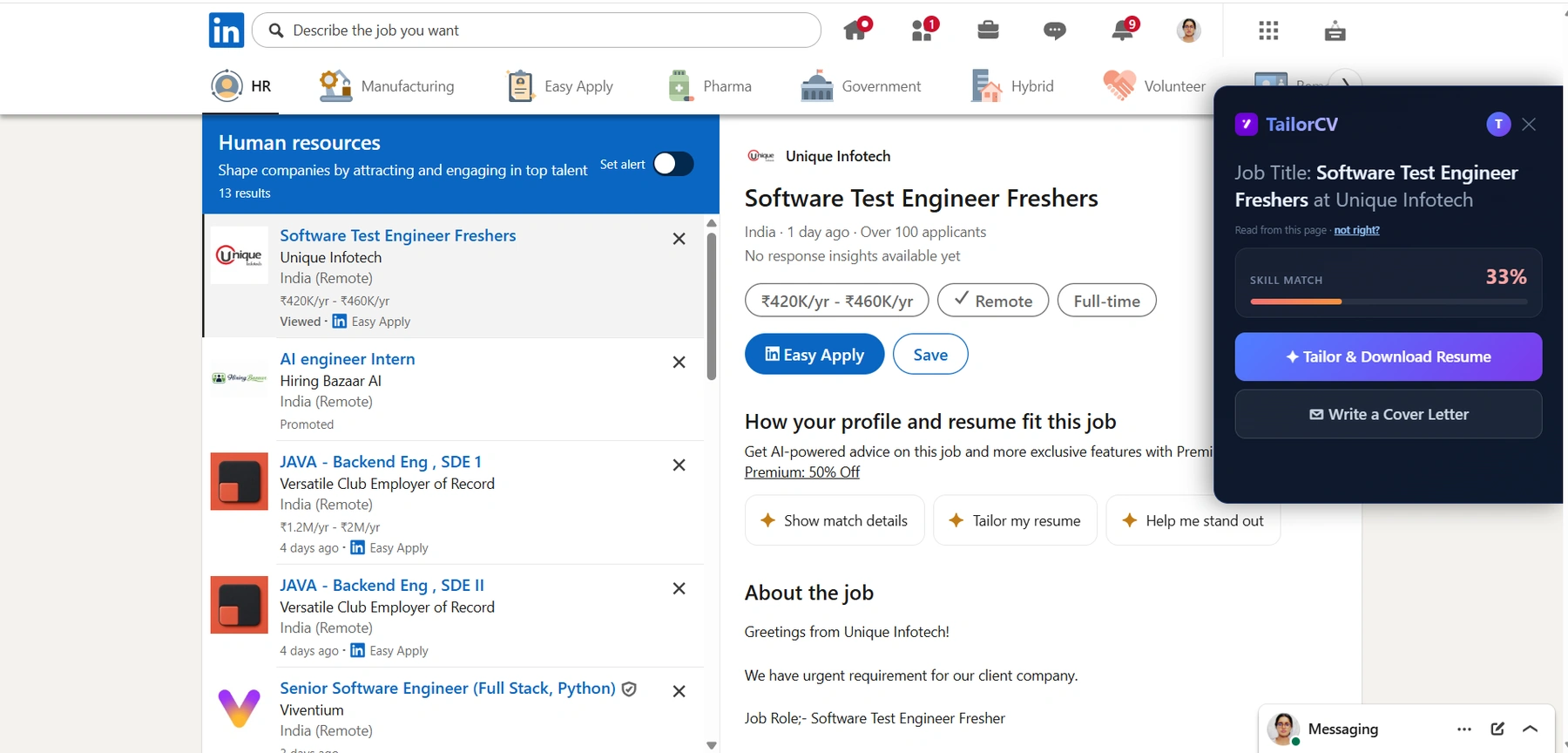
The panel reads the description straight off the listing you are already on and scores your resume against that role, so tailoring per application is a click rather than a detour.
The reason is structural. Your resume is screened by an applicant tracking system that matches on language, not on merit. A resume that doesn't carry the posting's terms is filtered before any human sees it, and the resulting silence looks identical to being narrowly beaten. So mass applying feels productive while producing almost no information about what's wrong.
The trap is that people respond to silence by applying more, which multiplies an unfixed conversion problem. If your resume doesn't convert, more applications make you slower, not faster.
The resolution isn't to abandon volume. It's to make tailoring cheap enough that you can have both — which is the entire case for tailoring in five minutes rather than an hour. At an hour each, thirty tailored applications is a month of work. At five minutes, it's a few days. That single change is what makes a fast, high-conversion search possible at all.
Fix Conversion Before Adding Volume
Spend the first day on this, not on applications. It pays back across everything that follows.
Diagnose honestly. Take a posting you're genuinely qualified for and run your resume against it with a free ATS score. A low match on a job you can actually do means you're being filtered on language, not capability — the single most common and most fixable cause of a stalled search.
Fix the mechanics. Clear formatting that breaks the parser, move to a parser-friendly structure, and check your file format and naming. These are one-time fixes that improve every application afterwards.
Fix the content. Increase your match with the keywords that matter and terms that lift your score, without stuffing. Tighten the structure, quantify achievements, use stronger verbs, sharpen the summary, get the length right, and cut roles too old to matter. Make sure soft skills are evidenced rather than listed, and that none of it sounds generic.
One day here typically beats a week of untargeted applying.
The Channels, Ranked by Speed
Not all routes move at the same rate. When time matters, weight your effort toward the fast ones.
1. Referrals — fastest by a wide margin. A referred application skips the queue, often skips the initial screen, and gets read by a human within days. Referral applications convert at multiples of cold ones. Ask people you actually know first, then second-degree contacts — referral messages and a LinkedIn referral template cover the wording. This is the single highest-leverage hour in a fast search.
2. Agency and in-house recruiters. Recruiters are paid on placement, which makes them the most motivated party in the process. They move in days, not weeks, and they know about roles before they're posted. Make yourself findable: an optimised LinkedIn profile and a headline that works as a search tag. A direct cold email works better than most people expect.
3. Fresh postings, applied to early. Recency matters enormously. Applying within forty-eight hours of a posting going live puts you in the first batch reviewed, before the pile becomes unmanageable. Set alerts and apply the same day. This is the highest-return habit in cold applying.
4. Direct outreach to hiring managers. Slower to build but high signal, and it works especially well at smaller companies where the hiring manager is reachable and the process is short.
5. Cold portal applications. The slowest and most crowded channel — and where most people spend nearly all their time. Keep doing it, but don't let it be the whole strategy.
6. Informational conversations. Not immediate, but they surface unposted roles and often convert weeks later. Informational interviews and general networking are the compounding channel.
Notice the inversion: the fastest channels are the ones most people use least, and the slowest is where most of the effort goes.
A Weekly System
Run this when you need speed, roughly three to four focused hours a day.
Monday — targeting. Define what you're actually going for: role type, level, locations, and a realistic salary band. Being specific is faster, because a targeted search converts and a scattered one doesn't. Build a list of thirty to fifty target companies rather than waiting on postings.
Daily — the core block. Apply to a sustainable number of fresh, tailored postings (how many per day has realistic figures — quality-adjusted volume, not maximum volume). Prioritise anything posted in the last two days. Tailor each one properly using fast posting-matching.
Daily — outreach. Five to ten contacts: referral requests, recruiter messages, hiring-manager notes. This is the block people skip when they're anxious, and it's the one that shortens the timeline most.
Wednesday — follow-ups. Chase applications from one to two weeks ago, once each, using follow-up templates.
Ongoing — interview readiness. Interviews arrive with two days' notice, so prepare before you need to. Build a STAR story bank, rehearse tell me about yourself, why do you want this job, strengths, weaknesses, why you left, five years, and why should we hire you. Prepare questions to ask, sort what to wear, and run a mock interview.
Friday — review. Count applications, responses, and interviews. If response rate is under roughly five percent, stop adding volume and fix the resume — the ATS score will usually show why. If you're getting interviews but no offers, the problem has moved to interview preparation, not the resume.
That last diagnostic is the most valuable part of the system: it tells you which problem you actually have, so you stop fixing the wrong one.
Speed Traps
Applying to everything regardless of fit. Feels fast, converts terribly, and burns the hours you needed for outreach.
Perfecting instead of sending. The mirror error. A good tailored resume sent today beats a perfect one sent Friday, especially given how much recency matters.
Only using job boards. The most crowded, slowest channel taken as the whole strategy.
Ignoring the pipeline while interviewing. A promising process is not an offer. Keep applying until you've signed.
Desperation showing. It affects negotiation and how you answer salary questions. A full pipeline is what protects you here.
Falling for scams. Urgency makes people less careful, and fast-search candidates are targeted deliberately — know how to spot a job scam.
Burning out in week two. Sprinting unsustainably then stopping is slower than a steady pace. Job search burnout is a real timeline risk, and handling rejection is part of staying in it.
If You're Starting From a Harder Position
No experience: lean hard on projects, a portfolio, and referrals — getting a job with no experience and first tech job cover the route, and ATS scores for freshers set expectations.
Career change: speed comes from translation, not from starting over — career-change resumes, moving into tech, non-tech to data, and a career-change portfolio.
A gap in your history: address it briefly and move on — explaining an employment gap.
Compressing the Interview Stage
Getting interviews faster only helps if you convert them. The interview stage is also where searches quietly stall — candidates who reach final rounds repeatedly and don't close are losing more time than those who apply less.
Be ready before the first call. Interviews arrive with a day or two of notice. Everything you prepare in advance is time you don't lose scrambling: a STAR story bank, the behavioural set, and an outfit sorted via what to wear.
Say yes to the earliest slot. Being first or early in a batch matters, for the same reason applying to fresh postings does.
Prepare per company, not generically. Twenty minutes of company research is what separates a specific answer from a recycled one, and it directly improves why do you want this job and why should we hire you.
Diagnose losses. If you're reaching final rounds and not converting, the fix isn't more applications — it's interview preparation, a mock interview, and sharper answers on why you left, strengths, and weaknesses.
Don't rush the offer. Speed matters until an offer exists, then it stops. Take the time to negotiate properly and answer salary expectations deliberately — a few days here is worth more than a week saved earlier, and accepting a bad fit quickly usually means searching again within the year.
Know the downstream timelines. How long each stage takes lets you plan around it instead of assuming every silence is a rejection.
Fastest Wins Available Today
If you have one afternoon, in rough order of payoff:
- Run an ATS check against a real posting. Highest-information hour available.
- Send five referral requests to people you actually know — referral messages and a LinkedIn template.
- Fix your LinkedIn headline so recruiters searching your skills find you.
- Set job alerts for your target roles so you can apply within forty-eight hours.
- Message three recruiters in your field — cold email that works.
- Rewrite your top three bullets with quantified results and stronger verbs.
- Book one informational interview — slower to pay off, but it compounds.
None of these take long, and all of them work on every application afterwards rather than just one.
Frequently Asked Questions
What's the fastest way to find a job? Referrals, by a wide margin — they skip the queue and get read by a human within days. After that, recruiters and applying to fresh postings within forty-eight hours. Cold portal applications are the slowest channel and where most people spend the most time.
How many jobs should I apply to per day if I need work fast? Enough to keep a pipeline without dropping tailoring — for most people that's a moderate daily number of well-matched applications, not fifty generic ones. Volume without conversion just produces more silence.
Is it better to apply to more jobs or tailor each one? Both, which is only possible if tailoring is fast. Thirty tailored applications typically beat a hundred generic ones on both interviews and elapsed time, because conversion rate matters more than raw count.
How long does a job search usually take? Commonly one to three months from first application to offer, longer for senior roles. Referral-driven searches run substantially shorter, which is why outreach is worth prioritising over extra applications.
Why am I not hearing back from any applications? Most often the resume is being filtered on language before a human sees it. Run it against a specific posting with a free ATS score — a low match on a job you're qualified for confirms it, and it's fixable in a day.
Putting It All Together
Speed in a job search doesn't come from applying to more things. It comes from three levers: a resume that actually converts, weighting your time toward referrals and recruiters instead of portals, and applying to fresh postings within a couple of days.
Fix conversion first — one day on the resume beats a week of untargeted applying. Then run a real system: tailored applications daily, outreach daily, follow-ups weekly, interview prep ongoing, and a Friday review that tells you whether your problem is the resume or the interview. Keep it sustainable, because a search you abandon in week three is the slowest outcome of all.
Start with the diagnostic. Run your resume against a job you want with a free ATS score — if the match is low on something you're qualified for, you've just found the reason the last month felt slow, and it's the cheapest thing on this list to fix.
What is your resume scoring right now?
Scan it against a job description and get your ATS match score in about a minute.
Drop your resume here or choose a file
PDF only. Max 2 MB.
We never share your data or use it to train AI models.

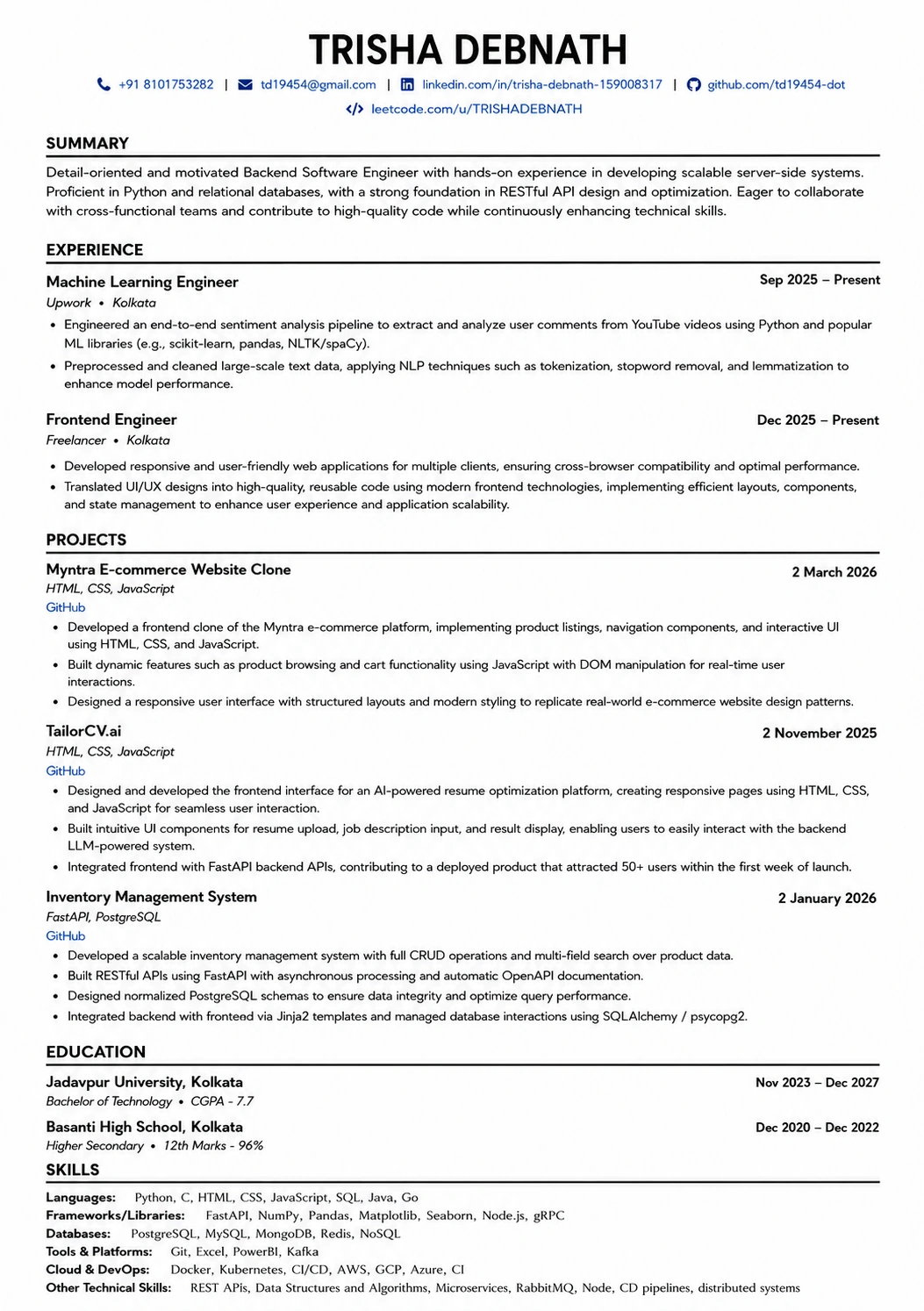
Templates that keep this structure intact
This template is ATS-tested — start from it and the formatting rules in this guide are already handled.
Was this guide useful?
Be the first to rate it.