 SS
SS
Key Takeaways
- Career changes to tech are increasingly common and achievable, with many coming from diverse fields such as teaching, finance, and healthcare.
- Accessible tech roles for career changers include data analyst, QA engineer, technical support, digital marketing, and UX/UI design, requiring varying levels of learning.
- Focus on one target role that aligns with your strengths, interests, and the time you can dedicate to learning.
- Building practical projects and obtaining relevant certifications can significantly enhance your employability in tech.
- A career-change resume should highlight transferable skills, new technical abilities, and relevant projects to bridge the gap from your previous experience.
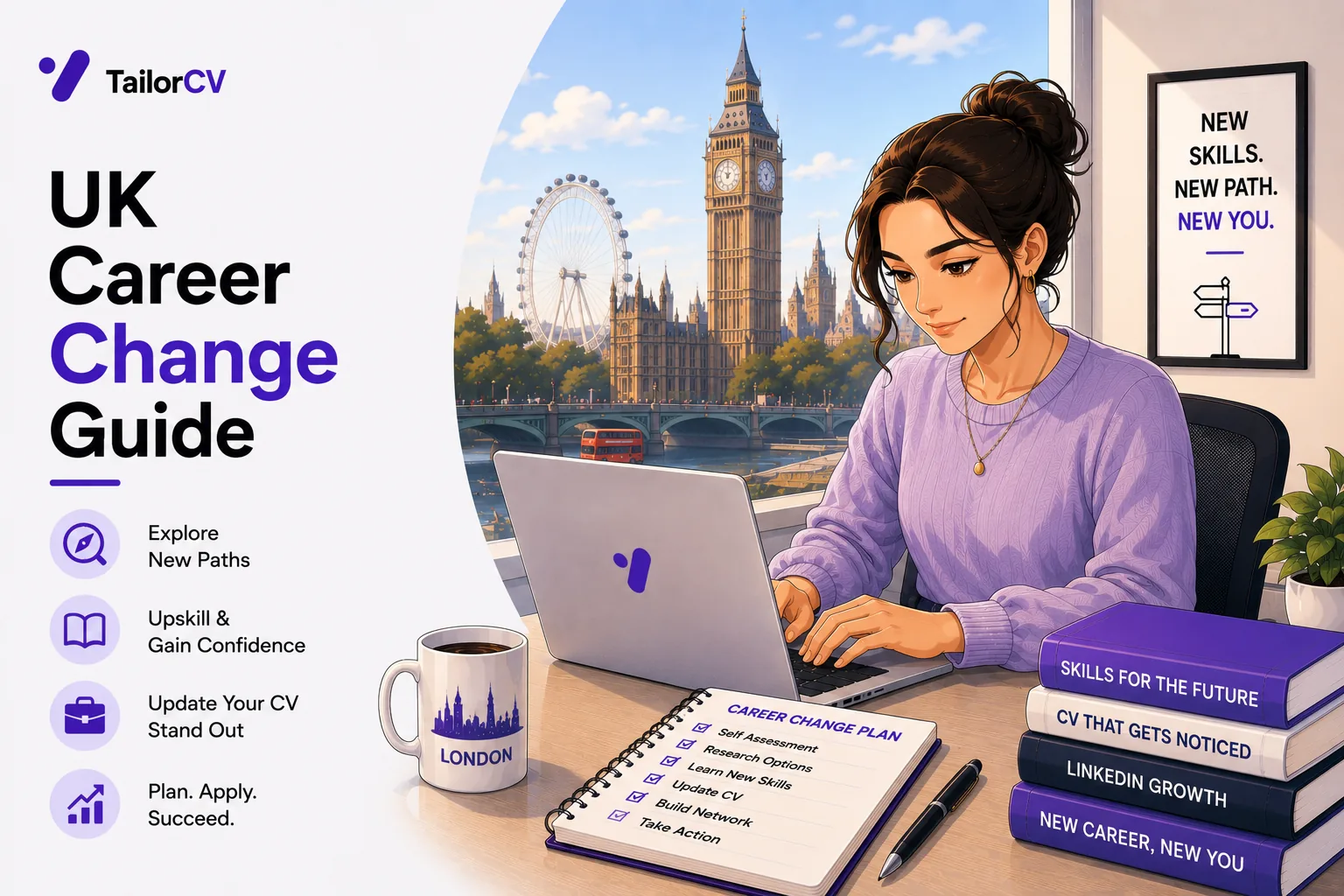
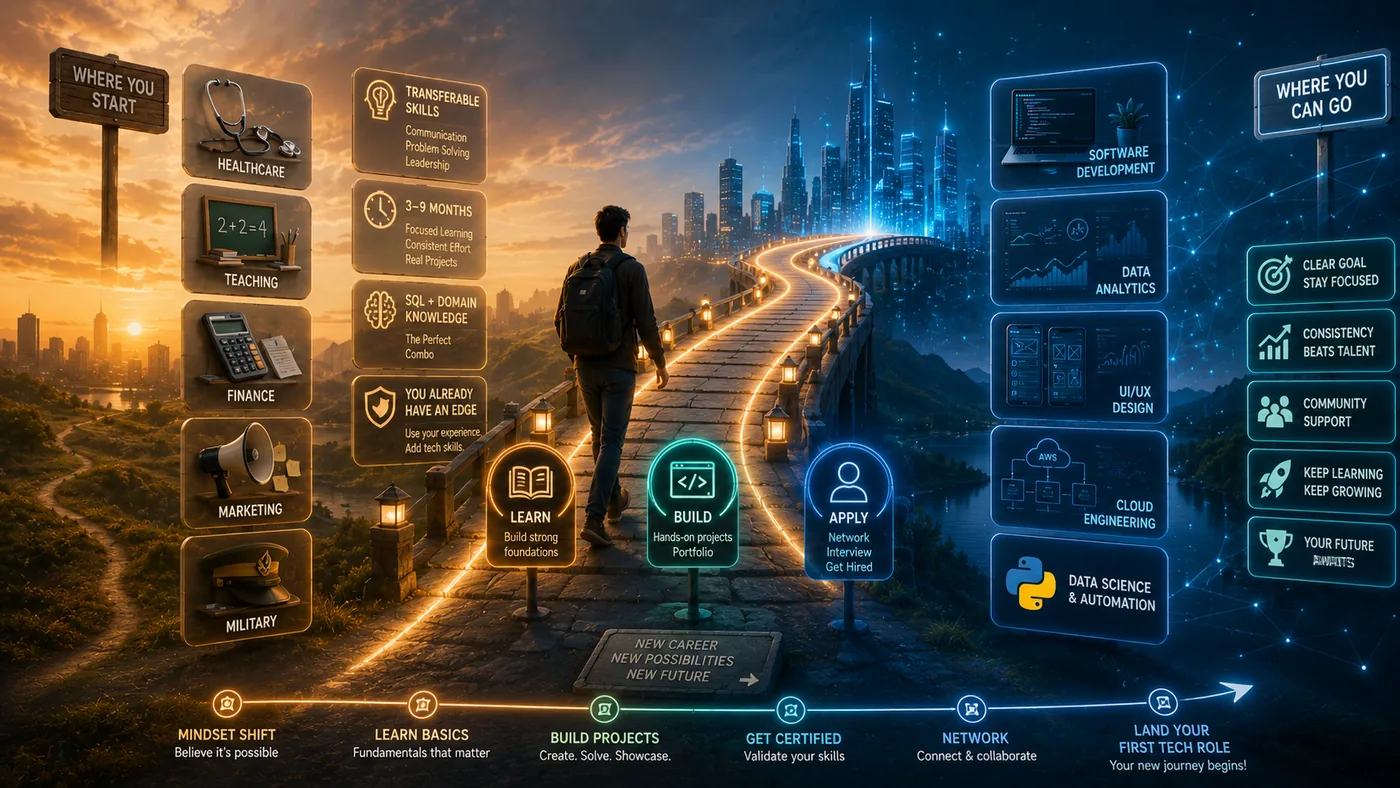
Changing careers into tech is one of the most common and achievable career transitions in 2026. People move into tech from teaching, finance, marketing, hospitality, the military, healthcare, and dozens of other fields. The path is well-trodden - but it requires strategy, skill-building, and a resume that bridges your past experience with your new direction.
This guide covers which tech roles are most accessible for career changers, how to build the right skills, how to position your transferable experience, and how to land your first tech role.
This complements the career change resume guide and the how to get your first tech job guide. Before applying, optimize your resume with the TailorCV ATS score checker.
Which Tech Roles Are Most Accessible for Career Changers?
Not all tech roles require years of computer science education. Some are more accessible to career changers:
Most Accessible (3-9 months of focused learning)
- data analyst - SQL, Excel, Power BI. Strong fit for people from finance, operations, and business backgrounds.
- QA / Test Engineer - Manual then automation testing. Accessible entry point into software.
- Technical Support / Customer Success - Leverages communication skills + technical learning.
- digital marketing / SEO - For marketing and content backgrounds.
- UX/UI Design - For creative and psychology backgrounds.
- Project / Product Coordinator - For organized, communication-strong professionals.
Moderately Accessible (9-18 months of focused learning)
- frontend developer - HTML, CSS, JavaScript, React.
- backend developer - Python, Node.js, databases.
- Full Stack Developer - Both front and back.
- data scientist - Requires statistics + Python + ML (steeper for non-quantitative backgrounds).
- Cloud / DevOps Engineer - AWS, Linux, automation.
Best Leverage of Existing Experience
Your existing domain knowledge is an asset. A nurse moving into health-tech product management, a teacher moving into EdTech, or an accountant moving into fintech data analysis brings domain expertise that pure tech candidates lack.
Step 1: Choose Your Target Role
Pick based on:
- Your existing strengths (analytical, creative, communication, technical aptitude)
- The accessibility of the role
- Your available time to learn
- Your genuine interest (you will spend months learning it)
What optimizing actually does to your resume
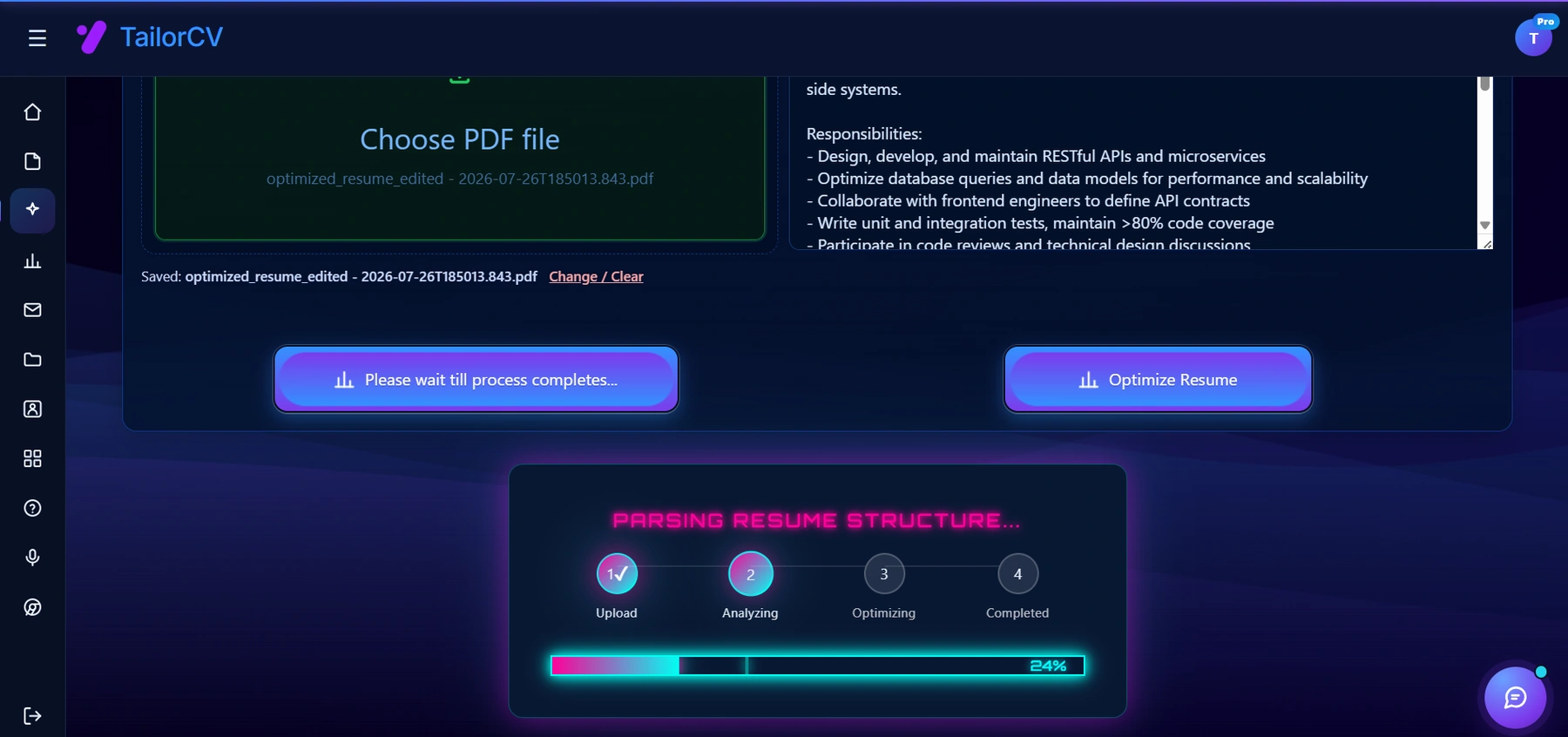
Optimising runs against the specific job description you paste in, not in the abstract.
Do not try to learn everything. Pick one role and go deep.
Step 2: Build the Skills
Self-Directed Learning
- Free and low-cost: freeCodeCamp, Coursera, Udemy, Google Career Certificates, YouTube
- Structured: bootcamps (intensive, faster, costlier)
- University: part-time degrees or certificates (slowest, most credentialed)
Build Projects
This is non-negotiable. Theory alone does not get you hired. Build 2-3 real projects in your target skill. Read how to build a professional portfolio.
For developers: build apps and put them on GitHub. For data analysts: build dashboards and analysis projects. For designers: build case studies.
Get a Certification (Where It Helps)
Some entry-level transitions benefit from recognized certifications:
- Google Data Analytics Certificate (for data analyst)
- AWS Cloud Practitioner (for cloud)
- Google UX Design Certificate (for UX)
- Meta Front-End Developer Certificate (for frontend)
Step 3: Write a Career-Change Resume
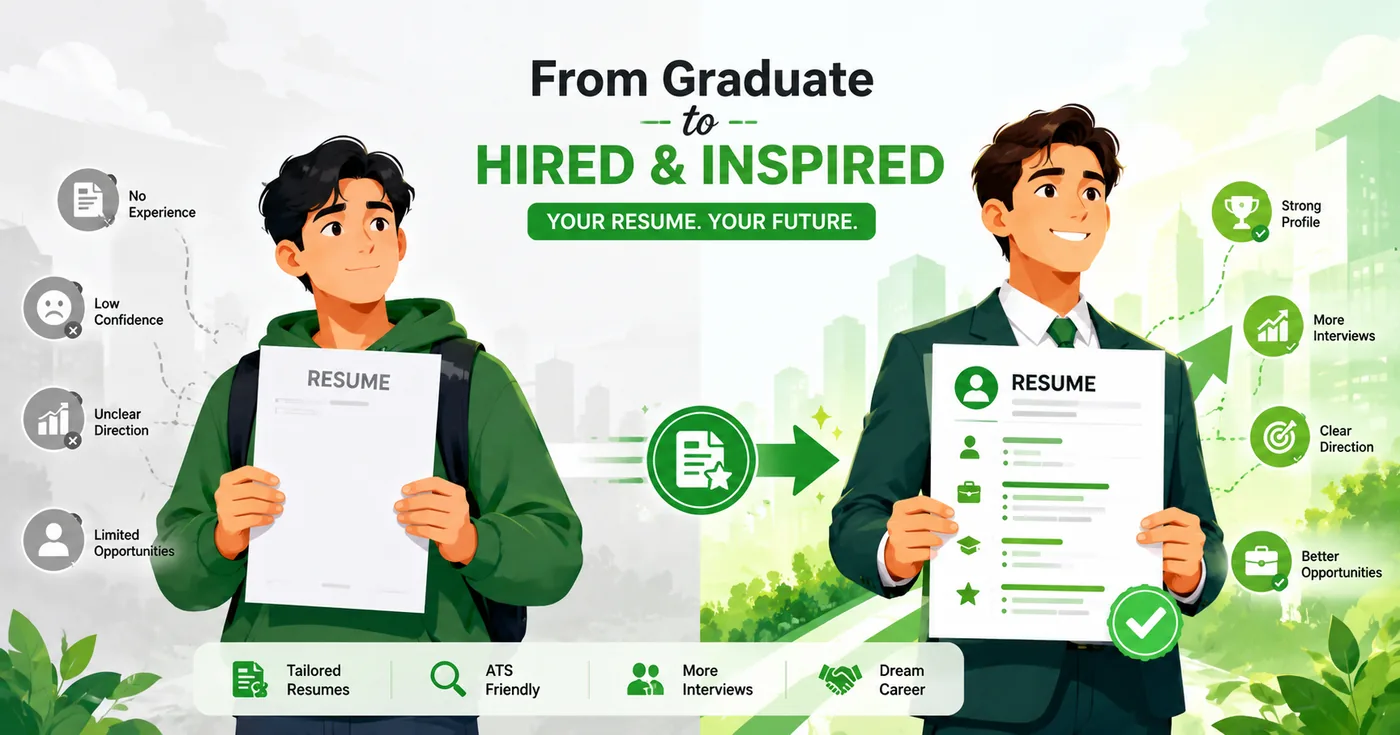
The challenge: your work history is in a different field. The solution: emphasize transferable skills, new technical skills, and projects.
Resume Structure for Career Changers
-
Summary - Explicitly state your transition and what you bring. "Former financial analyst transitioning to data analytics, combining 4 years of business analysis experience with new SQL, Python, and Power BI skills."
-
Skills - Lead with your new technical skills prominently.
-
projects - Place projects high on the resume, since they prove your new skills. This is often more important than your work history for career changers.
-
Experience - Reframe your past experience to highlight transferable skills (analytical thinking, stakeholder management, problem-solving, project delivery).
-
Education / certifications - Include your new certifications.
Reframing Transferable Skills
A teacher's experience becomes:
- "Managed and prioritized 5 simultaneous classes" -> project and time management
- "Analyzed student performance data to adjust teaching" -> data analysis
- "Presented to parents and administrators" -> stakeholder communication
A finance professional's experience becomes:
- "Built financial models in Excel" -> analytical and data skills
- "Automated reporting processes" -> process improvement and technical aptitude
Read the career change resume guide for detailed examples.
Step 4: Leverage Your Domain Expertise
Your previous career is a competitive advantage, not a liability. Target tech companies in industries you already understand:
- Former nurse -> health-tech (product, data, QA, customer success)
- Former teacher -> EdTech
- Former accountant -> fintech
- Former retail manager -> e-commerce tech
- Former marketer -> marketing tech / martech
You bring domain knowledge that pure-tech candidates lack, plus your new technical skills. This combination is genuinely valuable.
Step 5: Network and Apply Strategically
- Use LinkedIn to connect with people in your target role
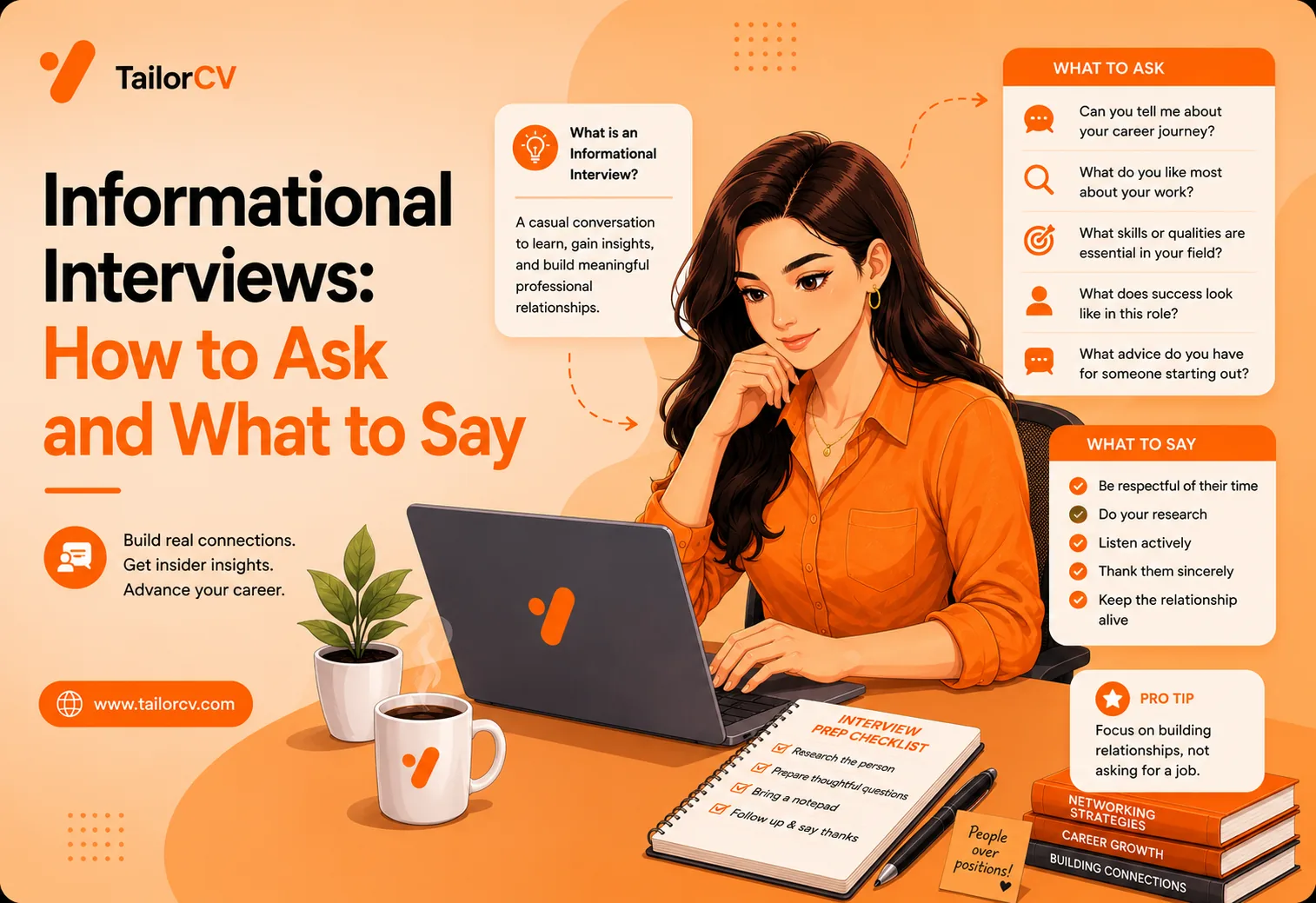
- Find others who made the same transition and ask for advice (most are happy to help)
- Use the cold email guide for outreach
- Apply to roles that value your domain experience
- Consider transitional roles (e.g., business analyst before data scientist) as stepping stones
Realistic Expectations
- Career changes take time: 6-18 months from starting to learn to landing a role
- You may need to accept a more junior title and salary initially
- Rejection is common - read how to handle job rejection
- Your first tech role is the hardest to get; subsequent moves are much easier
- Domain expertise + new tech skills is a strong combination that improves your odds significantly
Common Career Change Mistakes
Mistake 1: Learning without building
Courses and certificates without projects do not prove ability. Build real things.
Mistake 2: Hiding the career change
Address your transition openly and confidently in your summary and cover letter. Frame it as intentional, not desperate.
Mistake 3: Ignoring domain advantage
Do not abandon your past experience - leverage it. Target industries you already understand.
Mistake 4: Applying only through portals
Career changers benefit enormously from networking and referrals, which bypass the "lacks direct experience" filter.
Related Guides
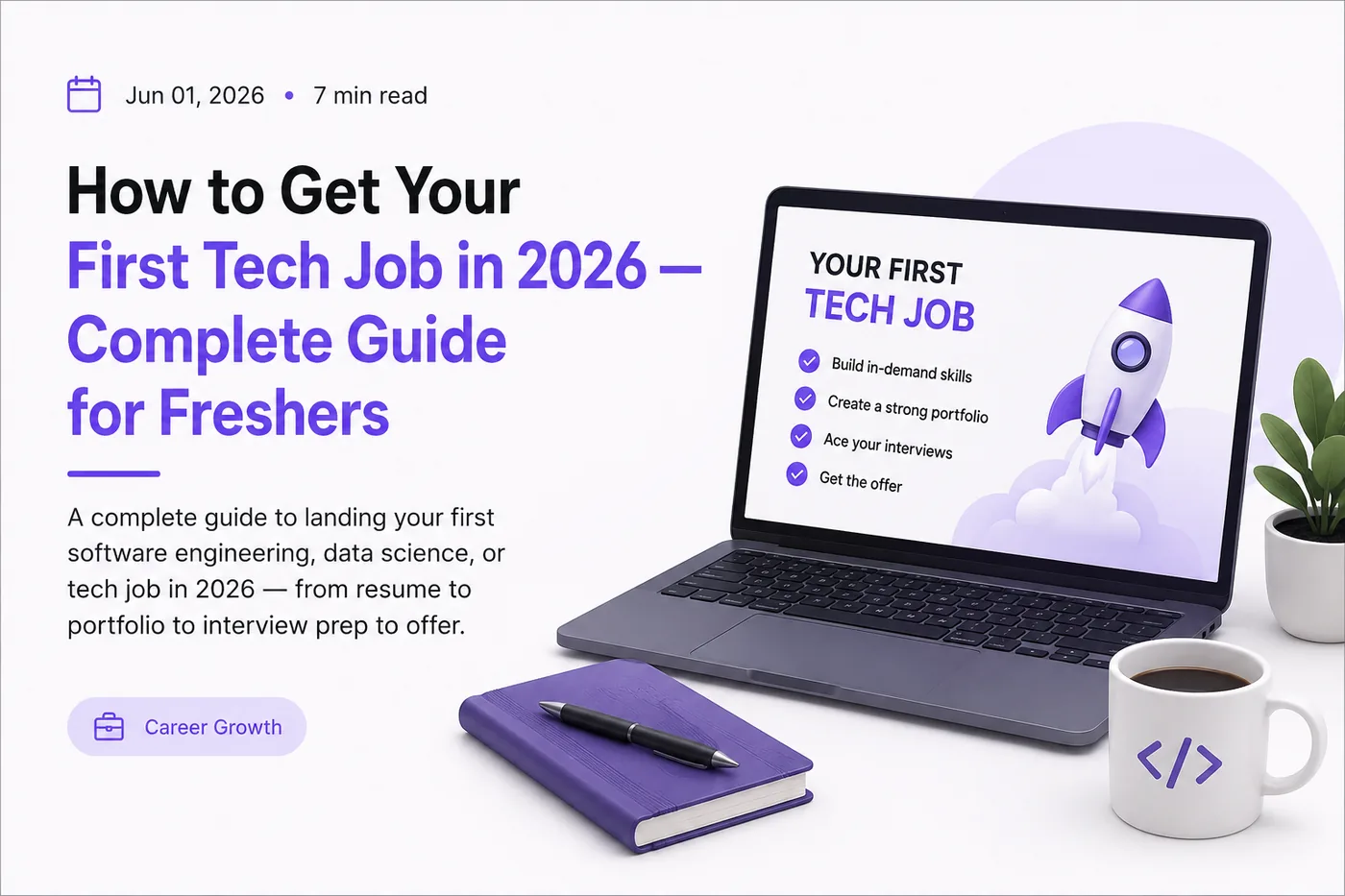
- How to Get Your First Tech Job
- First 90 Days at a New Job
- How to Ask for a Raise
- How to Get a Promotion
- Personal Branding for Professionals
- Remote Job Search Guide
- Why Am I Not Getting Interviews for Jobs I'm Qualified For?
- How to Explain Resume Gaps
- How to Get a Job With No Experience
- How to Prepare for Campus Placement
- How to Quit Your Job Professionally
- How to Write a Two Weeks Notice
Make This Practical
Turn the career advice into a stronger application system. Start by checking your resume with the free ATS score checker, align it with the role using How to Tailor Your Resume for Every Job, and keep your profile consistent with LinkedIn Resume Tailoring Sync.
When you are ready to apply, build the supporting pieces around the resume. Use the AI cover letter generator for targeted outreach, practice with the AI mock interview tool, and review Why Your Resume Gets No Responses if applications are not converting.
Conclusion
Changing careers into tech in 2026 is achievable with the right strategy: choose an accessible role, build real skills and projects, write a resume that bridges your past and future, and leverage your domain expertise.
Optimize your career-change resume with the TailorCV ATS score checker, read the career change resume guide, build your portfolio, and follow the first tech job guide.
Frequently Asked Questions
What are the best tech roles for career changers in 2026?
In 2026, some of the most accessible tech roles for career changers include data analyst, QA/test engineer, and UX/UI designer. These positions typically require 3-9 months of focused learning and leverage skills from various backgrounds, such as finance, operations, and creative fields. For more insights on how to transition effectively, check out our guide on how to get your first tech job.
How can I build the necessary skills for a tech career?
To build skills for a tech career, consider enrolling in online courses or bootcamps that focus on specific areas like coding, data analysis, or UX/UI design. Hands-on projects and real-world applications can also enhance your learning experience. If you're unsure where to start, our guide on how to get a job with no experience offers valuable strategies for beginners.
How should I write my resume for a tech career switch?
When writing your resume for a tech career switch, focus on highlighting transferable skills and relevant experience. Tailor your resume to showcase projects or tasks that demonstrate your ability to adapt to a tech environment. To help you craft the perfect resume, utilize our free ATS score checker to ensure it meets industry standards.
What should I include in my cover letter for a tech job?
In your cover letter, emphasize your passion for technology and how your previous experience contributes to your new career path. Use specific examples to illustrate your skills and adaptability. For a comprehensive template and examples, refer to our post on cover letter for a career change.
How can I prepare for interviews in the tech industry?
Preparing for tech interviews involves understanding the specific skills required for the role and practicing common interview questions. Consider using tools like an AI mock interview to simulate the interview experience and receive feedback. This preparation can significantly enhance your confidence and performance during actual interviews.
What is your resume scoring right now?
Scan it against a job description and get your ATS match score in about a minute.
Drop your resume here or choose a file
PDF only. Max 2 MB.
We never share your data or use it to train AI models.

Was this guide useful?
Be the first to rate it.