SS
SS

Key Takeaways
- Asking thoughtful questions in an interview demonstrates genuine interest and preparation, while saying "no questions" may signal disengagement.
- The questions you ask help assess if the role, team, and company are a good fit for you.
- Prepare 6-8 questions to ask, as you may only get to pose a few during the interview.
- Focus on questions about the role, team dynamics, growth opportunities, management style, and company culture.
- Use one or two questions that show deep research about the company to leave a strong impression.
At the end of almost every interview, you will be asked: "Do you have any questions for us?" This is not a formality - it is part of your evaluation. Candidates who ask thoughtful questions signal genuine interest, preparation, and good judgment. Candidates who say "No, I think you covered everything" signal disengagement.
The questions you ask also help you decide whether the role is right for you. An interview is a two-way evaluation, and the right questions reveal whether this job, team, and company are a good fit.
This guide gives you 40 smart questions organized by topic, plus questions to avoid.
Prepare these alongside your interview answers using the behavioral interview guide, the tell me about yourself guide, and the company research guide. Before the interview, optimize your resume with the TailorCV ATS score checker.
Why the Questions You Ask Matter
Your questions:
- Demonstrate genuine interest and preparation
- Show you think carefully about the role and company
- Help you assess whether this is the right opportunity
- Leave a strong final impression
- Can reveal red flags before you accept an offer
See it in action: a resume-based mock interview
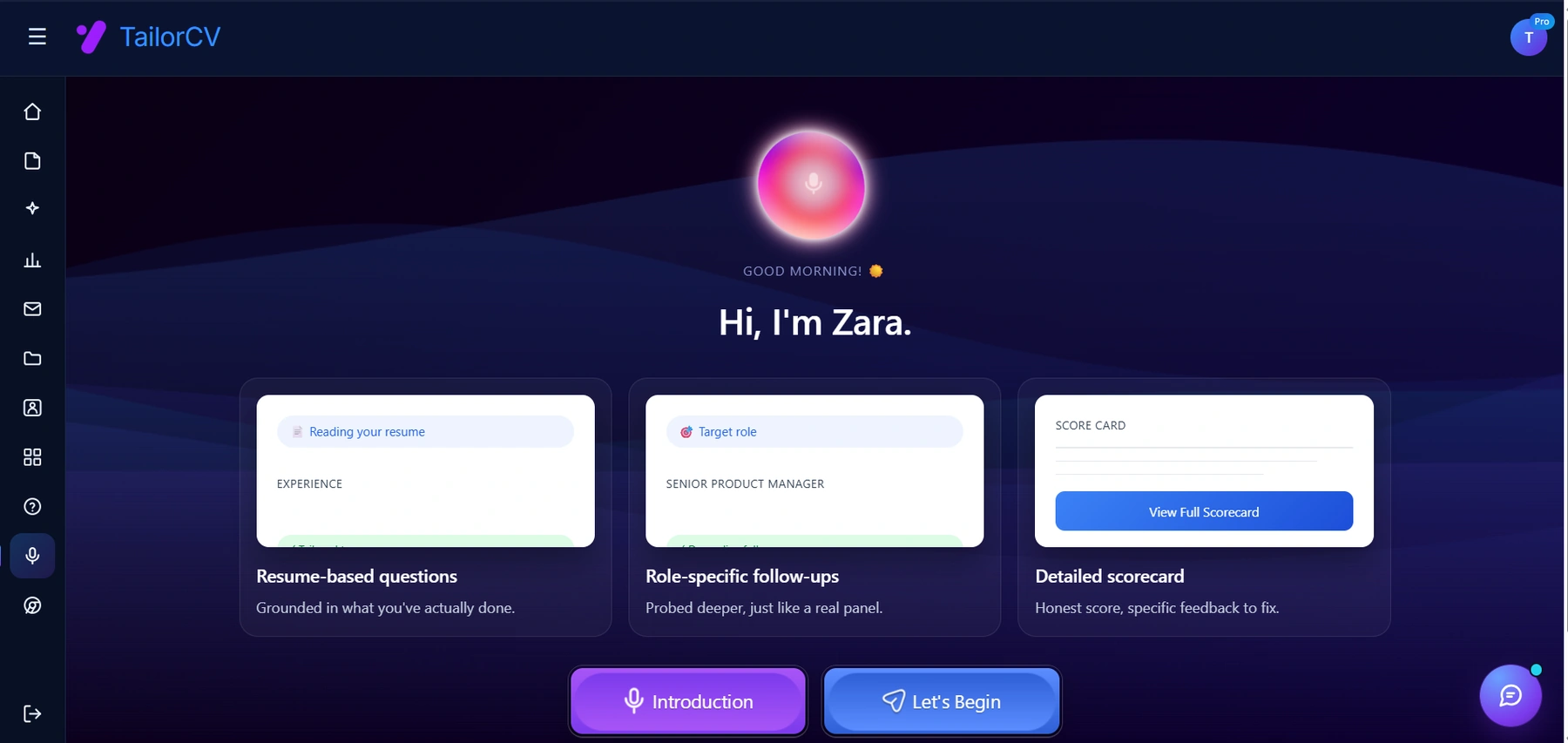
The scorecard at the end is the useful bit - an honest score plus specific feedback, which is what turns practice into improvement.
Prepare 6-8 questions (you may only get to ask 3-4, and some may be answered during the interview).
Questions About the Role
- What does success look like in this role in the first 6 months? In the first year?
- What are the biggest challenges someone in this position would face?
- What does a typical day or week look like in this role?
- How will my performance be measured and reviewed?
- What are the most important priorities for this role right now?
- Is this a new position, or am I replacing someone? (Why did the previous person leave or get promoted?)
- What skills or qualities make someone exceptional in this role versus just adequate?
- How does this role contribute to the team's and company's larger goals?
Questions About the Team
- Can you tell me about the team I'd be working with?
- How is the team structured, and who would I report to?
- How does the team handle collaboration and communication, especially in a hybrid or remote setting?
- What is the team's biggest current focus or project?
- How does the team handle disagreements or differing opinions?
- What is the experience level of the team members I'd work with?
- How does the team celebrate wins and handle setbacks?
Questions About Growth and Development
- What learning and development opportunities does the company offer?
- What does the career progression path look like for this role?
- How do people typically grow within this team or department?
- Is there a budget for conferences, courses, or certifications?
- Can you share an example of someone who started in a similar role and progressed?
- How does the company support employees in developing new skills?
Questions About the Manager and Management Style
- How would you describe your management style?
- How do you prefer to give and receive feedback?
- What do you expect from someone in this role in the first 90 days?
- How do you support your team members' growth and success?
- What do you enjoy most about leading this team?
Questions About Company Culture and Direction
- How would you describe the company culture?
- What do you personally enjoy most about working here?
- Where do you see the company heading over the next few years?
- How has the company changed since you joined?
- How does the company live out its stated values in day-to-day work?
- What is the company's approach to work-life balance?
Questions That Show Deep Research (Use Sparingly, One or Two)
- I read that the company recently [launched X / entered Y market / raised funding]. How does this role contribute to that?
- I saw your engineering blog post about [topic]. How has that approach evolved?
- The industry is shifting toward [trend]. How is the company positioning for that?
These questions, drawn from your company research, make a strong impression.
Closing Questions
- What are the next steps in the interview process?
- Is there anything about my background that gives you hesitation that I could address?
- When can I expect to hear back about next steps?
- Is there anything else I can provide that would be helpful?
- Based on our conversation, do you have any concerns about my fit for this role?
Question 37 and 40 are particularly powerful - they let you address objections before you leave the room.
Questions to AVOID in Early Interviews
- "What does this company do?" (shows zero research)
- "How much vacation time do I get?" (too early - save benefits questions for later stages or offer stage)
- "What's the salary?" (let them raise it, or wait for the offer stage)
- "How quickly can I get promoted?" (sounds entitled before you've started)
- "Do you monitor employees / how strict are you?" (raises red flags)
- Anything you could easily find on the company website
Save compensation and benefits questions for the recruiter, later rounds, or the offer stage - not the first interview with a hiring manager.
How to Deliver Your Questions
- Have them ready but ask naturally, not like a checklist
- Listen actively to answers and ask follow-ups - this shows genuine engagement
- If a question was already answered during the interview, say so: "You actually touched on team collaboration earlier, which was helpful - I'm curious to go a bit deeper on..."
- Prioritize your most important questions first in case time runs short
Related Guides
- Behavioral Interview Questions and Answers
- 20 Common Interview Mistakes to Avoid
- How to Answer "Tell Me About Yourself"
- How to Follow Up After a Job Interview
- How to Prepare for a Job Interview
- How to Research a Company Before Your Job Interview
- Virtual Interview Tips
- Group Discussion Tips
- Phone Interview Tips
- Coding Interview Preparation Guide
- Final Round Interview Tips
- How to Negotiate a Salary Offer
- ATS Mistakes Experienced Professionals Make (And Why Your Resume Stops Working After 5+ Years)
- 200 Best Action Verbs for Resume in 2026 - By Role and Category
- Cover Letter Guide 2026 - How to Write a Cover Letter That Gets Read
- First 90 Days at a New Job in 2026 - How to Succeed and Stand Out
- How to Ask for a Raise in 2026 - Scripts, Timing, and Strategy
- How to Build a Professional Portfolio in 2026 - Guide for All Industries
Make This Practical
Use this advice as interview practice, not just reading material. Start a role-specific session with the AI mock interview tool, prepare your opening with How to Answer Tell Me About Yourself, and structure evidence-heavy answers with the STAR Method Interview Answers Guide.
Before the interview, make sure the resume that earned the call is still aligned with the role. Check it with the free ATS score checker, review Common Interview Mistakes to Avoid, and use How to Follow Up After an Interview once the conversation is over.
Conclusion
The questions you ask in an interview are part of your evaluation and your decision-making. Prepare 6-8 thoughtful questions about the role, team, growth, and company. Avoid questions that show no research or focus prematurely on compensation.
Combine great questions with strong answers using the behavioral interview guide and tell me about yourself guide. Research the company with the company research guide, and optimize your resume with the TailorCV ATS score checker.
Frequently Asked Questions
Why is it important to ask questions during a job interview?
Asking questions during a job interview is crucial because it demonstrates your genuine interest and preparation for the role. Thoughtful questions not only allow you to assess whether the position aligns with your career goals, but they also leave a strong final impression on the hiring manager. Moreover, the right questions can help reveal potential red flags before you accept an offer, ensuring that you make an informed decision about your future.
What types of questions should I avoid asking in an interview?
You should steer clear of questions that may come off as self-serving or uninformed, such as those about salary and benefits too early in the conversation. Additionally, avoid asking questions that can easily be answered by researching the company, like basic facts about its products or services. Instead, focus on deeper inquiries that show your engagement and interest in the role and the company culture. For more on common pitfalls, check out our guide on common interview mistakes to avoid.
How can I prepare questions to ask during my interview?
To prepare effective questions, consider researching the company and the specific role you are applying for. Think about what aspects of the job or company culture are most important to you, and formulate questions that will help you gain clarity. It's also helpful to review your previous experiences and how they relate to the position, allowing you to create questions that connect your background to the role. For additional insights, refer to our article on how to answer "Tell Me About Yourself".
How many questions should I prepare for an interview?
It's advisable to prepare 6-8 questions for an interview, as you may only have the opportunity to ask 3-4 depending on the time available. Having a variety of questions will allow you to adapt based on the flow of the conversation and the responses you receive. This preparation not only shows your interest but also helps you gauge the fit of the role for your career aspirations. For more on effective interview strategies, check our behavioral interview guide.
What are some examples of smart questions to ask the hiring manager?
Smart questions to ask include inquiries about the company's growth plans, team dynamics, and expectations for success in the role. For example, you might ask, "What does success look like in this role in the first 6 months?" This type of question not only shows your interest in contributing to the company's goals but also helps you understand what will be expected of you. For more examples, refer to our full list of smart questions.
Was this guide useful?
Be the first to rate it.