 SS
SS
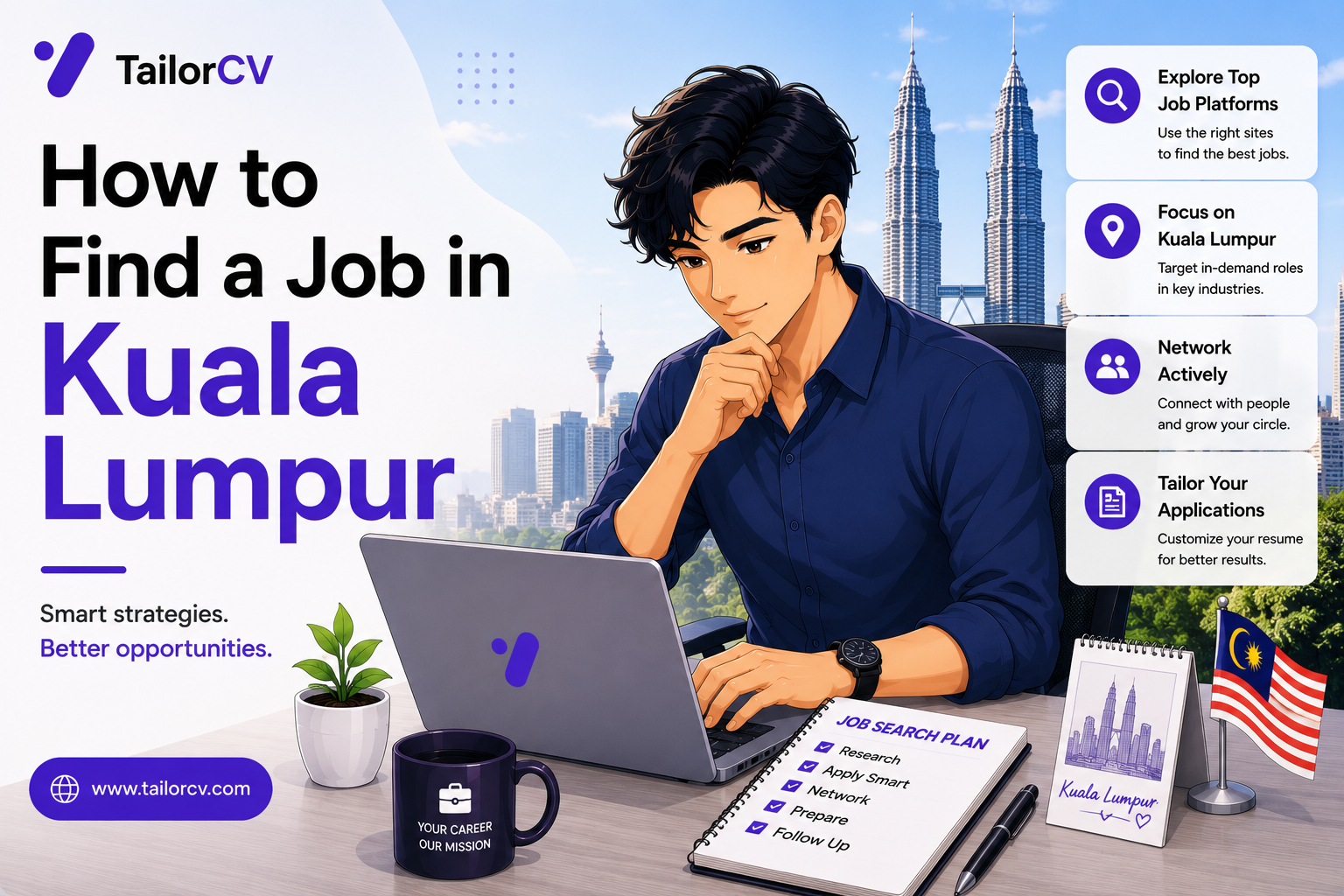
Key Takeaways
- KL and the Klang Valley concentrate Malaysia's opportunities in tech, finance, shared services, professional services, and sales.
- The market is competitive, so tailoring every application and networking matter more here than anywhere else in the country.
- Salaries are generally higher than the rest of Malaysia, reflecting living costs.
- An ATS-ready, tailored resume plus a strong LinkedIn presence is essential for KL's professional roles.
- Preparation for interviews and assessments turns KL shortlists into offers.
Kuala Lumpur is the beating heart of Malaysia's economy. As the country's capital and commercial centre, KL and the wider Klang Valley host the headquarters of banks, multinationals, tech companies, and government-linked corporations — which means the widest range of opportunities in the country, and the most competition for them.
Whether you're a fresh graduate, a professional moving to the city, or someone relocating to Malaysia, this guide shows you how to find a job in Kuala Lumpur in 2026: which industries are hiring, where to look, what to expect on pay, and how to stand out in a crowded market.
Why Kuala Lumpur? The Opportunity Landscape
KL's economy is diverse, which is good news for job seekers across fields.
Industries Hiring in KL and the Klang Valley
- Technology & digital: software, data, cybersecurity, product, and digital marketing roles cluster in KL Sentral, Bangsar South, Cyberjaya, and the surrounding tech corridors.
- Banking & finance: the major banks and insurers are headquartered here, with continuous demand in finance, risk, operations, and analytics.
- Global business services (GBS) / shared services: MNCs run large regional service centres in and around KL, hiring for finance, HR, IT, and customer operations.
- Professional services: consulting, law, audit, and advisory firms recruit graduates and experienced professionals.
- Sales, marketing & business development: every growing company needs revenue talent, making these accessible entry points.
Key Business Districts
- KLCC & KL Sentral: corporate HQs, banks, and MNCs.
- Bangsar South & Mid Valley: tech, media, and services.
- Cyberjaya: tech, GBS, and MNC delivery centres.
- Petaling Jaya & Damansara: a huge cluster of corporate and SME employers just outside the city core.
Step 1: Prepare an Application That Competes
KL is competitive, so your application has to be sharp before you send it anywhere.
What optimizing actually does to your resume
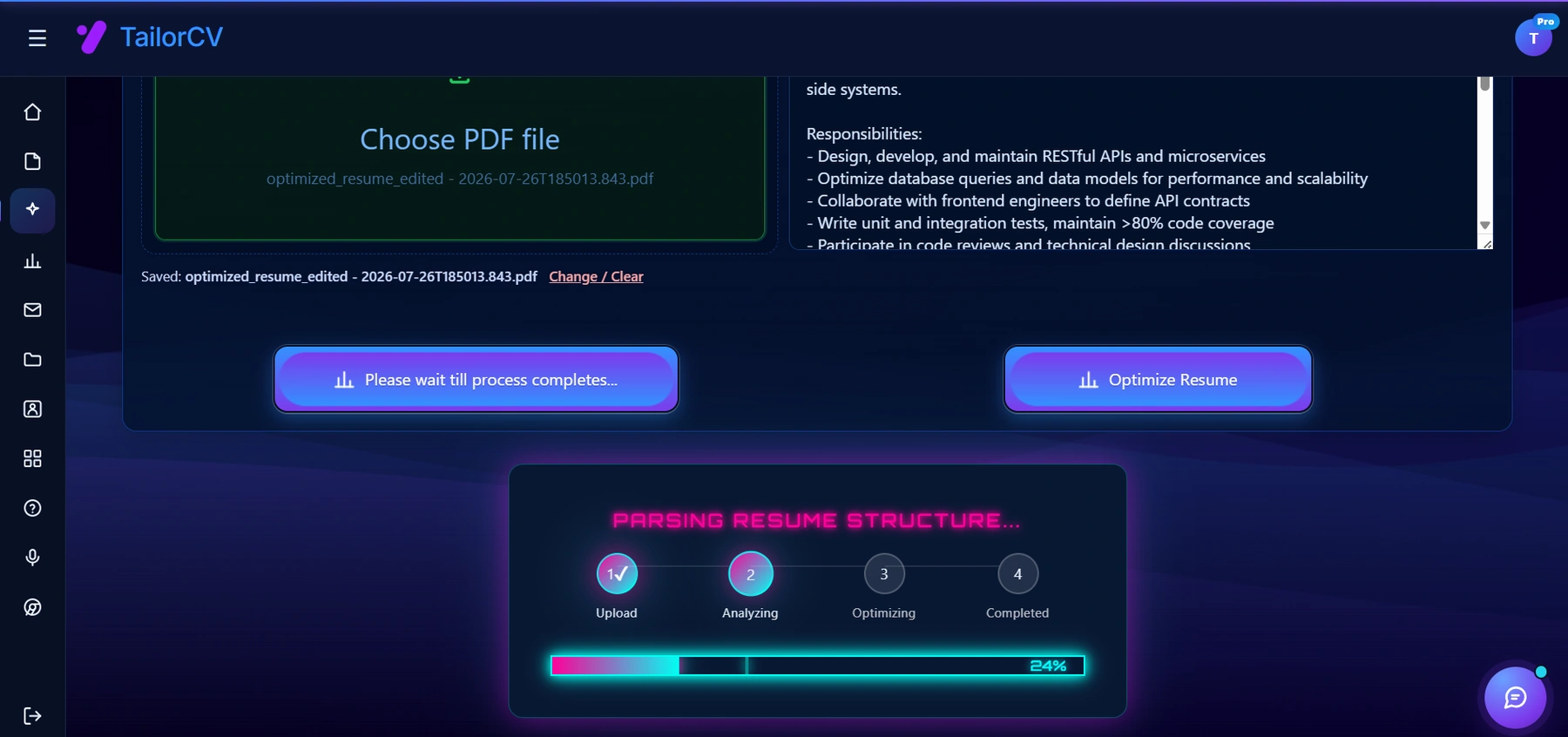
Optimising runs against the specific job description you paste in, not in the abstract.
- Build an ATS-ready, one-to-two-page resume following local norms — see how to write a resume for Malaysia jobs.
- Make sure it passes the software screen — most KL employers use an ATS; learn the mechanics in how ATS works in Malaysia and test each version with the free ATS score checker.
- Match each posting's keywords using best resume keywords for Malaysian jobs.
A resume built with the TailorCV resume builder and tailored per role with the resume optimizer gives you a real edge in KL's applicant pools.
Step 2: Search Across the Right Channels
Job Portals
- JobStreet — the largest source of KL listings; complete your profile fully.
- LinkedIn — critical for professional, MNC, and tech roles, and where KL recruiters actively source.
- Hiredly — great for KL startups and younger professionals.
- Indeed Malaysia and company career pages — apply directly where possible; many MNCs and GLCs run their own portals.
The Hidden Job Market
In a city this networked, many roles are filled through referrals. Attend industry meetups and tech events (KL has a busy calendar), engage with your university's alumni network, and connect with people at target companies. A warm introduction can jump you past hundreds of online applicants — which is why your LinkedIn presence matters so much.
Step 3: Tailor and Apply Strategically
Quality beats quantity in KL. For each role:
Tailoring without leaving Indeed
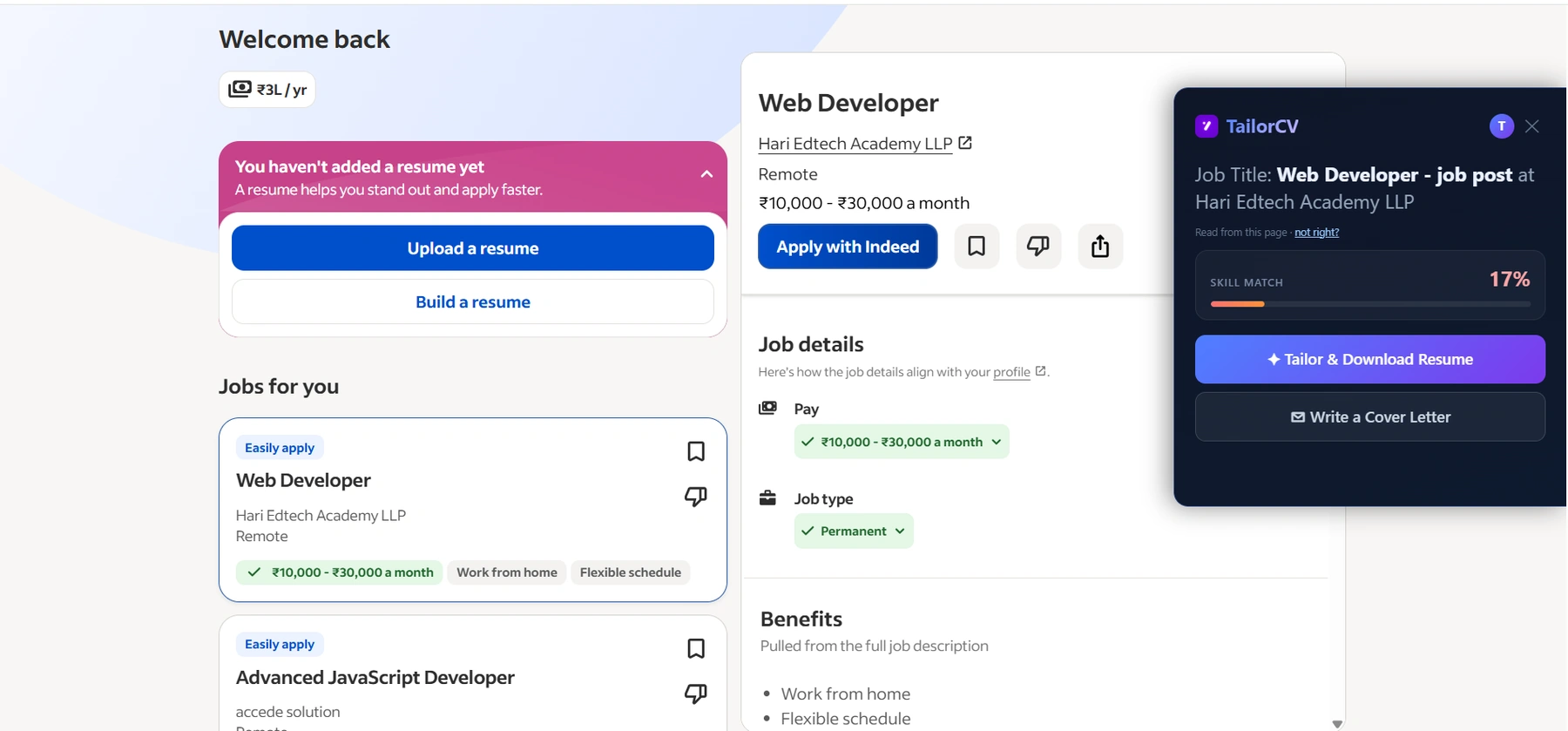
On Indeed the panel reads the posting off the page and shows the match before you hit Apply - the kind of gap worth closing first rather than discovering through silence.
- Tailor your resume and, where it helps, add a targeted cover letter — see the Malaysia cover letter guide.
- Apply early — graduate schemes and popular roles fill fast.
- Track every application and follow up politely.
Our complete guide to getting a job in Malaysia covers the end-to-end process in depth.
Step 4: Nail the Interview
KL employers often run multiple rounds and may include online assessments. Research each company, prepare structured achievement stories, and rehearse. Use interview prep to generate likely questions, practise with the AI mock interview, and review our Malaysia interview tips for local etiquette.
Salary Expectations in Kuala Lumpur (2026)
KL salaries are generally the highest in Malaysia, reflecting the concentration of MNCs and higher living costs. Actual pay depends on industry, employer type, and experience:
- Tech and engineering roles command strong packages, especially at MNCs and product companies.
- Banking, finance, and GBS offer competitive salaries with structured progression.
- Sales roles often pair a moderate base with significant commission.
Always research the specific range for your role and factor in benefits, learning, and growth — not just base pay. Negotiate from an informed position once you have an offer.
Cost of Living and Practical Considerations
KL offers higher salaries but also higher living costs than smaller Malaysian cities. Factor in rent (which varies widely by area), transport (the city has extensive LRT/MRT coverage, so living near a line saves time and money), and commute times when weighing an offer. Living near a rail line and a business hub can meaningfully improve your quality of life.
Relocating to KL From Abroad
If you're moving to Malaysia for work, you'll also need to understand work authorisation, employment passes, and how foreign candidates are assessed. Start with our guide to getting a job in Malaysia as a foreigner, and make sure your resume follows local conventions rather than your home country's format.
Finding a Job in KL by Field
KL's diversity means the best approach varies by sector. A quick orientation:
- Technology: the strongest area for both fresh and experienced talent. Target product companies, startups in Bangsar South and KL Sentral, MNC delivery centres in Cyberjaya, and fintech. A portfolio or GitHub carries real weight — build one with the TailorCV portfolio builder — and tech roles are the most likely to be remote-friendly.
- Banking and finance: the major banks and insurers are headquartered in KL, with continuous demand in finance, risk, compliance, and analytics. Professional qualifications (ACCA, CIMA, CFA) open doors, and structured graduate schemes are common.
- Global business services (GBS): MNCs run large regional service centres around KL and Cyberjaya, hiring at scale for finance, HR, IT, and customer operations — often an accessible entry point, and frequently multilingual.
- Professional services: consulting, audit, legal, and advisory firms recruit both graduates and experienced professionals, with clear (if demanding) progression.
- Creative, media, and marketing: agencies and in-house teams cluster in the city; a portfolio and demonstrable results (campaign metrics, engagement growth) matter most.
Match your channels and materials to your field, and you'll compete far more effectively than with a one-size-fits-all approach. The end-to-end process is covered in how to get a job in Malaysia.
Career Growth and Switching Jobs in KL
KL isn't just where careers start — it's where they accelerate. Because so many employers are concentrated in the Klang Valley, changing jobs to grow your salary and title is common and relatively low-friction. A few principles for progressing here:
- Job-hopping is normal but pace it. Moving every two to three years for genuine growth is accepted; a string of sub-one-year stints raises questions.
- Build a track record of impact. Quantified achievements are what justify each step up — keep a running record of your wins.
- Keep your network and LinkedIn warm even when you're happy, since KL's best roles often come through referrals and recruiter approaches. See LinkedIn optimization for Malaysian job seekers.
- Upskill continuously. KL's market rewards current, in-demand skills; a well-timed certification can unlock a jump in level or pay.
Whether you're aiming for a promotion internally or a move externally, the same tools apply — a tailored, results-focused resume and strong interview preparation.
A Realistic KL Job-Search Timeline
Kuala Lumpur is competitive, so set realistic expectations and keep a steady rhythm:
- Weeks 1–2: Build your ATS-ready resume with the TailorCV resume builder, optimise your LinkedIn, and draft a base cover letter. Research and list 20–30 target employers.
- Weeks 2–6: Apply consistently — quality over quantity — tailoring each application with the resume optimizer. Network actively: attend events, reconnect with alumni, and reach out to people at target companies. Track everything.
- Weeks 4–10: Attend screens, assessments, and interviews. Prepare intensively for each with interview prep and the AI mock interview, and follow up politely.
For fresh graduates and in-demand fields, one to three months of focused effort is typical; senior and niche roles can take longer. The candidates who succeed treat the search as a disciplined routine rather than a burst of activity.
Cost of Living: Budgeting for KL
KL offers Malaysia's highest salaries, but also higher living costs than smaller states — so evaluate offers on take-home value, not just the headline number. The biggest variable is housing: rents range widely between city-centre condominiums and suburban homes in Petaling Jaya, Kajang, or further out. Transport is the next lever — living near an LRT/MRT line close to work saves both money and hours of traffic. Factor in food (hawker meals keep daily costs low; frequent dining out and imported goods add up), utilities, and lifestyle. A useful mental model: a job paying slightly less but fifteen minutes from home, near a rail line, can leave you better off — in money and quality of life — than a higher-paying role with a punishing commute and expensive city-centre rent.
MNCs vs GLCs vs Startups: Which KL Employer Suits You?
Kuala Lumpur offers three broad types of employer, each with a different culture, pace, and career trajectory. Knowing which fits you helps you target your search:
- Multinational corporations (MNCs): global banks, tech firms, consumer-goods companies, and their regional service centres. They offer structured training, international exposure, competitive pay, and clear progression — but processes can be formal and roles specialised. Ideal if you want brand-name experience and a defined path.
- Government-linked companies (GLCs): large, stable Malaysian corporations such as the major banks, utilities, and conglomerates. They offer job security, solid benefits, and structured graduate schemes, often with a more formal, hierarchical culture. Bahasa Malaysia can be more prominent here.
- Startups and scale-ups: concentrated in Bangsar South, KL Sentral, and the tech corridors. They offer breadth of responsibility, fast learning, and a dynamic culture — at the cost of stability and, sometimes, lower base pay (occasionally offset by equity). Ideal if you want to wear many hats and grow quickly.
There is no universally "best" choice — only the best fit for your goals, risk appetite, and working style. Many successful KL careers mix them over time.
Fresh Graduates in Kuala Lumpur
KL is where most of Malaysia's graduate schemes and management-trainee programmes are based, making it a natural launchpad. To compete as a fresh graduate:
- Target graduate intakes early. Banks, MNCs, and GLCs open annual programmes on fixed cycles — apply the moment they launch.
- Use campus pipelines. KL and Klang Valley universities have strong employer relationships; career fairs and campus recruitment drives often have less competition than public portals.
- Convert internships. Many KL employers hire their interns into full-time roles — treat every internship as an extended interview.
- Build proof of skills. A certification and, for tech or creative fields, a portfolio (build one with the TailorCV portfolio builder) help you stand out among thousands of graduates.
For the complete fresh-graduate playbook, see how to get a job in Malaysia.
Networking in KL: Where the Hidden Jobs Are
Kuala Lumpur is one of the most networked cities in Southeast Asia, and a large share of roles are filled through referrals before they're ever posted. Tap into it:
- Industry meetups and tech events. KL has a busy calendar of tech, startup, marketing, and finance gatherings — attend, learn, and connect genuinely rather than collecting contacts.
- Professional associations in your field host events and open doors.
- Alumni networks. Your university's graduates working in KL are often willing to advise and refer.
- LinkedIn. Reach out to people at target companies with a short, respectful note, and stay visible by engaging thoughtfully. Make sure your profile is strong first — see LinkedIn optimization for Malaysian job seekers.
A warm introduction in KL can leapfrog you past hundreds of online applicants — so treat relationship-building as a core part of your search, not an afterthought.
Entry Routes: Internships, Contracts, and Graduate Schemes
If you're breaking into the KL market — as a fresh graduate or a career changer — several entry routes can get your foot in the door:
- Internships remain one of the best ways in. Many KL employers hire their interns into full-time roles, so treat every internship as an extended interview and deliver real value.
- Contract and temporary roles are common in GBS, tech, and project-based work. They build Klang Valley experience and references, and often convert to permanent positions.
- Graduate and management-trainee schemes at banks, MNCs, and GLCs offer structured entry with training and mentorship — apply early, as intakes run on fixed cycles.
- Apprenticeships and government-linked programmes (such as Protégé-style initiatives) are designed to help Malaysian graduates gain structured experience.
Don't hold out only for the "perfect" permanent role; a well-chosen contract or internship in KL can be the stepping stone that launches your career. Support your applications with a tailored resume from the TailorCV resume builder.
Staying Safe From Job Scams
As KL's job market has moved online, job scams have grown alongside it. Protect yourself so your search stays productive and safe:
- Never pay to get a job. Legitimate employers and recruiters don't charge application, processing, or "training deposit" fees.
- Be cautious with unsolicited offers, especially high-paying remote roles that arrive out of nowhere or pressure you to act fast.
- Verify the company — check its official website, LinkedIn presence, and registration before sharing personal details.
- Guard sensitive data. Don't hand over your IC number, bank details, or copies of documents until you've confirmed a genuine offer through official channels.
- Trust your instincts. If something feels off — vague job details, unprofessional communication, or requests for money — step back and verify.
A little caution keeps your KL job search focused on the many genuine opportunities the city offers.
Remote and Hybrid Work in KL
Since the shift to flexible work, many KL employers — especially in tech, GBS, and MNCs — now offer hybrid or fully remote arrangements. This widens your options: you can target Klang Valley employers without living in the city centre, or even work for KL-based companies from elsewhere in Malaysia. When evaluating roles, clarify the expected in-office days, as "hybrid" ranges from one day a week to four. For remote roles, employers increasingly value demonstrated self-management and communication skills — so highlight those on your resume and in interviews.
Where to Live and the Commute Factor
KL's traffic is legendary, so where you live relative to work materially affects your quality of life. The city's LRT, MRT, and monorail networks are extensive, and living near a rail line close to your workplace can save you hours each week and reduce transport costs. Popular residential areas balance access to business districts (KLCC, KL Sentral, Bangsar South, Petaling Jaya, Damansara) with rents that vary widely by neighbourhood. When you weigh an offer, factor commute time and housing cost alongside salary — a slightly lower-paying job fifteen minutes away can beat a higher-paying one with a two-hour daily commute.
Common Mistakes KL Job Seekers Make
- Applying generically. In a competitive market, untailored applications get filtered fast.
- Relying only on portals. Skipping networking leaves KL's hidden roles untapped.
- Weak online presence. Recruiters check LinkedIn; an incomplete profile costs opportunities.
- Underpreparing for assessments. Many KL employers screen with tests — practise.
- Ignoring commute reality. A great job with a two-hour daily commute wears thin fast.
Making the Most of the KL Market
Kuala Lumpur rewards persistence and preparation. With the widest range of employers in Malaysia concentrated in one metropolitan area, the opportunities are genuinely there — the challenge is standing out among the many candidates chasing them. The winning formula is consistent: a sharp, tailored, ATS-ready application; an active mix of portals, recruiters, and real networking; genuine interview preparation; and a search treated as a disciplined routine rather than a burst of effort. Stay open to internships, contracts, and graduate schemes as entry routes, protect yourself from scams, and weigh offers on total value and commute, not just salary. Do these things and the capital's next great role can be yours.
Frequently Asked Questions
What industries are hiring most in Kuala Lumpur? Technology, banking and finance, global business services, professional services, and sales consistently hire across the Klang Valley.
Is it hard to find a job in KL? It's competitive because KL attracts the most candidates, but it also has the most opportunities. A tailored, ATS-ready application plus networking significantly improves your odds.
How much can I earn in Kuala Lumpur? Generally more than elsewhere in Malaysia, though it varies by industry and experience. Research your specific role's range and weigh total package and growth, not just base pay.
Do I need to know Mandarin to work in KL? Not for most roles, but multilingual ability (Bahasa Malaysia, English, Mandarin) is an advantage, especially for customer-facing and regional positions.
Should I work for an MNC, a GLC, or a startup in KL? It depends on your goals. MNCs offer structured training and international exposure; GLCs offer stability and benefits; startups offer breadth and fast growth with less security. Target the culture and trajectory that fit you — many careers mix all three over time.
Is remote or hybrid work common in Kuala Lumpur? Yes, especially in tech, global business services, and MNCs. Arrangements range from one office day a week to fully remote. Clarify expected in-office days when evaluating a role, and highlight self-management skills for remote positions.
Where should I live for a job in KL? Prioritise proximity to your workplace and a rail line (LRT/MRT/monorail). KL traffic is heavy, so a shorter commute markedly improves quality of life. Weigh commute time and rent alongside salary when comparing offers.
Final Thoughts
Kuala Lumpur offers the widest range of opportunities in Malaysia — and the stiffest competition. Winning here means a sharp, tailored, ATS-ready application; an active mix of portals and networking; and genuine interview preparation.
Build your resume with the TailorCV resume builder, tailor it to each KL role with the ATS optimizer, sharpen your LinkedIn, and rehearse with the AI mock interview. The capital's next great role could be yours.
What is your resume scoring right now?
Scan it against a job description and get your ATS match score in about a minute.
Drop your resume here or choose a file
PDF only. Max 2 MB.
We never share your data or use it to train AI models.

Was this guide useful?
Be the first to rate it.