 TD
TD
Key Takeaways
- A professional portfolio complements your resume by providing tangible proof of your skills, especially in competitive fields like design, development, and marketing.
- In 2026, having a portfolio is crucial as recruiters increasingly rely on online evidence and project-based assessments due to remote hiring practices.
- Software developers should focus on 3-5 high-quality projects, maintain a polished GitHub profile, and create a portfolio website that showcases their skills and projects effectively.
- UX designers need to present 3-5 detailed case studies that illustrate their problem-solving process, including metrics that highlight the impact of their work.
- Regardless of industry, a strong portfolio can provide a competitive advantage, even in fields that traditionally do not require one.
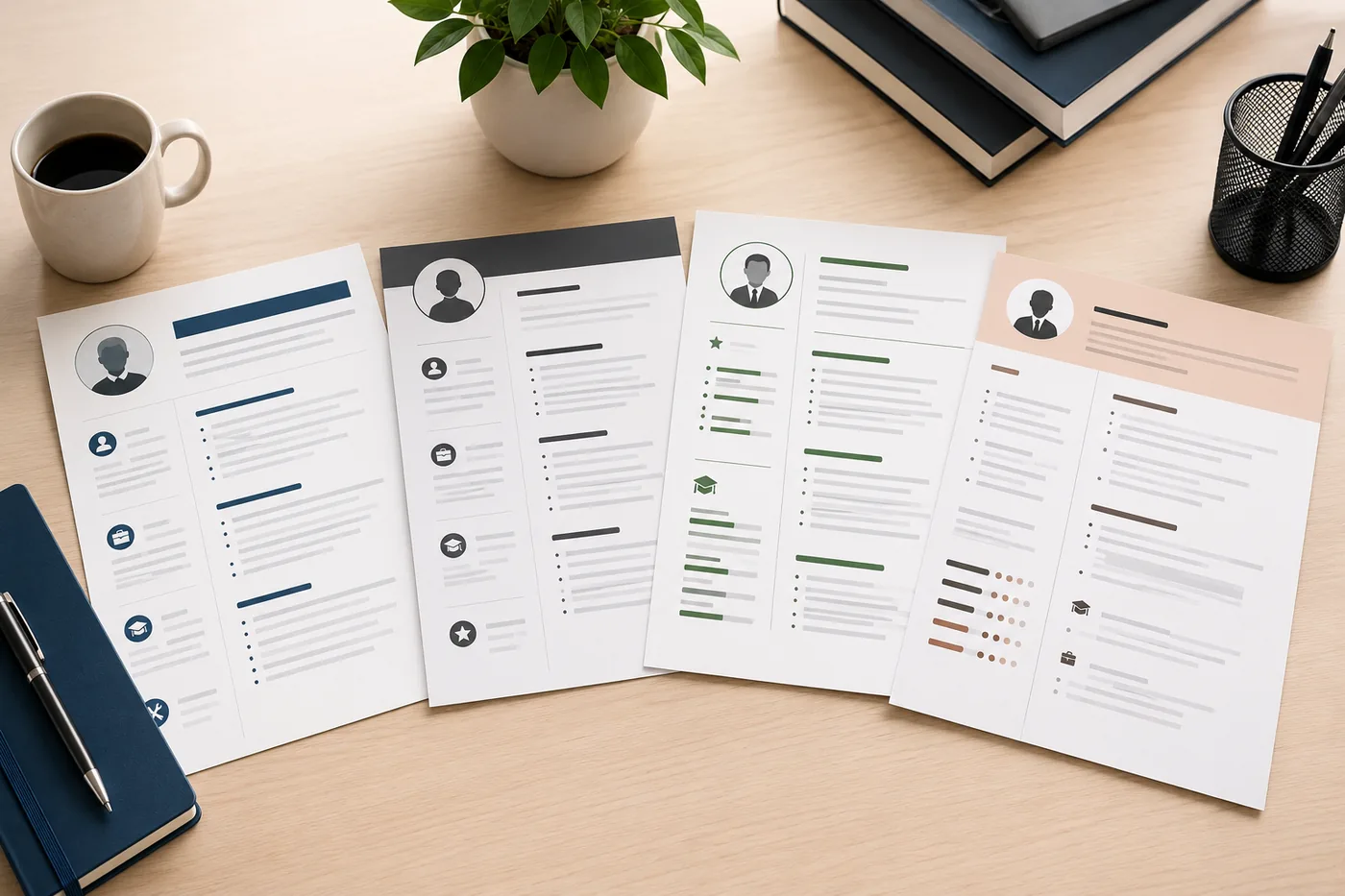
A professional portfolio is the evidence layer on top of your resume. Your resume claims skills - your portfolio proves them. For designers, developers, writers, and marketers, a strong portfolio is often the deciding factor between two equally qualified candidates. For engineers and analysts, it is increasingly expected even in corporate roles.
This guide covers how to build an effective portfolio for six different professional types - with platform recommendations, structure advice, and common mistakes to avoid.
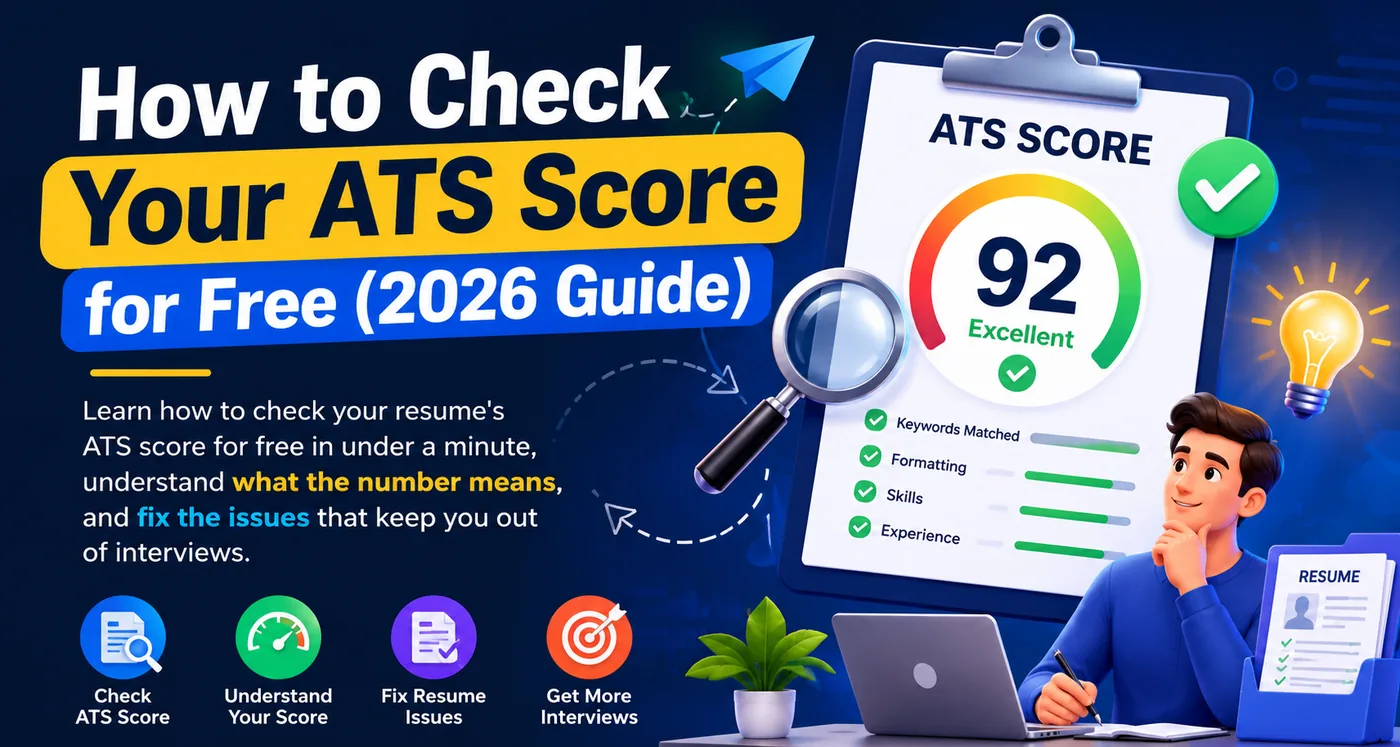
Before building your portfolio, make sure your resume is also strong. Use the TailorCV ATS score checker to optimize it and use an ATS-friendly template. Your portfolio and resume should tell the same story - just at different levels of depth.
Why Every Professional Needs a Portfolio in 2026
In 2026:
- Recruiters Google every candidate after their resume is shortlisted
- AI is making it easier to inflate credentials - demonstrated proof matters more
- Remote hiring means companies cannot assess candidates in person before deciding
- Project-based evidence reduces interview ambiguity and accelerates decisions
Even if your industry has not traditionally required a portfolio, having one creates a competitive advantage.
Software Developer Portfolio
What to Include
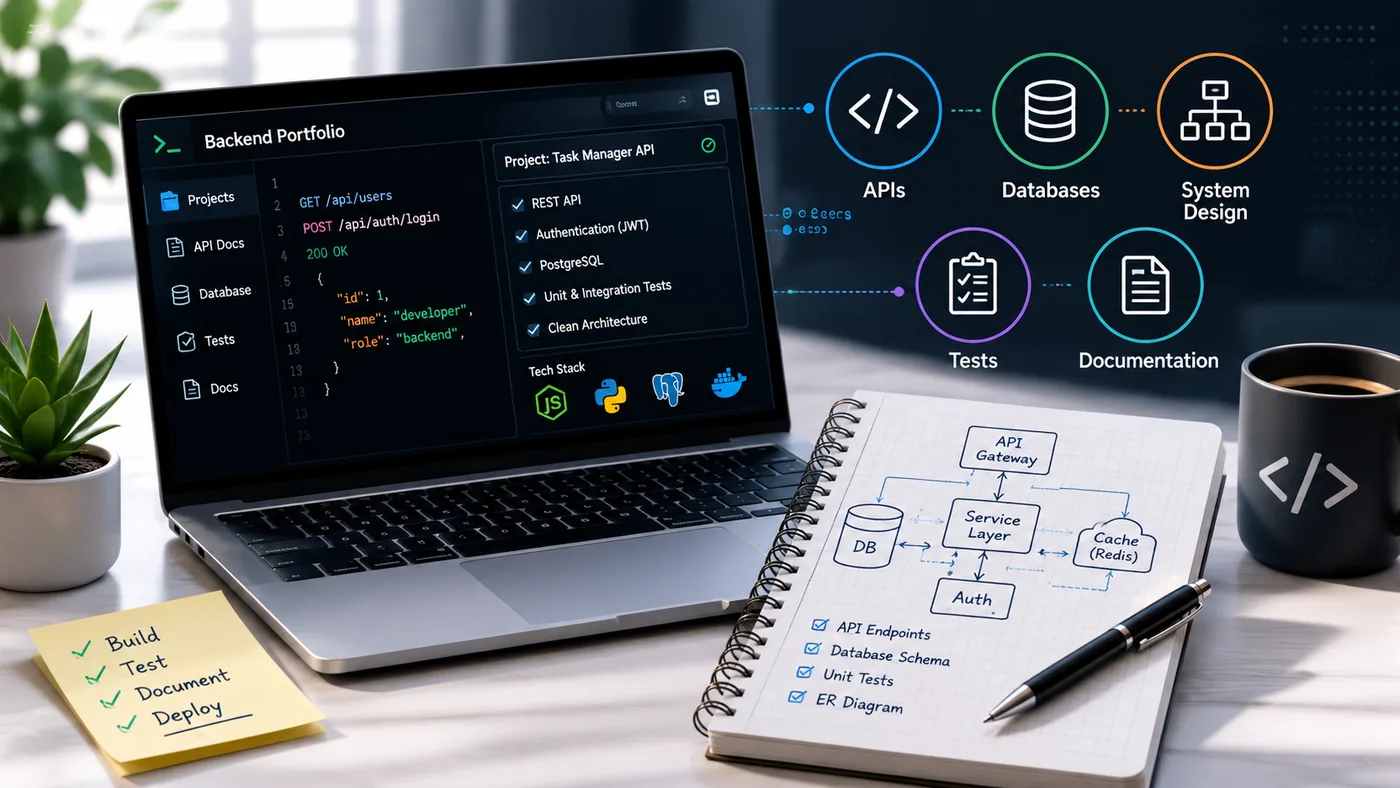
- 3-5 complete, deployed projects
- A clean GitHub profile with pinned repos and good READMEs
- Brief write-ups explaining what each project does and why you built it
- Live demo links where possible
- Tech stack clearly stated for each project
Project Quality vs Quantity
Three polished projects beat ten half-finished ones. A strong project has:
- A real use case (not a tutorial clone)
- A working demo or deployment
- A proper README with setup instructions and screenshots
- Test coverage
- Clean commit history
GitHub Profile Optimization
- Fill in your bio, location, and website/LinkedIn
- Pin your 6 best repositories
- Commit consistently - a green contribution graph signals active development
- Star projects you use and admire (signals technical taste)
- Contribute to at least one open-source project - even small fixes show community engagement
Portfolio Website
For developers, a portfolio website signals frontend competence and attention to detail. Platforms:
- GitHub Pages - Free, fast, works for simple sites
- Vercel - Perfect for Next.js portfolios
- Netlify - Easy deployment, great for static sites
Your portfolio site should include: brief bio, your tech stack, project cards with links, contact section, and link to your GitHub and resume.
Read how to get your first tech job for more developer portfolio guidance.
UX Designer Portfolio
What to Include
- 3-5 case studies, not just screenshots
- Each case study should follow: Problem -> Research -> Process -> Solution -> Outcome
- Include wireframes, user flows, prototypes, and final designs
- Show before/after comparisons where relevant
- Include at least one research-driven case study
Case Study Metrics to Include
- Task completion rate improvement
- Conversion or click-through rate changes
- Usability test scores before/after
- Support ticket reduction
- NPS improvement
Portfolio Platforms for Designers
- Figma Community - Showcase Figma projects publicly
- Behance - Adobe's creative community
- Dribbble - Visual design showcase
- Personal website - Custom portfolio via Webflow, Squarespace, or Framer
The best UX portfolios are on custom sites where you can control the narrative and structure of each case study fully.
Read the UX designer resume guide for portfolio link integration in your resume.
Marketing Portfolio
What to Include
- Campaign results with numbers (traffic, ROAS, leads, conversion rate)
- Writing samples, content examples, or ad creatives
- SEO case studies with traffic graphs
- Email campaign performance data
- Video or social content examples (if applicable)
How to Present Marketing Work
Create a simple PDF or Google Slides deck for each major campaign:
- Campaign goal
- Strategy and channels
- Creative approach (screenshots of ads, emails, landing pages)
- Results (traffic, leads, ROAS, revenue)
If your results are under NDA, describe the outcome without naming the client: "Grew organic traffic from 8K to 42K monthly sessions for a B2B SaaS client in the HR technology space."
Portfolio Platforms for Marketers
- Personal website (Squarespace, Wix, Webflow, or WordPress)
- Google Slides or Notion - shareable portfolio doc
- LinkedIn Featured section - highlight articles, campaigns, or results posts
Data Analyst / Data Scientist Portfolio
What to Include
- 3-5 analysis projects with real datasets
- Jupyter notebooks or Deepnote notebooks (published publicly)
- Tableau or Power BI dashboards (published to Tableau Public or Power BI Web)
- A brief description of the business question, dataset, method, and insight
- GitHub repos with clean code and documentation
Strong Project Ideas
- Customer churn analysis
- A/B test analysis
- Sales or marketing dashboard
- Predictive model on a public dataset (Kaggle)
- SQL case study with complex queries
Portfolio Platforms for Data Professionals
- GitHub - Jupyter notebooks and Python projects
- Tableau Public - Free Tableau portfolio hosting
- Kaggle - Notebooks, competitions, and datasets
- Deepnote - Collaborative data notebooks
Content Writer / Copywriter Portfolio
What to Include
- 10-15 writing samples across different formats
- Samples matching the type of writing you want to do (SEO blogs, email copy, ad copy, technical docs, social media)
- Published URLs wherever possible
- Response rates or engagement data for email or ad copy if available
How to Structure Your Portfolio
Group by format or industry:
- Blog / SEO Articles
- Email Marketing Copy
- Social Media Campaigns
- Technical Documentation
- White Papers or Long-form Content
Portfolio Platforms for Writers
- Contently - Purpose-built for professional writers
- Muck Rack - Journalism portfolio platform
- Personal website - Most professional option
- Google Drive - Simple and shareable for early career
Engineering Portfolio (Mechanical, Civil, Electrical)
Turning a resume into a portfolio site
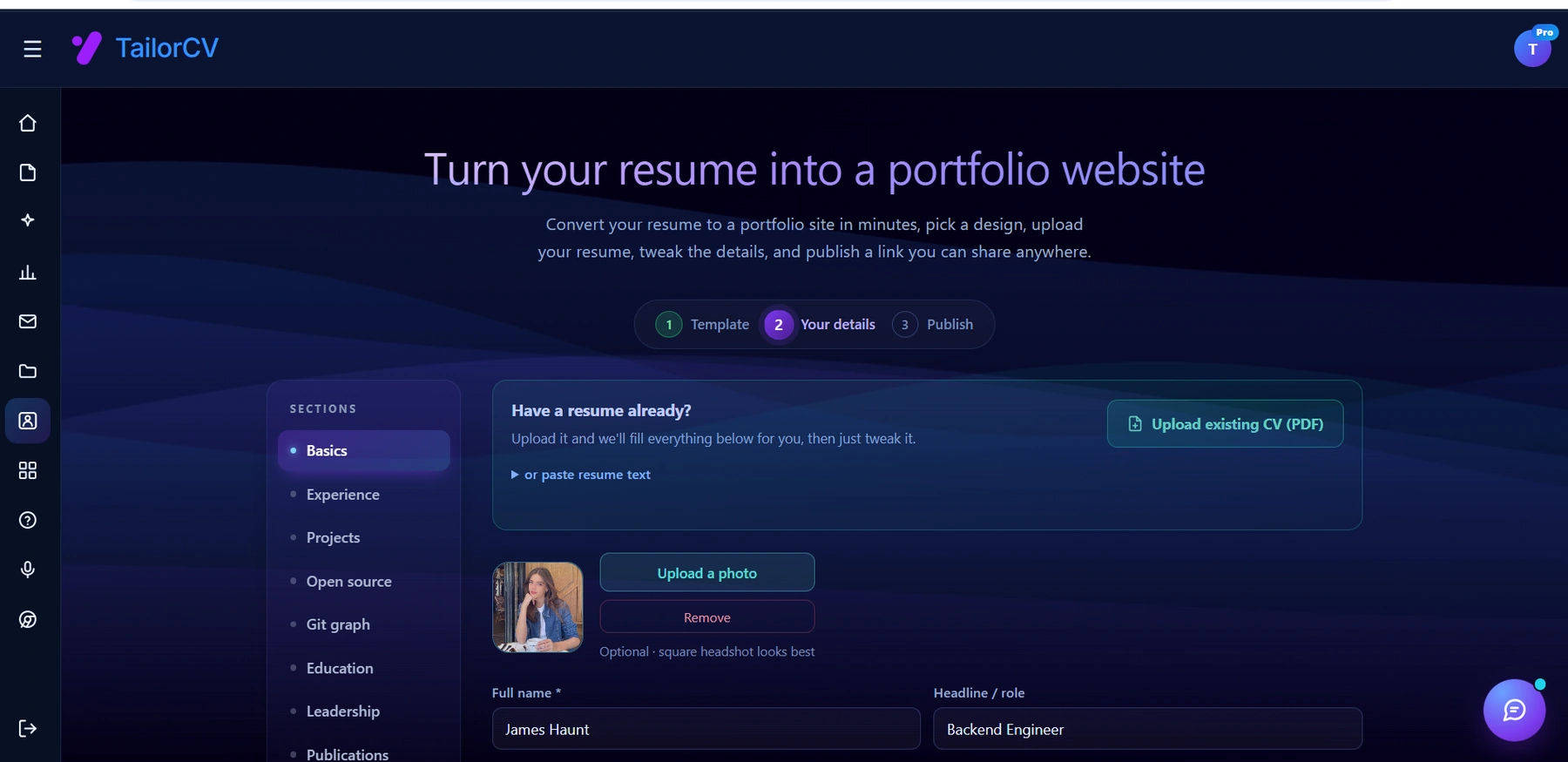
You upload the resume you already have and the sections fill themselves in - basics, experience, projects, education - so building the site is editing rather than starting from an empty page.
What to Include
- Project descriptions with your specific role and contribution
- CAD drawings, FEA results, or simulation screenshots (non-confidential)
- Published reports or thesis work
- Project photos if you have commissioning or construction images
- Any awards, publications, or conference presentations
Format
A PDF portfolio or LinkedIn featured section works well for traditional engineering. Include:
- Brief intro paragraph
- 3-5 projects with description, your role, key technical work, and outcome
- Technical images where permitted by your employer's IP policy
Portfolio Mistakes to Avoid
Mistake 1: Quantity over quality
10 weak projects are worse than 3 strong ones. Edit ruthlessly.
Mistake 2: No outcomes
A portfolio full of deliverables (designs, code, articles) without outcomes (what improved, who used it, what changed) is only half complete.
Mistake 3: Confidential client data
Never include client-confidential data, under-NDA work, or proprietary dashboards without explicit permission. Describe the work without the sensitive details.
Mistake 4: Dead links
Broken project links, expired demos, or private GitHub repos are worse than no link. Audit your portfolio links before every job application.
Mistake 5: No context
A design with no explanation of the problem it solved, or a dashboard with no description of the business question, is just a pretty image. Add the story.
Conclusion
A strong portfolio in 2026 is your single most powerful job search tool after your resume. It transforms claims into evidence and helps employers visualize you in the role before the interview.
Build it, link it on your resume, and keep it updated. Run your resume through the TailorCV ATS score checker, use an ATS-friendly template, and then use your portfolio link to reinforce your candidacy at every stage of the hiring process.
Related Guides
- How to Decline a Job Offer Professionally
- Networking Tips for Job Search
- How to Handle Job Rejection
- How to Negotiate a Salary Offer
- How to Quit Your Job Professionally
- How to Use LinkedIn for Job Search
- How to Write a Cold Email to a Recruiter
- How to Write a Two Weeks Notice
- LinkedIn Profile Optimization Guide
- Remote Job Search Guide
- Cover Letter Guide
- How to Get a Job With No Experience
- How to Follow Up After a Job Interview in 2026 - What to Send and When
- Why Am I Not Getting Interviews for Jobs I'm Qualified For?
- Work-Life Balance Tips for Professionals in 2026 - Practical Guide
- ATS Mistakes Experienced Professionals Make (And Why Your Resume Stops Working After 5+ Years)
Make This Practical
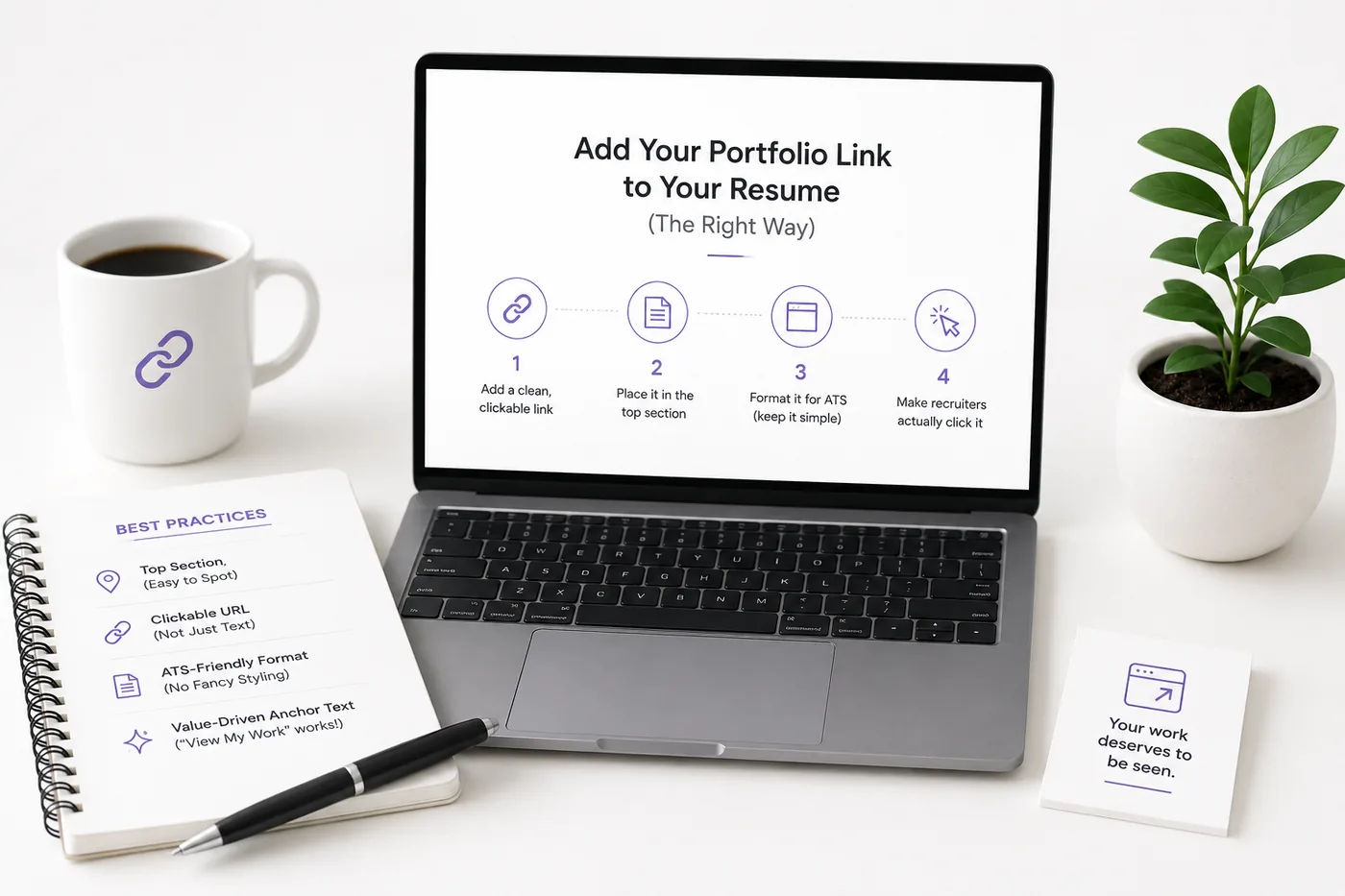
If this topic connects to your work samples, turn the advice into a live proof page with the TailorCV portfolio builder. After publishing, add the link correctly using How to Add Your Portfolio Link to Your Resume, tighten the page with the Portfolio Checklist Before Applying, and make sure recruiters can contact you through a clean Portfolio Contact Section.
Your portfolio works best when it supports the resume, not when it replaces it. Run the resume through the free ATS score checker, choose an ATS-friendly resume template, and use Portfolio SEO: Get Found so your name, role, and strongest projects are easier to discover.
Comparison of Strong vs. Weak Portfolio Elements
A well-constructed portfolio can significantly enhance your professional presence, while a poorly designed one can undermine your efforts.
| Portfolio Element | Strong Example | Weak Example |
|---|---|---|
| Project Selection | 3 diverse projects showcasing different skills | 1 project that is outdated and irrelevant |
| Presentation | Visually appealing layout with consistent branding | Cluttered design with inconsistent fonts and colors |
| Project Descriptions | Clear, concise write-ups explaining the problem solved | Vague descriptions with no context |
| Code Quality | Well-documented code with comments and best practices | Unorganized code with little to no documentation |
| Live Demonstrations | Active links to live demos for each project | No demos available or broken links |
| Tech Stack | Clearly listed technologies used for each project | No mention of technologies or outdated tech references |
| User Feedback | Testimonials or reviews from users or clients | No feedback or user engagement mentioned |
Frequently Asked Questions
Why is a portfolio important in 2026?
A portfolio is crucial in 2026 because it serves as tangible proof of your skills and accomplishments. As recruiters increasingly rely on online searches and AI tools to vet candidates, having a well-structured portfolio can set you apart from others who may only have a resume. For more insights, check out our Portfolio Checklist to ensure yours is comprehensive.
What should I include in my software developer portfolio?
Your software developer portfolio should showcase 3-5 complete, deployed projects that highlight your coding skills and problem-solving abilities. Include a variety of projects to demonstrate your versatility, and make sure to explain your role and the technologies used. For tips on common pitfalls, refer to our article on 11 Portfolio Mistakes That Cost You Interviews.
How do I choose between a portfolio website and a resume?
In 2026, both a portfolio website and a resume serve different but complementary purposes. While your resume provides a concise overview of your skills and experiences, your portfolio allows for a deeper dive into your work, showcasing your projects and methodologies. To understand the nuances better, read our post on Portfolio Website vs Resume.
Can I build my portfolio without coding skills?
Yes, you can build a professional portfolio without coding skills using various user-friendly platforms that offer portfolio website builders. These tools often come with customizable templates that allow you to present your work effectively. For a step-by-step guide, check out our article on How to Build a Portfolio With AI - No Coding Required.
How can I ensure my portfolio is ATS-friendly?
To make your portfolio ATS-friendly, focus on using clear headings, relevant keywords, and a straightforward layout that allows for easy navigation. Additionally, make sure your portfolio aligns with your resume in terms of content and messaging. You can also use our Free ATS score checker to optimize both your resume and portfolio for applicant tracking systems.
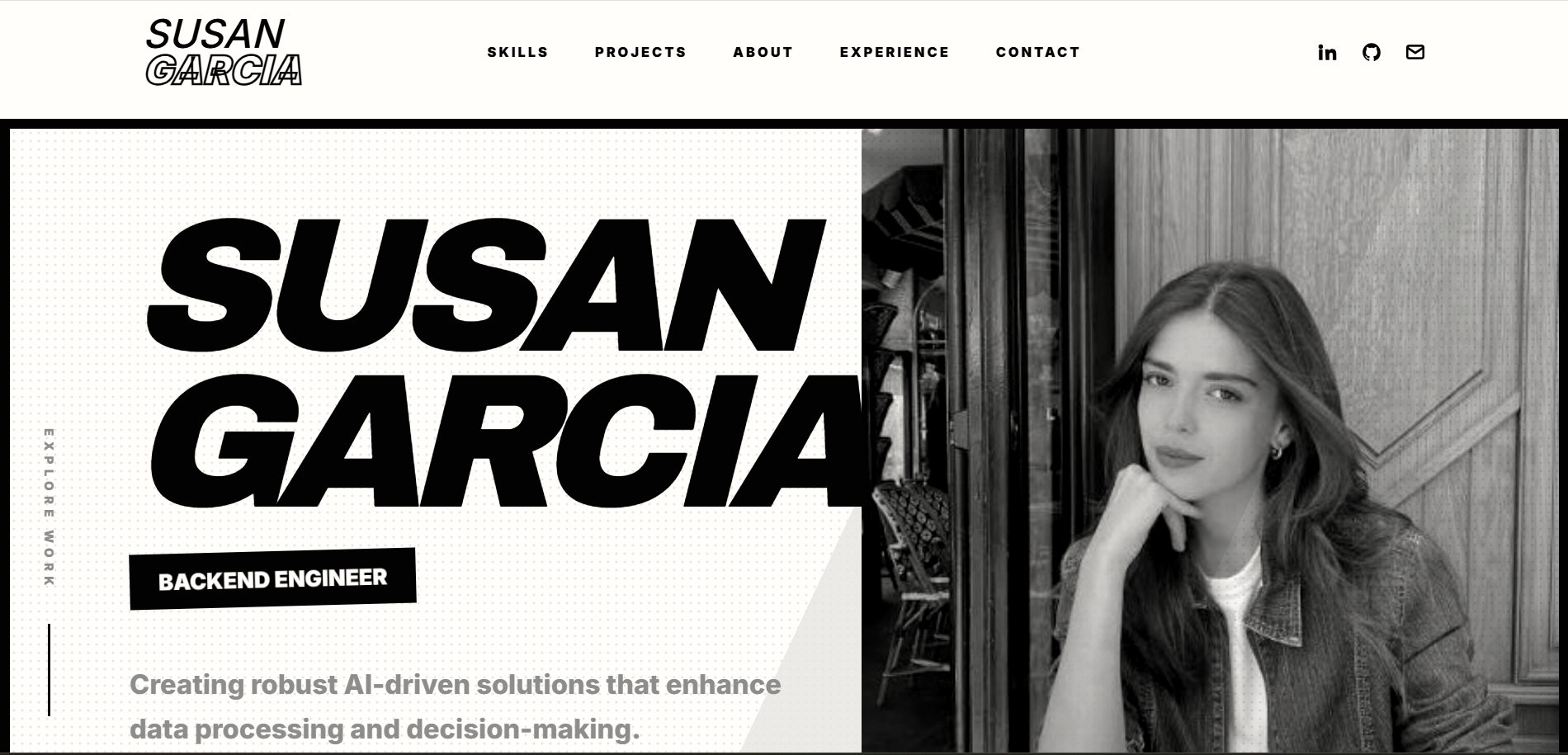
See what your portfolio could look like
This theme is built straight from your resume — pick one and your portfolio is live in minutes.
Was this guide useful?
Be the first to rate it.