 SS
SS
Key Takeaways
- Choose a clear technical niche to specialize in, such as backend engineering, data science, or cybersecurity, rather than trying to be a generalist.
- Build strong, complete projects that solve real problems and showcase your skills, with at least two well-documented projects preferred over many incomplete ones.
- Ensure your resume is ATS-friendly by using relevant keywords and structuring it to highlight your technical skills and project experiences effectively.
- Focus on creating a specific summary in your resume that outlines your track, top skills, and key project highlights to capture employer attention.
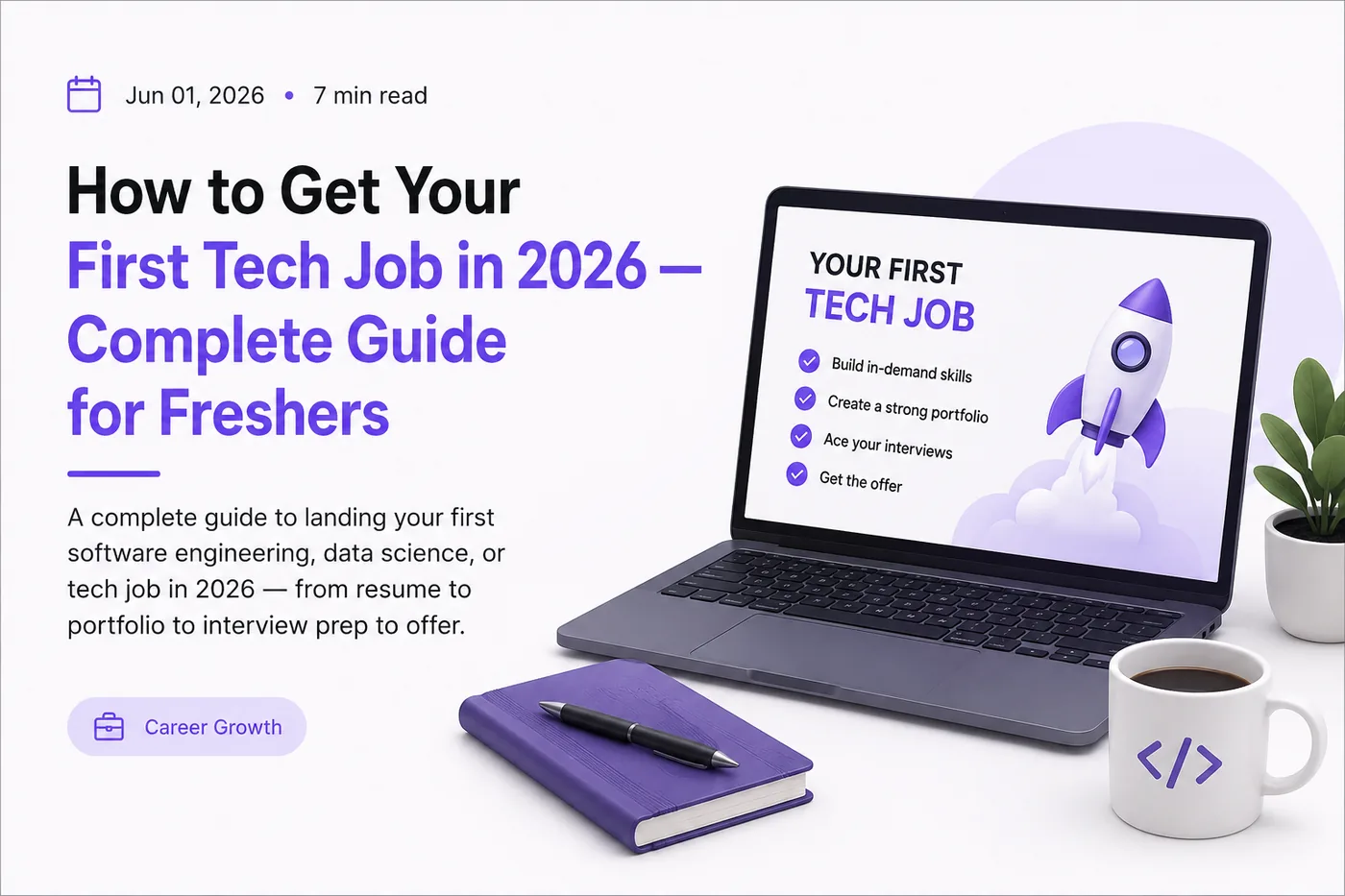
Getting your first tech job in 2026 is harder than it was five years ago. Layoffs at big tech companies created a surge of experienced candidates in the market. AI tools are changing which skills are most valued. And competition for entry-level roles has intensified globally.
But here's the reality: companies still hire freshers. They always will. The question is which freshers stand out - and the answer is the ones who can prove real ability through projects, portfolio, and preparation, not just a degree.
This guide walks you through every step: what to build, how to write your resume, where to apply, how to prepare, and how to convert your first interview into your first offer.
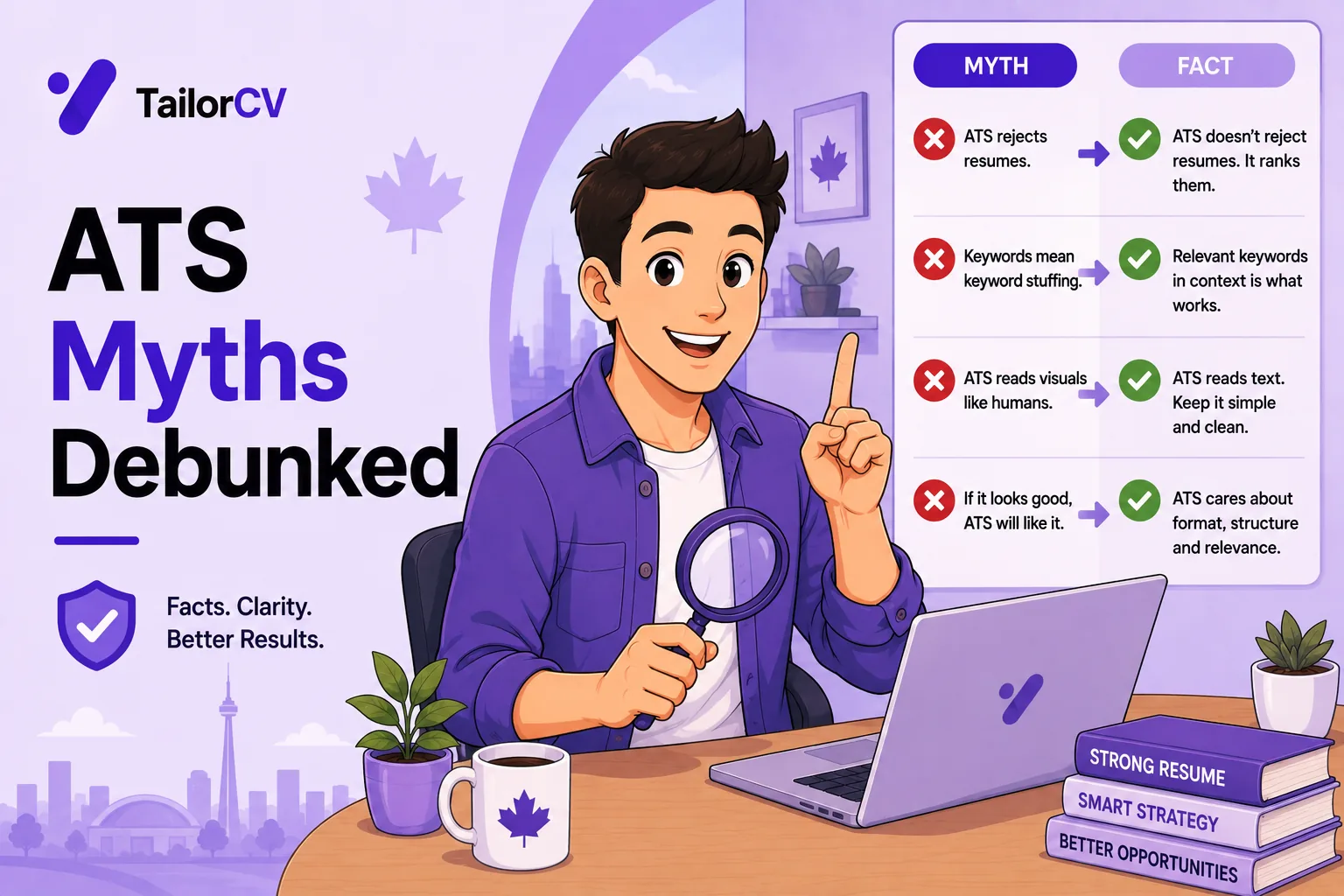
Before anything else, run your resume through the ATS score checker to understand how it reads. Use an ATS-friendly template and read the technical skills resume guide for structuring your skills. If you are building from scratch, read the first-time resume with no experience guide.
Step 1: Choose a Clear Technical Niche
The biggest mistake freshers make is trying to be "full stack" before they are strong at anything. Pick one area:
- Backend engineering (Python, Node.js, Java, Go)
- Frontend engineering (React, TypeScript)
- Data science / ML (Python, SQL, scikit-learn)
- Data analytics (SQL, Python, Power BI)
- Mobile (Android or iOS)
- DevOps / Cloud (AWS, Terraform, Kubernetes)
- cybersecurity (penetration testing, SOC analysis)
Go deep before going wide. Companies want a junior backend engineer who is solid in Python and PostgreSQL - not someone who has "touched" 12 different technologies.
Step 2: Build Real Projects
Your projects are your portfolio. Two strong, complete, documented projects are better than six half-finished ones.
What makes a strong project:
- Solves a real problem (not a tutorial clone)
- Full end-to-end (frontend + backend + database, or model + API + dashboard)
- Publicly available on GitHub with a proper README
- Has at least one deployment or live demo link
- Includes tests
Strong Project Ideas by Track
| Option | What to know |
|---|---|
| Backend/Full Stack: | Job board with authentication, search, and application tracking · REST API for task or project management · E-commerce backend with payment integration · URL shortener with analytics dashboard |
| Data Science/ML: | Churn prediction model on real dataset · Sentiment analysis on product reviews · Recommendation engine for movies or music · Forecasting model with dashboard |
| Data Analytics: | Sales performance dashboard in Power BI or Tableau · Customer segmentation analysis · Financial expense tracker with charts |
DevOps/Cloud:
- Multi-environment AWS infrastructure with Terraform
- CI/CD pipeline with GitHub Actions
- Kubernetes cluster with monitoring
Android/iOS:
- Habit tracker with notifications
- Budget app with charts
- Recipe manager with offline sync
Read how to add projects in resume for project formatting on your resume.
Step 3: Build a Strong Resume
Your resume needs to do three things:
- Pass ATS keyword matching
- Show your technical skills credibly
- Prove ability through project bullets, not just tool lists
Key sections:
Summary - Specific. Name your track, your top 3 skills, and 1-2 project highlights.
Skills - Organized by category. Only include tools you can discuss in an interview.
Projects - This is your experience section. Format each project with: name, tools, GitHub link, and 3-4 impact bullets.
education - Include CGPA if 7.5+, relevant coursework, and any academic achievements.
certifications - Add free, relevant certifications: Google Data Analytics, AWS Cloud Practitioner, Meta Front-End Developer, etc.
Run your resume through the TailorCV ATS score checker for every job description you apply to. It is likely that 40-60% of keyword mismatches are simply terminology differences (e.g., you wrote "REST endpoints" but the JD says "API development").
Also read common resume mistakes for freshers to avoid the most common errors.
Step 4: Build Your Online Presence
GitHub
- Keep your profile active - commit regularly, even if it is personal projects
- Pin your 6 strongest repos
- Write proper READMEs for every project you pin (problem, stack, setup, screenshots)
- Contribute to one open-source project - even bug fixes count
- Professional photo
- Headline that names your track and key skills
- About section with your project highlights
- Skill endorsements for your top technologies
Read the LinkedIn job search guide for full profile optimization.
Portfolio Website (Optional but powerful)
A simple portfolio site with your projects, resume, and contact link - hosted free on GitHub Pages, Vercel, or Netlify - significantly differentiates you from candidates with only a resume PDF.
Step 5: Apply Strategically
Do not mass-apply to 200 companies with the same resume. Apply to 5-10 per week with tailored resumes and track every application.
Tier 1 - Dream companies (2-3 per week) Fully tailor your resume. Write a cover letter. Research the company. Try to find someone in your network who works there.
Tier 2 - Strong fit companies (3-5 per week) Tailor resume to the job description. No cover letter required unless asked.
Tier 3 - Practice companies (2-3 per week) Apply with your best general resume. Use these to practice interviews early.
Track everything in a spreadsheet: company, role, date applied, status, next steps.
Step 6: Prepare for Technical Interviews
First tech jobs require clearing 2-4 interview rounds:
DSA / Coding Round - LeetCode, HackerRank
- Practice 50-100 problems (focus on arrays, strings, linked lists, trees, graphs, DP basics)
- Easy: 30 problems. Medium: 50+ problems. Hard: a few for stretch.
- LeetCode company tags for your target companies are valuable
system design (for mid-senior; rarely for freshers)
- Understand the basics: databases, caching, load balancers, APIs, CDN, message queues
Project Discussion
- Be able to explain every line of your resume projects
- Why did you choose this stack? What went wrong and how did you fix it?
- What would you do differently?
Behavioral Round
- Use STAR method for every behavioral question
- Read the behavioral interview guide
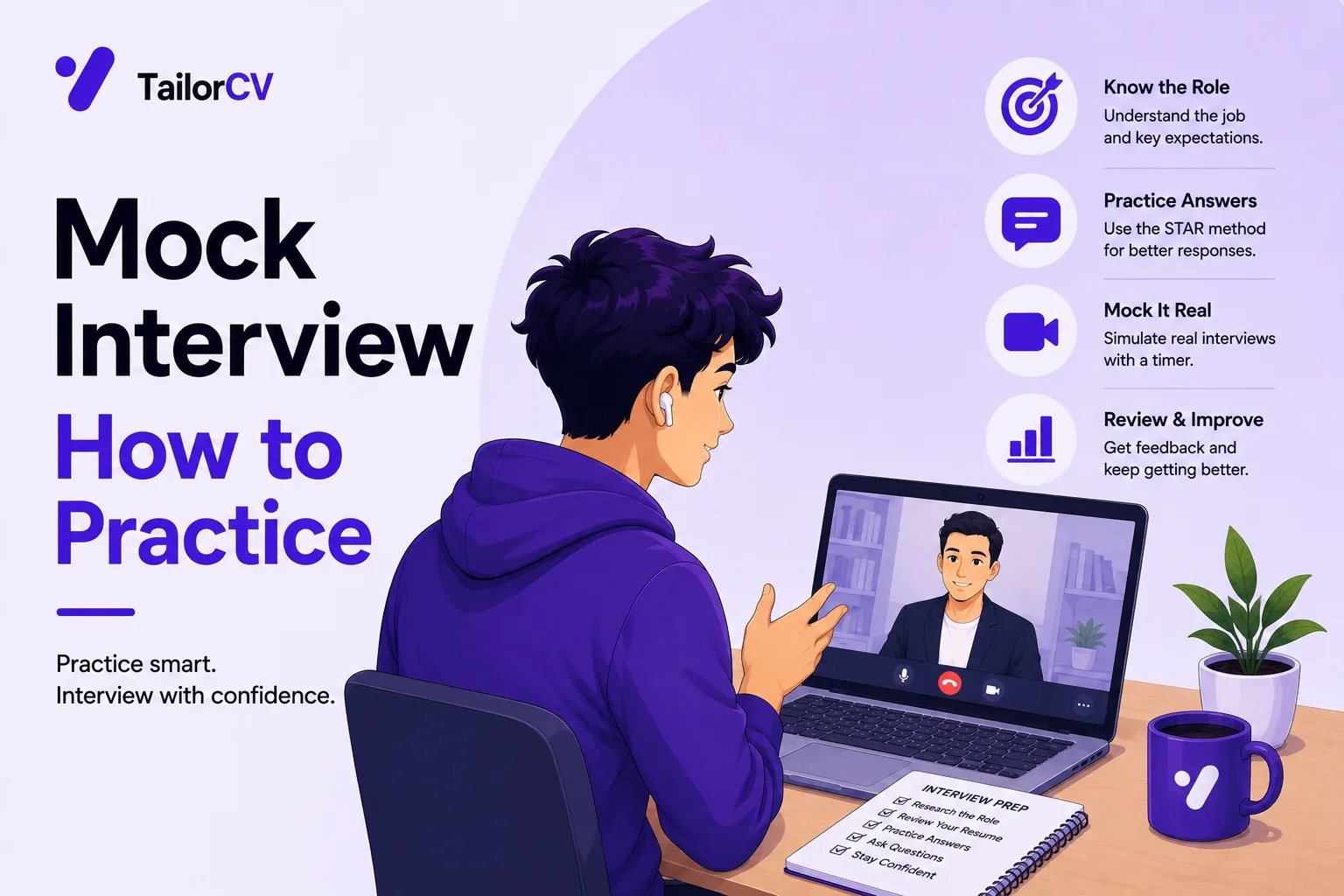
Practice with the free AI mock interview tool to build confidence before your real interviews.
Step 7: Handle Rejection Well
Rejection is the default in tech hiring for freshers. Most strong candidates apply to 30-80 companies before landing their first offer. This is normal.
What optimizing actually does to your resume
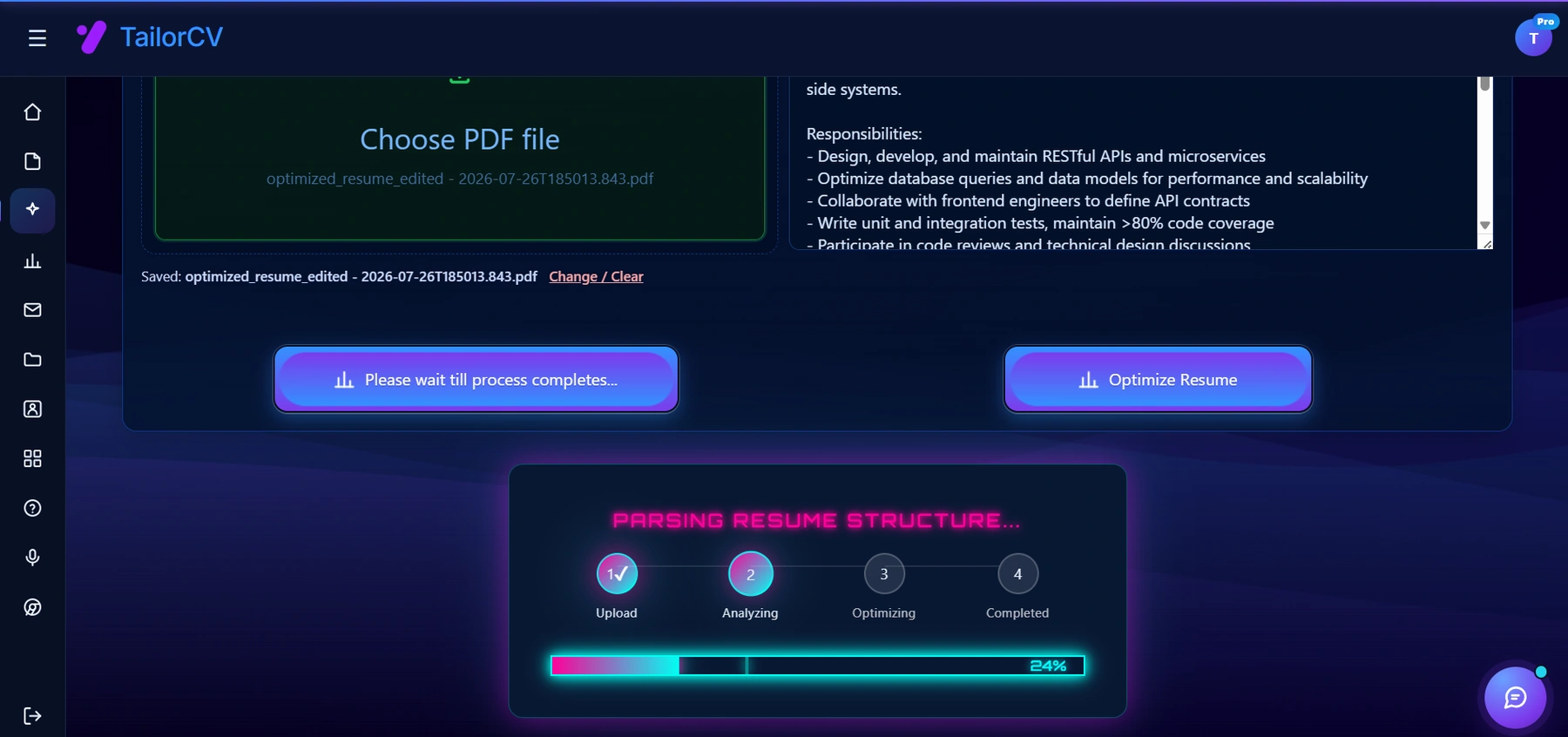
Optimising runs against the specific job description you paste in, not in the abstract.
What helps:
- Keep a pipeline of applications at different stages - never put all hope on one company
- Request feedback when rejected (rarely given, but worth asking)
- Treat every rejection as a data point: was it resume filtering? Technical round? Offer mismatch?
- Continue building projects and improving your profile between applications
Read how to handle job rejection for a more detailed guide.
Timeline Expectations for First Tech Job
- With strong projects, optimized resume, and consistent interviewing: 2-4 months
- With average resume and minimal preparation: 6-12+ months
- With weak GitHub, no projects, and poor interview prep: indefinitely
The 2-4 month timeline is achievable for most candidates who invest consistently.
Conclusion
Getting your first tech job in 2026 is a marathon, not a sprint - but it is completely achievable for candidates who build real projects, write strong resumes, optimize for ATS, and prepare their interviews seriously.
Start with your resume: use the TailorCV ATS score checker, use an ATS-friendly template, and read the technical skills guide for freshers. Then build your projects, practice your interviews with the mock interview tool, and apply consistently.
Related Guides
- Career Change to Tech
- How to Get a Job With No Experience
- Remote Job Search Guide
- First 90 Days at a New Job
- 10 Powerful Resume Templates for Beginners With No Experience That Actually Get Interviews
- Why Am I Not Getting Interviews for Jobs I'm Qualified For?
- The CS Degree Bubble Is Real
- How to Ask for a Raise
- How to Build a Professional Portfolio
- How to Get a Promotion
- LinkedIn Profile Optimization Guide
- First Time Resume With No Experience: Complete Guide for Freshers & College Students
Make This Practical
Turn the career advice into a stronger application system. Start by checking your resume with the free ATS score checker, align it with the role using How to Tailor Your Resume for Every Job, and keep your profile consistent with LinkedIn Resume Tailoring Sync.
When you are ready to apply, build the supporting pieces around the resume. Use the AI cover letter generator for targeted outreach, practice with the AI mock interview tool, and review Why Your Resume Gets No Responses if applications are not converting.
Comparison of Strong vs. Weak Technical Profiles for Freshers
When applying for your first tech job, showcasing a focused and relevant technical profile can make a significant difference in your chances of landing an interview.
| Criteria | Strong Profile | Weak Profile |
|---|---|---|
| Technical Skills | Proficient in one primary language (e.g., Python) and relevant frameworks (e.g., Django) | Familiar with multiple languages but lacks depth in any |
| Projects | Completed 2-3 personal projects demonstrating practical application of skills | Minimal or no projects to showcase practical experience |
| Portfolio | Well-organized online portfolio with live project links and case studies | Basic portfolio with few or no project examples |
| Resume Tailoring | Customized resume for each job application highlighting relevant skills and projects | Generic resume sent to multiple employers without specific tailoring |
| Networking | Active participation in tech meetups and online communities, showcasing initiative | Limited or no networking efforts, relying solely on job boards |
| Interview Preparation | Conducted mock interviews and researched common industry questions | Unprepared for interviews, lacking knowledge of the company and role |
| Soft Skills | Strong communication and teamwork skills demonstrated through group projects | Little emphasis on soft skills, focusing solely on technical abilities |
Frequently Asked Questions
What technical niche should I focus on for my first tech job?
Choosing a clear technical niche is crucial for freshers. Instead of trying to be a "full stack" developer, focus on one area where you can build expertise. Options include Backend engineering (Python, Node.js), Frontend engineering (React, TypeScript), or Data science/ML (Python, SQL). Specializing will help you stand out and demonstrate real ability through projects and a portfolio.
How can I make my resume stand out to employers?
To create a standout resume, ensure it is ATS-friendly by using a suitable template and optimizing your skills section. Additionally, run your resume through the ATS score checker to see how it performs and make necessary adjustments. Highlight relevant projects and skills that align with the job description to capture the attention of hiring managers.
What should I include in my portfolio when applying for tech jobs?
Your portfolio should showcase your best projects, demonstrating your skills and problem-solving abilities. Include a variety of works that reflect your chosen niche, such as coding projects for backend or frontend development, or data analysis reports for data science roles. For tips on building an effective portfolio, check out our guide on how to host your portfolio website for free.
How can I prepare for my first tech job interview?
Preparation for your first tech interview involves practicing common technical questions and behavioral scenarios. Utilize resources like the AI mock interview tool to simulate real interview conditions. Additionally, research the company and prepare questions to ask your interviewer to demonstrate your enthusiasm and fit for the role.
How can I leverage LinkedIn for my job search in tech?
LinkedIn is a powerful tool for job seekers in tech. Optimize your profile by highlighting your skills, projects, and any relevant certifications. Engage with content in your field and connect with industry professionals to expand your network. For a step-by-step approach, refer to our guide on how to use LinkedIn for job search.
Find out where a fresher resume stands
Score yours against a real posting - no account, no cost.
Drop your resume here or choose a file
PDF only. Max 2 MB.
We never share your data or use it to train AI models.

Was this guide useful?
Be the first to rate it.