SS
SS
Key Takeaways
- Generic language on resumes can hurt your chances by failing to match ATS keywords and losing recruiters' attention.
- Replace vague phrases with specific achievements that include results, scale, timeline, and methods to stand out.
- Use strong action verbs and quantify your contributions to demonstrate ownership and impact in your roles.
- Avoid unprovable claims like "passionate about" and instead provide concrete examples of your skills and experiences.
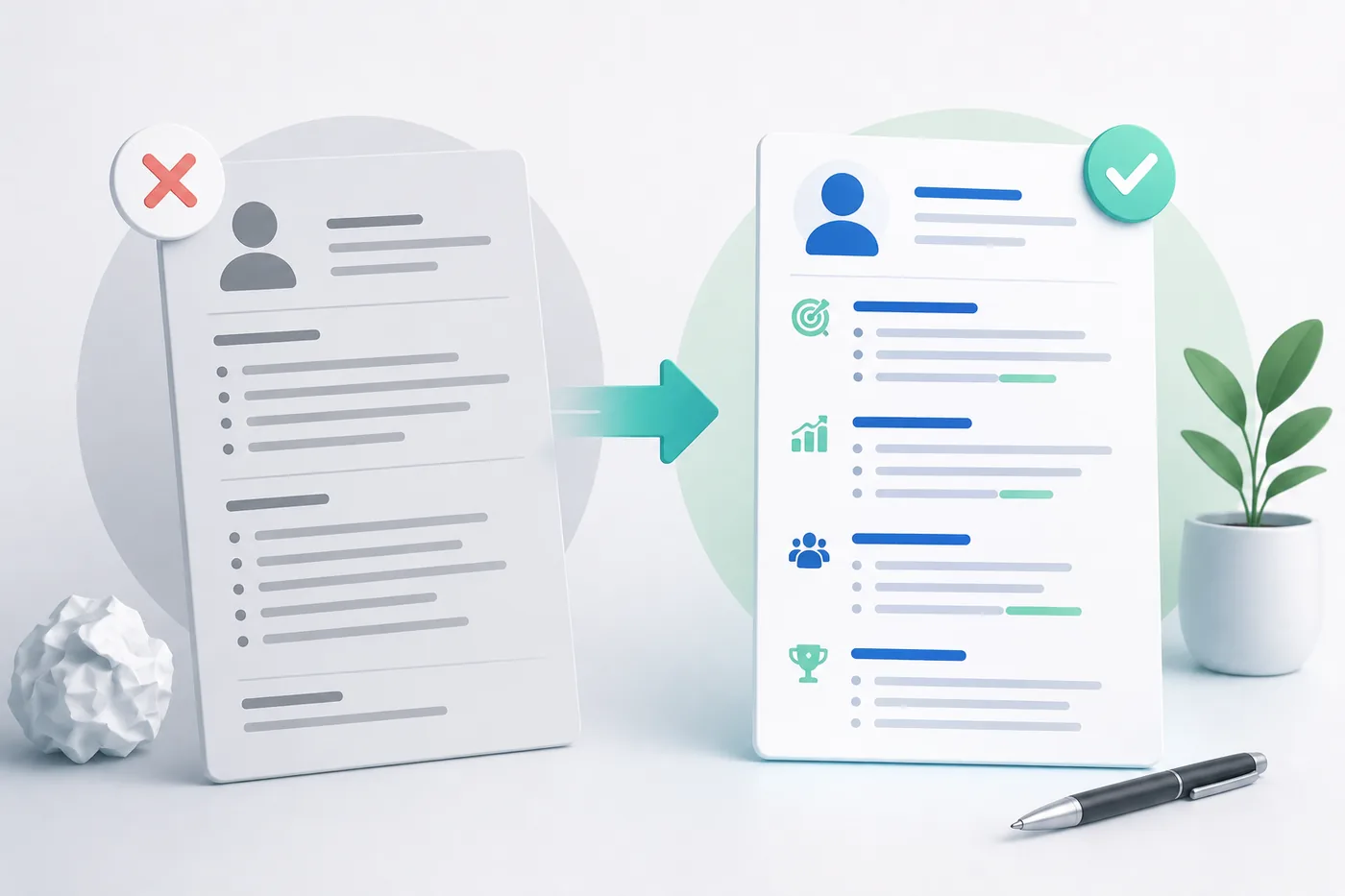
Read your current resume and ask: could this sentence describe anyone who has held this job? If the answer is yes, it is generic - and that is costing you interviews. This guide shows you the most common generic language patterns on resumes and how to rewrite each one to be specific, credible, and compelling.
See how your resume reads to ATS systems with the free scanner.
Why Generic Language Hurts More Than You Think
Generic language fails on two levels:
-
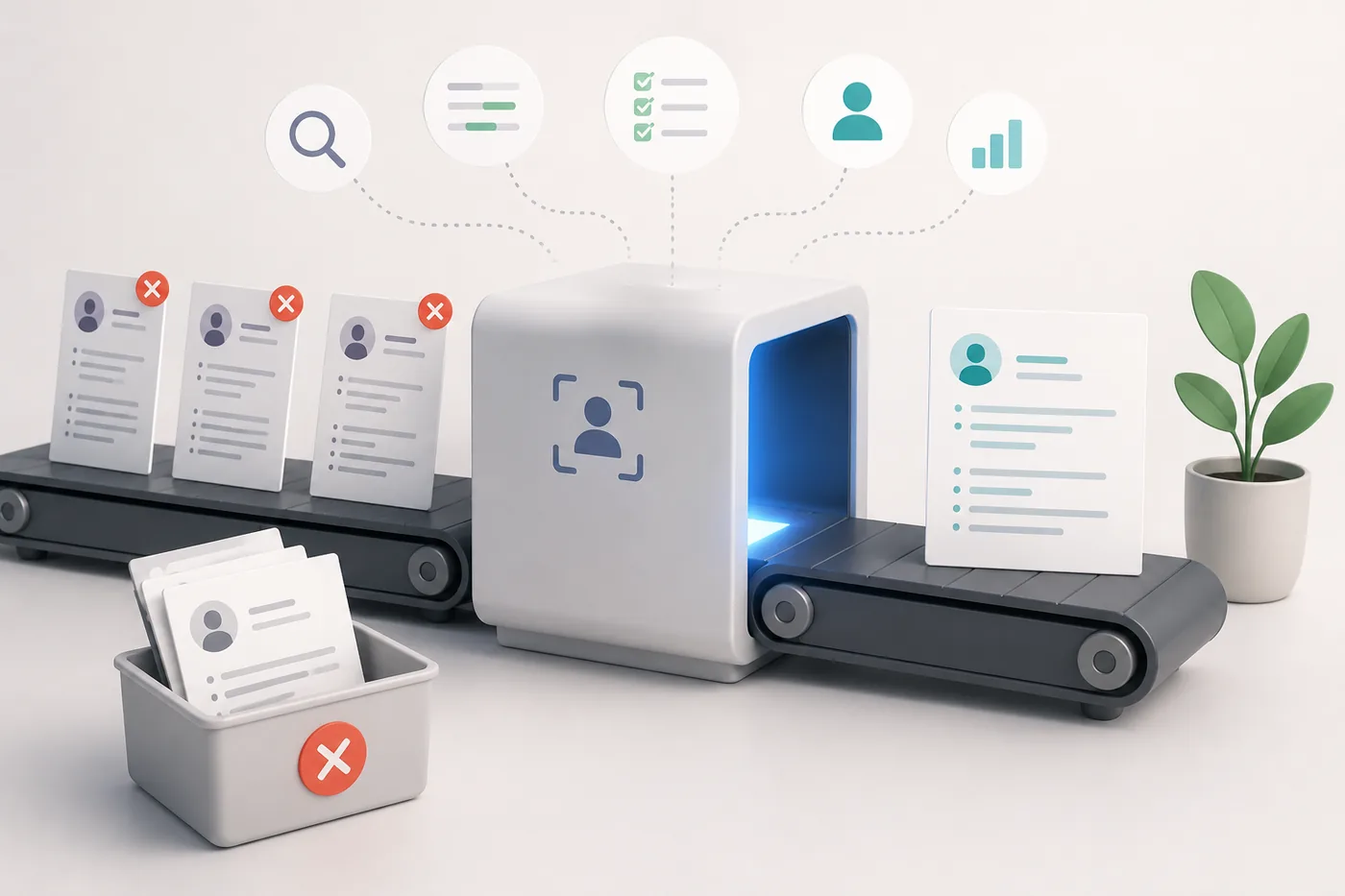
ATS level - vague phrases score poorly because they don't match the specific keywords employers configure. "Results-oriented professional" scores nothing. "Reduced customer acquisition cost by 28% through Google Ads optimization" scores for multiple terms simultaneously.
-
recruiter level - recruiters have read every generic phrase thousands of times. The moment they see one, their reading speed doubles because they stop expecting new information. They're scanning past you.
Both problems are fixable with the same solution: replace categories with specifics.
The 8 Most Common Generic Phrases - and How to Rewrite Them
Your resume after optimization
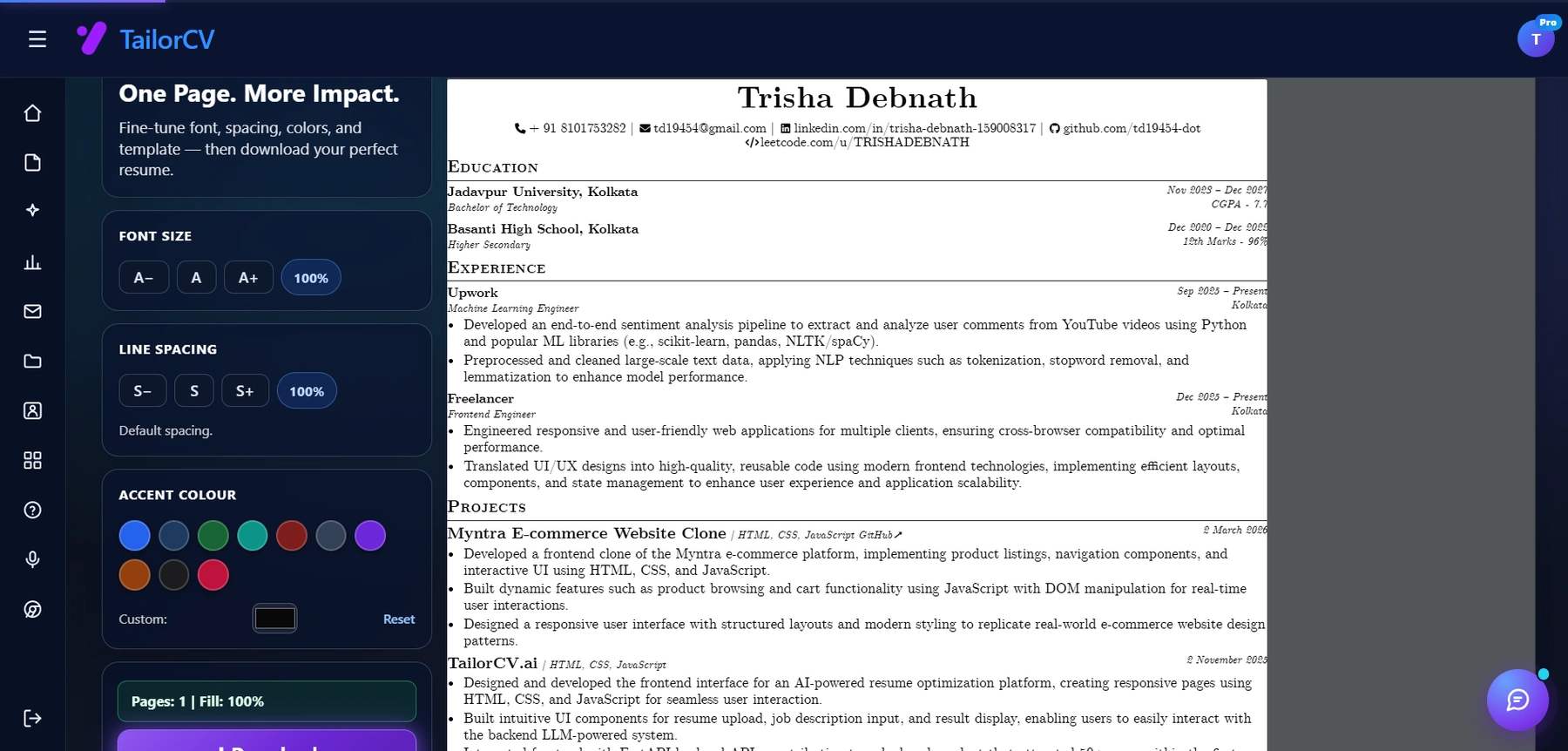
Font size, spacing, accent colour and template are all adjustable, with a live page counter.
1. "Results-oriented professional"
This phrase says absolutely nothing. Every candidate claims to care about results.
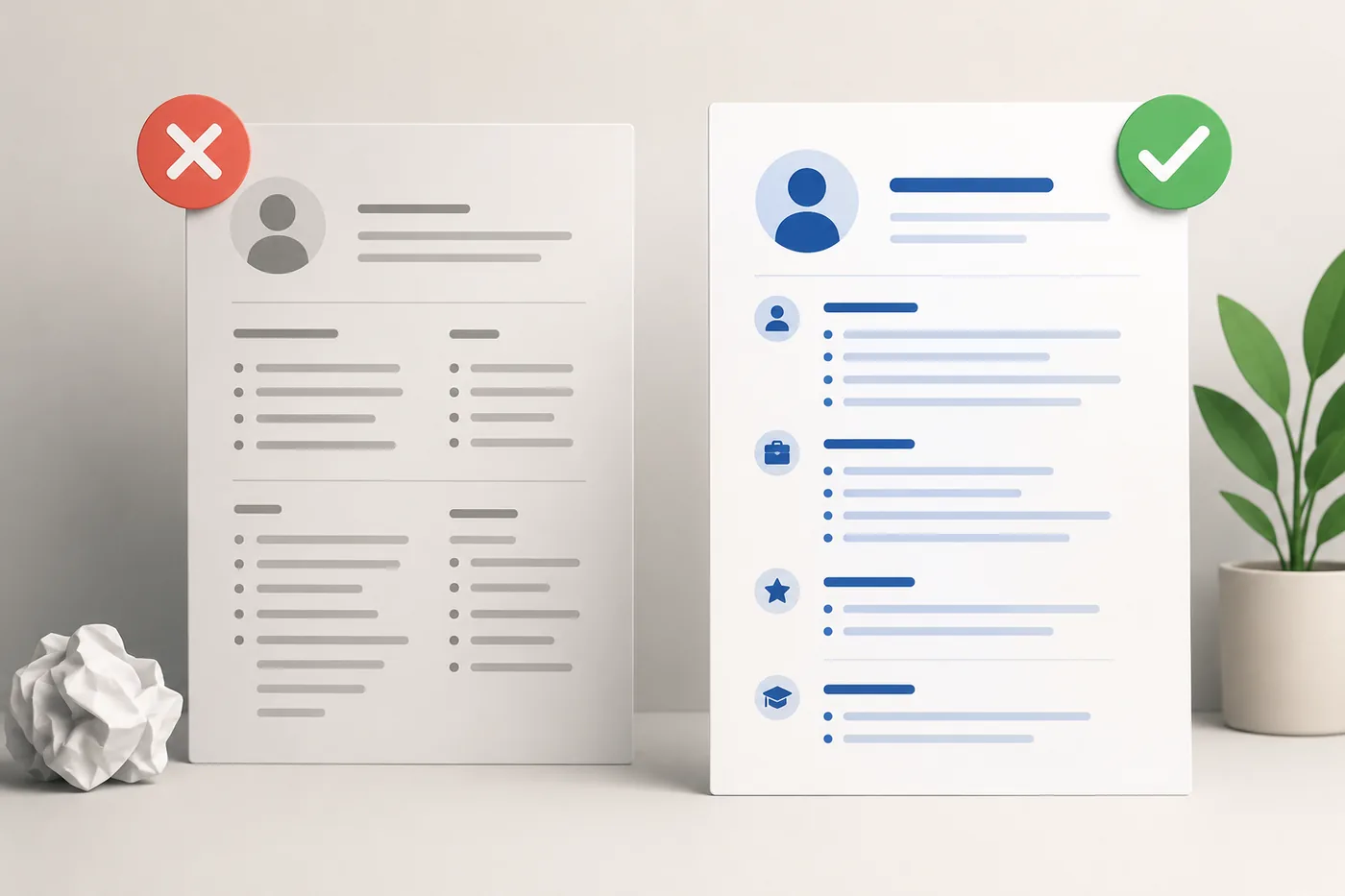
Generic: "Results-oriented marketing professional with a passion for driving growth."
Specific: "Growth marketing manager who scaled organic traffic from 12K to 84K monthly visitors in 18 months through SEO-led content strategy."
The second version names the result, the scale, the timeline, and the method. It is impossible to confuse with anyone else.
2. "Responsible for managing a team"
This describes the job description of every manager in existence.
Generic: "Responsible for managing a team of engineers."
Specific: "Led a 9-person backend engineering team through a microservices migration, delivering 12% latency improvement with zero production incidents."
See how to quantify resume achievements for a repeatable framework.
3. "Strong communication skills"
Claimed by nearly every resume. Means nothing without evidence.
Generic: "Excellent communication and interpersonal skills."
Specific: "Presented quarterly business reviews to C-suite stakeholders and authored the team's documentation that reduced new-hire onboarding time by 2 weeks."
If you genuinely have strong communication skills, show the context and outcome - don't assert the skill itself.
4. "Team player"
The softest soft skill claim on a resume.
Generic: "Proven team player who works well in collaborative environments."
Specific: "Partnered with product, design, and engineering across 3 time zones to launch a new onboarding flow, reducing drop-off by 19%."
The second version demonstrates the collaboration claim instead of asserting it.
5. "Worked on" / "Assisted with" / "Helped"
These verbs signal contribution without ownership. Recruiters infer minimal impact.
Generic: "Assisted with the development of a new customer success program."
Specific: "Designed and launched a tiered customer success program across 3 account segments, improving 90-day retention by 22%."
Use strong action verbs: led, built, designed, launched, reduced, grew, automated, restructured. See best action verbs for resume.
6. "Experience in [broad field]"
This is a category, not a credential.
Generic: "Extensive experience in data analysis and reporting."
Specific: "Built automated reporting pipelines in Python and SQL that cut weekly reporting time from 12 hours to 45 minutes across a 30-person sales team."
The specific version names the tools, the scale, and the outcome. It is immediately credible.
7. "Passionate about [industry/skill]"
Passion claims are unprovable and unscored by ATS. Every candidate is "passionate."
Generic: "Passionate about cybersecurity and committed to protecting organizational assets."
Specific: "Identified and remediated 3 critical vulnerabilities in production infrastructure before external audit; authored security runbooks now used by the entire 12-person team."
Show the passion through actions and outcomes, not through claiming it.
8. "Familiar with" / "Exposure to" / "Knowledge of"
These phrases signal uncertainty and lack of confidence. Recruiters read them as "I've heard of this tool."
Generic: "Familiar with AWS and cloud computing concepts."
Specific: "Deployed and maintained production infrastructure on AWS EC2, RDS, and S3; managed costs and uptime for a service handling 50K daily active users."
If you have real experience, own it. If you are genuinely a beginner, list it in a skills section with a context bullet rather than using "familiar with."
The Specificity Test
Before submitting, apply this test to every bullet on your resume:
Ask: "Could anyone who held this job title write this sentence?"
If yes, rewrite it until the answer is no.
The goal is a resume where every line is uniquely yours - because it contains a specific result, a specific tool, a specific context, or a specific scale that only you could have written.
How Generic Language Affects Your ATS Score
Generic phrases like "results-oriented," "team player," and "strong communicator" are not in most ATS keyword profiles. They score zero. Specific terms - "Tableau," "churn reduction," "A/B testing," "Sprint planning" - are in keyword profiles and score your resume upward.
Replacing generic language with specific language therefore improves both ATS performance and recruiter engagement simultaneously.
For keyword strategy, read best resume keywords to beat ATS systems and how ATS detects a generic resume.
Check your resume's keyword match with the free TailorCV ATS checker.
A Quick Audit Process
- Read every bullet on your resume
- Circle any phrase that appears on generic lists (see above)
- For each circled phrase: add a specific tool, a number, a team size, a time frame, or an outcome
- Retest with the ATS checker to confirm the rewrites hit keyword targets
The entire audit takes 20-30 minutes for a standard resume.
Generic phrasing often comes from a resume someone else wrote; tailoring a resume you didn't write shows how to make it yours.
Frequently Asked Questions
What if my work doesn't have metrics?
Most work has something measurable - team size, time saved, budget managed, volume handled, projects delivered. Estimate with "approximately" if exact numbers aren't available. See how to quantify resume achievements for approaches when you don't have hard data.
How specific is too specific?
In practice, almost never too specific. The only risk is naming confidential data (client names under NDA, proprietary figures). For everything else, specificity only helps. Check out How Recruiters Spot Generic Resumes - And Reject Them in 6 Seconds for more insights on the importance of specificity.
Can this work for early-career resumes with little experience?
Absolutely. Specificity at any level beats vagueness. "Helped with marketing" vs. "Managed the brand's Instagram account, grew following 400% in 3 months through daily Stories content" - both describe a student, but one is specific. For more tips, see How to Tailor Your Resume for Every Job - ATS Friendly Guide 2026 and learn about generic resume mistakes to avoid.
Related Guides
- How to Quantify Resume Achievements
- Best Action Verbs for Resume
- How Recruiters Spot Generic Resumes
- Generic Resume Mistakes That Cost You Interviews
- How ATS Detects a Generic Resume
- Best Resume Keywords to Beat ATS Systems
- How to Write a Resume Summary
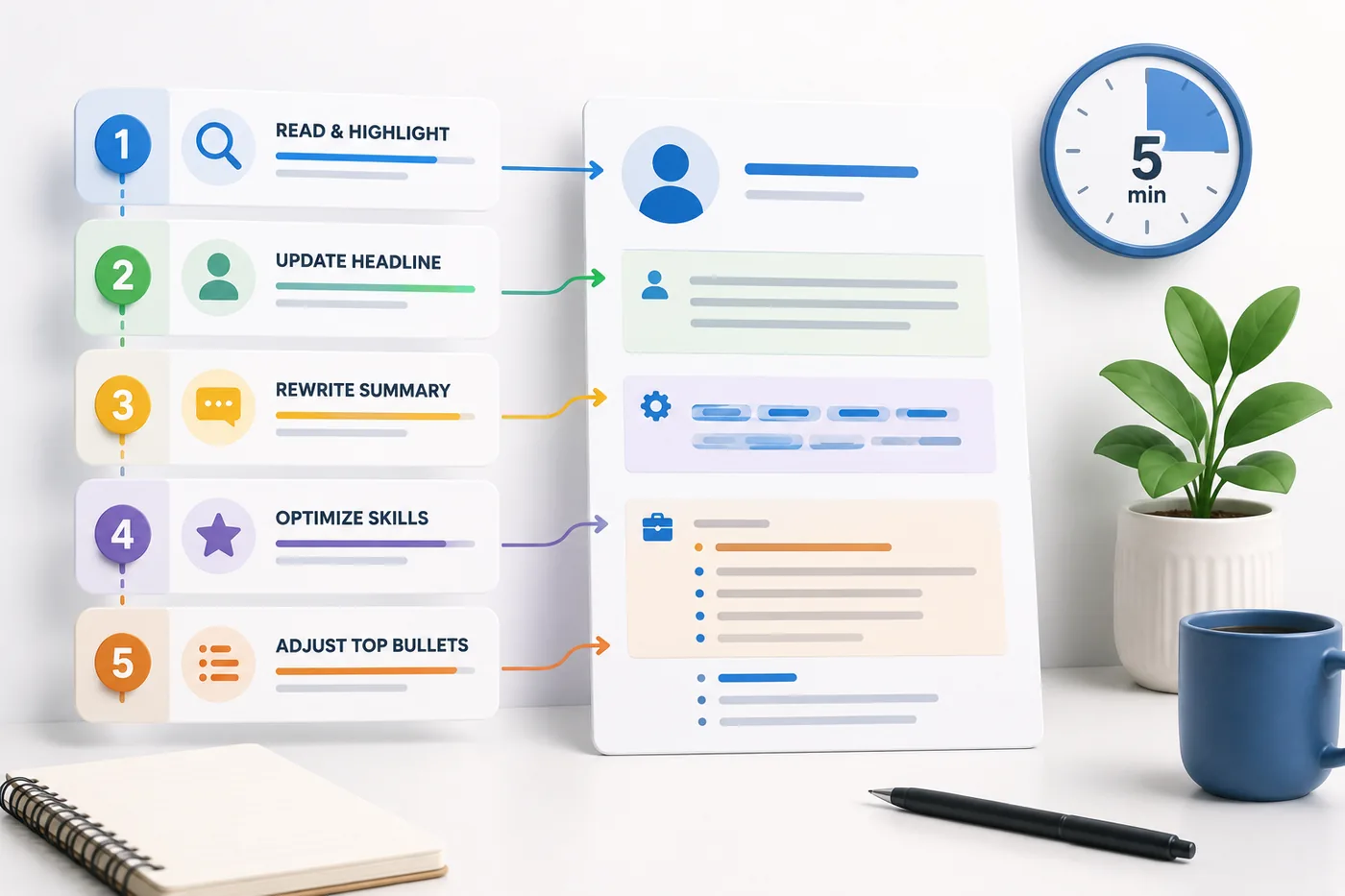
- How to Tailor a Resume in 5 Minutes
- Why Your Resume Gets No Responses
- Resume Customization Checklist
- How to Write Resume With AI
- Tailored Resume vs Generic Resume
Make This Practical
Use this guide as part of a complete job-search workflow. Check your resume with the free ATS score checker, improve targeting with the Resume Optimization Guide, and choose a clean format from the ATS-friendly resume templates.
After the resume is ready, strengthen the rest of the application. Draft a targeted letter with the AI cover letter generator, practice interviews with the AI mock interview tool, and create a project-backed proof page with the portfolio website builder if you need a stronger online presence.
Conclusion
Generic language is a habit, not a reflection of your capabilities. Every vague phrase on your resume is an opportunity to add a number, a tool, a team size, or an outcome that makes your experience impossible to confuse with anyone else's. Start with the eight rewrites above, apply the specificity test to every remaining bullet, and verify with an ATS check. The result is a resume that actually sounds like you - and gets you called.
What is your resume scoring right now?
Scan it against a job description and get your ATS match score in about a minute.
Drop your resume here or choose a file
PDF only. Max 2 MB.
We never share your data or use it to train AI models.

Templates that keep this structure intact
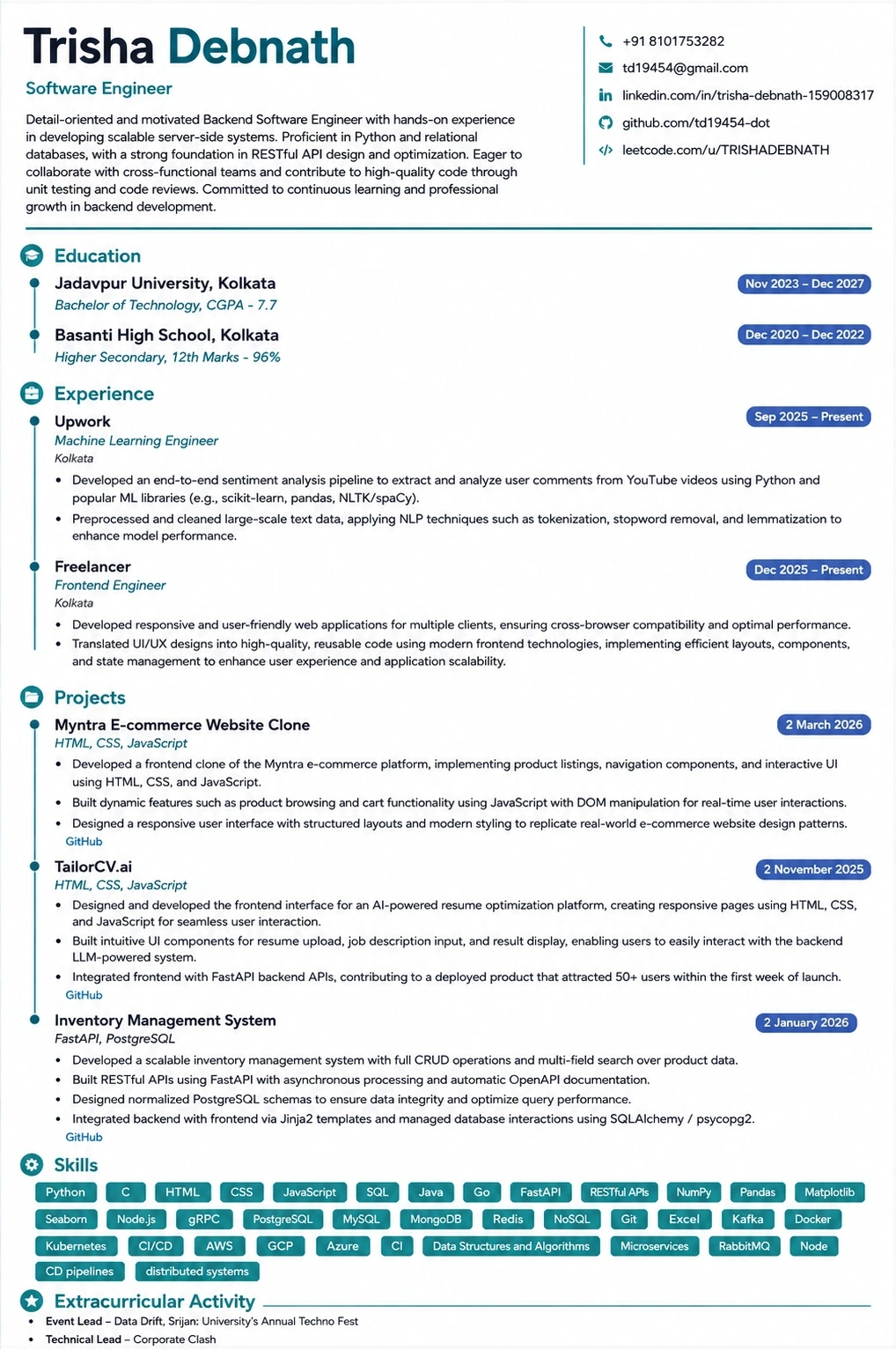
This template is ATS-tested — start from it and the formatting rules in this guide are already handled.
Was this guide useful?
Be the first to rate it.