 SS
SS

Key Takeaways
- Highlight relevant experiences such as class projects, internships, part-time jobs, and volunteer work to demonstrate your skills and reliability.
- Start your cover letter with a specific connection to the role or company, avoiding generic openings.
- Use measurable outcomes from your experiences to showcase your capabilities and align them with the job description.
- Close with enthusiasm, clearly stating your availability and eagerness to contribute to the team.
- Avoid common mistakes like apologizing for lack of experience, using generic phrases, and neglecting company research.
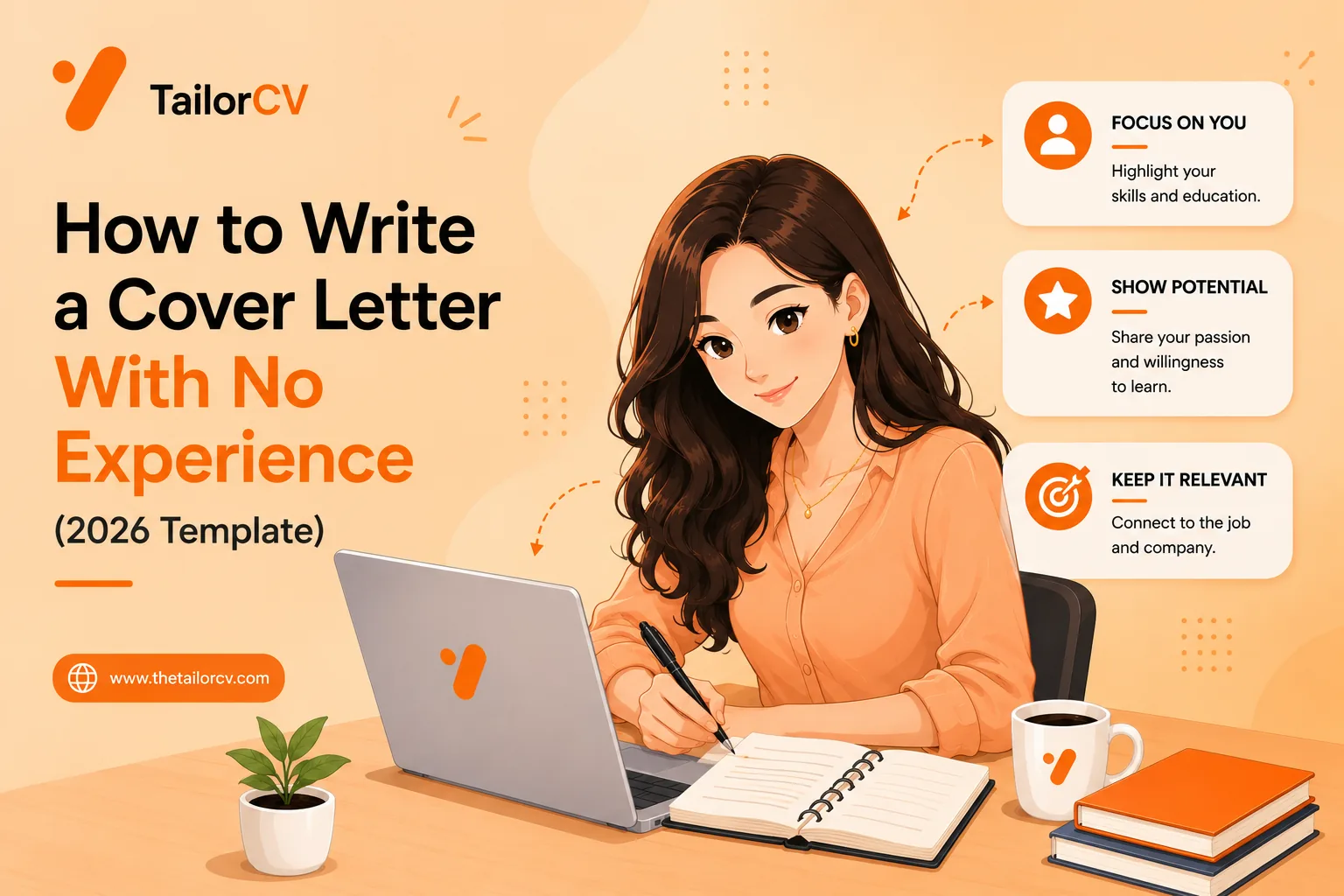
Having no formal work experience does not mean you have nothing to say in a cover letter. Every student and first-job seeker has coursework, projects, internships, clubs, or volunteer work that demonstrates the same qualities employers are actually screening for: reliability, initiative, and the ability to learn quickly.
Before writing the letter, make sure your resume with no experience is already telling a strong story, then draft your first version fast with the AI cover letter generator.
What to Use Instead of "Work Experience"
- Class projects - especially group projects with a real deliverable
- Internships, even short or unpaid ones - see the internship resume guide
- Part-time or campus jobs - customer service, tutoring, retail all show reliability
- Clubs, leadership roles, and volunteer work - see volunteer work on resume
- Personal or portfolio projects - see fresher resume projects that get interviews and projects in resume
Employers hiring for entry-level roles expect a thin work history. What they're actually evaluating is whether you can talk about your experience with specificity and confidence.
The Structure
What the finished letter looks like
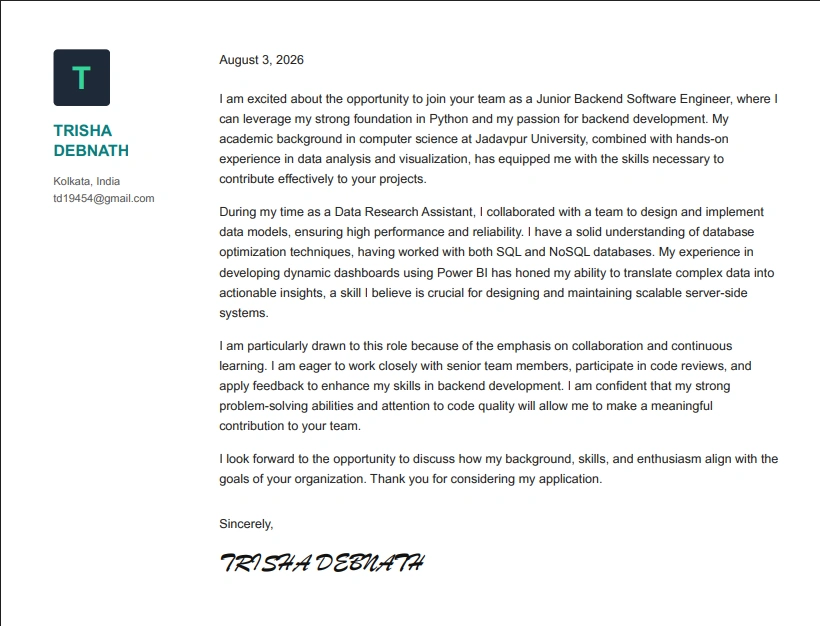
The same rules with a little more styling: the header is real text, not an image, so the layout stays readable to both a recruiter and a parser.
1. Open with Genuine Interest, Not a Generic Line
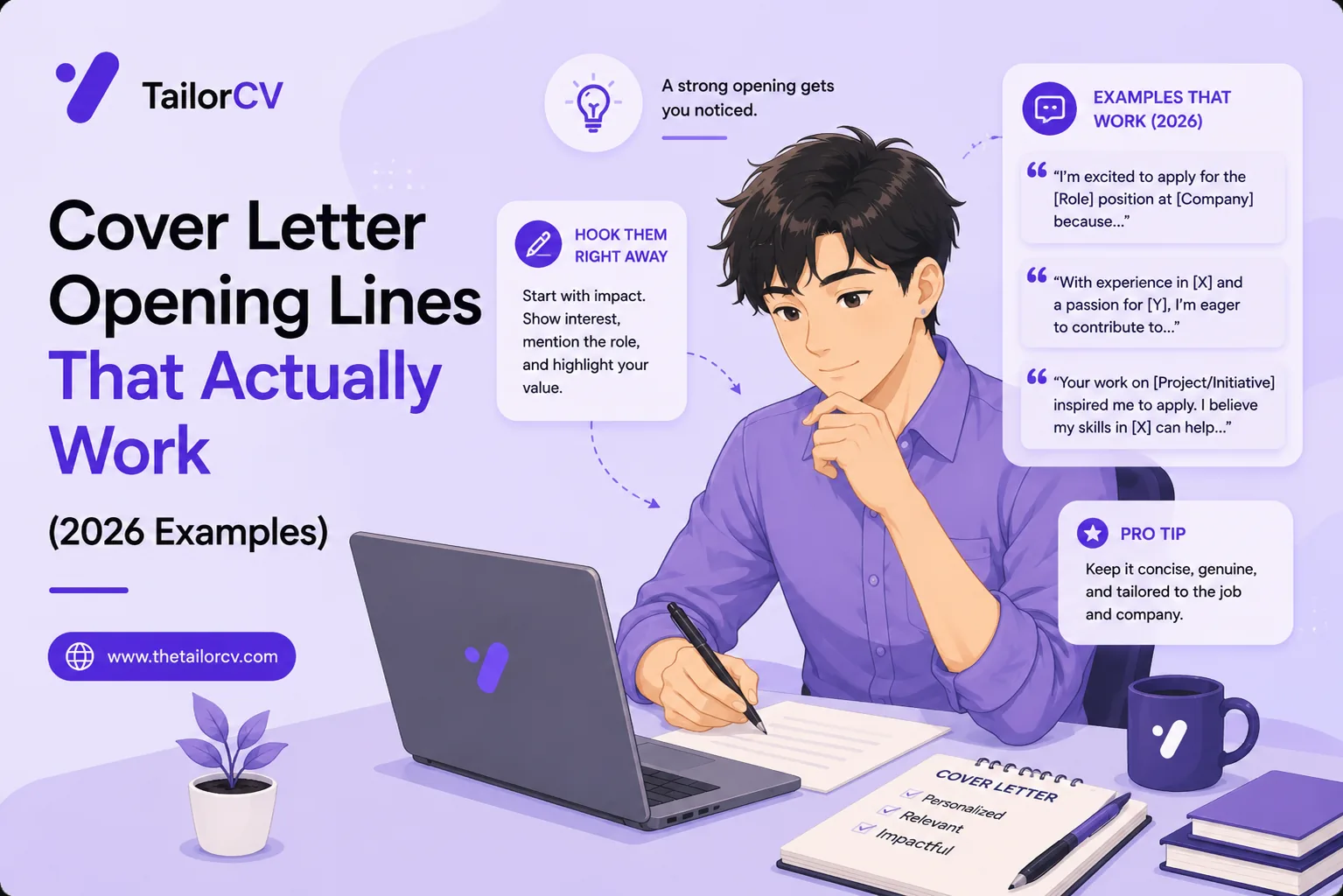
Skip "I am writing to apply for..." Open with something specific about the role or company that connects to what you've already done. For example, if you're applying for a marketing role at a startup known for its innovative campaigns, you might say, “I was inspired by your recent campaign that utilized social media influencers to reach a younger audience, and I’m eager to contribute my skills in digital marketing to similar initiatives.”
2. Replace "Experience" with Proof of Capability
"During my final-year capstone project, I led a team of four to build and ship a working prototype in eight weeks, coordinating tasks and presenting our results to a panel of judges."
By providing measurable outcomes, you give potential employers a clearer picture of your capabilities.
3. Connect That Proof to the Job Description
Mirror the language from the actual job description - if it asks for "attention to detail" or "collaboration," use examples that show exactly that. For example, if the job listing mentions "project management," you could highlight your role in organizing a student event or managing a group project.
4. Close with Enthusiasm and Availability
Keep it short, confident, and specific about next steps. “I am available for an interview at your convenience and can start immediately, as I am eager to contribute to your team.”
Full Template
Dear [Hiring Manager's Name],
Generating the letter from a job description
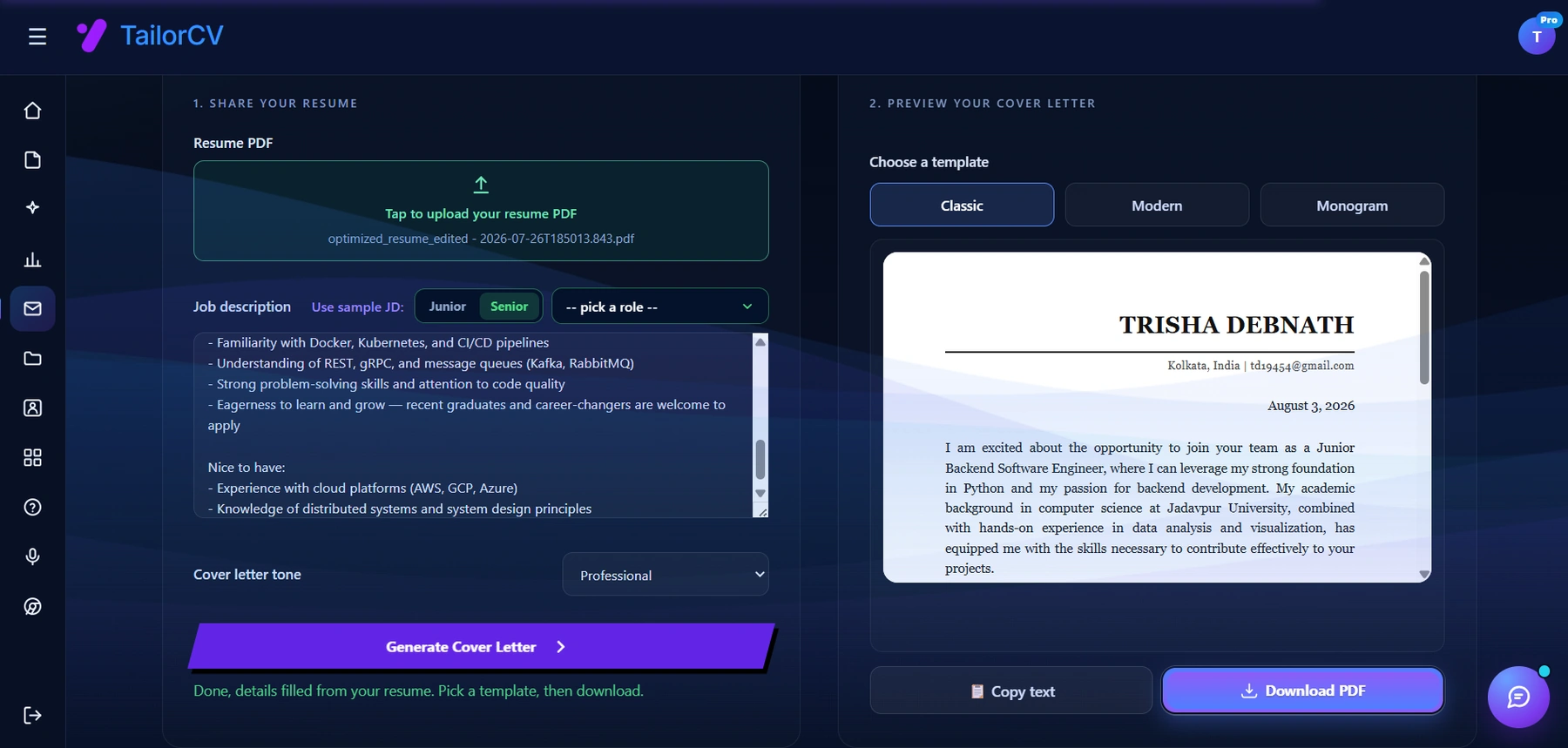
Details are pulled from your resume automatically, and the tone control decides how formal the letter reads before you download it.
I'm excited to apply for the [Role] position at [Company]. As a [year/major/recent graduate] at [School], I've spent the last [X months/years] building skills directly relevant to this role through [coursework/project/internship/campus job].
In my [specific project or role], I [specific action and result - use a number if possible]. That experience taught me [skill relevant to the job description], which I understand is central to this position.
What draws me to [Company] specifically is [something real about the company - product, mission, team, culture]. I'm eager to bring the same initiative and attention to detail to your team, and I'm available to start [timeframe].
Thank you for considering my application - I'd welcome the chance to discuss how my background fits this role.
Sincerely,
[Your Name]
Common Mistakes First-Time Applicants Make
| Mistake | Why it costs you |
|---|---|
| Apologizing for Lack of Experience | Instead of framing your lack of experience as a negative, focus on your eagerness to learn and grow |
| Using Generic Filler | Phrases like "I am a hardworking team player" do not add value without specific examples |
| Neglecting Company Research | Failing to understand the company’s culture or values can lead to a generic cover letter. See how to research a company before an interview |
| Making the Letter Longer than the Resume | Aim for a concise letter; ideally, it should not exceed one page |
Additional Tips for Writing an Effective Cover Letter
Tailor Each Cover Letter
Customizing your cover letter for each application is crucial. Take the time to reflect on how your experiences align with the specific requirements of the job. Use keywords from the job description to show that you are a good fit.
Use Action Verbs
Incorporate strong action verbs to convey your accomplishments. Instead of saying “I was involved in,” try “I spearheaded,” “I developed,” or “I executed.” This not only makes your letter more engaging but also emphasizes your proactive approach.
Highlight Relevant Skills
Identify key skills that are relevant to the job and demonstrate them through your experiences. For instance, if the job requires strong communication skills, you could mention a time you effectively presented a project to a large audience.
Keep a Professional Tone
While it's important to be enthusiastic, maintain a professional tone throughout your letter. Avoid overly casual language or slang, and ensure that your writing is free from grammatical errors.
Proofread and Edit
Before sending your cover letter, take the time to proofread and edit. Consider using tools like the ATS checker to ensure your letter is formatted correctly for Applicant Tracking Systems.
Real Examples of Cover Letters for Students and First-Time Job Seekers
Example 1: Marketing Internship
Dear Ms. Smith,
I am thrilled to apply for the Marketing Internship at XYZ Company. As a junior majoring in Marketing at ABC University, I have developed a strong foundation in digital marketing strategies through various class projects and my role as a social media manager for our campus newspaper.
In my recent project, I led a team of five students to develop a comprehensive marketing plan for a local business, resulting in a 30% increase in their social media engagement over three months. This experience honed my skills in content creation and analytics, which I believe are essential for the internship at XYZ Company.
I am particularly drawn to XYZ Company’s innovative approach to marketing and its commitment to social responsibility. I am eager to contribute my creativity and dedication to your team and am available to start immediately.
Thank you for considering my application. I look forward to the opportunity to discuss how I can contribute to your marketing efforts.
Sincerely,
[Your Name]
Example 2: Entry-Level Software Developer Position
Dear Mr. Johnson,
I am excited to submit my application for the Entry-Level Software Developer position at Tech Innovations. As a recent graduate with a Bachelor’s degree in Computer Science from DEF University, I have cultivated a strong technical skill set through coursework and personal projects.
During my capstone project, I developed a mobile app that allows users to track their fitness goals. I collaborated with a team of four, where I was responsible for coding the user interface and integrating APIs. This project not only improved my programming skills but also taught me the importance of teamwork and effective communication.
What excites me about Tech Innovations is your commitment to developing cutting-edge technology that makes a difference in people’s lives. I would love the opportunity to bring my programming skills and passion for technology to your team, and I am available for an interview at your convenience.
Thank you for your time and consideration.
Best regards,
[Your Name]
Conclusion
Writing a cover letter without formal work experience can be daunting, but it’s an opportunity to showcase your skills and enthusiasm. By focusing on relevant coursework, projects, and other experiences, you can craft a compelling narrative that resonates with potential employers. Remember to tailor each cover letter, use strong action verbs, and maintain a professional tone. With these tips and templates, you’ll be well on your way to landing that first job or internship.
For those considering a career change or applying for remote positions, be sure to check out our resources on Cover Letter for a Career Change - Template and Examples That Get Interviews and Cover Letter for Remote Jobs - What Hiring Managers Actually Want to See.
Frequently Asked Questions
Do I need a cover letter if I have no experience at all?
Yes - for entry-level roles, a strong cover letter often matters more because it's the only place you can explain context a thin resume can't. Pair it with a well-structured resume for internship with no experience.
How long should it be?
Three short paragraphs, under 250 words. Recruiters reviewing entry-level roles skim fast - see the cover letter guide for formatting standards.
What if I don't have any relevant projects?
Start one now. A small, focused project you can describe with a real outcome is worth more than a vague list of "skills." See developer portfolio project ideas or student portfolio guide for ideas across fields.
Should I mention my GPA or coursework?
Only if it's strong and relevant. Otherwise, prioritize projects and skills over grades - see how to list education on resume.
Make This Practical
Build the resume and cover letter as one package. Check your resume's ATS fit with the free ATS score checker, draft the letter with the AI cover letter generator, and turn your best project into a simple portfolio you can link directly in the letter.
Conclusion
No work experience does not mean no story. Frame your projects, coursework, and initiative with the same specificity a five-year veteran would use, and let the cover letter generator help you find the right words fast.
Was this guide useful?
Be the first to rate it.