 SS
SS
Key Takeaways
- Behavioral interview questions focus on past experiences to predict future performance, making preparation essential.
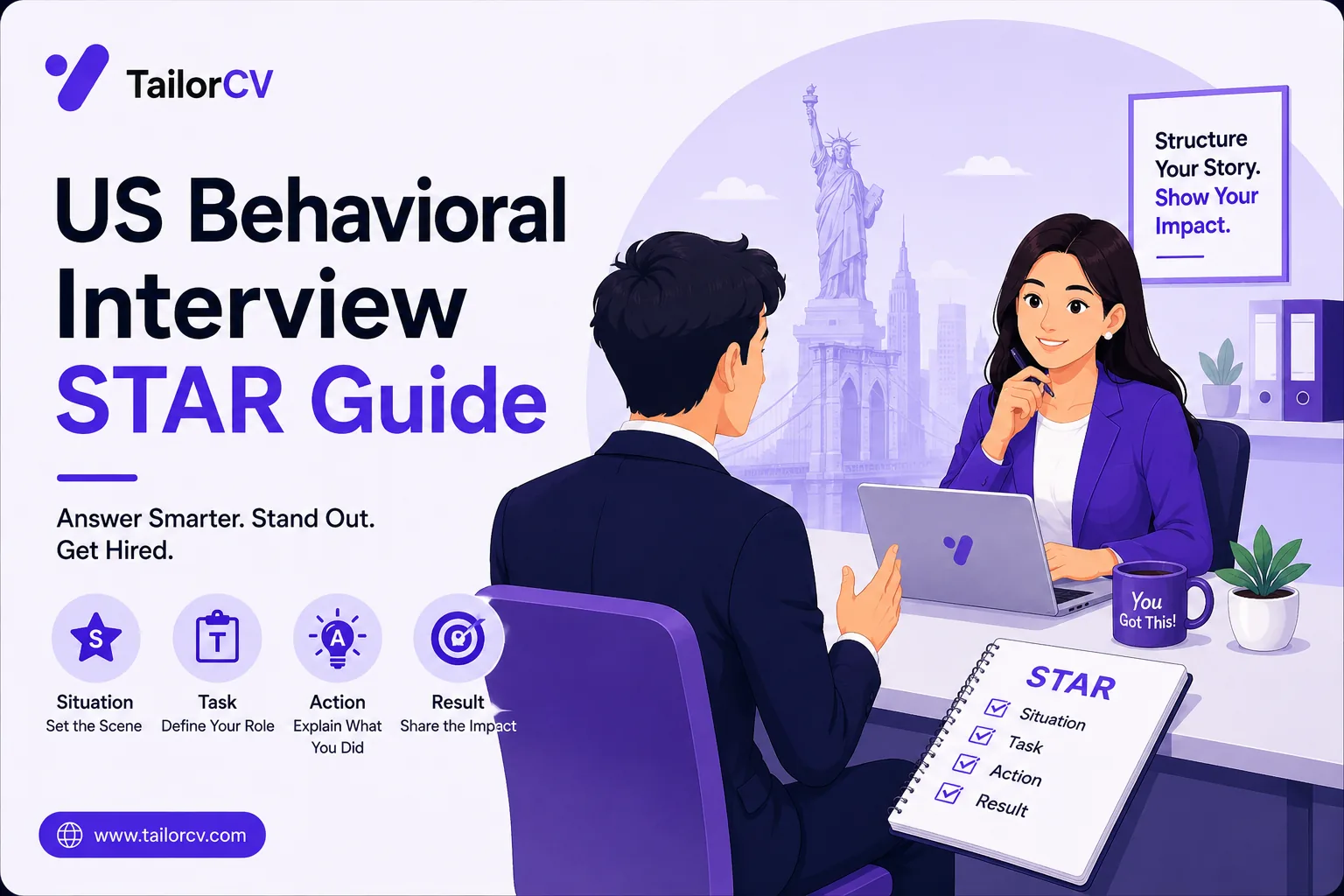
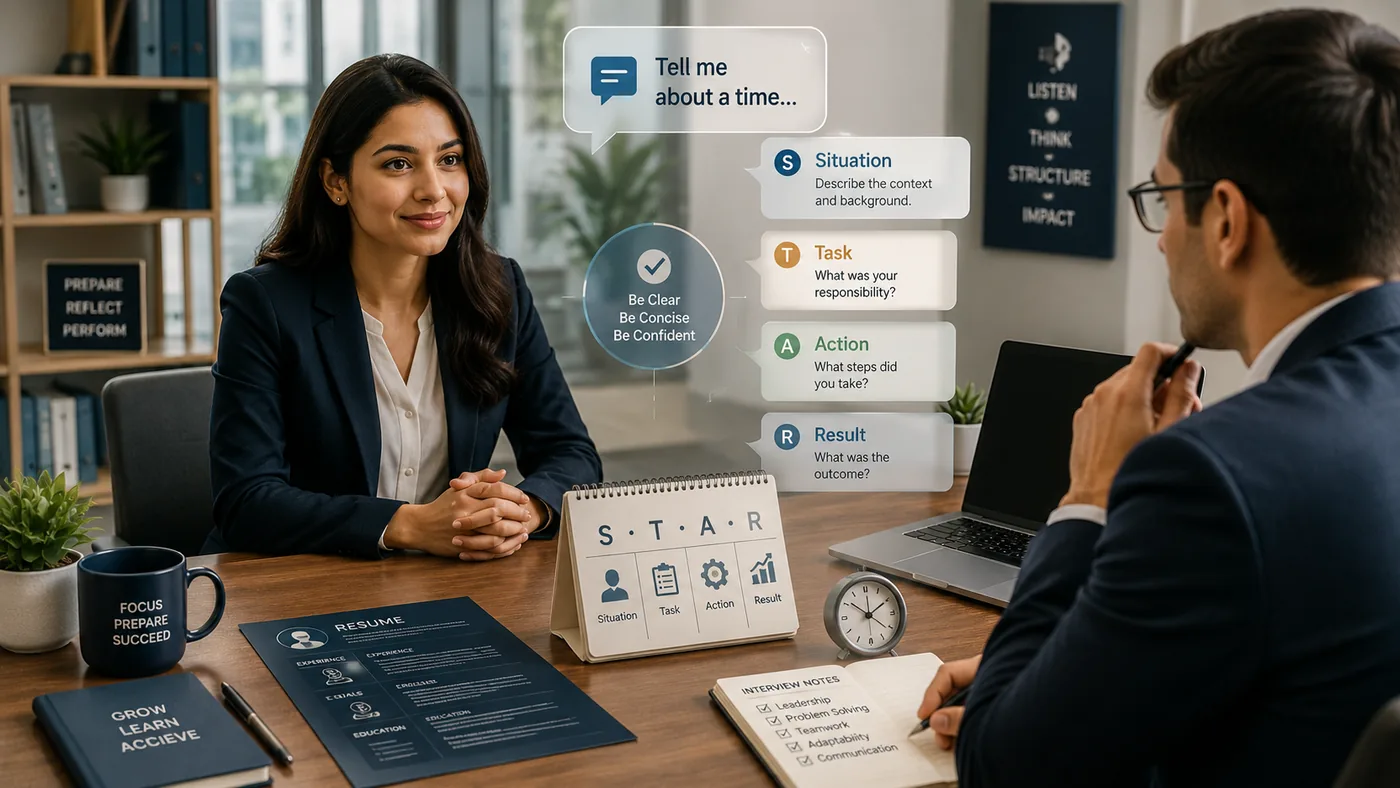
- The STAR method (Situation, Task, Action, Result) is the recommended framework for structuring responses to behavioral questions.
- Candidates should prepare specific stories that demonstrate competencies in areas like teamwork, problem-solving, leadership, communication, and adaptability.
- Practicing with mock interviews can help candidates articulate their experiences confidently and effectively.
- A strong resume is crucial for securing an interview, and candidates should optimize it before focusing on interview preparation.
behavioral interview questions are the most common interview questions across every industry. They ask you to describe how you handled real past situations - because past behavior is the best predictor of future performance.
If you go into a behavioral interview without prepared stories, you will either blank, ramble, or give weak generic answers. The difference between candidates who get offers and those who do not often comes down to how specifically and confidently they answer these questions.
This guide covers the STAR method, 40 common behavioral questions, and strong sample answers you can adapt for your experience.
Before your interview, make sure your resume is strong enough to get you into the room. Use the ATS score checker to optimize it, read the resume optimization guide, and use an ATS-friendly template. Once your resume gets you the interview, this guide takes over.
Also read the full interview preparation guide for comprehensive preparation, and try the free AI mock interview tool to practice answering these questions out loud.
What Are Behavioral Interview Questions?
behavioral interview questions ask you to describe a specific past experience. They almost always start with:
See it in action: a resume-based mock interview
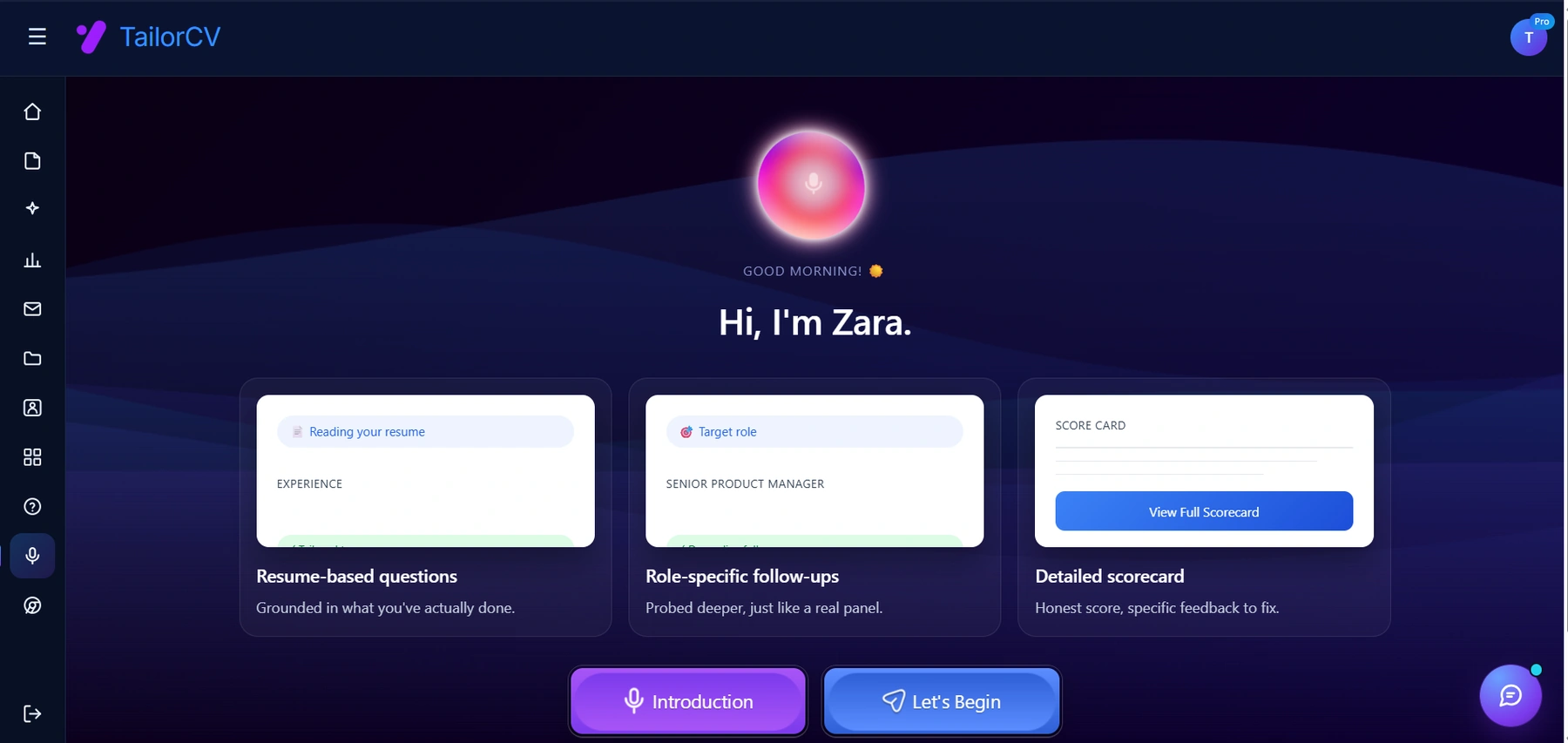
Rather than a fixed question list, the session is built from your own resume and target role, and ends with a scorecard naming the specific things to fix.
- "Tell me about a time when..."
- "Describe a situation where..."
- "Give me an example of..."
- "Can you walk me through..."
They are designed to assess your competencies - things like communication, leadership, conflict resolution, problem-solving, and adaptability - by looking at how you actually handled real situations.
The STAR Method
STAR is the standard framework for answering behavioral questions:
S - Situation: Set the context. Where were you? What was the challenge or goal?
T - Task: What specifically was your responsibility in that situation?
A - Action: What did you do? Be specific about your personal contributions.
R - Result: What happened? quantify the outcome wherever possible.
Keep STAR answers between 90 seconds and 2.5 minutes. Too short sounds thin. Too long loses the interviewer.
40 Common Behavioral Interview Questions by Theme
Teamwork and Collaboration
- Tell me about a time you worked with a difficult team member. How did you handle it?
- Describe a situation where you disagreed with your manager. What did you do?
- Give me an example of a time you helped a colleague who was struggling.
- Tell me about a successful project you completed as part of a team.
- Describe a time you had to collaborate across departments or functions.
Problem-Solving
- Tell me about a time you solved a difficult problem at work.
- Describe a situation where you had to make a decision with incomplete information.
- Give me an example of when you identified a problem before it became serious.
- Tell me about a time you had to think creatively to solve a challenge.
- Describe a complex technical problem you diagnosed and fixed.
Leadership and Initiative
- Tell me about a time you took initiative without being asked.
- Describe a project you led from start to finish.
- Give me an example of when you motivated a team that was struggling.
- Tell me about a time you influenced a decision without having authority.
- Describe a time you mentored or coached someone.
Communication
- Tell me about a time you had to explain a complex topic to a non-technical audience.
- Describe a situation where miscommunication caused a problem. How did you fix it?
- Give me an example of when you had to deliver difficult feedback.
- Tell me about a time you had to present to senior leadership.
- Describe how you keep stakeholders informed on a long-running project.
Adaptability and Resilience
- Tell me about a time you had to adapt to a major change at work.
- Describe a situation where a project failed. What did you learn?
- Give me an example of when you had to learn a new skill quickly.
- Tell me about the most stressful situation you have handled professionally.
- Describe a time when your priorities changed suddenly. How did you manage?
Conflict Resolution
- Tell me about a time you had a conflict with a customer or client.
- Describe a situation where two team members disagreed. How did you resolve it?
- Give me an example of a time you stood your ground on an important decision.
- Tell me about a time a colleague's mistake affected your work.
- Describe how you handle situations where you know someone is wrong but they outrank you.
Time Management and Prioritization
- Tell me about a time you managed multiple competing deadlines.
- Describe a project where the scope changed mid-way. How did you handle it?
- Give me an example of when you had to say no to a request.
- Tell me about a time you delivered a project under significant time pressure.
- Describe how you prioritize your work when everything feels urgent.
Failure and Growth
- Tell me about your biggest professional mistake. What did you do?
- Describe a time you received critical feedback. How did you respond?
- Give me an example of a goal you did not achieve. What happened?
- Tell me about a time you changed your approach after realizing it was not working.
- Describe a situation where you had to admit you were wrong.
Strong Sample Answers
Q: Tell me about a time you solved a difficult problem at work.
Situation: Our payment API was timing out for 3-5% of transactions during peak hours. This had been going on for 2 weeks and was causing customer complaints and chargebacks.
Task: As the backend engineer on call that week, I was responsible for diagnosing and fixing it.
Action: I started with APM traces and saw that 80% of the slow transactions hit one specific database query. When I ran EXPLAIN ANALYZE on the query, I found it was doing a sequential scan on a 6M-row table with no index on the filter column. I added a partial index and tested it in staging - query time dropped from 840ms to 12ms. I also added a Redis caching layer for the most frequent transaction type to prevent future load spikes.
Result: Timeout rate dropped from 4.2% to 0.1% within 24 hours of deployment. No further payment incidents that quarter. I also wrote a runbook for the team on how to diagnose similar performance issues.
Q: Describe a time you had to explain a complex technical topic to a non-technical audience.
Situation: Our engineering team had identified that we needed to migrate from a monolithic database to a distributed architecture to support planned 10x growth. The executive team had to approve a 3-month engineering investment with no visible new features.
Task: I had to present the case to the VP of Product and CFO and get their buy-in.
Action: I prepared a 10-slide presentation that explained the problem in business terms - not database jargon. I used the analogy of a single highway that worked fine for 1,000 cars but would gridlock at 10,000. I showed projected cost of downtime versus cost of migration, and benchmarked against competitor incidents caused by similar decisions.
Result: The VP approved the project in the same meeting. The migration was completed in 11 weeks, enabling the product launch that doubled user base 4 months later.
Q: Tell me about a time a project failed. What did you learn?
Situation: I led a 6-week project to build an automated reporting system for our operations team. We launched, and adoption was almost zero - 2 of 14 managers used it.
Task: I owned the project end to end and had to understand why it failed and what to do next.
Action: I ran 8 interviews with managers who had not adopted the tool. The core issue was that I had built what I thought they needed without involving them in the design. The reports were technically correct but did not match how they actually reviewed data in their workflows. I ran a 2-week discovery sprint with 3 managers to redesign the dashboard.
Result: The redesigned version reached 12 of 14 managers within the first month. I learned to always include end-users in the design phase, not just at the end. I now run a minimum of 3 user interviews before starting any internal tool project.
Q: Tell me about a time you managed multiple competing deadlines.
Situation: In Q3, I had 3 simultaneous commitments: a product release deadline, a quarterly performance review cycle, and an unexpected security audit request - all landing in the same week.
Task: I needed to deliver all three without dropping quality on any.
Action: I started by mapping each commitment into deliverables, owners, and hard versus soft deadlines. The security audit had a regulatory hard deadline, so I blocked 2 hours each morning for audit documentation. I delegated two subsections of the performance review to two senior team members with a clear brief. For the product release, I pushed a low-priority feature to the following sprint after aligning with the PM and documented the trade-off.
Result: We passed the security audit with no findings. The performance reviews were completed on time. The product release shipped on schedule with the full priority feature set. The deprioritized feature was released two weeks later with no business impact.
How to Build Your Own STAR Story Bank
Before any interview, prepare 8-12 STAR stories that cover:
- Your biggest individual technical achievement
- A time you disagreed with someone and handled it well
- A team project success
- A project or decision that did not go as planned
- A time you learned something new quickly
- An example of leadership or mentorship
- A time you prioritized under pressure
- Your most complex problem-solving experience
One strong story can often be adapted to answer 3-4 different questions by changing the emphasis.
Related Guides
- How to Answer "Tell Me About Yourself"
- How to Prepare for a Job Interview
- Best Questions to Ask in a Job Interview
- 20 Common Interview Mistakes to Avoid
- How to Follow Up After a Job Interview
- How to Research a Company Before Your Job Interview
- Virtual Interview Tips
- Group Discussion Tips
- Phone Interview Tips
- Coding Interview Preparation Guide
- Final Round Interview Tips
- How to Quit Your Job Professionally
- Career Change to Tech in 2026 - Complete Guide for Switchers
- How to Get Your First Tech Job in 2026 - Complete Guide for Freshers
- How to List Education on a Resume in 2026 - Complete Guide with Examples
- How to Use LinkedIn for Job Search in 2026 - Complete Guide
- Ideal Resume Length in 2026 - One Page or Two? Complete Guide
- Machine Learning Interview Questions and Answers (2026 Guide)
Make This Practical
Use this advice as interview practice, not just reading material. Start a role-specific session with the AI mock interview tool, prepare your opening with How to Answer Tell Me About Yourself, and structure evidence-heavy answers with the STAR Method Interview Answers Guide.
Before the interview, make sure the resume that earned the call is still aligned with the role. Check it with the free ATS score checker, review Common Interview Mistakes to Avoid, and use How to Follow Up After an Interview once the conversation is over.
Conclusion
behavioral interview preparation is not about memorizing perfect answers - it is about having a bank of specific, honest, well-structured stories that you can recall confidently.
Use the free AI mock interview tool on TailorCV to practice answering these questions out loud with feedback. Read the full interview preparation guide for technical interview, case interview, and salary negotiation preparation. And make sure your resume is strong before the interview even starts - use the ATS score checker to optimize it.
Frequently Asked Questions
What is the STAR method and how can it help in behavioral interviews?
The STAR method stands for Situation, Task, Action, and Result. It provides a structured way to respond to behavioral interview questions by allowing you to outline a specific situation you faced, the task you needed to accomplish, the actions you took, and the results of those actions. Using the STAR method can help you deliver clear and concise answers that highlight your skills and experiences effectively.
How do I prepare for common behavioral interview questions?
To prepare for common behavioral interview questions, start by identifying key experiences from your past that demonstrate your skills and competencies. Utilize the Interview Story Bank to organize your thoughts and practice your responses using the STAR method. Additionally, reviewing example questions and answers can help you frame your own stories to ensure they align with the job requirements.
What should I do if I have a gap in my employment history?
If you have a gap in your employment history, be prepared to address it during your interview. Focus on discussing what you did during that time, such as acquiring new skills, volunteering, or taking courses. Being honest and framing your gap positively can help reassure employers, and you can find useful tips in our guide on how to explain getting fired in an interview.
How can I effectively answer the question, "Why are you leaving your current job?"
When answering why you are leaving your current job, it's important to be honest yet tactful. Focus on your desire for new challenges, career growth, or a better fit for your skills and values. Practicing your response can help you articulate it confidently, and you can explore effective scripts in our post on how to answer "Why Are You Leaving Your Current Job?".
What are some good questions to ask at the end of a behavioral interview?
At the end of a behavioral interview, asking insightful questions can help you learn more about the company and demonstrate your interest. Consider asking about team dynamics, company culture, or specific goals for the role. For more ideas, check out our guide on the best questions to ask in a job interview in 2026 to ensure you leave a positive impression.
Was this guide useful?
Be the first to rate it.