SS
SS

Key Takeaways
- Transitioning to a data analyst role is possible by highlighting transferable skills from previous non-tech experience, such as reporting and customer analysis.
- Essential skills to develop include Excel, SQL, Power BI or Tableau, basic statistics, and data cleaning, focusing on one skill at a time.
- Craft a resume headline and summary that connect past operations experience with new data analytics skills to demonstrate relevance.
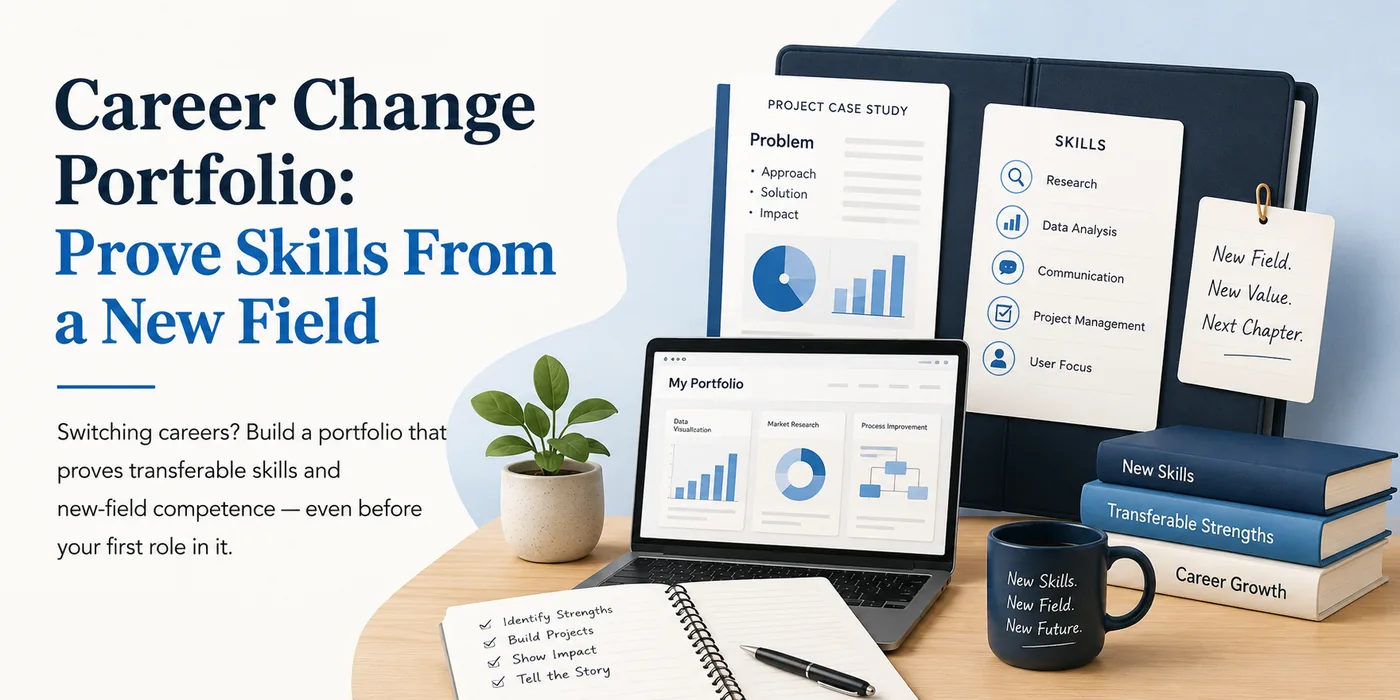
- Build 2-3 portfolio projects that showcase practical data analysis skills, concluding each with actionable recommendations.
- Optimize your application materials for specific job descriptions, ensuring they reflect relevant keywords and demonstrate a clear fit for the role.
You can move from a non-tech role to data analyst work if your resume connects your past domain experience to data skills. The mistake is presenting yourself as a total beginner when you may already have reporting, Excel, operations, finance, marketing, or customer analysis experience.
Skills to Build
Focus on:
- Excel
- SQL
- Power BI or Tableau
- Basic statistics
- Data cleaning
- Dashboard design
- Business communication
- Python basics if relevant
Do not try to learn everything at once.
Resume Positioning
Use a headline like:
Aspiring data analyst | SQL, Excel, Power BI | Operations and Reporting Background
Your summary should connect old and new:
Operations professional transitioning into data analytics, with experience tracking KPIs, building Excel reports, and identifying process gaps. Skilled in SQL, Power BI, and dashboard storytelling through recent portfolio projects.
portfolio Projects
Build 2-3 projects:
What optimizing actually does to your resume
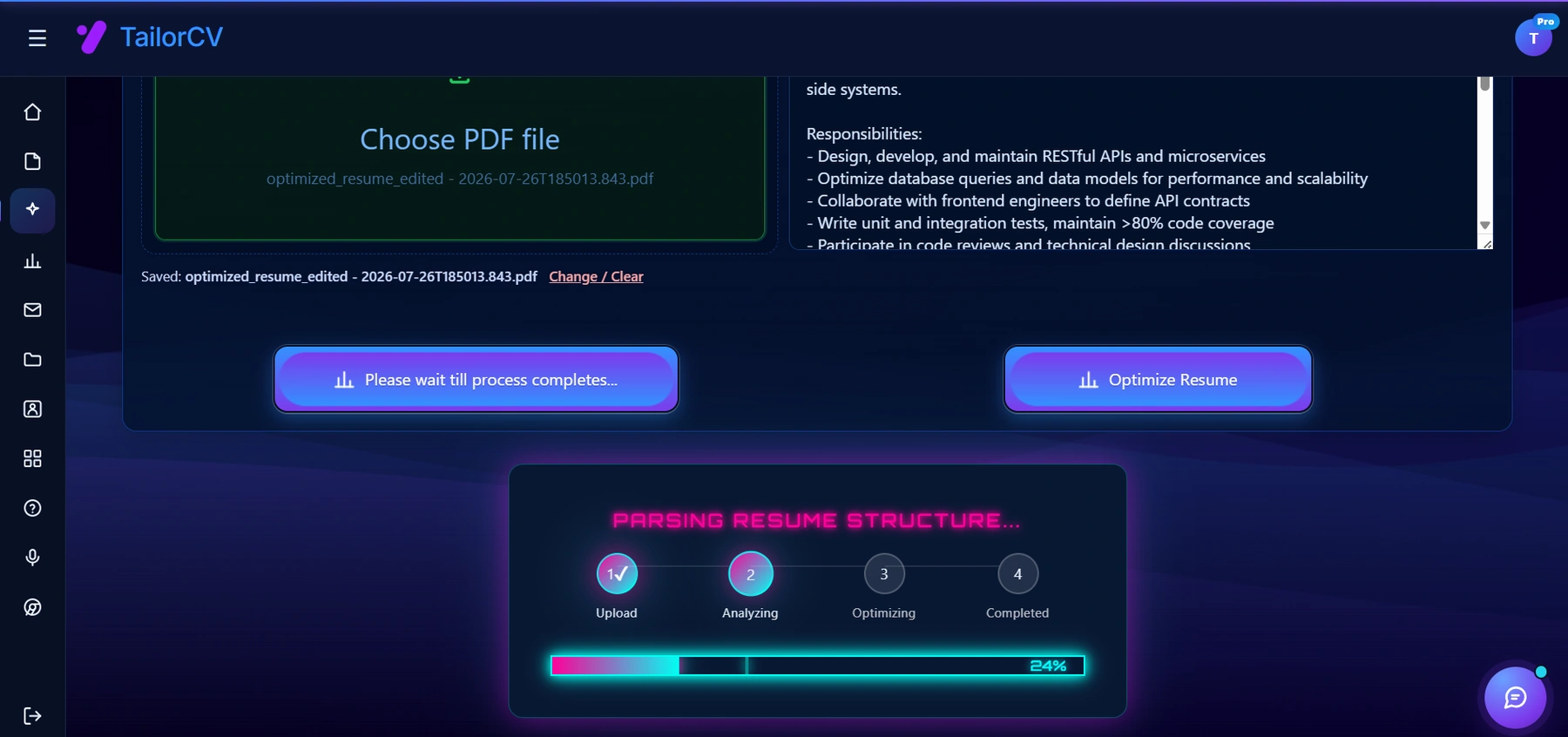
Optimising runs against the specific job description you paste in, not in the abstract.
- Sales dashboard
- Customer churn analysis
- Operations efficiency report
- Marketing campaign analysis
Each project should end with a recommendation.
How to Turn This Into a Stronger Application
Treat this guide as a working document, not just something to read once. The best job seekers use a simple loop: compare the target role, update one part of the application, test the result, then repeat. That is especially important for your non-tech to data analyst transition because small wording choices can change how recruiters and ATS systems understand your fit.
Start by choosing one real job description. Do not optimize for a vague job category like "marketing" or "developer." Optimize for a specific posting with a specific title, responsibilities, tools, and outcomes. Then look at your resume, LinkedIn profile, portfolio, cover letter, or interview story through that exact lens. If the employer asks for stakeholder management, automation, SQL, customer support, documentation, or leadership, those words should appear naturally in your materials where they are true.
The goal is not to copy the job description. The goal is to prove overlap. A good application makes the recruiter think, "This person has already done work close to what we need." That happens when your examples include the same skills, context, and outcomes the role is asking for.
Practical Upgrade Checklist
Before you send the application, review this checklist:
- Does the top section match the target role clearly?
- Are the most important keywords from the job description included naturally?
- Is there at least one measurable result or concrete example?
- Can a recruiter understand your fit in less than 10 seconds?
- Does the content avoid generic phrases like "hardworking," "responsible for," or "passionate professional"?
- Are your links, portfolio, GitHub, LinkedIn, or contact details easy to find?
- Does the application use the same positioning across resume, cover letter, and profile?
- Have you removed anything that distracts from the target role?
If the answer is no for any item, fix that before applying. Most candidates do not need a complete rewrite. They need sharper alignment.
Example Before and After
Weak version:
I have experience in different tasks and I am looking for a good opportunity where I can grow and contribute to the company.
Stronger version:
I am targeting roles where I can use non-tech to data analyst transition, practical problem solving, and measurable execution to support business outcomes. My strongest examples include improving a process, building a project, coordinating with stakeholders, and using relevant tools to deliver a clearer result.
The stronger version works because it is specific enough to connect with a role. It gives the recruiter keywords and proof signals. You can make it even better by replacing the general words with your own tools, metrics, industry, and project names.
For example, instead of saying "improved a process," say "reduced weekly reporting time from 4 hours to 45 minutes." Instead of saying "built a project," say "built a React dashboard with authentication, filters, and exportable reports." Specificity is what turns a normal application into a credible one.
SEO Reading Path
Use these related TailorCV guides to strengthen the rest of your application:
- Why Your Resume Gets No Responses
- How to Follow Up After Interview
- How to Write Cold Email to Recruiter
- Remote Job Search Guide
- How to Get a Job With No Experience
- ATS-Friendly Resume Builder
- Free ATS Resume Scan
These internal guides are useful because one document rarely wins a job alone. A strong resume needs matching keywords, a clean format, a convincing cover letter, a credible LinkedIn profile, and interview answers that support the same story. If one part says you are targeting data analytics and another part looks like a generic admin resume, the recruiter gets mixed signals.
More Relevant Internal Guides
If you want to keep improving this topic, these closely related guides are worth linking into your reading path:
- Resume Optimization Guide
- Resume Customization Checklist
- Resume Skills Match Job Description
- Resume Summary Match Job Description
- How to Write Resume Summary
- How to Write Resume Headline
- How to Quantify Resume Achievements
- Best Action Verbs for Resume
- Resume Red Flags
- Resume Proofreading Checklist
- Does My Resume Pass ATS?
- ATS Resume Formatting Mistakes
- ATS Keyword Mistakes
- ATS Keywords to Boost Score
- Best Resume Keywords to Beat ATS
- Hidden Keywords in Job Description
- Job Description Keyword Extraction Guide
- Resume Keyword Density Guide
Use these links as a practical cluster: first fix the resume and ATS alignment, then improve the supporting proof such as portfolio, LinkedIn, cover letter, or interview examples. That gives search engines clearer topical connections and gives readers a useful next step instead of a dead end.
Conclusion
A non-tech to data analyst resume works when it shows transferable domain knowledge plus current analytics proof. Run it through the ATS score checker against entry-level data analyst roles and fix the missing keywords.
Frequently Asked Questions
How many times should I customize this before applying?
Customize it for every serious application. That does not mean rewriting everything. Usually, you update the headline, summary, skills order, 3-5 bullet points, and any linked proof that supports the target role. For a faster process, use the 5-minute resume tailoring guide with the resume customization checklist.
Should I add every keyword from the job description?
No. Add only the keywords that honestly match your experience. Keyword stuffing can make your application look robotic, and it can hurt you in interviews when you cannot explain a skill you listed. Use the resume keywords guide and hidden keywords in job description guide to choose terms naturally.
What if I do not have exact experience yet?
Use adjacent proof. Projects, coursework, freelance work, volunteer experience, internships, or internal responsibilities can all demonstrate relevant skill. The key is to explain the connection clearly instead of hoping the recruiter guesses it. If you are early-career, read resume with no experience and projects in resume; if you are switching fields, use the career change resume guide.
How do I know if the final version is strong enough?
Paste your resume and the job description into the TailorCV ATS score checker. If the score is low, review missing keywords, weak section headings, and bullets that describe responsibilities instead of outcomes. The how to increase ATS score, ATS resume formatting mistakes, and how to write resume bullet points guides will help you revise before testing again.
Final Takeaway
The best applications are specific, consistent, and easy to verify. Use this guide to improve your non-tech to data analyst transition, then connect it with the rest of your job-search materials. When your resume, portfolio, LinkedIn, cover letter, and interview examples all tell the same focused story, recruiters can understand your value faster and with more confidence.
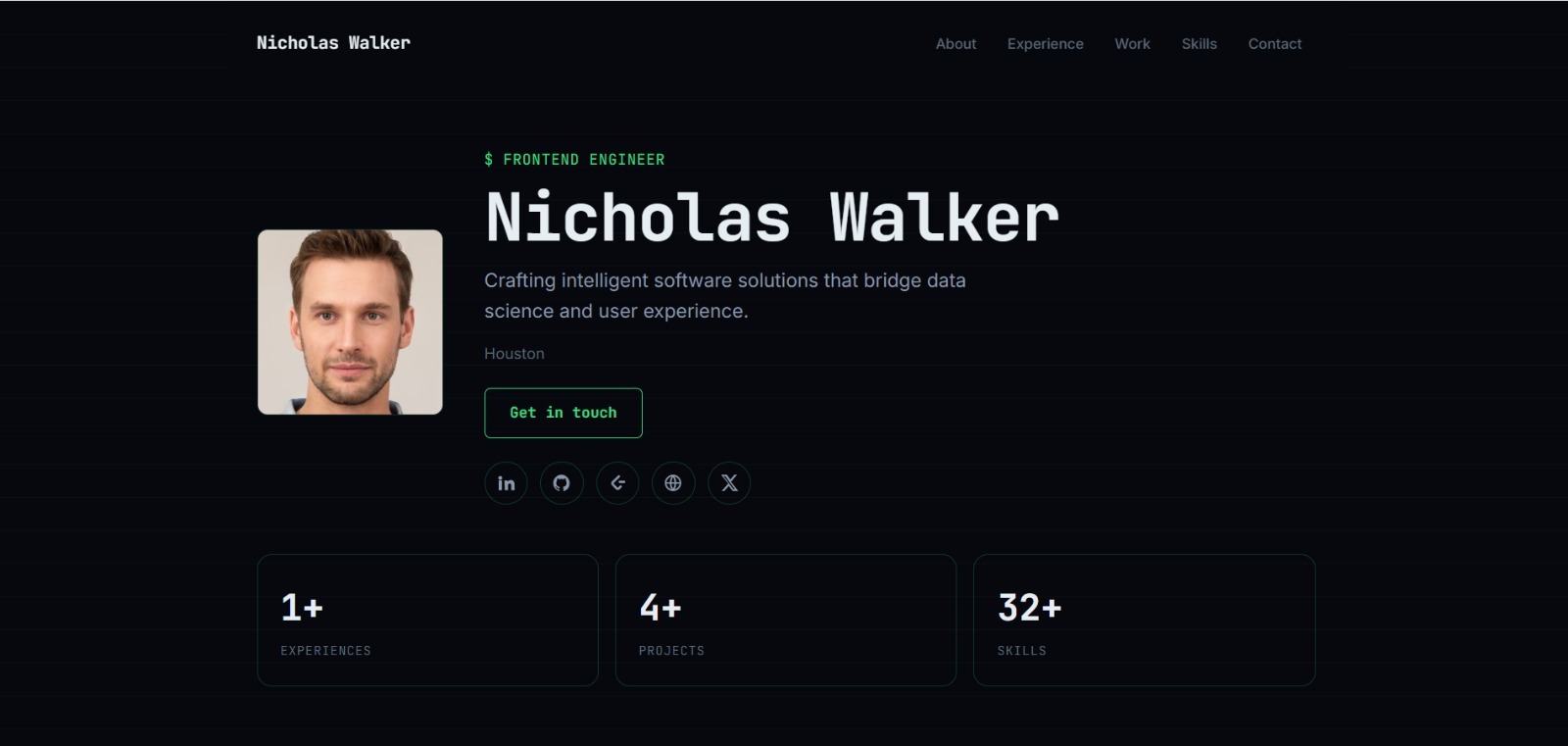
See what your portfolio could look like
This theme is built straight from your resume — pick one and your portfolio is live in minutes.
Was this guide useful?
Be the first to rate it.