 TD
TD
Key Takeaways
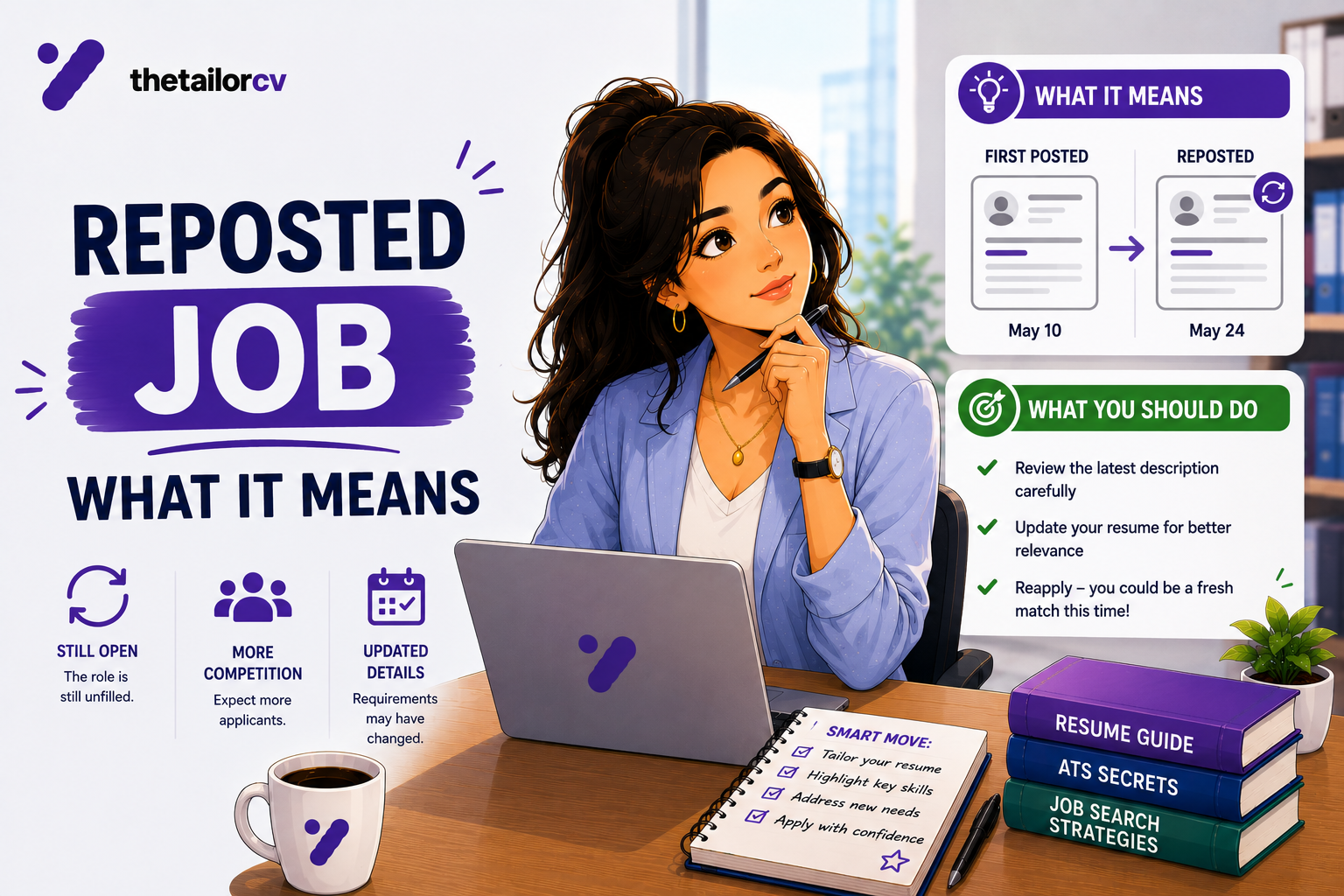
- A repost is not automatically a rejection of your application — several routine reasons cause it.
- Automatic repost cycles at large companies are common and unrelated to any individual candidate.
- A genuinely failed search (offer fell through, hire didn't work out) is a real possibility, but not the most common one.
- Reapplying is usually reasonable, though rarely necessary if your original application is still active in their system.
- The repost itself tells you little; the timing and how long it has been reposted tell you more.
You applied, heard nothing, and then noticed the same posting live again weeks later. It reads as discouraging — like being personally rejected in bulk — but the actual reasons behind a repost are usually more mundane than that.
Why Postings Get Reposted
Automatic repost cycles. Many applicant tracking systems and job boards automatically refresh or repost listings after a set period — often 30 days — to keep them appearing as "recently posted" in search results and algorithms. This can happen even while the company is actively reviewing your original application, and often has nothing to do with any candidate's outcome.
The search is still open and gathering more candidates. Companies frequently keep collecting applications for weeks before beginning serious review, particularly for less time-sensitive roles. A repost partway through this window does not mean your application was rejected — the process may simply still be in its collection phase.
A previous offer fell through, or a hire didn't work out. This does happen, and it is a genuine reason for a repost. It is also less common than people assume, and it says nothing about your specific application from the earlier round — the position simply reopened for reasons unrelated to your candidacy.
The requirements changed. Sometimes a company reposts because they have revised the role's scope, level, or requirements after the first round of applications did not surface the profile they expected. Worth reading the reposted version closely for changes.
Budget or headcount was reapproved after a pause. Some postings go temporarily inactive and later resume — this can look like a repost without reflecting anything about prior applicants.
What the Repost Alone Does Not Tell You
It does not tell you that you were specifically rejected, that your resume was weak, or that anything about your original application was the reason. Postings recycle through system mechanics and business timing more often than through a deliberate signal about any one candidate.
Reading the Timing
Reposted within a few weeks of your application, no changes to the listing: Most likely a routine system refresh or an extended collection window. Not particularly informative either way.
Reposted after a long gap (2+ months): More likely reflects a genuine change — the search restarted, a hire fell through, or priorities shifted. Worth a closer read of the current listing for what changed.
Reposted with visible changes to the requirements or title: The role itself evolved. Read the new version as essentially a different, related posting rather than assuming your original application is still relevant to it as-is.
Should You Apply Again?
If your original application is likely still in their system and under consideration (a short gap, no visible changes), a second application is usually unnecessary and occasionally reads as slightly odd to a recruiter reviewing duplicates. Most systems will surface your prior application regardless.
If the requirements changed meaningfully, treat it as a new opportunity worth a fresh, updated tailored resume — particularly if you now better match the revised requirements, or if you have gained relevant experience since your original application.
If a long gap has passed, reapplying is generally reasonable and sometimes advisable — enough time may have passed that your original application is effectively stale in the process, and a fresh submission with any updates to your background is a low-cost, low-risk move.
If you are uncertain, a brief, polite note to a recruiter or hiring contact — if you have one — asking whether the role is still open and whether you should resubmit is a reasonable, low-pressure way to clarify rather than guessing.
What Not to Read Into a Repost
Do not treat a repost as confirmation that you specifically were rejected for a fixable resume flaw — the far more common explanations are structural or timing-related and have nothing to do with your application's quality. Spending significant energy trying to diagnose "what went wrong" from a repost alone is usually not a productive use of your time, since the repost itself carries too little specific information to diagnose anything reliably.
If you do want a genuine diagnostic on your application quality, that is better done by checking your resume's actual match against the posting directly — see below — rather than by inferring anything from the repost pattern.
A Reasonable Default
In the absence of other information: if the posting changed meaningfully or a long gap has passed, submit a fresh, updated application. If it is a short-gap repost with no visible changes, assume your original application is still active and move your attention to other opportunities rather than resubmitting or waiting anxiously on this one.
When the same role appears in several places with different wording, which version to tailor to explains how to pick the source of truth.
Frequently Asked Questions
Does a repost mean I definitely was not selected? Not necessarily — many reposts happen through routine system mechanics unrelated to any specific candidate's outcome, including yours.
Will reapplying hurt my chances if my first application is still active? Unlikely to actively hurt, but it is often unnecessary and provides no real benefit if your original application is still under genuine consideration.
How long should I wait before assuming a role has gone stale? There is no fixed rule, but beyond four to six weeks of silence, most searches have moved past your original application's active review window regardless of repost status.
Should I mention in a reapplication that I applied before? Not necessary to flag explicitly — most systems track this on their end. Focus your reapplication on any genuine updates to your background instead.
Is there a way to find out for certain why a job was reposted? Generally only by asking a recruiter or contact directly, and even then you may not get a full answer. Treat the repost as low-information and move forward accordingly.
Check Your Match Rather Than Guess From the Repost
If you are unsure whether to reapply, the more useful question is whether your resume genuinely matches the current version of the posting — which the repost pattern alone cannot tell you.
Scan your resume against the current listing, particularly if requirements changed. This gives you a concrete answer about fit, rather than an inference drawn from an ambiguous signal.
Free, about a minute. See also application viewed but no response and applied to 100 jobs, no interviews.
What is your resume scoring right now?
Scan it against a job description and get your ATS match score in about a minute.
Drop your resume here or choose a file
PDF only. Max 2 MB.
We never share your data or use it to train AI models.

Templates that keep this structure intact
This template is ATS-tested — start from it and the formatting rules in this guide are already handled.
Was this guide useful?
Be the first to rate it.