 SS
SS

Key Takeaways
- Simply listing soft skills on a resume is ineffective; employers seek evidence of these skills through accomplishments.
- Demonstrate soft skills by providing specific examples of past experiences rather than generic statements.
- Key soft skills to highlight include communication, leadership, teamwork, problem-solving, adaptability, time management, conflict resolution, and attention to detail.
- Place evidence of soft skills primarily in experience bullets and reference them in the summary only if supported by context.
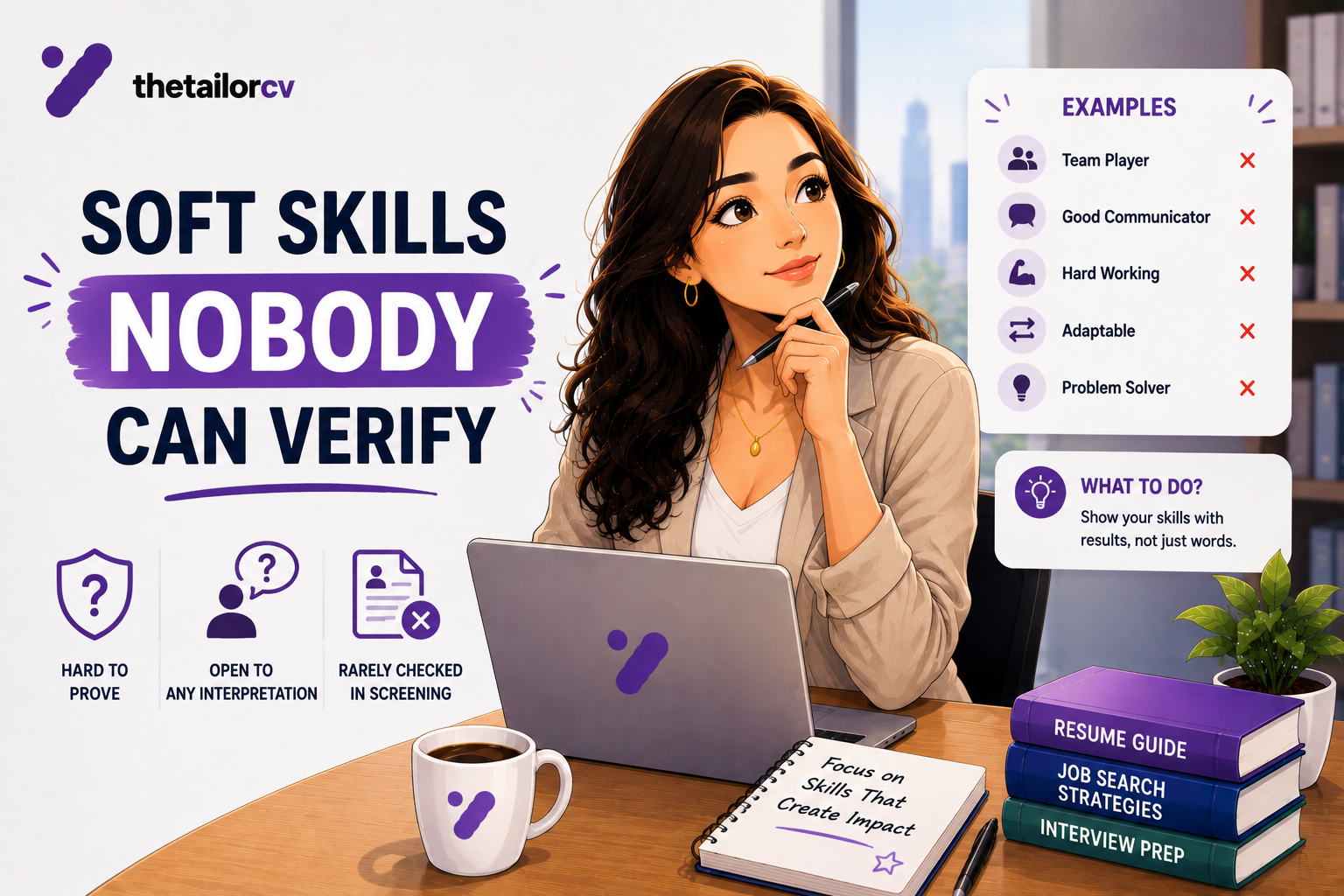
soft skills - communication, leadership, teamwork, problem-solving - are genuinely important to employers. But here is the problem: simply listing them on your resume is worthless. Everyone writes "excellent communicator," "team player," and "strong leadership skills." These claims carry zero weight because they cannot be verified and everyone makes them.
The right approach is to prove soft skills through evidence in your experience bullets - not list them as adjectives. This guide shows you which soft skills matter and exactly how to demonstrate each one.
Before optimizing your soft skills presentation, make sure your hard skills and keywords match the job. Use the ATS score checker and read what not to put on a resume - generic soft skill lists are often the first thing to cut.
Why Listing Soft Skills Doesn't Work
Consider a skills section that says: "Communication, Leadership, Teamwork, Problem-solving, Time management, Adaptability"
This tells the recruiter nothing. Anyone can type these words. There is no evidence, no context, and no differentiation. Worse, it wastes space that could hold a real achievement.
The solution: demonstrate soft skills through your accomplishments. Instead of claiming leadership, describe a time you led. Instead of claiming communication, describe a time you communicated effectively with a measurable result.
The Most Valued Soft Skills in 2026 - and How to Prove Each
Communication
Don't write: "Excellent communication skills."
Show it:
- "Presented quarterly product roadmap to C-suite executives and 40+ stakeholders, securing approval for a $2M engineering investment."
- "Translated complex technical requirements into clear documentation that reduced onboarding time for new engineers from 3 weeks to 1 week."
Leadership
Don't write: "Strong leadership skills."
Show it:
- "Led a cross-functional team of 9 engineers and designers to deliver a product launch 2 weeks ahead of schedule."
- "Mentored 4 junior developers, 2 of whom were promoted within 12 months."
Teamwork / Collaboration
Don't write: "Team player."
Show it:
- "Collaborated with product, design, and data teams to ship 12 features in a quarter through structured weekly cross-functional syncs."
- "Partnered with the sales team to redesign the demo environment, contributing to a 15% increase in close rate."
Problem-Solving
Don't write: "Strong problem-solving abilities."
Show it:
- "Diagnosed and resolved a recurring production outage by identifying a database connection leak, reducing downtime incidents from 4 per month to zero."
- "Identified the root cause of a 12% cart abandonment increase through funnel analysis and implemented a fix that recovered $48K in monthly revenue."
Adaptability
Don't write: "Highly adaptable."
Show it:
- "Adapted to a mid-project tech stack change from Angular to React, self-learning the new framework and delivering the migration within the original timeline."
Time Management / Prioritization
Don't write: "Excellent time management."
Show it:
- "Managed 3 concurrent client projects with competing deadlines, delivering all on time by implementing a structured prioritization framework."
Conflict Resolution
Don't write: "Good at resolving conflicts."
Show it:
- "Mediated a disagreement between engineering and product teams over scope, facilitating a compromise that kept the release on schedule."
Attention to Detail
Don't write: "Detail-oriented."
Show it:
- "Maintained 99.8% data accuracy across 600+ monthly transactions through a systematic verification process."
Where Soft Skills Belong on Your Resume
-
Experience bullets - This is where soft skills should primarily live, proven through achievements.
-
Summary - You can reference one or two key soft skills if immediately backed by context. "Engineering leader who has mentored 10+ developers and led cross-functional delivery of 3 major products."
-
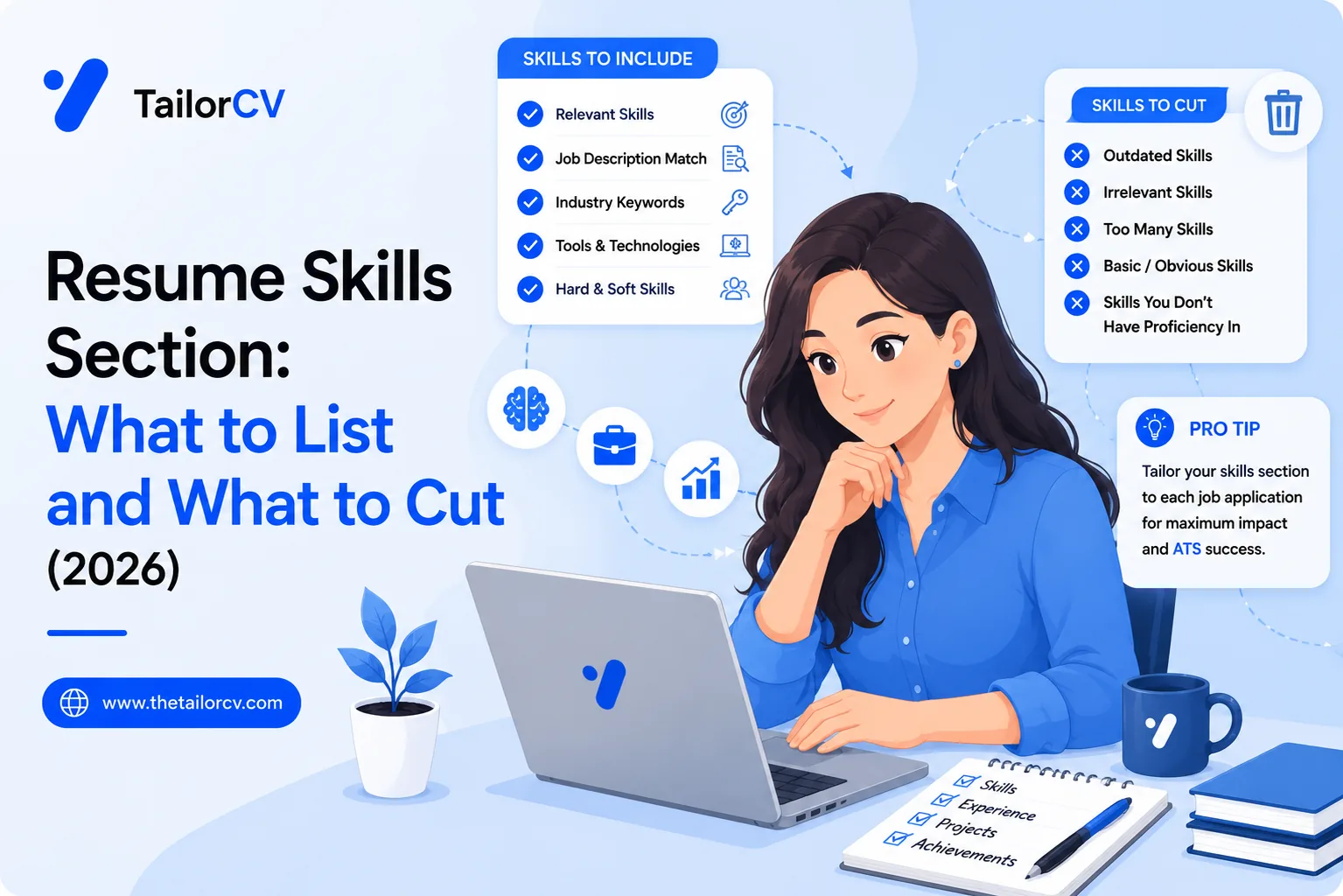
Skills section - Generally avoid a separate soft skills list. If a job description explicitly requires certain soft skills as keywords (for ATS), you can include a brief line, but proof in experience matters far more.
Soft Skills That Job Descriptions Actually Search For
Some ATS systems do scan for soft skill keywords if the job description emphasizes them. If the job description repeatedly mentions "stakeholder management" or "cross-functional collaboration," include those exact phrases - but always with evidence.
Common soft skill keywords in job descriptions:
- Stakeholder management
- Cross-functional collaboration
- Communication
- Leadership
- Problem-solving
- Analytical thinking
- Adaptability
- Mentorship
- Negotiation
- Strategic thinking
The trick: include the keyword AND prove it. "Stakeholder management: led monthly steering committee with 8 senior stakeholders across 3 departments."
Soft Skills by Career Stage
Entry-Level / Fresher
Focus on: learning ability, teamwork, communication, time management. Prove through group projects, internships, and academic leadership.
"Coordinated a 5-person team for a final-year capstone project, managing task allocation and weekly progress reviews to deliver on time."
Mid-Level
Focus on: ownership, collaboration, problem-solving, mentorship. Prove through project leadership and cross-team work.
Senior / Leadership
Focus on: leadership, strategic thinking, stakeholder management, influence. Prove through team building, organizational impact, and executive communication.
Common Soft Skills Mistakes
Your resume after optimization
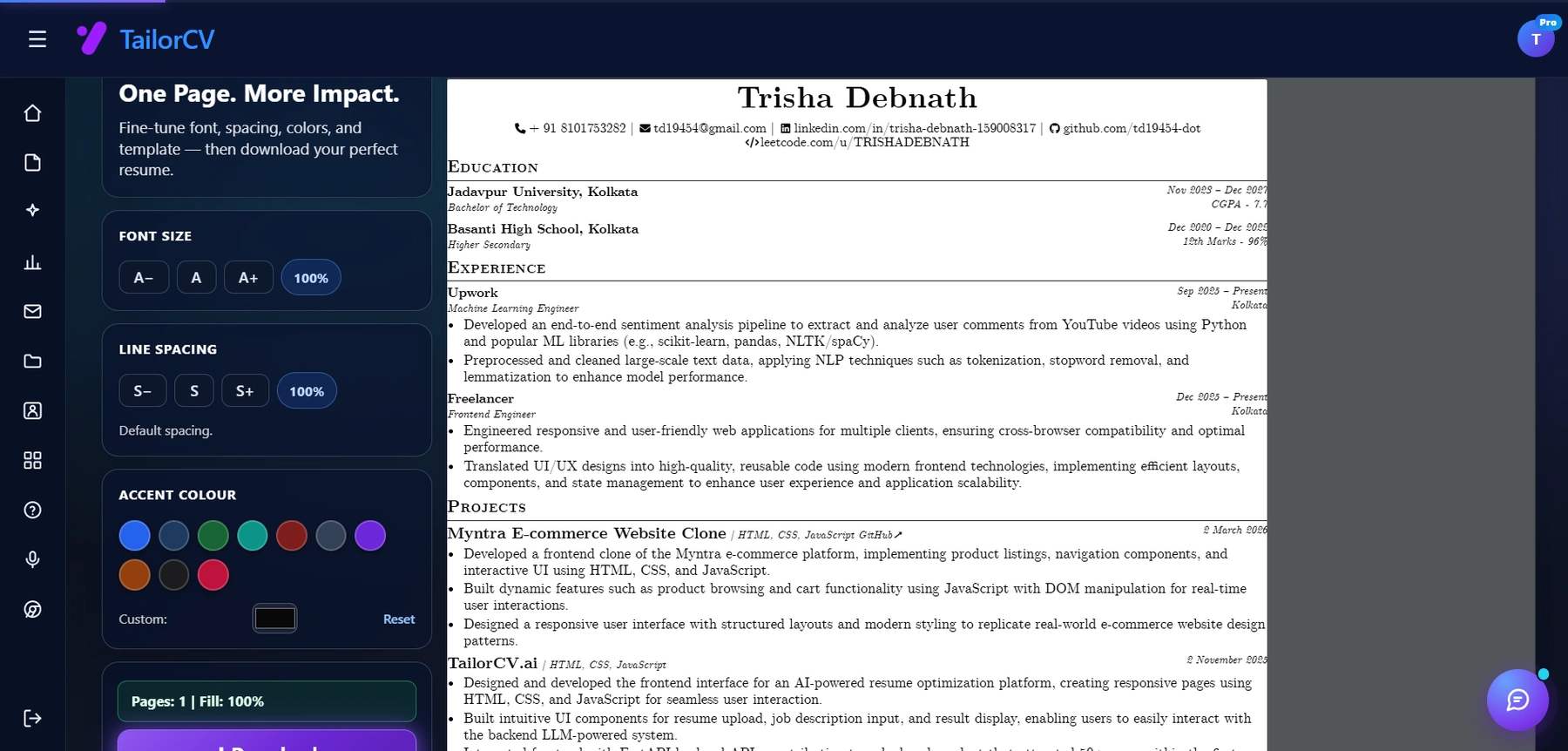
Font size, spacing, accent colour and template are all adjustable, with a live page counter.
Mistake 1: A long list of adjectives
"Hardworking, dedicated, passionate, motivated, detail-oriented, team player" - delete this entire line. It adds nothing.
Mistake 2: Claiming without proving
Every soft skill claim should have a supporting accomplishment somewhere in your resume.
Mistake 3: Using soft skills to fill space
If you have real achievements, they demonstrate soft skills automatically. You rarely need to state soft skills explicitly.
Related Guides
- How to List Certifications on a Resume
- How to List Education on a Resume
- Top Skills to Add to Your Resume
- What Not to Put on a Resume
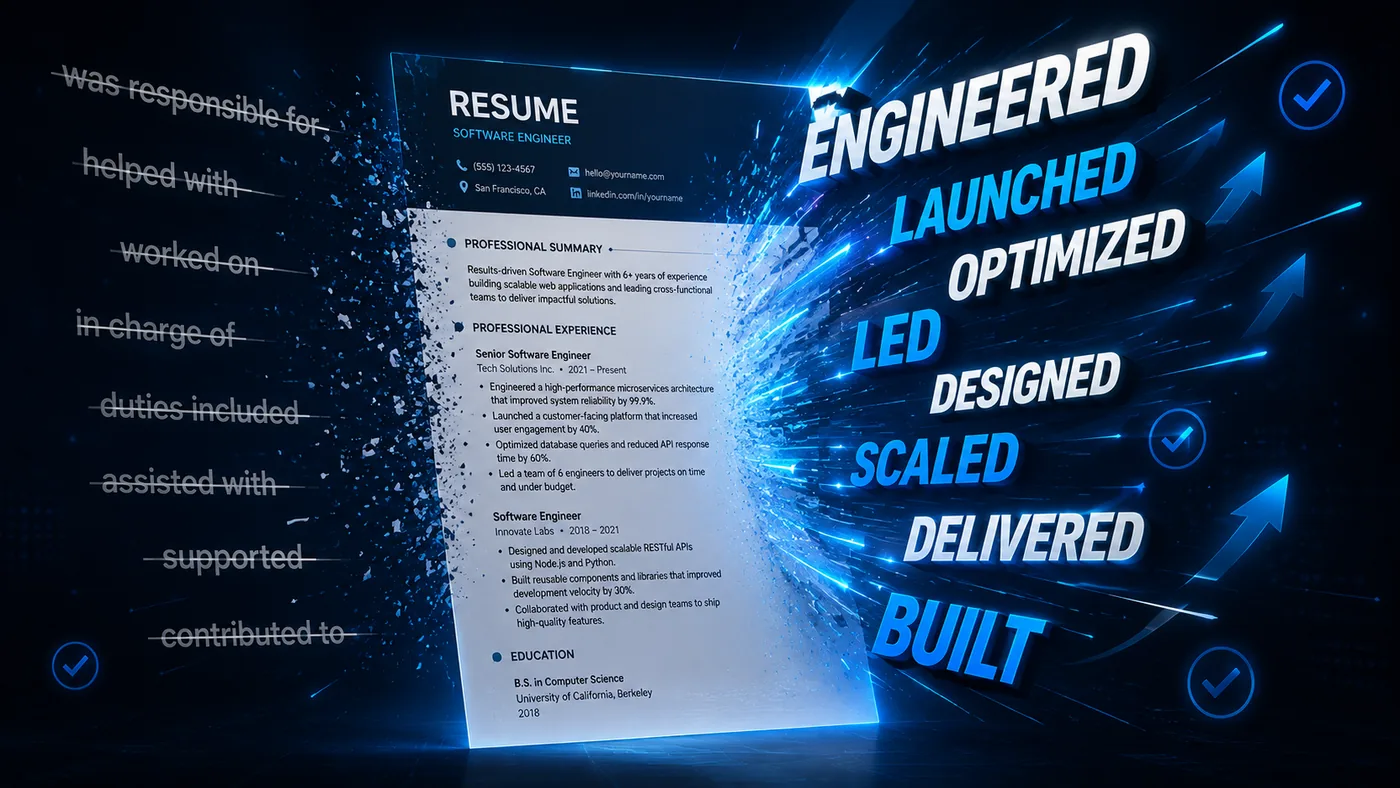
- 200 Best Action Verbs for Resume
- How to Quantify Resume Achievements
- How to Write a Resume Headline
- How to Write a Resume Summary
- 35 Powerful Technical Skills in Resume for Freshers With No Experience (2026 Guide)
- How to Explain Resume Gaps
- Ideal Resume Length
- MBA Resume
- Cover Letter Guide 2026 - How to Write a Cover Letter That Gets Read
- Why Am I Not Getting Interviews for Jobs I'm Qualified For?
- Why Your Resume Never Gets a Response - 12 Hidden ATS Mistakes Killing Your Job Search in 2026
- ATS Mistakes Experienced Professionals Make (And Why Your Resume Stops Working After 5+ Years)
- 20 Common Interview Mistakes to Avoid in 2026
- How to Answer "Tell Me About Yourself" in 2026 - With Examples
Make This Practical
Use this guide as part of a complete job-search workflow. Check your resume with the free ATS score checker, improve targeting with the Resume Optimization Guide, and choose a clean format from the ATS-friendly resume templates.
After the resume is ready, strengthen the rest of the application. Draft a targeted letter with the AI cover letter generator, practice interviews with the AI mock interview tool, and create a project-backed proof page with the portfolio website builder if you need a stronger online presence.
Conclusion
soft skills matter - but on a resume, they must be shown, not listed. Replace every "excellent communicator" with a specific example of communication that produced a result. Your achievements are the proof of your soft skills.
Run your resume through the TailorCV ATS score checker to verify keyword matching, read the action verbs guide and quantify achievements guide to make your evidence-based bullets stronger, and check what not to put on a resume for what to remove.
Frequently Asked Questions
Why is it important to demonstrate soft skills rather than just listing them on my resume?
Demonstrating soft skills through evidence is crucial because it provides context and credibility to your claims. Recruiters often see generic phrases like "excellent communicator" with no supporting details, which fail to differentiate you from other candidates. By showing your soft skills through specific examples of your accomplishments, you can effectively highlight your unique contributions and value. For more tips on showcasing achievements, check out our guide on how to quantify resume achievements.
What are some examples of how to prove communication skills on my resume?
Instead of stating "excellent communication skills," you could provide a specific example such as, "Presented quarterly results to a team of 30, resulting in a 15% increase in project funding." This approach not only illustrates your communication ability but also ties it to a measurable outcome, making your claim more credible. For more action-oriented phrases, refer to our article on 200 best action verbs for resume in 2026.
How can I effectively show leadership skills on my resume?
To showcase leadership skills, describe a situation where you led a project or team, detailing the challenges you faced and the positive impact of your leadership. For example, "Led a team of five in a successful product launch that increased sales by 20% within the first quarter." This method provides concrete evidence of your leadership capabilities, making your resume stand out. If you need additional examples or guidance, consider checking our post on how to write a resume summary.
What soft skills are most valued by employers in 2026?
In 2026, employers highly value skills such as adaptability, problem-solving, and emotional intelligence. Demonstrating these skills through your accomplishments can set you apart from other candidates. For instance, showcasing how you adapted to a significant change in your workplace can illustrate your resilience and flexibility. To learn more about how to present these skills, refer to our guide on how to list certifications on a resume.
How do I ensure my resume aligns with ATS requirements while showcasing soft skills?
To align your resume with ATS requirements, make sure to include relevant keywords that match the job description while integrating your soft skills. Use specific phrases and metrics to demonstrate your abilities, as generic lists can lead to your resume being overlooked. Utilize our free ATS score checker to optimize your resume further and ensure it meets the necessary criteria.
What is your resume scoring right now?
Scan it against a job description and get your ATS match score in about a minute.
Drop your resume here or choose a file
PDF only. Max 2 MB.
We never share your data or use it to train AI models.

Templates that keep this structure intact
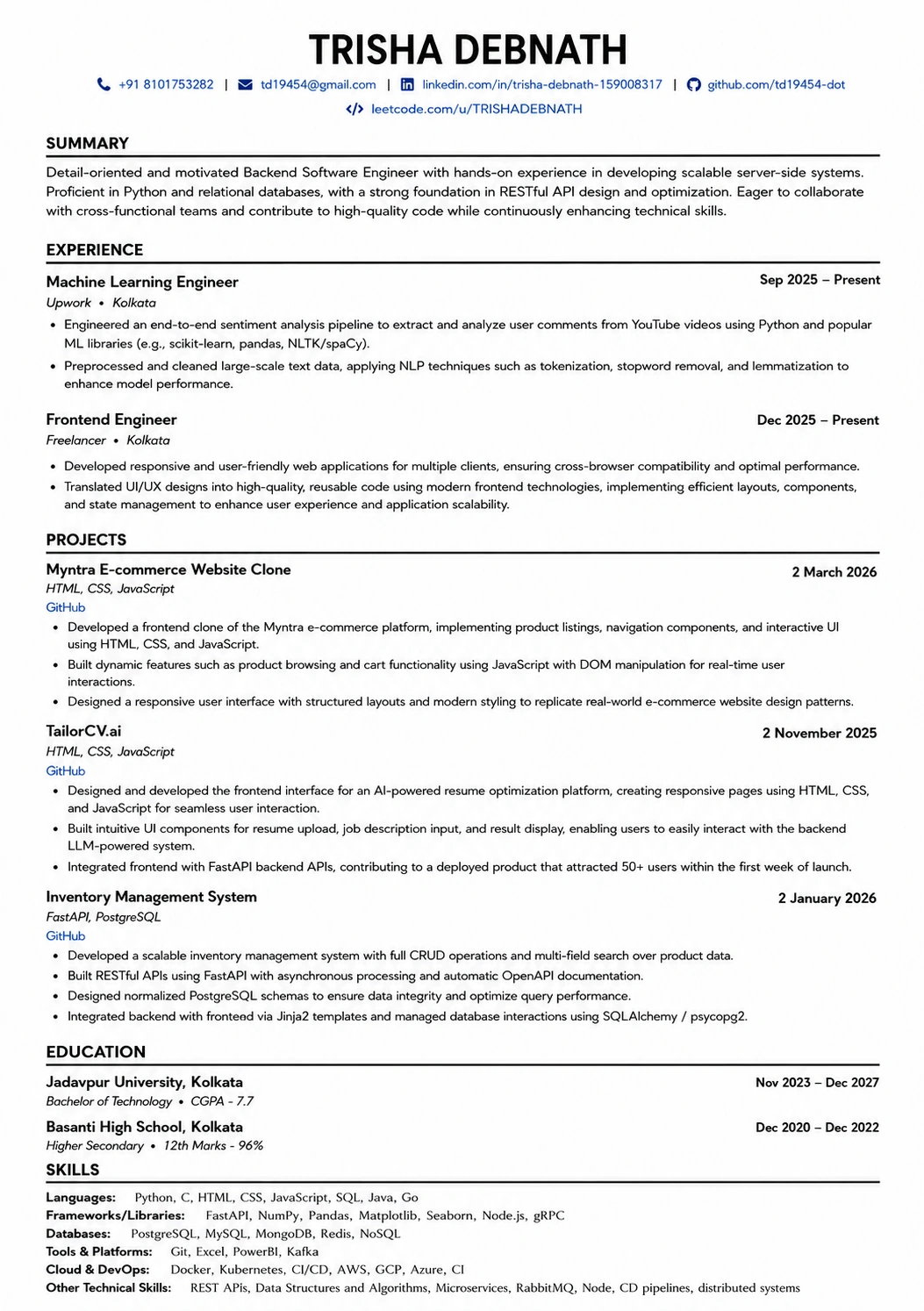
This template is ATS-tested — start from it and the formatting rules in this guide are already handled.
Was this guide useful?
Be the first to rate it.