 TD
TD
Key Takeaways
- Replace the phrase "no experience" with "relevant experience" to boost confidence and highlight transferable skills.
- Relevant experience can include university projects, volunteer work, internships, and personal projects that demonstrate your capabilities.
- Identify and match your transferable skills to the job description, focusing on those most valued by employers.
- Building projects relevant to your desired role can effectively showcase your abilities and problem-solving skills.
How to Get a Job With No Experience - 10 Strategies That Actually Work in 2026
Use this guide with resume templates for beginners, examples for a resume summary with no experience, and the mock interview tool as you prepare applications. If your target role is technical, also use the FAANG software engineer resume guide or the data analyst resume 2026 guide for role-specific examples.
Trying to get a job with no experience can feel like being stuck in a loop. Employers ask for experience, but you need a job to get experience. It is frustrating, especially for fresh graduates, career changers, return-to-work professionals, and anyone entering a new field.
The good news: "no experience" rarely means you have nothing to offer.
You may not have formal work experience in that exact role yet, but you likely have transferable skills, academic projects, personal projects, volunteer work, certifications, part-time experience, freelance tasks, leadership examples, or real-world problem-solving ability.
In 2026, employers still hire beginners. They just need clearer proof that you can learn, contribute, communicate, and grow. Your job is to make that proof easy to see.
If you are building your first resume from scratch, this related guide on writing a resume with no experience is a useful companion.
1. Stop Saying You Have No Experience
The phrase "no experience" can accidentally shrink your confidence. Instead, separate formal experience from relevant experience.
Formal experience means paid work in the same role. Relevant experience means anything that proves you can perform parts of the job.
Examples of Relevant Experience
Relevant experience can include:
- University projects
- Bootcamp assignments
- Volunteer work
- Student clubs
- Internships
- Family business support
- Freelance work
- Personal projects
- Online certifications
- Part-time jobs
- Community leadership
If you organized an event, you practiced planning and coordination. If you handled customers in a retail job, you built communication and problem-solving skills. If you created a portfolio project, you showed initiative and technical learning.
2. Identify Your Transferable Skills
Transferable skills are skills you can carry from one context to another. They are especially important when you do not have direct experience.
For example, a teacher moving into customer success may bring communication, training, conflict resolution, documentation, and stakeholder management. A retail worker moving into sales may bring persuasion, customer service, product knowledge, and resilience.
Common Transferable Skills Employers Value
Strong transferable skills include communication, organization, research, teamwork, leadership, writing, data analysis, customer service, project coordination, adaptability, and attention to detail.
Match Skills to the Job
Do not list every skill you have. Read the job description and identify which transferable skills matter most. Then show evidence in your resume, cover letter, and interview answers.
3. Build Projects That Prove Ability
projects are one of the best ways to overcome limited experience. They show that you can create something, solve a problem, and follow through.
If you want a marketing job, create a sample campaign. If you want a data job, analyze a public dataset. If you want a design job, redesign a real app screen and explain your decisions. If you want an administrative role, create process templates, spreadsheets, or scheduling systems. For more examples, read this guide on how to add projects to your resume.
Make Projects Practical
Employers care more about practical projects than perfect ones. A small, complete project is better than a huge unfinished idea.
Include the problem, your process, the tools used, and the outcome. If possible, add a link to a portfolio, GitHub, Notion page, Google Drive folder, or personal website.
4. Use Volunteer Work Strategically
Volunteer work counts when it builds relevant skills. Many nonprofit organizations, community groups, schools, and local businesses need help with social media, operations, data entry, event planning, tutoring, translation, design, fundraising, or admin tasks.
Treat Volunteer Work Like Professional Experience
On your resume, describe volunteer work with the same seriousness as paid work. Use action verbs and measurable outcomes.
Instead of:
"Helped at local charity."
Write:
"Coordinated weekly donor records in Google Sheets and supported event check-in for 120+ attendees."
That sounds like real work because it is real work.
5. Get Certifications That Match the Role
certifications can help, especially for entry-level jobs where you need to show commitment. They are not magic, but they can fill gaps and give you keywords for your resume.
What optimizing actually does to your resume
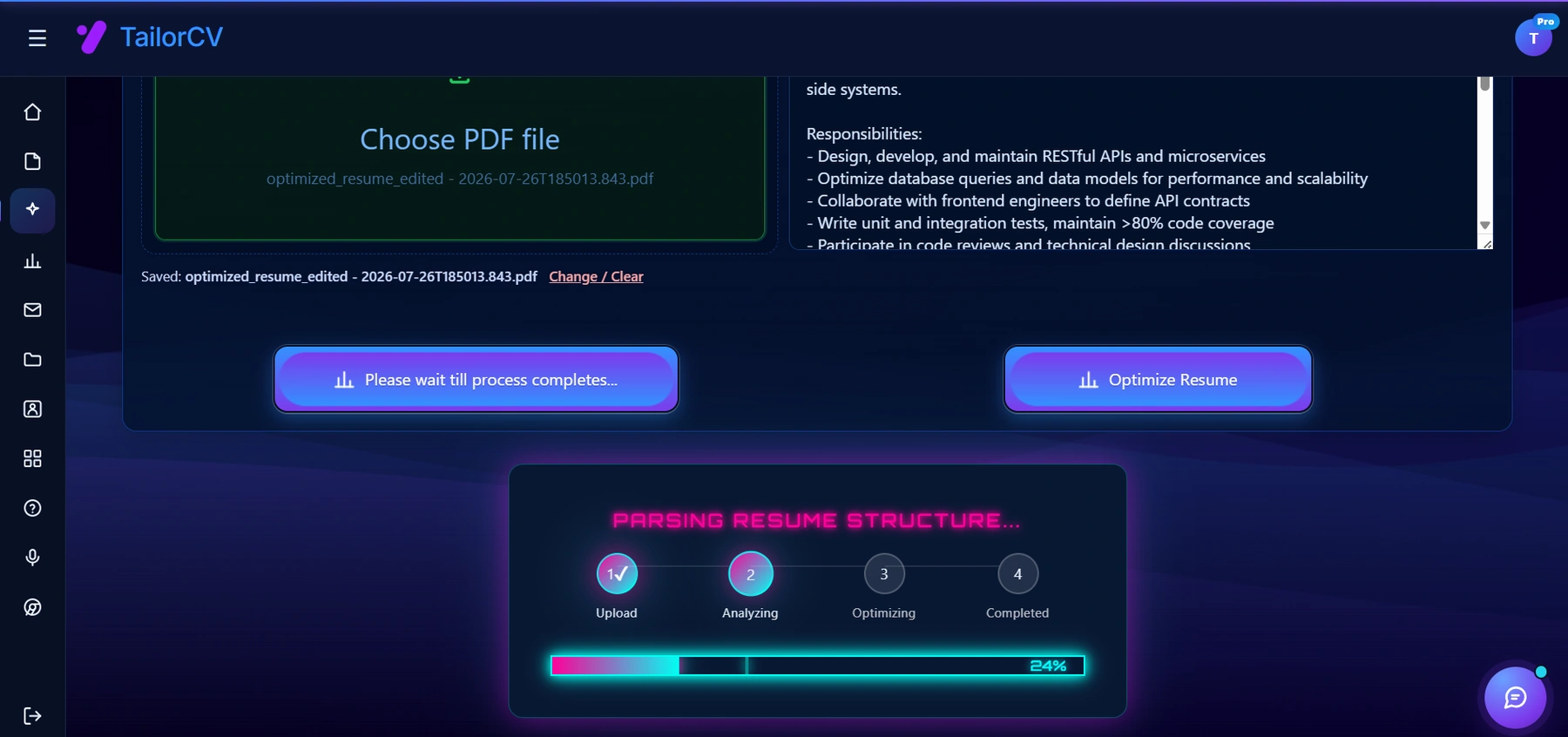
The tool parses your resume the way an ATS would before it changes anything, so the edits it suggests are grounded in the posting itself.
Choose Recognized, Relevant Certifications
For digital marketing, look at Google, HubSpot, Meta, or analytics certifications. For IT support, consider CompTIA, Google IT Support, Microsoft, or cloud fundamentals. For project coordination, look at project management foundations. For data roles, build skills in Excel, SQL, Python, Tableau, or Power BI. This list of free online certificates for resumes can help you choose more strategically.
Do Not Collect Random Certificates
Five relevant certifications are better than twenty unrelated ones. Employers want direction, not a long list of badges.
6. Create a Beginner-Friendly Resume
When you have limited experience, your resume structure matters. Lead with the strongest proof you have.
A good no-experience resume may include:
- Summary
- Skills
- projects
- education
- certifications
- Volunteer experience
- Part-time work
- Leadership or activities
You can also start from ATS-friendly resume templates if formatting is slowing you down.
Write a Strong Summary
Your summary should position you for the target role.
Example:
"Entry-level data analyst with hands-on experience using Excel, SQL, and Tableau through academic and personal projects. Skilled in cleaning datasets, building dashboards, and presenting insights clearly."
This is much stronger than saying you are "seeking an opportunity to learn."
Make Your Bullets Evidence-Based
Every bullet should show what you did, how you did it, and why it mattered.
7. Optimize Your Resume for ATS
Many beginner resumes fail because they do not include the right keywords. The candidate may be capable, but the resume does not match the job description.
TailorCV.ai can help by comparing your resume to a target job description and showing missing skills, weak sections, and ATS alignment issues. This is especially useful when you are new and unsure what employers expect.
For a deeper explanation, read the ATS score guide before you apply.
Use Job Description Language
If a job asks for "customer support," "ticketing systems," and "CRM," use those exact phrases if they match your background. If you used Zendesk in a volunteer role or practiced CRM workflows in a course project, mention it clearly.
Keep Formatting Simple
Use standard headings, clean bullet points, and readable fonts. Avoid graphics, columns, and complex tables if you are applying through online systems.
8. Apply to the Right Jobs
Not every "entry-level" job is truly entry-level. Some job posts ask for three years of experience because employers are optimistic, not because it is always required.
Tailoring without leaving Indeed
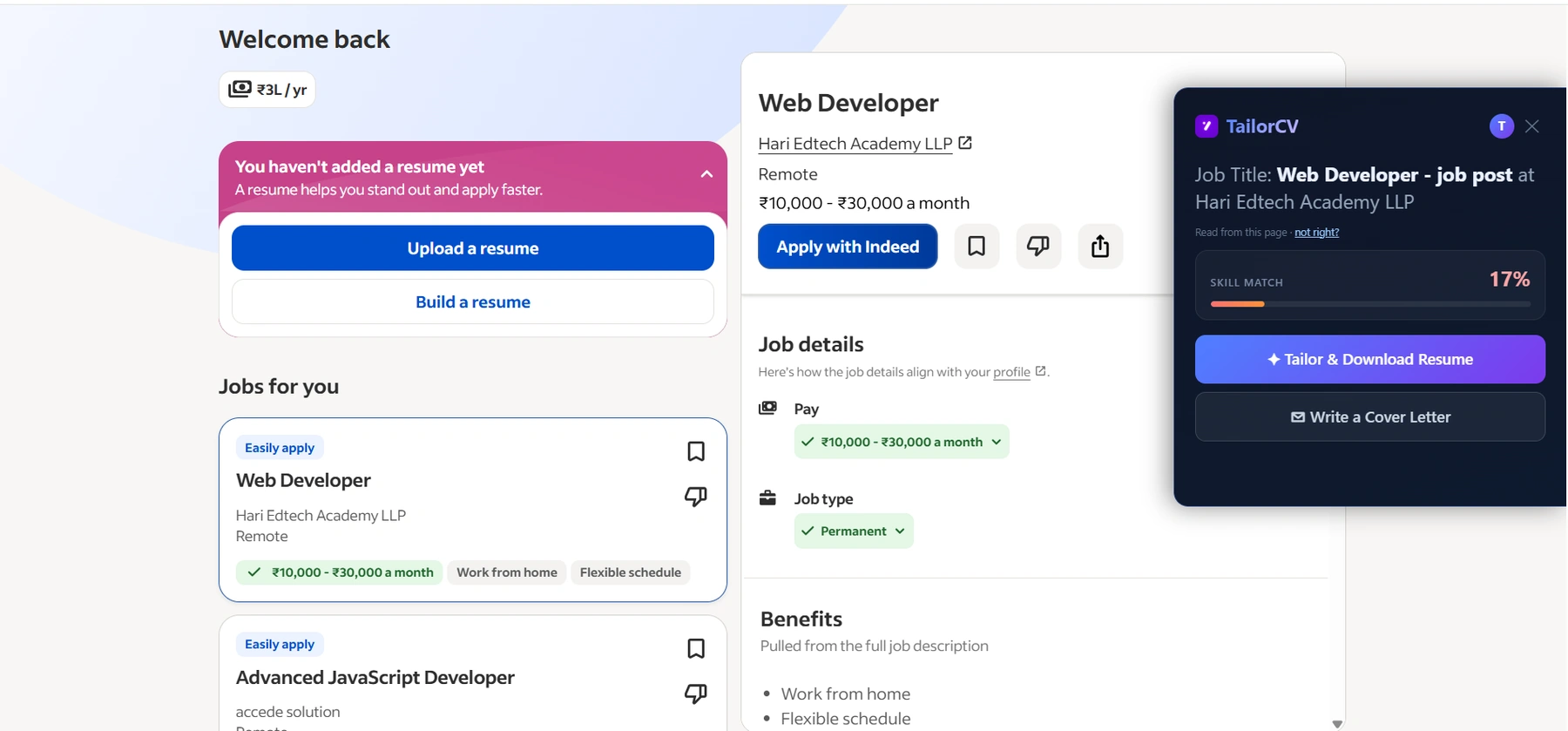
On Indeed the panel reads the posting off the page and shows the match before you hit Apply - the kind of gap worth closing first rather than discovering through silence.
Apply when you meet around 60 to 70 percent of the requirements, especially if you match the core skills and can learn the rest.
Search for Better Keywords
Use search terms like:
- Entry-level
- Junior
- Associate
- Trainee
- Assistant
- Coordinator
- Intern
- Apprentice
- Graduate program
Also search by skill, not only title. For example, search "Excel reporting assistant" or "customer onboarding coordinator."
9. Network Without Being Awkward
networking does not mean begging strangers for jobs. It means starting conversations, learning from people, and becoming visible.
Message alumni, former classmates, community members, LinkedIn creators, recruiters, or people in roles you admire. Keep messages short and specific.
Simple Networking Message
"Hi, I am exploring entry-level customer success roles and noticed you moved into the field recently. If you are open to it, I would appreciate one piece of advice on what helped you get started."
This is respectful and easy to answer.
Ask for Advice, Not a Job
Advice conversations often lead to referrals later. But the first goal is learning and connection.
10. Prepare Interview Stories Before You Get Interviews
Many beginners wait until they have an interview to prepare. That creates panic. Start earlier.
Employers will ask about teamwork, mistakes, problem-solving, deadlines, conflict, learning, and motivation. You can answer using school, projects, volunteer work, part-time work, or personal situations.
When you are ready to practice out loud, try AI mock interview practice to turn those examples into confident answers.
Use the STAR Method
STAR stands for Situation, Task, Action, Result.
Example:
"In my final-year project, our team was behind schedule two weeks before submission. I created a task tracker, divided remaining work by priority, and scheduled short daily check-ins. We submitted on time and received positive feedback for organization and presentation."
That answer shows leadership, organization, and follow-through.
What to Do This Week
If you want momentum, take practical action this week.
Choose one target role. Save five job descriptions. Highlight repeated skills. Update your resume summary and skills section. Add one project or volunteer example. Run your resume through TailorCV.ai to check ATS fit. Send five tailored applications instead of twenty generic ones.
Track Your Applications
Use a spreadsheet with company, role, date applied, resume version, contact person, and follow-up date. Job searching feels less chaotic when you can see your progress.
Common Mistakes to Avoid
Do not apologize for being new. Confidence matters. You can be honest about your level without sounding unsure.
Do not apply with a blank-looking resume. Add projects, certifications, and volunteer experience.
Do not use the same resume for every role. Even entry-level resumes need tailoring.
Do not wait for permission to build experience. Create projects, help people, volunteer, learn tools, and document your work.
Final Thoughts
Getting a job with no direct experience is challenging, but it is not impossible. Employers hire beginners who show potential, proof, and preparation.
Your goal is to make your value visible. Translate your background into transferable skills. Build projects. Use volunteer work. Choose relevant certifications. tailor your resume. Practice interview stories. Reach out to people.
You do not need a perfect background to get started. You need a clear target, consistent effort, and a resume that shows why you are worth interviewing.
Try TailorCV free -> thetailorcv.com
Make This Practical
Turn the career advice into a stronger application system. Start by checking your resume with the free ATS score checker, align it with the role using How to Tailor Your Resume for Every Job, and keep your profile consistent with LinkedIn Resume Tailoring Sync.
When you are ready to apply, build the supporting pieces around the resume. Use the AI cover letter generator for targeted outreach, practice with the AI mock interview tool, and review Why Your Resume Gets No Responses if applications are not converting.
Related Guides
- How to Get Your First Tech Job
- How to Negotiate a Salary Offer
- Remote Job Search Guide
- LinkedIn Profile Optimization Guide
- Networking Tips for Job Search
- Cover Letter Guide
- The CS Degree Bubble Is Real
- Freelancing vs Full-Time Employment
- How to Build a Professional Portfolio
- How to Decline a Job Offer Professionally
- How to Explain Resume Gaps
- How to Handle Job Rejection
Comparison of Formal Experience vs. Relevant Experience
Understanding the difference between formal and relevant experience can help you present yourself more effectively to potential employers.
| Aspect | Formal Experience | Relevant Experience |
|---|---|---|
| Definition | Paid work in the specific role | Any experience that applies to the role |
| Examples | Internship at a marketing firm | Managing a social media account for a club |
| Value to Employers | Directly applicable skills | Transferable skills and adaptability |
| Perception | Seen as more credible | Demonstrates initiative and resourcefulness |
| Focus on Resume | Job titles and company names | Skills, projects, and achievements |
| Networking Approach | Connections within the industry | Leveraging personal networks and community involvement |
Frequently Asked Questions
How can I highlight my transferable skills when applying for jobs with no experience?
To effectively showcase your transferable skills, tailor your resume and cover letter to emphasize relevant abilities gained from previous experiences, such as volunteering or academic projects. Use specific examples that demonstrate your problem-solving, communication, and teamwork skills. For more guidance on how to structure your application, check out our cover letter for a career change for tips on presenting your skills convincingly.
What types of projects should I include on my resume if I have no formal work experience?
Including academic projects, personal projects, or volunteer work can significantly bolster your resume. Focus on projects that align with the job you're applying for and highlight your role, the skills you utilized, and the outcomes achieved. For more insights on selecting and presenting these experiences, refer to our guide on projects in your resume.
Is networking really important if I have no job experience?
Yes, networking is crucial, especially for those without formal job experience. Building connections can lead to opportunities that aren’t advertised publicly and can help you gain insights into the industry. Attend networking events, engage in industry-specific forums, and connect with professionals on platforms like LinkedIn to expand your network. For strategies on transitioning into new fields, check out our Career Change to Tech in 2026.
What should I do if I’m applying for jobs in a different field?
When applying for jobs in a different field, it's essential to tailor your resume and cover letter to highlight relevant skills and experiences that can transfer to the new role. Focus on how your background can add value to the potential employer. For specific examples and templates, see our cover letter for an internal job application.
How many jobs should I apply to if I have no experience?
While the quality of applications is more important than quantity, a good rule of thumb is to apply to at least 5-10 jobs per week. This number allows you to cast a wide net while still tailoring your applications effectively. For more detailed insights on job application strategies, visit our post on how many jobs should you apply to per day.
Find out where a fresher resume stands
Score yours against a real posting - no account, no cost.
Drop your resume here or choose a file
PDF only. Max 2 MB.
We never share your data or use it to train AI models.

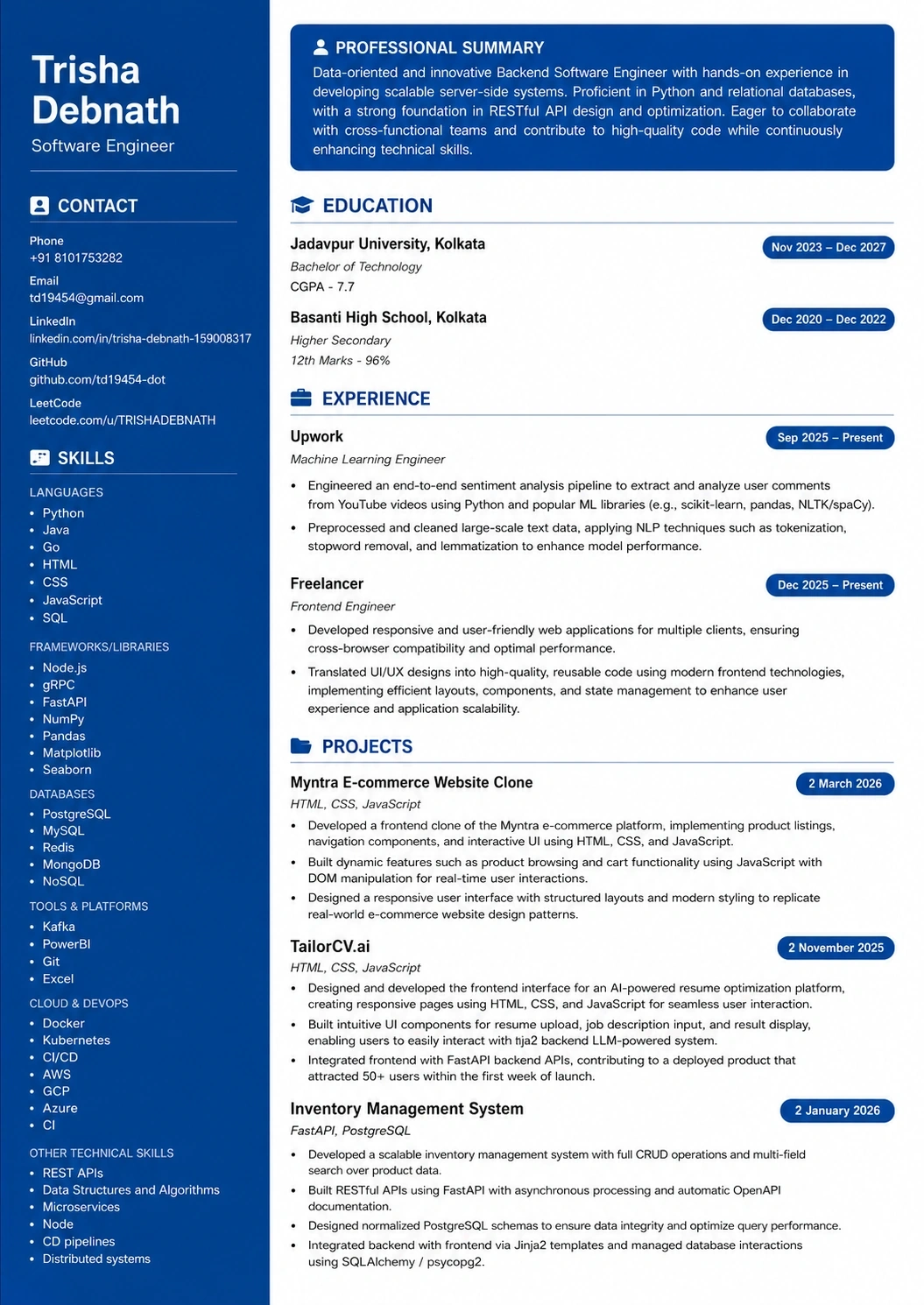
A layout that works with a short history
Leads with skills and projects instead of years of experience you do not have yet.
Was this guide useful?
Be the first to rate it.