SS
SS
Key Takeaways
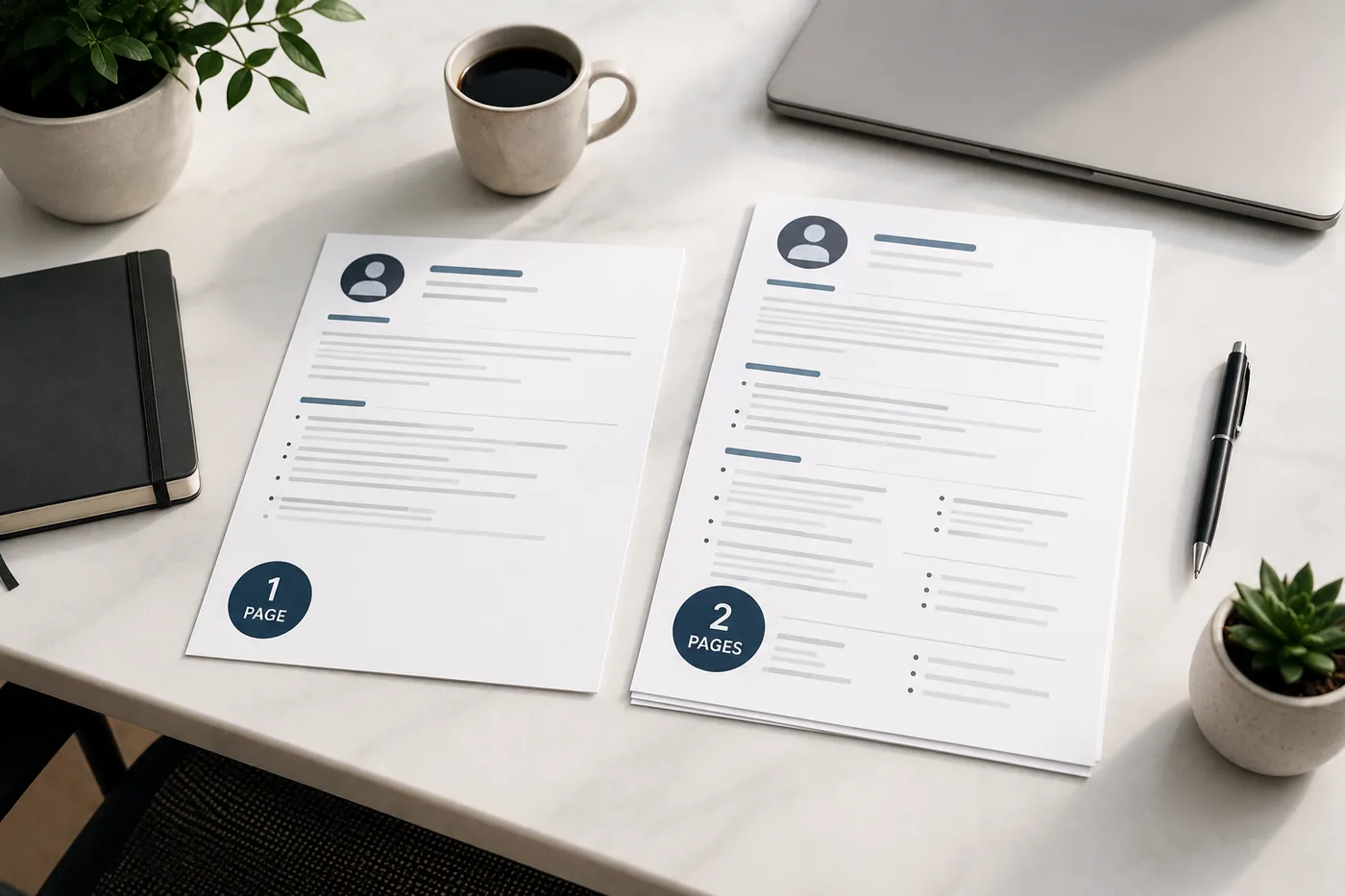
- A one-page resume is ideal for candidates with less than 10 years of experience, while those with 10+ years may use one to two pages.
- Two-page resumes are appropriate for senior roles, specialized fields, or when detailing extensive accomplishments and certifications.
- In industries like tech and business, one page is preferred for early-career professionals, while senior roles can justify two pages.
- To shorten an overly long resume, remove outdated experiences, cut unnecessary objectives, and focus on strong, relevant bullet points.
- Always prioritize clarity and conciseness; a well-edited one-page resume is often more effective than a longer, padded version.
"How long should my resume be?" is one of the most common resume questions - and the answer is more nuanced than the "always one page" advice you may have heard. The right length depends on your experience level, industry, and the role you are targeting.
This guide gives you clear rules for resume length in 2026, plus practical advice on how to cut a resume that is too long or expand one that is too short.
Before worrying about length, make sure your content is right. Run your resume through the ATS score checker and use an ATS-friendly template. For what to cut, read what not to put on a resume.
The Quick Answer
- 0-10 years of experience: One page
- 10+ years of experience: One to two pages
- Senior leadership, academia, or specialized fields: Two pages (sometimes more for CVs)
- Students, freshers, internships: One page, always
When in doubt, shorter is better. A tight one-page resume almost always beats a padded two-page resume.
One Page Resume - When to Use
Use a one-page resume if you have:
- Less than 10 years of experience
- Early to mid-career roles
- A focused career without extensive specialized history
Almost all candidates with under a decade of experience should use one page. Recruiters spend seconds scanning - a tight, focused single page that highlights your best work is more effective than a longer document.
Benefits of One Page
- Forces you to prioritize your strongest content
- Easier and faster for recruiters to scan
- Signals strong editing judgment
- Reduces the risk of weak, padding content
Two Page Resume - When It's Acceptable
A two-page resume is appropriate if you have:
- 10+ years of relevant experience
- Multiple roles with substantial, distinct accomplishments
- Senior or leadership positions with broad scope
- Technical roles requiring detailed project or publication lists
- Significant certifications, patents, or publications
If you use two pages, make sure the second page is full (at least half to two-thirds) and contains valuable content - not padding. A 1.2-page resume looks unfinished; either tighten to one page or expand meaningfully to fill most of two.
Resume Length by Industry
Tech (Software, Data, Engineering)
One page for most. Two pages acceptable for senior/staff/principal engineers with extensive project history.
Business (Finance, Marketing, Operations, Sales)
One page for under 10 years. Two pages for senior managers and executives.
Healthcare (Nurses, Doctors, Pharmacists)
One to two pages. Clinical roles often need space for licensure, certifications, and clinical experience.
Academia and Research
A full CV (curriculum vitae) can be many pages, including publications, grants, teaching, and presentations. This is different from a resume.
Government and Federal
Federal resumes (e.g., USAJobs in the US) are often deliberately longer (3-5 pages) due to specific format requirements. Follow the posting's instructions.
Creative (Design, Writing)
One page resume + a separate portfolio. The portfolio carries the depth; the resume stays tight.
How to Cut a Resume That's Too Long
If your resume is spilling past your target length:
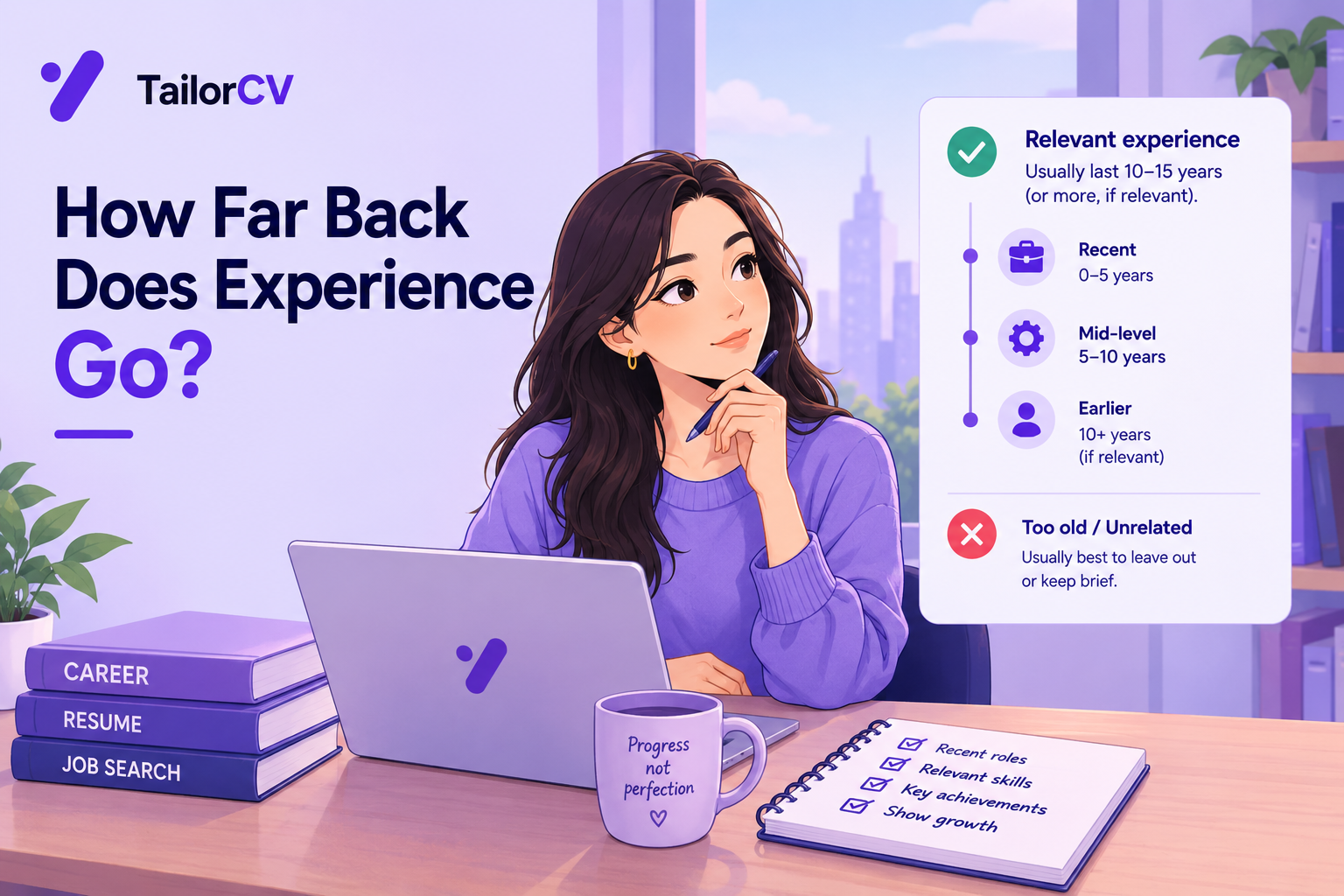
- Remove old experience - Roles older than 10-15 years, or irrelevant early-career jobs.
- Cut the objective and references line - "References available on request" and generic objectives waste space.
- Trim bullet points - Keep 3-5 strong bullets per role, not 8 weak ones. Lead with your best.
- Remove generic skills - "Microsoft Office," "communication," "team player."
- Tighten language - "Responsible for managing a team of 5" becomes "Managed a team of 5."
- Reduce white space and margins - Within reason; keep it readable (0.5-0.75 inch margins).
- Remove hobbies and interests - Unless directly relevant.
- Consolidate - Combine similar bullets, remove redundancy.
Read what not to put on a resume for the full list of things to remove.
How to Expand a Resume That's Too Short
If your resume is too sparse (common for freshers):
- Add a projects section - For students and career changers, projects are essential and fill space with real value.
- Expand on achievements - Add quantified results to thin bullets.
- Add relevant coursework - For freshers, list relevant courses under education.
- Add certifications - Free certifications (Google, AWS, Meta) add credibility and content.
- Include volunteer or extracurricular leadership - Especially relevant for entry-level.
- Add a skills section - Organized by category.
Do not pad with fluff. An honest, focused half-page is better than a page filled with meaningless filler. Read the internship resume guide and first resume with no experience guide for fresher-specific advice.
Font, Margins, and Spacing for Length Control
To fit content cleanly:
- Font size: 10-12pt for body, 14-16pt for your name
- Margins: 0.5-0.75 inch
- Line spacing: 1.0-1.15
- Standard fonts: Calibri, Arial, Garamond, Georgia
Your resume after optimization
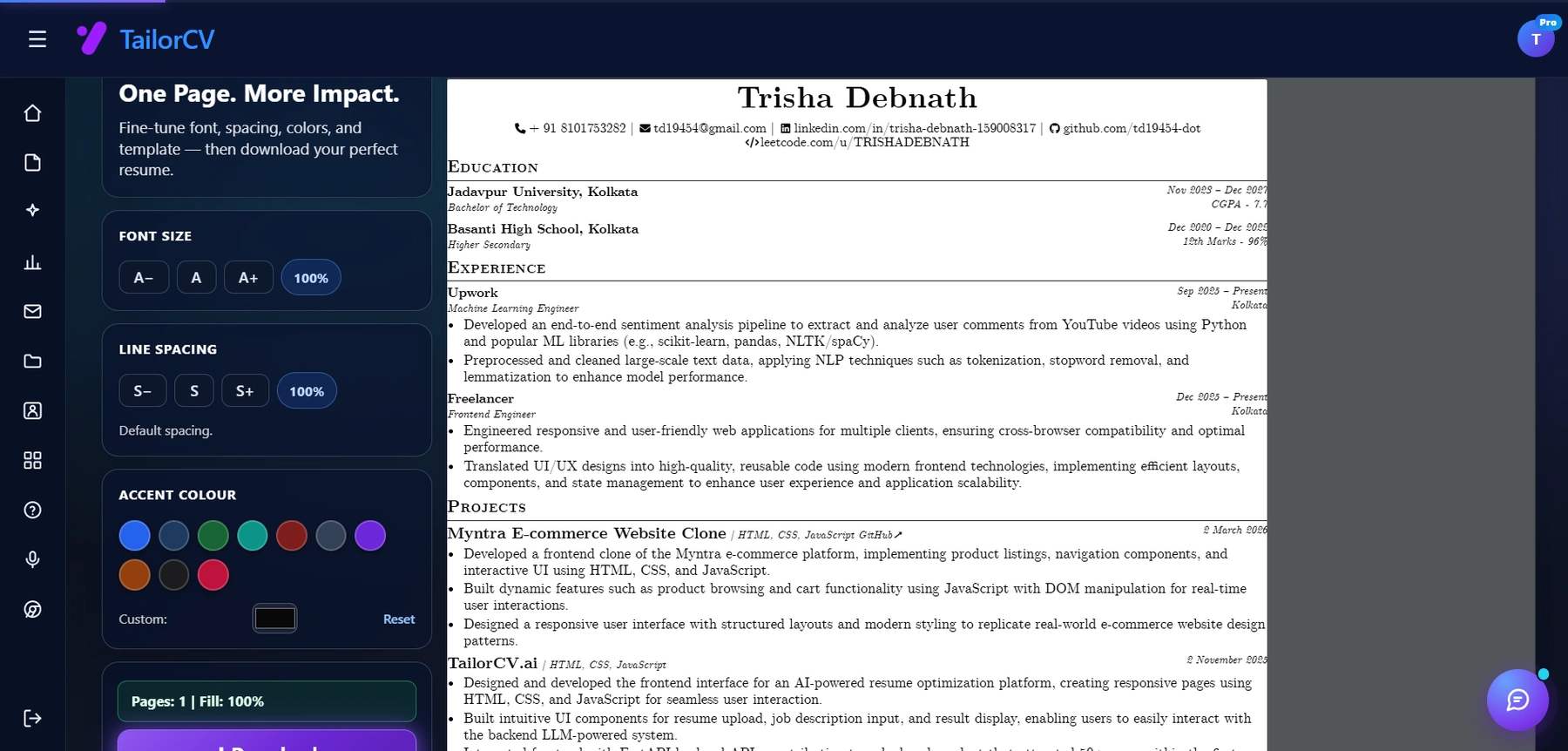
Font size, spacing, accent colour and template are all adjustable, with a live page counter.
Do not shrink your font below 10pt or your margins below 0.5 inch to force a one-pager - it becomes unreadable and signals poor judgment. If you genuinely cannot fit on one page at readable sizes, a clean two-page resume is better.
Common Resume Length Mistakes
Mistake 1: Padding to reach two pages
Two thin pages are worse than one strong page. Never pad.
Mistake 2: Cramming everything onto one page unreadably
If you have 15 years of experience, do not shrink to 8pt font to force one page. Use two pages cleanly.
Mistake 3: A 1.3-page resume
This looks unfinished. Either cut to one full page or expand to fill most of two.
Mistake 4: Including everything you've ever done
Relevance beats completeness. Your resume is a marketing document, not a complete career history.
Related Guides
- 200 Best Action Verbs for Resume
- How to Explain Resume Gaps
- How to List Certifications on a Resume
- How to List Education on a Resume
- How to Quantify Resume Achievements
- How to Write a Resume Headline
- How to Write a Resume Summary
- Internship Resume Guide
- First Time Resume With No Experience: Complete Guide for Freshers & College Students
- Top Skills to Add to Your Resume
- Soft Skills for Resume
- 35 Powerful Technical Skills in Resume for Freshers With No Experience (2026 Guide)
- How to Write a Resume with AI in 2026 - Smart Use Without the Risks
- Cover Letter Guide 2026 - How to Write a Cover Letter That Gets Read
- How to Write a Resume Summary With No Experience (10 Real Examples for 2026)
- How to Get a Job With No Experience - 10 Strategies That Actually Work in 2026
Make This Practical
Use this guide as part of a complete job-search workflow. Check your resume with the free ATS score checker, improve targeting with the Resume Optimization Guide, and choose a clean format from the ATS-friendly resume templates.
After the resume is ready, strengthen the rest of the application. Draft a targeted letter with the AI cover letter generator, practice interviews with the AI mock interview tool, and create a project-backed proof page with the portfolio website builder if you need a stronger online presence.
Conclusion
Resume length in 2026: one page for under 10 years of experience, one to two pages for senior professionals. Prioritize relevance and impact over completeness. A tight, focused resume always beats a padded one.
Once your length is right, run your resume through the TailorCV ATS score checker to ensure your content matches the job. Use ATS-friendly templates and read the resume optimization guide.
Length is closely tied to how many years you show; how far back your experience should go gives the window by career stage and field.
Frequently Asked Questions
How do I determine the ideal resume length for my experience level?
The ideal resume length varies based on your experience level. For those with 0-10 years of experience, a one-page resume is typically best, as it allows you to highlight your most relevant skills quickly. If you have 10+ years of experience, you can extend to one or two pages to include more detailed accomplishments. For specialized roles or senior leadership positions, a two-page resume is often acceptable.
What should I include on a one-page resume?
On a one-page resume, prioritize your most relevant experiences, skills, and achievements. Focus on strong content that showcases your qualifications for the specific role you are applying for. If you have relevant volunteer work, consider including it as it can enhance your application. For guidance on this, check out our article on how to add volunteer work to your resume.
Can I use a two-page resume if I have less than 10 years of experience?
Generally, it's recommended to stick to a one-page resume if you have less than 10 years of experience. However, if you have extensive relevant accomplishments or specialized skills, you might consider a two-page format. Just ensure that every piece of information adds value and aligns with the job you’re targeting, as a tight one-page resume is often more effective.
How can I cut down a resume that is too long?
To cut down a long resume, start by removing any outdated or irrelevant information, such as early job experiences that don’t relate to your current career goals. Focus on your most significant achievements and use concise language. For tips on what to avoid, read our post on what not to put on a resume.
What are the best action verbs to use in my resume?
Using strong action verbs can significantly enhance your resume's impact. Choose verbs that convey your achievements and skills effectively. For a comprehensive list tailored to different roles and categories, check out our guide on 200 best action verbs for resume in 2026. Additionally, consider how to list certifications and education to further strengthen your resume.
What is your resume scoring right now?
Scan it against a job description and get your ATS match score in about a minute.
Drop your resume here or choose a file
PDF only. Max 2 MB.
We never share your data or use it to train AI models.

Templates that keep this structure intact
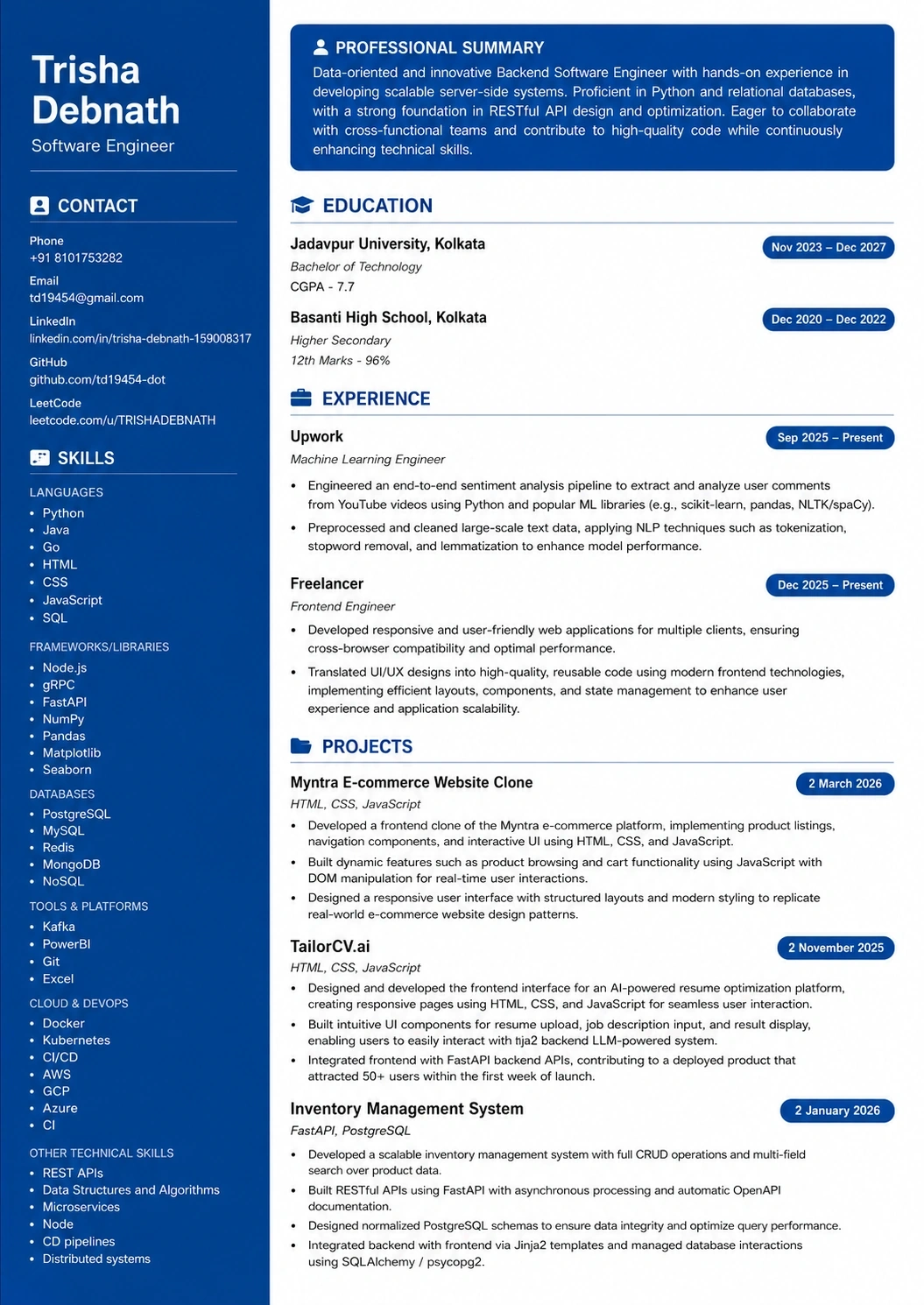
This template is ATS-tested — start from it and the formatting rules in this guide are already handled.
Was this guide useful?
Be the first to rate it.