TD
TD
Key Takeaways
- The scanner filters and ranks; the recruiter decides. Neither stage substitutes for the other.
- The score determines whether you are read. Everything after that is human judgment on evidence.
- Most applications that fail do so at the human stage, not the machine stage.
- Optimising past a reasonable score has near-zero return; improving evidence has a high one.
- Referrals and direct applications change the order of these stages but not the judgment at the end.
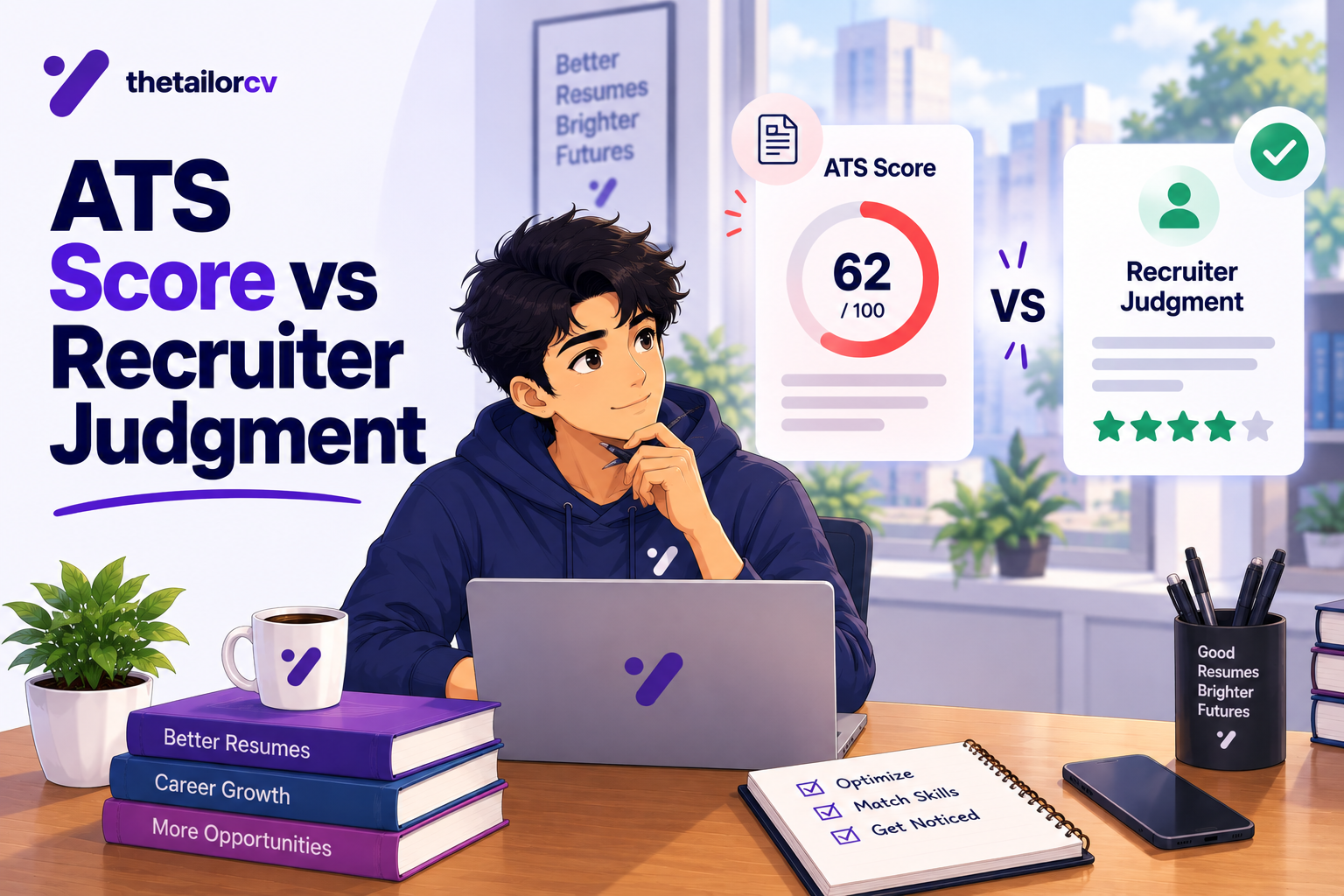
A persistent misunderstanding shapes a lot of wasted effort: the belief that the ATS decides.
It does not. It sorts. Understanding precisely what each stage does tells you where your remaining hour is best spent.
What Each Stage Actually Does
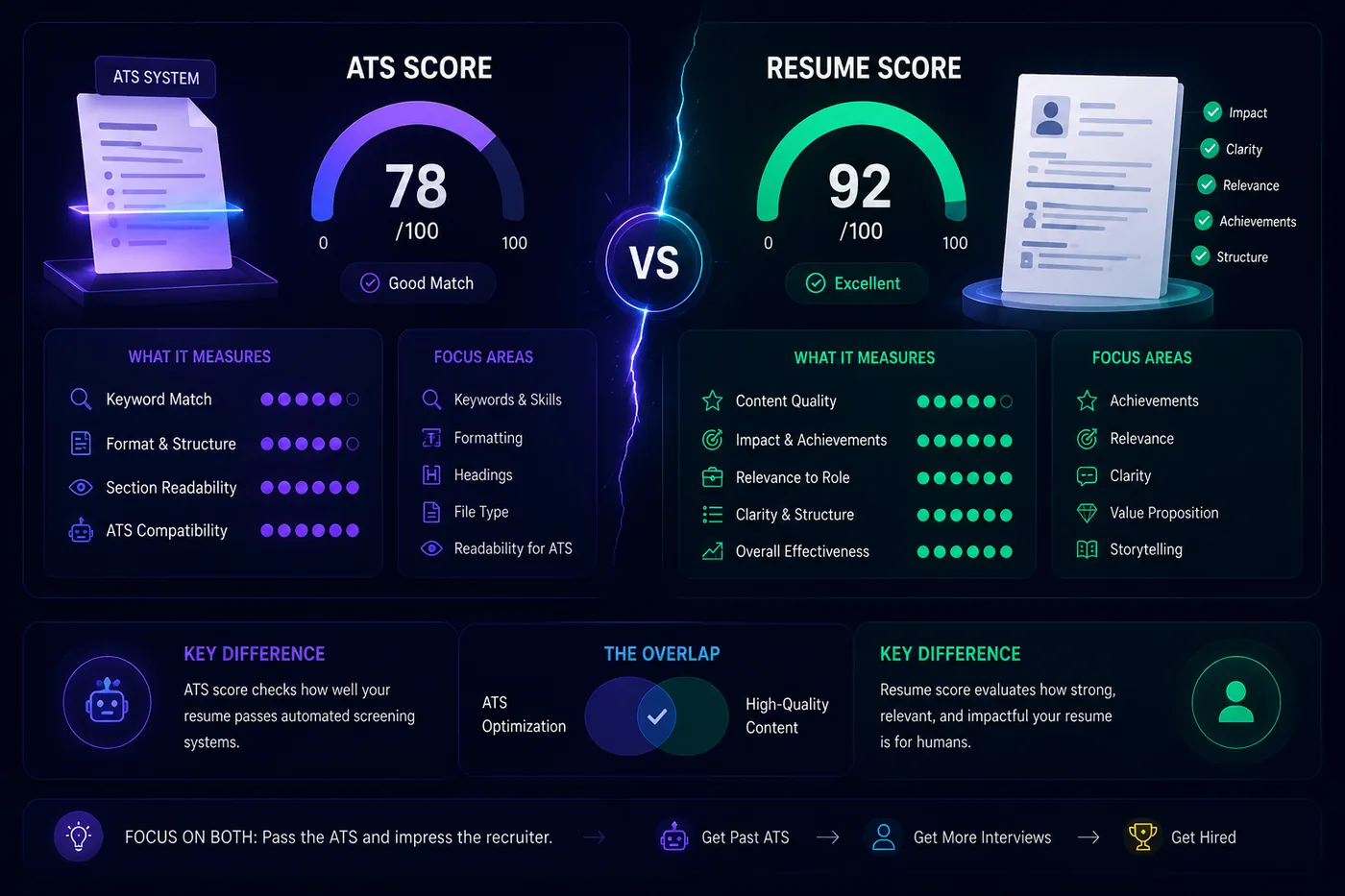
The system does three things. It parses your resume into structured data. It applies any hard filters - knockout questions, required credentials, location eligibility. And it ranks the remaining applicants by relevance so the recruiter has an order to work through.
What it does not do, in almost all configurations, is delete you for a mediocre score. You are ranked lower, which on a posting with three hundred applicants often has the same practical effect - but the mechanism matters, because it means the fix is relative, not binary.
The recruiter does something different. They open your resume and spend a few seconds asking: does this person plausibly do this job, at this level, and is there evidence? That question is about substance - scope, outcomes, progression, credibility.
So the two stages evaluate different properties. The scanner measures whether relevant terms are present and legible. The human measures whether the work behind them was any good.
Where Applications Actually Die
It is tempting to blame the machine, partly because it is invisible and partly because it feels more fixable.
But consider the pattern of your own results. If you get occasional recruiter screens, your resume is clearly passing the ranking stage - the problem is downstream. If you get nothing at all across many well-matched applications, then either parsing is broken, or the match is genuinely weak, or your evidence is not convincing anyone who reads it.
In practice, most applications from qualified people fail at the human stage. The resume was read and it did not make the case.
The Practical Split
This suggests a straightforward allocation of effort.
Spend the first pass on the machine stage. Confirm the document parses - copy-paste test. Confirm the central requirements from the posting appear in your resume in the employer's language. Confirm your title and dates register correctly. This takes ten or fifteen minutes and is largely mechanical.
Spend everything after that on the human stage. Are your top bullets outcomes or duties? Is your strongest evidence in the top third of page one? Does your scope read at the level you are applying for?
The first stage has a ceiling you hit quickly. The second does not.
What Recruiters Are Reading For
Worth being concrete, because "make it better" is not actionable.
Level fit. Does the scope of your work match the scope of the role? A senior posting wants ownership and ambiguity, not a list of completed tasks.
Evidence over assertion. "Strong communicator" is worth nothing. "Presented quarterly results to the exec team" is worth something.
Progression. Does the trajectory make sense? Titles, scope and responsibility moving in a direction.
Relevance density. How much of the first half-page is about things this job cares about?
Credibility. Do the claims hold together? A two-year analyst claiming enterprise architecture ownership reads wrong, and the whole document gets discounted.
None of these are things a scanner assesses, and all of them are things you control.
When the Order Changes
Two routes reverse the sequence.
A referral often means a human reads you first, and the system becomes a formality. This is why referrals convert so much better than cold applications - you skip the ranking stage entirely.
A direct approach to a hiring manager does the same. Smaller companies frequently have no ranking stage at all; someone reads every application.
In both cases the machine stage becomes irrelevant and the human judgment becomes everything - which reinforces the same conclusion about where the work belongs.
The Honest Summary
Get your resume legible and relevant. That is a solvable, bounded problem, and it needs doing once per resume version plus a short pass per application.
Then make it convincing, which is unbounded and is where the outcome is actually determined.
People invert this because the first half feels tractable and measurable. The score goes up, which feels like progress. But a resume that scores well and says nothing has only completed the easy half.
Frequently Asked Questions
Can a low score stop a human ever seeing my resume? On a high-volume posting, effectively yes - a recruiter working through a ranked list may never reach the bottom. The mechanism is ranking rather than rejection, but the outcome can be the same.
Do all employers use a scanner? No. Many small companies read every application manually. Larger employers almost always use one.
If a recruiter decides, why does the score matter at all? Because it determines whether your resume is among the ones they read. It is a gate, not a verdict.
Should I stop using ATS checkers? No - use one to confirm legibility and relevance, then stop. The mistake is treating the score as the goal rather than the entry condition.
Does a high score help once a human is reading? Not directly. The recruiter does not see your score. What helps is that a well-tailored resume tends to also be a clearly relevant one.
Clear the First Stage, Then Move On
The machine stage is the cheap half and worth closing out properly so you can stop thinking about it.
Scan your resume against the posting, fix anything genuinely missing or unparsed, and then put the rest of your time into whether your top bullets would convince someone who does this job.
Related: high score but no interviews and strong score with weak bullets.
What is your resume scoring right now?
Scan it against a job description and get your ATS match score in about a minute.
Drop your resume here or choose a file
PDF only. Max 2 MB.
We never share your data or use it to train AI models.

Templates that keep this structure intact
This template is ATS-tested — start from it and the formatting rules in this guide are already handled.
Was this guide useful?
Be the first to rate it.