 SS
SS
Key Takeaways
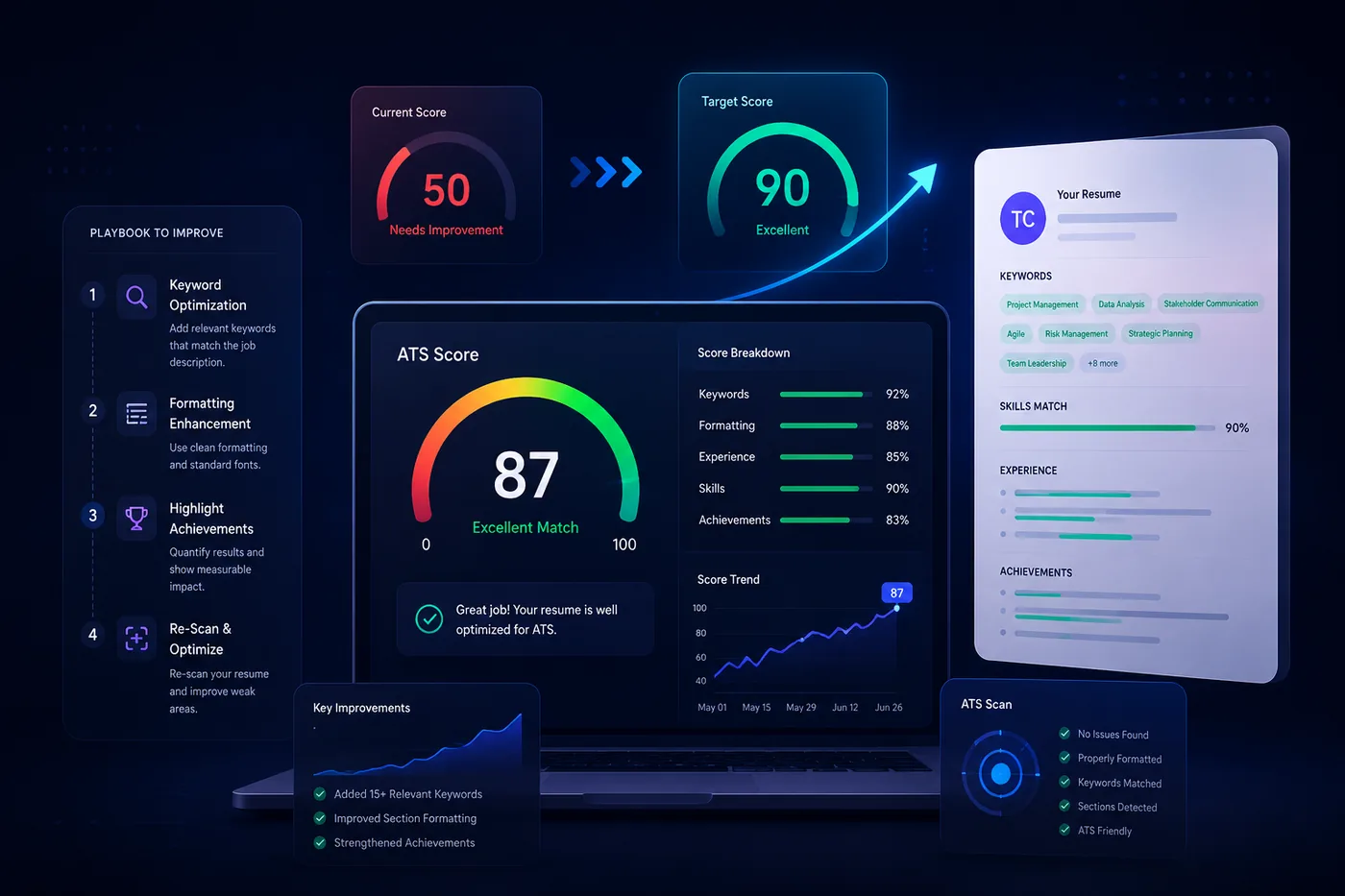
- Start by scanning your resume with an ATS score checker to establish a baseline score and identify areas for improvement.
- Fix formatting issues first by using a single-column layout and standard headings to enhance readability for ATS systems.
- Match keywords from the job description to your resume, incorporating them naturally in your summary, skills section, and experience bullet points.
- Quantify your achievements to demonstrate impact, using specific metrics to strengthen your resume's effectiveness.
- Regularly re-scan your resume after each edit to track improvements and aim for an ATS score of 80 or higher.
If your resume is scoring in the 50s or 60s, you can usually reach the competitive 80-90 range in a single focused editing session. This is a practical, step-by-step playbook to increase your ATS score - no guesswork.
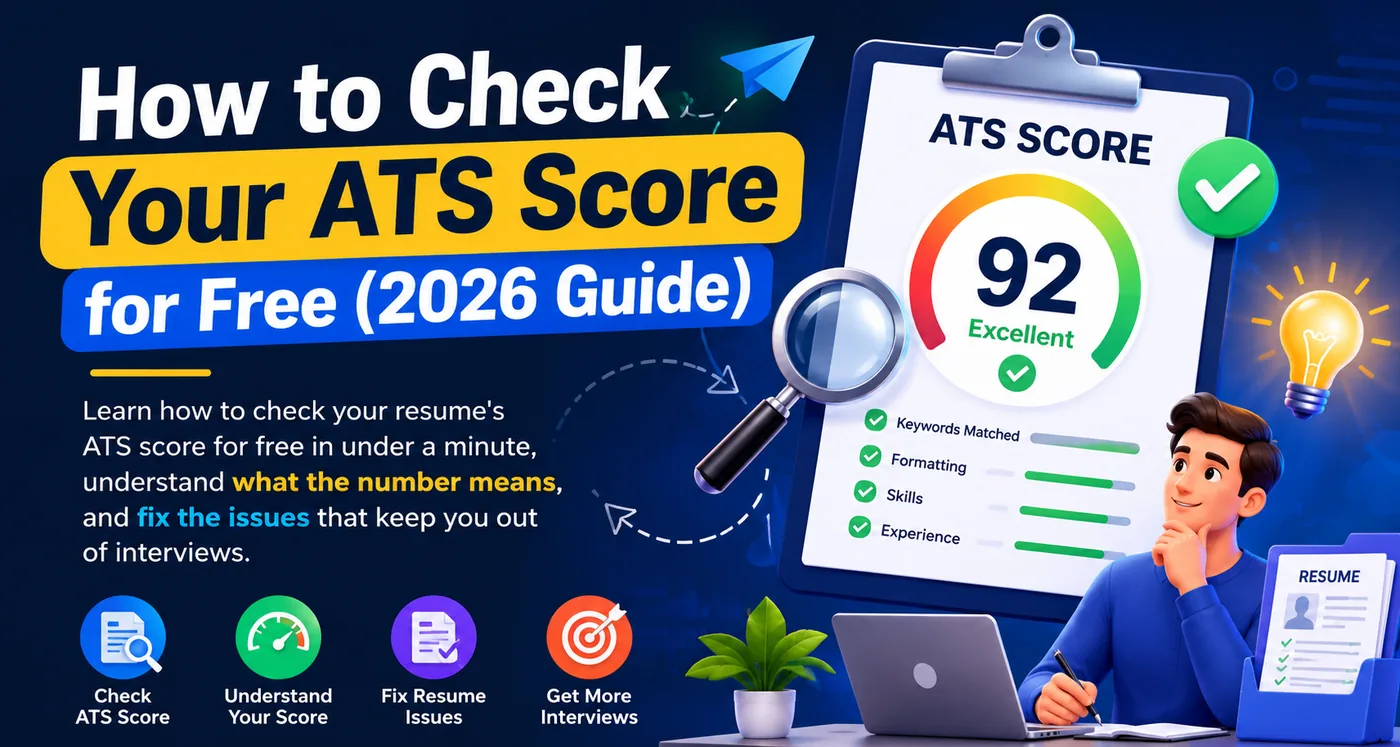
Keep the free ATS score checker open so you can re-scan after each step and watch the number climb.
First, Get Your Baseline
Before you change anything, scan your current resume against the exact job description using the ATS score checker. Note:
- Your overall score
- missing keywords
- Formatting warnings
- Weak sections
This baseline tells you which steps below will move the needle most.
Step 1: Fix Formatting First (Biggest Easy Win)
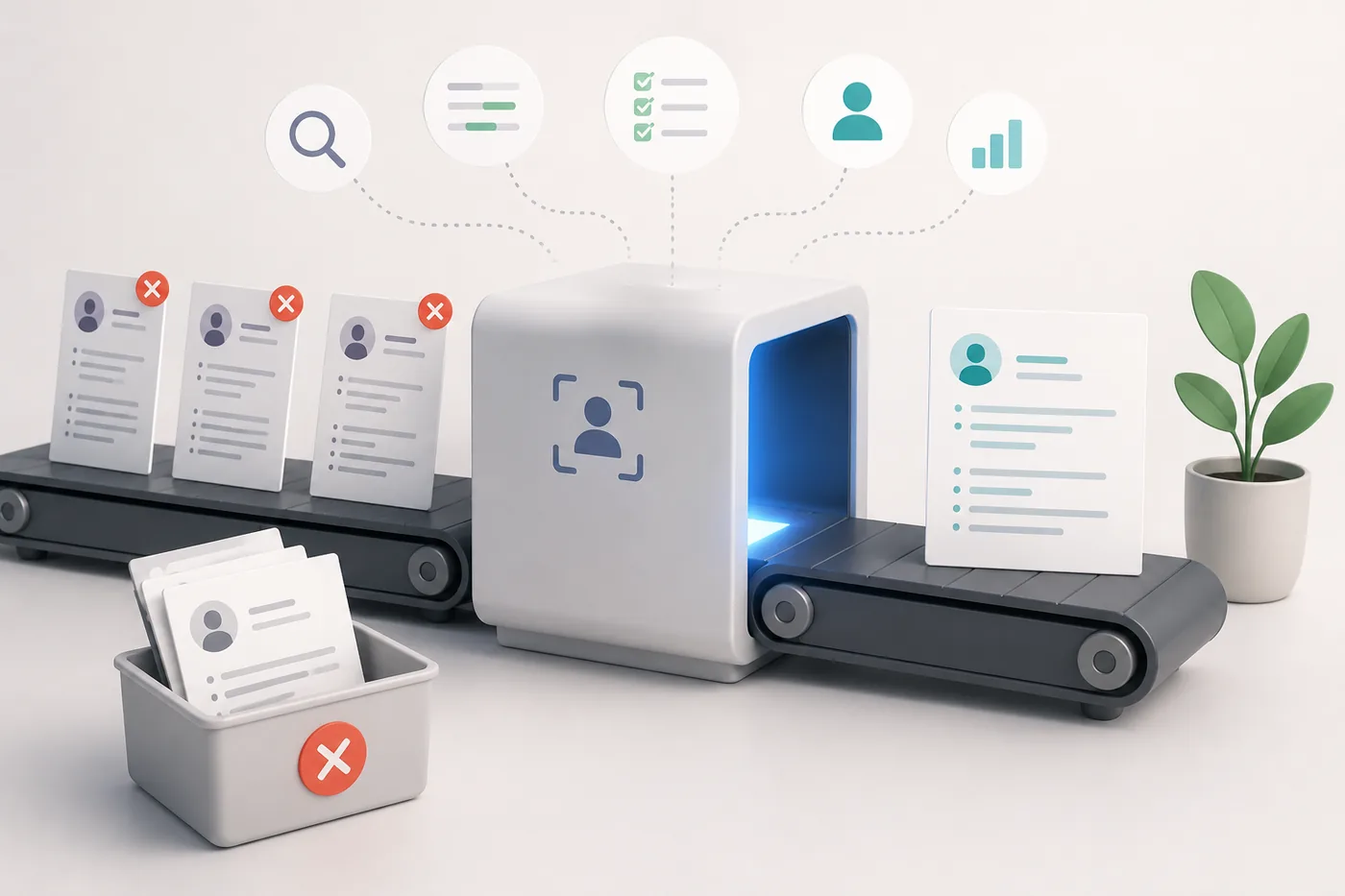
If the parser cannot read your resume, nothing else matters. Replace complex layouts with a clean structure.
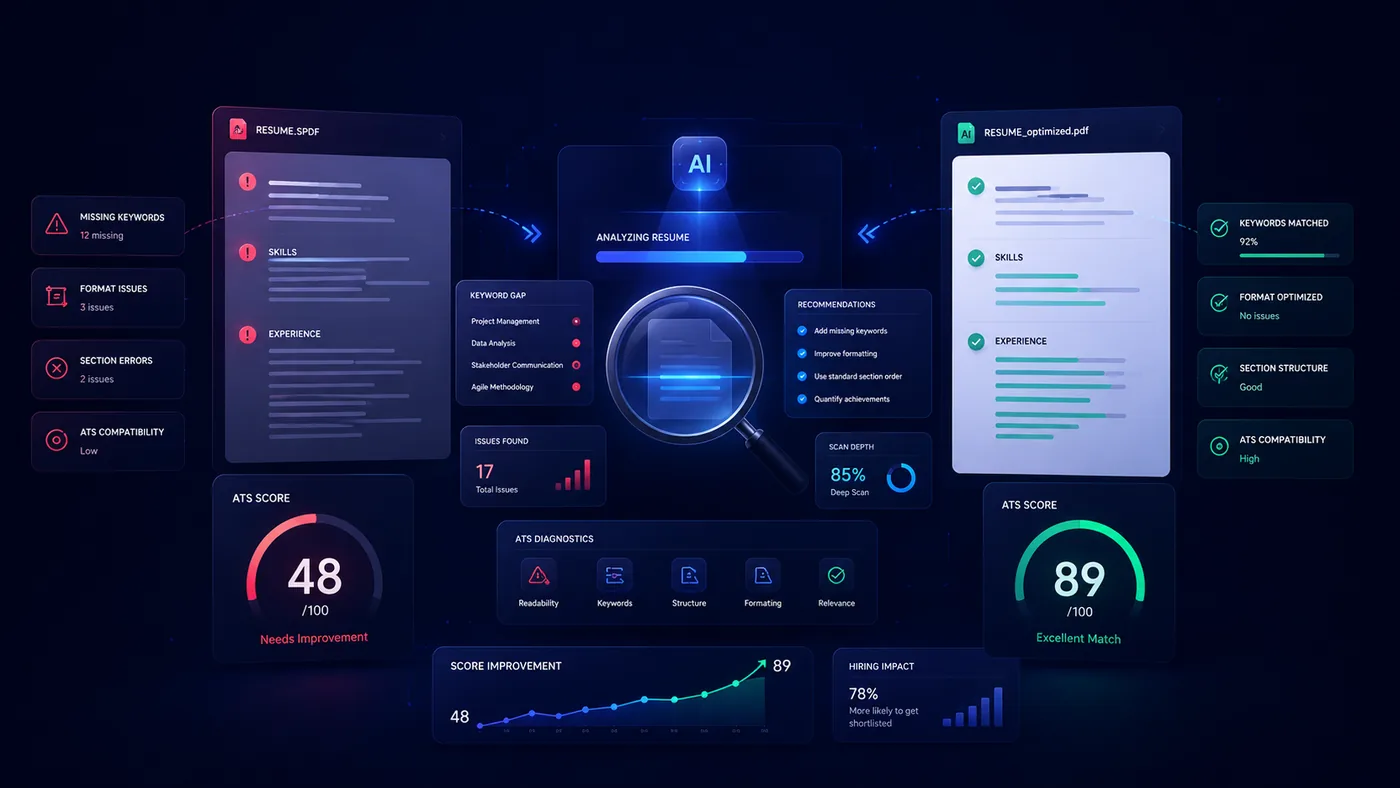
What optimizing actually does to your resume
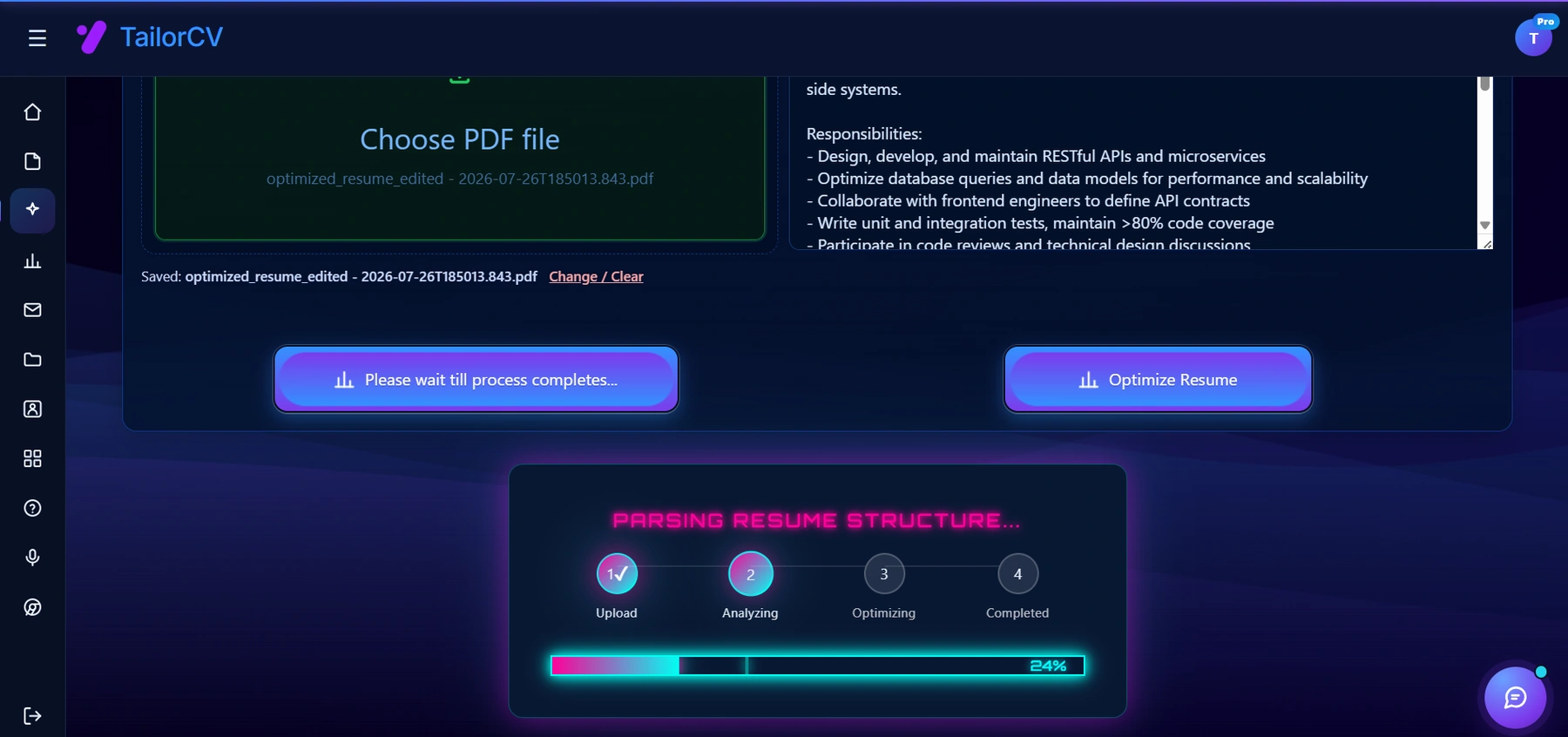
Optimizing runs in visible stages against the specific job description you paste in - it parses your resume the way an ATS would before rewriting anything.
- Use a single-column layout
- Remove tables, text boxes, columns, icons, and images
- Use standard headings: Summary, Skills, Experience, education
- Keep all key info in the body, not headers/footers
- Export as a text-based PDF or DOCX
Start from a proven ATS-friendly template to skip this entirely.
Typical gain: +10 to +20 points.
Step 2: Match the Job Description Keywords
Open the job posting and list every skill, tool, and qualification it mentions. Add the ones that genuinely apply to you, using the exact wording.
Place keywords naturally in your:
- Professional summary
- skills section
- Experience bullet points
Include both acronyms and full terms - "Customer Relationship Management (CRM)". For a deeper method, read the resume keywords guide and ATS keywords to boost your score.
Typical gain: +10 to +25 points.
Step 3: Strengthen Your Skills Section
Create or expand a dedicated skills section that mirrors the role's requirements:
- Technical skills and tools
- Industry-specific terminology
- Relevant certifications
- A few high-value soft skills
This directly improves your skills-alignment score.
Step 4: Quantify Your Achievements
Rewrite weak bullets into measurable results. The ATS - and recruiters - value impact.
- Before: "Responsible for managing social media"
- After: "Grew social media engagement 47% and added 12K followers in 6 months"
See how to quantify resume achievements and best action verbs for your resume.
Step 5: Align Your Job Titles and Summary
- Make sure your professional summary names the target role and top keywords
- Where accurate, use standard job titles instead of internal labels
- Lead your experience with the most relevant roles
Step 6: Re-Scan and Repeat
Run the ATS score checker again. Compare to your baseline, apply any remaining suggestions, and re-scan until you are at 80+.
| Edit | Typical Impact |
|---|---|
| Fix formatting / template | +10 to +20 |
| Add missing keywords | +10 to +25 |
| Strengthen skills section | +5 to +10 |
| Quantify achievements | +5 to +10 |
A Realistic Before-and-After
A typical journey from 52 to 88:
- Switched from a two-column template to single column -> 52 -> 66
- Added 9 missing keywords from the posting -> 66 -> 81
- Rewrote 6 bullets with metrics -> 81 -> 88
Three steps, one session, into the competitive range.
Common Mistakes to Avoid When Optimizing Your ATS Score
When attempting to improve your ATS score, it's easy to make mistakes that can hinder rather than help your efforts. Here are some common pitfalls to avoid:
-
Ignoring ATS Compatibility: Using unconventional fonts or graphics can confuse ATS software. Stick to standard fonts like Arial or Times New Roman and avoid images.
-
Overstuffing Keywords: While matching job description keywords is crucial, overloading your resume with them can appear unnatural. Use keywords in context, ensuring they fit seamlessly into your narrative.
-
Neglecting Soft Skills: Many candidates focus solely on hard skills, but ATS systems also evaluate soft skills like communication and teamwork. Incorporate these into your experience descriptions.
-
Using Uncommon Acronyms: While acronyms may be familiar in your industry, they might not be recognized by ATS. Always spell out acronyms on first use, followed by the abbreviation in parentheses.
-
Failing to Customize for Each Application: Sending out a generic resume can significantly decrease your ATS score. Tailor your resume for each job application by aligning your experience with the specific requirements of the role.
Do's and Don'ts for ATS Optimization
Do's:
- Do Use Standard Headings: Use conventional headings like "Work Experience," "Education," and "Skills" to make it easier for ATS to categorize your information.
- Do Use Bullet Points: Bullet points enhance readability and help ATS extract relevant information easily.
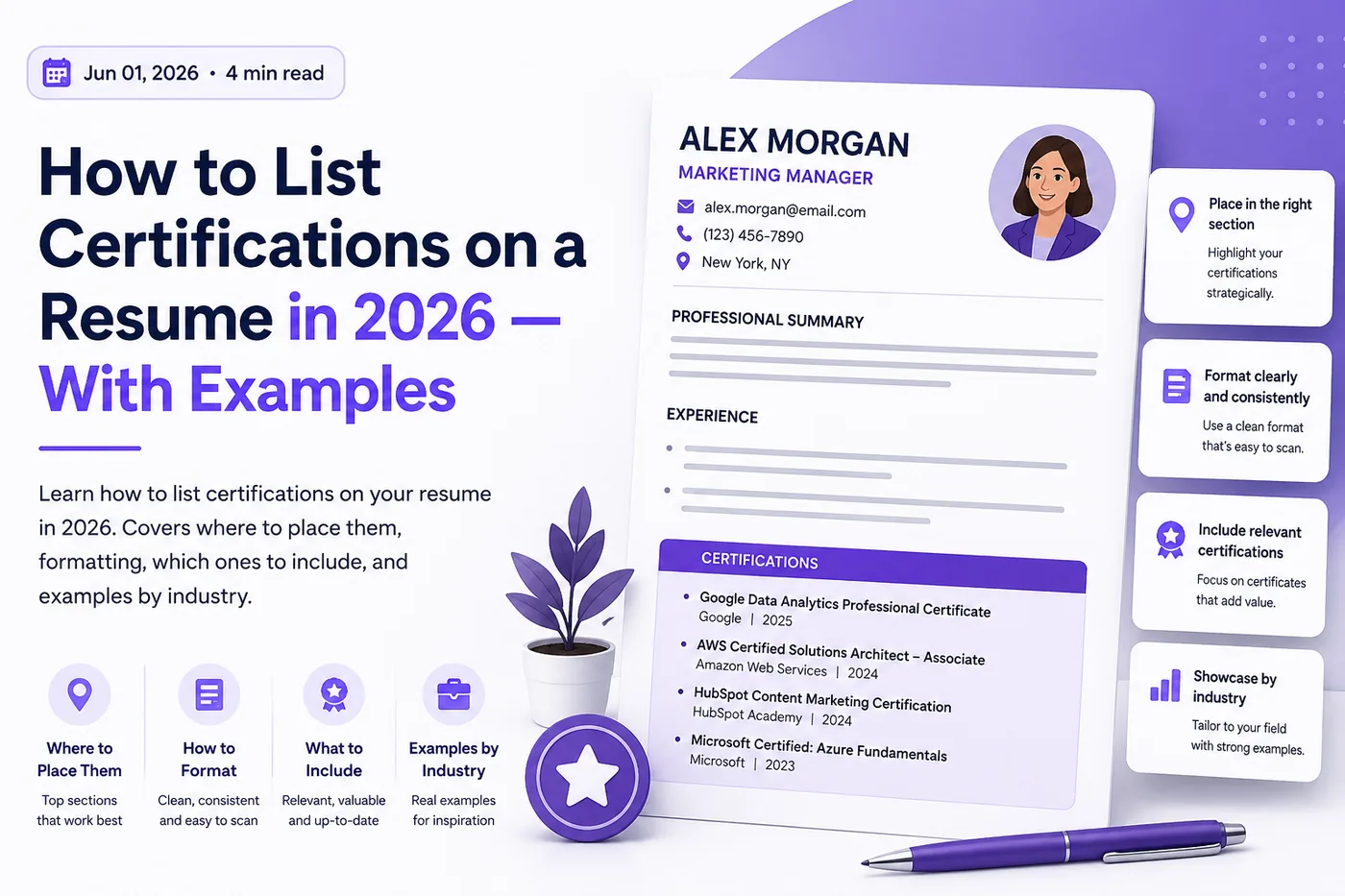
- Do Include Relevant Certifications: Highlight certifications that are relevant to the job. How to List Certifications on a Resume in 2026 - With Examples provides guidelines on how to do this effectively.
Don'ts:
- Don't Use Tables: ATS may struggle to read tables. Instead, format your information using simple text and bullet points.
- Don't Include Irrelevant Information: Only include experiences and skills that directly relate to the job. Extraneous details can dilute the effectiveness of your resume.
- Don't Use Complex Language: Keep your language clear and straightforward. ATS thrives on simplicity, so avoid jargon that may not be recognized.
Short Scenarios for Practical Understanding
-
Scenario: A Marketing Manager Application - You apply for a Marketing Manager role. The job description emphasizes "digital marketing" and "SEO." Your resume should prominently feature experiences related to these areas, using those exact phrases in your bullet points. For example:
- "Led SEO campaigns that increased website traffic by 30% over six months."
-
Scenario: A Software Developer Position - The job description lists "Java," "Agile," and "team collaboration." Ensure your resume includes these keywords in both your skills section and your job descriptions:
- "Contributed to Agile development teams to deliver software solutions using Java, enhancing team collaboration and project outcomes."
Mini Checklist for ATS Optimization
Before submitting your resume, use this mini checklist to ensure it meets ATS requirements:
- unchecked: Is the format ATS-friendly? (No graphics, tables, or unusual fonts)
- unchecked: Does it contain relevant keywords? (Match them with the job description)
- unchecked: Are soft skills included? (Incorporate them naturally within your experience)
- unchecked: Is the language clear and concise? (Avoid jargon and complex phrases)
- unchecked: Did you customize it for this job application? (Tailor your resume for each position)
- unchecked: Have you used standard headings? (Work Experience, Education, Skills)
- unchecked: Is your contact information easy to find? (At the top of the resume)
For further assistance, check out our ATS Resume Checker - How It Works and How to Pass (2026) to test your resume's compatibility before submission.
Frequently Asked Questions
How long does it take to improve an ATS score?
Usually under an hour. Formatting and keywords produce the fastest, largest gains.
What is the fastest way to raise my score?
Fix formatting (use a single-column ATS template) and add the exact keywords from the job description. Those two steps account for most of the improvement.
Should I aim for 100?
No. 80-90 is the sweet spot. Pushing for 100 risks keyword stuffing that hurts readability for human reviewers. See what is a good ATS score.
Do I repeat this for every job?
Yes. Re-tailor and re-scan for each role, since the score is specific to each job description.
Related Guides
- Why Is My ATS Score So Low?
- How to Check Your ATS Score for Free
- What Is a Good ATS Score?
- ATS Keywords to Boost Your Score
- How to Make Your Resume ATS-Friendly
- ATS Resume Checker - How It Works and How to Pass (2026)
- ATS Score vs Resume Score - What's the Difference? (2026)
- Does My Resume Pass ATS? A 12-Point Checklist (2026)
- Free ATS Resume Scan - Test Your Resume in 60 Seconds (2026)
- ATS Score Guide for 2026
- What is an ATS Score and Why Does It Decide Your Job Application Before Any Human Reads It
- Resume to Job Description Match Percentage - What Score Do You Need in 2026?
Make This Practical
Do not guess whether the resume is ready. Upload it to the free ATS score checker, compare the result with the ATS Score Guide, and fix formatting issues using ATS Resume Formatting Mistakes and ATS Resume Parser Friendly Format.
After the technical cleanup, improve relevance. Use Resume Matching With Job Description, strengthen keyword coverage with the Resume Keywords Guide, and avoid overdoing it by checking ATS Keyword Mistakes. If the layout itself is weak, rebuild with an ATS-friendly resume template.
Conclusion
Increasing your ATS score is a repeatable process: fix formatting, match keywords, strengthen skills, quantify results, and re-scan. Follow the steps in order and you can move from a failing score to a competitive 80-90 in one sitting.
What is your resume scoring right now?
Scan it against a job description and get your ATS match score in about a minute.
Drop your resume here or choose a file
PDF only. Max 2 MB.
We never share your data or use it to train AI models.

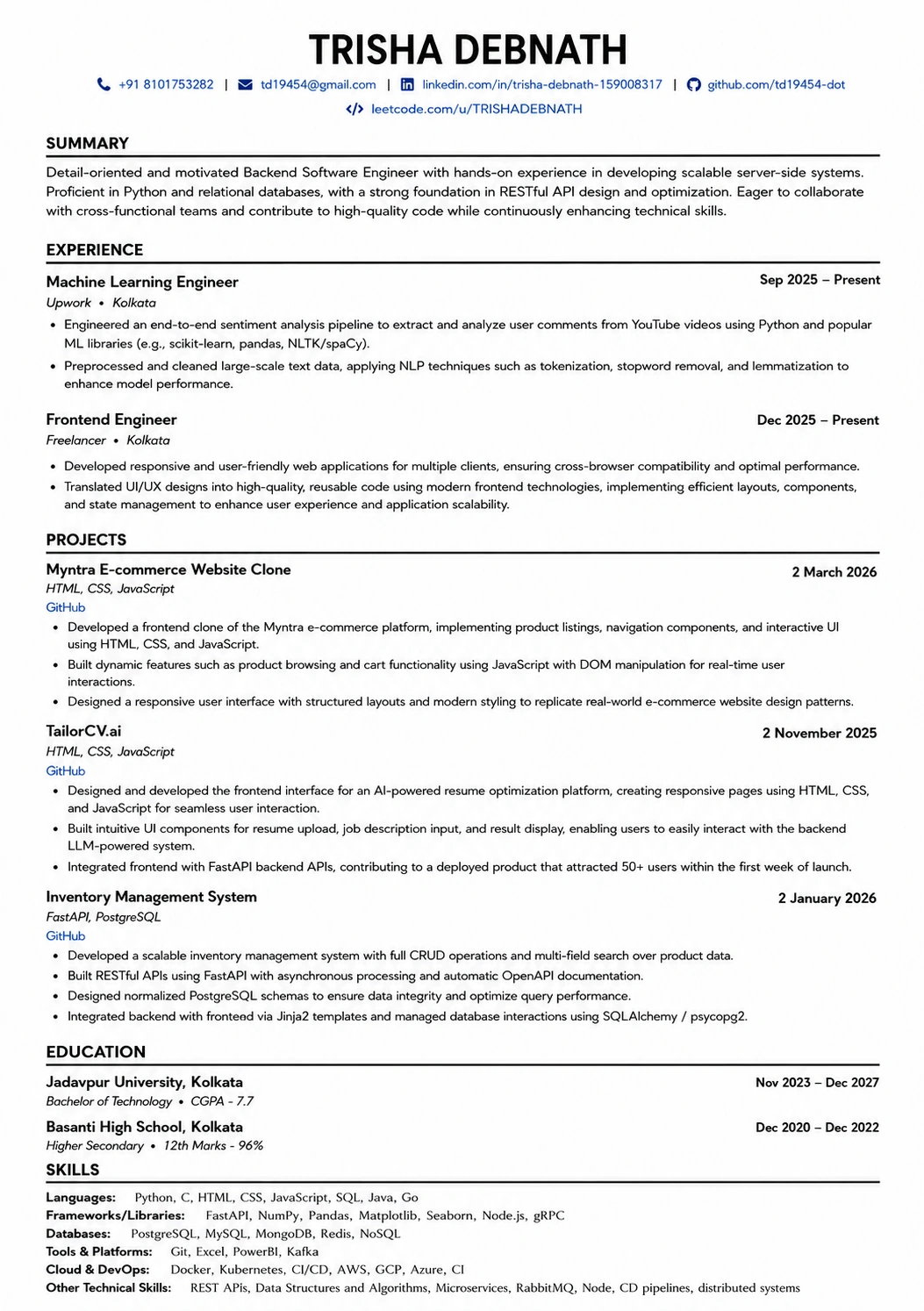
Templates that keep this structure intact
This template is ATS-tested — start from it and the formatting rules in this guide are already handled.
Was this guide useful?
Be the first to rate it.