 SS
SS
Key Takeaways
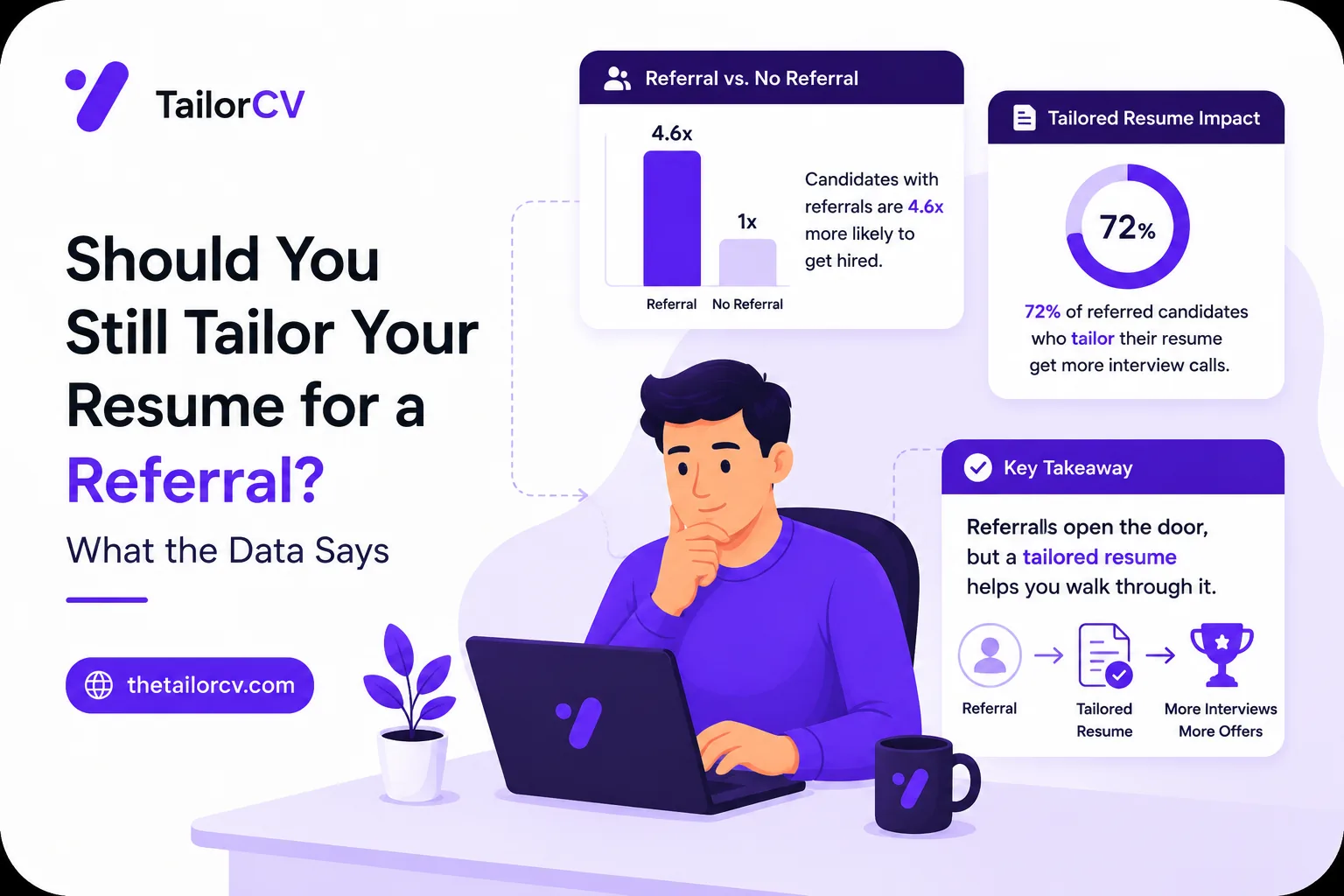
- Referrals improve your chances of getting an interview, but a tailored resume is still essential for making a strong impression.
- Referred resumes often go through the ATS, so it's important to ensure your resume matches the job description.
- A well-matched resume enhances your referrer's credibility and reflects positively on them.
- Tailoring your resume should include updating the summary, aligning skills with job requirements, and maintaining ATS-friendly formatting.
Getting a referral is one of the most effective ways to boost your odds of landing an interview. Referred candidates are significantly more likely to get hired than candidates who apply cold. That statistic leads many job seekers to a reasonable-sounding but incorrect conclusion: if I have a referral, I don't need to bother matching my resume to the job description.
That assumption can quietly cost you the advantage a referral is supposed to give you. Here is what actually happens to a referred resume, and how much tailoring effort still pays off.
Whether you have a referral or not, check your resume's match score with the TailorCV ATS score checker before it goes to the hiring team.
What a Referral Actually Changes
A referral typically affects your application in a few specific ways:
- It often gets your resume flagged or fast-tracked internally, sometimes bypassing the initial ATS filtering queue or moving you to the top of it
- It adds a layer of internal credibility, since a current employee is vouching for you
- It may get you a faster response, since referred candidates are often reviewed before the general applicant pool
What a referral does not automatically do is replace the need for your resume to clearly demonstrate fit for the specific role. Even fast-tracked resumes still get read, and a mismatched one still weakens your case.
Does a Referral Skip the ATS Entirely?
Not usually. At many companies, referred candidates' resumes are still uploaded into the same ATS as everyone else's, just with an internal tag or note indicating the referral source. Some companies do have expedited or manual-review paths for referrals, but this varies significantly by employer size and internal process.
Because you usually cannot know for certain which process applies, treating your referred application as if it will pass through standard ATS screening is the safer assumption.
Why Tailoring Still Matters, Even With a Referral
The Hiring Manager Still Forms a First Impression From Your Resume
A referral gets your resume looked at. It does not guarantee the hiring manager is impressed by what they see. A generic resume can still undercut the credibility a referral provides.
Your Referrer's Reputation Is Tied to Your Application
A strong, well-matched resume makes your referrer look good for vouching for you. A weak, unmatched one can quietly cost them some credibility for future referrals, which is worth being mindful of even if it does not affect your own outcome directly.
You Still Need to Win the Interview, Not Just Get One
A referral primarily affects whether you get an interview, not whether you get the job. A resume that clearly matches the role's requirements helps set up a stronger interview conversation, since the interviewer is more likely to come in already seeing the fit.
How Much Should You Tailor for a Referral Application?
You do not need to disappear into hours of keyword optimization the way you might for a cold application into a heavily automated pipeline. But a baseline level of matching effort still pays off:
Keeping every tailored resume with its job
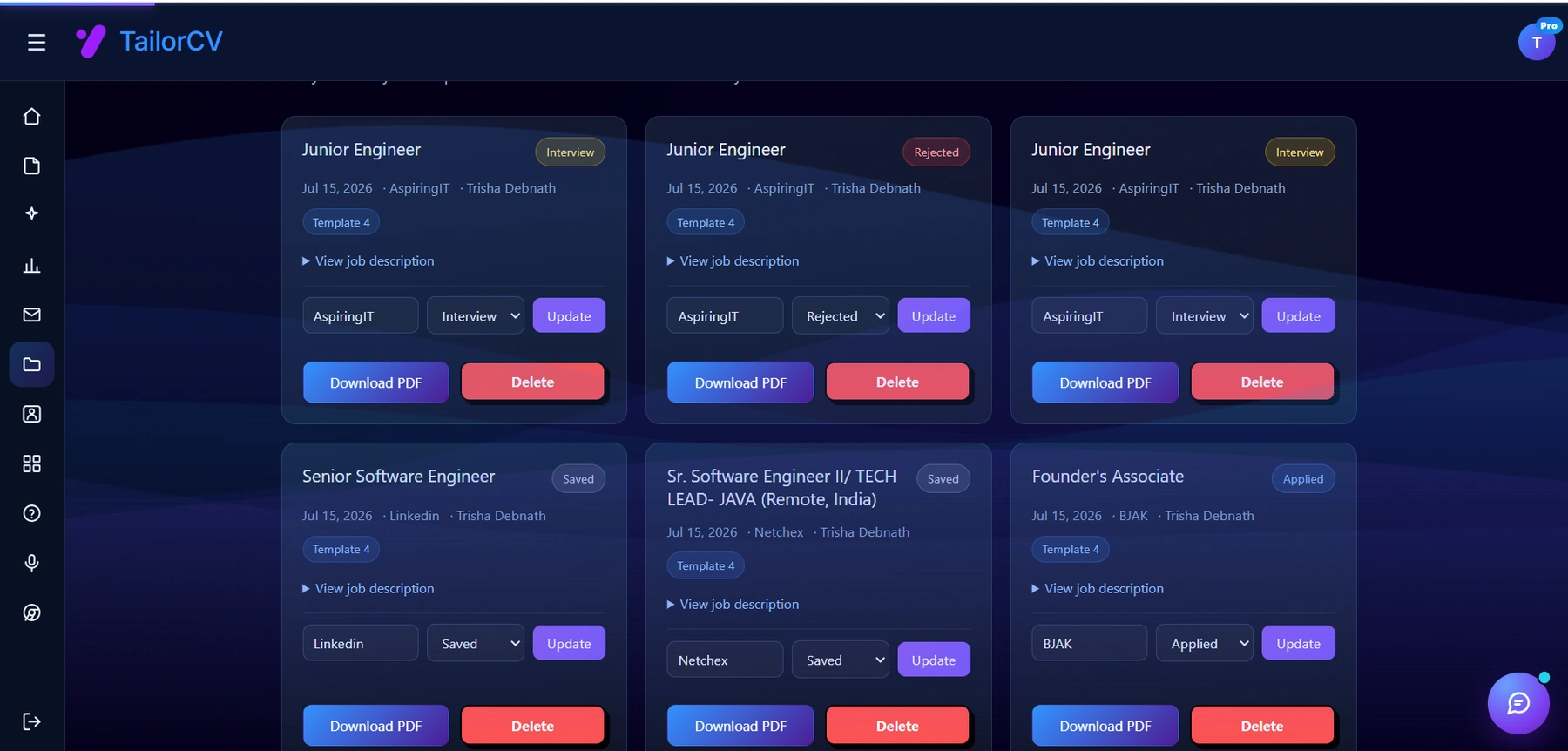
Every resume you tailor is saved against the job it was written for, with the company, the job description and a status you can move from Saved to Applied to Interview. That is the part a spreadsheet usually gets wrong - the tracker and the actual document drift apart, and you end up guessing which version you sent.
- Read the job description fully, and confirm your resume reflects its core requirements clearly.
- Update your summary to reflect the specific role and its priorities, following resume summary match job description.
- Confirm your top skills and bullets align with what the role actually asks for, even if you skip a full keyword-by-keyword optimization pass.
- Keep your formatting clean and ATS-friendly in case the resume does route through standard screening.
Read how much to change your resume for every job for a broader framework on calibrating tailoring effort by situation.
A Quick Comparison
| Factor | Cold Application | Referral Application |
|---|---|---|
| Passes through ATS | Almost always | Often, though sometimes expedited or flagged |
| Level of keyword-matching effort needed | High | Moderate — baseline alignment still matters |
| Hiring manager's first impression | Formed entirely by the resume | Influenced by the referral, but still shaped by the resume |
| Risk of a generic resume | High — likely filtered out | Lower risk of rejection, but still weakens your case |
How to Ask Your Referrer for Useful Context
A good referrer can tell you things a job posting cannot: what the hiring manager actually prioritizes, whether the role's requirements are strictly enforced or flexible, and what has stood out about past successful candidates. Use this context alongside the job description itself when deciding how to tailor your resume.
How TailorCV Helps You Tailor Efficiently for a Referral
Paste the job description into TailorCV's resume optimizer to quickly confirm your resume reflects the role's core requirements, without needing to spend the same level of effort you would on a fully cold application. Generate a quick, tailored cover letter if your referrer's introduction email needs supporting material.
Common Mistakes to Avoid When Tailoring for a Referral
When tailoring your resume for a referral, it's easy to make missteps that can undermine your chances, even with the advantage of a referral. Here are some common mistakes to watch out for:
Your resume after optimization
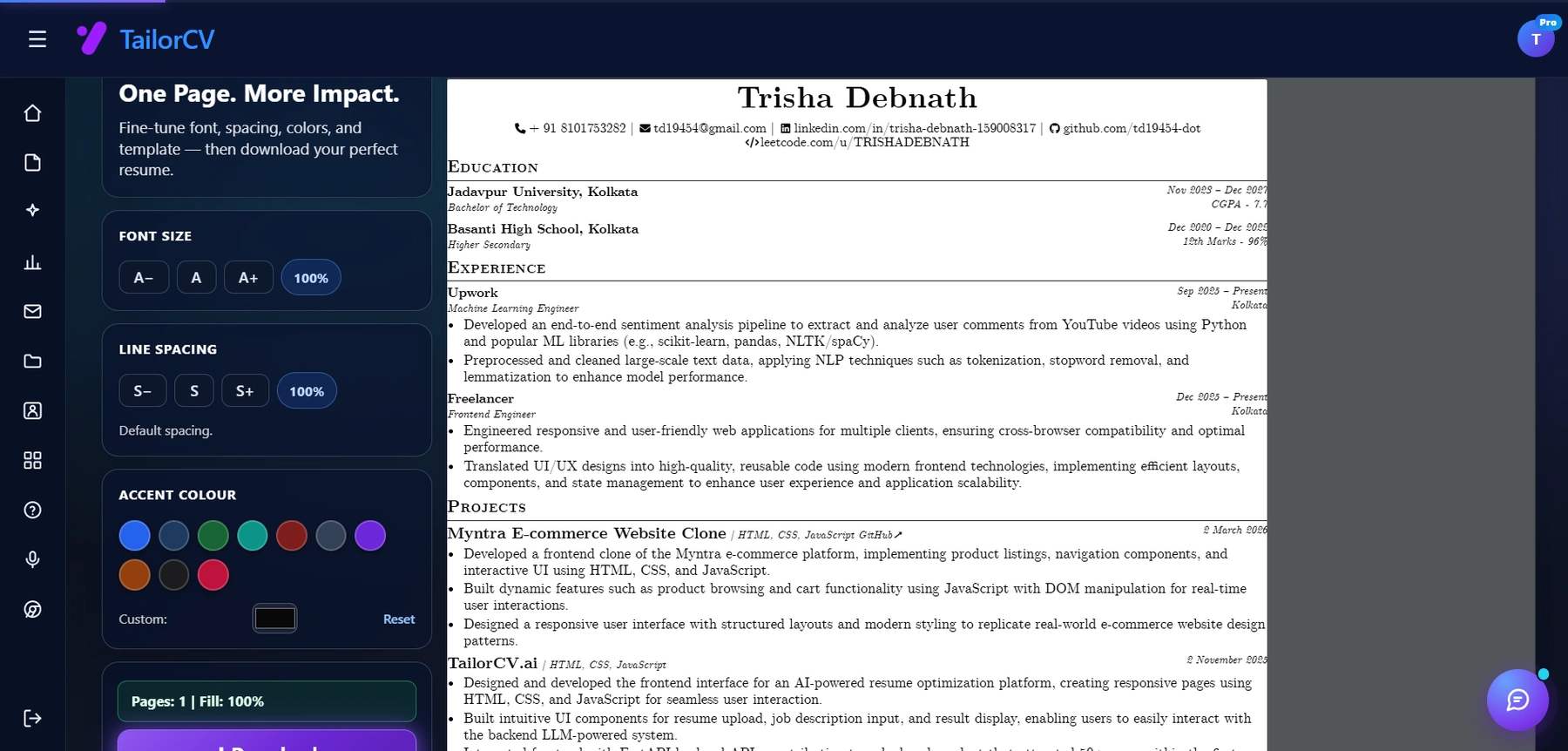
Font size, spacing, accent colour and template are all adjustable, with a live page counter.
-
Overlooking Key Skills: Failing to highlight the most relevant skills mentioned in the job description can be detrimental. Use the Job Description Analysis Checklist Before You Apply to identify which skills are crucial.
-
Ignoring Company Culture: Tailoring your resume isn’t just about matching skills; it’s also about aligning with the company’s culture. If your referrer can provide insights into the company’s values, make sure to reflect those in your resume.
-
Using a Generic Template: While templates can save time, a one-size-fits-all approach can be detrimental. Customize the design and layout to fit the job and the company’s branding.
-
Neglecting to Update Your LinkedIn Profile: Many hiring managers will look at your LinkedIn profile. Ensure it matches your tailored resume. Use How to Match Your Portfolio to the Job Description (Not Just Your Resume) for guidance.
-
Failing to Proofread: Typos and grammatical errors can create a negative impression. Always proofread your tailored resume multiple times. Consider using tools available on TailorCV for an ATS checker to ensure your resume is error-free.
Step-by-Step Guide to Tailoring Your Resume for a Referral
To ensure you’re effectively tailoring your resume when applying through a referral, follow this structured approach:
-
Gather Job Information: Start by collecting the job description and any insights from your referrer about the role and the company.
-
Identify Keywords: Use the Resume Keyword Map Template - Match Your Resume to Any Job Description to pinpoint essential keywords and phrases from the job description.
-
Select Relevant Experience: Highlight your most relevant work experiences. Focus on accomplishments that align closely with the job’s requirements and the company’s goals.
-
Customize Your Summary: Write a tailored summary or objective that reflects your interest in the role and how your skills align with the company’s needs.
-
Align Skills: Make sure to list skills that are both required and preferred. Refer to the article on Required vs Preferred Qualifications - How to Prioritize What You Match for tips on prioritizing these.
-
Include Metrics: Whenever possible, quantify your achievements with metrics to demonstrate your impact. This adds credibility and makes your application stand out.
-
Finalize and Review: Once you have tailored your resume, review it thoroughly. Use peer feedback and check for ATS compatibility with tools like TailorCV.
Quick Tailoring Checklist for Referral Applications
Use this quick checklist to ensure your resume is tailored effectively for a referral application:
- unchecked: Job Description Reviewed: Have you examined the job description thoroughly?
- unchecked: Keywords Identified: Are the relevant keywords highlighted in your resume?
- unchecked: Relevant Experience Highlighted: Does your experience reflect the requirements of the job?
- unchecked: Cultural Fit Considered: Have you incorporated elements that align with the company culture?
- unchecked: Metrics Included: Are your achievements quantified with metrics?
- unchecked: Proofread: Is your resume free from typos and grammatical errors?
- unchecked: LinkedIn Profile Updated: Does your LinkedIn profile match your tailored resume?
- unchecked: Portfolio/Video Pitch Ready: If applicable, have you tailored your 30-second video pitch and portfolio to complement your resume?
Real-World Scenarios: Tailoring in Action
To illustrate how effective tailoring can make a difference, consider these scenarios:
Scenario 1: Marketing Position
Jessica has a referral for a marketing manager position. She reviews the job description and finds that the company emphasizes digital marketing strategies. Jessica tailors her resume to highlight her experience in SEO and PPC campaigns, using specific metrics to showcase her successes. She also mentions a project where she improved website traffic by 40%, aligning her achievements with the company's goals.
Scenario 2: Software Engineering Role
Mark receives a referral for a software engineering role focused on cloud technologies. Instead of using a generic resume, he tailors his document to emphasize his experience with AWS and Docker, incorporating relevant keywords from the job description. He also adds a project section that describes his contributions to a cloud migration project, showcasing his hands-on experience.
By following these steps and avoiding common pitfalls, you can maximize the impact of your tailored resume and improve your chances of landing an interview, even when applying through a referral.
Frequently Asked Questions
Does a referral guarantee my resume skips ATS screening?
No. Many companies still route referred resumes through the same ATS, sometimes with a flag or note, but not necessarily a full bypass. Treat your resume as if it will be screened either way.
How much should I tailor my resume if I already have a referral?
A baseline level, confirm your summary, top skills, and key bullets reflect the role's core requirements, even if you do not do a full keyword-optimization pass.
Can a referral offset a weak resume entirely?
It can improve your odds of getting an initial look, but a weak or mismatched resume still hurts your chances of moving forward, since the hiring manager still forms an impression from it.
Should I ask my referrer to submit my resume or apply myself and mention them?
This depends on the company's process. Ask your referrer directly, since some companies require an internal referral submission for the referral to count.
How do I check if my resume is well-matched even with a referral?
Use the TailorCV ATS score checker to confirm your resume aligns with the job description's core requirements before your referrer submits it.
Related Guides
- Resume Matching with Job Description - Complete Guide
- Do You Still Need to Match Your Resume Through a Recruiter?
- Networking Tips for Job Search
- Referral Message Template LinkedIn
- How Much to Change Your Resume for Every Job
- Resume Summary Match Job Description
- How ATS Detects a Generic Resume
- ATS Score Guide 2026
- Cover Letter Guide 2026
- How to Use LinkedIn for Job Search
Conclusion
A referral improves your odds of getting looked at. It does not replace the need for your resume to clearly match the role. Keep a baseline of tailoring effort even with a strong referral, and you protect both your own chances and your referrer's credibility.
Check your resume's match score with TailorCV before your referrer sends it forward.
Match My Resume to This Job - Free
See what tailoring is worth on your resume
Score your current resume against a real job description before you change a word.
Drop your resume here or choose a file
PDF only. Max 2 MB.
We never share your data or use it to train AI models.

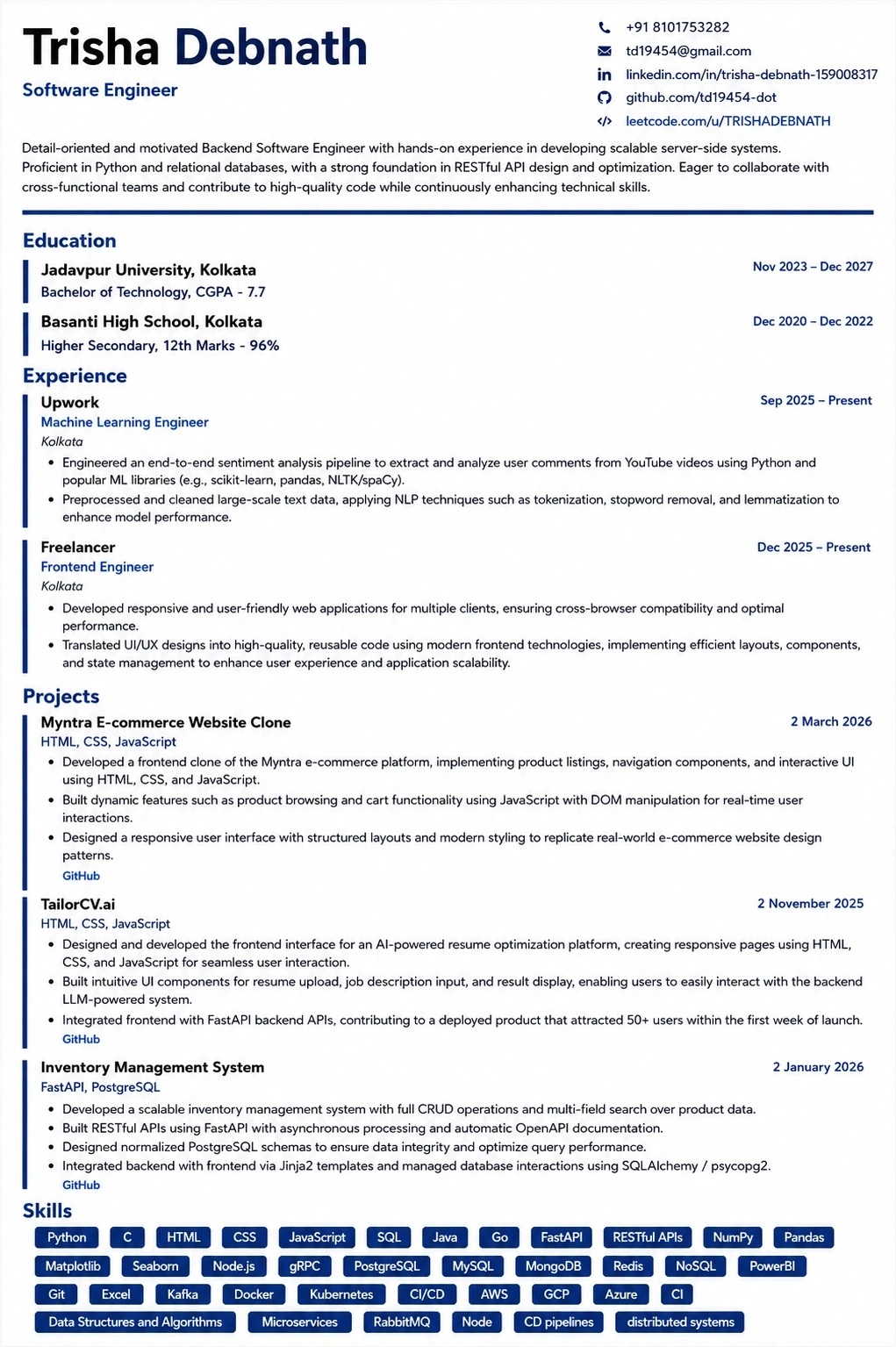
Start from a template that tailors well
Clean structure means swapping keywords per job takes minutes, not a re-layout every time.
Was this guide useful?
Be the first to rate it.