 TD
TD
Key Takeaways
- A generic resume describes your career broadly, while a tailored resume focuses on why you are the best fit for a specific job.
- Tailored resumes enhance visibility by using specific job titles and relevant skills in the headline, making them stand out.
- Professional summaries and experience bullets should be customized to highlight relevant achievements and metrics that align with the job posting.
- Tailoring increases ATS scores significantly, with fully tailored resumes scoring between 80-90%, compared to 40-60% for generic versions.
- Tailoring does not involve misrepresenting your experience; it means presenting your qualifications in a way that aligns with the job requirements.
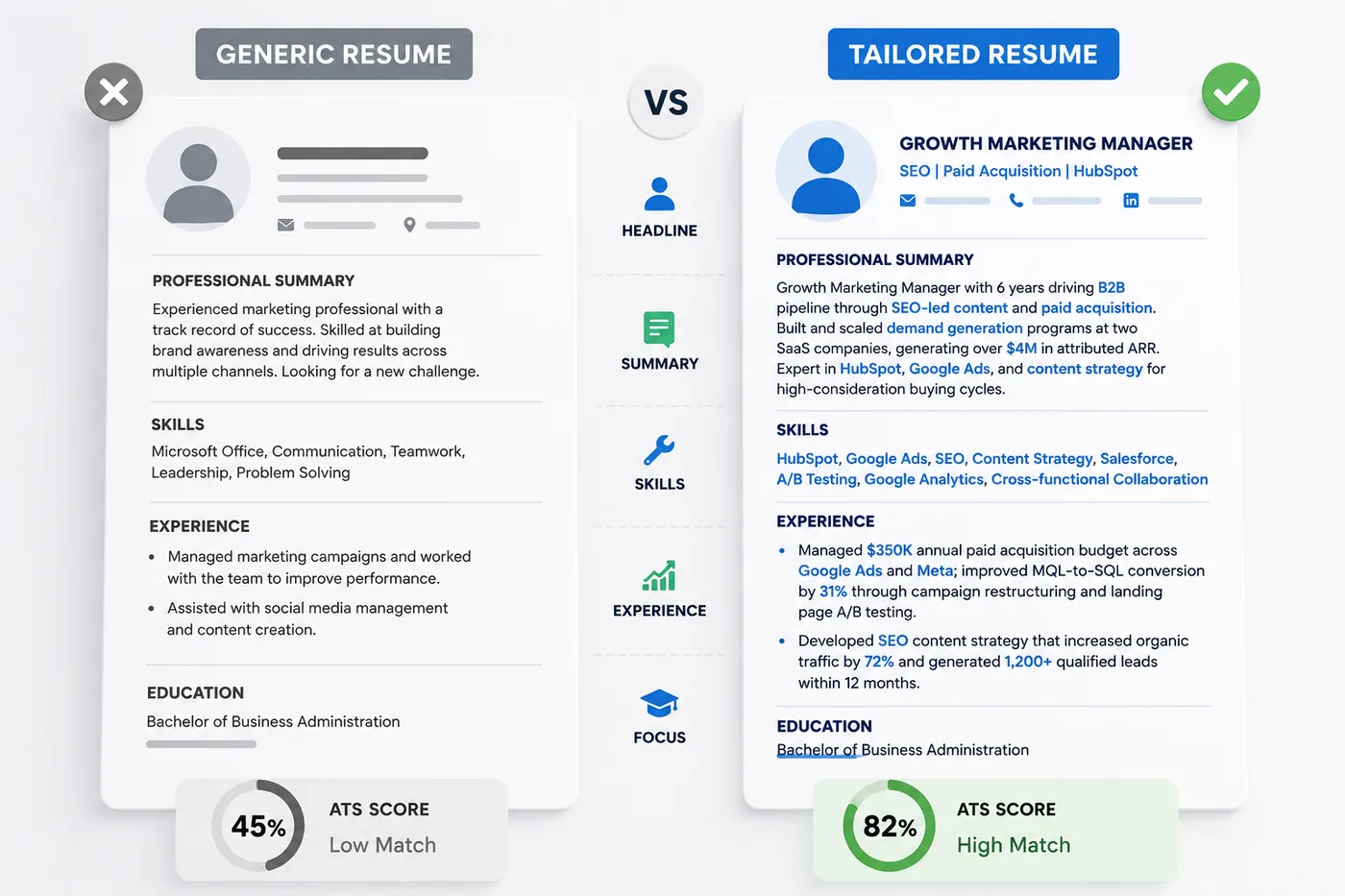
You can have two resumes that describe exactly the same person with exactly the same experience - and one will get a 45% ATS score while the other gets 82%. One will get skimmed in 6 seconds and passed over; the other will get a recruiter picking up the phone. That is the difference between a generic resume and a tailored one. Here is a side-by-side breakdown of every dimension that separates them.
See the gap between your current resume and what the role needs with the free ATS checker.
The Fundamental Difference
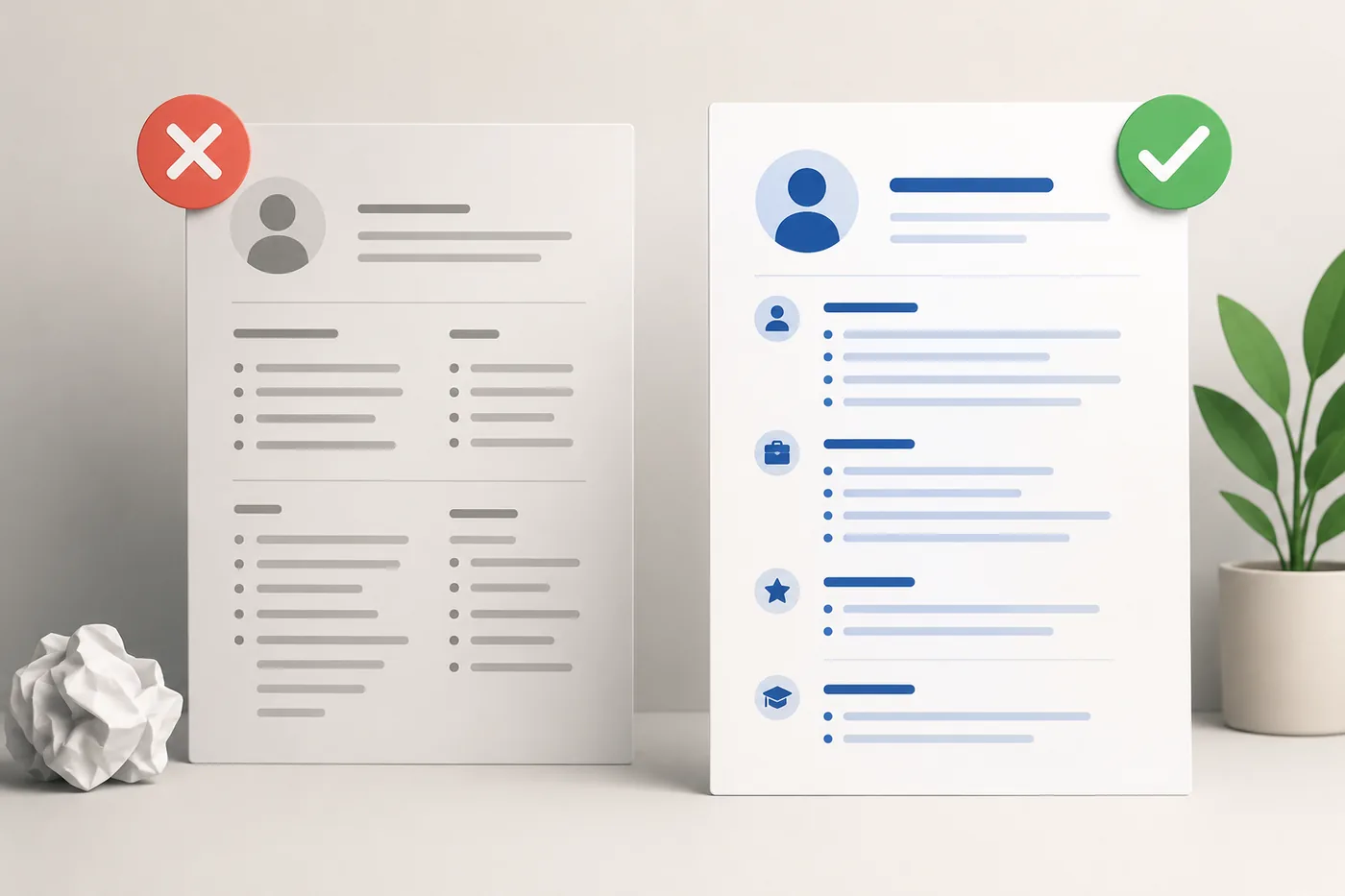
A generic resume is written to describe your career. It works for any job in your field.
A tailored resume is written for a specific job. It answers one question: "Why is this person the best fit for this exact role?"
The same experience, framed generically, sounds like everyone else. Framed with specificity and alignment to the posting, it stands out immediately.
Side-by-Side: Every Section Compared
Headline
| Generic Resume | Tailored Resume |
|---|---|
| "Marketing Professional" | "Growth Marketing Manager - SEO, Paid Acquisition, HubSpot" |
| "Software Developer" | "Full Stack Engineer (React / Node.js / AWS)" |
| "Operations Manager" | "Senior Operations Manager - Process Automation & Supply Chain" |
The tailored headline mirrors the job title, adds 2-3 specific skills, and immediately signals role fit.
Read how to write a resume headline.
Professional Summary
Generic:
"Experienced marketing professional with a track record of success. Skilled at building brand awareness and driving results across multiple channels. Looking for a new challenge."
Tailored (for a Growth Marketing Manager posting):
"Growth Marketing Manager with 6 years driving B2B pipeline through SEO-led content and paid acquisition. Built and scaled demand generation programs at two SaaS companies, generating over $4M in attributed ARR. Expert in HubSpot, Google Ads, and content strategy for high-consideration buying cycles."
The generic version could be anyone. The tailored version could only be a person with specific B2B SaaS demand gen experience - which is exactly what the posting wants.
Skills Section
| Generic Resume | Tailored Resume |
|---|---|
| Microsoft Office, Communication, Teamwork, Leadership, Problem Solving | HubSpot, Google Ads, SEO, Content Strategy, Salesforce, A/B Testing, Google Analytics, Cross-functional Collaboration |
The generic list scores near zero in ATS keyword matching. The tailored list scores every required term in the posting.
For keywords by industry, see best resume keywords to beat ATS systems.
Experience Bullets
Generic:
"Managed digital marketing campaigns and worked with the team to improve performance."
Tailored (for a demand gen role):
"Managed $350K annual paid acquisition budget across Google Ads and Meta; improved MQL-to-SQL conversion by 31% through campaign restructuring and landing page A/B testing."
The tailored version contains six ATS keywords, two specific metrics, and names the exact channels the posting prioritized.
Read how to quantify resume achievements.
The ATS Score Difference
Here is what the same resume produces depending on tailoring level:
| Version | ATS Score (Typical) | Result |
|---|---|---|
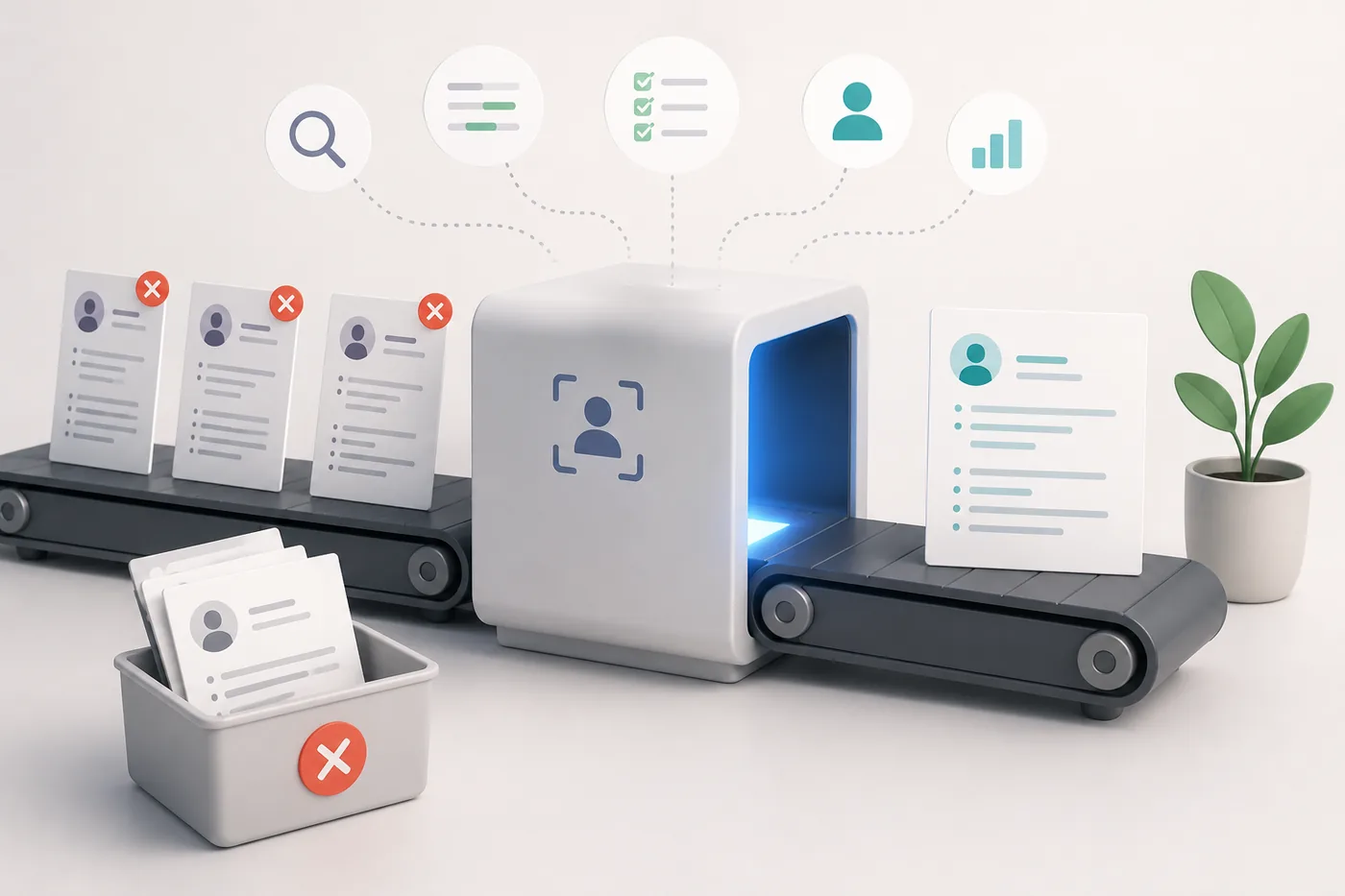
| Generic | 40-60% | Auto-filtered by most systems |
| Light tailoring (headline + skills) | 65-75% | Reaches recruiter queue in most systems |
| Full tailoring (all sections aligned) | 80-90% | Top of recruiter queue, flagged as strong match |
For how ATS scoring works in detail, see the ATS score guide and how ATS detects a generic resume.
What Tailoring Does NOT Mean
Common misconceptions:
| Term | Why it matters |
|---|---|
| It does not mean lying | you only add terms that reflect real skills and real experience |
| It does not mean rewriting everything | the core work history stays the same; you change positioning |
| It does not take hours | the 5-minute checklist handles 80% of the benefit |
| It is not keyword stuffing | keywords go into meaningful achievement sentences, not lists |
Read how to tailor a resume in 5 minutes for the checklist.
The Recruiter Experience: Generic vs Tailored
Reading a generic resume:
"Another marketing resume. Nothing specifically relevant to our growth role. Vague. Move on."
Your resume after optimization
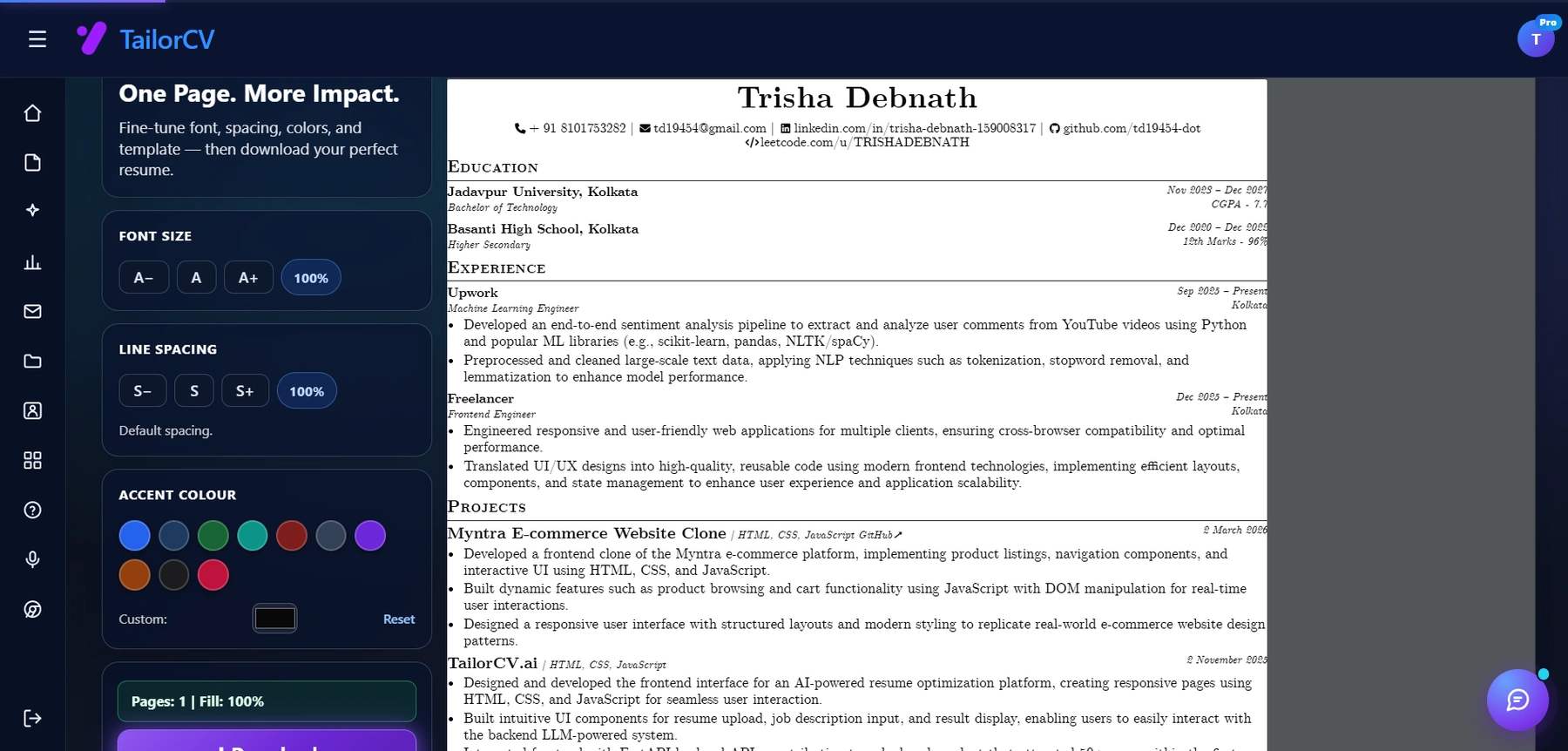
This is the resume after optimization - the tailored content is already in place, and these controls are how you fit it: font size, spacing, accent colour, template, with a live page counter.
Reading a tailored resume:
"This person has B2B SaaS demand gen experience, used HubSpot and Google Ads, and has the MQL-to-SQL conversion metric we care about. This one goes in the yes pile."
Recruiters are not looking for reasons to hire you - they are looking for reasons to filter you out quickly so they can focus on the few they will call. A tailored resume removes every reason to filter.
See how recruiters spot generic resumes.
Frequently Asked Questions
How long does it take to tailor a resume?
The core changes - headline, summary, skills - take 5 minutes. A full tailoring pass including bullets takes 20-30 minutes for high-priority roles.
Is it worth tailoring for every application?
Yes, at minimum the 5-minute version. The ATS score difference between a generic resume and even lightly tailored one is typically 15-25 percentage points.
Can I have a "base" resume I tailor from?
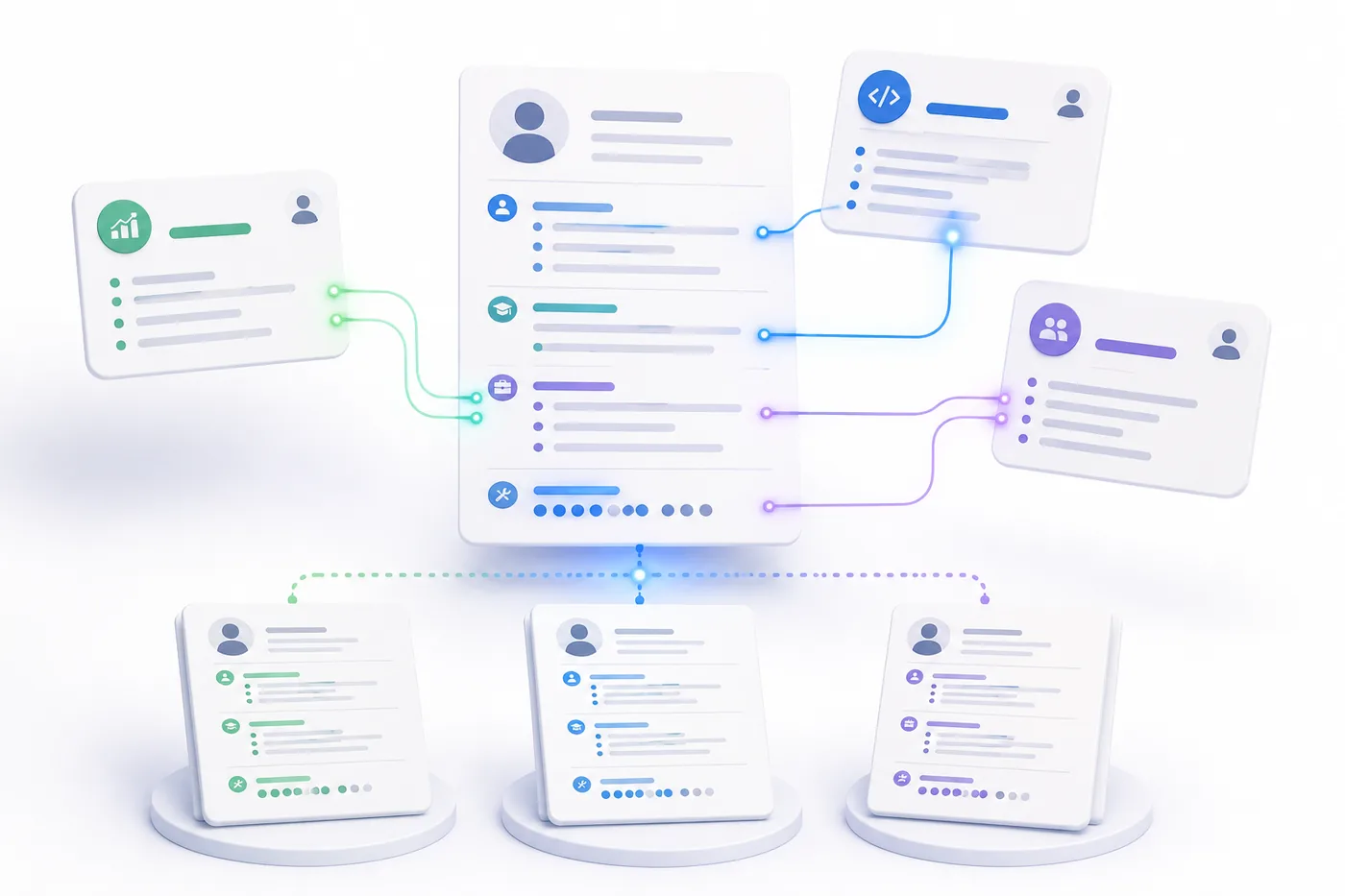
Yes - in fact that is the recommended approach. Build 2-3 strong base versions for each role type you target, then apply the resume customization checklist before each application.
How do I know if my resume is tailored enough?
Run it through TailorCV's free ATS checker. A score above 75% means you have hit the key signals. For more insights, check out how ATS detects a generic resume to ensure your resume stands out.
Related Guides
- How Recruiters Spot Generic Resumes
- How to Tailor a Resume in 5 Minutes
- How ATS Detects a Generic Resume
- Best Resume Keywords to Beat ATS Systems
- Generic Resume Mistakes That Cost You Interviews
- Resume Customization Checklist
- How to Stop Sounding Generic on Your Resume
- How Much Should You Change Your Resume for Every Job
- Why Your Resume Gets No Responses
- How to Quantify Resume Achievements
- ATS Score Guide for 2026
- Resume Matching With Job Description - Complete Guide
Make This Practical
Do not guess whether the resume is ready. Upload it to the free ATS score checker, compare the result with the ATS Score Guide, and fix formatting issues using ATS Resume Formatting Mistakes and ATS Resume Parser Friendly Format.
After the technical cleanup, improve relevance. Use Resume Matching With Job Description, strengthen keyword coverage with the Resume Keywords Guide, and avoid overdoing it by checking ATS Keyword Mistakes. If the layout itself is weak, rebuild with an ATS-friendly resume template.
Conclusion
The difference between a tailored resume and a generic one is not experience or qualifications - it is communication. A tailored resume speaks the employer's language, answers the ATS's keyword profile, and tells the recruiter in 6 seconds that this person is relevant. A generic resume makes everyone work harder to see the fit. Given that tailoring the critical sections takes 5 minutes, there is no reason to send the generic version.
Compare your resume to the job description - free
See what tailoring is worth on your resume
Score your current resume against a real job description before you change a word.
Drop your resume here or choose a file
PDF only. Max 2 MB.
We never share your data or use it to train AI models.

Start from a template that tailors well
Clean structure means swapping keywords per job takes minutes, not a re-layout every time.
Was this guide useful?
Be the first to rate it.