TD
TD
Key Takeaways
- Dress one level more formal than the team's daily norm - not three levels, which reads as misreading the culture.
- There are five reliable ways to find out what that norm actually is.
- Finance, law, consulting and government remain among the few genuinely formal contexts.
- Fit beats price: well-fitting inexpensive clothes look better than expensive clothes that do not fit.
- Clothing is a threshold, not a lever - clear it and it stops mattering entirely.
Nobody gets hired for their outfit. But people do get quietly marked down for one, and the mechanism is simple: anything that makes the interviewer notice your clothes is attention not spent on your answers.
So the goal isn't to look impressive. It's to look appropriate enough that clothing stops being a variable, and to feel settled enough that you're not managing a collar for forty minutes. This guide covers how to read a company's actual dress code, what works across industries in 2026, the video-specific rules that are genuinely different, and the mistakes worth avoiding.
The Governing Rule
Dress one level more formal than the team's daily norm. Not three levels — that reads as a misunderstanding of the culture. Not the same as everyday — that can read as casual about the opportunity.
One level above says you understood where you were going and took it seriously. That's the entire signal you're trying to send.
The rule works because it's relative. A suit is correct at a law firm and wrong at an early-stage startup, where it can suggest you haven't worked in that environment. There is no universal interview outfit — there's only the right read of a specific place, which is why researching the company covers this too.
How to Find Out the Actual Norm
Five reliable methods, in rough order of usefulness:
Ask the recruiter. The most direct and least used. "Is there a dress code I should know about?" is a completely normal question that recruiters answer readily, and asking it signals care rather than ignorance.
Look at the company's own photos. Team pages, careers pages, and recent posts on their LinkedIn show how people actually dress. This is better evidence than any industry generalisation.
Look at employees' profiles. Photos on individual profiles, particularly recent ones, give you a real sample.
Check the industry and the region. Finance, law, and government skew formal. Tech, creative, and startups skew casual. Regional norms vary and matter — the same role can carry different expectations in different markets, which is worth knowing when applying abroad.
Consider the stage. A first-round screen is often lighter than a final panel or a meeting with senior leadership. Second interviews sometimes involve more senior people, so calibrate up if the room changes.
By Industry
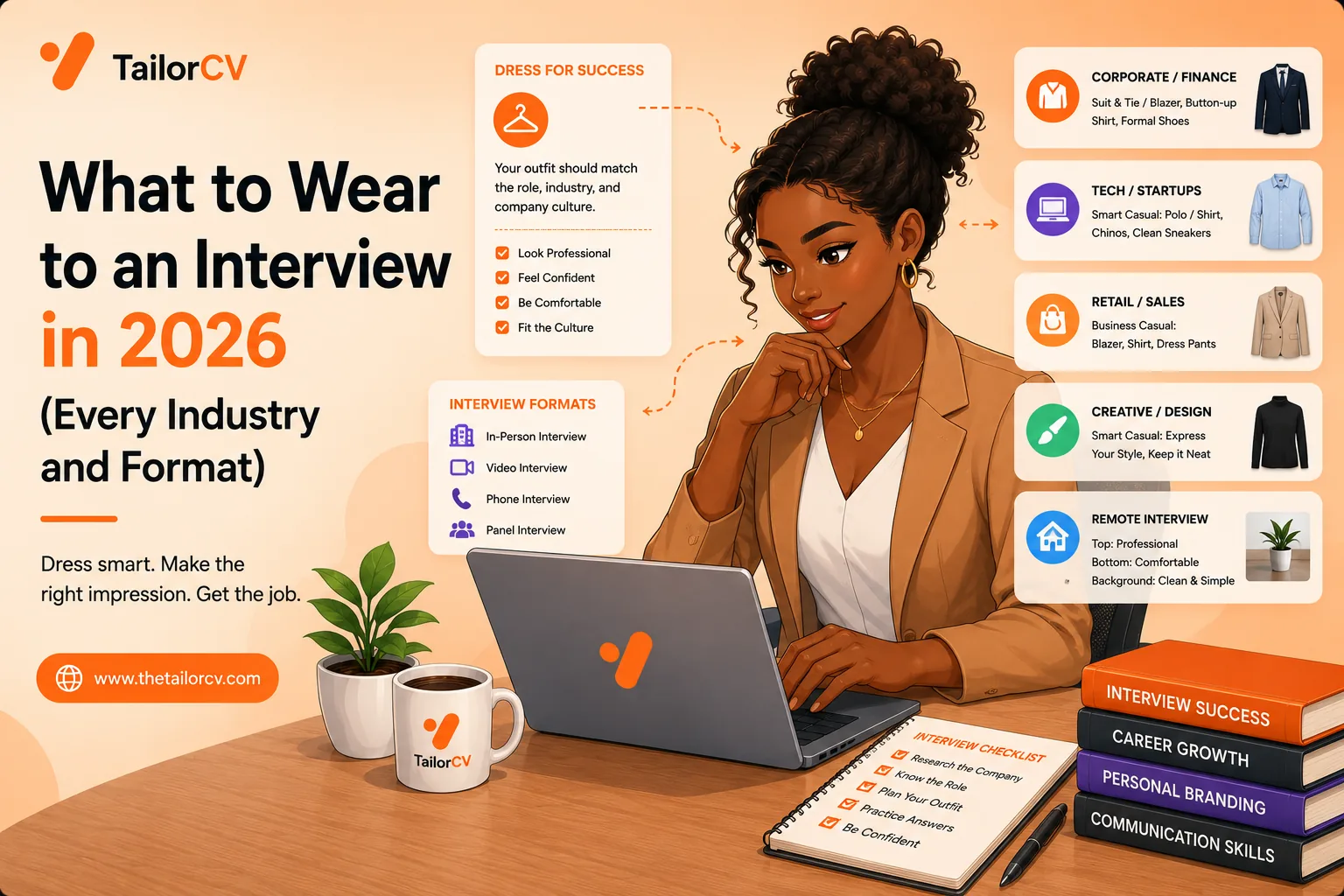
Finance, law, consulting, government. Formal. A well-fitting suit in a dark neutral, a plain shirt, conservative shoes. This is one of the few contexts where a suit is a genuine default rather than an overshoot, and where getting it wrong downward is a real cost.
Corporate and large enterprise. Business or smart casual. Tailored trousers or a skirt with a shirt, blouse, or knit; a blazer optional but useful. A jacket is easy to remove if you arrive and find the room is lighter than expected.
Tech and startups. Smart casual. Clean, well-fitting, unremarkable — a shirt or plain knit, dark jeans or chinos, decent shoes. A full suit at an early-stage startup can genuinely count against you as a culture-read signal. This holds across most first tech jobs.
Creative fields. Smart casual with room for personality. Some individuality is expected here rather than risky, but keep it deliberate rather than loud, and let your portfolio do the actual work.
Healthcare, education, non-profit. Business casual, practical and understated. Clean and considered matters more than expensive.
Trades, retail, hospitality, operations. Neat and practical. Clean, well-fitting, appropriate for the environment. If there's a site visit or a floor walk involved, sensible shoes matter more than a jacket.
Video Interviews
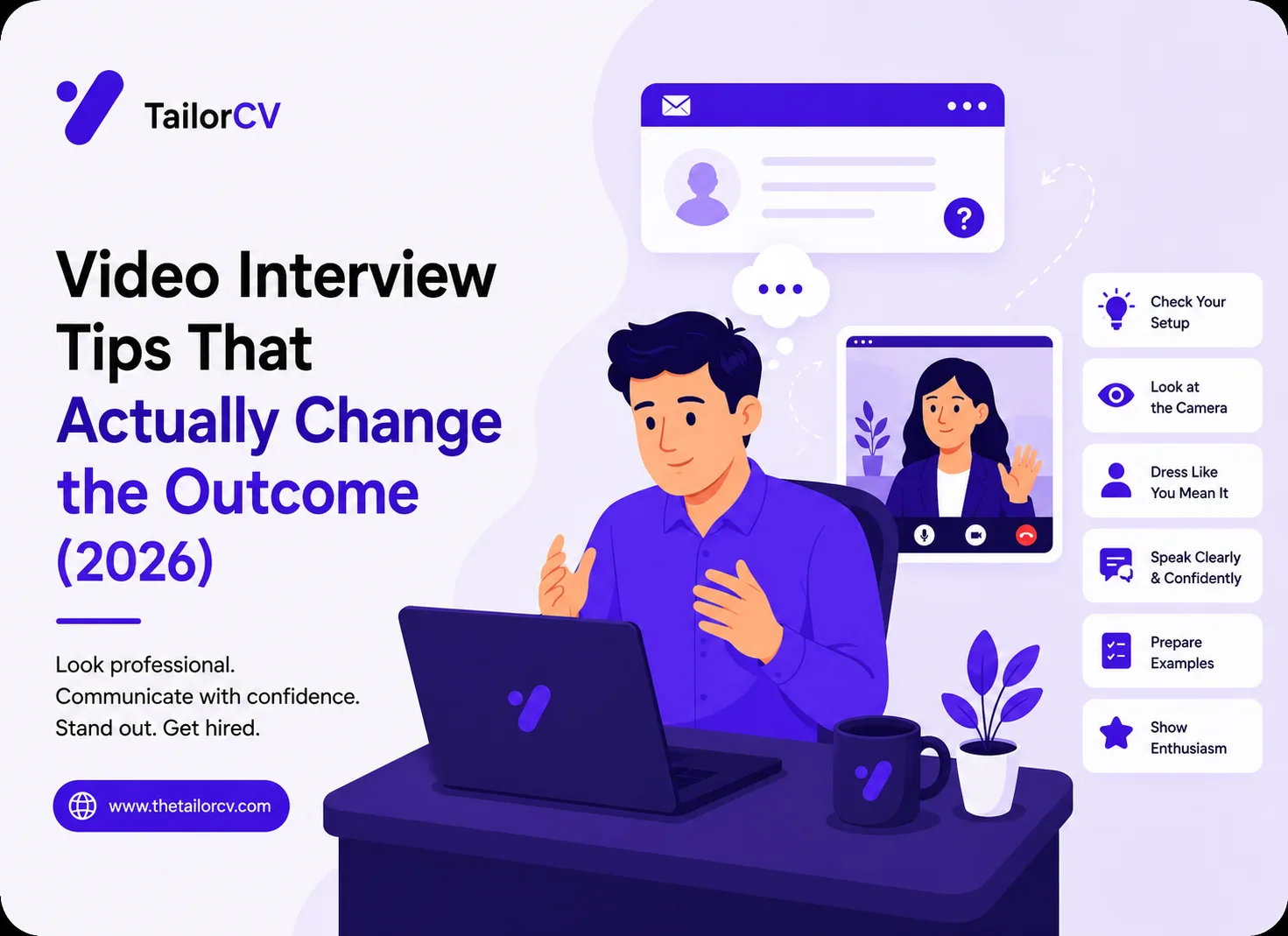
The rules differ enough to need their own treatment, and this is where preparation pays off most — see video interview tips for the full setup.
See it in action: a resume-based mock interview
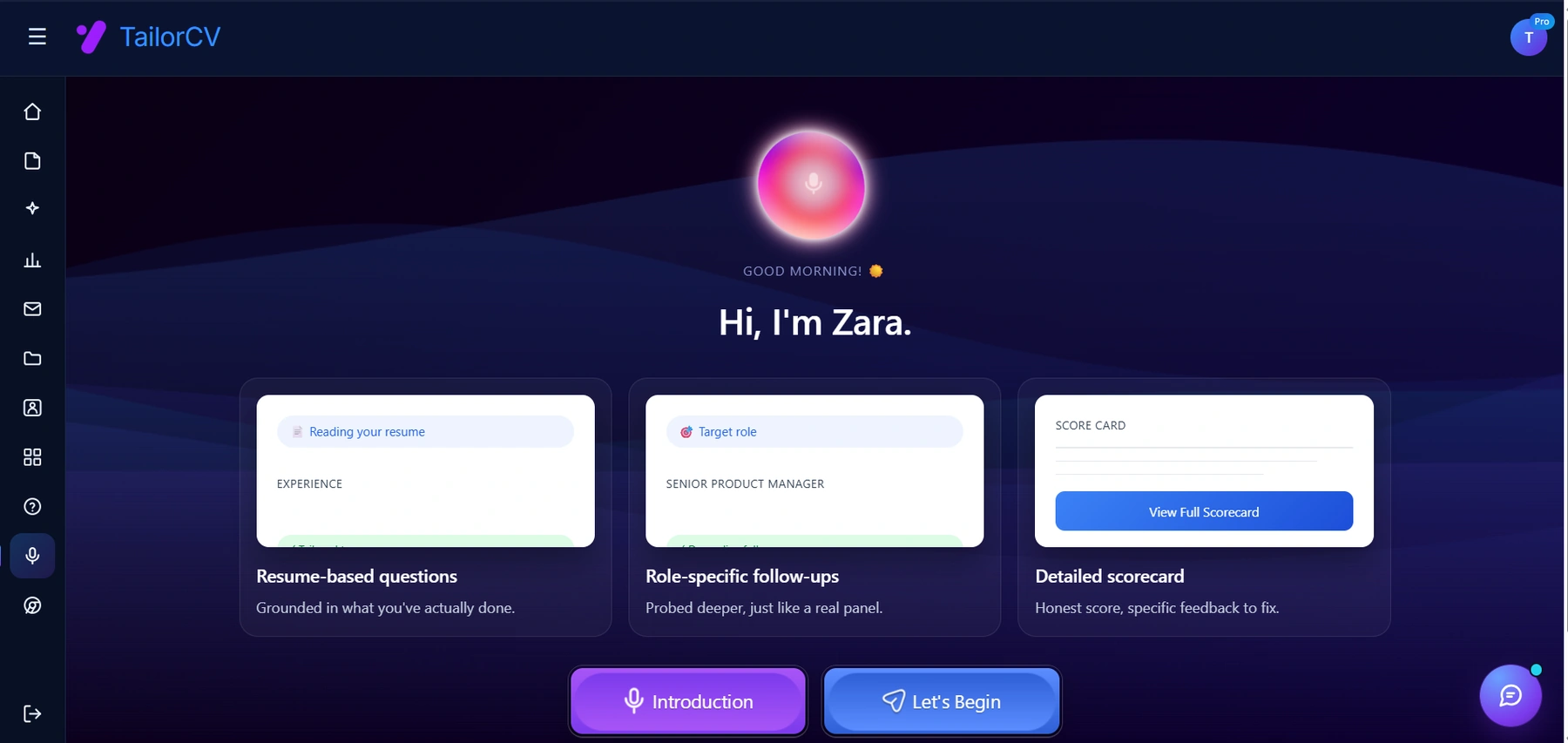
You can rehearse this before the real thing. The interviewer reads your resume first, so the questions come from your actual experience rather than a generic list.
Dress fully. Not just the top half. It affects how you sit and speak, and you may need to stand.
Solid colours over patterns. Fine stripes, checks, and herringbone can shimmer or moiré on camera. Mid-tones read best.
Avoid pure white and pure black. White can blow out under auto-exposure; black can flatten into a shape with no detail. Mid-blue, grey, muted green, and burgundy all sit well.
Contrast with your background. If your wall is white, don't wear white — you'll dissolve into it.
Minimal jewellery and quiet fabrics. Anything that catches the light or brushes a lapel microphone becomes a distraction across a whole call.
Test on camera first. Open the camera, sit where you'll sit, check the actual lighting you'll have at that time of day. Thirty seconds of checking removes the most common video-specific problems.
Universals That Matter More Than the Outfit
Fit beats price. Well-fitting inexpensive clothes look better than expensive clothes that don't fit. Fit is the thing people actually register.
Clean and pressed. Non-negotiable, and more noticeable than anything else on this list.
Comfort is functional. If you're adjusting your collar or shifting in your shoes, it costs you attention during the part that matters. Sit down in the outfit beforehand.
Restraint with scent. Some interviews happen in small rooms and some people are sensitive. Minimal or none.
Grooming, understated. Tidy hair, neat nails, nothing that pulls focus.
Prepare it the night before. Everything laid out and checked. Morning-of discoveries — a stain, a missing button — start the day badly, and you want your attention on your answers.
Carry something sensible. A tidy bag or folder with copies of your resume. Which is a good moment to check your file format and naming are right on the version you bring.
Mistakes to Avoid
Overdressing for a casual culture. Less commonly discussed than underdressing and equally real. A three-piece suit at a ten-person startup reads as a misread.
Underdressing for a formal one. Smart casual at a law firm final round signals you didn't check.
Brand-new shoes. They hurt, and discomfort shows in how you carry yourself.
Anything you're pulling at. Too tight, too loose, too short, needing constant adjustment — all of it drains attention.
Visible logos and slogans. They invite the interviewer to form an opinion about something irrelevant.
Wrinkled or stained. The most preventable failure and the one people notice fastest.
Assuming one outfit fits everywhere. The rule is relative to the company. Reading the specific culture is the skill.
Keep It In Proportion
Clothing is a threshold, not a lever. Clear the threshold and it stops mattering entirely; nobody has ever been hired because of a jacket. The things that actually decide the outcome are your answers and your evidence.
Which means the preparation that matters most is elsewhere: rehearsing tell me about yourself, why do you want this job, what are your strengths, your greatest weakness, why you left your last job, where you see yourself in five years, and why they should hire you. Build a story bank with the STAR method, work through the behavioural set, prepare questions to ask them, and run a mock interview. Adapt for panel formats. Afterwards, follow up, then handle salary expectations and negotiation.
And further upstream: you need the interview first. That comes from a tailored, ATS-readable resume — checked with a free ATS score, improved where keywords fall short, free of formatting that breaks parsing, built on a sound structure with quantified achievements.
Building One Reliable Interview Outfit
Rather than deciding fresh each time, most people are better served by owning one outfit that works across the majority of their interviews, plus one adjustment either way.
The core. Well-fitting trousers or a skirt in a dark neutral, a plain shirt or blouse, and clean, comfortable shoes. On its own this sits at business casual, which covers most corporate, healthcare, education, and non-profit interviews without alteration.
The formal adjustment. Add a matching jacket and it becomes business formal, which covers finance, law, consulting, and senior panels. Keeping the jacket separate rather than treating the suit as the default is what makes the outfit flexible.
The casual adjustment. Swap to dark chinos or clean dark jeans and a plain knit, keep the same shoes, and it reads correctly at most tech companies and startups — the environments where first tech roles and startup interviews happen.
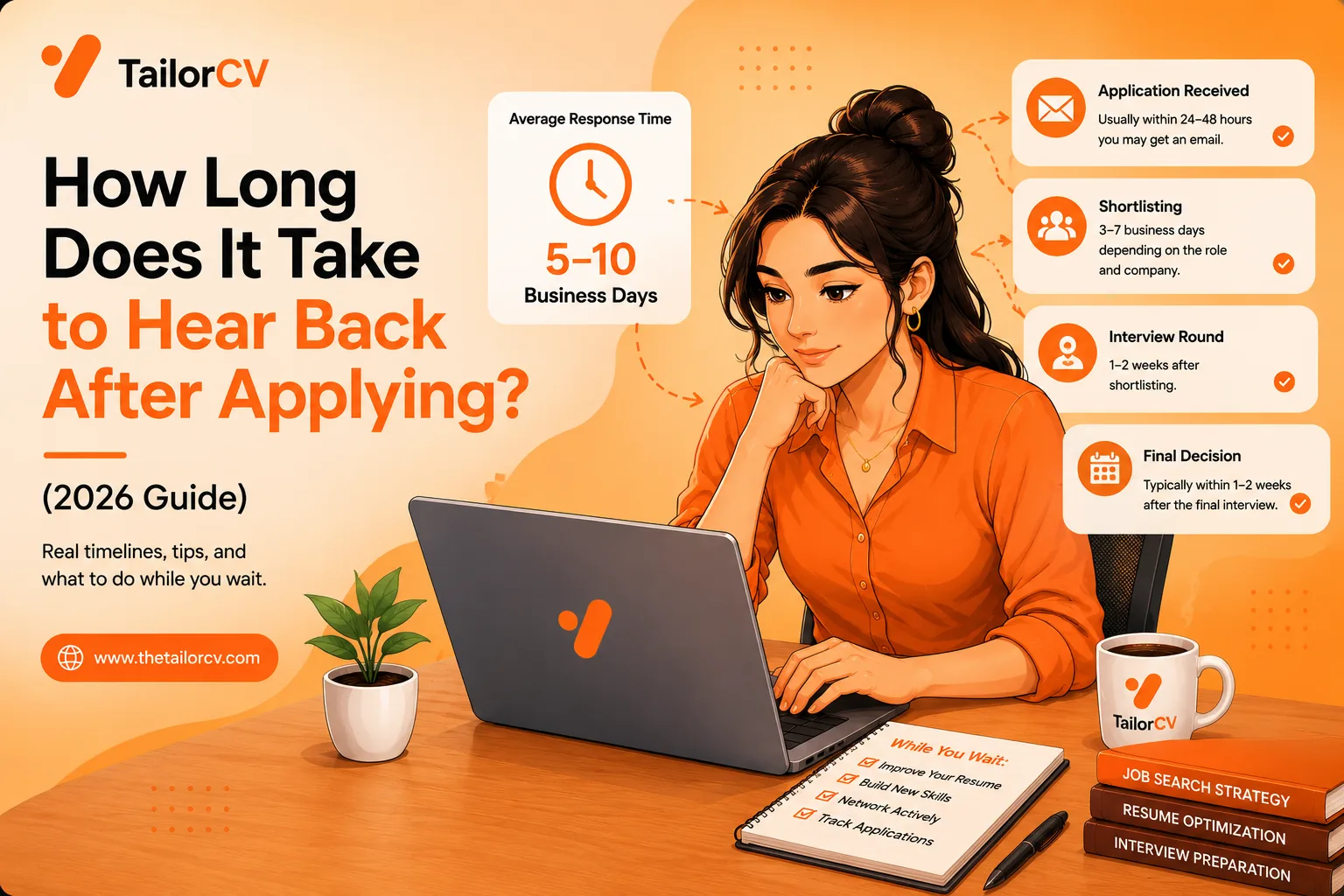
One outfit, two adjustments, and the decision takes thirty seconds instead of an evening. That matters more than it sounds when interviews arrive with two days' notice, which is common in a fast-moving search and normal given how unpredictable response timing is.
Keep it maintained — cleaned, pressed, and checked — so it's ready without notice. The same logic applies to having your materials ready: a current tailored resume, a checked ATS score, and printed copies in the right file format.
What to Bring With You
Clothing is half of arriving prepared. The rest:
- Printed copies of your resume — two or three. Interviewers sometimes arrive without one, and handing one over is a small competence signal. Make sure it's the tailored version for this role, not a generic one.
- A notebook and pen. Taking notes reads as engaged, and you'll want somewhere to have written your questions for them.
- The posting itself, so your examples stay aimed at what they asked for.
- Portfolio or work samples if relevant — see building a professional portfolio and projects that get interviews.
- Contact details and the exact location. Confirm the building, floor, and who to ask for.
- Water, and time to spare. Arriving ten minutes early and composed beats arriving on time and rushed.
For remote interviews the equivalent checklist is technical: tested camera and microphone, a charged device, a quiet room, and a backup plan if the connection drops — covered in video interview tips.
Frequently Asked Questions
What should I wear to a job interview in 2026? One level more formal than the team's everyday dress. That means a suit for finance or law, business casual for most corporate roles, and smart casual for tech and startups. Clean, well-fitting, and unremarkable is the target.
Should I wear a suit to an interview? Only in formal industries — finance, law, consulting, government — or for senior corporate roles. At a startup or most tech companies a suit can read as a misread of the culture. Check the company's own photos before deciding.
What should I wear to a video interview? Solid mid-tone colours, no fine patterns, avoid pure white and pure black, contrast with your background, minimal jewellery, and dress fully rather than just the top half. Test on camera in your actual lighting first.
Is it worse to overdress or underdress? Both are real, and both are misreads of the same thing. Underdressing suggests you didn't take it seriously; overdressing suggests you don't know the environment. One level above the daily norm avoids both.
How do I find out a company's dress code? Ask the recruiter — it's a normal question. Otherwise look at the company's team page and recent posts, and at employees' own profile photos. That's better evidence than any industry rule of thumb.
Putting It All Together
Dress one level above the team's daily norm, find that norm by asking or by looking at their own photos, and prioritise fit and cleanliness over cost. For video, use solid mid-tones, contrast with your background, and check the camera before you start.
The whole point is to make clothing a non-issue — cleared, unremarkable, and immediately forgotten so the conversation is about your work. Spend twenty minutes on this and the rest of your preparation on your answers, because that's where the decision is actually made.
Start further back than the outfit: make sure your resume is getting you into the room. Run it against the posting with a free ATS score and tailor it before you apply — a tailored resume beats a generic one by a wide enough margin that it decides whether the outfit ever matters. If you're not getting interviews at all, that's the problem to fix first, whether through better keyword matching, a sharper summary, referrals, or simply a faster, better-targeted search. And if the wait between applications and interviews is wearing on you, how long responses actually take and job search burnout are worth reading — arriving rested does more for how you come across than anything you wear.
Was this guide useful?
Be the first to rate it.