 TD
TD
Key Takeaways
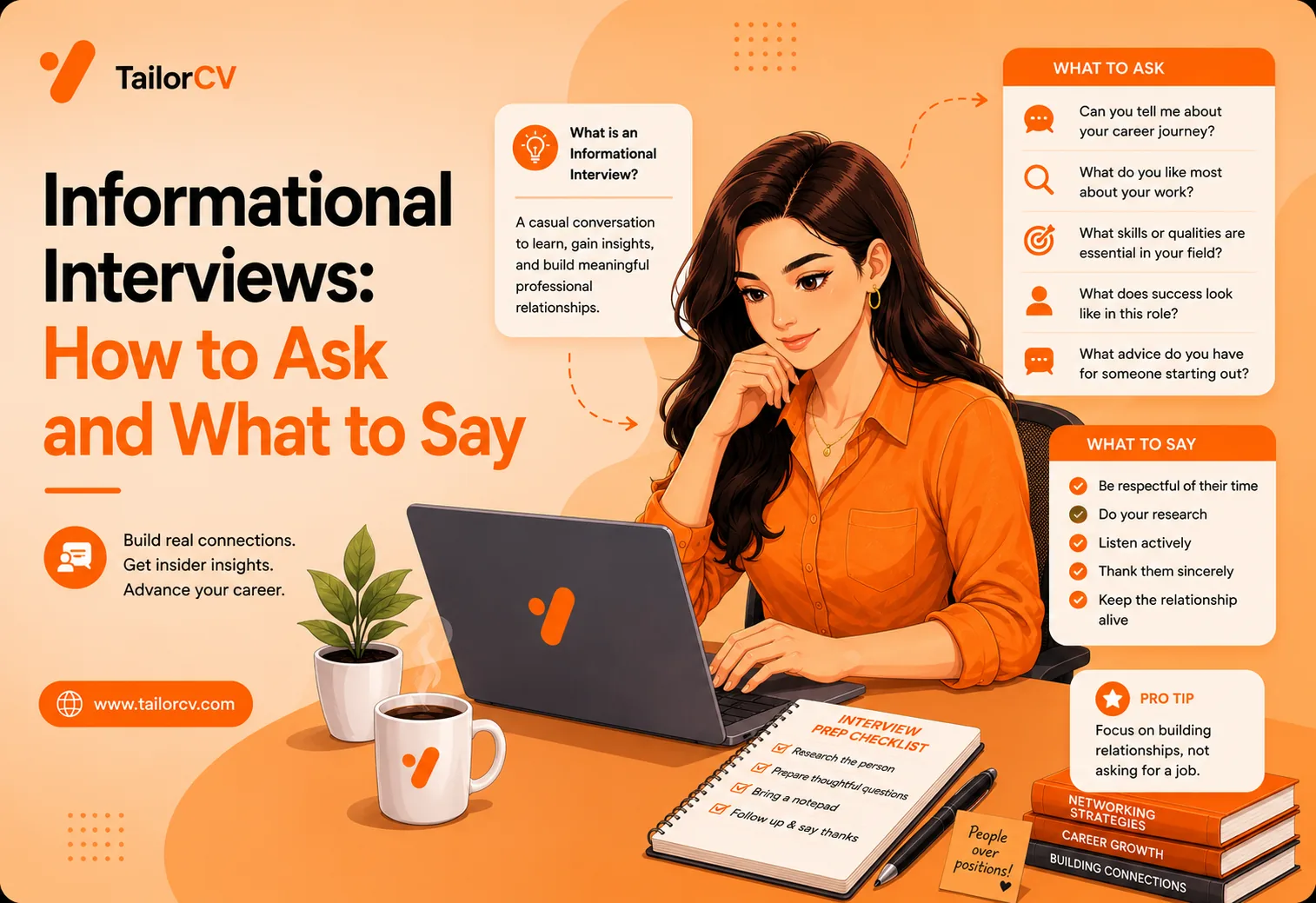
- Informational interviews work for four reasons, none of which involve asking for a job.
- Ask people one or two steps ahead of you, not twenty - they remember the transition and have time.
- The outreach message must be short, specific, and must not smell like a job request.
- Prepare six to eight questions, expect to use four, and ask about their experience rather than about openings.
- The most damaging mistake is treating it as a covert job application - people feel it immediately.
An informational interview is a short conversation with someone doing work you're interested in, where you ask about their field and they answer. That's it. No job is on the table, and that absence is the entire reason it works.
Most people either never try this or ruin it by treating it as a disguised job application. Done properly it's one of the highest-return activities in a job search — it surfaces roles that never get posted, gives you language that makes your applications land, and builds relationships that pay off months later. Done badly it's a wasted twenty minutes and a contact who won't reply again.
Why It Works
Four things, none of which involve asking for a job.
It reaches the hidden market. A large share of roles are filled through networks before they're ever advertised. Informational conversations put you in the group people think of when something opens — and being remembered before a posting exists beats competing after one.
It gives you real language. Twenty minutes with someone in the field tells you what the work is actually called, which tools genuinely matter, and which requirements are real versus aspirational. That directly improves how you match a resume to a job description and which keywords you're using at all — you can't optimise for terms you've never heard.
It reveals fit before you commit. Especially valuable if you're changing industries or moving into tech. Finding out a field isn't what you imagined costs one conversation instead of one job.
It's low-pressure for both sides. Most people genuinely enjoy talking about their work to someone who's actually curious. Asking for advice is easy to say yes to; asking for a referral from a stranger is not.
That last point is the mechanism. You're asking for something people like giving.
Who to Ask
People one or two steps ahead of you, not twenty. Someone three years into the role you want remembers what the transition was like and has time. A director with two decades of distance has forgotten the details and a fuller calendar.
Where to find them, roughly in order of response rate:
- Alumni from your university. The highest-converting cold outreach there is; the shared connection does the work.
- Second-degree connections on LinkedIn — a mutual contact raises reply rates substantially.
- People at companies you're targeting. Overlaps usefully with referrals, though don't conflate the two on the first contact.
- People who've made the same transition you're making. The most valuable category if you're switching fields — they've solved your exact problem.
- Active practitioners who write, speak, or post publicly about the work. They've already signalled willingness to talk about it.
Aim for a handful of conversations, not one. Patterns only emerge across several — and one person's view of a field is a sample of one.
The Outreach Message
Short, specific, and it must not smell like a job request. That's the whole craft.
Subject: Quick question about moving into data analytics
Hi Priya,
I'm a Delhi University alum working in operations, and I'm exploring a move into analytics. I came across your profile and your path from ops into a data role is close to the one I'm considering.
Would you be open to a 20-minute call in the next few weeks? I'd mostly like to hear how you made the switch and what you'd do differently. I'm not job hunting at you — genuinely just trying to understand the field before I commit to it.
Happy to work around whatever time suits.
Thanks, Arun
What makes it work:
- A connection stated up front — alumni, mutual contact, or a specific reason it's them.
- A specific reason for this person, not a template. "Your path from ops into data" could only be sent to them.
- A bounded ask — twenty minutes, clearly finite.
- A clear non-job framing. Say it explicitly. It removes the awkwardness that stops people replying.
- All the effort on your side — you work around their schedule.
- Short. Under 150 words. Long messages don't get read.
Send it, then let it go. Roughly one in three replies, and that's a good rate. Send one polite nudge after two weeks if there's no answer, then stop. The same restraint applies as in following up on applications — and cold-emailing a recruiter is a related but different ask.
What to Ask
Prepare six to eight questions and expect to use four. Ask about their experience, not about openings.
Their path: How did you get into this? What did the transition actually involve? What surprised you?
The work itself: What does a normal week look like? Which part takes the most time? What's the least glamorous part nobody mentions?
Skills and signals: What separates people who do well here from people who struggle? Which skills matter more than the job postings suggest — and which matter less?
Getting in: If you were entering now with my background, where would you start? What do candidates from my background typically get wrong?
The field's direction: What's changing? What's overhyped? What's underrated?
The one question to always close with: "Is there anyone else you'd suggest I talk to?" This is what turns one conversation into a network. Ask it every time.
Never ask: "Are there any openings?", "Can you refer me?", or "Can you pass on my resume?" on a first conversation. That converts an advice conversation into a job request retroactively, and it's the reason people stop replying to these messages generally.
If a job comes up, they will raise it. Frequently they do.
Running the Conversation
Be on time and end on time. You said twenty minutes. At the nineteen-minute mark, say so and offer to stop. Nothing builds goodwill faster, and it's the most common reason people agree to a second conversation.
Do your homework. Read their profile and know the basics about their company — the same company research discipline. Asking something you could have looked up wastes the time you asked for.
Listen more than you talk. You're there to learn. Keep your own summary to thirty seconds if they ask.
Take notes. You'll want the specifics later, and patterns across conversations are the real output.
Be genuinely curious. People can tell, and it's the difference between a helpful contact and a polite one.
Don't pitch yourself. The temptation is strong and it's the main failure mode. If they ask what you're looking for, answer briefly and honestly, then return to their experience.
Following Up
Within 24 hours: a short thank-you naming one specific thing you're acting on. Specificity proves you listened — the same principle as a good post-interview follow-up.
Two to six weeks later: a brief update if you did the thing they suggested. "You mentioned SQL was the gap — I've finished a course and built a small project." This is the highest-value message in the whole sequence, because it shows their advice mattered. People remember that, and it's when referrals start appearing unprompted.
Then stay lightly in touch. Occasional, low-effort, not transactional. Networking works on a slow clock.
When a role does open, you can approach them directly — now as someone they know. That's when a referral message is appropriate, and referral applications convert far better than cold ones.
Turning It Into Applications
The output should change your materials, or the conversations were entertainment.
Use their language in your resume — the terms they used are the terms the postings use, which is what keyword matching needs and what raises your ATS score. Reprioritise your experience toward what they said actually matters, quantifying the parts they flagged. Fill named gaps with projects and a portfolio — or a career-change portfolio if you're switching.
Then check it worked: run the updated resume against a real posting with a free ATS score, tailor it per application in five minutes, and make sure it's ATS-readable with no formatting that breaks parsing.
Their answers also prepare you for interviews. What they said about the work feeds directly into why do you want this job, strengths, where you see yourself in five years, why should we hire you, and the questions you ask them. Combine with a STAR story bank, the behavioural set, a mock interview, and the full prep guide.
Because it compounds slowly, run it alongside — not instead of — active applying and a realistic daily application volume. It also helps with burnout: conversations feel human in a way portals don't, and they generate momentum when rejections and long silences don't.
Common Mistakes
Treating it as a covert job application. The most damaging one. If the conversation is really a pitch, people feel it immediately, and word travels. The framing has to be genuine.
Asking for too much time. Sixty minutes is a meeting; twenty is a favour. Ask small and people say yes.
Not preparing. Arriving with no questions puts the work on them and wastes the goodwill you spent to get there.
Talking about yourself. You asked to learn. If more than a third of the conversation is you, it went wrong.
Only contacting very senior people. Lower reply rates, less relevant detail, and less memory of the transition you're actually making.
One conversation and stopping. Patterns need several. One person's view is a sample of one, and you'll over-weight whatever they happened to emphasise.
No follow-up. The thank-you and the later update are where the relationship actually forms. Skipping them wastes most of the value.
Not acting on the advice. If nothing in your resume or approach changes, the conversation was entertainment. The point is to come away with something to do.
Letting it replace applying. It compounds slowly. Run it alongside a steady daily application volume, not instead of one.
Adapting It to Your Situation
Early career or no experience. This is where informational interviews return the most, because you have the least visibility into how the field actually works. Ask what separates strong candidates from weak ones at entry level, then build to that — getting a job with no experience, a first tech job, projects that get interviews, and realistic fresher ATS expectations.
Career changers. Prioritise people who made the same move. Ask specifically which parts of your current background transferred and which didn't — that answer is the spine of a career-change resume, whether you're moving into tech or from non-tech into data.
Returning after a gap. Ask what's changed in the field since you left, which is genuinely useful information and also makes explaining the gap and why you left much easier to do confidently.
Senior candidates. Fewer, more targeted conversations — often about a specific company's direction rather than the field. At this level roles are frequently filled through exactly this channel before they're posted.
Anyone deep into a long search. These conversations are also the antidote to the isolation that drives job search burnout, and they produce forward motion when applications produce only silence and rejection.
One caution regardless of situation: be alert to anyone who turns an advice conversation into a request for payment, personal financial details, or an unusual "opportunity" — how to spot a job scam applies to networking as much as to postings.
Frequently Asked Questions
What is an informational interview? A short, informal conversation — usually twenty to thirty minutes — with someone working in a field or role you're interested in, where you ask about their experience. No job is being discussed, which is exactly why people agree to it.
See it in action: a resume-based mock interview
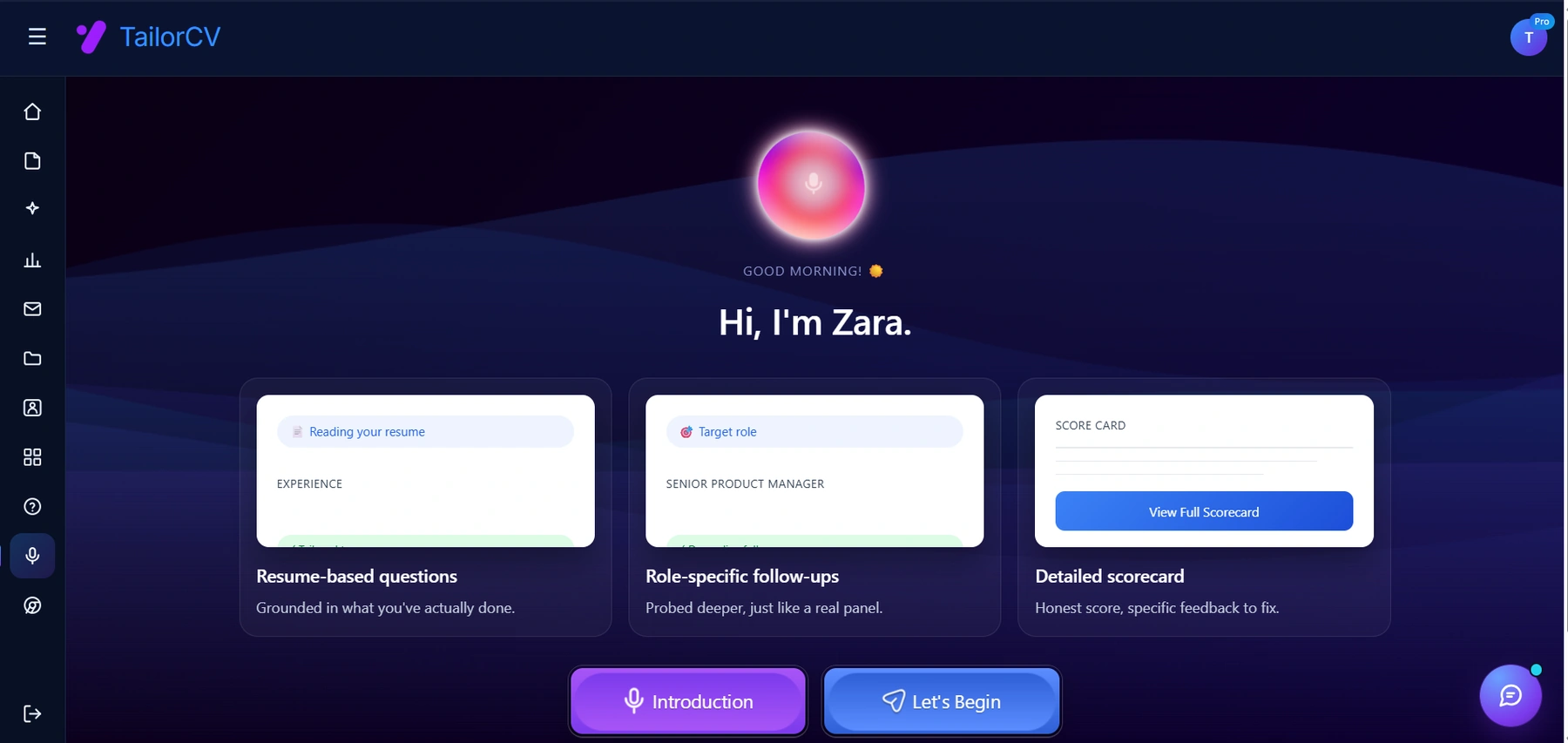
You can rehearse this before the real thing. The interviewer reads your resume first, so the questions come from your actual experience rather than a generic list.
How do I ask for an informational interview? A short message stating a genuine connection, a specific reason you're contacting that person, a bounded twenty-minute ask, and an explicit note that you're not job hunting at them. Under 150 words, with all scheduling flexibility on your side.
What should I ask in an informational interview? Ask about their path, what a normal week actually looks like, which skills matter more or less than postings suggest, and what they'd do if they were entering now with your background. Always close by asking who else they'd suggest you speak to.
Can I ask for a job in an informational interview? No — not on the first conversation. It retroactively converts an advice request into a job request and is the main reason these messages get ignored. If a role exists, they will usually raise it themselves.
Do informational interviews actually lead to jobs? Often, but indirectly and on a delay. They surface unposted roles, produce referrals weeks later, and sharpen your applications immediately. Treat them as a compounding channel that runs alongside active applying, not a replacement for it.
Putting It All Together
An informational interview works because you're asking for something people enjoy giving — their perspective — rather than something they find awkward to refuse. Keep that framing intact and the whole thing runs smoothly.
Target people one or two steps ahead of you, write a short message with a real connection and an explicit non-job framing, prepare good questions about their experience, respect the time limit exactly, and always ask who else you should talk to. Follow up the same day, and again weeks later when you've acted on their advice — that second message is where referrals come from.
Then use what you learn. Rewrite your resume in the language they used, and check the difference with a free ATS score against a real posting. Conversations that don't change your materials were just pleasant; the ones that do are what shorten the search.
Was this guide useful?
Average 5.00 / 5.00 · 1 rating