 TD
TD

Key Takeaways
- Networking is essential for job searching, as many positions are filled through referrals rather than online applications.
- Effective networking in 2026 focuses on building genuine relationships and being helpful, rather than traditional schmoozing.
- Introverts can excel at networking by prioritizing one-on-one conversations and written outreach over large events.
- A successful networking mindset involves giving value before asking for help, fostering goodwill in relationships.
- Utilize both online platforms like LinkedIn and industry communities, as well as in-person events, to expand your network effectively.
networking is consistently cited as the most effective way to find a job - a large share of positions are filled through referrals and connections rather than online applications. Yet many people avoid networking because it feels uncomfortable, transactional, or fake.
The good news: effective networking in 2026 is not about schmoozing at events or collecting business cards. It is about building genuine professional relationships over time and being helpful. This works even for introverts.
This guide gives you practical, authentic networking strategies for your job search.
Networking complements your applications. Make sure your resume is strong with the TailorCV ATS score checker and your LinkedIn profile is optimized so that when people check you out, you make a strong impression.
Why Networking Works Better Than Applying
When you apply online, you compete with hundreds of applicants and must first pass the ATS. When someone refers you, you:
- Bypass much of the initial filtering
- Get a credibility boost from the referrer
- Are far more likely to get an interview
- Often learn about roles before they are publicly posted
Tailoring without leaving LinkedIn
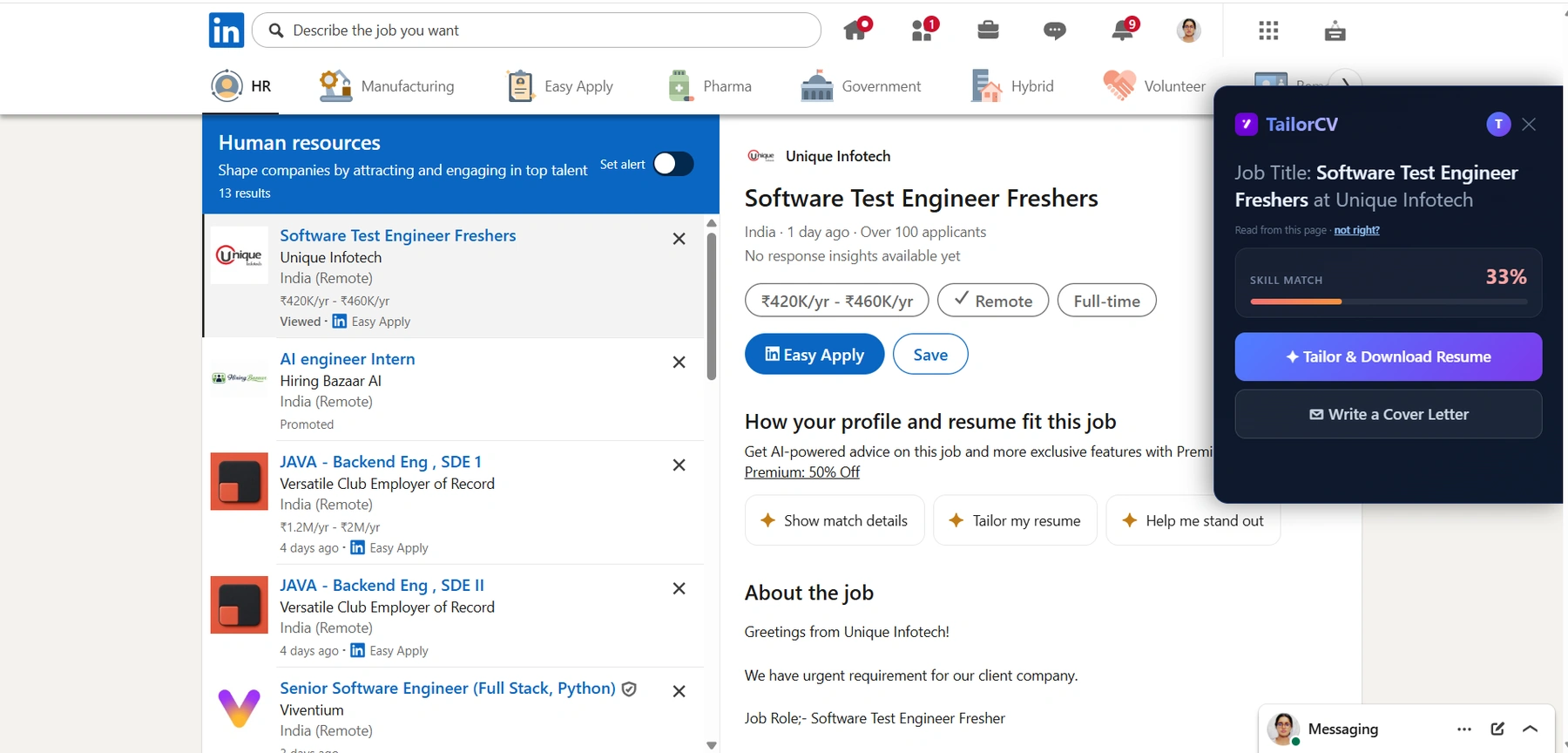
The panel reads the description straight off the listing you are already on and scores your resume against that role, so tailoring per application is a click rather than a detour.
Referrals dramatically increase your hiring odds. This is why networking is worth the discomfort.
Networking for Introverts
If networking feels exhausting or fake to you, reframe it:
- networking is not "working a room" - it is building a few genuine relationships
- You do not need to be charismatic - you need to be genuinely curious and helpful
- One-on-one conversations (which introverts often prefer) are more effective than large events
- Written outreach (LinkedIn messages, email) is networking too - and plays to introvert strengths
- Quality over quantity: 10 genuine connections beat 100 shallow ones
You can be an excellent networker as an introvert by focusing on depth, written communication, and authentic interest.
The Mindset Shift: Give Before You Ask
The biggest networking mistake is reaching out only when you need something. Effective networkers build relationships before they need them and lead with generosity.
Ways to give value:
- Share useful articles or resources
- Make introductions between people who should know each other
- Offer help or expertise
- Engage thoughtfully with others' content
- Celebrate others' achievements genuinely
When you have built goodwill, asking for help feels natural - and people are glad to reciprocate.
Where to Network
Online (Best for Most People)
- LinkedIn: The primary professional network. Connect, engage, and message. Read the LinkedIn job search guide.
- Industry communities: Slack groups, Discord servers, Reddit communities, professional forums
- Twitter/X: Active in many tech and creative industries
- GitHub: For developers, contributing and engaging is networking
In Person
- Industry meetups and conferences
- Alumni events
- Professional association events
- Workshops and talks
- Local tech/industry gatherings
How to Network Effectively
1. Reconnect With Your Existing Network
Start with people you already know - former colleagues, classmates, professors, managers. These warm connections are the easiest and most effective.
"Hi [Name], it's been a while! I hope you're doing well. I'm currently exploring new opportunities in [field] and would love to catch up and hear what you've been up to. Would you have time for a quick call?"
2. Use Alumni Networks
Your university alumni network is one of the highest-response networking channels. Use LinkedIn's Alumni tool to find graduates at companies you are interested in.
3. Request Informational Interviews
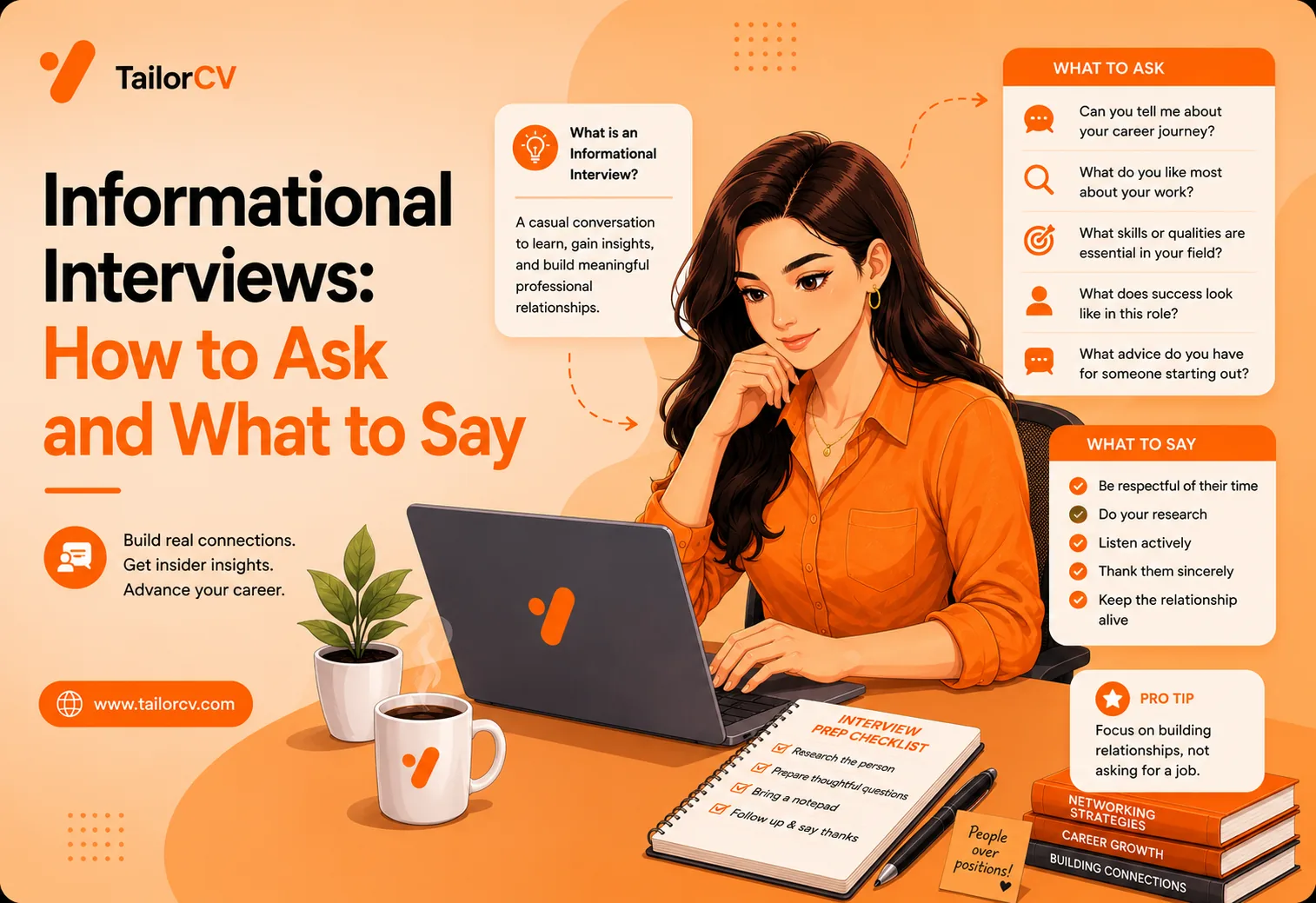
An informational interview is a low-pressure conversation to learn about someone's role or company - not a job request. People are far more willing to give advice than to be asked for a job.
"I'm really interested in [field/company] and I'd love to hear about your experience. Would you have 15 minutes for a quick chat? I'd be grateful for any insights."
4. Engage Before Reaching Out
Before cold-messaging someone, engage with their content for a while. Comment thoughtfully on their posts. When you reach out, you are no longer a complete stranger.
5. Follow Up and Stay in Touch
Networking is not one-and-done. After a good conversation, follow up with a thank-you, stay in touch periodically, and maintain the relationship over time.
Networking Scripts
Reconnecting
"Hi [Name], great to see your update about [their news]! I've been meaning to reconnect. I'm currently exploring [field] roles - would love to catch up and hear how things are going with you."
Informational Interview Request
"Hi [Name], I came across your profile and was really interested in your work at [Company]. I'm exploring a career in [field] and would value 15 minutes to hear about your experience. No pressure at all if you're busy."
Asking for a Referral (After Building Rapport)
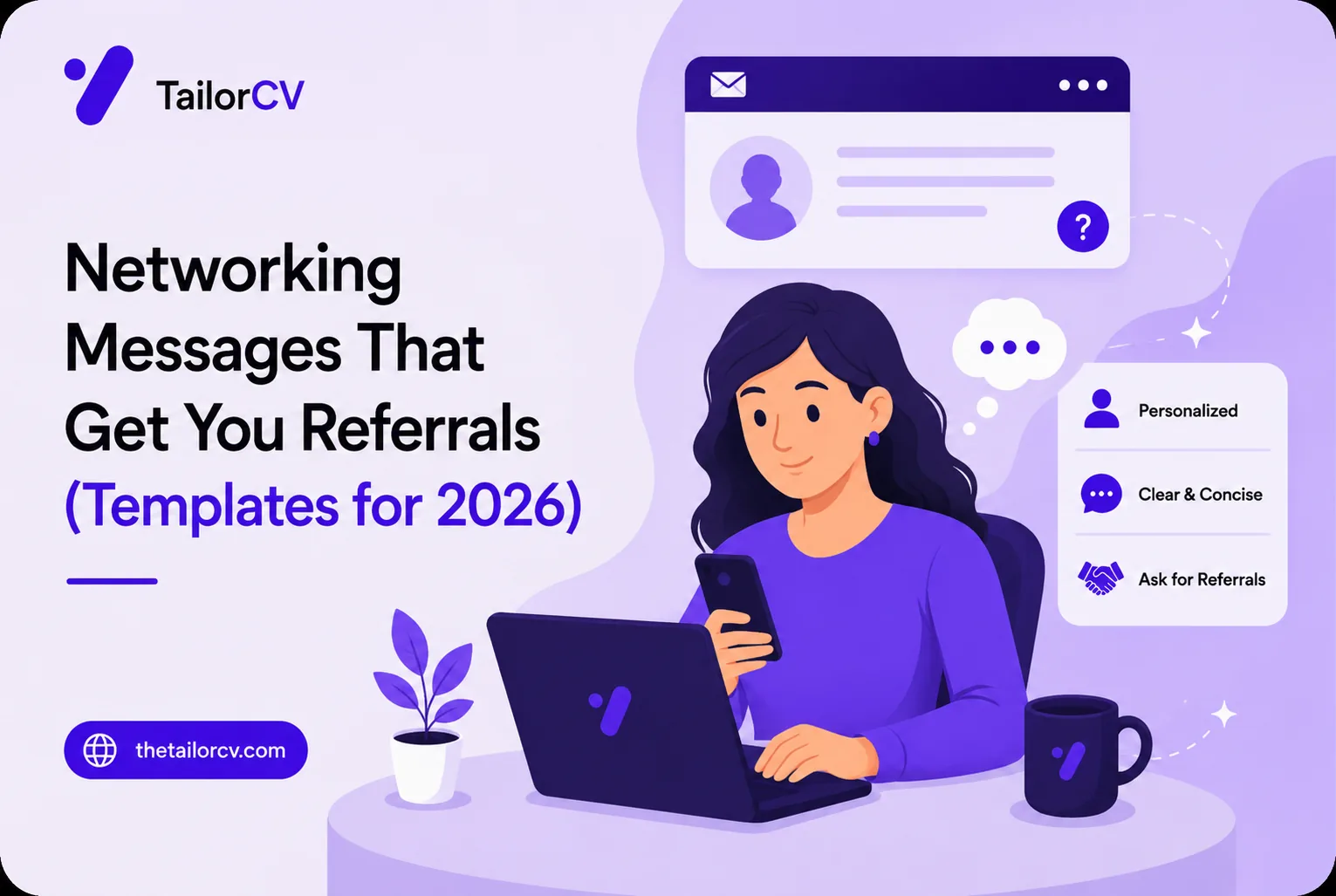
"Thanks so much for the conversation - it was really helpful. I noticed [Company] has an opening for [role] that looks like a great fit. Would you be comfortable referring me, or pointing me to the right person? I completely understand if not."
Read the cold email to recruiter guide for more outreach templates.
Common Networking Mistakes
Mistake 1: Only networking when you need something
Build relationships before you need them. Transactional networking is transparent and ineffective.
Mistake 2: Asking for a job immediately
Lead with curiosity and relationship-building. Job requests come naturally once rapport exists.
Mistake 3: Not following up
A single conversation that you never follow up on rarely leads anywhere. Maintain relationships.
Mistake 4: Neglecting your online presence
When you network, people check your LinkedIn. Make sure it's strong - read the LinkedIn profile optimization guide.
Mistake 5: Being inauthentic
People sense fake networking. Be genuinely curious and helpful. Authenticity is your best networking asset.
Related Guides
- How to Build a Professional Portfolio
- How to Decline a Job Offer Professionally
- How to Handle Job Rejection
- How to Use LinkedIn for Job Search
- How to Write a Cold Email to a Recruiter
- How to Get a Job With No Experience
- How to Negotiate a Salary Offer
- How to Quit Your Job Professionally
- How to Write a Two Weeks Notice
- LinkedIn Profile Optimization Guide
- Remote Job Search Guide
- Cover Letter Guide
- How to Follow Up After a Job Interview in 2026 - What to Send and When
- Why Am I Not Getting Interviews for Jobs I'm Qualified For?
- How to Explain Resume Gaps in 2026 - Honest Strategies That Work
- Work-Life Balance Tips for Professionals in 2026 - Practical Guide
- ATS Mistakes Experienced Professionals Make (And Why Your Resume Stops Working After 5+ Years)
- Data Analyst vs Data Scientist in 2026 - Which Career Is Right for You?
Make This Practical
Turn the career advice into a stronger application system. Start by checking your resume with the free ATS score checker, align it with the role using How to Tailor Your Resume for Every Job, and keep your profile consistent with LinkedIn Resume Tailoring Sync.
When you are ready to apply, build the supporting pieces around the resume. Use the AI cover letter generator for targeted outreach, practice with the AI mock interview tool, and review Why Your Resume Gets No Responses if applications are not converting.
Conclusion
networking is the most effective job search strategy, and it works even for introverts when approached authentically. Build genuine relationships, give before you ask, reconnect with your existing network, request informational interviews, and stay in touch over time.
Support your networking with a strong resume (use the TailorCV ATS score checker) and an optimized LinkedIn profile. Combine networking with the cold email guide for a complete outreach strategy.
Frequently Asked Questions
Why is networking more effective than just applying for jobs online?
Networking is more effective than applying online because it allows you to bypass initial filtering processes, gain credibility through referrals, and access job opportunities that may not be publicly posted. When someone refers you to a position, your chances of landing an interview significantly increase. This is why understanding the power of networking is crucial for any job seeker.
How can introverts network effectively during their job search?
Introverts can network effectively by focusing on building genuine relationships rather than forcing themselves into large networking events. They can start by reaching out to individuals for one-on-one conversations, utilizing platforms like LinkedIn to connect, and even crafting a well-thought-out cold email to engage recruiters or professionals in their field. Personalizing messages can make a significant impact and reduce discomfort.
What are some practical tips for building genuine connections in networking?
To build genuine connections, focus on being helpful and showing interest in others' work. Attend industry-specific events, engage in meaningful conversations, and follow up with personalized messages. Using templates like the LinkedIn referral message can also help you reach out without feeling awkward, increasing your chances of forming lasting professional relationships.
How can I ensure my resume supports my networking efforts?
Your resume should complement your networking strategy by being strong and tailored to the roles you're pursuing. Use tools like the Free ATS score checker to optimize your resume for applicant tracking systems and ensure it makes a strong impression when shared with your network. A well-crafted resume can enhance the credibility you gain from your networking efforts.
How can networking lead to job offers?
Networking can lead to job offers by creating opportunities for referrals, which significantly boost your chances of being noticed by employers. When you build relationships and stay in touch with your network, you may learn about job openings early and receive endorsements from your connections. This proactive approach to networking can make all the difference in turning conversations into actual job offers.
What is your resume scoring right now?
Scan it against a job description and get your ATS match score in about a minute.
Drop your resume here or choose a file
PDF only. Max 2 MB.
We never share your data or use it to train AI models.

Was this guide useful?
Be the first to rate it.