 TD
TD
Key Takeaways
- A career change portfolio demonstrates your ability to perform in a new field, countering the limitations of a resume focused on your previous career.
- Build 2-3 projects relevant to your target field to provide evidence of your skills and versatility.
- Clearly connect your past experience to your new career by showcasing how your old skills can be an asset in the new context.
- Craft a compelling narrative that explains your career pivot, including your motivation, completed projects, and future aspirations.
- Quantify achievements from both your previous and new projects to highlight your impact and capabilities across industries.
Career Change Portfolio: Prove Skills From a New Field
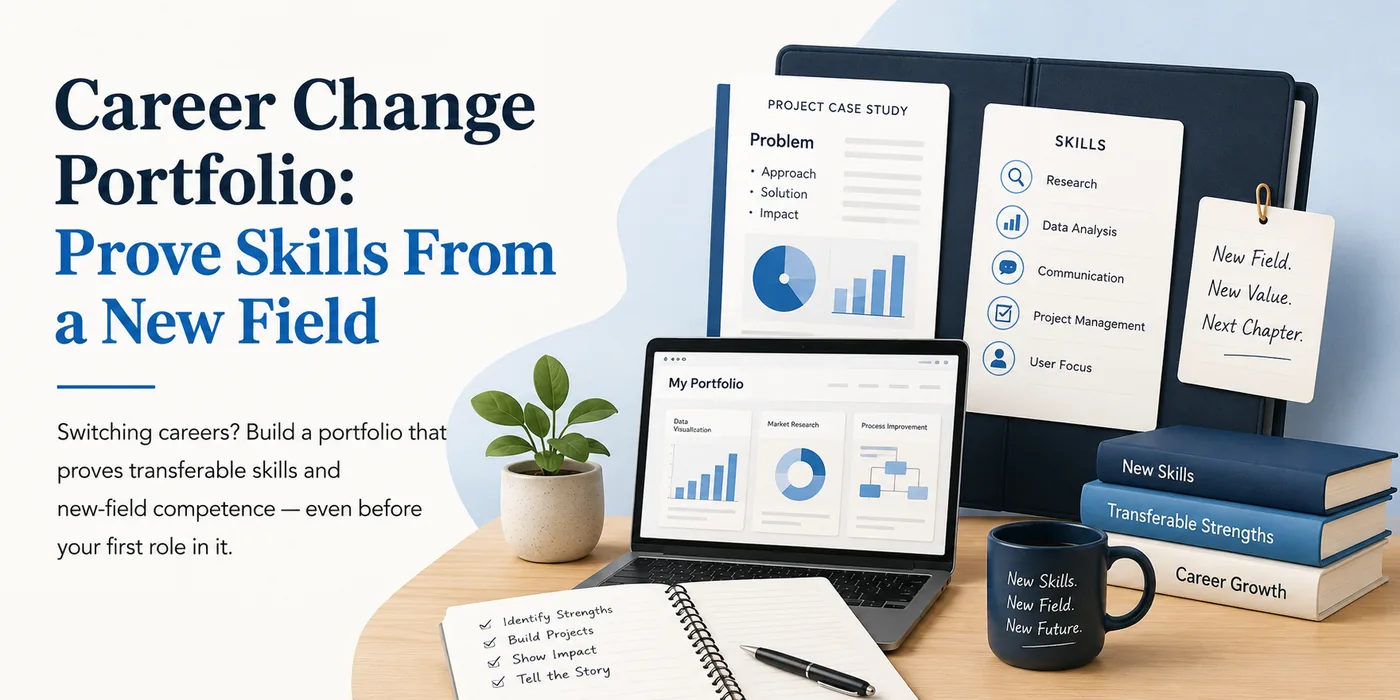
When you switch fields, your resume works against you - it is full of the old career. A portfolio flips the script: it proves you can already do the new work, which is the only thing a skeptical hiring manager actually cares about. Pair this with How to Build a Professional Portfolio and the Career Change Resume guide.
Lead With New-Field Projects
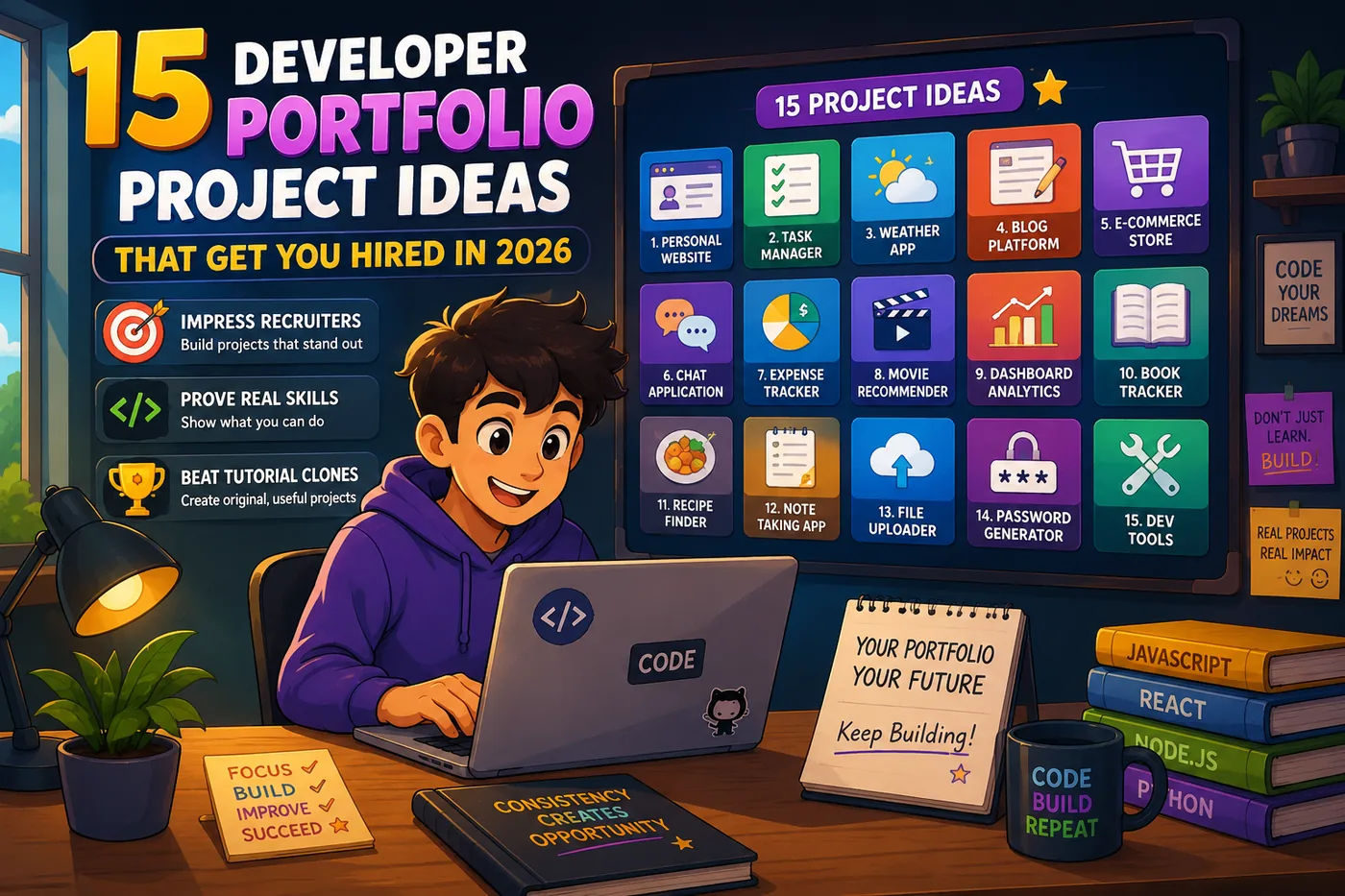
Build 2-3 projects in your target field, even self-initiated ones. These are the evidence that overrides "but you have not done this professionally." For ideas, see 15 Developer Portfolio Project Ideas and What to Put in Your Portfolio With No Projects.
How to Select Projects
- Identify Core Skills: Research the essential skills for your target role. For example, if you're moving into UX design, focus on projects that highlight user research or interface design.
- Leverage Existing Knowledge: Use your previous experience to inspire project ideas. A former teacher can create educational content or an interactive learning app.
- Showcase Diversity: Include a mix of projects, such as personal projects, freelance work, or collaborations, to demonstrate versatility.
Example Project Ideas
- Tech to Marketing: Create a content marketing plan for a hypothetical product, including SEO strategies and sample blog posts.
- Finance to Data Analysis: Develop a case study analyzing a dataset relevant to a new industry, showcasing your analytical skills and insights.
- Sales to UX: Design a mockup for a website or app, focusing on user pathways and conversion points to demonstrate your understanding of user experience.
Bridge Your Old Skills
Show how your previous experience is an asset, not a gap:
- A teacher moving into UX deeply understands users.
- A salesperson moving into marketing understands conversion.
- An analyst moving into PM understands data-driven decisions.
Make the bridge explicit in your Portfolio About Me Section so the reader connects the dots for you.
Crafting Your Narrative
- Highlight Relevant Experience: Detail specific projects or roles from your old career that are relevant to your new field.
- Use Relatable Language: Avoid jargon from your previous industry that may not translate well. Instead, use language familiar to your target field.
Tell the Pivot Story
A short, confident narrative - why you switched, what you have built, where you are headed - turns a "risky" candidate into a focused one. Vagueness reads as uncertainty; a clear story reads as conviction.
Structuring Your Story
- Introduction: Briefly introduce your background and the decision to pivot.
- Motivation: Explain what inspired the change. For example, was it a passion for the new field, or a desire for growth?
- New Projects: Discuss the projects you’ve completed and what skills you gained through them.
- Future Aspirations: Share your goals in the new field, emphasizing your commitment to continued learning and growth.
Quantify Both Worlds
Use results from your old career and your new projects. Numbers travel across industries - see How to Quantify Resume Achievements.
Examples of Quantifying Achievements
- Sales to Marketing: “Increased lead conversion rates by 30% through targeted email campaigns.”
- Teaching to UX: “Conducted user interviews with 50+ students to inform design decisions, resulting in a 25% improvement in usability scores.”
- Finance to Data Analysis: “Analyzed financial reports leading to a 15% cost reduction through data-driven recommendations.”
Publish and Align
Generate your career-change portfolio from your resume with the portfolio builder, then mirror it in a career-change resume and the Career Change to Tech guide.
Key Alignment Tips
- Consistent Branding: Use the same colors, fonts, and imagery across your resume, portfolio, and LinkedIn profile for a cohesive look.
- Unified Messaging: Ensure that your career goals and skills are presented consistently across all platforms to avoid confusion.
Keep Your Resume and Portfolio in Sync
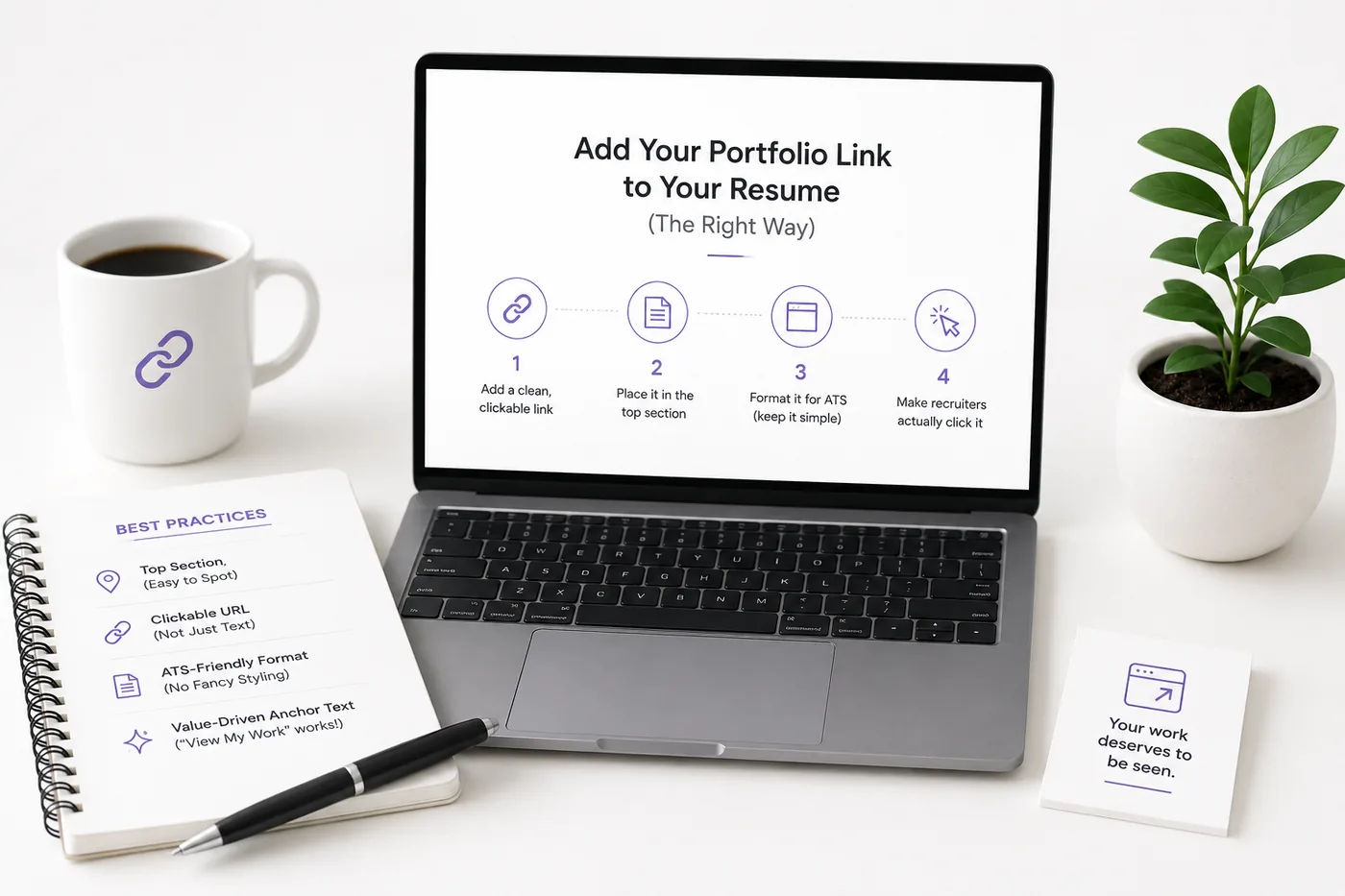
Your resume, your LinkedIn, and your portfolio should tell the same story - same name, same headline, same top projects - just at different levels of depth. A recruiter who sees a 'Full Stack Developer' resume and a portfolio headlined 'Aspiring Designer' gets confused, and confusion loses interviews. Lock the resume down first with the ATS score checker and an ATS-friendly template, then mirror that exact positioning in your portfolio. When they reinforce each other, every recruiter touchpoint pushes you forward. See How to Add Your Portfolio Link to Your Resume for placing the link correctly.
Turning a resume into a portfolio site
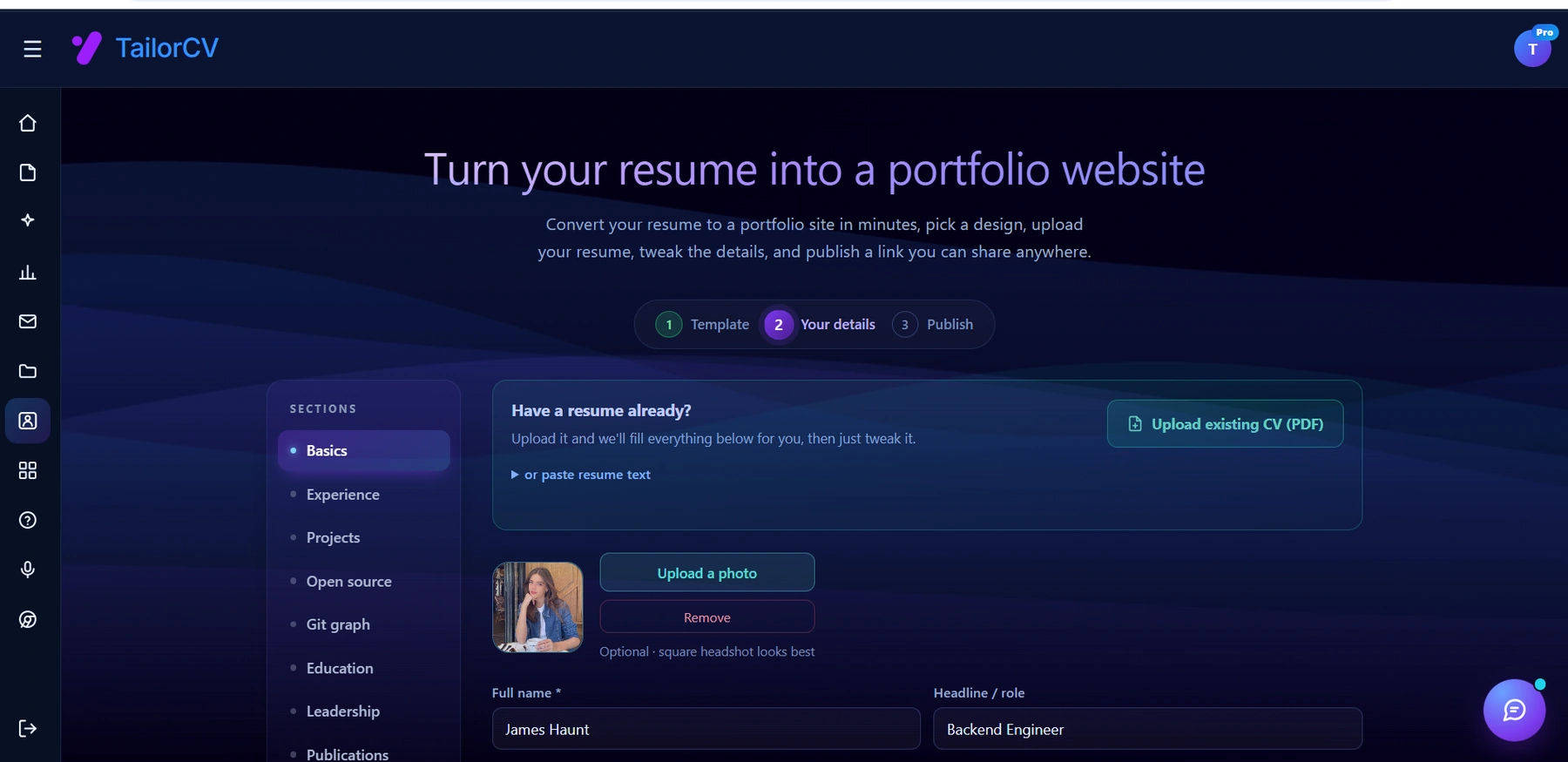
You upload the resume you already have and the sections fill themselves in - basics, experience, projects, education - so building the site is editing rather than starting from an empty page.
Common Mistakes
- A portfolio still anchored in the old field.
- No new-field projects, only courses.
- Apologizing for the switch instead of owning it.
- Inconsistent messaging across your resume, LinkedIn, and portfolio.
Checklist for Your Career Change Portfolio
- unchecked: 2-3 relevant projects showcased
- unchecked: Clear connections made between old and new skills
- unchecked: A well-structured pivot story
- unchecked: Quantified achievements included
- unchecked: Resume and portfolio aligned in branding and messaging
- unchecked: No outdated content from your previous career
- unchecked: Consistent language and terminology used throughout
Additional Resources
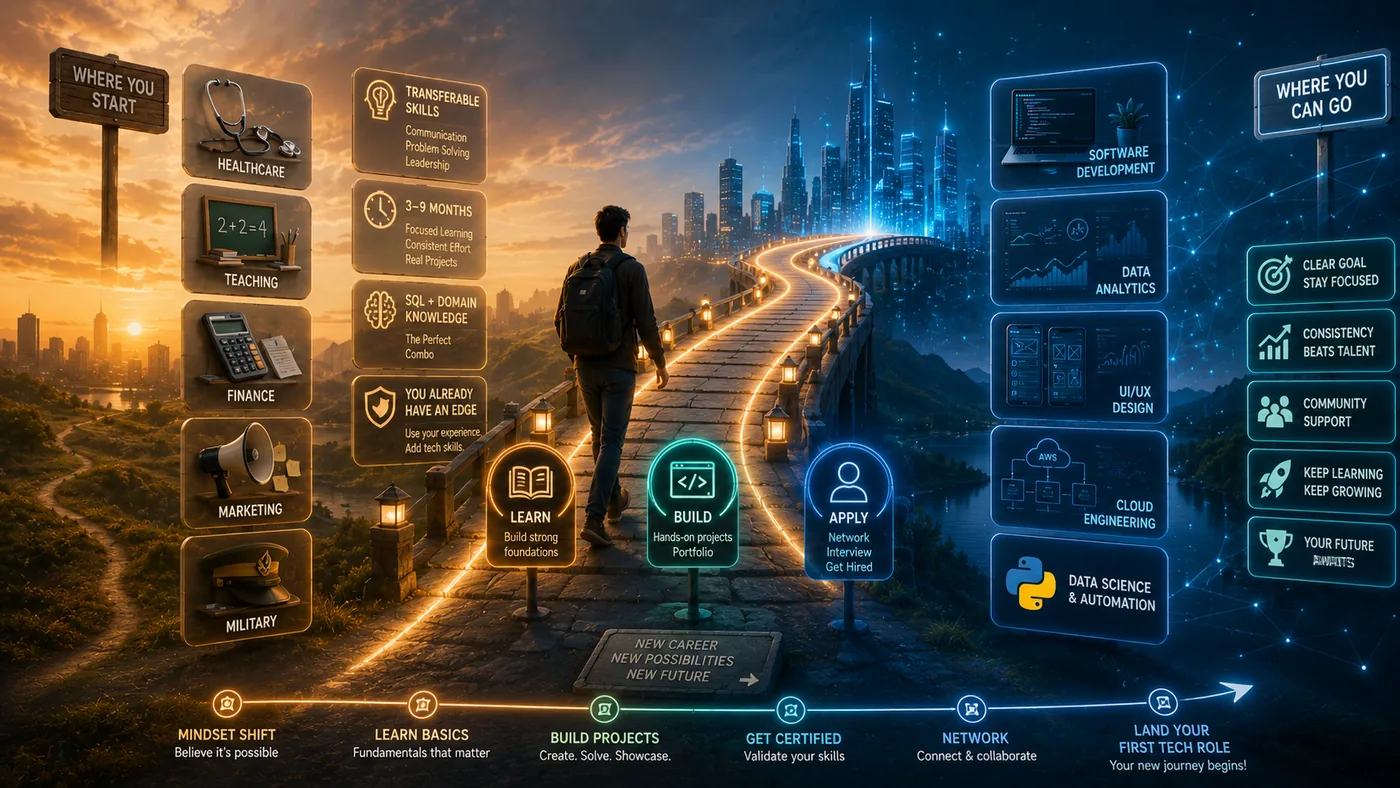
- For those transitioning into tech, check out the Career Change to Tech in 2026 - Complete Guide for Switchers for industry-specific advice.
- If you're a business analyst, refer to our Business Analyst Portfolio Guide for tailored insights.
- For finance professionals, explore the Finance and Accounting Portfolio Guide to enhance your transition.
By following these steps and avoiding common pitfalls, you can create a compelling career change portfolio that not only highlights your transferable skills but also demonstrates your readiness to excel in your new field. Embrace the change, and let your portfolio be a testament to your adaptability and ambition!
Frequently Asked Questions
Can a portfolio really overcome no experience in the new field?
Often yes - concrete projects in the target field are exactly the proof employers need to take a chance on a switcher. Consider using an AI portfolio builder to showcase your work effectively.
How many new-field projects do I need?
Two to three solid, documented ones to start. Add more as you go. This is similar to the approach in our Business Analyst Portfolio Guide.
How do I frame my old career?
As transferable strength. State the bridge explicitly in your About Me and case studies. You might also find it helpful to reference our Cover Letter for a Career Change for additional insights on framing your experience.
Build Your Portfolio Now
You do not need to code a site from scratch or spend a weekend wrestling with a website builder. Turn your existing resume into a live, shareable portfolio website in minutes with the TailorCV portfolio builder - choose a template, upload your CV, tweak the details, and publish a link you can drop straight onto your resume and LinkedIn. Before you start applying, run your resume through the free ATS score checker and switch to an ATS-friendly template so your portfolio and resume tell one clean, consistent story to every recruiter.
Related Guides
- How to Build a Professional Portfolio
- Career Change Resume
- Career Change to Tech Guide
- What to Put in Your Portfolio With No Projects
- Build a Portfolio With No Experience
- Personal Branding for Professionals
- Portfolio About Me Section
- How to Quantify Resume Achievements
- 15 Developer Portfolio Project Ideas
- How to Get a Job With No Experience
- Portfolio Mistakes to Avoid
- Turn Your Resume Into a Portfolio in Minutes
- Teacher and Educator Portfolio Guide: Showcase Your Classroom Impact
Make This Practical
If this topic connects to your work samples, turn the advice into a live proof page with the TailorCV portfolio builder. After publishing, add the link correctly using How to Add Your Portfolio Link to Your Resume, tighten the page with the Portfolio Checklist Before Applying, and make sure recruiters can contact you through a clean Portfolio Contact Section.
Your portfolio works best when it supports the resume, not when it replaces it. Run the resume through the free ATS score checker, choose an ATS-friendly resume template, and use Portfolio SEO: Get Found so your name, role, and strongest projects are easier to discover.
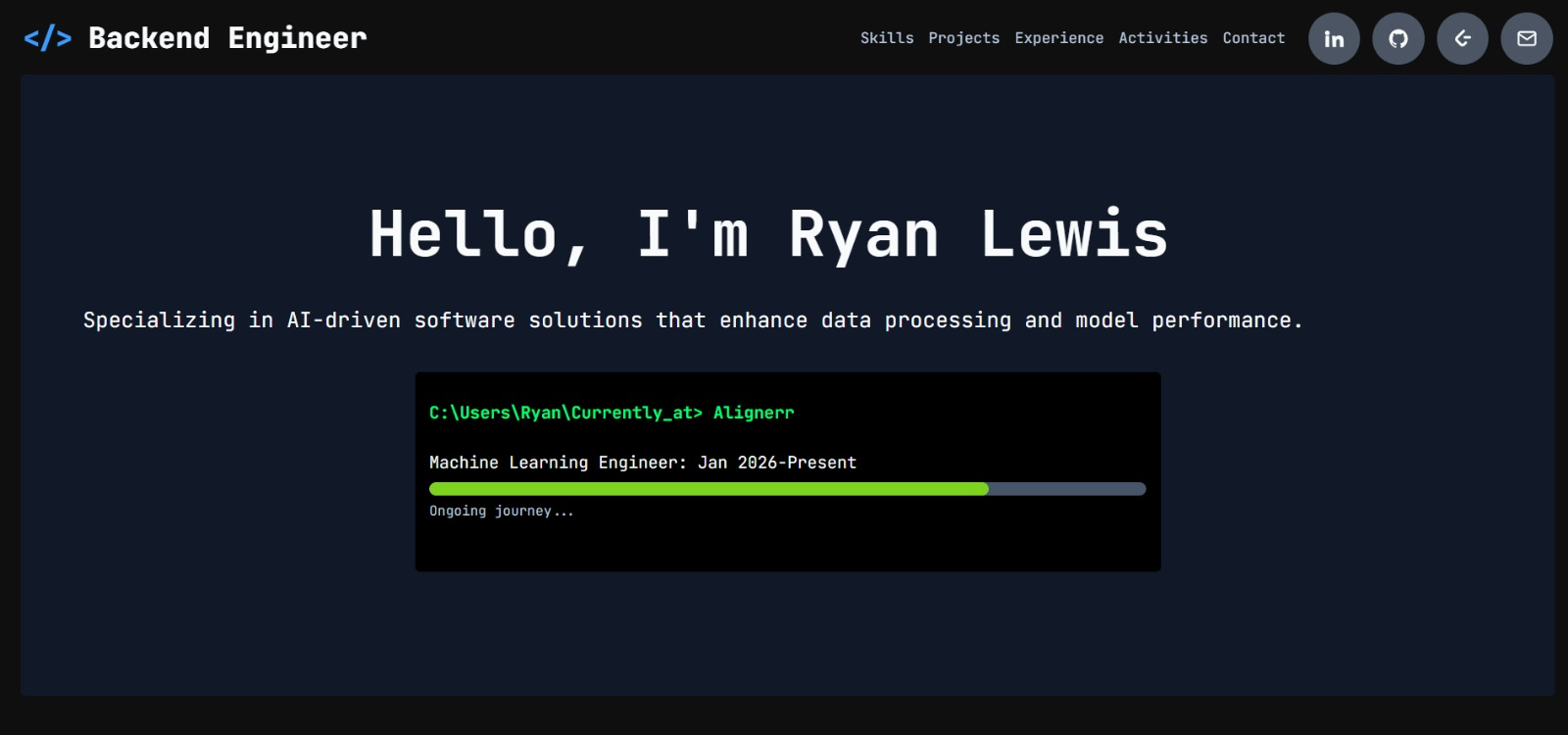
See what your portfolio could look like
This theme is built straight from your resume — pick one and your portfolio is live in minutes.
Was this guide useful?
Be the first to rate it.