 TD
TD
Key Takeaways
- A career change resume must translate past experiences into language relevant to the new industry, highlighting transferable skills and achievements.
- Clearly define a specific target role to avoid creating a vague resume; this allows for tailored language and focus on relevant skills.
- Transferable skills such as communication, leadership, and problem-solving are crucial in demonstrating how past experiences can add value in a new field.
- The resume should quickly answer three key questions: why the new field, what skills transfer, and where is the proof of those skills.
Career Change Resume - How to Write a Resume When Switching Industries in 2026
Use this guide with the resume optimization guide, the ATS score checker, and the mock interview tool so your resume, keywords, and career-change story all line up.
Changing careers is exciting, but writing the resume can feel uncomfortable. You know you have value, but your experience does not line up neatly with the job titles in your new industry.
That is the challenge of a career change resume. You are not just listing what you have done. You are translating what you have done into language your new field understands.
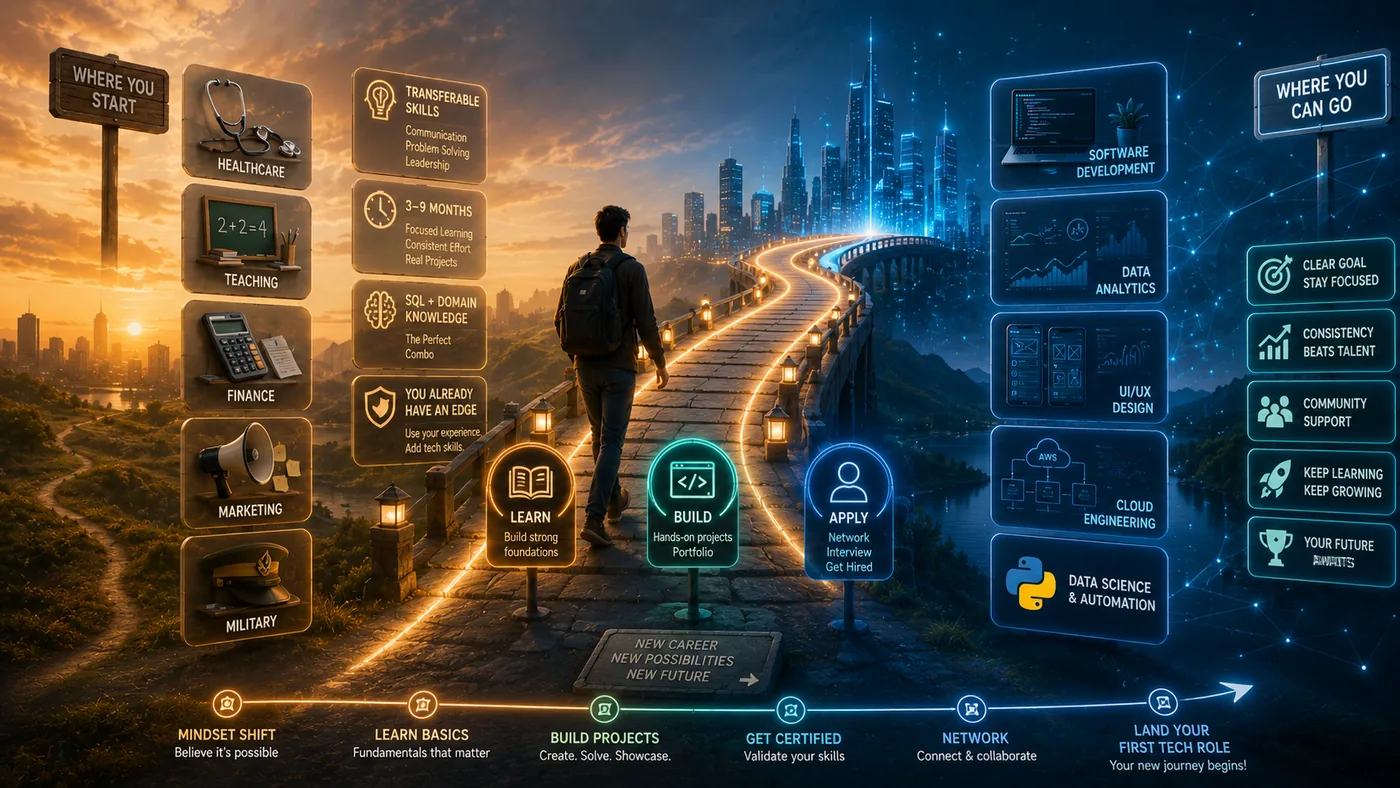
In 2026, career changes are common. Professionals move from teaching to customer success, retail to sales, operations to project management, healthcare to technology, finance to data, and corporate roles to startups. Employers are more open to non-linear paths than they used to be, but they still need a clear reason to trust the fit.
Your resume must answer three questions quickly:
Why this new field? What skills transfer? Where is the proof?
If you are still shaping the overall resume, the resume optimization guide can help you understand what to improve first.
What Makes a Career Change Resume Different?
A traditional resume usually highlights a clear progression within one field. A career change resume needs to build a bridge between your past and your target role.
That bridge is made of transferable skills, relevant achievements, projects, certifications, keywords, and a clear professional summary.
Your Old Titles May Not Tell the Full Story
If you were a teacher, your title may not sound relevant to training, customer success, instructional design, or operations. But your work may include presentation, planning, stakeholder management, documentation, conflict resolution, and performance tracking.
If you worked in retail, your title may not sound relevant to sales, account management, recruiting, or customer experience. But you may have handled targets, customers, inventory, scheduling, team training, and problem-solving.
The resume needs to make that connection visible.
Start With a Target Role
Do not write a career change resume for "anything." That creates a vague resume.
Choose a specific role or role family. For example:
- Customer success associate
- Project coordinator
- data analyst
- HR coordinator
- UX researcher
- digital marketing specialist
- Operations analyst
- Business development representative
Why Specific Targeting Matters
Each field uses different language. A project coordinator resume should emphasize planning, timelines, stakeholders, tools, and reporting. A customer success resume should emphasize onboarding, retention, customer communication, CRM, and product education.
If you try to target too many roles at once, your resume becomes generic.
For job-by-job customization, use this guide on how to tailor your resume for every job.
Identify Transferable Skills
Transferable skills are the foundation of a career change resume. They show how your past experience can create value in your new field.
Examples of Transferable Skills
Common transferable skills include:
- Communication
- Leadership
- Research
- Data analysis
- Training
- customer service
- Conflict resolution
- Project coordination
- Process improvement
- Budgeting
- Writing
- Presentation
- Stakeholder management
- Problem-solving
Translate Skills Into the New Industry's Language
Translation is the key.
Teacher language:
"Created lesson plans and managed classroom activities."
Customer success language:
"Designed structured learning materials, delivered group training, and adapted communication to different user needs."
Retail language:
"Helped customers and stocked products."
Sales language:
"Advised customers on product fit, handled objections, and supported daily revenue targets."
You are not lying. You are framing the same work in language the new employer understands.
Choose the Right Resume Format
Career changers often wonder whether to use a functional resume or chronological resume.
Chronological Resume
A chronological resume lists your work history in reverse date order. This is the most familiar format for recruiters and ATS tools.
It works best if your previous roles have clear transferable value or if your career change is not too dramatic.
Functional Resume
A functional resume focuses heavily on skills instead of dates and job history. It can help highlight transferable skills, but many recruiters dislike it because it hides context.
ATS tools may also parse it less effectively.
Hybrid Resume
For most career changers, a hybrid resume is the best choice. It includes a strong summary, targeted skills, selected achievements, and then a chronological work history.
This format gives recruiters the context they need while bringing relevant skills to the top.
Write a Strong Career Change Summary
Your summary should explain your direction without sounding apologetic.
Weak summary:
"Looking to change careers into marketing. I do not have direct experience but I am hardworking and willing to learn."
Strong summary:
"Operations professional transitioning into digital marketing, with experience coordinating campaigns, tracking performance metrics, and improving customer communication. Skilled in Excel, content planning, stakeholder coordination, and process improvement."
What to Include
Mention your previous background, target field, transferable strengths, and relevant tools or projects. Keep it to three or four lines.
Build a Targeted Skills Section
Your skills section should combine transferable skills with new-field keywords.
For example, if you are moving into project coordination, your skills might include:
Project scheduling, stakeholder communication, task tracking, risk documentation, meeting coordination, process improvement, Excel, Asana, Jira, reporting.
Avoid Generic Skill Lists
Do not rely only on soft skills like teamwork, creativity, and hard work. Include concrete skills, tools, and methods from the job description.
Rewrite Experience Bullets for Relevance
You do not need to describe every duty from your old job. Focus on responsibilities and achievements that connect to the new role.
Example: Teacher to Customer Success
Before:
"Taught English classes to high school students."
After:
"Delivered structured training to 120+ learners, adapted explanations based on user needs, and tracked progress to improve engagement and outcomes."
Example: Retail Manager to Operations Coordinator
Before:
"Managed store shifts and helped employees."
After:
"Coordinated daily staffing, inventory checks, vendor deliveries, and issue resolution for a high-volume retail location."
Example: Administrative Assistant to Project Coordinator
Before:
"Scheduled meetings and answered emails."
After:
"Managed calendars, meeting agendas, follow-ups, and documentation for cross-functional projects involving leadership and external partners."
Add Projects and Certifications
projects and certifications help prove commitment to your new field. They also give you relevant keywords and talking points.
Projects That Help Career Changers
If you want a data role, build a dashboard. If you want marketing, create a campaign plan. If you want UX, conduct a small research study. If you want project management, document a project plan with timeline, risks, and deliverables.
This guide on adding projects to your resume is useful even if you are not a fresher, because the same proof-first approach works for career changers.
Certifications Should Support Your Target
Choose certifications that employers recognize and that match the job description. Do not collect random certificates just to fill space.
If you need affordable options, review the list of free online certificates for resumes.
Optimize for ATS in the New Field
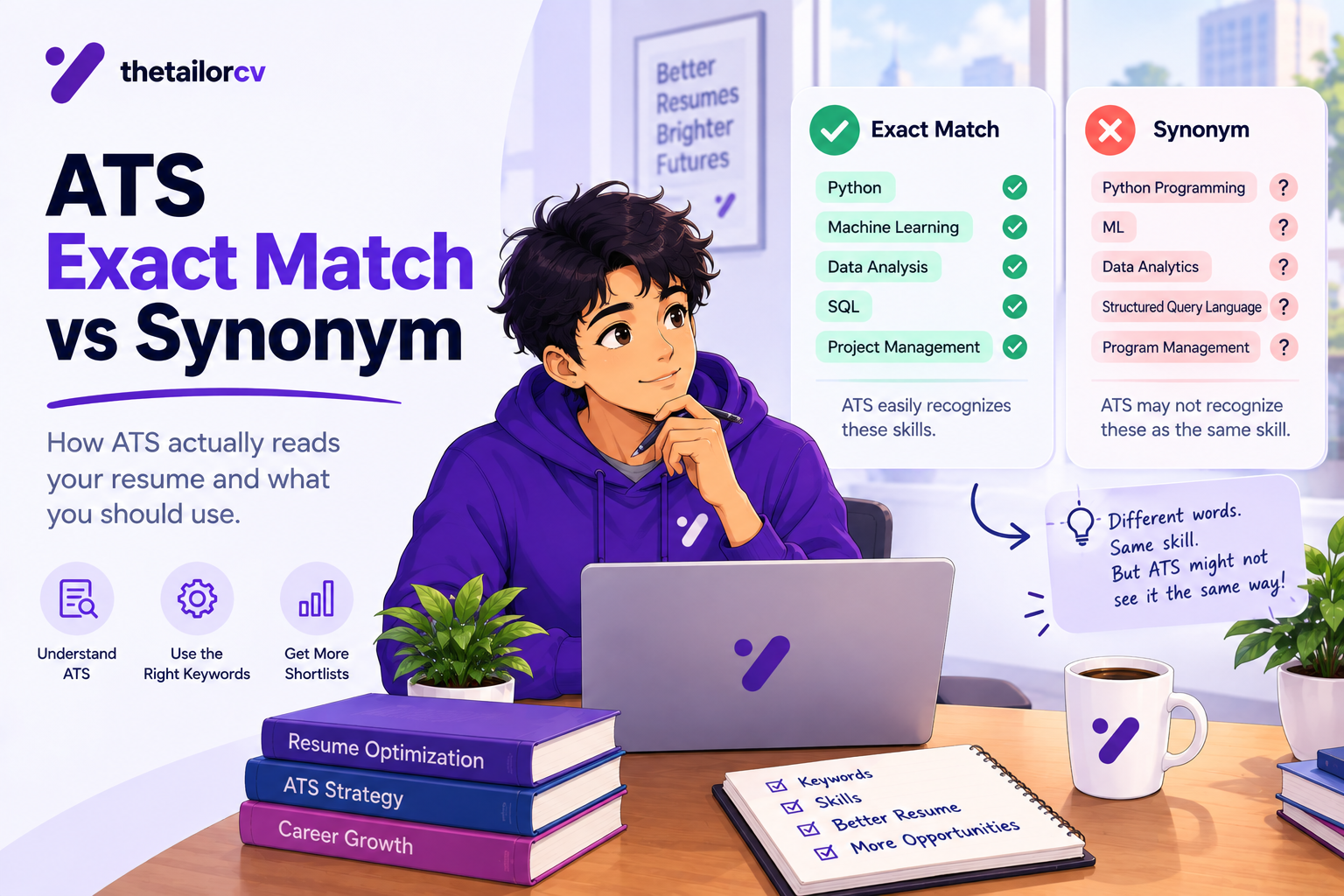
Career changers often get filtered out because their resumes use language from the old industry, not the new one.
Your resume after optimization
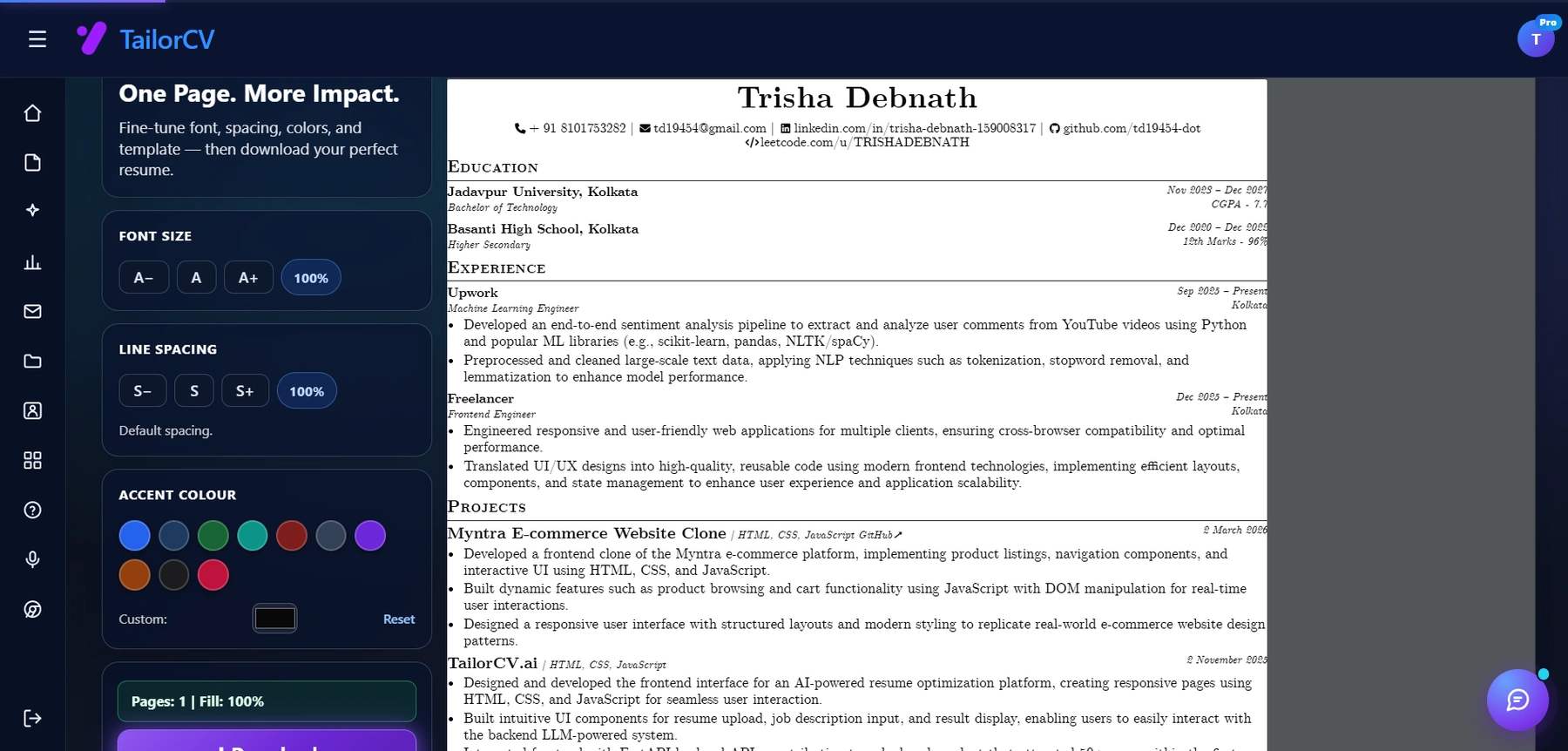
This is the resume after tailoring - the content is already matched, and these controls are how you fit it onto one page.
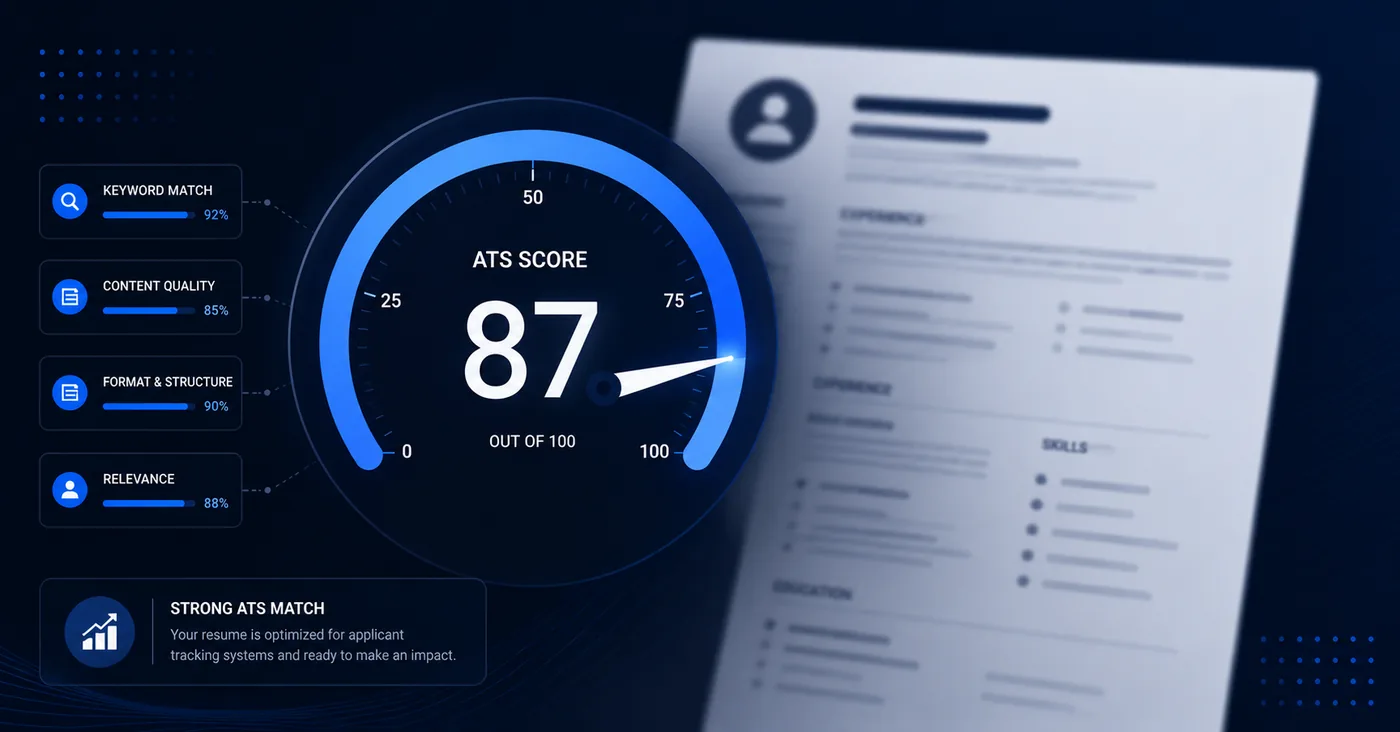
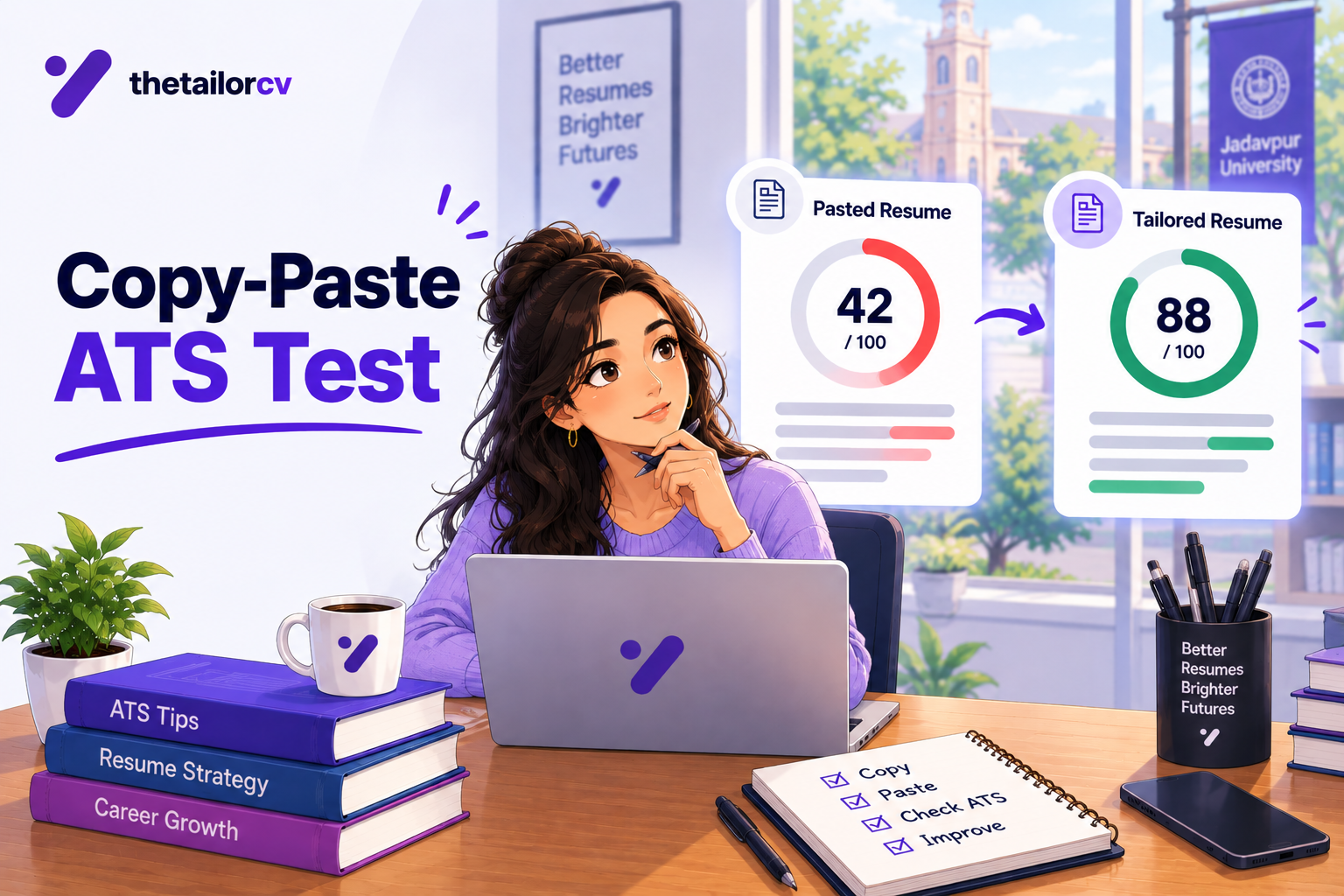
This is where ATS optimization matters. TailorCV.ai can compare your resume to a target job description and show missing keywords, weak alignment, and sections that need rewriting. That helps you translate your experience faster and more accurately.
You can start with the resume optimization tool to check whether your career change resume fits the new role.
If you want a cleaner layout, browse ATS-friendly resume templates before submitting.
Use Keywords Honestly
If you have used a skill in a different context, include it. If you have only studied a tool, be clear. For example, write "SQL coursework and portfolio projects" instead of implying years of professional SQL experience.
Add a Relevant Projects Section
Projects can improve ATS alignment because they allow you to include target-field keywords naturally.
Address the Career Change in Your Cover Letter
Your cover letter should explain the move directly and positively. Do not spend half the letter apologizing for not having the traditional background.
Simple Cover Letter Structure
Start with the target role and why it interests you. Explain your transferable background. Give one or two proof points. Mention what you have done to prepare for the transition. Close with enthusiasm.
Example Career Change Cover Letter Paragraph
"My background in hospitality has given me strong experience in customer communication, issue resolution, scheduling, and service recovery. I am now applying those strengths to customer success roles, where I can help users adopt products, solve problems, and build long-term relationships."
This is confident and clear.
Prepare for Interview Questions
Career changers should expect one big question:
"Why are you changing careers?"
Prepare an answer that connects your past, your motivation, and your future.
You can practice that answer with the mock interview tool before speaking with recruiters.
Strong Answer Formula
Use this structure:
"In my previous role, I enjoyed [transferable work]. Over time, I became more interested in [new field]. I have built relevant skills through [projects, certifications, experience], and this role is a strong fit because [specific connection]."
Avoid Negative Explanations
Do not focus only on escaping your old career. Employers want to hear what you are moving toward, not just what you are leaving.
Common Career Change Resume Mistakes
One mistake is hiding the career change completely. If your resume creates confusion, recruiters may move on.
Another mistake is using a functional resume that removes dates and context. It can look suspicious.
A third mistake is keeping old-industry language. If the new employer cannot understand your relevance, they will not connect the dots for you.
The final mistake is applying too broadly. A targeted career change resume is much stronger than a general one.
Final Thoughts
Switching industries in 2026 is possible, but your resume must do more than list your past. It must translate your past into the future you want.
Choose a target role. Identify transferable skills. Use a hybrid format. Write a clear summary. Reframe your experience bullets. Add projects and certifications. Optimize for ATS with the language of your new field.
Tools like TailorCV.ai make this easier by showing how your resume matches a specific job description and where you need stronger alignment.
Your career path does not have to be perfectly linear to be valuable. It just has to be clearly explained.
Try TailorCV free -> thetailorcv.com
Make This Practical
Turn the career advice into a stronger application system. Start by checking your resume with the free ATS score checker, align it with the role using How to Tailor Your Resume for Every Job, and keep your profile consistent with LinkedIn Resume Tailoring Sync.
When you are ready to apply, build the supporting pieces around the resume. Use the AI cover letter generator for targeted outreach, practice with the AI mock interview tool, and review Why Your Resume Gets No Responses if applications are not converting.
Related Guides
- Cover Letter Guide
- 35 Powerful Technical Skills in Resume for Freshers With No Experience (2026 Guide)
- 15 Best Free Online Certificates That Actually Look Good on a Resume
- How to Tailor Your Resume for Every Job Application (Step-by-Step)
- How to Improve Your ATS Score
- Top Skills to Add to Your Resume
- Soft Skills for Resume
- Why Am I Not Getting Interviews for Jobs I'm Qualified For?
- ATS Score Guide for
- 200 Best Action Verbs for Resume
- Business Analyst Resume
- Career Change to Tech
- Resume Matching for Career Changers - How to Bridge the Gap in 2026
- How to Write a Resume Headline in 2026 - With 30 Examples
- How to Write a Resume Summary in 2026 - With 20 Examples
- How to Write a Resume with AI in 2026 - Smart Use Without the Risks
- How to Match Your Resume Skills Section to Any Job Description in 2026
- Event Planner Resume Guide 2026
Comparison of Career Change Resume Approaches
When switching industries, how you present your experience can make a significant difference in how potential employers perceive your qualifications.
| Aspect | Weak Approach | Strong Approach |
|---|---|---|
| Job Titles | "Elementary School Teacher" | "Educational Program Manager" |
| Professional Summary | "Looking for a new opportunity." | "Dynamic professional with expertise in curriculum development and stakeholder engagement, seeking to leverage teaching experience in a customer success role." |
| Skills Section | "Communication, Organization" | "Cross-functional collaboration, Data analysis, Project management, Customer relationship management" |
| Relevant Experience | "Taught various subjects to students." | "Developed and implemented innovative educational programs that increased student engagement by 30%." |
| Certifications | "Bachelor's in Education" | "Certified Customer Success Manager (CCSM), Project Management Professional (PMP)" |
| Keywords | "Teaching, Classroom Management" | "Customer Success, Stakeholder Engagement, Agile Methodologies" |
| Accomplishments | "Managed classroom activities." | "Led a team to enhance curriculum delivery, resulting in a 15% improvement in student satisfaction scores." |
If you are keeping the same role and only changing industry, the job is smaller - tailoring when the company is in another industry covers translating vocabulary and metrics.
Frequently Asked Questions
What are transferable skills, and how do I identify them for my career change resume?
Transferable skills are abilities that can be applied across different jobs and industries. To identify them, reflect on your past roles and consider skills like communication, problem-solving, and project management. For more guidance on how to effectively showcase these skills, check out our career change to tech guide.
How can I ensure my resume is optimized for ATS when changing industries?
To optimize your resume for Applicant Tracking Systems (ATS), use relevant keywords from the job description and maintain a clear, structured format. Consider utilizing our free ATS score checker to evaluate your resume's compatibility with ATS requirements before submitting your application.
What should I include in my cover letter when switching careers?
Your cover letter should explain your motivation for changing careers, highlight your transferable skills, and provide examples that demonstrate your qualifications for the new role. For effective templates and examples, refer to our cover letter for a career change guide.
How can I showcase projects on my resume when I have limited experience in the new field?
Even if you have limited direct experience, you can include relevant projects that demonstrate your skills and knowledge applicable to the new industry. If you're unsure what to include, our article on fresher resume projects offers great ideas for showcasing your capabilities.
What are some common mistakes to avoid when writing a career change resume?
Common mistakes include using a generic resume format, failing to tailor your skills to the new role, and neglecting to highlight achievements relevant to the target industry. Ensure your resume answers key questions about your transition and consider our resume templates for a more effective presentation.
What is your resume scoring right now?
Scan it against a job description and get your ATS match score in about a minute.
Drop your resume here or choose a file
PDF only. Max 2 MB.
We never share your data or use it to train AI models.

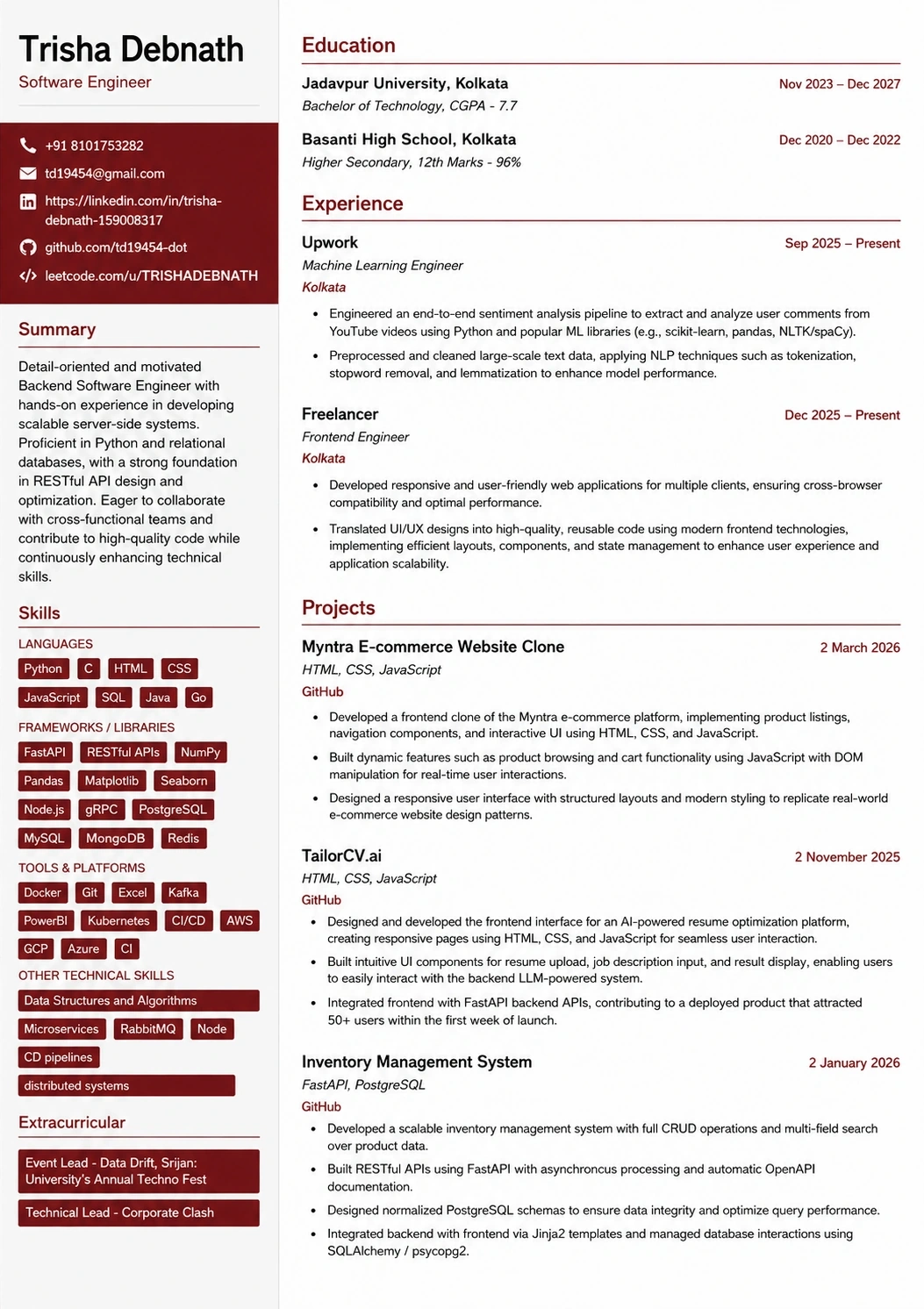
Templates that keep this structure intact
This template is ATS-tested — start from it and the formatting rules in this guide are already handled.
Was this guide useful?
Be the first to rate it.