 SS
SS
Key Takeaways
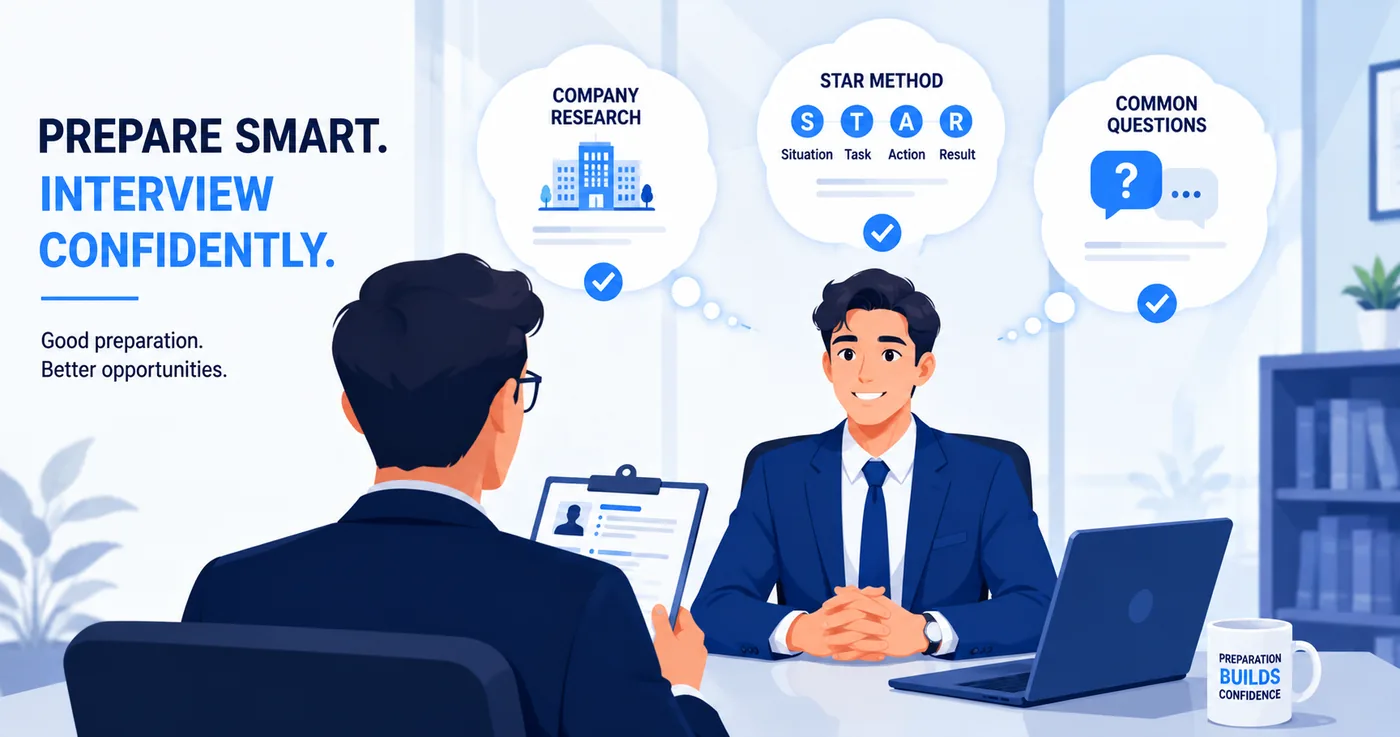
- Review your resume and ensure your application story is consistent before the interview.
- Understand the job description thoroughly, as it serves as your interview study guide to anticipate questions.
- Research the company to provide a personalized answer to "Why do you want to work here?" that connects your skills to their needs.
- Prepare clear stories about your achievements and experiences related to the role, as anything on your resume can become a question.
- Practice your responses out loud and prepare thoughtful questions to demonstrate your interest and engagement.
How to Prepare for a Job Interview in 2026 - Complete Guide for Every Industry
Before interview day, make sure your application story is consistent by reviewing the resume optimization guide, using the ATS score checker, and practicing with the AI mock interview tool. If you are preparing for technical roles, review the FAANG software engineer resume guide or data analyst resume guide so your interview stories match the resume you submitted.
A job interview is not just a test of your experience. It is a test of how clearly you can connect your experience to the employer's needs.
In 2026, interviews can happen in many formats: video calls, phone screens, panel interviews, technical assessments, case interviews, recorded interviews, and final conversations with senior leaders. The format may change, but the fundamentals remain the same.
You need to understand the company, know the role, prepare strong stories, practice out loud, ask thoughtful questions, and follow up professionally.
This guide works across industries because every employer is looking for the same basic signals: competence, communication, reliability, problem-solving, motivation, and fit.
Start With the Job Description
The job description is your interview study guide. It tells you what the employer cares about most.
Read it carefully and highlight the main responsibilities, required skills, tools, qualifications, and success measures. If a responsibility appears near the top, expect questions about it.
This is the same logic behind tailoring your resume to every job: the job description tells you what to emphasize.
Turn Requirements Into Questions
If the description says "manage cross-functional projects," prepare for:
"Tell me about a time you managed a project with multiple stakeholders."
If it says "analyze customer data," prepare for:
"How have you used data to make a decision?"
If it says "handle difficult clients," prepare for:
"Tell me about a time you dealt with a challenging customer."
This simple exercise makes your preparation more focused.
Research the Company
Company research helps you answer "Why do you want to work here?" without sounding generic.
Look at the company website, product pages, recent announcements, leadership messages, social media, customer reviews, industry news, and employee posts on LinkedIn.
What to Research
Focus on:
- What the company sells or provides
- Who its customers are
- Its main products or services
- Recent growth, launches, or changes
- Company values
- Competitors
- Challenges in the industry
Prepare a Clear Reason
A strong answer connects the company to your interests and skills.
Example:
"I am interested in this role because your platform focuses on helping small businesses automate finance workflows. In my last role, I enjoyed improving manual reporting processes, so the product and the operations focus both feel aligned with my experience."
Know Your Resume Deeply
Anything on your resume can become an interview question. Do not list tools, projects, or responsibilities you cannot explain.
Review each role and prepare short stories about your achievements, challenges, teamwork, mistakes, and learning moments.
Connect Your Resume to the Role
Before the interview, compare your resume to the job description. TailorCV.ai can help you identify which parts of your resume are most aligned with the role, so you know what to emphasize in the interview.
If your resume still feels too broad, use the resume optimization tool before the interview so your talking points match the application you submitted.
If the role focuses on leadership, prepare leadership stories. If it focuses on analytics, prepare examples involving data, decisions, and outcomes.
Use the STAR Method
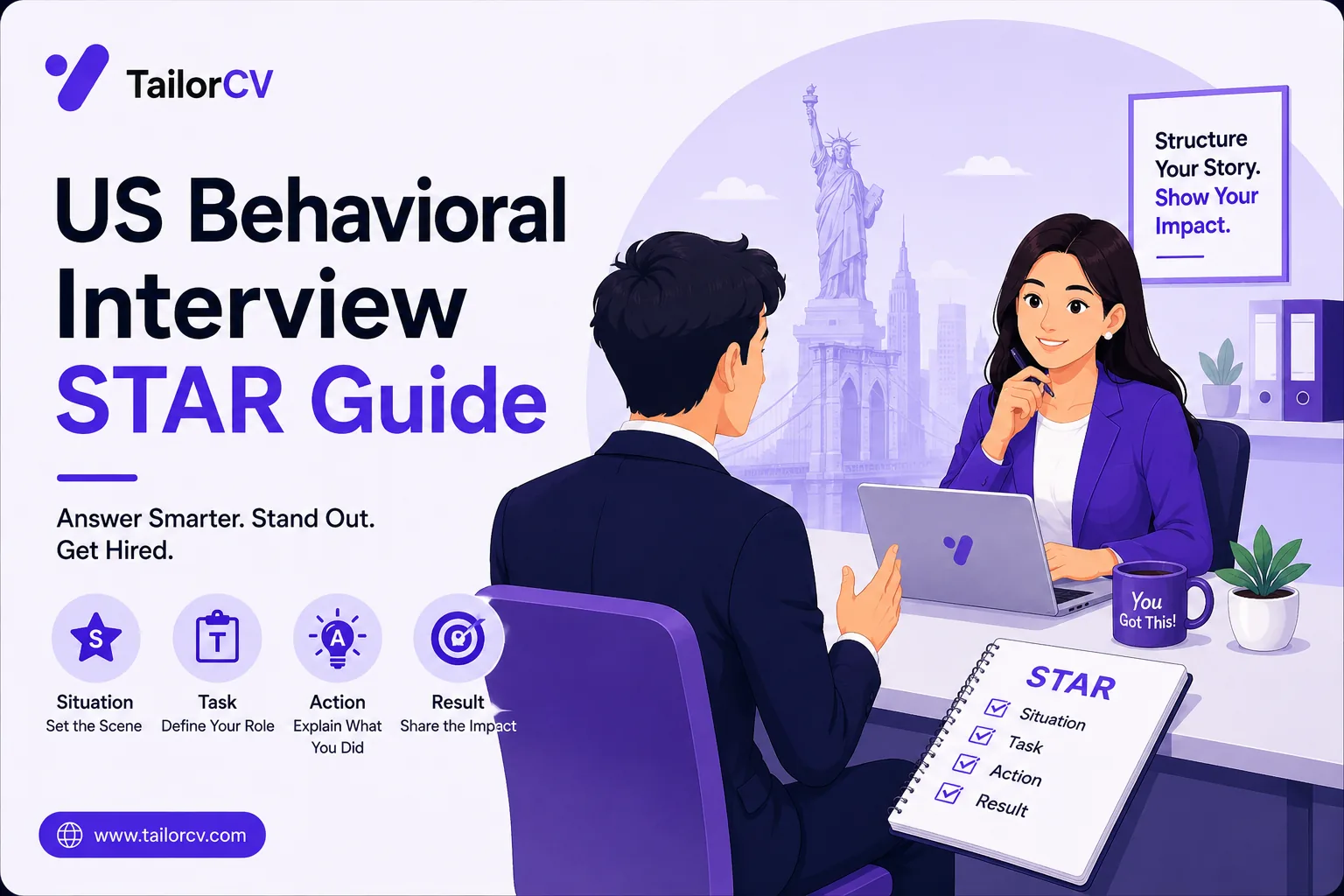
The STAR method helps you answer behavioral interview questions clearly.
STAR stands for:
- Situation
- Task
- Action
- Result
Why STAR Works
Interviewers want specific examples, not vague claims. STAR gives your answer structure and keeps you from rambling.
For more role-specific practice, the guide to free AI mock interview practice can help you rehearse with better structure.
Question:
"Tell me about a time you solved a problem."
Answer:
"In my previous role, our weekly client reports were often delayed because data came from three different spreadsheets. I was asked to help reduce the delay. I created a single tracking template, standardized inputs, and scheduled a weekly review with the team. As a result, reports were delivered one day earlier and errors dropped noticeably."
That answer is specific, practical, and easy to follow.
Prepare Common Interview Questions
You cannot predict every question, but you can prepare for the ones that appear in almost every industry.
See it in action: a resume-based mock interview
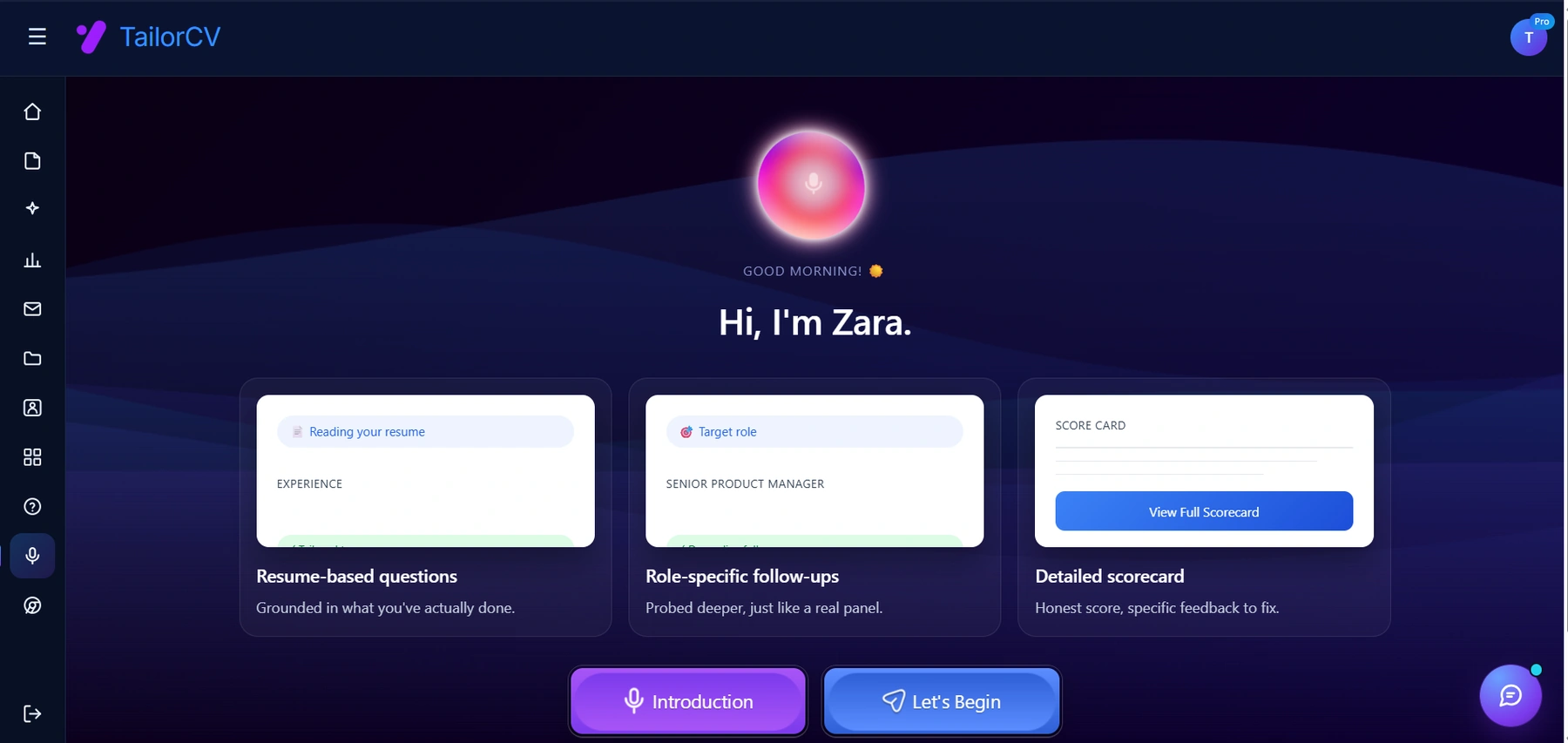
The scorecard at the end is the useful bit - an honest score plus specific feedback, which is what turns practice into improvement.
Tell Me About Yourself
This is not an invitation to tell your life story. Give a short professional summary.
Use this structure:
Present role or background, relevant experience, key strengths, and why this role fits.
Why Do You Want This Job?
Connect the role to your skills, interests, and career direction. Mention something specific about the company.
What Are Your Strengths?
Choose strengths that matter for the job. Support each one with a quick example.
What Is Your Weakness?
Choose a real but manageable weakness. Explain what you are doing to improve. Avoid fake weaknesses like "I work too hard."
Why Should We Hire You?
Summarize your fit. Mention the top two or three reasons you can help.
Practice Mock Interviews
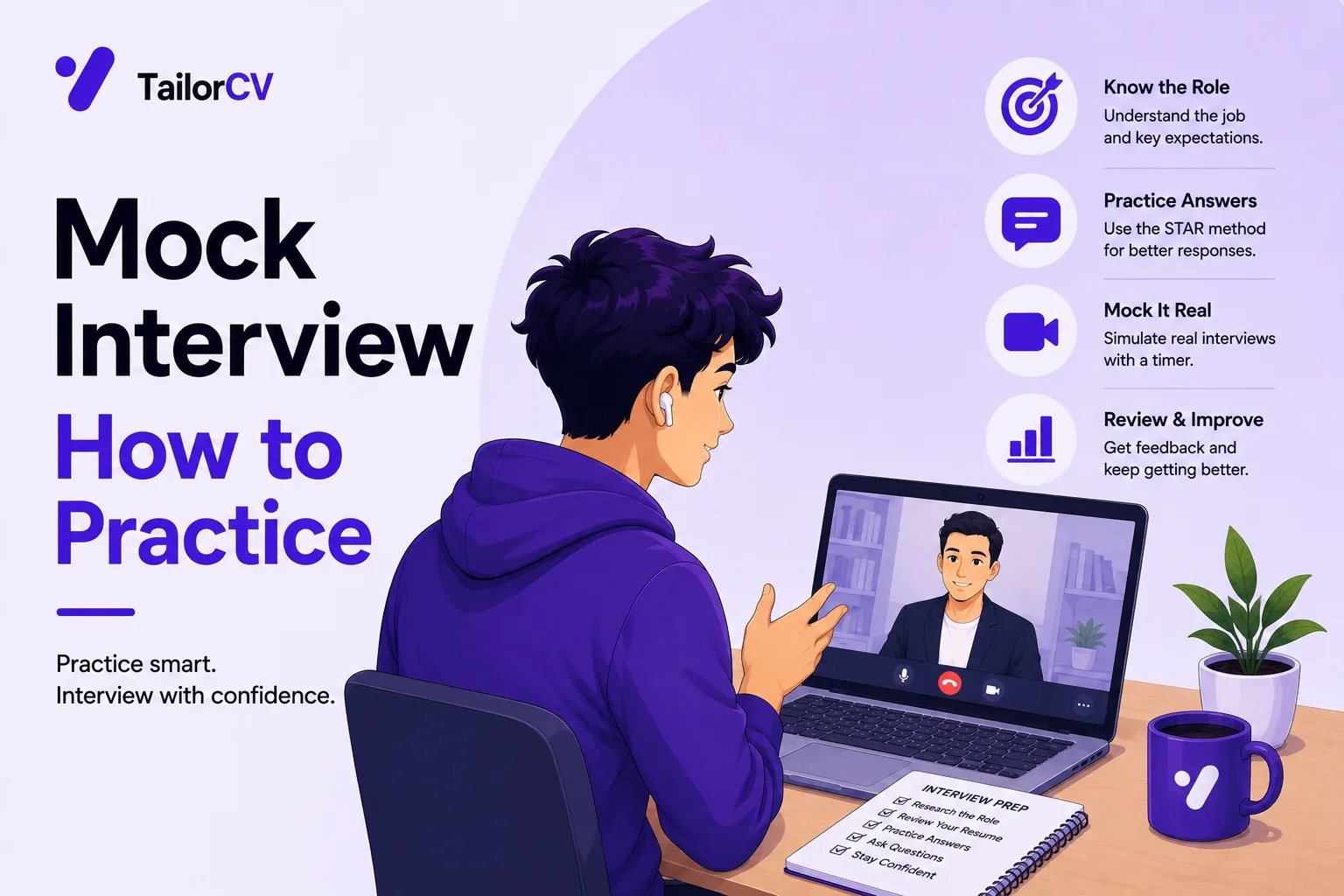
Reading answers silently is not enough. Interviews happen out loud, under pressure. Practice helps you sound clear and natural.
Use mock interview tools, a friend, a mentor, or a camera recording. Practice common questions and role-specific questions.
What to Check During Practice
Listen for:
- Long answers
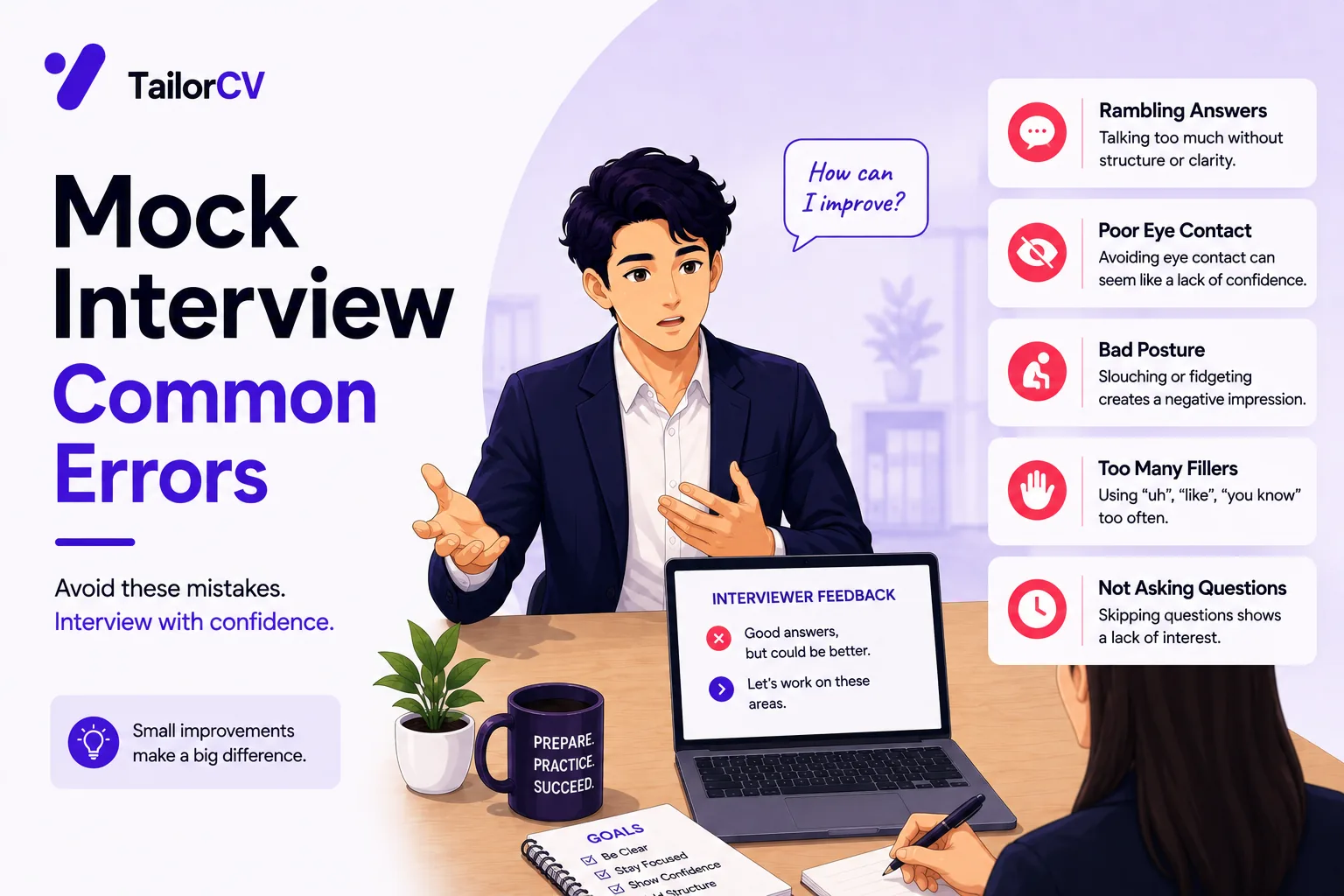
- Too many filler words
- Missing examples
- Weak endings
- Unclear results
- Nervous speed
You do not need to memorize scripts. You need to know your stories well enough to adapt them.
Use AI for Practice
AI mock interview practice can help you prepare questions, improve answers, and identify weak spots. TailorCV.ai supports job seekers by helping align resume strengths with interview preparation, so your answers match the role you applied for.
For practice, you can use AI mock interview practice or the interview preparation tool to rehearse before the real conversation.
Prepare Questions to Ask the Employer
At the end of most interviews, you will be asked, "Do you have any questions for us?"
Always have questions ready. This shows curiosity and helps you decide whether the job is right for you.
Good Questions to Ask
You can ask:
- What would success look like in the first 90 days?
- What are the biggest priorities for this role right now?
- How does the team usually collaborate?
- What challenges is the team trying to solve this year?
- How is performance measured for this position?
Avoid Early Questions About Perks Only
It is fine to care about salary, flexibility, and benefits. But if your only questions are about time off and perks in the first conversation, it may send the wrong signal.
Plan Your Body Language
Body language matters because it affects how confident and engaged you appear.
For video interviews, sit upright, look at the camera when speaking, keep your background clean, and test your audio. For in-person interviews, offer a polite greeting, maintain natural eye contact, and avoid fidgeting.
Do Not Overperform Confidence
You do not need to act like a motivational speaker. Calm, prepared, and present is enough.
Smile Naturally
A small smile at the start and end of answers can make you seem warmer and more approachable.
Decide What to Wear
What you wear depends on the company and industry. When unsure, choose one level more polished than the expected workplace style.
For corporate, finance, legal, or consulting roles, business professional is usually safest. For tech, startups, creative roles, or casual workplaces, neat business casual often works.
Keep It Simple
Wear clothes that fit well, feel comfortable, and do not distract. For video interviews, avoid busy patterns and check how colors look on camera.
Prepare for Different Interview Types
Different industries use different formats.
Phone Screen
Usually focuses on background, motivation, salary expectations, availability, and basic fit.
Video Interview
Tests communication, role fit, and professionalism. Treat it like an in-person meeting.
Technical Interview
Common in engineering, data, finance, healthcare, and skilled roles. Practice the actual tasks you may be asked to perform.
Case Interview
Common in consulting and strategy roles. Practice structuring problems, asking clarifying questions, and explaining your thinking.
Panel Interview
Multiple interviewers may ask about different areas. Address the person who asked the question, but include the group with eye contact or camera awareness.
Send a Follow-Up Email
A follow-up email is simple but powerful. Send it within 24 hours.
If you are still improving your application materials after the interview, review the resume templates and resume builder before your next round.
Follow-Up Email Example
Subject: Thank you for the interview
"Hi [Name],
Thank you for taking the time to speak with me today about the [Role] position. I enjoyed learning more about the team's priorities, especially [specific detail]. Our conversation strengthened my interest in the role, and I believe my experience with [relevant skill] would help contribute to [company goal].
Best, [Your Name]"
Keep it short, specific, and professional.
Final Interview Checklist
Before the interview, make sure you have:
- unchecked: Reviewed the job description
- unchecked: Researched the company
- unchecked: Practiced your introduction
- unchecked: Prepared STAR stories
- unchecked: Reviewed your resume
- unchecked: Tested your technology
- unchecked: Chosen your outfit
- unchecked: Prepared questions
- unchecked: Planned your follow-up
Final Thoughts
interview preparation is not about memorizing perfect answers. It is about knowing your value and communicating it clearly.
When you research the company, study the job description, practice STAR stories, and prepare thoughtful questions, you become easier to trust. You show the employer that you are not just looking for any job. You are ready for this job.
Use tools like TailorCV.ai to understand how your resume matches the role, then carry that same focus into your interview preparation.
Try TailorCV free -> thetailorcv.com
Make This Practical
Use this advice as interview practice, not just reading material. Start a role-specific session with the AI mock interview tool, prepare your opening with How to Answer Tell Me About Yourself, and structure evidence-heavy answers with the STAR Method Interview Answers Guide.
Before the interview, make sure the resume that earned the call is still aligned with the role. Check it with the free ATS score checker, review Common Interview Mistakes to Avoid, and use How to Follow Up After an Interview once the conversation is over.
Related Guides
- Behavioral Interview Questions and Answers
- 20 Common Interview Mistakes to Avoid
- How to Answer "Tell Me About Yourself"
- How to Research a Company Before Your Job Interview
- Virtual Interview Tips
- Group Discussion Tips
- How to Follow Up After a Job Interview
- How to Practice Mock Interviews Online for Free Using AI
- Phone Interview Tips
- Best Questions to Ask in a Job Interview
- Coding Interview Preparation Guide
- Final Round Interview Tips
- Why Am I Not Getting Interviews for Jobs I'm Qualified For?
- How to Prepare for Campus Placement in 2026 - Complete Guide
- What to Bring to a Job Interview
Comparison of Strong vs. Weak Interview Preparation Strategies
A well-structured approach to interview preparation can significantly impact your performance.
| Preparation Strategy | Strong Example | Weak Example |
|---|---|---|
| Researching the Company | Thoroughly understanding the company's values, recent news, and culture. | Skimming the company website and social media. |
| Tailoring Your Answers | Relating your skills and experiences directly to the job description. | Giving generic answers that don’t connect to the role. |
| Practicing Interview Skills | Conducting mock interviews with a friend or using an AI tool. | Practicing alone without feedback or structure. |
| Asking Questions | Preparing insightful questions that demonstrate your interest in the role and company. | Asking basic questions that could be answered by a simple search. |
| Following Up | Sending a personalized thank-you email that references specific interview points. | Sending a generic thank-you note or no follow-up at all. |
Frequently Asked Questions
How can I effectively use the STAR method for my interview answers in 2026?
The STAR method—Situation, Task, Action, Result—is a powerful framework for structuring your interview responses. To prepare, consider creating an Interview Story Bank where you can document various experiences that fit this model. This will help you clearly articulate how your past experiences relate to the job you're applying for, showcasing your competencies effectively.
What should I do if I feel anxious about my upcoming interview?
Feeling anxious before an interview is common, but there are strategies to manage it. Practice using the AI mock interview tool to simulate the interview environment, which can help reduce nerves. Additionally, consider reviewing our tips on overcoming interview anxiety to build your confidence leading up to the big day.
How do I prepare for different interview formats, like panel or technical interviews?
Understanding the format of your interview is crucial for preparation. For panel interviews, practice addressing multiple interviewers and engaging with each of them. If you're facing a technical interview, ensure you review relevant technical concepts and practice problem-solving. Resources like our comprehensive guide on competency-based interview questions can provide insight into what to expect.
What are some smart questions to ask during my interview?
Asking thoughtful questions demonstrates your interest in the role and company. Consider inquiring about the team dynamics, the company culture, or growth opportunities within the organization. This not only shows your enthusiasm but also helps you assess if the company is the right fit for you. For more ideas, check out our guide on how to prepare for campus placement.
How should I follow up after my interview?
Following up after an interview is an essential step that can set you apart from other candidates. Send a professional thank-you email within 24 hours, reiterating your interest in the position and highlighting a key point from the discussion. For more detailed strategies, refer to our post on how to follow up after an interview effectively.
Was this guide useful?
Be the first to rate it.