TD
TD
Key Takeaways
- A skill-match score compares the skills on your resume against the skills a posting asks for, and reports the overlap.
- Doing it in seconds changes when you learn the information - before you invest in an application rather than after.
- The number is a signal; the two lists underneath it are the substance.
- Skill-matching is the diagnosis and tailoring is the treatment.
- The most useful thing it reveals is the gap between the skills you have and the skills your resume actually shows.
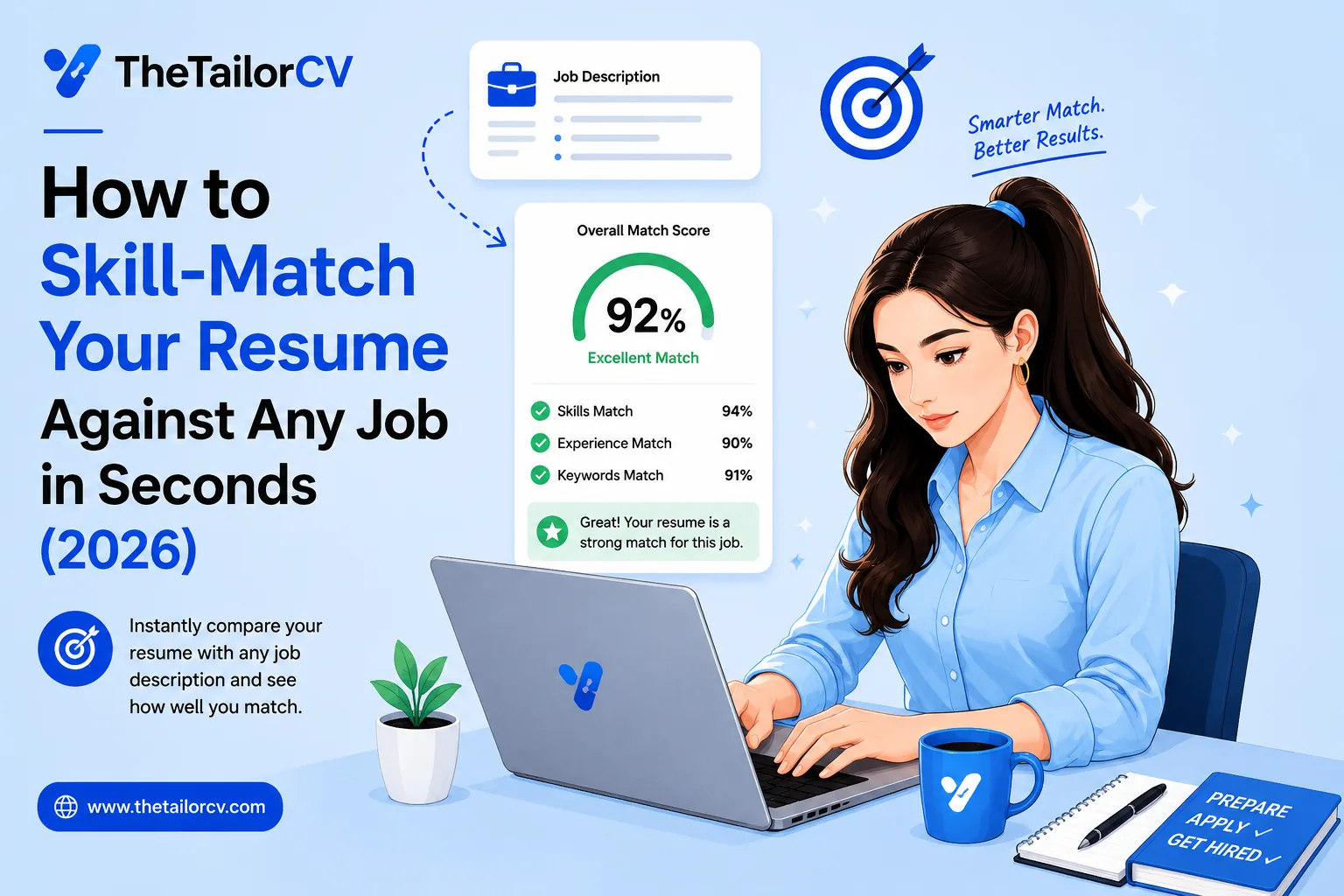
Before you spend twenty minutes on an application, it helps to know one thing in seconds: do your skills actually match this job? A skill-match score answers exactly that — how well your resume's skills line up with what the posting requires, and which ones you are missing. This guide explains what skill-matching is, how to read it, and how to check it against any posting in seconds.
What Skill-Matching Actually Measures
A skill-match score compares the skills on your resume against the skills a job posting asks for, and reports the overlap. It is a focused slice of the broader ATS match: where a full match looks at keywords, titles, phrasing and formatting, skill-matching zeroes in on the concrete capabilities — the tools, technologies, and competencies the role requires.
Your resume after optimization
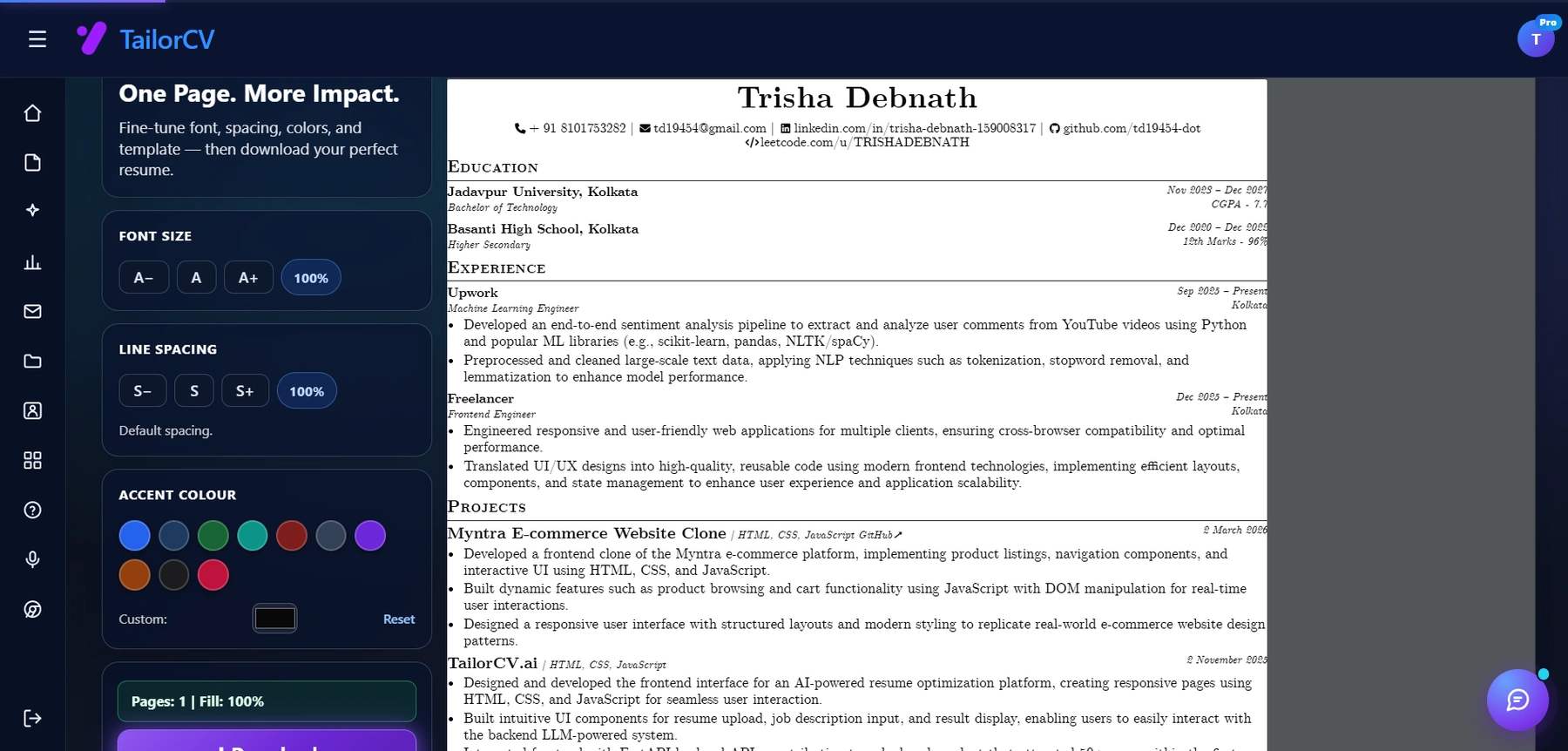
This is the resume after tailoring - the content is already matched, and these controls are how you fit it onto one page.
That focus makes it fast and clear. You get a percentage and, more usefully, two lists: the skills you have that the job wants, and the skills the job wants that your resume does not show. Because it is matching specific terms, it is honest about the difference between "I have this skill" and "my resume shows I have this skill" — which are not the same thing, and the gap between them is why qualified people get filtered out.
Why Speed Matters Here
The value of doing this in seconds is that it changes when you learn the information — before you invest in an application rather than after you are ghosted.
A skill-match score is a triage tool. Glance at it on a posting and you instantly know whether this role is worth a full application, a light tailor, or a pass. Spend your effort where the match is close enough to close, not on roles where you are missing half the core skills. That is a far better use of a job search than applying to everything and hoping — it is the same fewer-but-matched logic, applied at the triage stage. Checking in seconds is what makes triage practical; if it took ten minutes per job, you would not do it, and you would be back to blind applying.
How to Read the Gaps
The number is a signal; the two lists are the substance. Here is how to act on them.
Skills you have but the resume does not show. These are the quick wins — you genuinely have the skill, you just did not phrase it the way the posting does, or did not surface it prominently. Fix by working the term into a real bullet, honestly. This is the most common and most fixable gap, and closing it is pure upside.
Skills you partly have. Adjacent experience that maps to the requirement — you used a similar tool, or did the thing under a different name. Re-express it to show the connection, without overstating.
Skills you genuinely lack. The honest gaps. These tell you something real: whether you are a fit, and what to learn next. A posting where you are missing several core skills is useful information — it says "not yet", which saves you a wasted application and points at what to build. Do not fabricate these; a claimed skill you cannot back up collapses in the interview.
Reading the gaps this way turns a score into a plan: close the phrasing gaps now, bridge the adjacent ones carefully, and note the real gaps as learning targets. It is the difference between an ATS score and a general resume score made concrete and actionable.
Skill-Match, Then Tailor
Skill-matching is the diagnosis; tailoring is the treatment. Once you see which skills the resume fails to show, you work them in from your real experience — and then re-check to confirm the match improved. That loop — match, tailor, re-match — is the whole point, and doing it on the page makes it fast enough to run on every job.
TailorCV's extension does exactly this. Open any posting, and the panel reads the job description off the page and shows your skill-match score in seconds — before you decide anything. One click then tailors your resume to close the showable gaps, honestly and in your own voice, and shows the score again so you can see the improvement. No copy-paste, no separate tab, on LinkedIn, Indeed, Naukri, ATS boards and any site from the toolbar. It is the fastest honest path from "do I match this?" to "now I match this."
Keeping the Match Honest and Parseable
A high skill-match is only worth something if the resume behind it is real and readable. Two guardrails. First, keep it honest — matching is re-expressing genuine skills, never inventing them, because the interview exposes the difference. Second, keep it parseable: a resume that matches perfectly but breaks the ATS formatting still fails, so ATS-friendly structure underlies everything. And avoid keyword-stuffing the skills list — a wall of tools with no evidence in your bullets reads as hollow to the human who follows the filter.
The "Show" vs "Have" Gap
The single most useful thing a skill-match reveals is the gap between the skills you have and the skills your resume shows — and it is worth dwelling on, because it is where most qualified people lose interviews they should have got.
Here is the pattern. You have used SQL for two years, but your resume says "pulled data for reporting". You have led projects, but your bullets say "helped with initiatives". You know the skills are there; you lived them. But a skill-match reads what is written, not what you did, and so does the recruiter's filter. The skill exists in your head and your history — just not in a form the machine or the busy human can see. That is the "show vs have" gap, and it is invisible until a match score surfaces it.
This is genuinely good news, because it is the easiest gap to close. You are not learning a new skill or padding your resume — you are simply describing a real skill in the words that make it visible. "Pulled data for reporting" becomes "built SQL queries and reports for stakeholder decisions"; same truth, now showable and matchable. A skill-match score turns this from something you would never have noticed into a specific, honest fix — and it is why tailoring lifts qualified candidates from filtered-out to shortlisted without a single false claim. The best keywords you are missing are often skills you already have, just unshown.
Skill-Matching Across Your Search
The tool holds everywhere because every posting names skills. For remote roles the skill bar is often higher and a remote cover letter helps; conventions shift for the USA and Canada, including resume vs CV. Startups on Wellfound weight breadth of skills; enterprises weight depth — the startup vs enterprise difference — and applying faster matters when you are matching across many. Freshers: your skills lean on projects, your ATS score as a fresher reflects that, a portfolio shows skills a resume cannot, and getting a first tech job or a job with no experience leans hard on showing real, matchable skills. Campus placement compresses this into a short window, so fast skill-matching matters even more.
After the Match
A strong skill-match gets you seen; the search continues. Add a cover letter with a strong opening line, send a follow-up after applying and after the interview, and pace yourself with how many jobs to apply to per day. Before interviews, research the company, rehearse behavioural questions and tell me about yourself, and run a mock interview; the full interview prep guide covers more. When one does not land, handle the rejection. The whole point is that a tailored, well-matched resume beats a generic one — and skill-matching is how you know, in seconds, whether you are there yet.
Frequently Asked Questions
What is a resume skill-match score? It compares the skills on your resume against the skills a job posting requires and reports the overlap as a percentage, plus the specific skills you are missing. It is a focused part of the broader ATS match, zeroed in on concrete capabilities — the tools and competencies the role needs.
How do I skill-match my resume against a job in seconds? Use a tool that reads the job posting and compares its required skills to your resume, showing your match and the gaps. An on-page extension does this straight from the posting in seconds, so you can triage roles and tailor before investing in a full application.
What should I do with the missing skills? Split them three ways: skills you have but did not show (work them into real bullets now), skills you partly have (re-express the connection honestly), and skills you genuinely lack (treat as learning targets, do not fabricate). The first group is pure upside and the most common gap.
Does a high skill-match guarantee an interview? No — it means your resume clears the skill filter and reaches a human, which is necessary but not sufficient. The resume still has to impress a person, and interviews follow. A high match honestly earned is a strong start, not a finish line.
Putting It All Together
Skill-matching answers the fastest, most useful question in a job search: do my skills actually fit this role? Getting that answer in seconds turns applying from a blind investment into informed triage — you spend effort where the match is close, close the showable gaps with honest tailoring, and note the real gaps as things to learn.
The loop is simple: match, read the gaps, tailor from your real experience, re-match. Doing it on the page makes it fast enough to run on every job, which is what keeps your whole search matched instead of hopeful. And the honesty guardrail is what makes a high match mean something — a score built on skills you can actually defend in the interview.
Try it on a role you want: check your skill-match in seconds. If it is close, close the gap and apply with confidence. If it is far, you just saved yourself a wasted application — and learned exactly what to build next.
What is your resume scoring right now?
Scan it against a job description and get your ATS match score in about a minute.
Drop your resume here or choose a file
PDF only. Max 2 MB.
We never share your data or use it to train AI models.

Templates that keep this structure intact
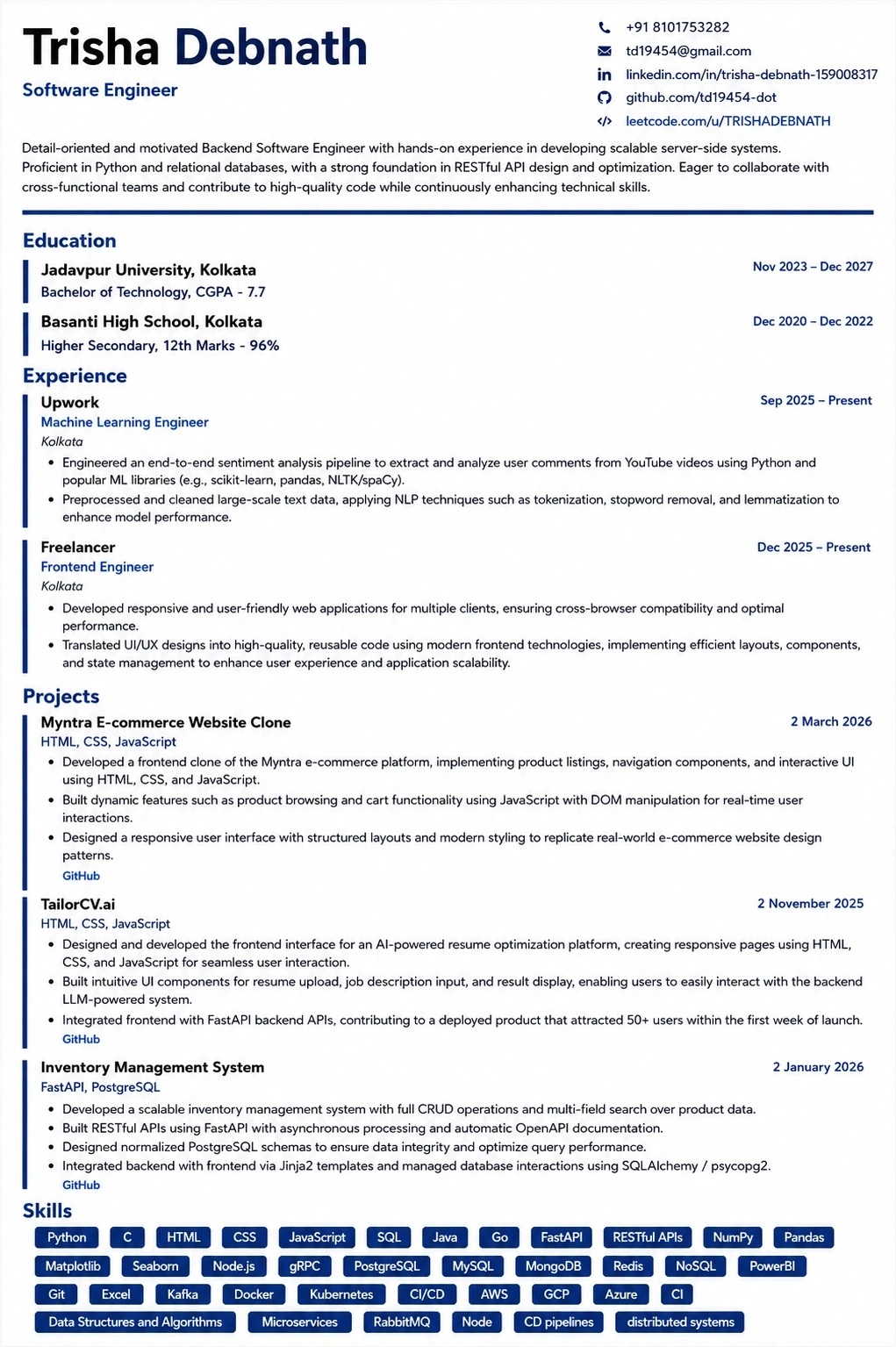
This template is ATS-tested — start from it and the formatting rules in this guide are already handled.
Was this guide useful?
Be the first to rate it.