 TD
TD
Key Takeaways
- The Canadian job market in 2026 will see growth in technology, healthcare, construction, and green jobs, with over 1 million job vacancies expected.
- A Canadian resume should be a maximum of two pages, focus on achievements, and avoid including personal information like photos or marital status.
- To create an ATS-friendly resume, use relevant keywords, maintain simple formatting, and save the document in the specified file format.
- A tailored cover letter should address the hiring manager directly, highlight relevant experience, and express enthusiasm for the role.
- Avoid generic greetings and rehashing your resume in the cover letter, and include a call to action to encourage further communication.
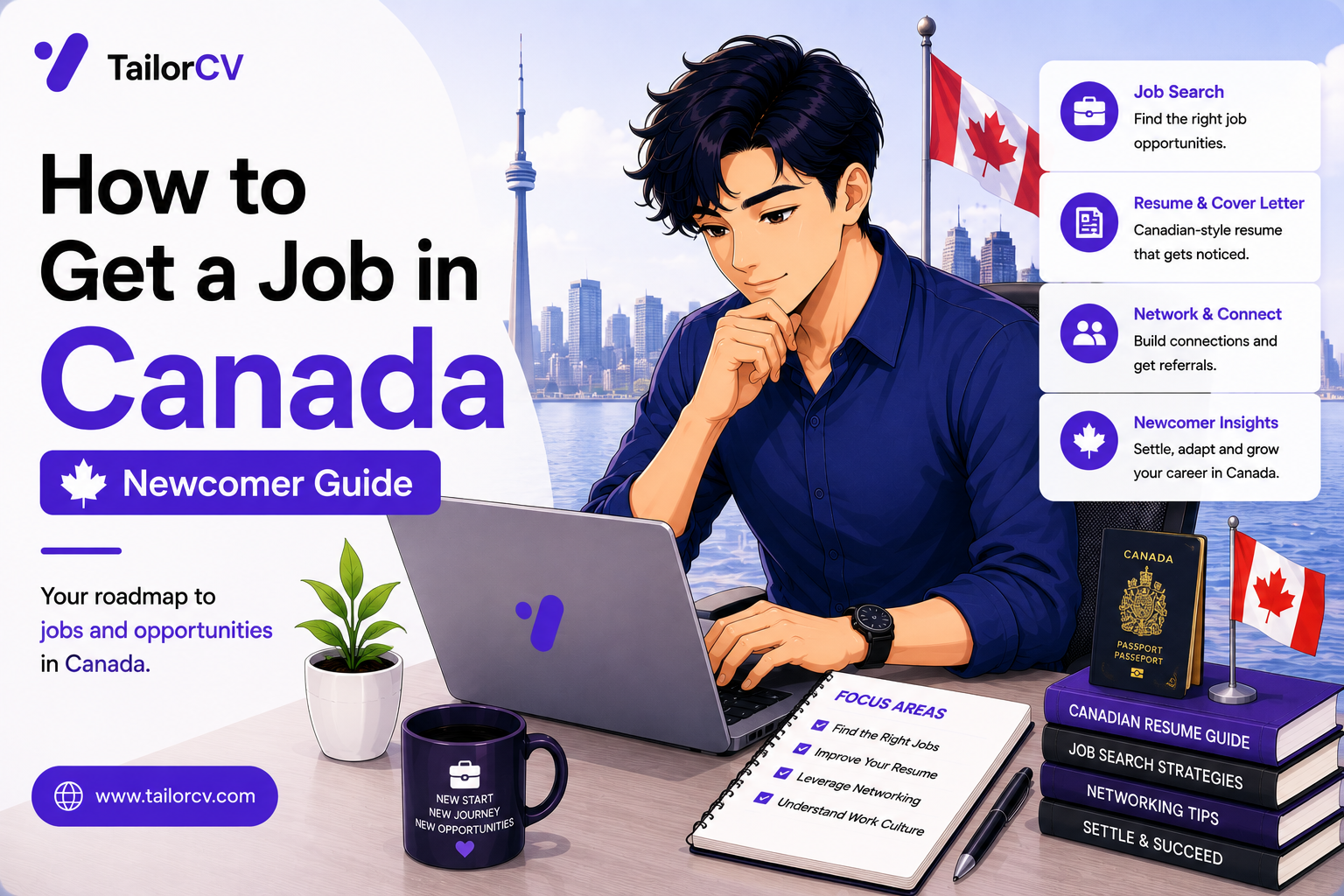
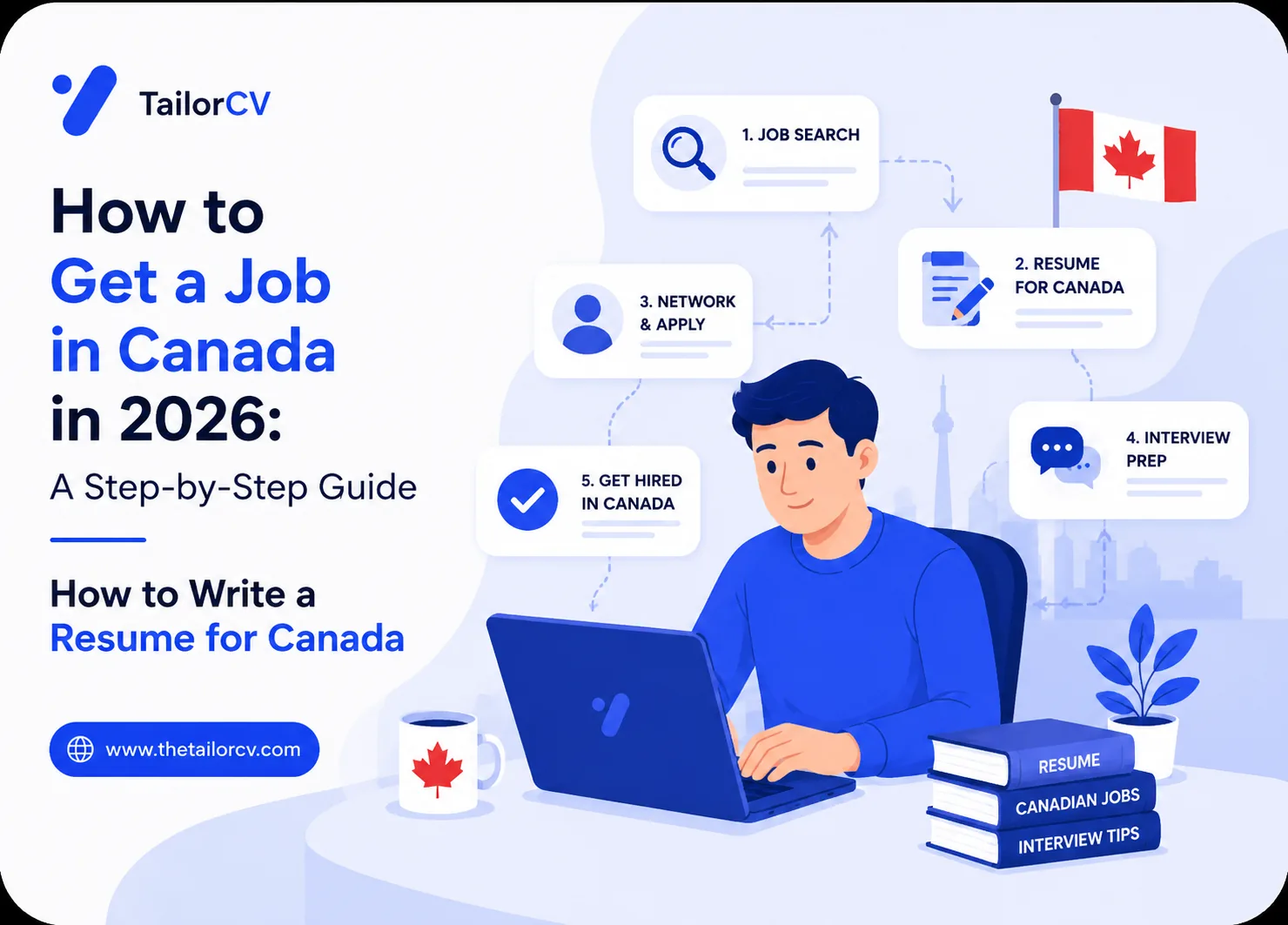
Finding a job in Canada in 2026 requires a strategic approach that aligns with local employment practices and market demands. Whether you're a newcomer, an international student, or a seasoned professional, understanding the nuances of the Canadian job market can significantly improve your chances of landing your dream job. This guide will walk you through the essential steps, from crafting an ATS-friendly resume to mastering the interview process.
Understanding the Canadian Job Market
Before diving into the job application process, it's crucial to understand the current job market landscape in Canada. In 2026, certain industries are projected to experience significant growth. These include:
| Where | What changes there |
|---|---|
| Technology | Software development, cybersecurity, and data analysis |
| Healthcare | Nursing, personal support workers, and telehealth services |
| Construction | Skilled trades, project management, and engineering roles |
| Green Jobs | Renewable energy, environmental consulting, and sustainability roles |
Key Labor Market Statistics
- Unemployment Rate: As of 2026, the unemployment rate in Canada is projected to be around 5.5%, indicating a competitive job market.
- Job Vacancies: Over 1 million job vacancies are expected across various sectors, especially in technology and healthcare.
- Diversity and Inclusion: Canadian employers increasingly prioritize diversity, equity, and inclusion, making it essential for candidates to demonstrate cultural competence.
Researching these sectors will help you tailor your job search and focus on the most promising opportunities.
Crafting Your Canadian Resume
A well-structured resume is your ticket to getting noticed by potential employers. Canadian resume norms differ from those in other countries, so it’s essential to follow local guidelines:
| Section | What goes in it |
|---|---|
| Length | Keep your resume to two pages maximum |
| Format | Use a professional format with clear headings and bullet points |
| Content | Focus on achievements rather than just duties |
| Personal Information | Do not include a photo, age, or marital status |
| References | State "References available upon request." |
Common Resume Mistakes to Avoid
- Using Generic Templates: Tailor your resume to each job application.
- Overloading with Jargon: Use clear language that hiring managers can easily understand.
- Neglecting Soft Skills: Highlight interpersonal skills, teamwork, and adaptability.
For a detailed guide on creating a standout resume, check out our article on how to write a resume from scratch. You can also explore our resume templates to find a style that suits you.
Making Your Resume ATS-Friendly
Many Canadian employers use Applicant Tracking Systems (ATS) to filter resumes. To ensure your resume passes through these systems:
- Use Keywords: Analyze job descriptions for relevant keywords and incorporate them into your resume.
- Keep Formatting Simple: Avoid complex layouts, graphics, or unusual fonts.
- File Format: Save your resume as a PDF or Word document, as specified in the job listing. For more on this, refer to our resume file format guide.
To assess how well your resume aligns with ATS criteria, utilize our free ATS score checker.
Writing an Effective Cover Letter
A tailored cover letter can set you apart from other candidates. In 2026, your cover letter should:
- Address the Hiring Manager: Whenever possible, find out who will read your application and address them directly.
- Highlight Relevant Experience: Connect your skills and experiences to the specific job requirements.
- Show Enthusiasm: Convey your passion for the role and the company.
Cover Letter Common Pitfalls
- Generic Greetings: Avoid "To Whom It May Concern" and strive for personalization.
- Rehashing Your Resume: Use the cover letter to provide context and additional insights, not just a summary.
- Neglecting a Call to Action: End with a statement that encourages further communication.
For tips on crafting a compelling cover letter, consult our cover letter guide 2026 and consider using our AI cover letter generator for assistance.
Leveraging LinkedIn for Job Search
LinkedIn is a powerful tool for job seekers in Canada. Here’s how to make the most of it:
Tailoring without leaving LinkedIn
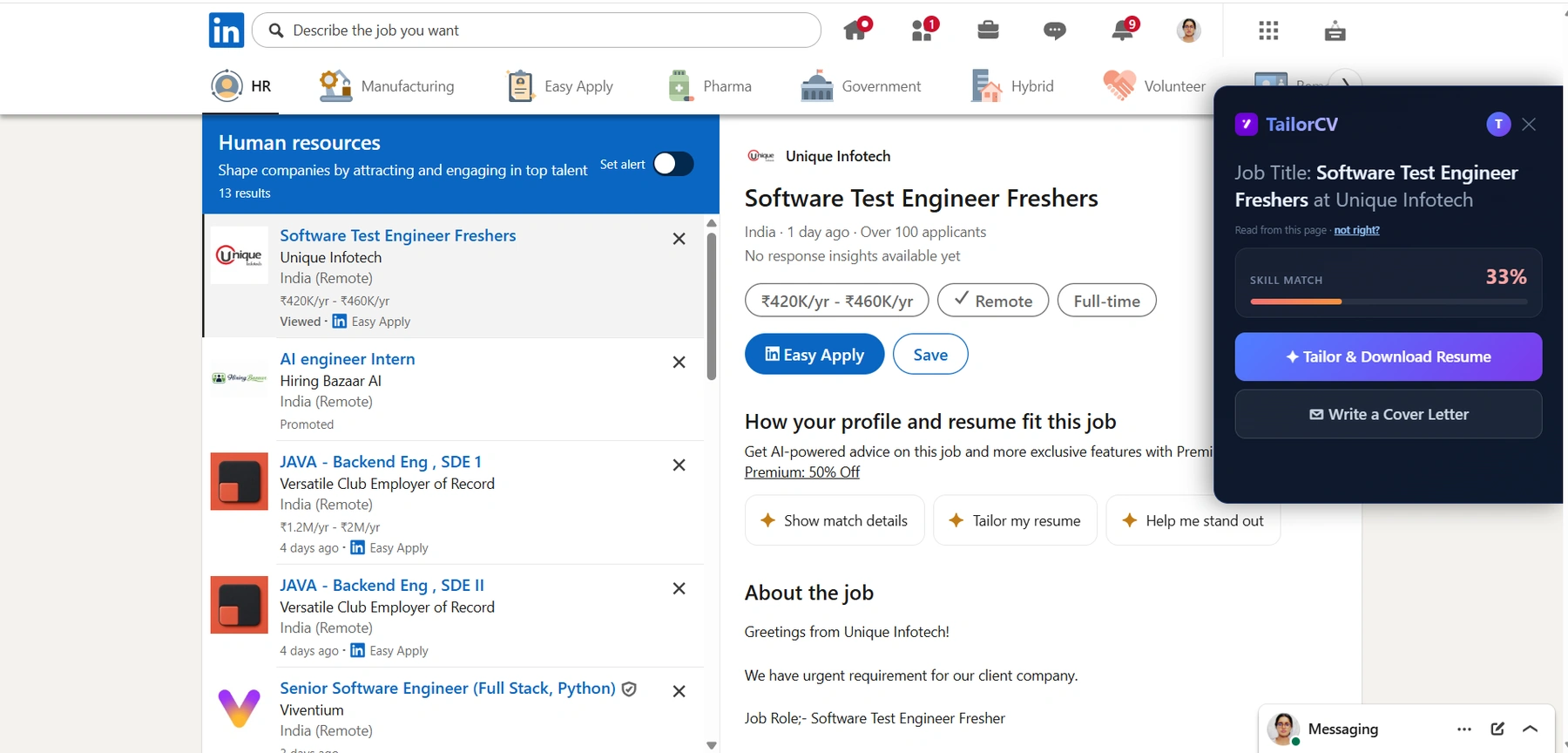
The panel reads the description straight off the listing you are already on and scores your resume against that role, so tailoring per application is a click rather than a detour.
- Optimize Your Profile: Use a professional photo, write a strong headline, and summarize your experience effectively.
- Network: Connect with industry professionals and join relevant groups.
- Engage with Content: Share articles and comment on posts to increase your visibility.
- Use LinkedIn Premium: Consider investing in a Premium account for additional features like InMail messaging and access to insights on who viewed your profile.
Networking Tips
- Informational Interviews: Reach out to professionals in your desired field for informal chats to learn about their experiences.
- Alumni Networks: Leverage your school’s alumni network for connections and mentorship opportunities.
- Attend Virtual Events: Participate in webinars and workshops to expand your network.
For more detailed strategies, check out our guide on LinkedIn for job search.
Preparing for Interviews
Once you secure an interview, preparation is key. Here’s how to get ready:
- Research the Company: Understand their values, culture, and recent news.
- Practice Common Questions: Prepare for typical interview questions and have examples ready that showcase your skills.
- Dress Appropriately: Follow the company’s dress code, leaning towards professional attire.
Behavioral Interview Techniques
- STAR Method: Structure your responses using the Situation, Task, Action, Result framework to articulate your experiences effectively.
- Mock Interviews: Practice with friends or mentors to build confidence and receive constructive feedback.
For in-depth interview preparation tips, refer to our interview preparation guide and consider using our AI mock interview feature for practice.
Following Up After Interviews
After your interview, don’t forget to send a follow-up email. This should be concise and express gratitude for the opportunity. It’s also a chance to reiterate your interest in the position and highlight any key points you may not have covered during the interview.
Follow-Up Email Checklist
- Subject Line: Use a clear subject line that references the position.
- Gratitude: Thank the interviewer for their time.
- Recap: Briefly summarize why you are a great fit for the role.
- Availability: Mention your availability for further discussions.
For templates and examples, check out our article on Follow-Up Email After Job Application - Templates That Sound Professional.
Exploring Remote Work Opportunities
With the rise of remote work, many Canadian employers are now open to hiring remote employees. If you’re interested in remote positions:
- Broaden Your Search: Look for remote-specific job boards and listings.
- Tailor Your Resume: Highlight relevant remote work experience and skills.
- Showcase Adaptability: Emphasize your ability to work independently and manage time effectively.
Tips for Remote Job Applications
- Highlight Tech Skills: Familiarity with remote collaboration tools like Zoom, Slack, or Trello can be a plus.
- Demonstrate Communication Skills: Effective communication is crucial in a remote setting, so provide examples of how you've excelled in this area.
For more insights, read our remote job search guide.
Job Application Strategy
The job application process can be overwhelming, especially with the number of positions available. Here are some best practices to streamline your efforts:
- Set Daily Goals: Aim to apply for a specific number of jobs each day. Research suggests that applying to 5-10 jobs daily can yield better results. For more on this, see our article on How Many Jobs Should You Apply to Per Day? The Real Numbers Behind a Successful Search.
- Track Your Applications: Use a spreadsheet to monitor the jobs you've applied for, including company names, positions, application dates, and follow-up timelines.
- Stay Organized: Keep copies of your resume and cover letters tailored for each application for easy reference.
Navigating Job Scams
As you search for jobs, be aware of potential scams. Here are some red flags to watch out for:
- Unrealistic Salary Offers: If it sounds too good to be true, it probably is.
- Lack of Company Information: Legitimate companies will have a web presence and contact information.
- Requests for Personal Information: Be wary of employers asking for sensitive information upfront.
For a comprehensive guide on identifying job scams, check out our article on How to Spot a Job Scam - Red Flags in Fake Job Postings and Recruiter Messages.
Dealing with Recruiter Ghosting
If you've been ghosted by a recruiter after an interview, it can be disheartening. Understanding the reasons behind this can help you manage your expectations and next steps.
What to Do Next
- Send a Follow-Up: If you haven't heard back within a week or two, it's appropriate to send a polite follow-up email.
- Keep Networking: Stay connected with others in the industry to keep your options open.
- Reflect and Move On: Use the experience as a learning opportunity and focus on other applications.
For more insights on this topic, read our article on Recruiter Ghosting You After an Interview? What It Means and What to Do Next.
By following these steps and utilizing the resources available, you can enhance your job search strategy and increase your chances of landing a job in Canada in 2026. Remember to stay positive, persistent, and adaptable throughout your journey.
Related Guides
Keep building your Canadian job search with these related TailorCV guides:
- How ATS Works in Canada: Beating Applicant Tracking Systems for Canadian Jobs
- Canadian Resume Format Guide (2026): How to Write a Resume for Canada
- How to Write a Cover Letter for Canadian Jobs (With Structure)
- In-Demand Jobs in Canada for 2026 (and How to Match Your Resume)
- Recruiter Ghosting You After an Interview? What It Means and What to Do Next
- AI Job Search Agent 2026 - How to Use AI Without Losing Your Voice
- Follow-Up Email After Job Application - Templates That Sound Professional
- Job Application Tracker Template - What to Track After Every Application
You can also check your resume's ATS score for free, generate a tailored cover letter, or build a portfolio website in minutes.
Frequently Asked Questions
1. What is the best way to find a job in Canada?
The best way to find a job in Canada is to leverage multiple channels, including job boards, networking on LinkedIn, and attending job fairs. Additionally, tailoring your resume for each application is crucial. For more tips, see our guide on how to get a job in Canada.
2. How can I optimize my resume for ATS?
To optimize your resume for ATS, use specific keywords from the job description, maintain a simple format, and avoid images or graphics. For more detailed strategies, check our how to make a resume ATS-friendly.
3. Should I include references in my resume?
In Canada, it’s standard to state "References available upon request" rather than listing them directly on your resume. This keeps your resume concise. For more insights, refer to our Canadian resume format guide.
4. How important is networking for job searching in Canada?
Networking is extremely important in Canada. Many jobs are filled through referrals and connections. Use platforms like LinkedIn to connect with professionals in your field. For tips on effective networking, see our article on LinkedIn for job search.
5. What are the most in-demand jobs in Canada for 2026?
In 2026, in-demand jobs include roles in technology, healthcare, and green jobs. Researching these sectors can help you tailor your job search effectively. For a deeper dive, check our guide on in-demand jobs in Canada for 2026.
What is your resume scoring right now?
Scan it against a job description and get your ATS match score in about a minute.
Drop your resume here or choose a file
PDF only. Max 2 MB.
We never share your data or use it to train AI models.

Was this guide useful?
Be the first to rate it.