 TD
TD
Key Takeaways
- Campus placements involve multiple stages including resume screening, aptitude tests, coding rounds, group discussions, technical interviews, and HR interviews.
- A strong resume should highlight a clear summary, relevant projects, organized technical skills, education, and certifications.
- Aptitude tests assess quantitative, logical reasoning, and verbal ability; practice with timed mock tests is essential.
- For coding rounds, focus on mastering data structures and algorithms, and solve a significant number of problems on coding platforms.
- Stay informed on current affairs for group discussions and practice structuring arguments effectively without dominating the conversation.
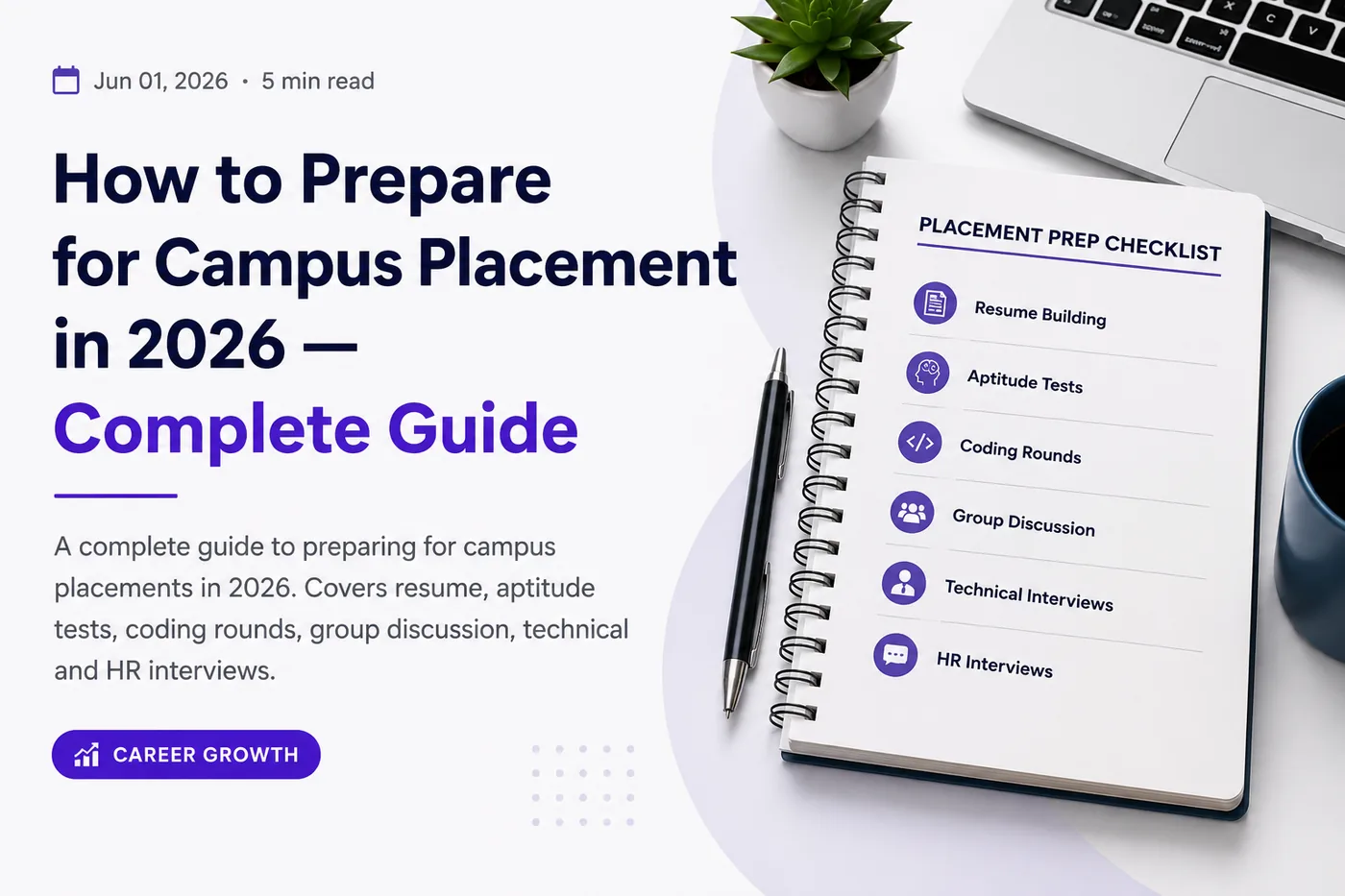
Campus placements are the gateway to your first job for most college students. The process is competitive and multi-staged - typically including resume screening, aptitude tests, coding rounds, group discussions, technical interviews, and HR interviews. Preparing strategically across all stages dramatically improves your chances.
This guide gives you a complete roadmap for campus placement preparation in 2026.
Start with a strong resume - run it through the TailorCV ATS score checker and read the internship resume guide and first resume with no experience guide. Practice interviews with the free AI mock interview tool.
The Campus Placement Process
Typical stages:
- Resume screening - Companies shortlist based on resume and eligibility criteria
- Aptitude test - Quantitative, logical, verbal, sometimes technical MCQs
- Coding round - Programming problems (for tech roles)
- Group discussion - Some companies use GD rounds
- technical interview - Projects, fundamentals, problem-solving
- HR interview - Behavioral, fit, communication
What optimizing actually does to your resume
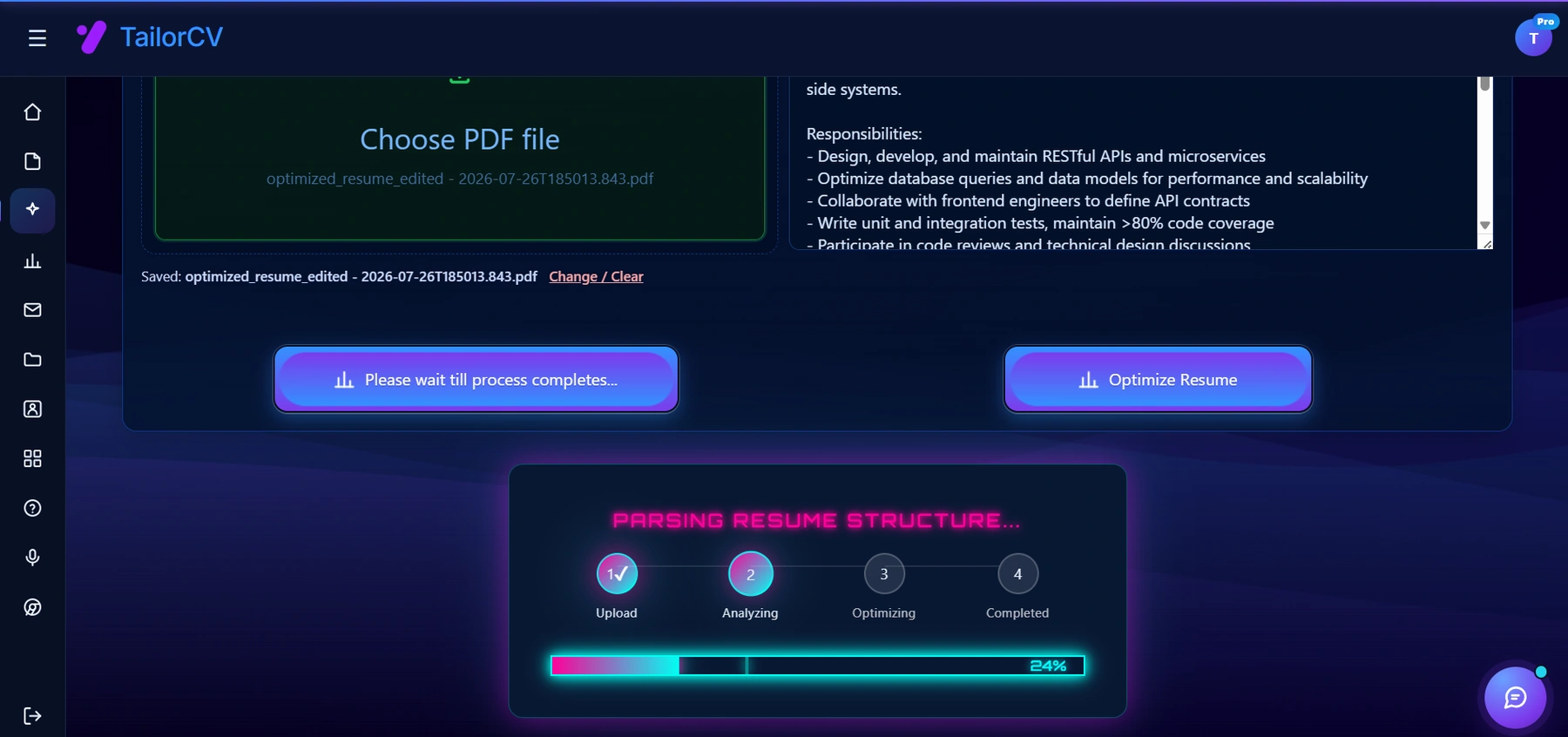
The tool parses your resume the way an ATS would before it changes anything, so the edits it suggests are grounded in the posting itself.
Prepare for each stage specifically.
Stage 1: Build a Strong Resume
Your resume is the first filter. For freshers, it should emphasize:
- A clear summary
- Strong projects (most important for freshers)
- Technical skills organized by category
- education with CGPA (if strong)
- certifications and achievements
Read the dedicated internship resume guide and technical skills for freshers guide. Verify it with the TailorCV ATS score checker.
Stage 2: Prepare for Aptitude Tests
Aptitude tests typically cover:
Quantitative Aptitude
- Percentages, ratios, profit and loss
- Time and work, time speed distance
- Permutations, combinations, probability
- Number systems, averages, ages
Logical Reasoning
- Series, patterns, analogies
- Blood relations, directions
- Puzzles, seating arrangements
- Syllogisms, coding-decoding
Verbal Ability
- Reading comprehension
- Grammar, sentence correction
- Synonyms, antonyms, vocabulary
Preparation
- Practice with platforms like IndiaBix, PrepInsta, or company-specific question banks
- Solve timed mock tests
- Focus on speed and accuracy
- Review company-specific patterns (TCS, Infosys, Wipro, etc. have known formats)
Stage 3: Prepare for Coding Rounds
For tech roles, coding rounds are critical.
Topics to Master
- Data structures: arrays, strings, linked lists, stacks, queues, trees, graphs, hash maps
- Algorithms: sorting, searching, recursion, dynamic programming basics
- Time and space complexity
Practice
- Solve 100-150 problems on LeetCode, HackerRank, or GeeksforGeeks
- Focus on easy and medium problems
- Practice company-tagged questions
- Time yourself
Read the coding interview preparation guide for the full patterns and practice plan.
Stage 4: Prepare for Group Discussion
If your target companies use GD rounds:
- Stay updated on current affairs and business topics
- Practice structuring arguments
- Learn to contribute substantially without dominating
- Practice mock GDs with peers
Read the dedicated group discussion tips guide.
Stage 5: Prepare for Technical Interviews
Technical interviews assess:
- Core CS fundamentals (DSA, OOP, DBMS, OS, networks)
- Your projects (be ready to explain every detail)
- Problem-solving and coding
- Domain knowledge for specialized roles
Preparation
- Know your projects deeply - architecture, challenges, your contributions
- Revise core subjects: DBMS, OS, OOP, computer networks, DSA
- Practice explaining your code and decisions
- Prepare for "why this approach?" questions
If you cannot explain a project in your resume, remove it. Read the technical interview preparation guide.
Stage 6: Prepare for HR Interviews
HR rounds assess fit, communication, and motivation. Common questions:
- "Tell me about yourself" - read the tell me about yourself guide
- "Why do you want to join our company?"
- "What are your strengths and weaknesses?"
- "Where do you see yourself in 5 years?"
- "Why should we hire you?"
Prepare honest, structured answers. Research the company using the company research guide. Practice behavioral answers with the behavioral interview guide.
Campus Placement Preparation Timeline
6+ Months Before
- Build 2-3 strong projects
- Start DSA practice
- Maintain/improve your CGPA
3 Months Before
- Intensive aptitude and coding practice
- Build and polish your resume
- Start mock interviews
1 Month Before
- Company-specific preparation
- Mock GDs and interviews
- Revise core subjects
- Finalize your resume
During Placement Season
- Research each company before its process
- Rest well before tests and interviews
- Learn from each round (even rejections)
- Keep applying - do not stop after one rejection
Common Campus Placement Mistakes
Mistake 1: Weak or no projects
For freshers, projects are the strongest differentiator. Build real ones. Read how to add projects in resume.
Mistake 2: Neglecting aptitude
Many students focus only on coding and fail the aptitude filter. Prepare for both.
Mistake 3: Not knowing your own resume
Interviewers ask about everything on your resume. Know every line deeply.
Mistake 4: Giving up after rejections
Placement season involves rejection. Keep going. Read how to handle job rejection.
Mistake 5: Poor communication
Even technically strong students fail HR and GD rounds due to communication. Practice speaking clearly and confidently.
Related Guides
- Why Am I Not Getting Interviews for Jobs I'm Qualified For?
- Group Discussion Tips
- How to Get Your First Tech Job
- How to Prepare for a Job Interview
- First Time Resume With No Experience: Complete Guide for Freshers & College Students
- Career Change to Tech
- 20 Common Interview Mistakes to Avoid
- First 90 Days at a New Job
- How to Answer "Tell Me About Yourself"
- How to Ask for a Raise
- How to Get a Promotion
- How to Research a Company Before Your Job Interview
- Campus Placement Email Etiquette 2026 - Templates That Get Replies
- Campus Placement Mock Test Guide 2026 - How to Practise Properly
Make This Practical
Turn the career advice into a stronger application system. Start by checking your resume with the free ATS score checker, align it with the role using How to Tailor Your Resume for Every Job, and keep your profile consistent with LinkedIn Resume Tailoring Sync.
When you are ready to apply, build the supporting pieces around the resume. Use the AI cover letter generator for targeted outreach, practice with the AI mock interview tool, and review Why Your Resume Gets No Responses if applications are not converting.
Conclusion
campus placement success comes from preparing across all stages: a strong resume, aptitude practice, coding preparation, GD skills, technical depth, and HR readiness. Start early, build real projects, and practice consistently.
Build your resume with the TailorCV ATS score checker and internship resume guide. Master coding with the coding interview guide, GD with the group discussion guide, and interviews with the mock interview tool.
Frequently Asked Questions
What should I include in my resume for campus placement in 2026?
Your resume should clearly highlight your skills, education, and relevant projects. For freshers, it's essential to include a strong summary and emphasize projects that demonstrate your abilities. Check out our guide on fresher resume projects that get interviews for ideas on impactful projects to feature.
How can I prepare for the group discussion round during campus placements?
Preparing for the group discussion (GD) round involves understanding the current topics and practicing your communication skills. Familiarize yourself with common GD formats and practice articulating your thoughts clearly. For detailed strategies, read our post on Group Discussion Tips 2026 to stand out in this crucial stage.
What types of questions can I expect in a technical interview?
In a technical interview, you can expect questions that assess your understanding of core concepts, problem-solving abilities, and your projects. Be prepared to discuss technical details of your projects and demonstrate your coding skills. Our Competency-Based Interview Questions guide can help you prepare effectively for these types of interviews.
How do I handle behavioral questions during HR interviews?
Behavioral questions in HR interviews often explore how you've handled past situations. Use the STAR method (Situation, Task, Action, Result) to structure your responses. If you've had unique experiences, like job changes, consider reading our guides on how to explain job hopping or getting fired to prepare for these discussions.
What tools can help me improve my resume before campus placements?
Utilizing tools like the Free ATS score checker can help ensure your resume meets industry standards and is optimized for applicant tracking systems. Additionally, consider using our resume templates to create a professional-looking document that highlights your qualifications effectively.
What is your resume scoring right now?
Scan it against a job description and get your ATS match score in about a minute.
Drop your resume here or choose a file
PDF only. Max 2 MB.
We never share your data or use it to train AI models.

Was this guide useful?
Be the first to rate it.