 TD
TD
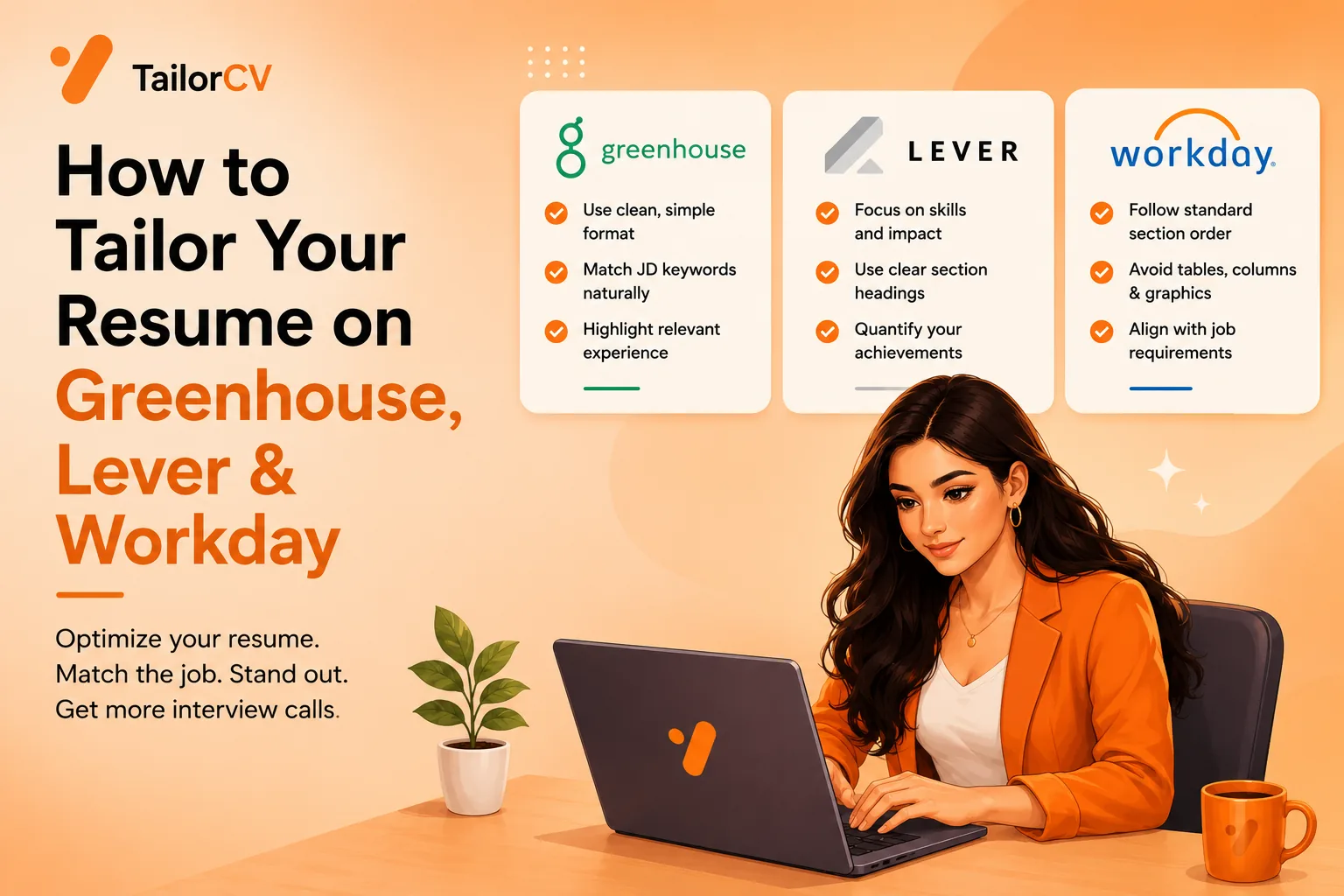
Key Takeaways
- On an ATS board there is no aggregation layer - you are applying straight into the employer's system.
- Each ATS behaves a little differently, and knowing the quirks helps.
- The four tailoring moves are the same everywhere, but they matter more here because there is no human buffer.
- By hand the flow is read, note the repeated skills, duplicate, work keywords in honestly, reorder, verify parsing, export and upload.
- The same habit carries across every board, because they all run the same kind of filter.
Everyone obsesses over LinkedIn and Indeed, but some of the best jobs never really live there. They live on company career pages, powered by applicant tracking systems like Greenhouse, Lever, Ashby and Workday. And these are the pages where tailoring matters most, because you are applying directly into the ATS with nothing in between.
This guide covers why ATS-board applications deserve extra care, the quirks of each platform, and how to tailor and apply in one click even on career pages no other tool bothers to support.
Why ATS Boards Are Different
On LinkedIn or Indeed, there is a layer of aggregation between you and the employer's system. On a Greenhouse or Workday page, there is not — you are submitting straight into the company's applicant tracking system, which parses your resume into structured data and matches it against the role before a recruiter ever filters the pool.
That directness cuts both ways. The good news: these postings are often less flooded than a viral Indeed listing, so a well-matched resume stands out more. The bad news: there is no forgiveness. If your resume does not carry the posting's language, the parser does not register your fit, and you are filtered before a human looks — the mechanism behind passing the ATS in 2026. A generic resume that might scrape through on a board with human recruiters browsing gets quietly dropped here.
So these are exactly the applications not to rush. Fewer, well-matched applications to ATS-board jobs beat a pile of generic ones — the same logic behind how many jobs to apply to per day.
The Platform Quirks
Each ATS behaves a little differently, and knowing the quirks helps.
Greenhouse parses cleanly and is one of the more forgiving systems, but it leans heavily on the structured fields you fill in alongside your resume — fill them accurately, because recruiters filter on them. Keep your resume itself parser-friendly.
Lever is similar and clean, and often shows the job description in full on the page, which makes matching easy — read it carefully and mirror its language.
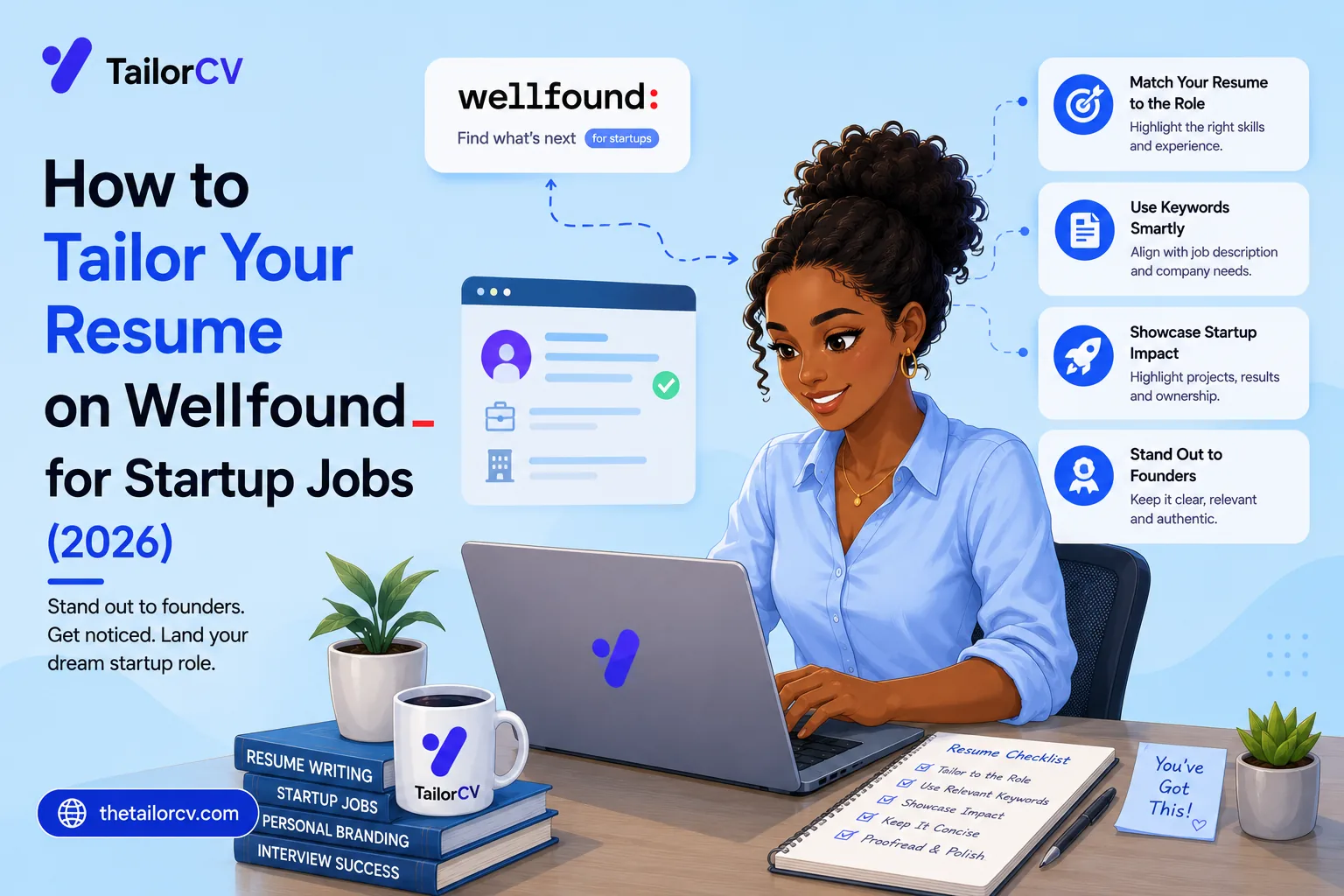
Ashby is newer, used by a lot of fast-growing startups, and generally parses modern resumes well. The startup context matters: emphasis shifts, which is why tailoring for a startup versus an enterprise is worth reading.
Workday is the strict one. It is used by large enterprises, its forms are long, and its parser is notoriously literal — formatting mistakes that other systems tolerate can scramble your resume here. Keep it simple: no tables, no columns, no text boxes, and follow ATS-friendly formatting strictly. Workday also often makes you re-enter your history into its own fields even after you upload — tedious, but the fields are what get searched, so do them properly.
What to Tailor
The four moves are the same everywhere, and they matter more here because there is no human buffer.
Match the keywords the posting names, using its exact wording, drawing on the ATS keywords that boost your score and the best keywords to beat the ATS, while avoiding the stuffing mistakes. Reorder so the most relevant, quantified experience is near the top. Rewrite the top bullets to answer this role in your own voice, not generic filler. Never fabricate — re-emphasise what is real, because a lie surfaces in the interview.
The Manual Way
By hand: read the posting, note the repeated skills, duplicate your resume, work the keywords in honestly, reorder, verify it parses, export, upload, and then — on Workday especially — re-key your history into the form fields. About ten to fifteen minutes per application once you count the forms. Our tailor in 5 minutes and tailor for every job guides cover the resume part; the form-filling is unavoidable manual work on these platforms.
Because ATS-board applications take longer than a LinkedIn quick-apply, the temptation to reuse a generic resume is even stronger here — and even more costly, because there is no human recruiter browsing to rescue a near-miss.
The One-Click Way, Even on Career Pages
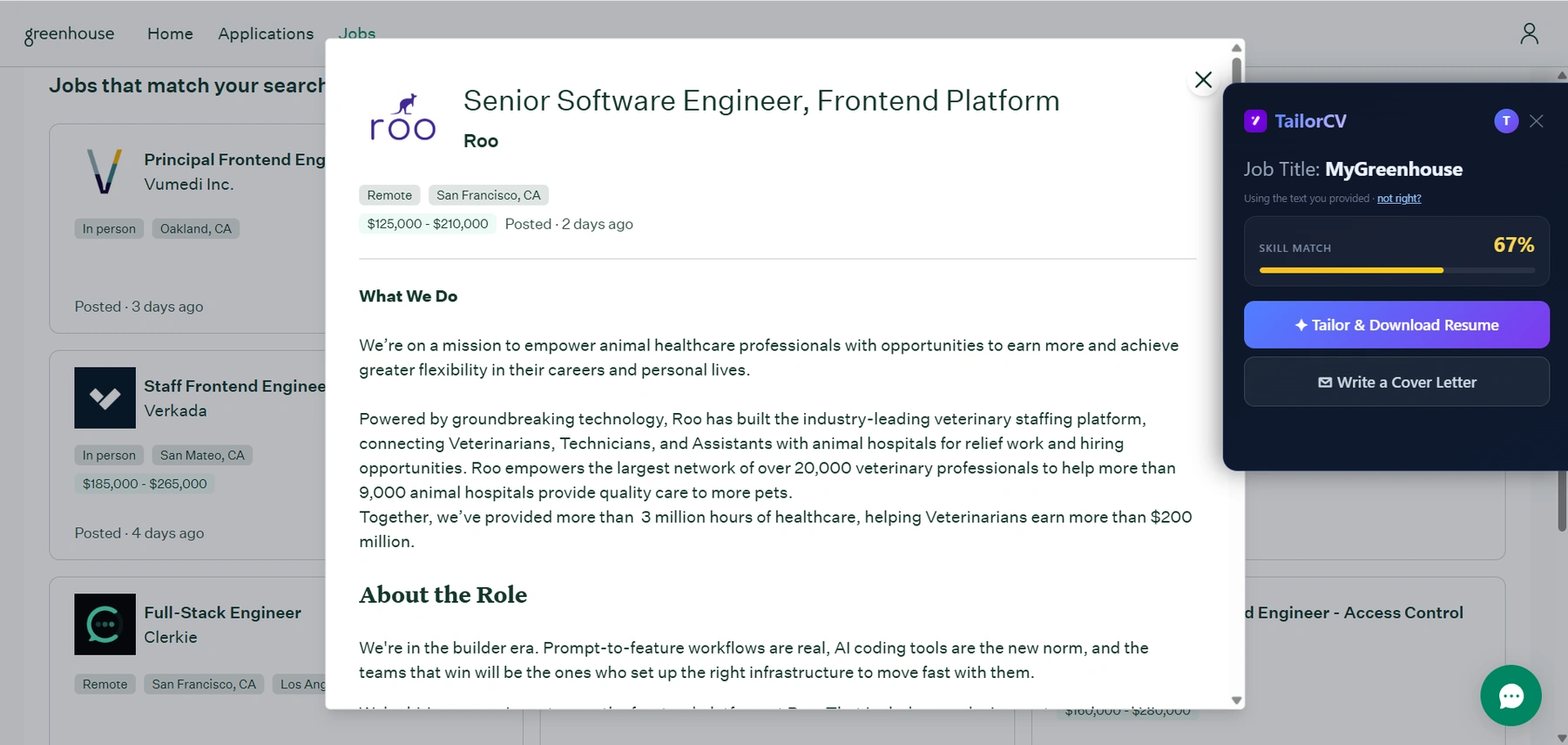
Most job-search tools only support the big aggregators and leave you on your own on company career pages. That is a real gap, because those pages host some of the best roles. TailorCV's Chrome extension supports Greenhouse, Lever, Ashby and Workday out of the box — and for any career page it has never seen, you can open the panel from the toolbar and it still reads the description.
Open the posting, the panel reads the job description off the page, and shows your skill-match score against that role before you start the long application. One click tailors your resume to close the gap and downloads the ATS-ready PDF; a second writes a matching cover letter. You still fill Workday's forms by hand — nobody can automate those safely — but at least the resume going into them is matched, not generic. It works the same on LinkedIn, Indeed and Naukri too.
Step by Step
Step 1 — Set your base resume once. Upload the resume you normally send; run a free ATS score on it first if you are unsure it is solid.
Step 2 — Open the Greenhouse/Lever/Ashby/Workday posting for a role you actually want.
Step 3 — Read your match score and missing keywords — the difference between an ATS score and a resume score.
Step 4 — Tailor. One click closes the keyword gap, grounded in your real experience. Download the PDF.
Step 5 — Cover letter. A strong opening line helps; avoid the mistakes.
Step 6 — Fill the forms carefully and submit. On Workday especially, the structured fields are what get searched, so mirror your tailored resume's language in them.
After You Apply
Send a follow-up after applying and after the interview. Before the interview, research the company, rehearse behavioural questions and tell me about yourself, and run a mock interview; the full interview prep guide ties it together. When one does not land, handle the rejection and keep moving.
Applying to remote or overseas roles through these boards? A remote-matched resume and remote cover letter help, and conventions differ for the USA and Canada — including whether you need a resume or a CV. Watch for job scams on unfamiliar career pages. Freshers: your ATS score as a fresher, projects that get interviews, your first tech job, and a portfolio site all help.
Why These Boards Reward Tailoring Most
It is worth sitting with why company career pages punish generic resumes harder than aggregators do, because it changes how you should spend your effort.
On a big aggregator, a recruiter is often browsing a list, and a near-miss resume can still catch a human eye. On a Greenhouse or Workday page, there is frequently no browsing at all until the filter has already run — the system ranks and screens the pool, and only the matched resumes surface for human review. So the same resume that might have squeaked through on Indeed simply never reaches a person here. The buffer is gone.
That has a practical consequence for how you allocate time. A lot of people spread themselves thin across fifty aggregator quick-applies and treat career-page jobs as too much effort. It is the wrong trade. The career-page roles are often better — more senior, better paid, less contested — and they reward the tailoring you are already learning to do. Shifting even a third of your energy from generic aggregator spraying to careful, matched career-page applications tends to change results faster than any other single move, and it pairs naturally with tailoring your resume for every job as a standing habit.
There is also a compounding benefit. Because these systems store your structured data, a matched application teaches the company's ATS to associate you with the right role — and many companies re-open requisitions or hire from past applicant pools. A well-matched application is not just a shot at this job; it is a record that surfaces you for the next one.
A Note on Formatting for Strict Parsers
Because Workday and, to a lesser extent, the others are literal parsers, formatting is not a cosmetic concern on these boards — it is a pass/fail gate. A resume that renders beautifully in your PDF viewer can arrive as scrambled fragments if it fights the parser.
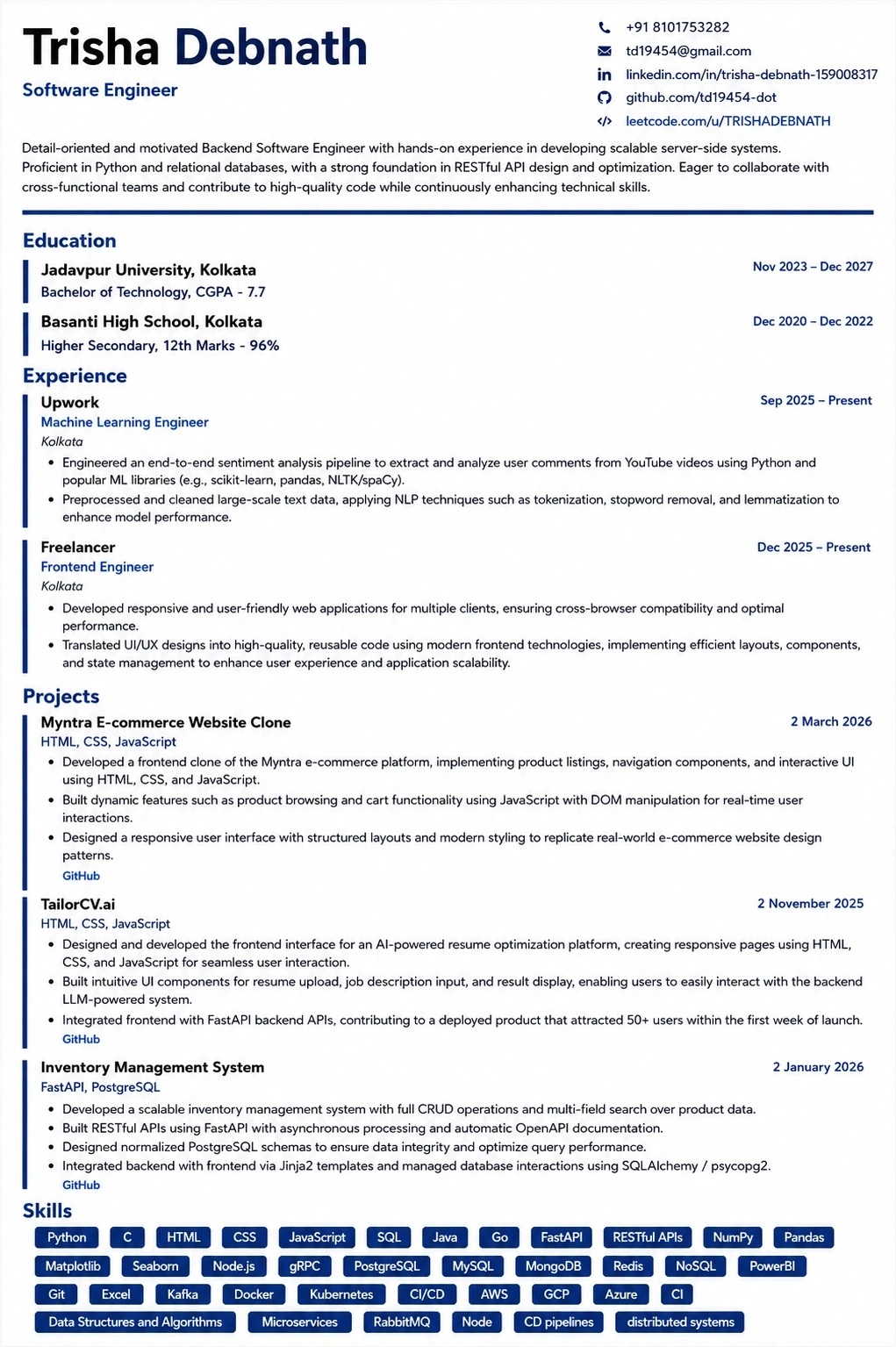
Your resume after optimization
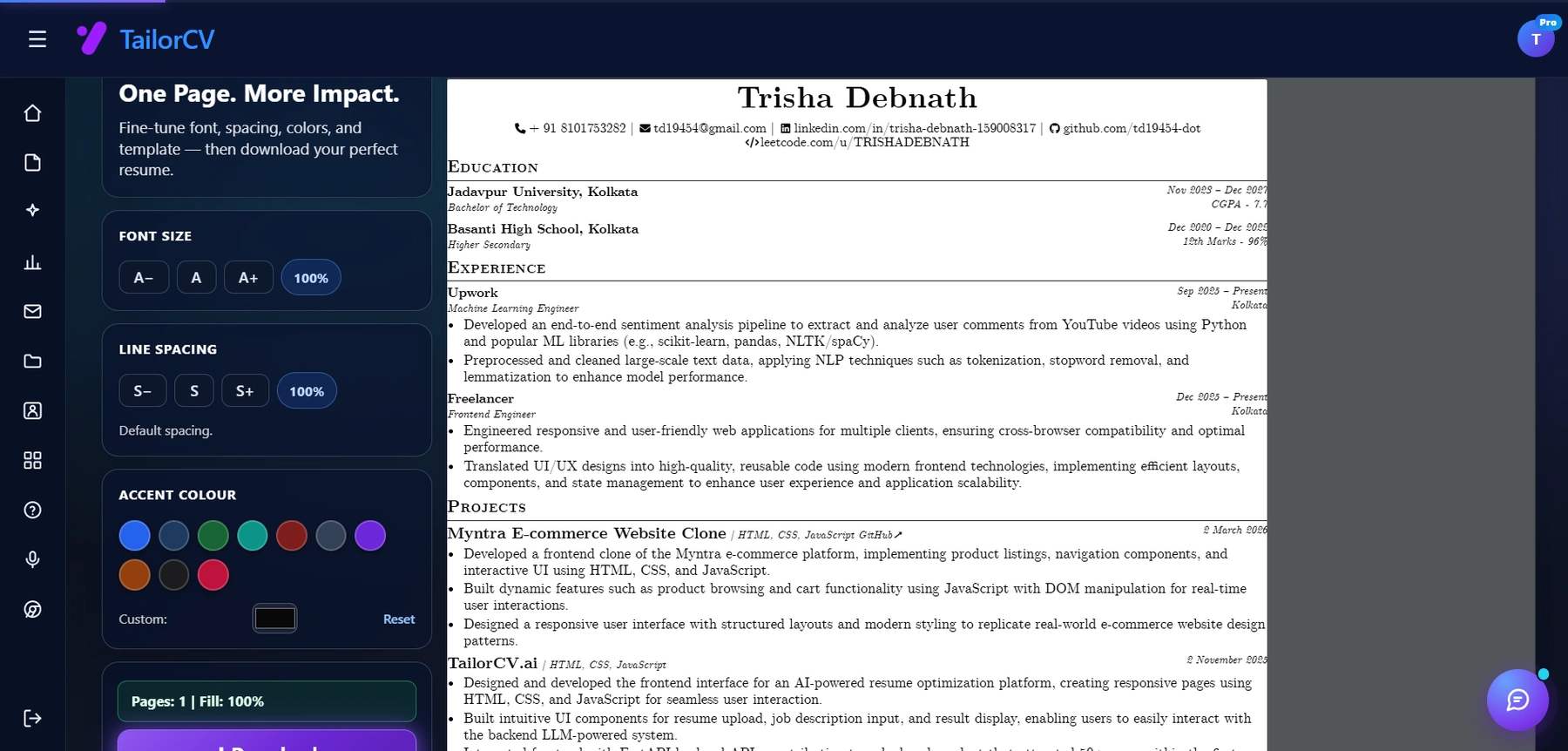
The optimized resume renders live beside the controls, so you see the page count change as you adjust.
The safe rules are boring and they work: a single column, standard section headings ("Experience", "Education", "Skills"), no tables, no text boxes, no images or icons carrying information, and contact details in the body rather than the header. Dates in a consistent format. A common, embeddable font. This is the groundwork covered in making your resume ATS-friendly and the parser-friendly format guide, and it matters doubly here because there is no human to notice that the machine mangled you.
If you are unsure whether your current resume clears these bars, the fastest way to find out is to run it through a free ATS score and read the structural flags before you send it into a strict system like Workday. Fix the base once, and every tailored copy inherits a clean foundation — the same principle as tailoring in five minutes starting from a solid base.
The listing on these portals is usually the version to match when the same job appears elsewhere; see the same job posted twice with different wording.
Frequently Asked Questions
Do Greenhouse and Workday use an ATS? They are applicant tracking systems. When you apply on a company's Greenhouse, Lever, Ashby or Workday page, you are submitting directly into their ATS, which parses your resume and matches it against the role before a recruiter filters candidates.
Why does Workday make me re-enter my resume? Workday parses your uploaded resume imperfectly and asks you to confirm or re-key the structured fields. Those fields are what recruiters search, so fill them accurately and mirror your tailored resume's language — do not skip them.
Is it worth tailoring for company career pages? More than anywhere. There is no human recruiter browsing to rescue a near-miss, so an unmatched resume is simply filtered out. A tailored resume also stands out more here because these postings are usually less flooded than viral aggregator listings.
Can an extension work on any company career page? A good one supports the major ATS platforms directly and can be opened manually on career pages it has not seen. TailorCV's extension covers Greenhouse, Lever, Ashby and Workday, plus any site from the toolbar.
Putting It All Together
ATS-board applications are the ones most worth getting right and the ones most people get wrong, because they take longer and tempt you into reusing a generic resume — straight into a parser with no human buffer to save you.
Treat them as your highest-effort, lowest-volume applications: read the posting, match the four things that matter, keep the resume strictly parseable, and fill the forms with care. The roles are often better and less contested; a matched resume goes a long way.
Find one Greenhouse, Lever, Ashby or Workday role you genuinely want. Check your match score, close the gap, tailor the resume, and apply properly. On these boards, one well-matched application is worth ten rushed ones.
See what tailoring is worth on your resume
Score your current resume against a real job description before you change a word.
Drop your resume here or choose a file
PDF only. Max 2 MB.
We never share your data or use it to train AI models.

Start from a template that tailors well
Clean structure means swapping keywords per job takes minutes, not a re-layout every time.
Was this guide useful?
Be the first to rate it.