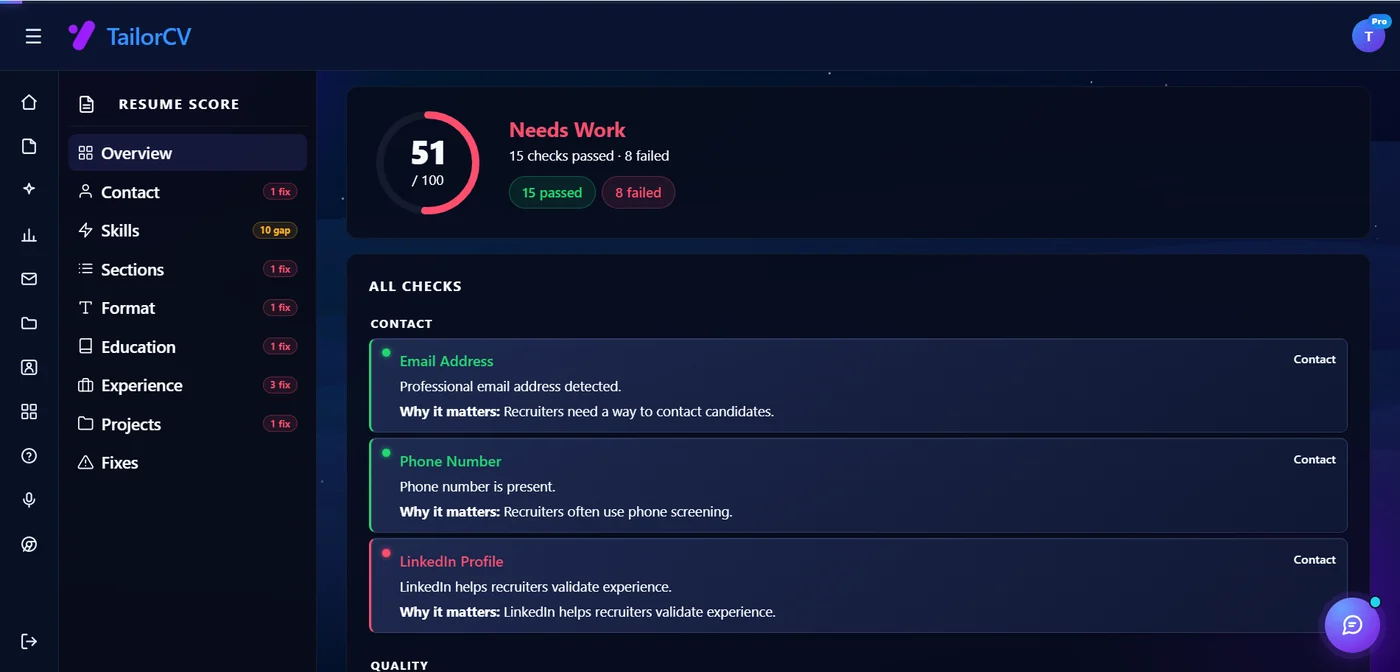
 SS
SS
Key Takeaways
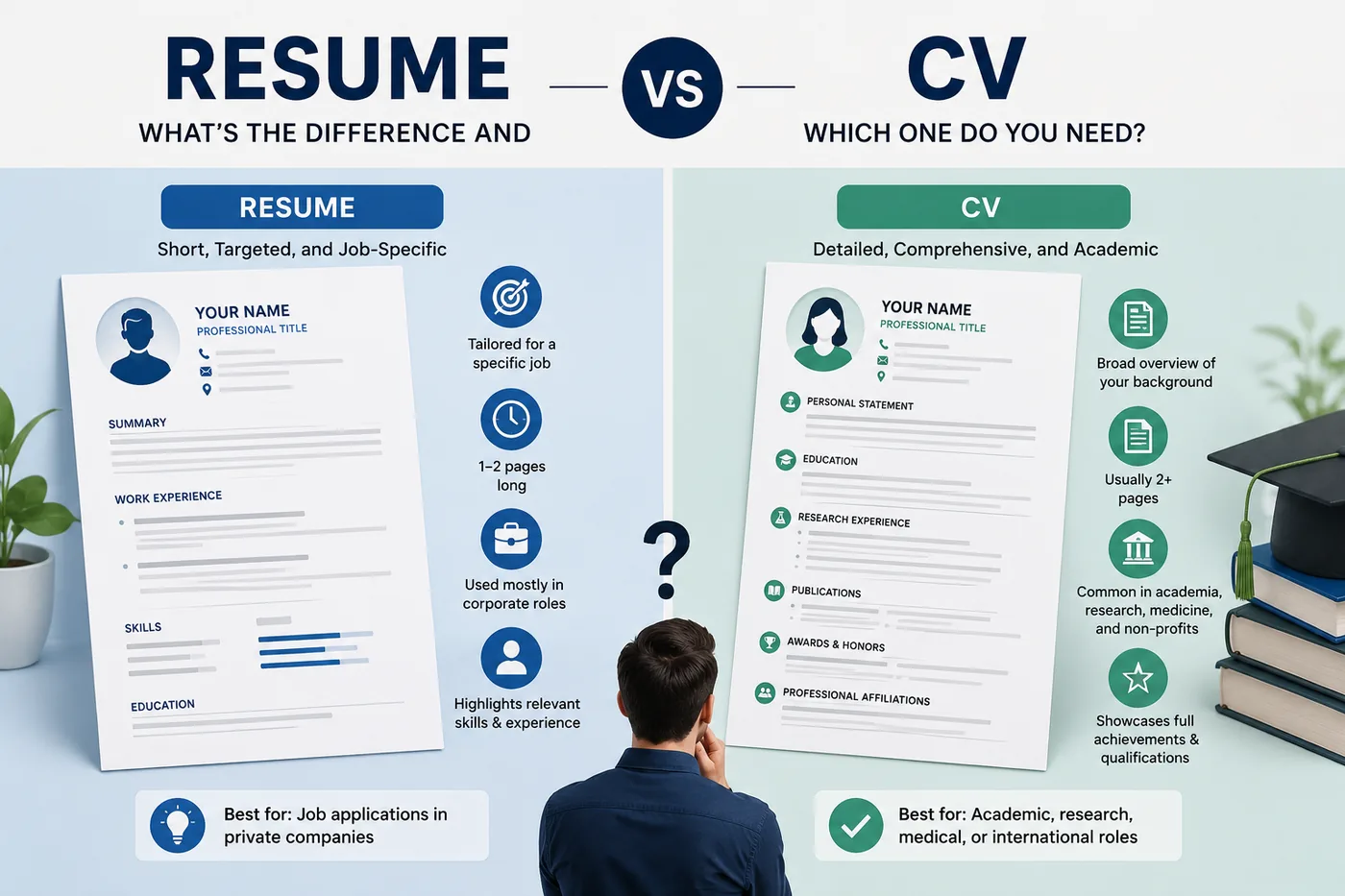
- A resume is a concise document (1-2 pages) tailored for specific job applications, while a CV is a comprehensive record of your entire academic and professional history (2-20+ pages).
- Resumes are commonly used in the US, Canada, and Australia for industry jobs, whereas CVs are standard for academic positions and in many countries in Europe, the Middle East, and Africa.
- The content of a resume focuses on skills and achievements relevant to the job, while a CV includes all professional details such as publications, research, and teaching experience.
- Geographic differences in terminology can lead to confusion; for instance, in the UK, "CV" is equivalent to a US resume, while "CV" in the US refers specifically to academic documents.
"Should I send a resume or a CV?" is one of the most common questions job seekers ask - and getting it wrong can make you look out of touch with the role or region you are targeting. The answer depends on where you are applying, what industry you are in, and what level of role you are pursuing.
This guide explains the key differences, when each is appropriate, and what to include in each document.
Before you send either, check your document against the job with the TailorCV ATS score checker and start from an ATS-compatible template.
The Core Difference
| Feature | Resume | CV (Curriculum Vitae) |
|---|---|---|
| Length | 1-2 pages | 2-20+ pages |
| Purpose | Get a specific job | Document full academic/professional history |
| Content | Targeted to the role | Comprehensive - everything included |
| Updates | Tailored per application | Updated as career progresses |
| Common in | US, Canada, Australia (industry) | UK, Europe, academia worldwide |
| Focus | Skills, achievements, impact | Publications, research, presentations, grants |
What Is a Resume?
A resume is a concise, targeted document - typically one to two pages - that highlights your most relevant experience, skills, and achievements for a specific job application. You tailor it for each role. You cut anything irrelevant.
Resumes are the standard document for:
- Industry jobs (tech, finance, marketing, operations, sales)
- Corporate and private-sector roles
- Applications in the US, Canada, and Australia
Read what is a resume and why it matters for the full breakdown.
What Is a CV?
A CV (curriculum vitae, Latin for "course of life") is a comprehensive professional document that records your complete academic and professional history. It grows over your career and is rarely shortened or cut. Everything stays in.
CVs are standard for:
- Academic positions (faculty, lecturer, researcher)
- Research grants and fellowships
- Medical residencies and clinical roles
- Jobs in many European, Middle Eastern, and African countries
- Graduate school applications
A CV typically includes:
- Full employment history
- All publications (journal articles, books, chapters)
- Conference presentations
- Research grants and fellowships
- Teaching experience
- Academic awards and honors
- Professional memberships and committee work
- References
Geographic Differences - Where Each Is Used
This is where most confusion happens. The same document is called by different names in different countries.
United States and Canada
- Resume: Used for all private-sector, industry jobs
- CV: Used only for academic and some scientific/research positions
- If an industry employer in the US asks for a "CV," they almost always mean a resume
United Kingdom and Ireland
- CV: The standard document for most jobs, equivalent to a US resume (typically 2 pages)
- UK CVs are formatted similarly to US resumes but may include personal info like nationality
- The term "resume" is rarely used in the UK
Europe (EU Countries)
- Many countries use the Europass CV format
- Length and content norms vary by country
- Germany, France, and Scandinavia have their own conventions - some include photos
Australia and New Zealand
- "Resume" and "CV" are often used interchangeably for industry jobs
- Standard length: 2-3 pages (longer than the US norm)
- Academic positions use a full academic CV
India and Southeast Asia
- "CV" and "resume" are often used interchangeably for industry roles
- Most professional applications expect a standard 1-2 page resume
- Academic and government roles may require longer detailed CVs
Academic CV vs Industry Resume - Key Differences
If you are transitioning from academia to industry (or vice versa), understanding this distinction is critical.
Academic CV
- Length: No limit - 5, 10, 20+ pages is normal
- Focus: Publications, grants, teaching, research, conferences, awards
- Audience: Search committees, grant reviewers, academic collaborators
- Goal: Document complete scholarly contribution
Industry Resume
- Length: 1-2 pages maximum
- Focus: Skills, impact, achievements, business value
- Audience: Recruiters, hiring managers, ATS systems
- Goal: Win a job interview at a specific company
Academics applying to industry roles must compress their CV into a resume - translating research accomplishments into business impact language. Read the career change resume guide for transition strategies.
Which One Should You Submit?
Follow the job posting's language:
- Posting says "resume" - Submit a resume (1-2 pages, targeted)
- Posting says "CV" - In the US, usually means a resume; in academia, submit a full CV
- Posting says "CV or resume" - Submit whichever is appropriate for the industry and country
- Academic/research role - Always submit a CV, never a resume
- Applying internationally - Match the convention of the country you are applying to
When in doubt, check what is standard in the industry and location. A two-page targeted resume passes as a "CV" in most non-academic contexts.
ATS Compatibility: Resume vs CV
ATS systems (used by most companies for initial screening) are optimized for resumes, not CVs. A lengthy CV submitted to a corporate job application will likely parse poorly - the sections, the length, and the academic structure are not what ATS expects.
If you are applying to industry roles:
- Use a resume, not a CV
- Use an ATS-friendly template
- Check your score with the ATS checker
Read how to make your resume ATS-friendly for the complete formatting guide.
How to Convert a CV to a Resume
If you have an academic CV and need to create an industry resume:
- Target it - Identify what skills and experiences are relevant to the role
- Cut ruthlessly - Remove publications, presentations, grants, and academic-only sections
- Reframe language - Translate "conducted research on X" into "analyzed X to improve Y by Z%"
- Lead with impact - Use a strong resume summary that speaks to business value
- Add a skills section - Technical and transferable skills prominently displayed
- Quantify - Add numbers and results wherever possible. Read how to quantify resume achievements
- Keep to 2 pages - See the ideal resume length guide
- Check ATS compatibility - Run the final version through the ATS score checker
Related Guides
- What Is a Resume and Why Does It Matter?
- The Anatomy of a Perfect Resume
- Ideal Resume Length Guide
- How to Write a Resume Summary
- How to Make Your Resume ATS-Friendly
- Career Change Resume Guide
- How to Quantify Resume Achievements
- Chronological vs Functional Resume
- ATS Score Guide
- How to Write a Resume from Scratch
Make This Practical
Use this guide as part of a complete job-search workflow. Check your resume with the free ATS score checker, improve targeting with the Resume Optimization Guide, and choose a clean format from the ATS-friendly resume templates.
After the resume is ready, strengthen the rest of the application. Draft a targeted letter with the AI cover letter generator, practice interviews with the AI mock interview tool, and create a project-backed proof page with the portfolio website builder if you need a stronger online presence.
Conclusion
The resume vs CV distinction comes down to length, purpose, and geography. In the US, Canada, and for most industry roles globally, a targeted 1-2 page resume is the right document. In academia, for research grants, and in many European countries, a comprehensive CV is expected.
When applying to industry roles, always use a resume, start from an ATS-friendly template, and verify your document with the TailorCV ATS checker. For academic CV guidance, follow the conventions of your field and institution.
Frequently Asked Questions
What is the main difference between a resume and a CV?
The primary difference lies in their purpose and length. A resume is a concise document, typically one to two pages, tailored for a specific job application, focusing on relevant skills and achievements. In contrast, a CV (curriculum vitae) is a comprehensive record of your entire academic and professional history, ranging from 2 to 20+ pages, and includes everything from publications to research. For a deeper understanding, check out what is a resume and why it matters.
When should I use a resume instead of a CV?
You should use a resume when applying for jobs in industries like tech, finance, or marketing, particularly in the US, Canada, and Australia. Resumes are ideal for corporate and private-sector roles where a targeted approach is necessary. On the other hand, a CV is more appropriate for academic positions or roles in the UK and Europe, where a comprehensive overview of your career is expected.
How often should I update my resume or CV?
Your resume should be tailored and updated for each job application to ensure it aligns with the specific role you are targeting. In contrast, a CV should be updated regularly as your career progresses, adding new experiences, publications, and achievements. To help manage your applications effectively, consider using a job application tracker template.
Can I use the same document for different job applications?
Using the same document for different job applications is generally not advisable. A resume should be tailored for each position, emphasizing the relevant skills and experiences that match the job description. A CV, while comprehensive, should still be reviewed and potentially adjusted to highlight the most pertinent information for the specific academic or professional opportunity you are pursuing.
What tools can help me create an effective resume or CV?
Utilizing templates can significantly enhance the effectiveness of your resume or CV. You can start from an ATS-compatible template to ensure your document passes through applicant tracking systems. Additionally, tools like the free ATS score checker can help you optimize your document for better visibility to potential employers.
What is your resume scoring right now?
Scan it against a job description and get your ATS match score in about a minute.
Drop your resume here or choose a file
PDF only. Max 2 MB.
We never share your data or use it to train AI models.
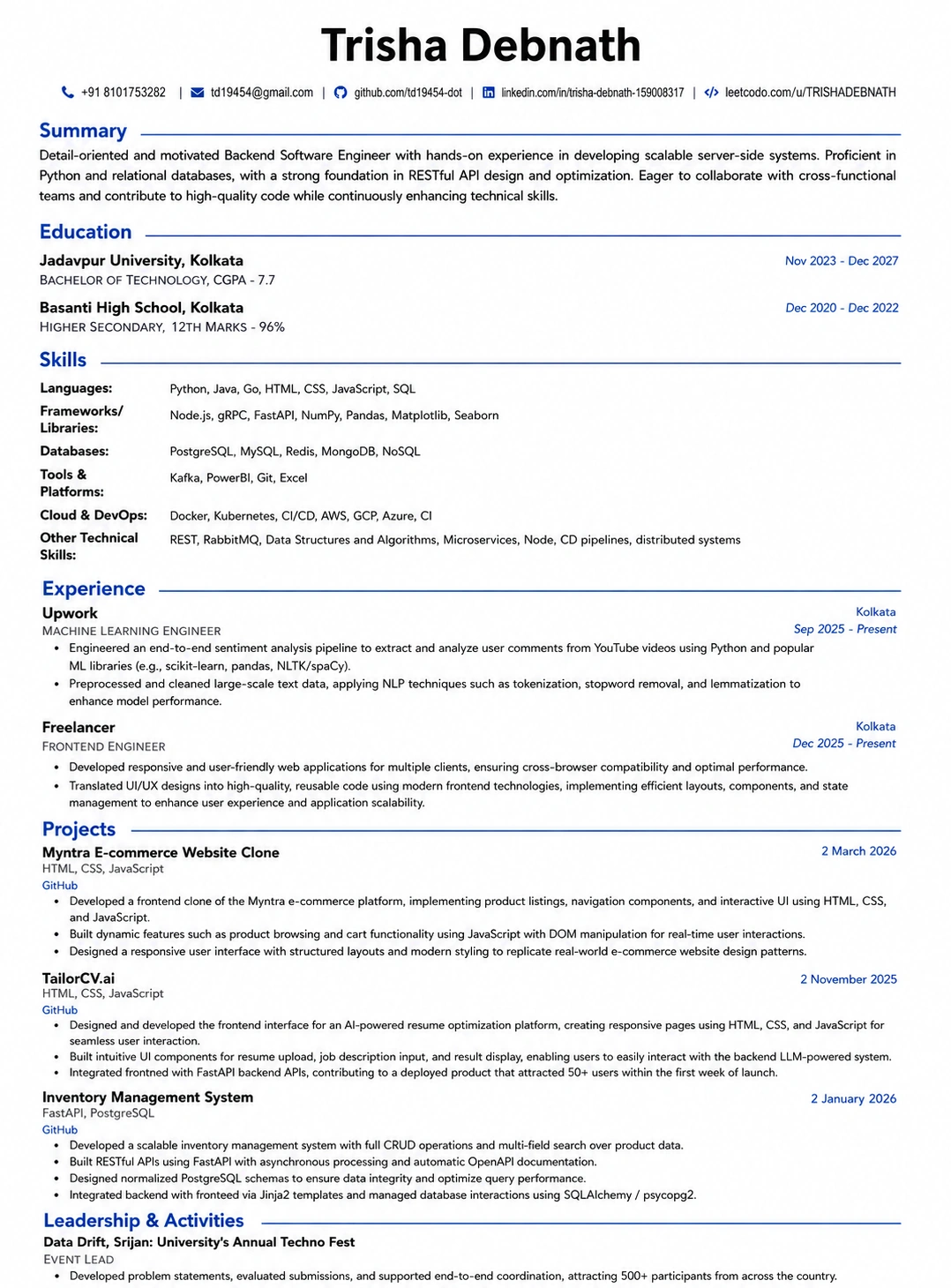
Templates that keep this structure intact
This template is ATS-tested — start from it and the formatting rules in this guide are already handled.
Was this guide useful?
Be the first to rate it.