 SS
SS

Key Takeaways
- Tailoring your resume without a job description requires gathering indirect signals about the role and company needs.
- Utilize referrals to gain insights about the team’s current projects, hiring manager's priorities, and specific resume preferences.
- Research current employees in similar roles to identify common skills, backgrounds, and industry-specific language to incorporate into your resume.
- Align your professional summary with the company's mission, using relevant terminology to demonstrate your understanding of their goals.
- Match your skills to industry standards by inferring required competencies based on the role and sector you are targeting.
Every resume guide tells you to read the job description carefully.
Extract the keywords. Mirror the language. Match the skills.
Great advice - when there is a job description.
But what do you do when there is not one?
When your college friend texts you: "Hey, my company is probably hiring a PM - want me to drop your resume to the hiring manager?"
When a recruiter reaches out on LinkedIn about a role that "isn't posted yet."
When you are doing cold outreach to a company you want to work for, even though they have nothing open.
When the job posting is four lines of vague text with no actual requirements.
These are real situations that millions of job seekers face - and almost every tailoring guide completely ignores them.
This guide does not.
Why No Job Description Makes Tailoring Harder (But Not Impossible)
A job description is a targeting system. It tells you exactly what the employer needs, in their own words.
Without one, you are working from signals - indirect information about what the company and role actually require.
The good news: you usually have more signal than you think.
You have:
- The company's existing job postings (even for different roles)
- LinkedIn profiles of current employees in similar roles
- The company's website, product, and mission language
- Industry knowledge about what this role typically involves
- The person who referred you (a goldmine of insider context)
- Glassdoor, Levels.fyi, Blind, and Crunchbase data
Your job is to become a detective.
Method 1: Referral Applications
This is the highest-value scenario.
A referral means a real person at the company is endorsing you. That is a significant advantage. But it does not mean you can skip tailoring.
The hidden keywords technique applies here too - even without a formal job description, the referral conversation reveals real signals about priorities.
Step 1: Debrief Your Contact
Your referral contact is your most valuable source.
Ask them:
- What is the team actually working on right now?
- What is the hiring manager's biggest pain point?
- What did they say they were looking for?
- Is there anything specific they want to see in a resume or application?
- What do people on the team typically have in their backgrounds?
This conversation gives you more useful information than most job descriptions.
Step 2: Research the Specific Team
Use LinkedIn for your job search strategically here. Look at people on that team. What do their profiles show?
- What skills and tools appear frequently?
- What past employers have team members come from?
- What titles do they use?
- What do they post about professionally?
This is your keyword map.
Step 3: Tailor Your Summary to the Company's Mission
Even without a specific JD, you know what the company does. Your professional summary should show that you understand the company's mission and that your background is directly relevant to it.
Generic (no tailoring):
"product manager with 4 years of experience in tech."
Tailored for referral to a growth-stage fintech:
"product manager with 4 years building consumer-facing financial products, with a strong focus on onboarding optimization and payment flow design. Experienced in the 0-to-1 and scaling phases of fintech products serving underbanked users."
If the company is building financial infrastructure - use fintech language. If the company is a B2B SaaS - use SaaS language. If the company is a consumer marketplace - use marketplace language.
Step 4: Match Your Skills to the Industry Standard
Use industry knowledge to infer the required skills.
For a PM at a SaaS company: Jira, roadmapping, agile, A/B testing, cross-functional collaboration, product analytics.
For a software engineer at an AI startup: Python, ML frameworks, distributed systems, system design, cloud infrastructure.
Use TailorCV's optimizer with a generic job description for the role type at that company size as your proxy. This gives you a keyword match baseline to work from.
Method 2: Cold Outreach Applications
Cold outreach means you are writing to someone who did not ask for your resume.
This is harder. But it works - especially for senior roles and specialized positions.
Before reaching out, think about your personal brand - the impression you want to create before the recipient even opens your resume.
Research First, Write Second
Before you send a single line, research the company and person deeply:
- What has the company published recently? (blog posts, press releases, product launches)
- What is the person's role and focus area?
- What problems are they probably trying to solve?
- Has the company been hiring for similar roles recently? (Search for expired job postings on LinkedIn, Indeed, Glassdoor)
Expired job postings are one of the best substitutes for a live job description. They tell you exactly what the company looked for six or twelve months ago. The needs are probably similar.
Write a Resume That Speaks to Their Specific Problem
Your cold outreach resume should not be a generic best-of resume. It should feel like it was written for this person.
If you are reaching out to a CMO whose company is clearly struggling with content marketing - your resume should lead with your content and SEO achievements.
If you are reaching out to a VP Engineering whose LinkedIn shows they are scaling a team rapidly - your resume should lead with your experience building teams and technical infrastructure under growth pressure.
Make them feel like you did the homework. Because you did.
The Cover Email Is Part of the Tailoring
With cold outreach, you do not have an application form. Your email is your first impression.
Read how to write a cold email to a recruiter for a framework that actually gets responses.
Keep it short. One paragraph: why you are reaching out, the specific value you bring, and what you want.
Your resume is an attachment. The email is the hook.
Method 3: Vague Job Postings
Some postings are deliberately vague. Four lines. No specifics. "Looking for a talented self-starter to join our growing team."
Use the Company Website as Your JD Substitute
Read the company's:
- About page (mission, values, priorities)
- Product pages (what they build, who it is for)
- Blog (what they write about reveals what they think matters)
- Team page (what backgrounds and titles current employees have)
This is your substitute job description.
Write your resume to match the language the company uses to describe itself and its work.
If the company website is full of phrases like "data-driven culture," "customer obsession," and "high-velocity iteration" - these are the phrases that resonate internally. Use them.
Search LinkedIn for Similar Roles at This Company
Even if this posting is vague, there may be previous postings for this type of role at this company on LinkedIn. Search "[Company name] [role type]" with LinkedIn's job search, set the time filter to past year.
Old postings tell you:
- What skills they typically require
- What the actual title usually is
- What they call their teams
That is your keyword guide.
The Universal Tailoring Principles (No JD Required)
Whether you have a referral, are doing cold outreach, or are facing a vague posting - these principles apply:
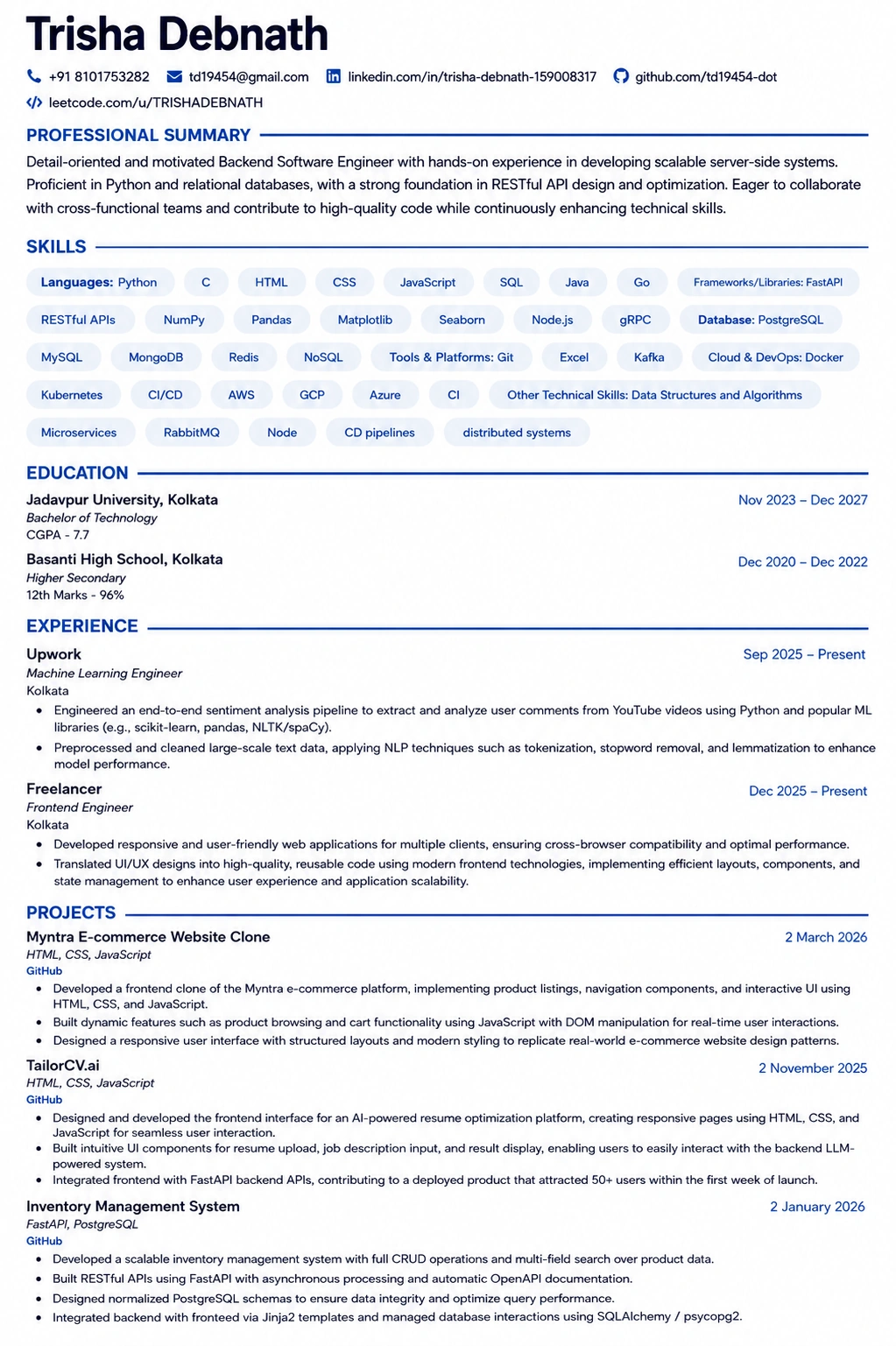
Your resume after optimization
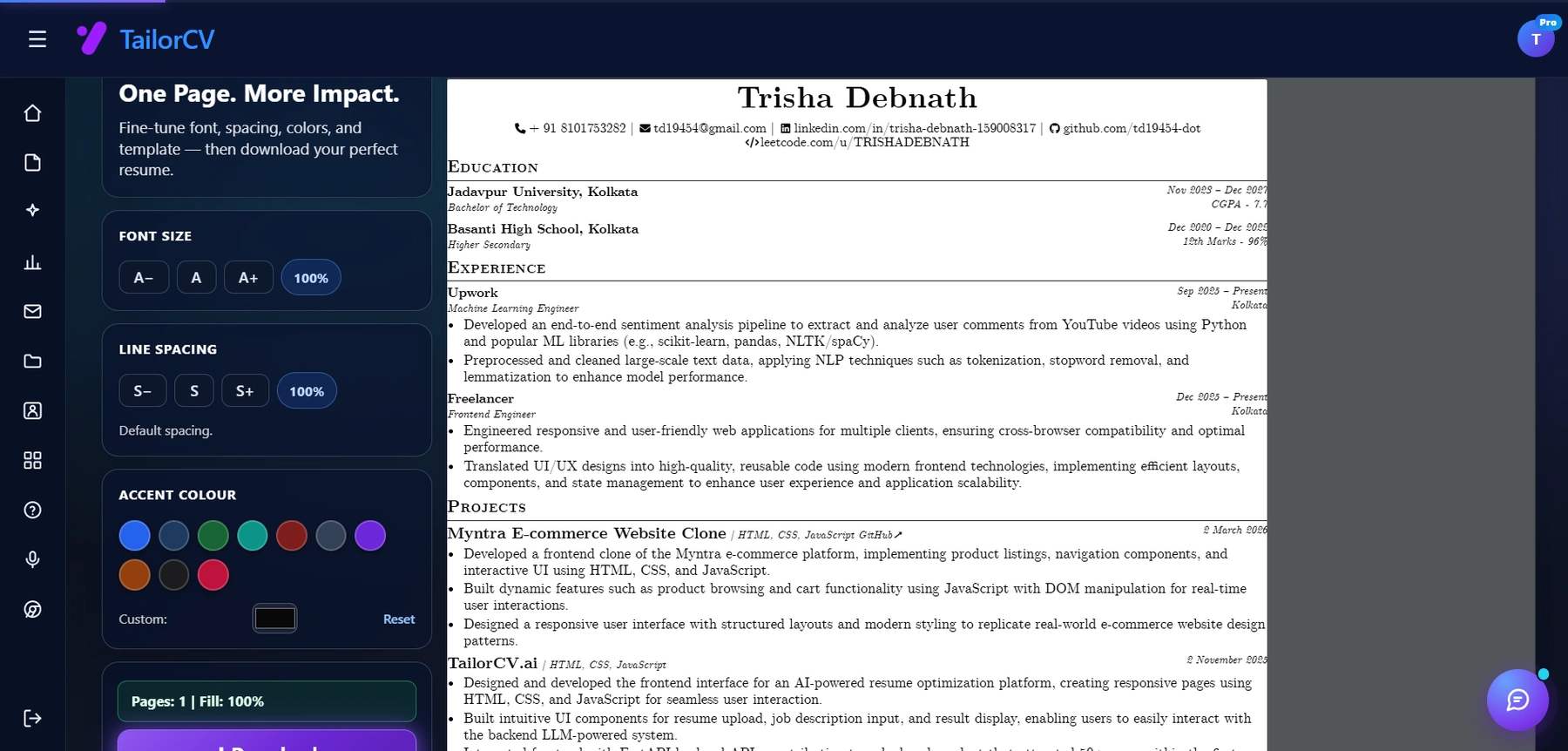
The optimized resume renders live beside the controls, so you see the page count change as you adjust.
1. Tailor to the company, not just the role Every company has a personality. Your summary should reflect that you understand who they are - not just what the role involves.
2. Use industry-standard keywords for the role type Every role has a canonical set of skills that any knowledgeable hiring manager would expect. Use those. The skills to add to your resume in 2026 guide is useful here.
3. Lead with results that are directly relevant to this company's stage Early-stage company? Lead with speed and scrappiness. Reference startup vs enterprise resume tailoring for guidance. Late-stage enterprise? Lead with scale and process.
4. Research makes the difference The candidate who did 20 minutes of research before tailoring always beats the one who sent a generic version.
How to Check Your Tailoring Without a JD
Without a specific job description, you can still check your resume's strength.
Use TailorCV with a similar job description from another company in the same space. Use LinkedIn's job alerts for similar roles to find comparable postings.
Get your ATS match score against the proxy posting. This tells you whether your keyword coverage is strong for this type of role.
Make This Practical
Do not guess whether the resume is ready. Upload it to the free ATS score checker, compare the result with the ATS Score Guide, and fix formatting issues using ATS Resume Formatting Mistakes and ATS Resume Parser Friendly Format.
After the technical cleanup, improve relevance. Use Resume Matching With Job Description, strengthen keyword coverage with the Resume Keywords Guide, and avoid overdoing it by checking ATS Keyword Mistakes. If the layout itself is weak, rebuild with an ATS-friendly resume template.
FAQ
Is it worth applying without a job description?
Yes - especially referrals, where your chances are significantly higher than a cold application. Invest the research time.
How do I follow up after a referral application?
Send a brief, professional thank-you to your contact after submitting. Give them visibility into what you sent. Read how to follow up after an interview for guidance on the broader follow-up process.
What if there is genuinely no information available about the company?
That is a signal. A company with no public presence, no LinkedIn profiles, and no published information is risky to apply to anyway. At minimum, research the founders and any news coverage before crafting your tailored resume.
Can I use one resume for multiple cold outreach emails?
Only if the recipients are at very similar companies. For each distinct company type or stage, tailor separately.
Related Guides
- How to Tailor Your Resume for Every Job
- How to Write a Cold Email to a Recruiter
- Networking Tips for Job Search
- How to Use LinkedIn for Job Search
- Job Description Keyword Extraction Guide
- Resume Summary Match Job Description
- Tailored vs Generic Resume
- Resume Startup vs Enterprise Tailoring Guide
- Cover Letter Guide 2026
- How to Research a Company Before Your Interview
- Autofill vs Auto-Tailor: What Job Search Extensions Actually Do (2026)
Conclusion
Most resume guides assume a job description exists.
Most of the best job opportunities do not come with one.
Referrals, cold outreach, and emerging roles require a different kind of tailoring - one based on research, industry knowledge, and company-specific signals rather than a carefully written requirements list.
The effort is higher. The competition is lower. The conversion rate is better.
Do the research. Speak the company's language. Lead with the results that matter to this company at this moment.
That is how you tailor without a job description.
Tailor My Resume for Any Role - Free
See what tailoring is worth on your resume
Score your current resume against a real job description before you change a word.
Drop your resume here or choose a file
PDF only. Max 2 MB.
We never share your data or use it to train AI models.
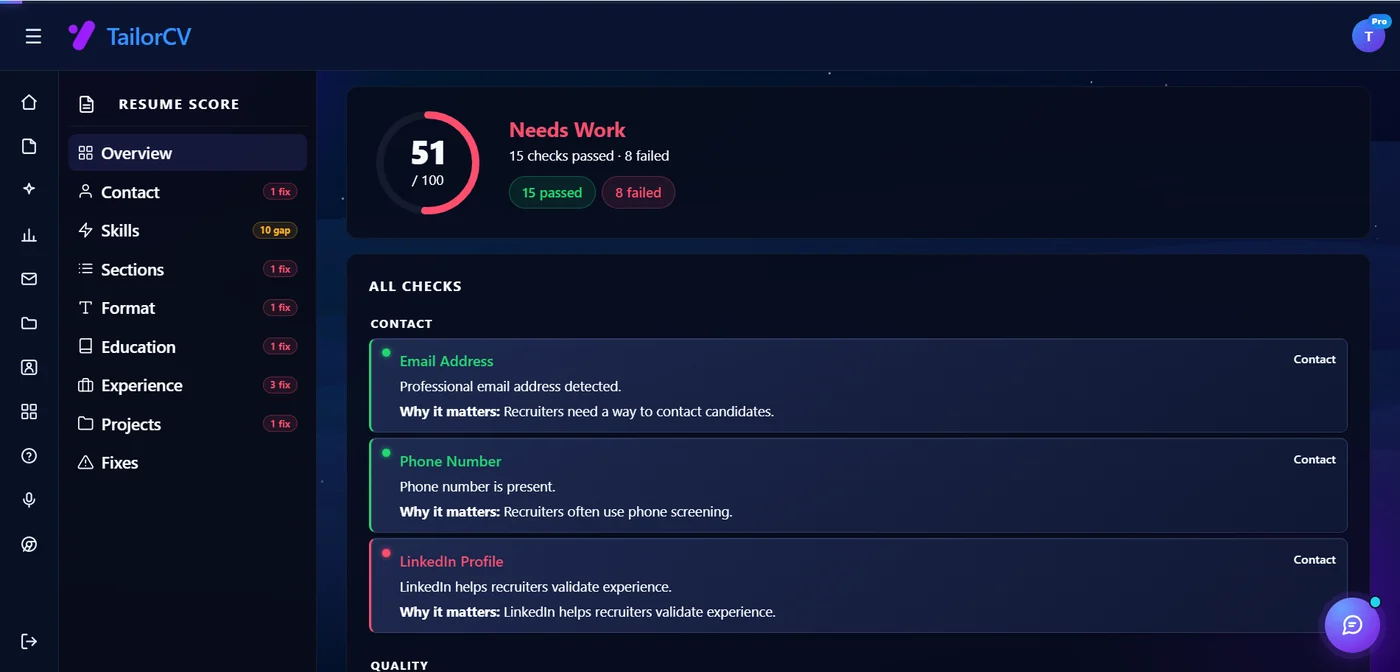
Start from a template that tailors well
Clean structure means swapping keywords per job takes minutes, not a re-layout every time.
Was this guide useful?
Be the first to rate it.