 TD
TD
Key Takeaways
- Singapore's demand concentrates in finance and fintech, technology, biomedical and pharma, logistics, and professional services.
- Your resume is the gate, and in Singapore it is usually read by software before a human.
- The single biggest reason applications vanish is one generic resume fired at everything - the filter matches language, not meaning.
- Foreigners need a valid work pass, and which category you fall into shapes the whole search.
- Singapore interviews are typically structured and competency-based, so prepare accordingly.
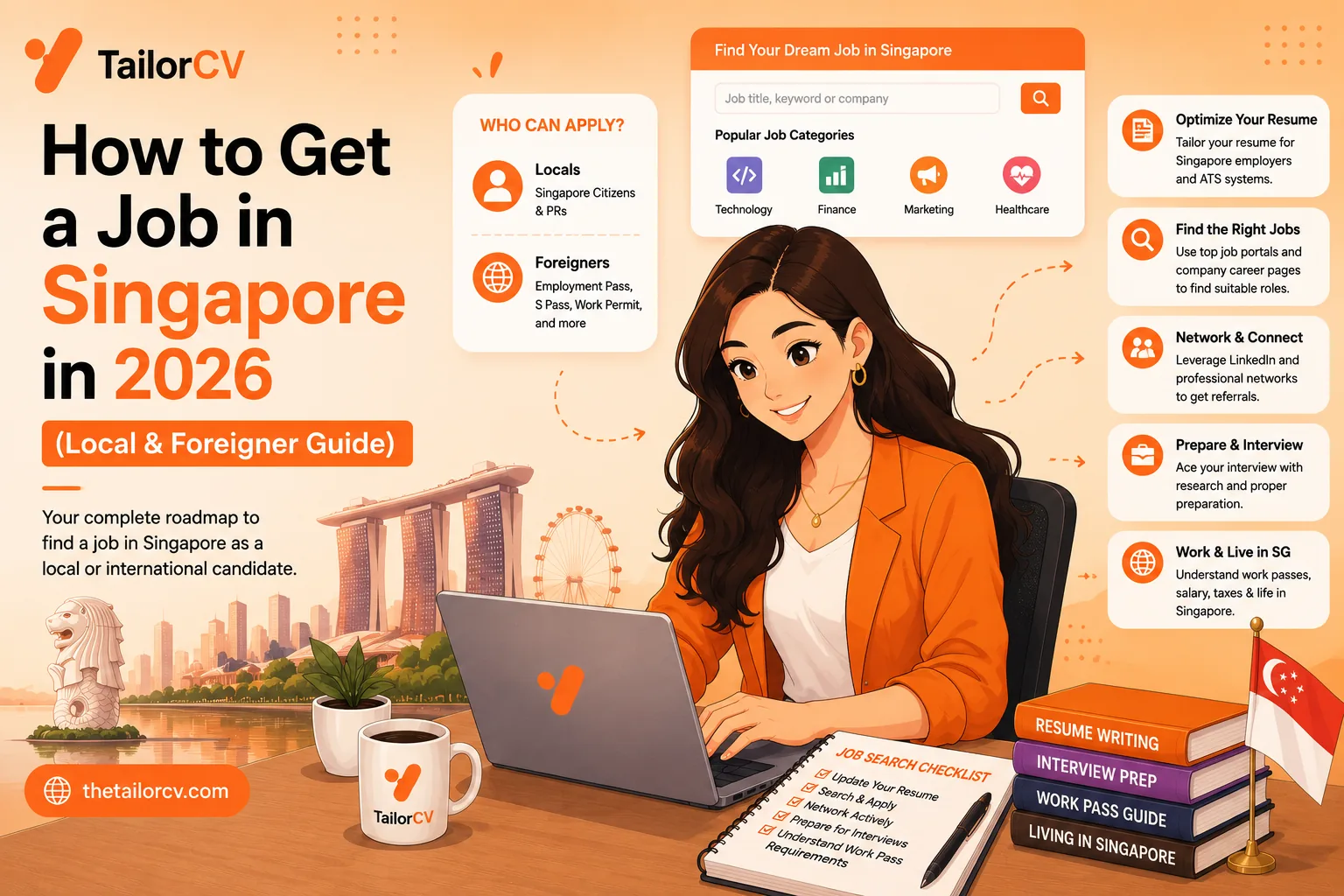
Singapore is one of Asia's most attractive places to work — a global business hub with strong salaries, low taxes, and headquarters for much of the region's finance, tech, and shipping. It's also intensely competitive, and the process has its own rules, especially around resumes, ATS screening, and (for foreigners) work passes. This guide walks the full path to getting a job in Singapore in 2026, for locals and overseas applicants alike.
The Singapore Job Market in 2026
Singapore's demand is concentrated in a few strong sectors: finance and fintech, technology, biomedical and pharma, logistics and supply chain, and professional services. Many roles are regional (APAC) hubs based in Singapore, which is why multilingual ability and cross-border experience are genuine assets.
The competition is real — you're up against strong local graduates from NUS, NTU, and SMU, and experienced professionals from across the region. Standing out is less about credentials and more about getting your application seen (past the ATS) and matched (to the specific role). That's where most applicants lose, and where you can win.
Step 1: Get Your Resume Right
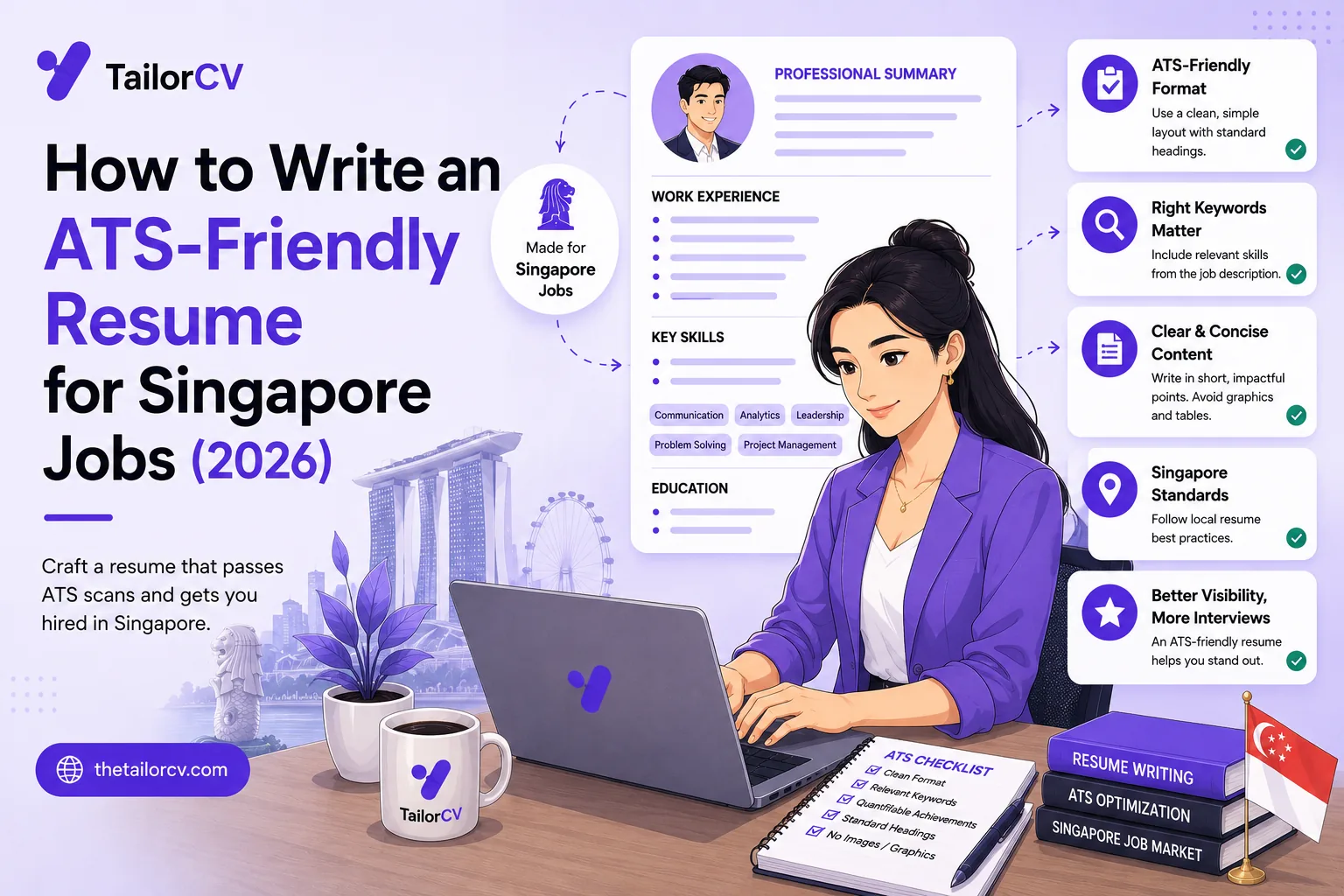
Your resume is the gate, and in Singapore it's usually read by software before a human. Get the format right first: single page (or two for seniors), reverse-chronological, single column, and ATS-parseable. The Singapore resume format guide covers the local specifics — state your PR/citizenship or pass status, use British English, and leave off NRIC, photo, DOB, and address. Keep it parser-friendly and free of formatting mistakes, with the right template and quantified results.
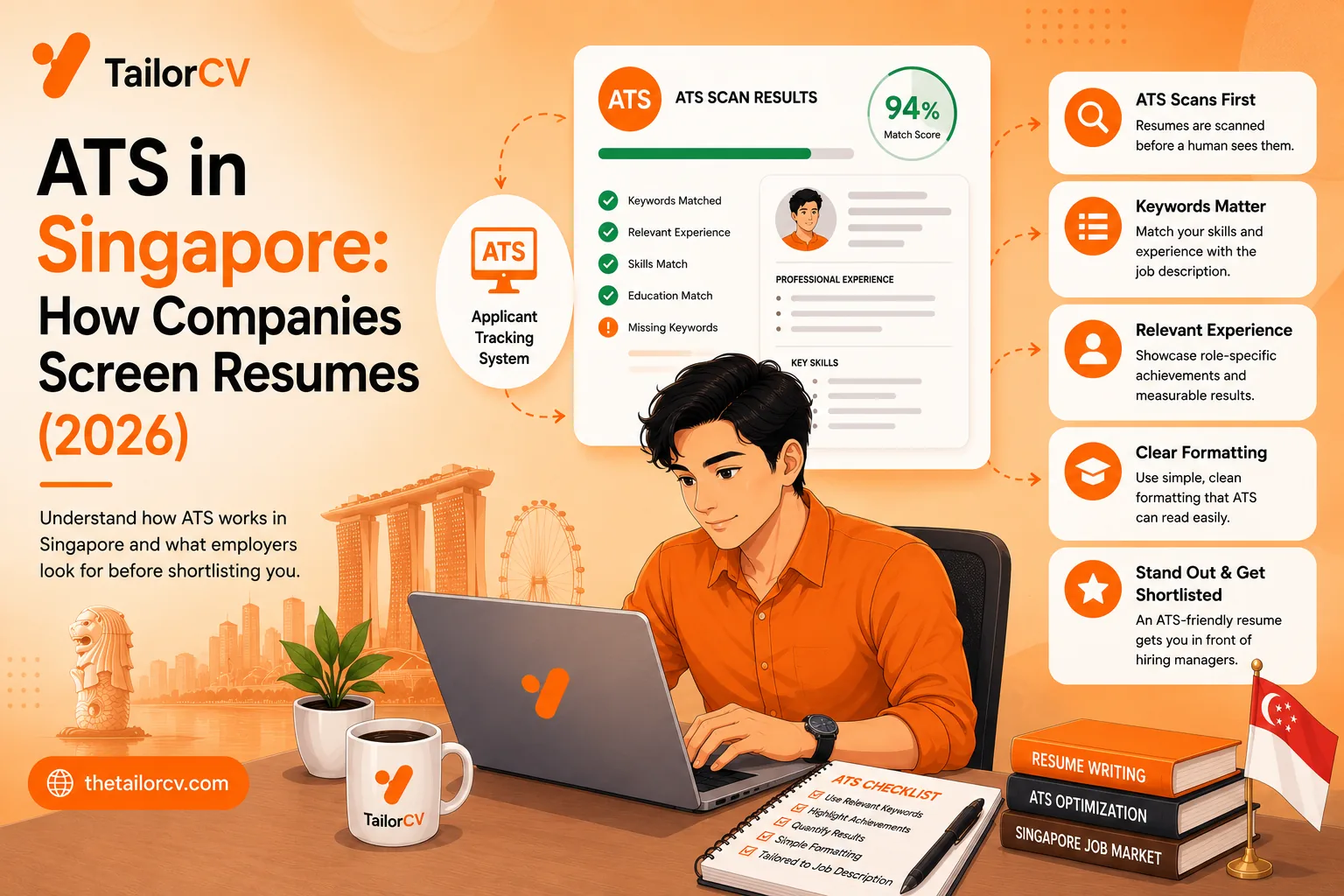
Then make it ATS-friendly for Singapore: parseable so the software reads it, and matched so it ranks. Understanding the ATS landscape in Singapore — especially the recruitment-agency keyword-search layer — shapes how you write. Avoid the formatting mistakes that scramble the parse, and keep it ATS-friendly throughout.
Step 2: Tailor Every Application
The single biggest reason applications vanish in Singapore is the generic resume fired at everything. The filter matches language, not meaning, so a resume that doesn't carry the posting's exact terms gets dropped — even when you're qualified. Our tailored vs generic resume piece shows the cost.
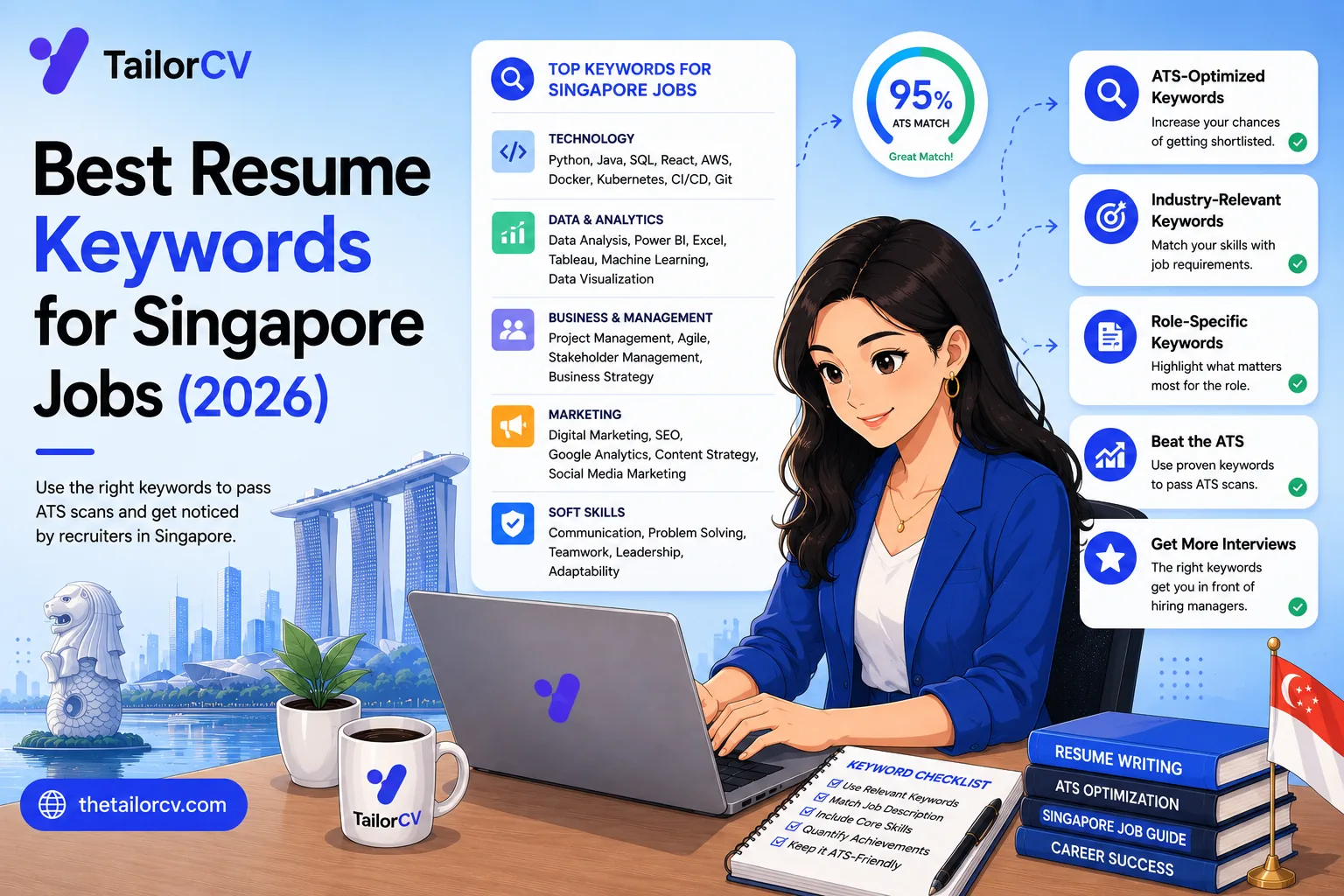
Tailor each role you actually want: match the keywords using the right terms and the best keywords for Singapore jobs, quantify your results, and keep it in your voice. Do it fast — in five minutes or matched to the job description fast — and for every job. Check your fit before applying with a free ATS score; the difference between an ATS score and a resume score is worth understanding, and how to increase your ATS score is the follow-through. Pace yourself — fewer, tailored applications beat volume.
Step 3 (Foreigners): Understand Work Passes
If you're not a citizen or PR, you'll need a valid work pass, and this shapes your search. The main categories in 2026:
- Employment Pass (EP): for professionals, managers, and executives meeting a salary threshold; subject to the COMPASS points framework (which assesses salary, qualifications, and how the hire complements the local workforce).
- S Pass: for mid-skilled staff, with its own salary bar and quota.
- Tech.Pass / ONE Pass: for high-earning or top-tier tech and business talent, offering more flexibility.
Practical reality: most employers must justify hiring a foreigner over a local, so your application has to make the case clearly — which loops right back to a sharp, matched resume that shows specific value. Stating your pass eligibility up front (per the Singapore format guide) removes friction. Rules change, so always confirm current criteria on the official Ministry of Manpower (MOM) site before you apply.
Step 4: Where and How to Apply
| Step | What to do |
|---|---|
| Company career pages | the MNCs, banks, and larger firms, usually via Greenhouse, Workday, or SuccessFactors. Tailoring matters most here, since there's no human buffer |
| Recruitment agencies | a huge share of Singapore hiring; get into their databases with keyword-rich resumes, since they search you for current and future roles |
| heavily used by Singapore recruiters. Keep your profile optimised with a strong headline, and be careful on Easy Apply not to fire off generic applications | |
| Job boards | MyCareersFuture (which prioritises locals under the Fair Consideration Framework), plus regional boards |
Tailoring without leaving Glassdoor
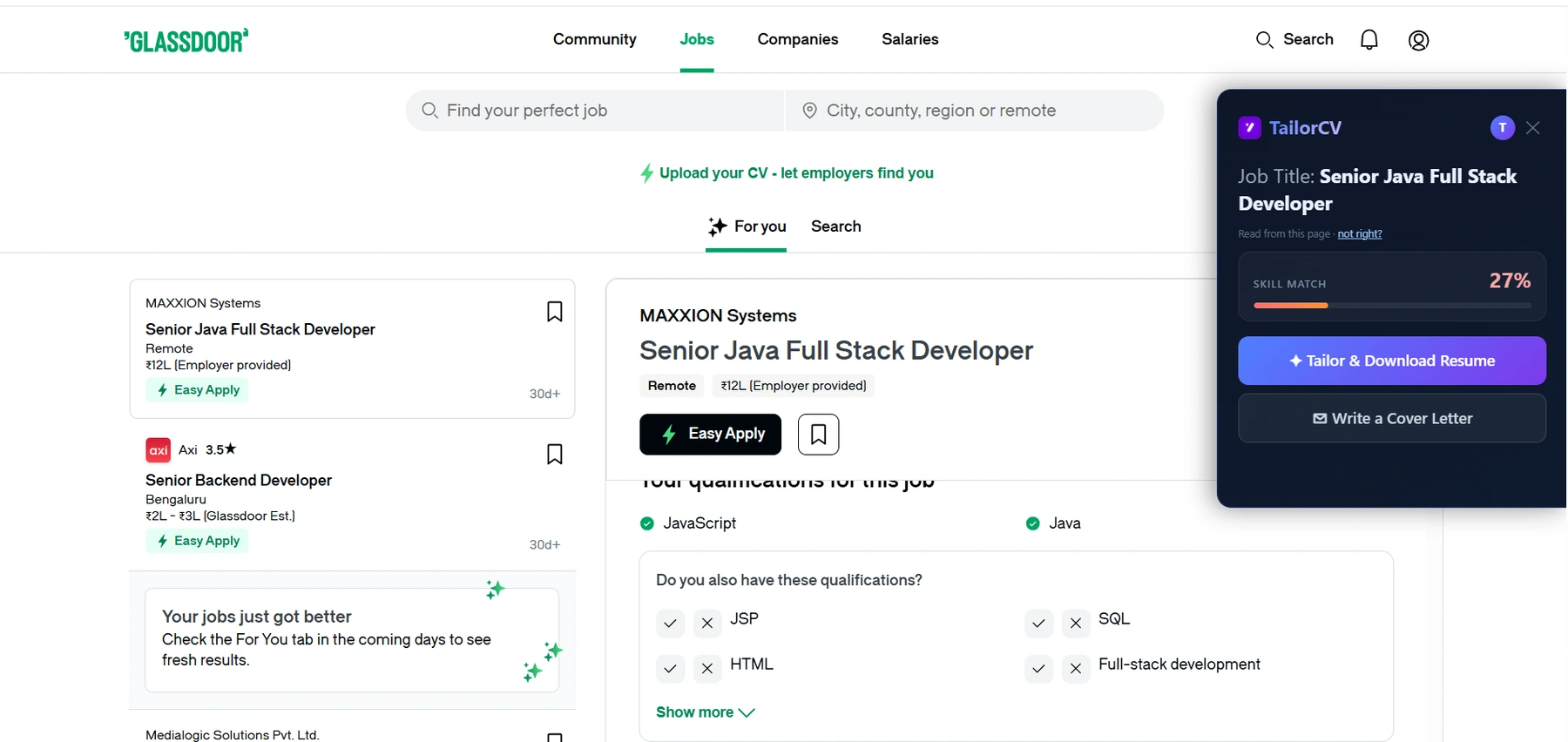
Glassdoor tells you which qualifications it thinks you are missing; the panel beside it scores the whole resume against the role and rewrites it to close that gap.
What optimizing actually does to your resume
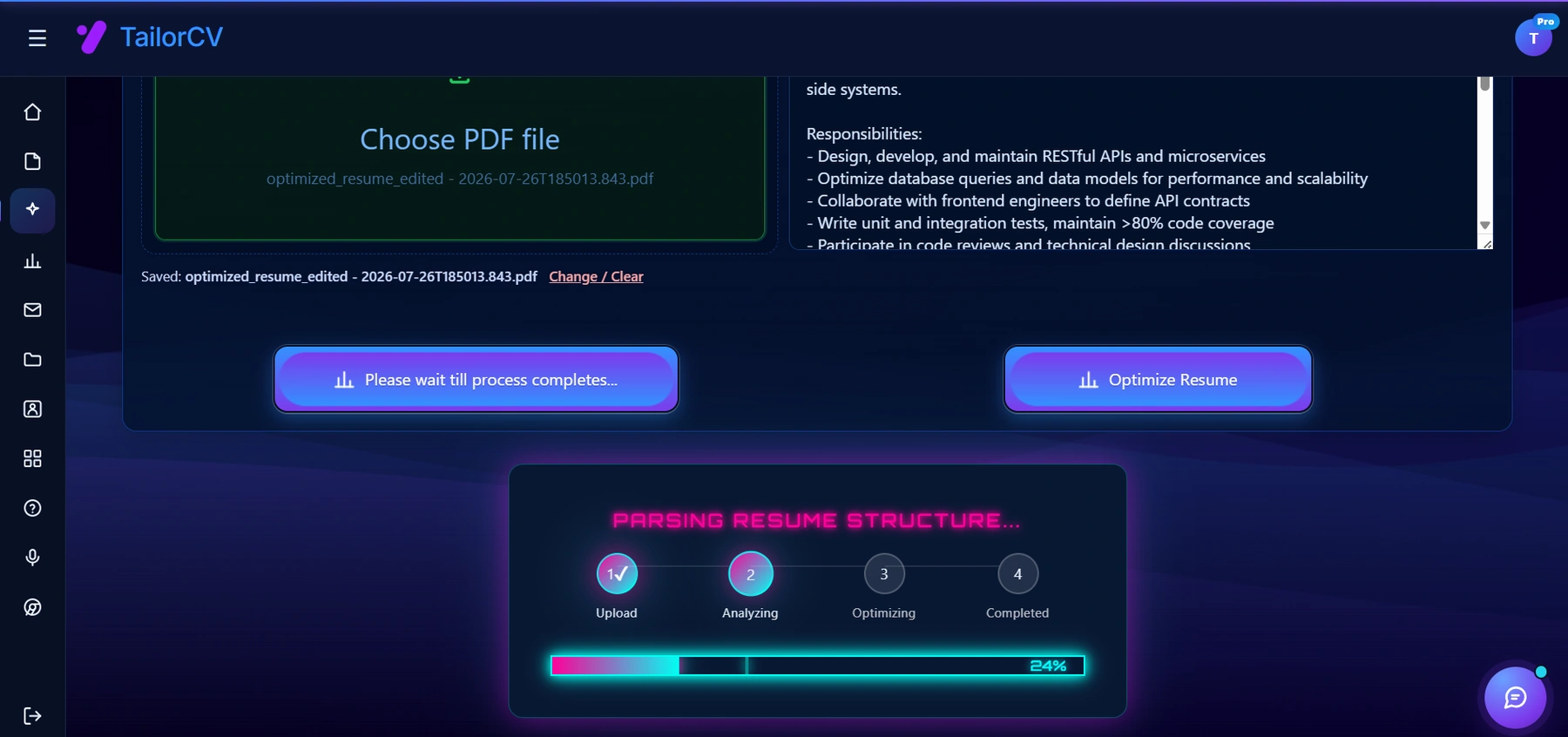
The tool parses your resume the way an ATS would before it changes anything, so the edits it suggests are grounded in the posting itself.
Whichever channel, the same rule holds: matched beats generic, and being found by recruiter search beats waiting to be discovered. And always watch for job scams — fake "recruiters" asking for money or documents up front are a red flag.
Step 5: Interviews and Offers
Once you're shortlisted, Singapore interviews are typically structured and competency-based. Prepare properly: research the company, rehearse behavioural questions and the classics — tell me about yourself, why do you want this job — and run a mock interview to practise out loud. The full interview prep guide covers the rest. Send a follow-up after the interview, and when the offer comes, negotiate the salary — Singapore packages often include variable bonus and benefits worth discussing. When one doesn't land, handle the rejection and keep moving.
For Fresh Graduates
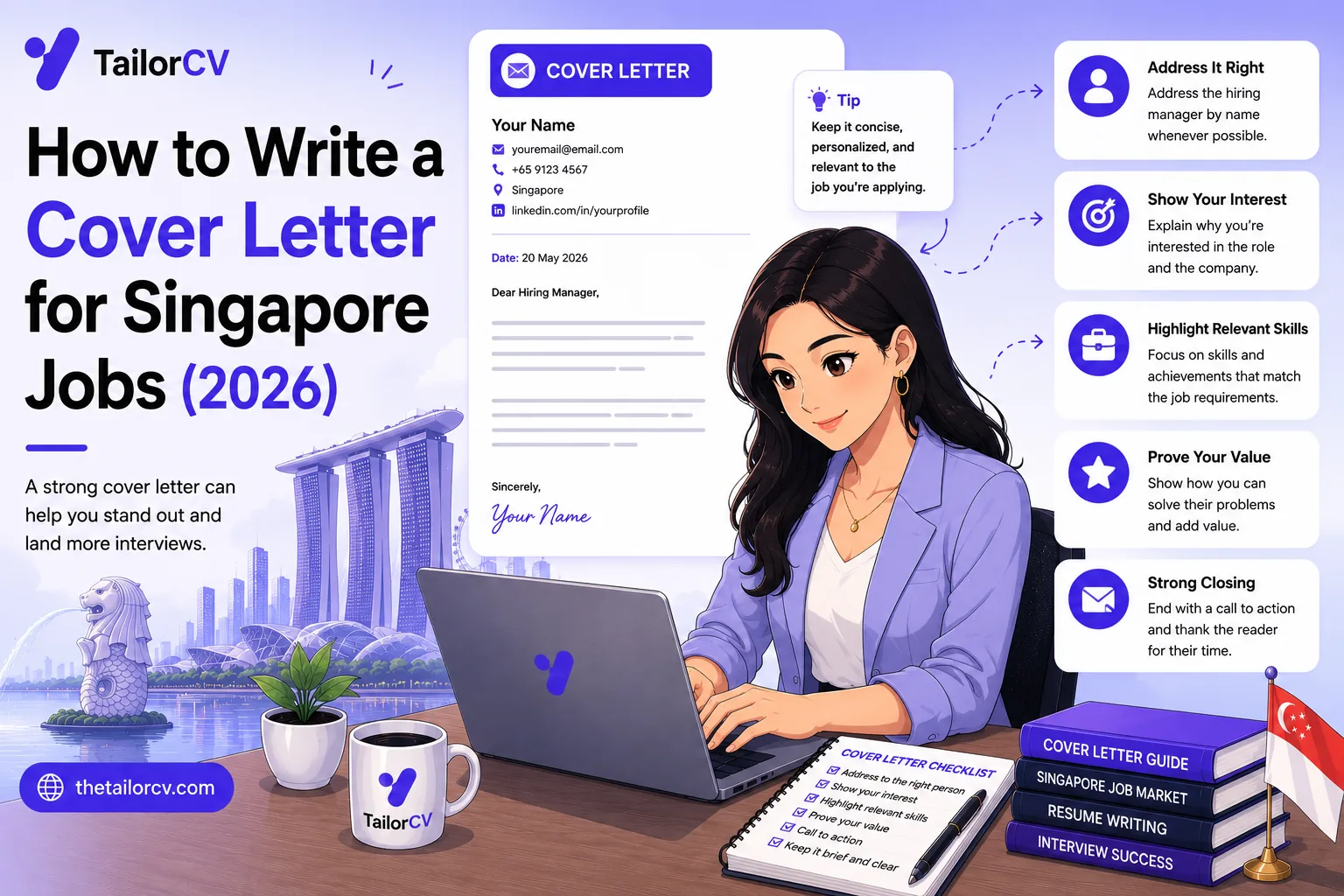
If you're graduating in Singapore, your search leans on projects and internships. Your ATS score as a fresher reflects that, so projects that get interviews and a portfolio site carry weight — especially for a first tech job or landing a role with no experience. Add a cover letter for Singapore jobs, and know whether the role wants a resume or a CV. If you have an employment gap, address it briefly. For tech roles specifically, the ATS resume that gets tech interviews in Singapore goes deeper.
Frequently Asked Questions
How hard is it to get a job in Singapore as a foreigner? Competitive but very achievable, especially in tech, finance, and specialised fields. You'll need a valid work pass (EP, S Pass, or a top-tier pass), and employers must justify hiring you over a local — so a sharp, matched resume that shows specific value is essential. Confirm current pass criteria on the MOM website.
Do I need a work pass before applying? No — you apply first, and the employer typically sponsors the pass if they hire you. But state your pass eligibility on your resume so recruiters know the hiring logistics up front.
Where's the best place to look for jobs in Singapore? A mix: company career pages, recruitment agencies (a major channel here), LinkedIn, and MyCareersFuture. Get into agency databases with keyword-rich resumes, and tailor every application to the specific role.
How do I stand out in Singapore's competitive market? Get seen and get matched. Make your resume ATS-parseable and tailor it to each posting's exact language, keep your LinkedIn and keywords sharp for recruiter search, and prepare thoroughly for competency-based interviews. Standing out is less about credentials than about a targeted, well-matched application.
Putting It All Together
Getting a job in Singapore comes down to a clear sequence: a properly formatted, ATS-friendly resume with your pass status stated; a tailored application for every role you want; the right channels (career pages, agencies, LinkedIn, MyCareersFuture); and thorough interview prep. For foreigners, add a clear understanding of work passes and a resume that makes the case for hiring you specifically.
None of it is mysterious — it's execution. The applicants who land roles in Singapore aren't always the most credentialed; they're the ones whose applications got seen by the software and matched to the job. Start there: run your resume against a Singapore role you want with a free ATS score, fix the gap it shows, and apply with confidence.
What is your resume scoring right now?
Scan it against a job description and get your ATS match score in about a minute.
Drop your resume here or choose a file
PDF only. Max 2 MB.
We never share your data or use it to train AI models.

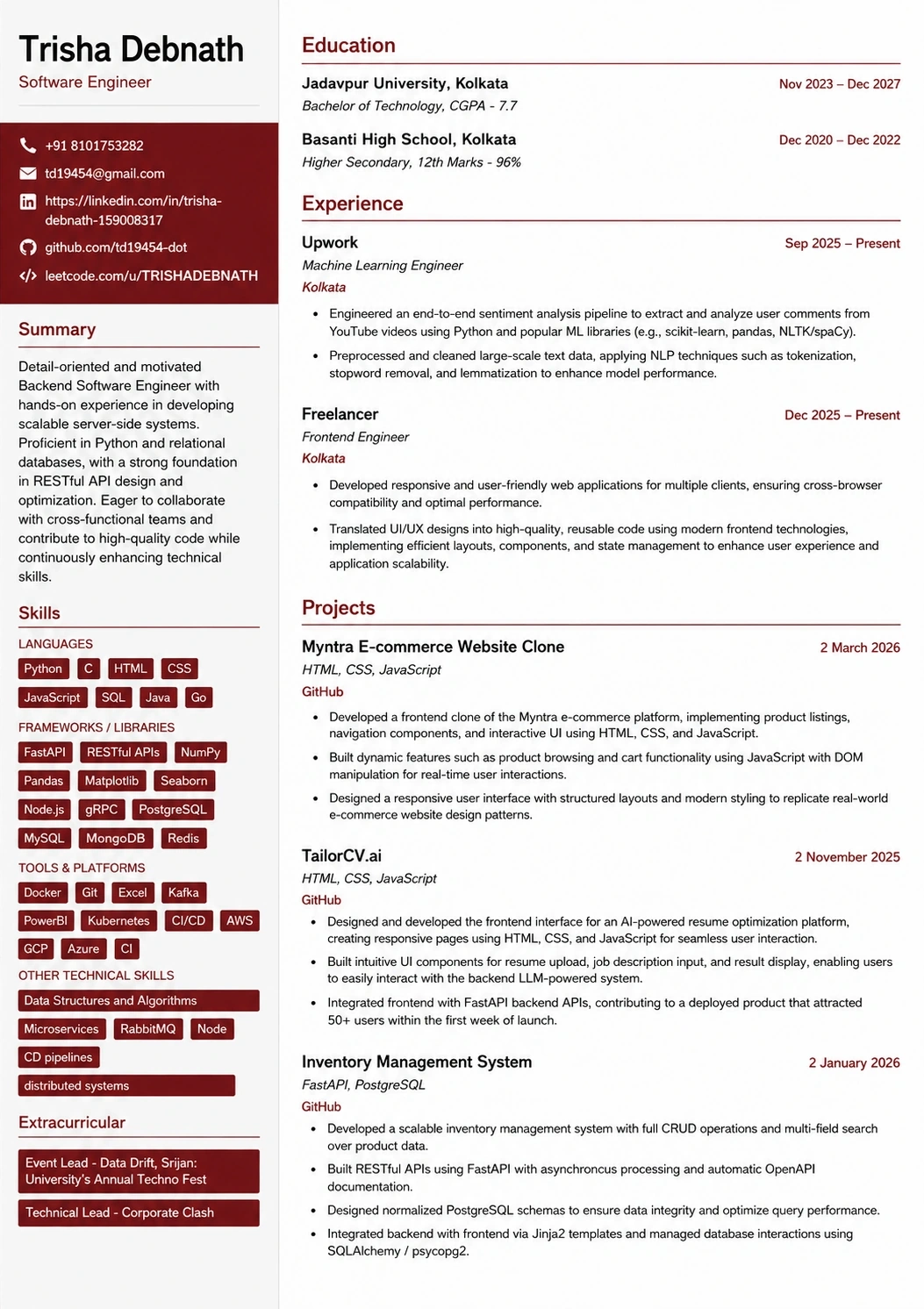
Templates that keep this structure intact
This template is ATS-tested — start from it and the formatting rules in this guide are already handled.
Was this guide useful?
Be the first to rate it.