 TD
TD
Key Takeaways
- Tech hiring in Singapore rewards a few things consistently, and knowing them shapes the whole resume.
- Tech resumes are especially prone to ATS-breaking formatting - two-column layouts, skill bars and icons all cause problems.
- Your skills section is the keyword engine: it is what recruiters search and what the ATS matches on.
- Tech hiring managers scan for what you built and what it did, so lead each bullet with quantified impact.
- A portfolio site and an active GitHub often matter as much as the resume itself.
Singapore has become one of Asia's leading tech hubs — the regional base for global giants and a magnet for startups, fintech, and data-driven firms. That means strong demand for engineers, data professionals, product managers, and designers, and it also means fierce competition and heavy ATS screening. A tech resume that gets interviews in Singapore has to clear the software filter and speak to what hiring managers here actually want. This guide shows you how.
What Singapore Tech Employers Look For
Tech hiring in Singapore rewards a few things consistently:
| Skill | Why it matters |
|---|---|
| Concrete, current skills | the exact languages, frameworks, cloud platforms, and tools the role names. Vague "familiar with programming" loses to specific, matched keywords |
| Shipped impact | projects and systems you built and their measurable outcomes (latency cut, users served, cost saved) |
| Regional and cross-functional experience | many Singapore roles are APAC hubs, so working across teams and markets is valued |
| Fundamentals | data structures, system design, and problem-solving for engineering roles |
The resume has to surface these in a way both the ATS and the hiring manager can read — parseable structure, matched keywords, quantified results.
Formatting a Tech Resume for the ATS
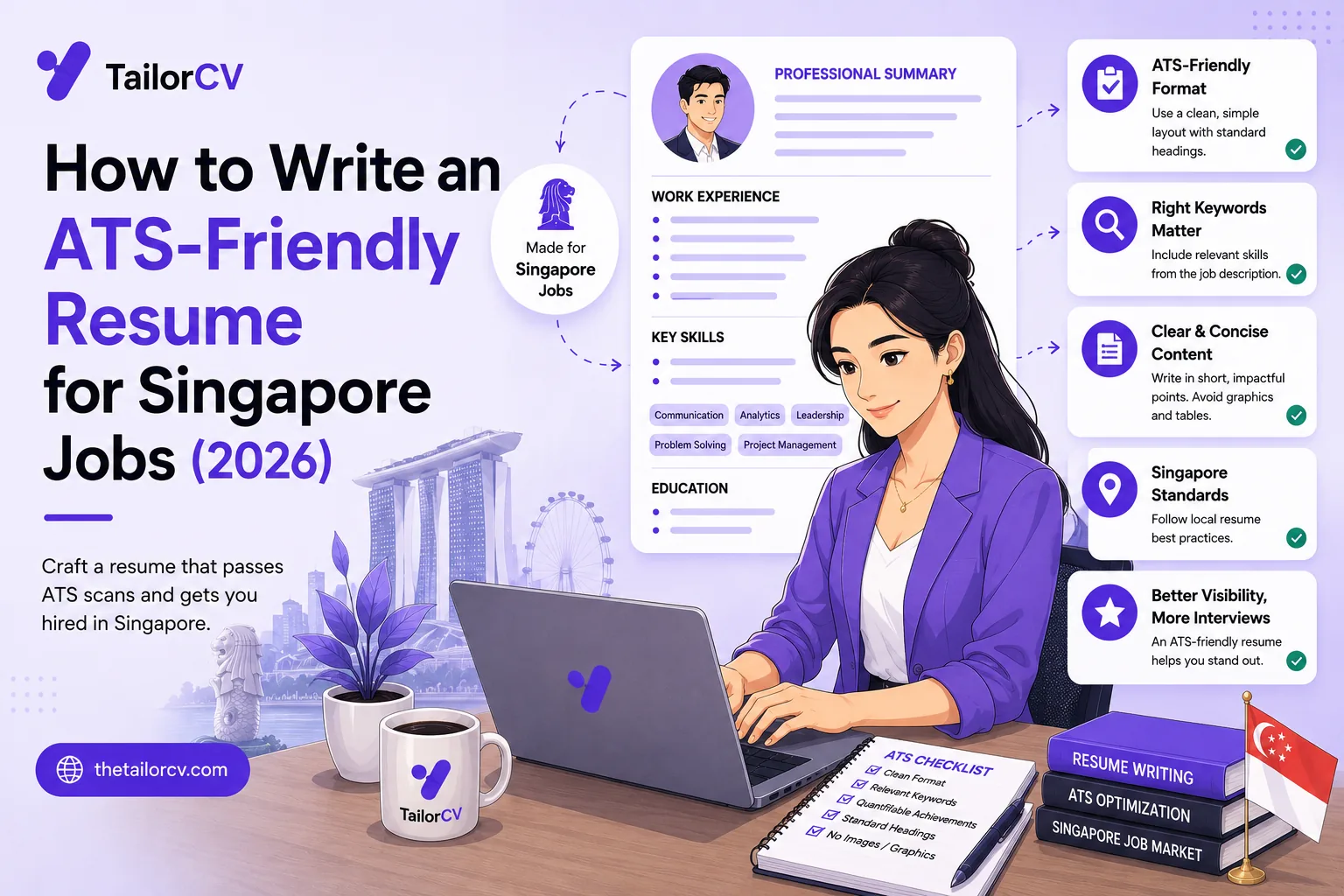
Tech resumes are especially prone to ATS-breaking formatting — designers and engineers love clean two-column layouts, skill bars, and icons, all of which scramble the parser. Keep it strictly parser-safe:
Your resume after optimization
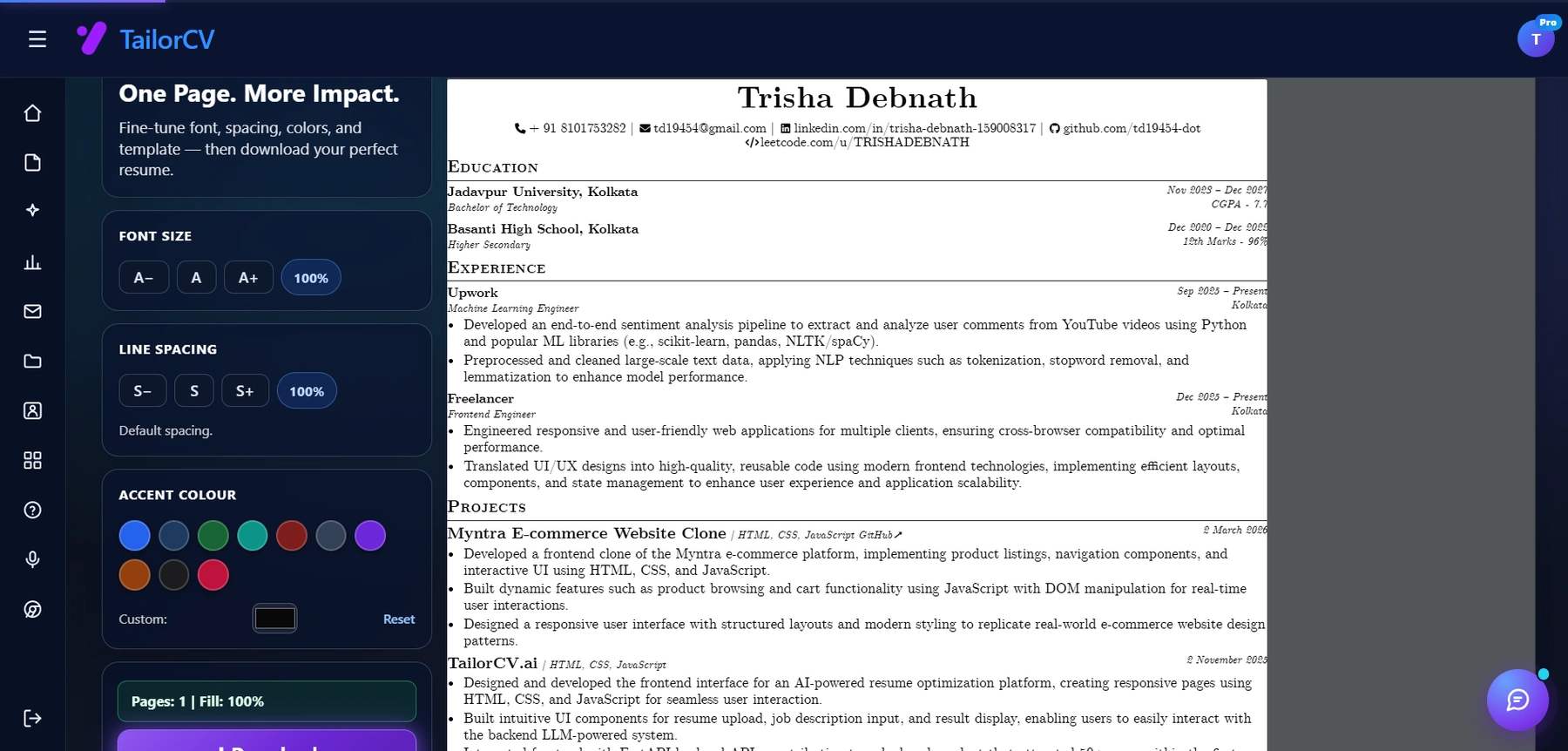
This is the resume after tailoring - the content is already matched, and these controls are how you fit it onto one page.
- Single column, standard headings, black text, PDF.
- No skill bars or rating graphics — "React ████░" parses as nothing; write the skill plainly.
- No tables for your skills grid — a plain comma-separated list parses cleanly.
- Contact and links in the body — including GitHub and portfolio URLs as plain text.
The full rules are in how to make your resume ATS-friendly and the parser-friendly format guide. The Singapore resume format guide covers the local specifics (PR/pass status, British English, no NRIC/photo), and choosing the right template keeps you out of the pretty-but-broken trap.
The Skills Section: Your Keyword Engine
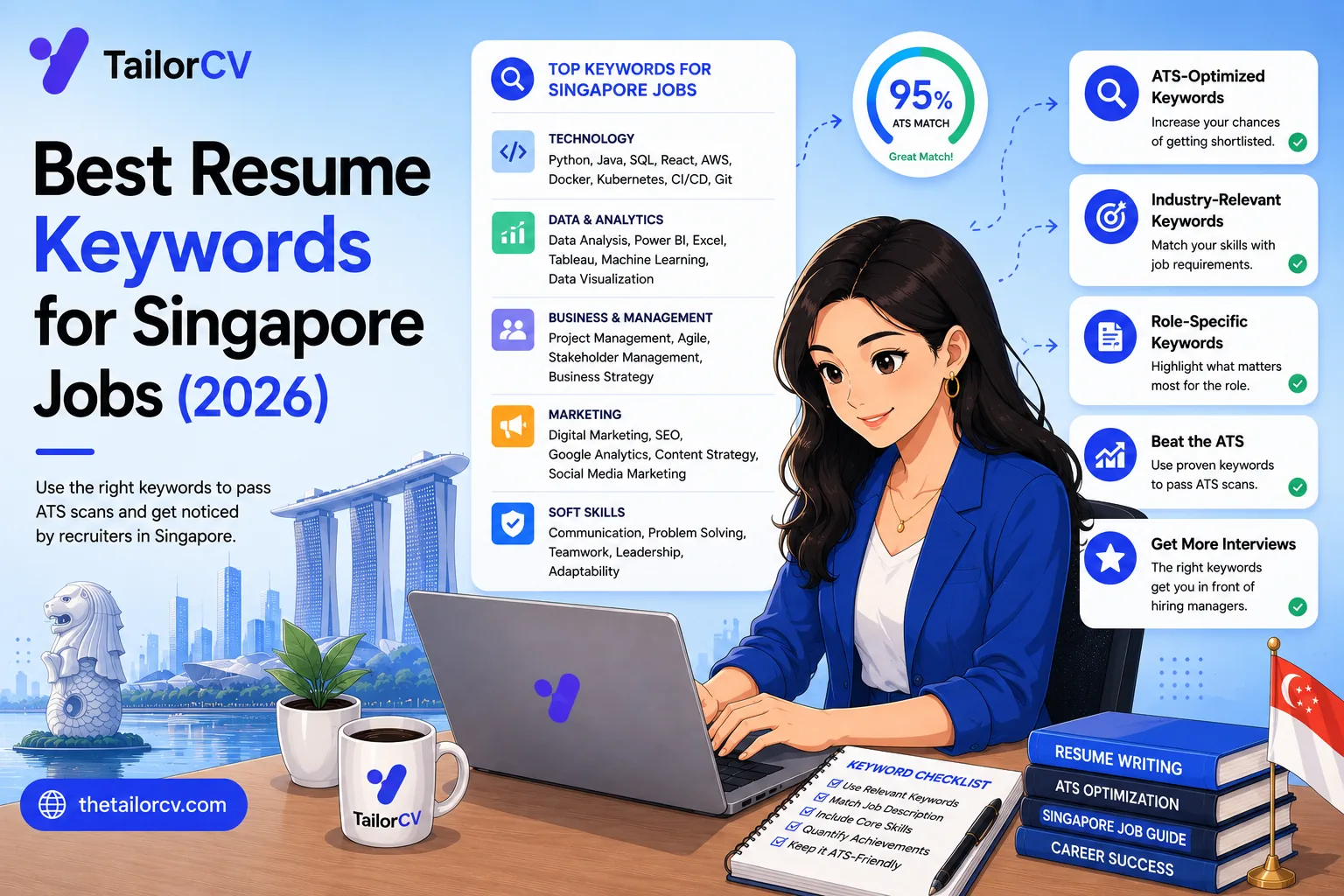
For tech roles, your skills section is doing enormous work — it's what recruiters search and what the ATS matches on. Structure it so the exact terms from the posting appear, where you genuinely have them:
- Languages: Python, Java, Go, TypeScript, C++ — whatever you actually use.
- Frameworks/Libraries: React, Spring, Django, Node.js, etc.
- Data/Cloud: SQL, Spark, AWS, GCP, Kubernetes, Docker, Snowflake.
- Tools: Git, Jira, CI/CD, Terraform.
Match these to each posting — pull the keywords that beat the ATS and the best keywords for Singapore jobs, and avoid the stuffing mistakes that a human sees through. A wall of every technology you've ever touched, with no evidence in your bullets, reads as hollow. Keep it honest and in your voice.
Bullets: Show Shipped Impact
Tech hiring managers scan for what you built and what it did. Lead each bullet with the impact, quantified:
- Weak: "Worked on the backend API."
- Strong: "Built and scaled a REST API serving 2M requests/day, cutting p99 latency 40% with Redis caching."
The number and the specific tech together do the work — one satisfies the human, the other satisfies the ATS. Quantifying your achievements is the highest-leverage upgrade most tech resumes need, and keeping bullets specific rather than generic — and pacing with how many jobs to apply to per day — is what separates a shortlist from silence.
Tailoring for Software vs Data vs Product
Different tech roles want different emphasis, and the same underlying experience should be re-ordered per posting:
- Software engineering: languages, system design, scale, code quality, fundamentals.
- Data (analyst/scientist/engineer): SQL, Python, pipelines, dashboards, statistical rigour, business impact.
- Product: cross-functional delivery, metrics moved, user outcomes, technical fluency.
This is why tailoring for every job matters — the same resume can't be optimal for all three, because a generic resume matches none of them precisely. Tailor fast per role — in five minutes or matched to the job description fast — keeping the rewrite true to your real experience. And note the startup vs enterprise difference: a Singapore fintech startup wants breadth and shipping speed, an MNC wants depth and process.
The Portfolio and GitHub
For tech in Singapore, a portfolio site and an active GitHub often matter as much as the resume — they show real, working code that a one-page PDF can't. Linking your portfolio gives hiring managers something concrete to evaluate. This is doubly true for freshers: projects that get interviews and a strong portfolio are how you compensate for a short resume when chasing a first tech job or a role with no experience. Your ATS score as a fresher leans heavily on these.
Check, Then Apply
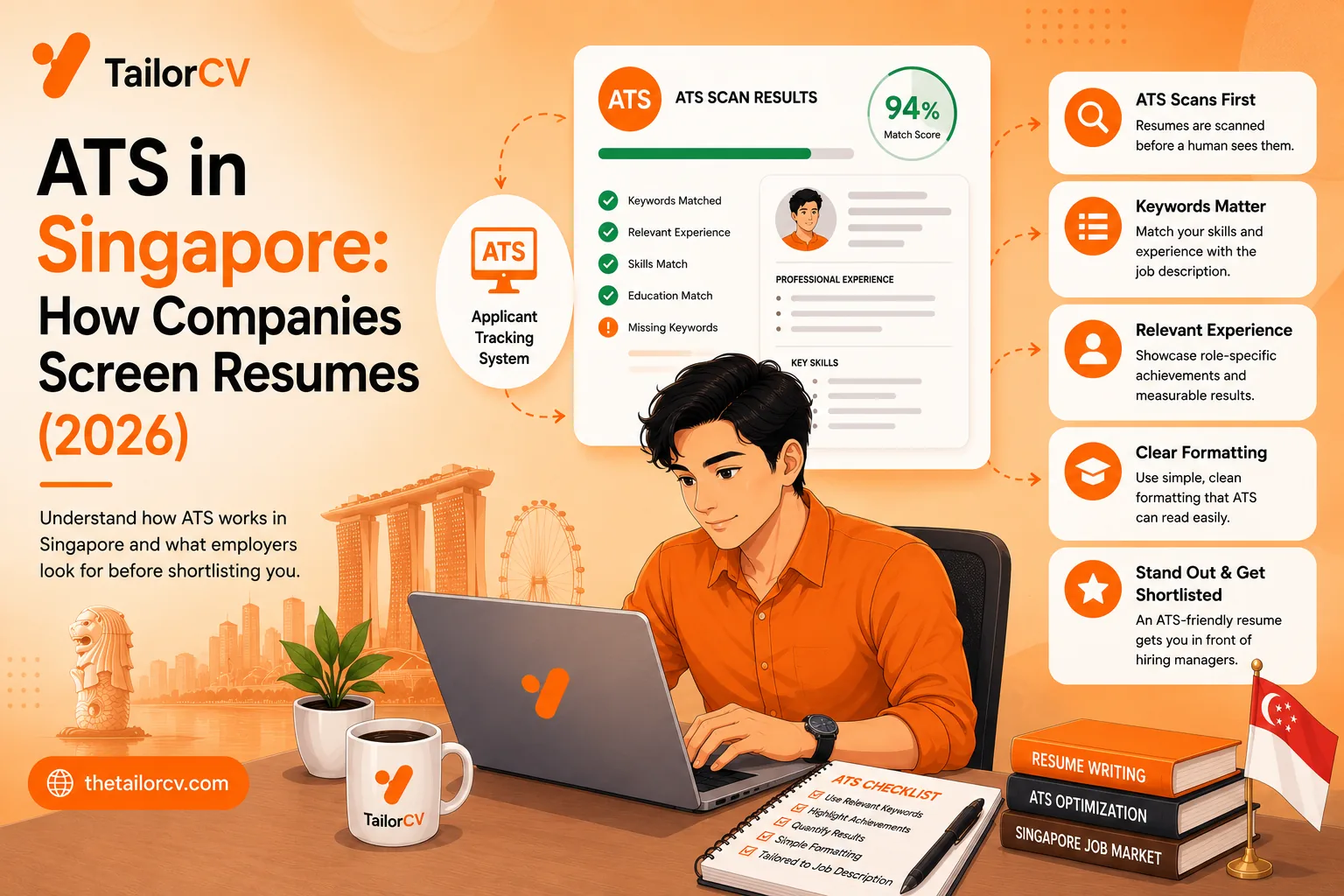
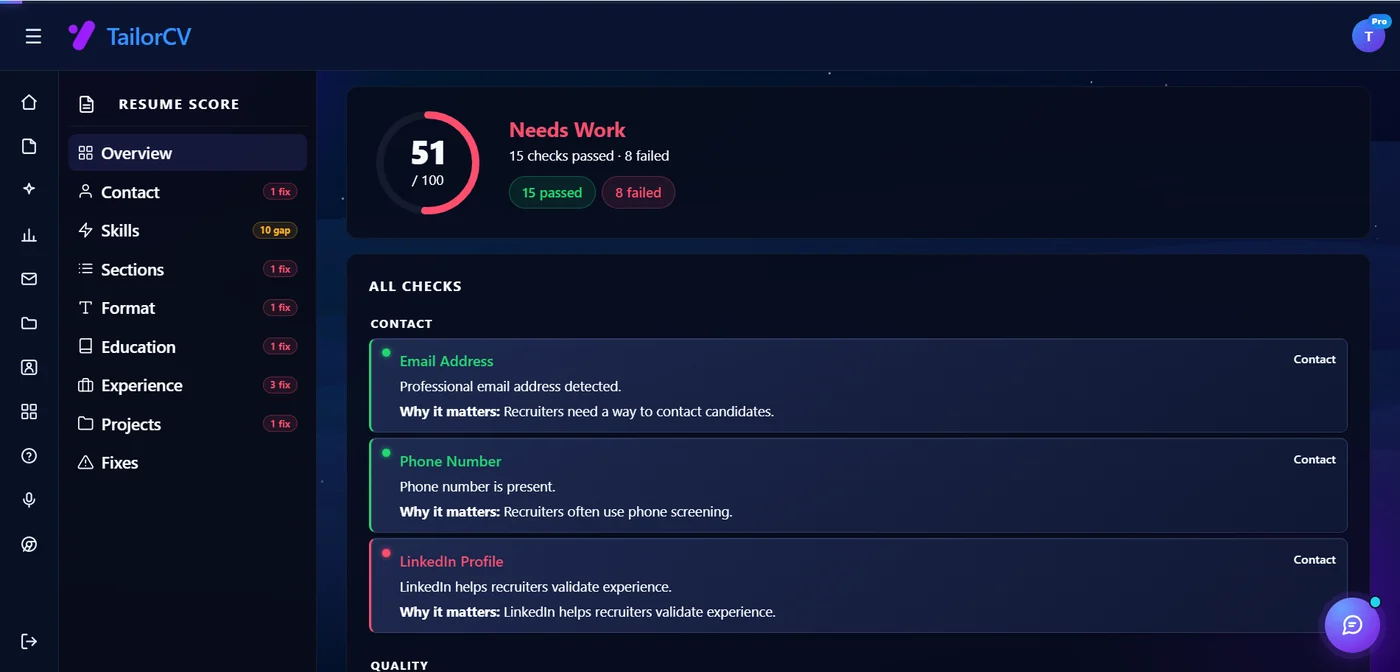
Before you submit a tech application, run your resume against the posting with a free ATS score and read the missing skills — the difference between an ATS score and a resume score matters, and increasing your score is the follow-through. This is faster than guessing why a strong application got no reply. Understanding how the ATS reads your resume and the ATS landscape in Singapore makes every fix obvious, and writing an ATS-friendly resume for Singapore ties it together.
After the Resume
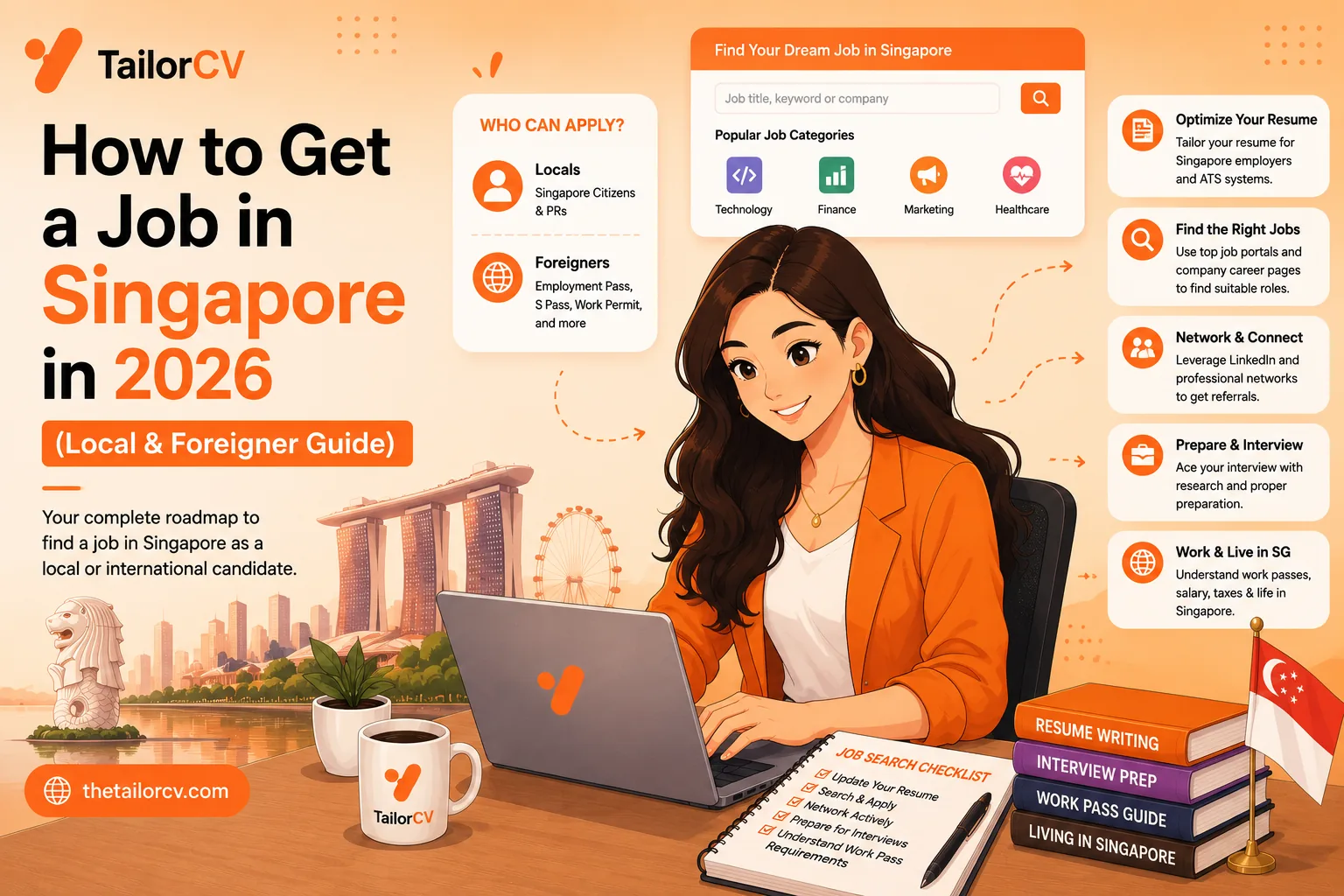
Getting shortlisted is the start. Add a Singapore cover letter where allowed, keep your LinkedIn optimised with a strong headline, and know how to get a tech job in Singapore end to end. Tech interviews here are demanding — research the company, rehearse behavioural questions, practise tell me about yourself and why do you want this job, and run a mock interview; the full prep guide covers coding and system-design rounds. Send a follow-up, negotiate the offer (Singapore tech comp often includes equity/bonus), and handle rejection when it comes. Pace with how many jobs to apply to per day, and watch for job scams.
Frequently Asked Questions
What skills should be on a Singapore tech resume? The exact languages, frameworks, cloud platforms, and tools the specific posting names, where you genuinely have them — plus fundamentals like data structures and system design for engineering roles. Match your skills section to each job description rather than listing everything you've touched.
Do tech companies in Singapore use ATS? Yes — MNCs, fintechs, and increasingly startups (via Greenhouse, Lever, Ashby, Workday). Your resume must be single-column and parseable, with GitHub/portfolio links as plain text, and matched to the posting's stack.
How important is a portfolio or GitHub for Singapore tech jobs? Very. They show real, working code that a resume can't, and hiring managers often check them. For freshers especially, a strong portfolio and active GitHub can matter as much as the resume itself.
How do I tailor my tech resume for different roles? Re-order and re-emphasise the same real experience per posting: highlight system design and scale for software roles, SQL and pipelines for data roles, and cross-functional metrics for product roles. Tailor to each job's exact stack and priorities rather than sending one generic version.
Putting It All Together
A tech resume that gets interviews in Singapore is parseable, keyword-matched, and impact-driven: single-column and ATS-safe, with a skills section that mirrors the posting's stack, bullets that lead with quantified shipped results, and a portfolio/GitHub that proves it. Tailor it per role — software, data, and product want different emphasis from the same experience — and verify your fit before applying.
Singapore's tech market is competitive, but it rewards exactly what you can control: a resume the software can read, matched to the role, backed by real work you can point to. Start by scoring your current tech resume against a Singapore posting you want with a free ATS score — the missing-skills list is your fix list.
What is your resume scoring right now?
Scan it against a job description and get your ATS match score in about a minute.
Drop your resume here or choose a file
PDF only. Max 2 MB.
We never share your data or use it to train AI models.
Was this guide useful?
Be the first to rate it.