 TD
TD
Key Takeaways
- A strong Singapore resume is clean, concise, and results-focused.
- Personal details are where Singapore differs from Western resumes, and where many applicants get it wrong.
- Use standard, parser-friendly section headings in a conventional order.
- Larger employers and recruitment agencies run resumes through ATS software, so formatting that breaks the parser sinks you before a human reads it.
- Format gets you parseable; tailoring to the specific posting gets you shortlisted.
Singapore is one of Asia's most competitive job markets, and the resume conventions here are specific enough that a resume built for another country often lands wrong. Companies in Singapore — from the banks and MNCs in the CBD to fast-growing regional startups — increasingly screen applications through an applicant tracking system before a human ever reads them. This guide covers exactly how to format a resume for Singapore in 2026: the structure, the length, the personal-details rules that trip people up, and how to keep it ATS-friendly so it survives the filter.
The Singapore Resume at a Glance
A strong Singapore resume is clean, concise, and results-focused. The essentials:
- Length: 1 page for freshers and those with under ~5 years' experience; 2 pages maximum for senior professionals. Singapore recruiters value brevity.
- Format: reverse-chronological (most recent first) — the safest and most ATS-parseable structure.
- File type: PDF, unless the posting or portal specifically asks for Word.
- Language: Singapore uses British English spelling (organisation, optimise, programme). Match it.
The single most important principle: the resume must be readable by both the ATS and the human who follows it. That means clean structure and the right keywords, without the formatting tricks that break parsers.
Personal Details: What to Include (and Leave Out)
This is where Singapore differs from Western resumes, and where many applicants get it wrong.
Include: full name, phone number, email, and LinkedIn. A line for location (e.g. "Singapore") is fine.
Nationality / PR status: In Singapore it is common and often expected to state your citizenship or residency status (Citizen, PR, or your pass type such as EP/S Pass eligibility), because it affects hiring logistics and quotas. Many local employers screen on this, so stating it up front saves everyone time. This is a genuine difference from US resumes, where such details are omitted.
Photo: optional and declining. Traditional Singapore resumes sometimes included a photo; modern MNC and tech hiring increasingly prefers none, and a photo can actually confuse an ATS parser. When in doubt, leave it out.
What to leave out: NRIC number, full home address, date of birth, marital status, and religion. Older local templates included these; in 2026 they are unnecessary, a privacy risk, and add nothing an ATS or recruiter needs.
The Section Order
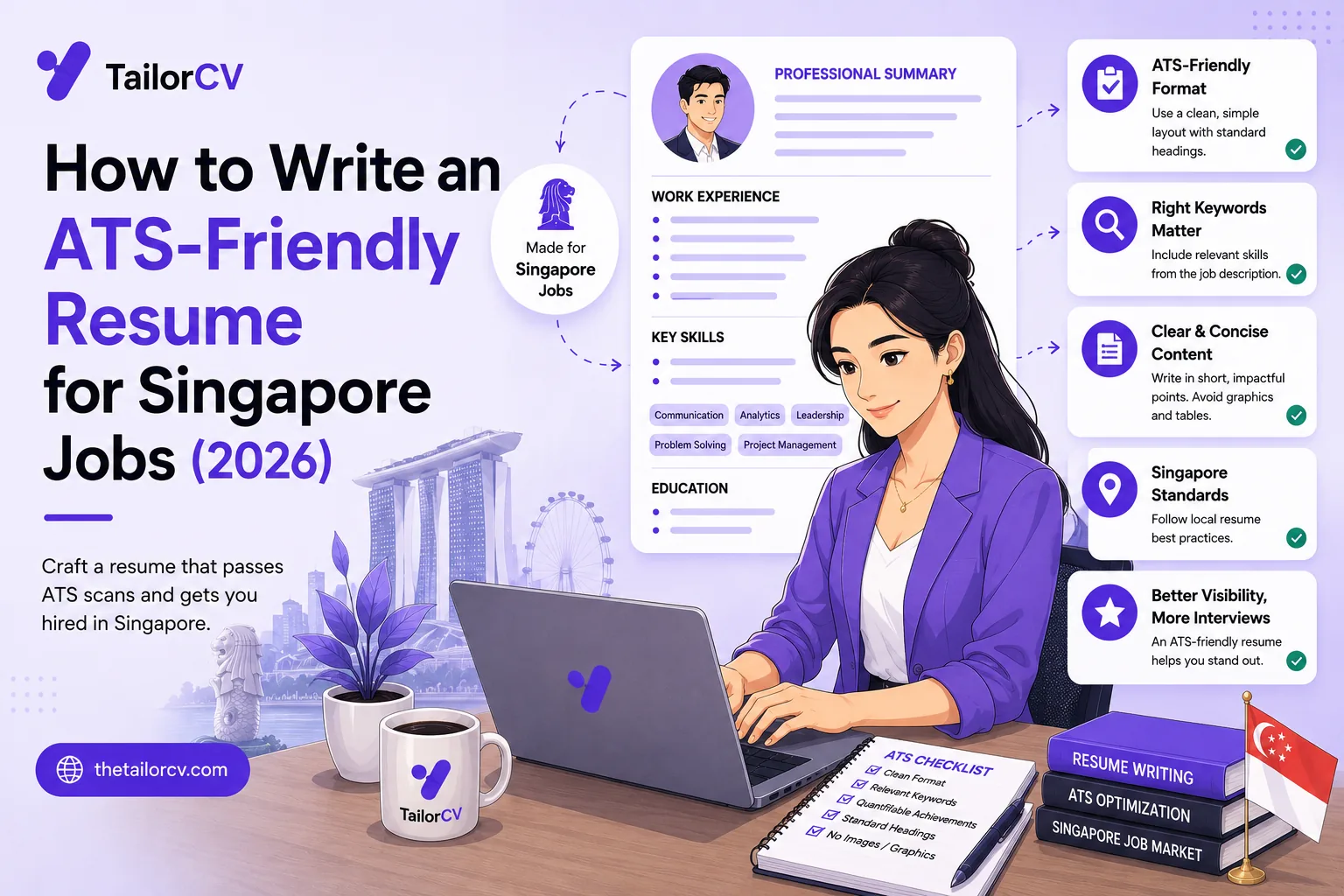
Use standard, parser-friendly section headings in this order:
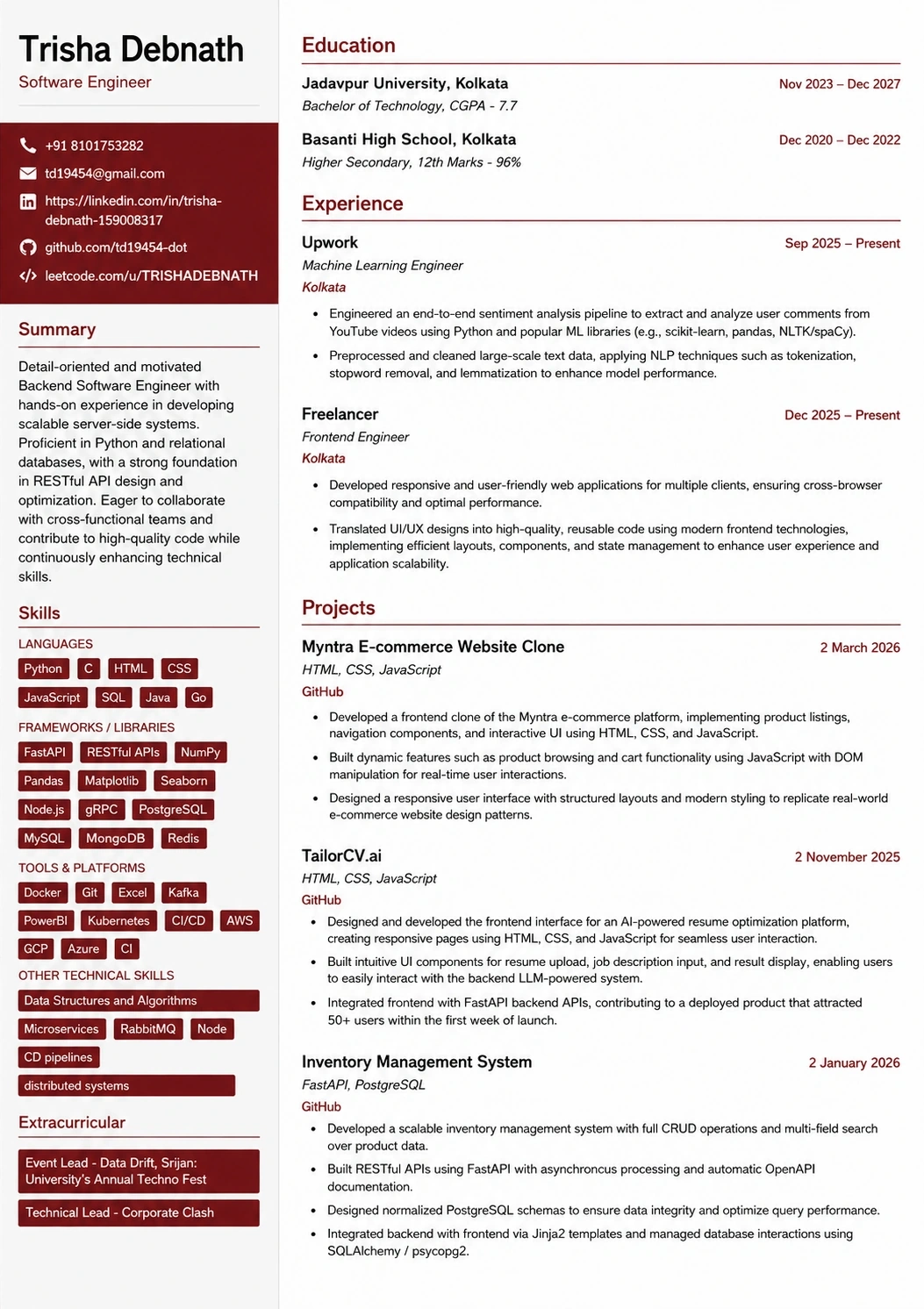
Your resume after optimization
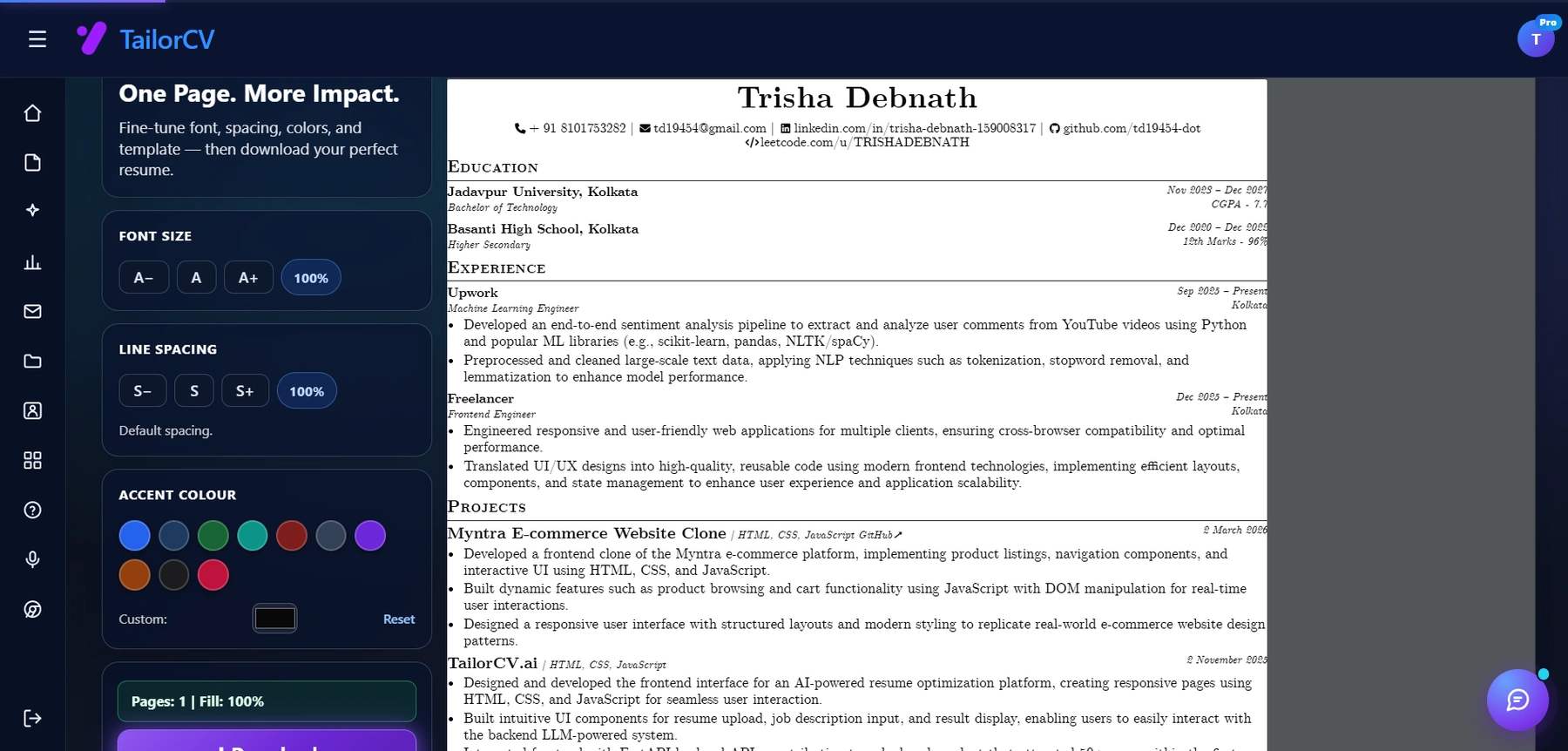
This is the resume after tailoring - the content is already matched, and these controls are how you fit it onto one page.
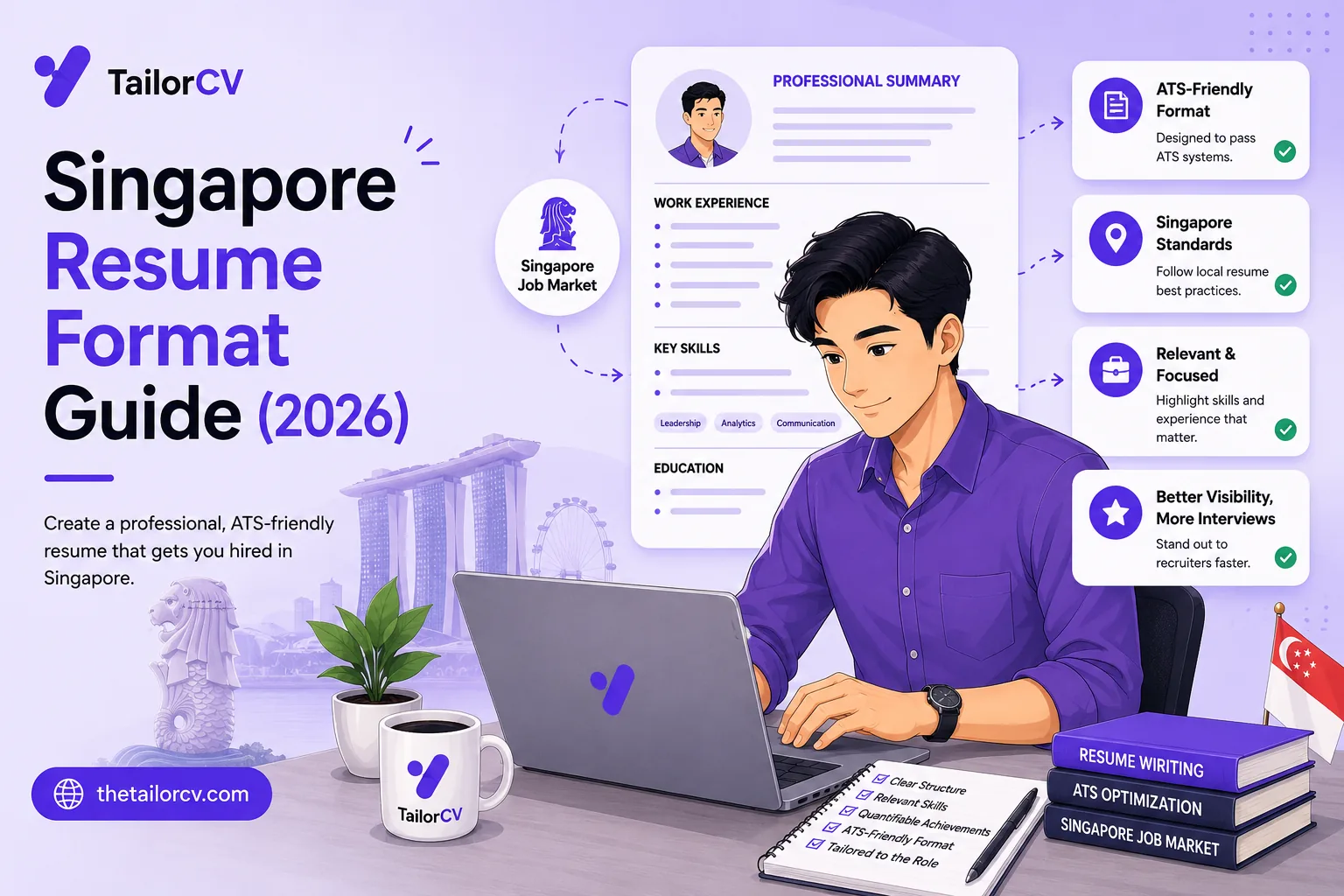
1. Header — name, contact, LinkedIn, and PR/citizenship status.
2. Professional Summary — 2–3 lines stating your role, years of experience, and strongest, most relevant skills, in your own voice rather than generic filler. This is prime keyword real estate.
3. Work Experience — reverse-chronological, each role with company, title, dates, and 3–5 quantified bullet points. Lead bullets with impact and numbers (revenue, cost saved, users, efficiency).
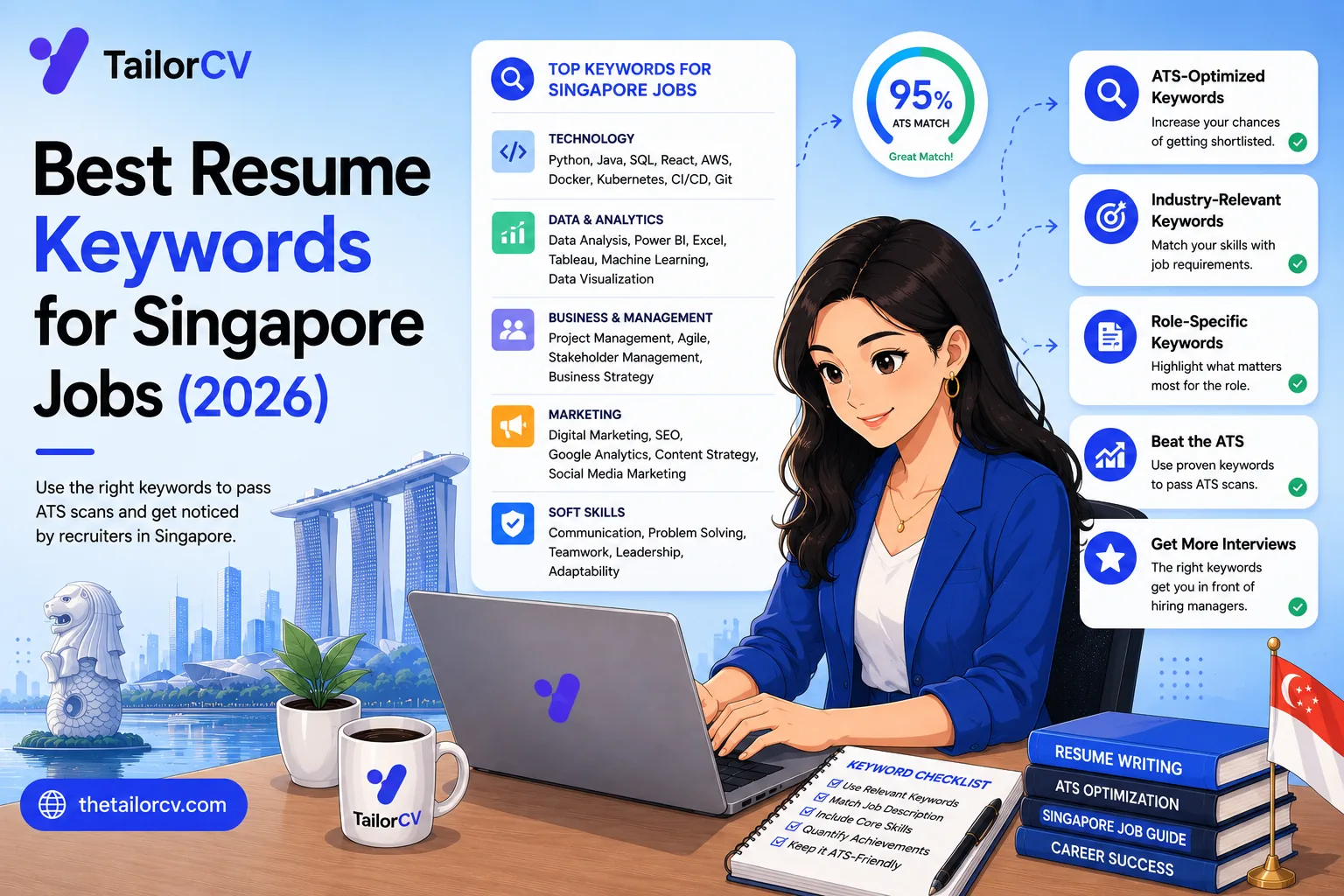
4. Skills — a clean list of concrete, named skills and tools. This is what recruiters search and what the ATS matches — get the right keywords in here.
5. Education — degree, institution, year. Include your GPA/honours if strong.
6. Optional — certifications, projects, languages (multilingual is a real asset in Singapore), and awards.
Use standard headings ("Work Experience", "Skills", "Education") — not creative ones. An ATS looks for these exact words. Our parser-friendly format guide covers the specifics.
Keeping It ATS-Friendly
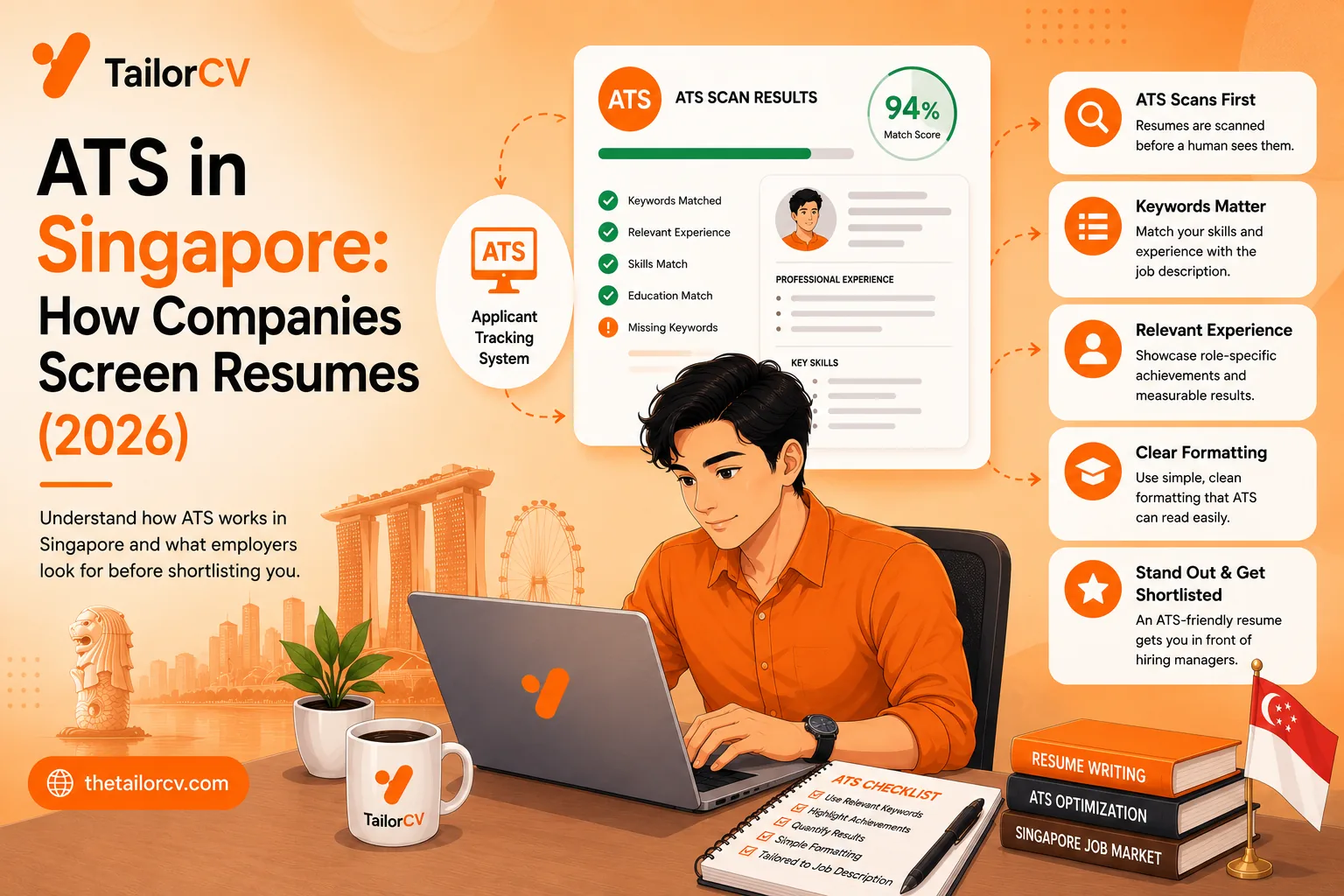
Singapore's larger employers and recruitment agencies run resumes through ATS software, so formatting that breaks the parser sinks you before a human looks. The rules are the same globally and worth following strictly:
- One column. Two-column layouts get read across and scramble.
- No tables, text boxes, or graphics carrying information — parsers skip or mangle them.
- Standard fonts, black text, standard section headings.
- Contact details in the body, not the header/footer (some parsers drop those).
- No photo, no icons, no skill bars — they parse as nothing.
The full checklist is in how to make your resume ATS-friendly and the formatting mistakes to avoid. Understanding how the ATS reads your resume is what makes these rules click, and how to pass the ATS in 2026 ties it together.
Tailoring to the Singapore Job
Format gets you parseable; tailoring gets you shortlisted. Even a perfectly formatted resume fails if it does not match the specific posting. Singapore roles name specific skills, tools, and often regulatory or regional requirements — work the ones you genuinely have into your resume, in the posting's wording.
The reason this matters so much: the filter matches language, not meaning. If the job asks for "stakeholder management" and your resume says "worked with teams", a human calls those the same; the software does not. Our tailored vs generic resume piece shows the gap. Do it for every role you want — how to tailor for every job and in five minutes — and avoid the common keyword mistakes while working in the terms that matter. You can check your fit against any posting with a free ATS score, keeping in mind the difference between an ATS score and a resume score.
Common Singapore Resume Mistakes
- Too long. A 3-page resume for a mid-level role reads as unfocused here. Cut to the relevant.
- Including NRIC/DOB/address. Unnecessary and a privacy risk in 2026.
- American spelling. Use British English to match local convention.
- Designer templates. Beautiful two-column PDFs with icons fail the parser, so pick a template that stays ATS-safe. Clean beats pretty.
- A generic resume for every role. The single biggest reason applications vanish — tailor each one.
- No quantified results. "Responsible for sales" loses to "Grew regional sales 23% in FY2025." Quantify everything.
For Freshers and Recent Grads
If you are graduating from NUS, NTU, SMU, or a polytechnic, your resume leans on projects, internships, and coursework rather than years of work. Your ATS score as a fresher reflects that, so projects that get interviews do heavy lifting, as does a portfolio site that shows real work a one-page resume cannot. If you are chasing a first tech job, demonstrated ability often beats pedigree. And if you have a gap to explain, address it briefly and honestly.
Beyond the Resume
A strong resume is step one. The broader Singapore job search — how to get a job in Singapore, whether you need a resume or a CV, and the ATS landscape here — is worth understanding. Add a Singapore cover letter where the application allows one, keep your LinkedIn optimised since recruiters here rely on it heavily, and be alert to job scams, which target job seekers everywhere.
Once interviews come, research the company, rehearse behavioural questions, tell me about yourself and why do you want this job, and run a mock interview; the full interview prep guide covers the rest. Send a follow-up after applying and after the interview, negotiate the offer, and if one does not land, handle the rejection and keep going — pacing yourself with how many jobs to apply to per day.
Frequently Asked Questions
What is the ideal resume length for Singapore jobs? One page for freshers and those with under five years of experience; two pages maximum for senior professionals. Singapore recruiters prize brevity and relevance — a long, padded resume works against you.
Should I include my photo and NRIC on a Singapore resume? Skip both in 2026. A photo can confuse ATS parsers and modern employers rarely expect one; NRIC, date of birth, home address, and marital status are unnecessary and a privacy risk. Do state your citizenship or PR/pass status, which local employers commonly screen on.
Do Singapore companies use ATS? Yes — most MNCs, banks, and recruitment agencies, and increasingly local firms and startups. Your resume must be single-column, parseable, and matched to the posting's keywords to get past the filter to a human.
British or American English on a Singapore resume? British English. Singapore uses British spelling (organisation, optimise, colour, programme). Matching local convention signals attention to detail.
Putting It All Together
A Singapore resume that works in 2026 is clean, concise, and matched — one page (or two for seniors), reverse-chronological, single-column and ATS-parseable, with your PR/citizenship status stated and the privacy-risk personal details left off. Format it so the software can read it, then tailor it so the software ranks it, and you clear both gates most applicants trip on.
The format is the foundation; the tailoring is what lands the interview. Get the structure right once, then match each application to the specific role. Start by running your current resume against a Singapore job you want with a free ATS score — if it comes back low, you have just found why your applications weren't landing, and exactly what to fix.
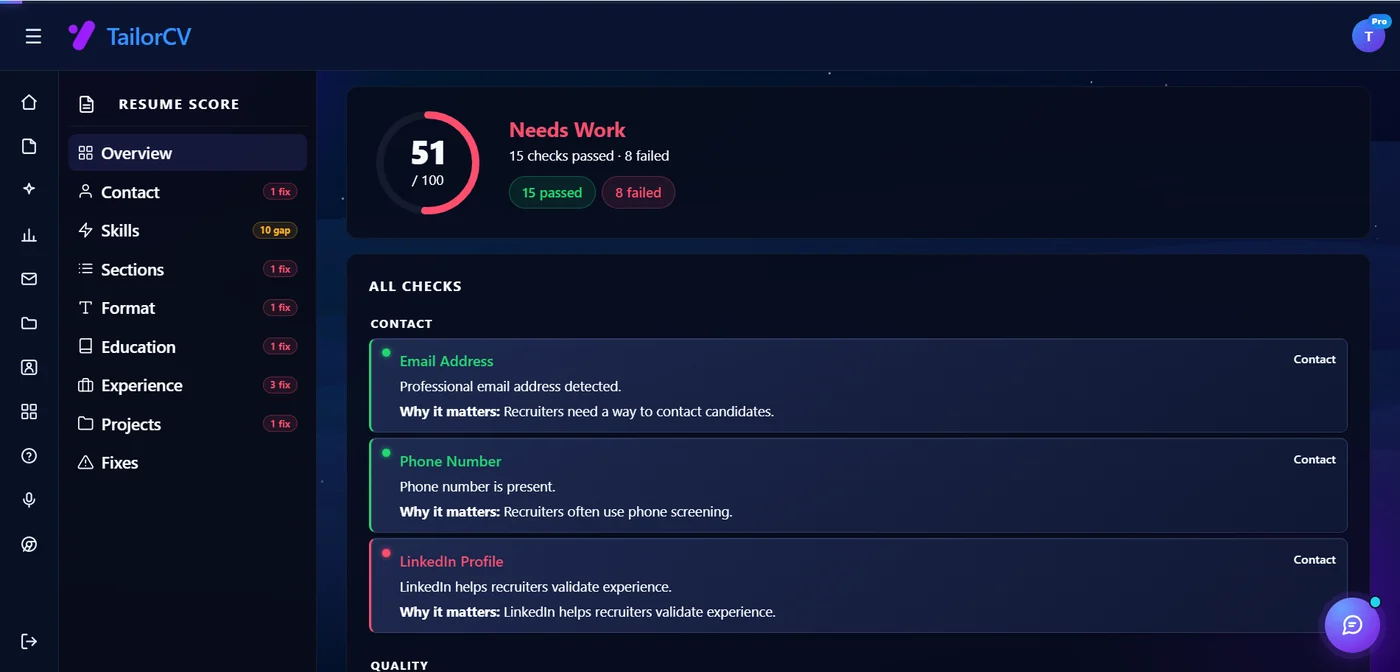
Does your formatting survive the parser?
Upload your resume and see what an ATS actually reads back.
Drop your resume here or choose a file
PDF only. Max 2 MB.
We never share your data or use it to train AI models.
A layout that parses cleanly
Single column, standard headings, no text boxes — the formatting rules in this guide, already applied.
Was this guide useful?
Be the first to rate it.