 TD
TD
Key Takeaways
- Cover letters matter in Singapore sometimes, and it is worth knowing when - on high-volume ATS-filtered MNC applications the resume is screened first.
- There are a few local conventions worth following, including British English and a professional register.
- A strong Singapore cover letter contains four things, all drawn from the specific posting rather than a template.
- A generic cover letter fails for the same reason a generic resume does - it carries no information.
- The approach adapts: foreigners should address pass eligibility, and career changers lean on transferable evidence.
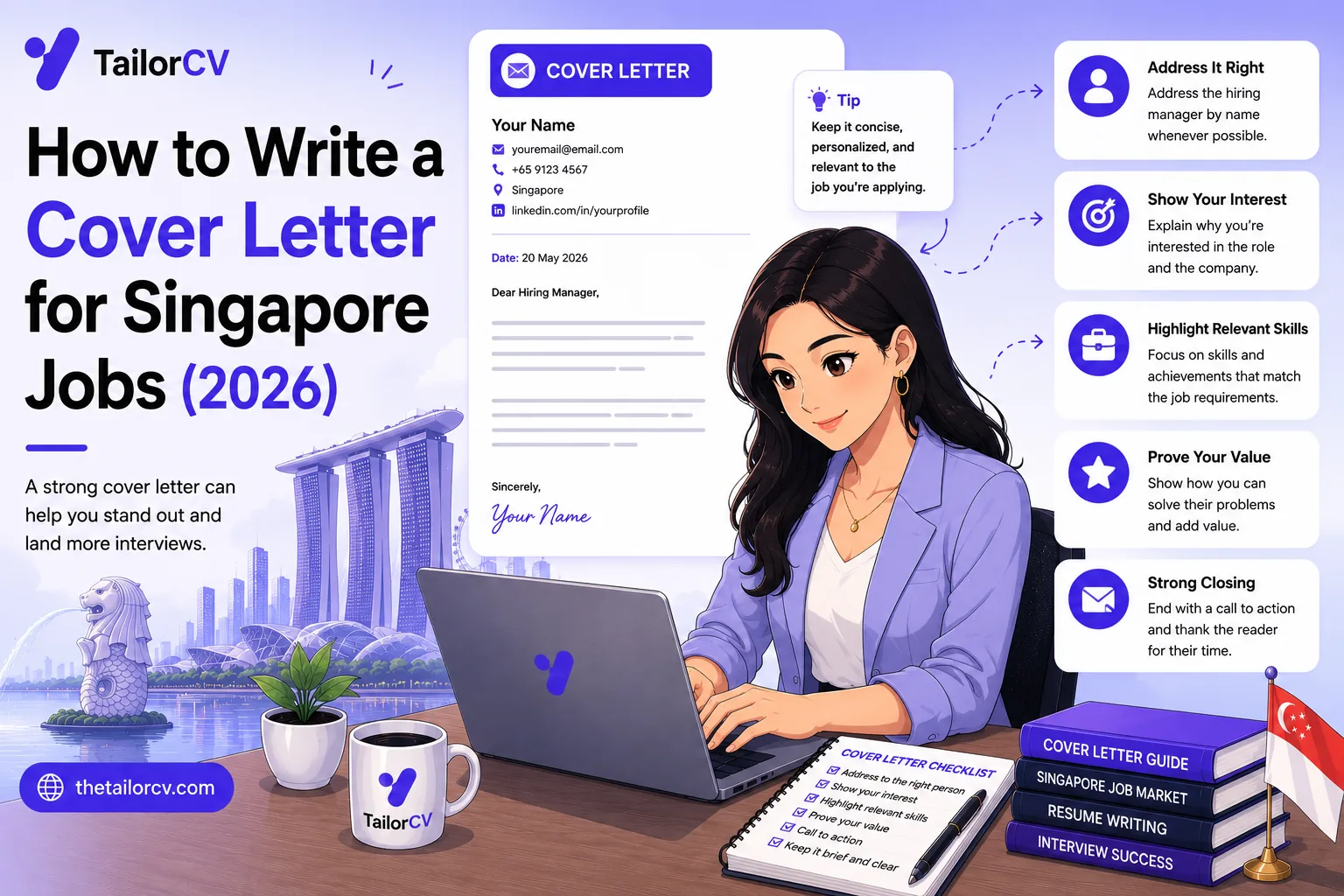
In Singapore's competitive market, a cover letter can be the thing that tips a close decision — or a wasted, generic paragraph a recruiter ignores. The difference is whether it's built from the specific role or copied and pasted with the company name swapped. This guide covers how to write a cover letter for Singapore jobs in 2026: when it actually matters, the right structure and tone, the local conventions, and how to tailor it so it earns its place.
Do Cover Letters Matter in Singapore?
Sometimes, and it's worth knowing when. On a high-volume, ATS-filtered application through a large MNC or bank, the resume is screened first and the cover letter may not be read at all. But on a company career page, a role handled by a recruitment agency, a referral, or a smaller firm, a human often does read it — and there, a specific, well-aimed letter helps.
The rule: a generic cover letter is worthless everywhere, and a tailored one is valuable exactly where a human reads it. Since you can't always tell which is which, attach a tailored letter whenever the application allows one — as long as tailoring it costs you little. That "little" is the whole point.
Singapore Cover Letter Conventions
A few local norms:
- Length: short — three to four tight paragraphs, well under one page. Singapore recruiters value concision.
- Tone: professional and direct. Not overly casual, not flowery.
- Language: British English, matching your resume (organise, optimise, programme).
- Pass status: if you're a foreigner, it's fine to briefly note your work-pass eligibility, since it affects hiring logistics — the same reason you state it on your Singapore resume.
- Format: plain and clean if it goes through a portal — the same parser-friendly principles as your resume apply, since some systems read the letter too.
What a Strong Singapore Cover Letter Contains
Four things, all drawn from the specific posting rather than a template:
1. A specific opening. Name the role and a concrete reason for this company — not "I am writing to apply for". A strong opening line decides whether the rest gets read, so avoid the usual cover letter mistakes.
2. Your match to their top priorities. Mirror what the posting leads with, in its words — the same keyword-matching logic as your resume, applied to prose, using terms that matter without stuffing.
3. One or two proof points. A quantified example that maps to the role's key requirement does more than three paragraphs of adjectives — and it should read in your own voice, not generic filler.
4. A confident, brief close. A short sign-off, and note your availability or pass status if relevant.
The full method is in the cover letter guide for 2026, and the mistakes to avoid covers the rest.
The Structure That Works
Opening (1–2 sentences): a specific hook tied to the role or company. Body paragraph one: your strongest match to the posting's top requirement, with a concrete, quantified example. Body paragraph two: a second proof point, or why you're drawn to this company specifically (and, for foreigners, a brief note on pass eligibility). Close (1–2 sentences): confident, brief, professional. Keep the whole thing to three or four short paragraphs — Singapore recruiters skim.
What the finished letter looks like
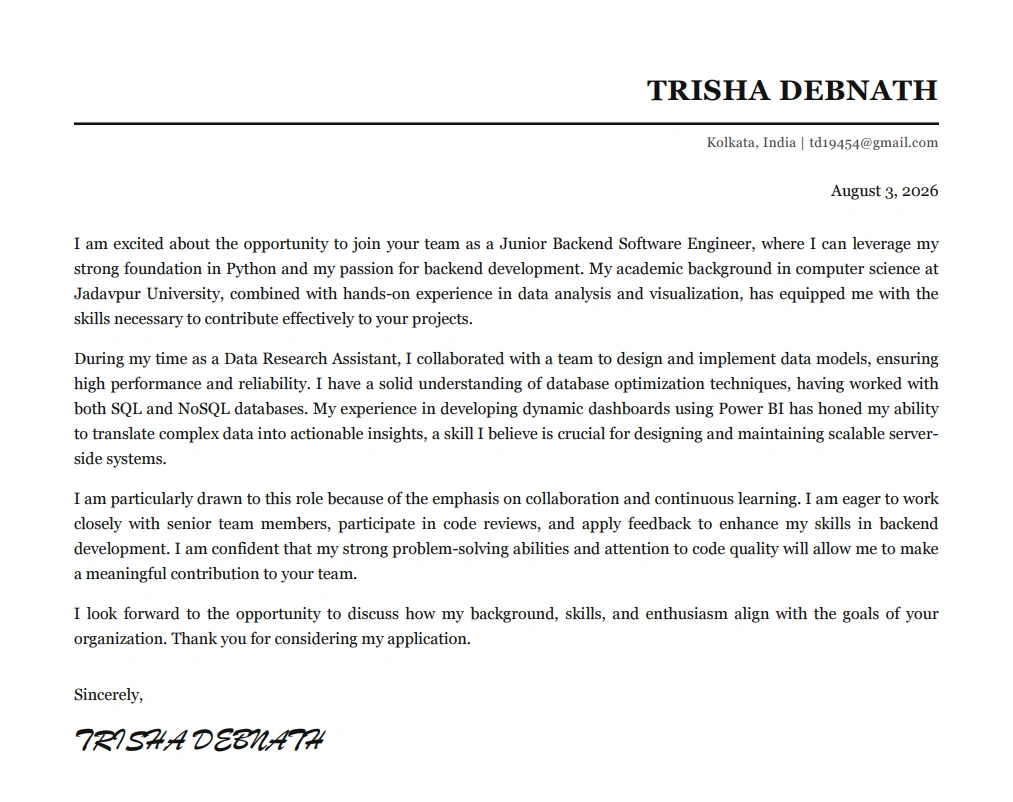
A format like this parses cleanly - one column, standard headings, everything the parser needs where it expects to find it.
Tailoring: Why Generic Letters Fail
A generic cover letter fails for the same reason a generic resume does — it carries no information. A letter's entire job is to say something the resume doesn't: why this role, why this company, how you map to their specific priorities. A copy-pasted letter says none of that; it's interchangeable across a hundred applications, so it adds zero signal. The recruiter reads two lines, recognises the template, and moves on.
Generating the letter from a job description
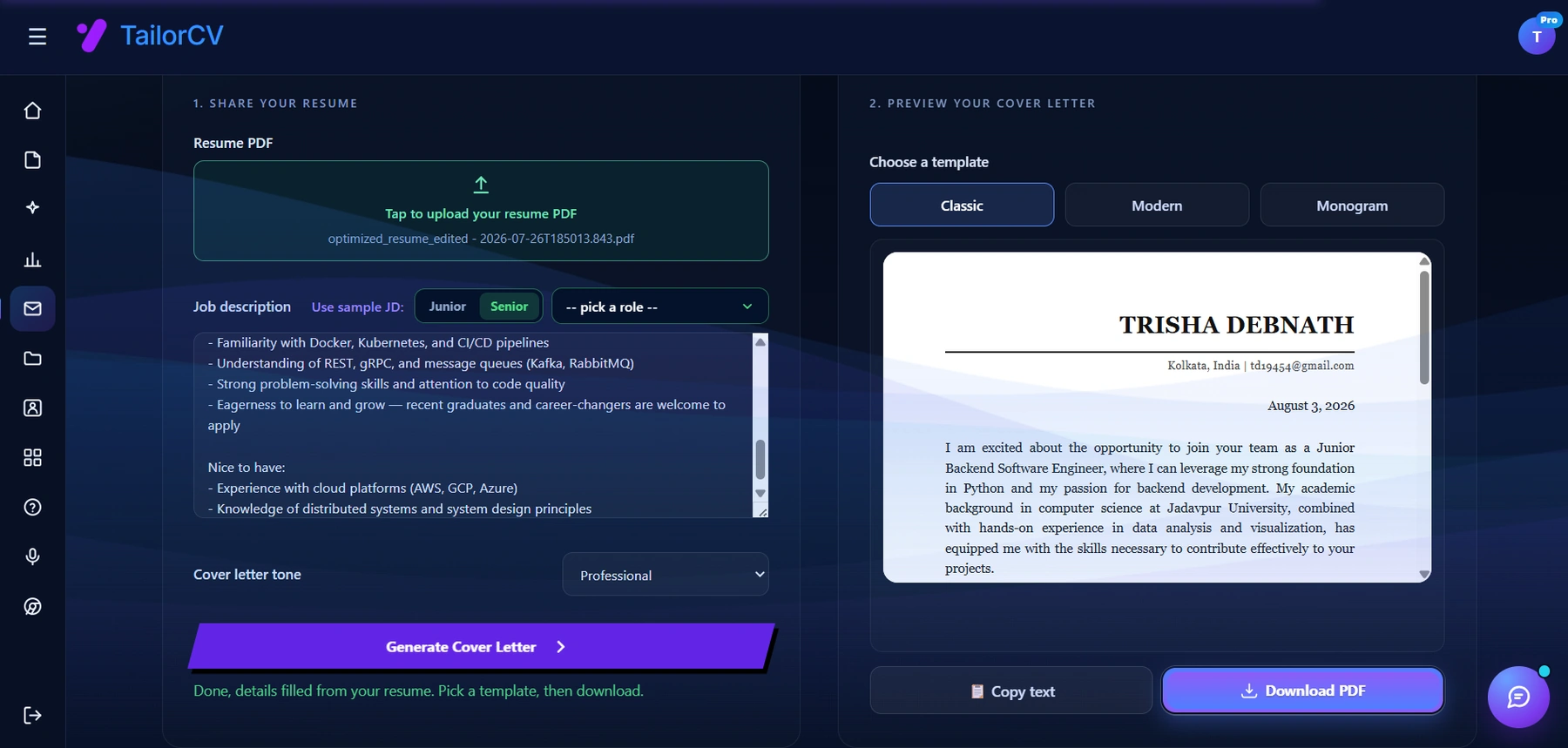
Having the preview beside the inputs is what makes this fast: change the tone or template and you see the result immediately.
A letter built from the posting carries information in every line. The tailoring isn't decoration — it's the content. And the only reason people send generic letters is that writing a fresh one each time is slow. Remove that friction — build the letter from the specific posting quickly — and you can attach a genuinely tailored one to every application that allows it. This pairs with a tailored resume: on the same role, match the resume and write the matching letter together, both aimed at the same requirements. Check the fit with a free ATS score, and increase your match where it's low.
Cover Letters for Different Situations
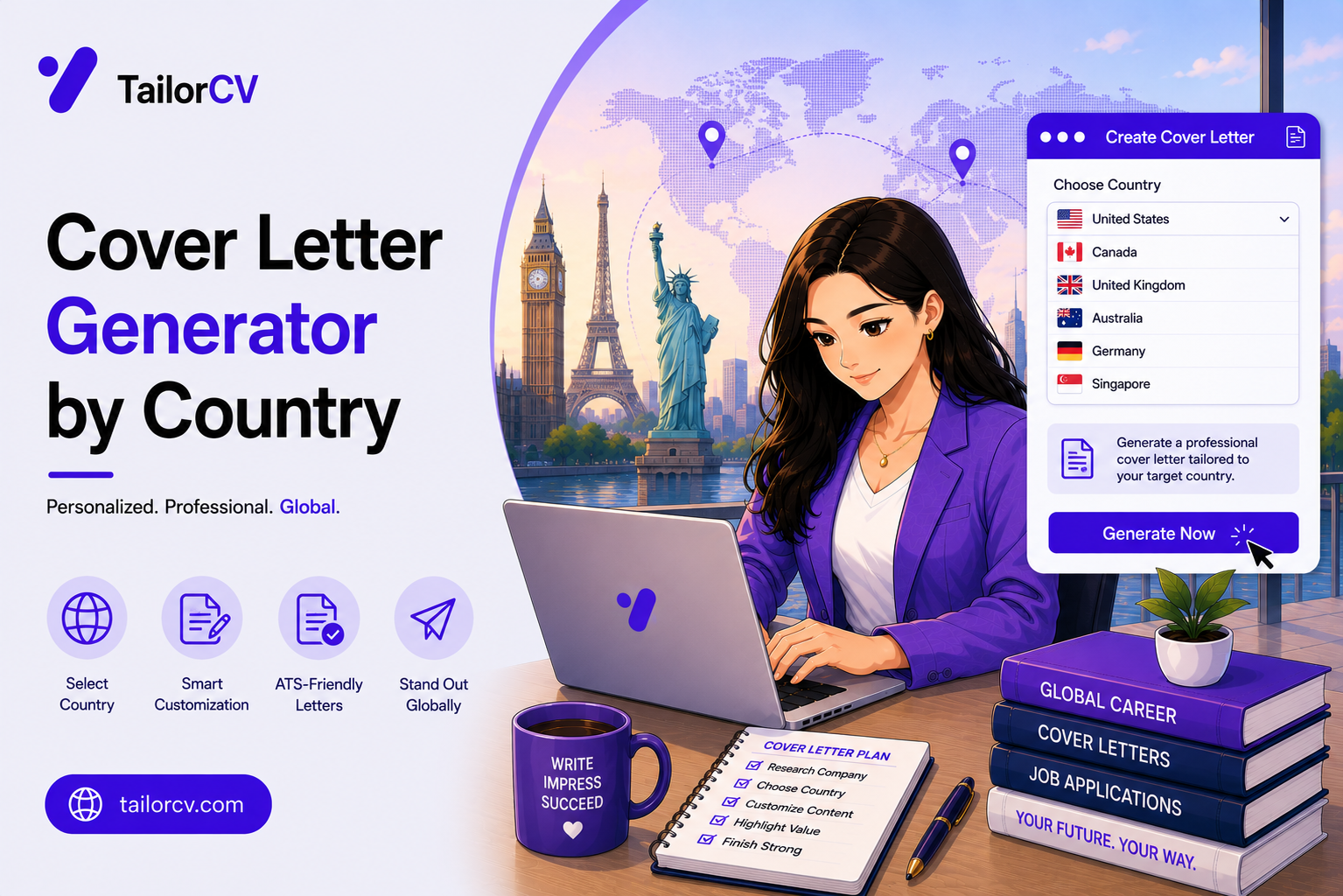
The approach adapts. Foreigners should briefly address pass eligibility and why they're targeting Singapore specifically. Career changers lean on the letter to connect dots the resume can't. Remote or regional roles — a remote-focused letter addresses distributed work directly. Freshers with little experience lean on projects and genuine interest tied to the role, which connects to fresher projects that get interviews, a portfolio, and landing a first tech job. If you have an employment gap, a line in the letter can address it honestly.
After the Cover Letter
The letter is one piece of the Singapore application. Make sure your resume is tailored to the same posting and ATS-friendly, built on the right format, keywords, and parser-safe structure — and understand the ATS landscape here and whether the role wants a resume or a CV. Know how to get a job in Singapore end to end, and for tech, the resume that gets tech interviews. Keep your LinkedIn optimised.
Then prepare for interviews: research the company, rehearse behavioural questions, tell me about yourself and why do you want this job, and run a mock interview; the full prep guide covers more. Send a follow-up after applying and after the interview, negotiate the offer, and handle rejection when it comes. Pace with how many jobs to apply to per day, and watch for job scams.
Frequently Asked Questions
Do I need a cover letter for Singapore jobs? Not always, but attach a tailored one whenever the application allows it. On high-volume ATS-filtered roles it may not be read; on company career pages, agency roles, referrals, and smaller firms it often is — and there a specific letter helps. A generic one is worthless everywhere.
How long should a Singapore cover letter be? Short — three to four tight paragraphs, well under a page. Singapore recruiters value concision. Lead with your strongest, most specific match and keep it professional and direct.
Should I mention my work-pass status in the cover letter? If you're a foreigner, a brief note on pass eligibility is helpful, since it affects hiring logistics — the same reason you state it on your resume. Keep it to a line; don't let it dominate.
British or American English for a Singapore cover letter? British English, matching Singapore convention and your resume (organise, optimise, colour, programme).
Putting It All Together
A Singapore cover letter is worth writing only if it's built from the specific role — short, professional, in British English, tailored to the posting's priorities with one or two quantified proofs, and (for foreigners) a brief note on pass eligibility. Generic letters are dead; tailored ones are alive exactly where a human reads them.
The only reason people send generic letters is that writing fresh ones is slow — remove that friction and you can attach a genuinely tailored letter to every application that allows one, at little cost, and reap the benefit on the subset that gets human eyes. Pair it with a tailored, ATS-friendly resume, and check your fit against the posting with a free ATS score before you send.
Was this guide useful?
Be the first to rate it.