 TD
TD
Key Takeaways
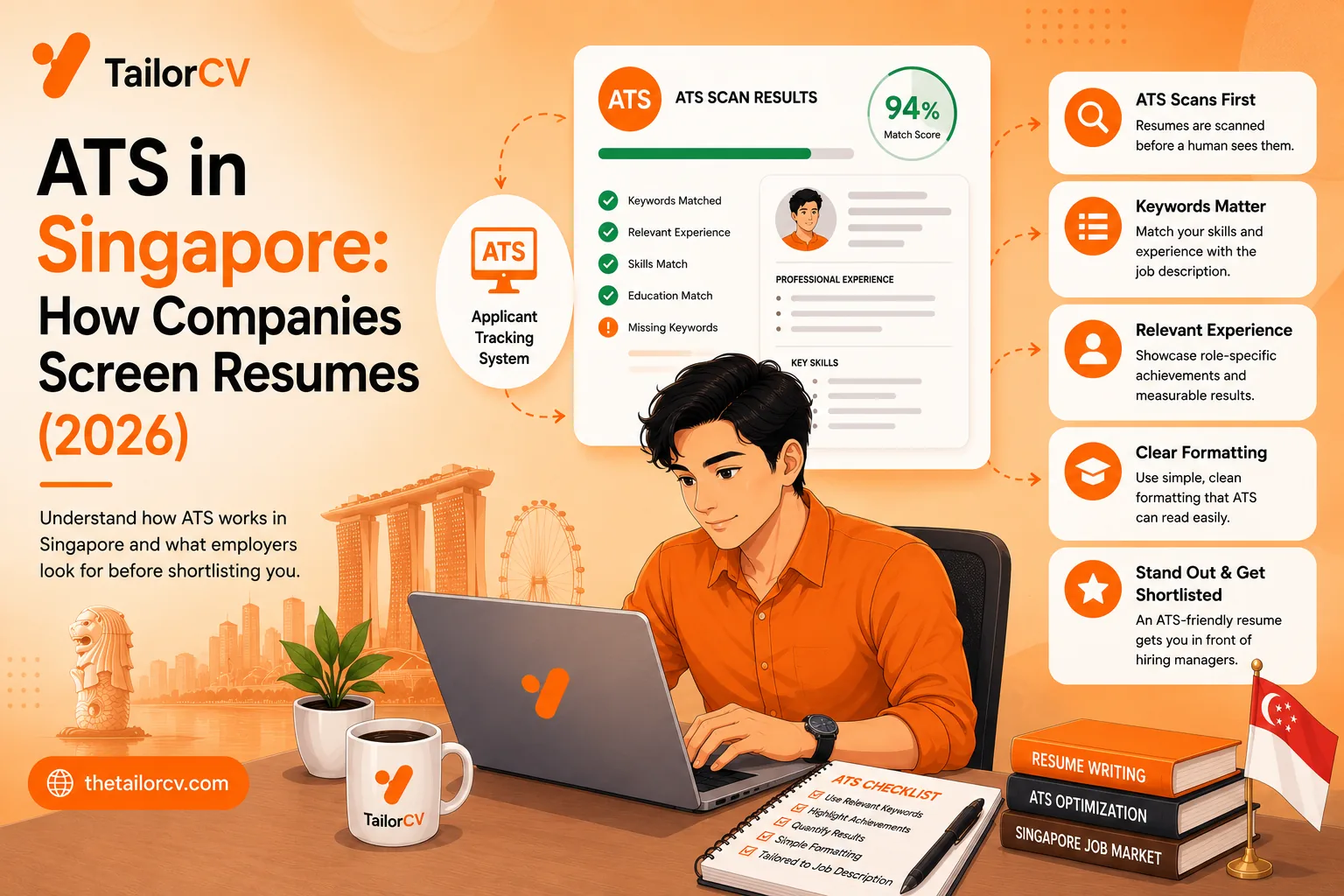
- Applicant tracking systems are widespread across Singapore's job market.
- Your resume is parsed into data, matched by exact language against the job, then ranked.
- Qualified people get filtered out through a translation problem, not a merit problem.
- Singapore's heavy reliance on recruitment agencies adds a layer that changes your strategy.
- Clearing the ATS only gets your resume in front of a human - the rest of the search still decides the outcome.
If your Singapore applications keep disappearing into silence, the culprit is usually not your qualifications — it's the software that reads your resume before any human does. Singapore's larger employers and recruitment agencies run applications through an applicant tracking system that parses, scores, and filters resumes automatically. Understanding how that screen works is the difference between being invisible and being shortlisted. This guide explains the ATS in Singapore: who uses it, how it filters, and how to get past it.
Who Uses ATS in Singapore
Applicant tracking systems are widespread across Singapore's job market:
What an ATS score report actually shows you
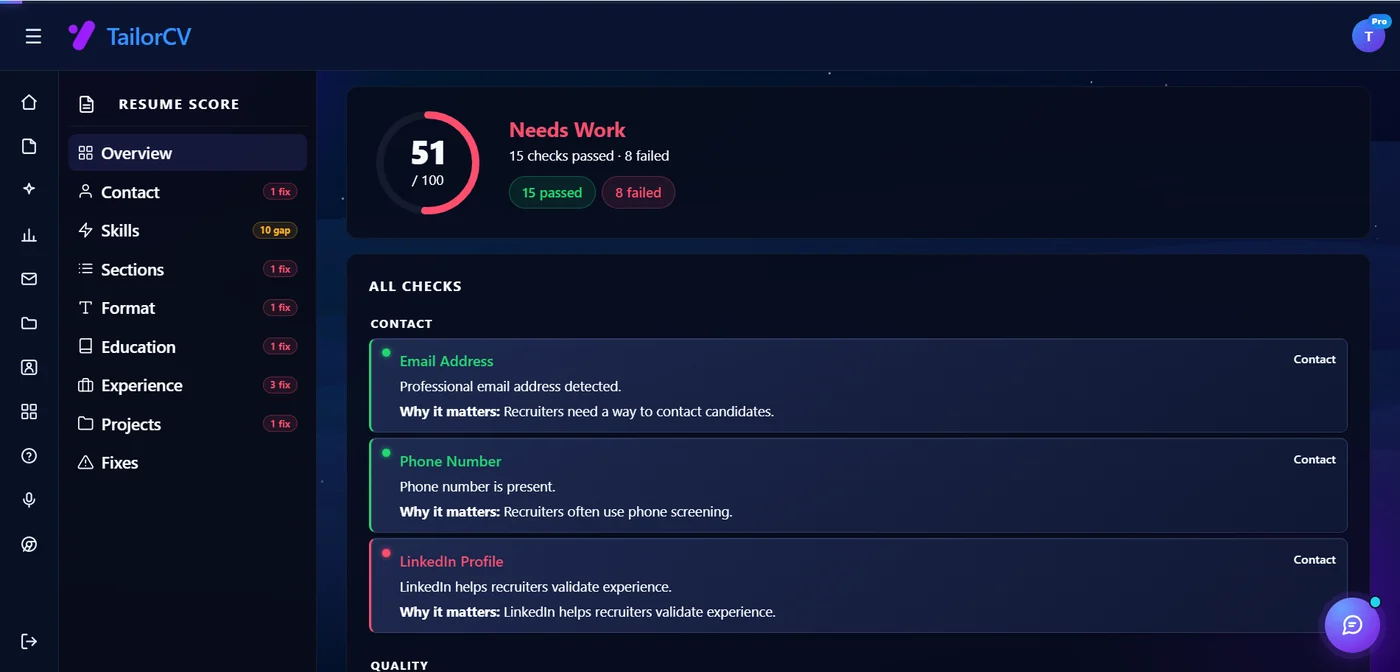
This is what a score actually looks like. The number matters less than the breakdown: each check tells you what failed and why it matters.
- MNCs and banks in the CBD — nearly all use enterprise ATS platforms (Workday, SuccessFactors, Taleo, Greenhouse).
- Recruitment and search agencies — which handle a large share of Singapore hiring — run candidate databases you must be found in, searched by keyword.
- Government-linked and large local firms — increasingly automated screening.
- Startups and SMEs — growing adoption, often via Greenhouse, Lever, or Ashby.
The practical takeaway: for most roles you actually want in Singapore, a machine reads your resume first. That's true for the USA and Canada too, but Singapore's heavy reliance on recruitment agencies adds a second keyword-search layer on top of the standard filter.
How the Screen Actually Works
Here's the mechanism, step by step.
1. Parsing. Your resume is broken into structured fields — name, contact, skills, titles, dates, education. This is why formatting matters: tables, columns, graphics, and photos confuse the parser, and a resume that arrives scrambled is dead on arrival regardless of content.
2. Matching. The system compares your parsed data, by exact language, against the job description — and crucially, it matches words, not meaning. "Regional stakeholder management" and "worked with teams across APAC" are the same to a human and different to the software.
3. Ranking and search. Recruiters filter or search the pool by the posting's key terms. Only the resumes that parse cleanly and carry those terms surface for human review. In Singapore's agency-heavy market, recruiters also search their database for future roles — so being keyword-matched keeps surfacing you.
The upshot: passing the ATS in 2026 means being both parseable and matched. Everything else follows from that.
Why Qualified People Get Filtered Out
The most common frustration — "I'm clearly qualified, why no reply?" — usually isn't about merit. It's a translation problem. You have the experience; you just described it in your words instead of the posting's, so the machine that screened you first couldn't see the match. You were rejected in translation, not on ability.
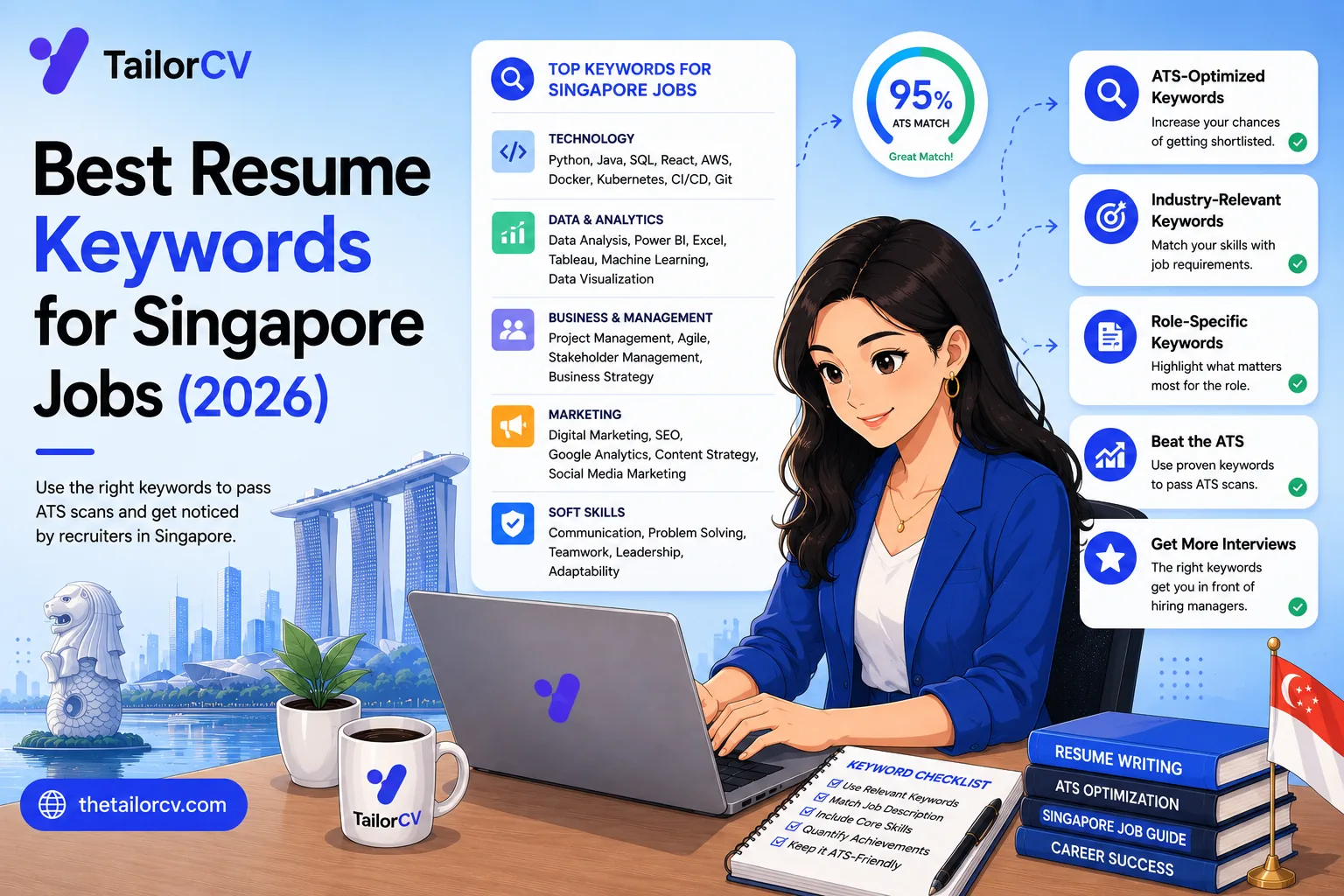
This is exactly why a generic resume fails against a specific posting, and why tailoring — re-expressing your real experience in the posting's language — lifts a genuinely strong candidate from filtered-out to shortlisted without a single false claim. The keyword mistakes to avoid and the keywords that beat the ATS are worth knowing, and the best keywords for Singapore jobs specifically.
Getting Past the Singapore Screen
Three moves, in order.
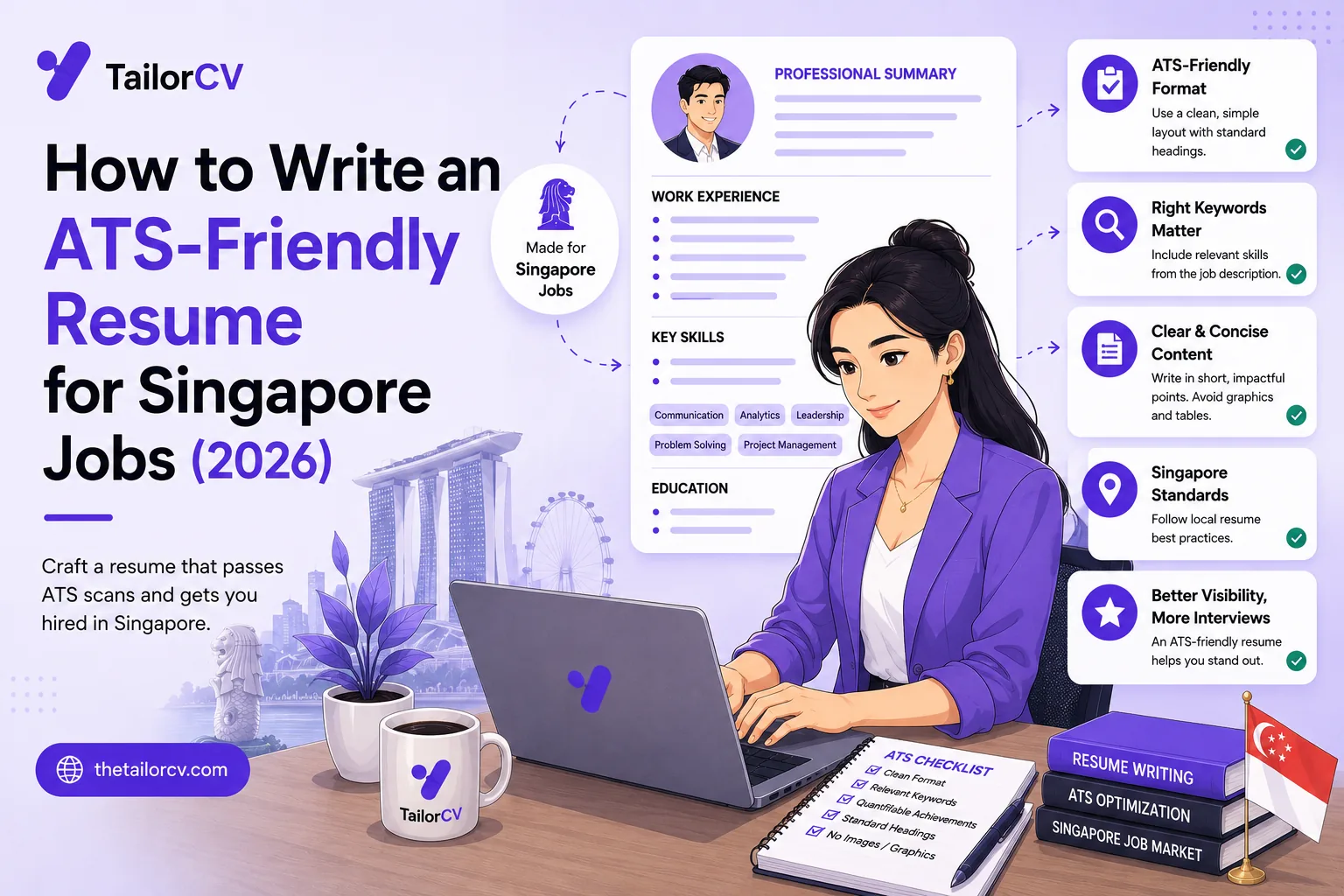
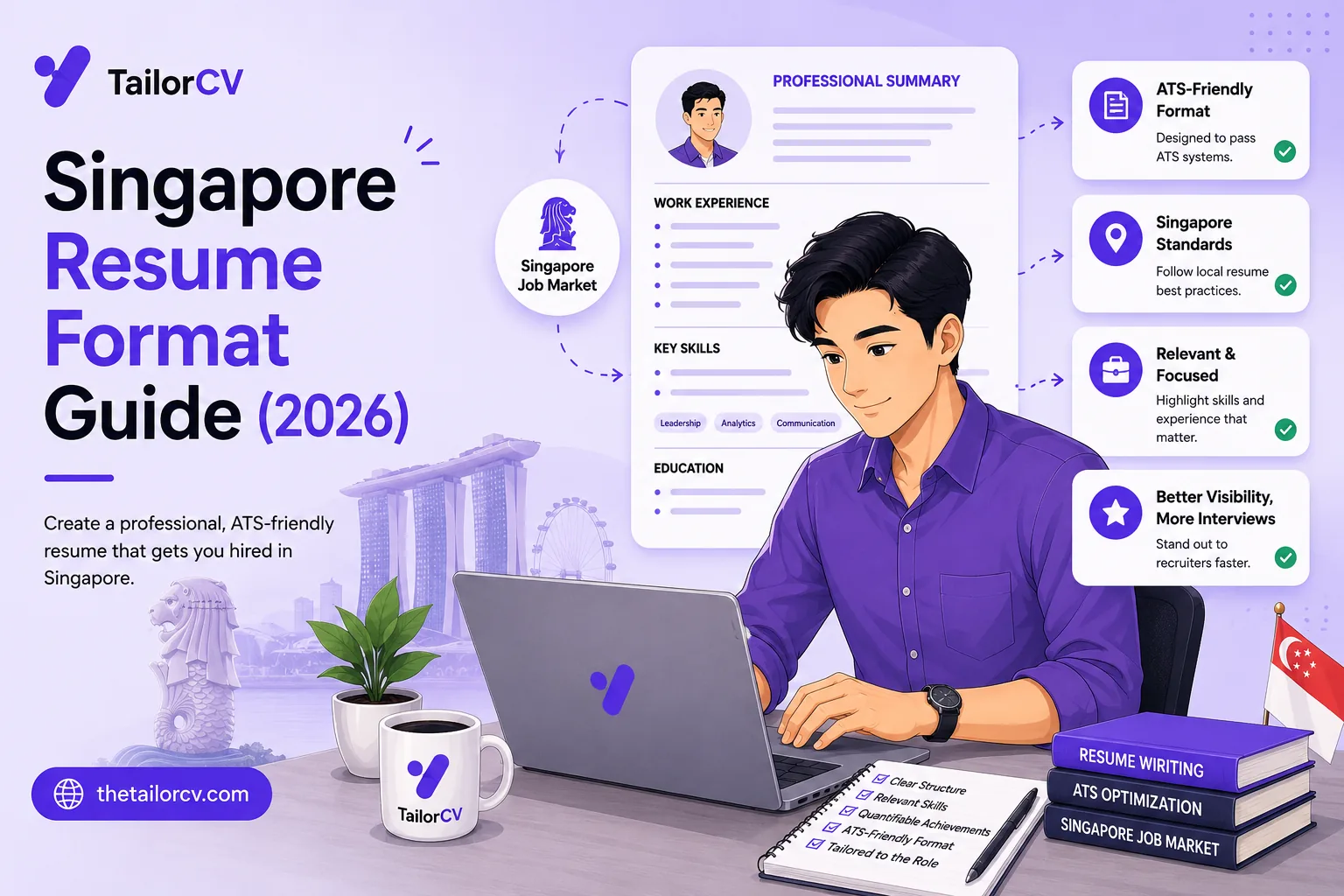
1. Make it parseable. Single column, standard headings, no tables/graphics/photo, PDF. The full checklist is in how to make your resume ATS-friendly and the formatting mistakes to avoid. The Singapore resume format guide covers the local specifics (PR status, British English, no NRIC).
2. Match it to the posting. Work the specific skills and terms into your resume, in your voice, quantified, keeping the rewrite true to your real experience and matched fast. Do it fast per role — in five minutes or matched to the job description fast. The complete build is in writing an ATS-friendly resume for Singapore.
3. Check before you apply. Run a free ATS score against the posting and read the missing keywords — the difference between an ATS score and a resume score matters, checking it free is fast, and increasing your ATS score is the follow-through. This turns a blind application into an informed one.
The Recruitment-Agency Layer
Singapore's reliance on recruitment agencies deserves special attention, because it changes strategy. When an agency has your resume, it sits in their database, searched by keyword for current and future roles. So:
- Your headline and skills are search tags. Fill them with the exact terms recruiters would search for your target roles — a vague "experienced professional" carries none.
- Keep it current. Agencies surface recently active/updated candidates higher. A resume refreshed regularly outperforms an identical one left stale.
- Multilingual and regional experience are searchable assets in Singapore's APAC-hub roles — make them explicit.
This mirrors how LinkedIn recruiter search works, and a strong LinkedIn headline compounds the effect. It also matters on LinkedIn Easy Apply, where low friction tempts you into generic applications.
Beyond the Screen
Clearing the ATS gets your resume to a human — the rest of the search still decides the outcome. Understand how to get a job in Singapore end to end, whether you need a resume or a CV, and add a Singapore cover letter where allowed. For tech specifically, the ATS resume that gets tech interviews in Singapore goes deeper.
Freshers: your ATS score as a fresher leans on projects, a portfolio, and strategies for a first tech job or a role with no experience. Then prepare for interviews: research the company, rehearse behavioural questions and tell me about yourself, run a mock interview, and follow the full prep guide. Send a follow-up, negotiate the offer, and handle rejection when it comes — pacing with how many jobs to apply to per day, and staying alert to job scams.
Frequently Asked Questions
Do most Singapore companies use ATS? Yes. MNCs, banks, government-linked firms, recruitment agencies, and increasingly SMEs and startups all use applicant tracking systems. For most desirable roles, software screens your resume before a human does.
How do I beat the ATS in Singapore? You don't trick it — you satisfy it. Make your resume parseable (single column, standard headings, no graphics) and matched (carry the posting's exact skills and terms). Then verify with a free ATS score before applying. Tricks like hidden keywords get you rejected by the human who follows.
Why do recruiters never find my resume? Usually because your resume and headline lack the exact terms they search. In Singapore's agency-heavy market, your resume sits in databases searched by keyword — if it says "coordinated with teams" and they search "stakeholder management", you don't appear. Tailoring and strong skill/headline keywords fix this.
Does formatting really get me rejected? Yes. Tables, two-column layouts, text boxes, graphics, and photos can scramble the parse, so a well-written resume arrives as nonsense and is filtered before anyone reads it. Single-column, standard-heading, parser-safe formatting is essential.
Putting It All Together
The ATS in Singapore isn't a mystery once you see the mechanism: your resume is parsed into data, matched by exact language against the job, and ranked — with an extra keyword-search layer from the agencies that drive so much local hiring. Get filtered out and it feels like the market is brutal; often the market simply never saw you.
The fix is entirely in your control: make your resume parseable, match it to each posting's language, keep your keywords sharp for recruiter search, and check your fit before you apply. Do that and you stop being invisible. Start by running your resume against a real Singapore job with a free ATS score — if it comes back low, you've just found why your applications were vanishing, and exactly what to change.
What is your resume scoring right now?
Scan it against a job description and get your ATS match score in about a minute.
Drop your resume here or choose a file
PDF only. Max 2 MB.
We never share your data or use it to train AI models.
Templates that keep this structure intact
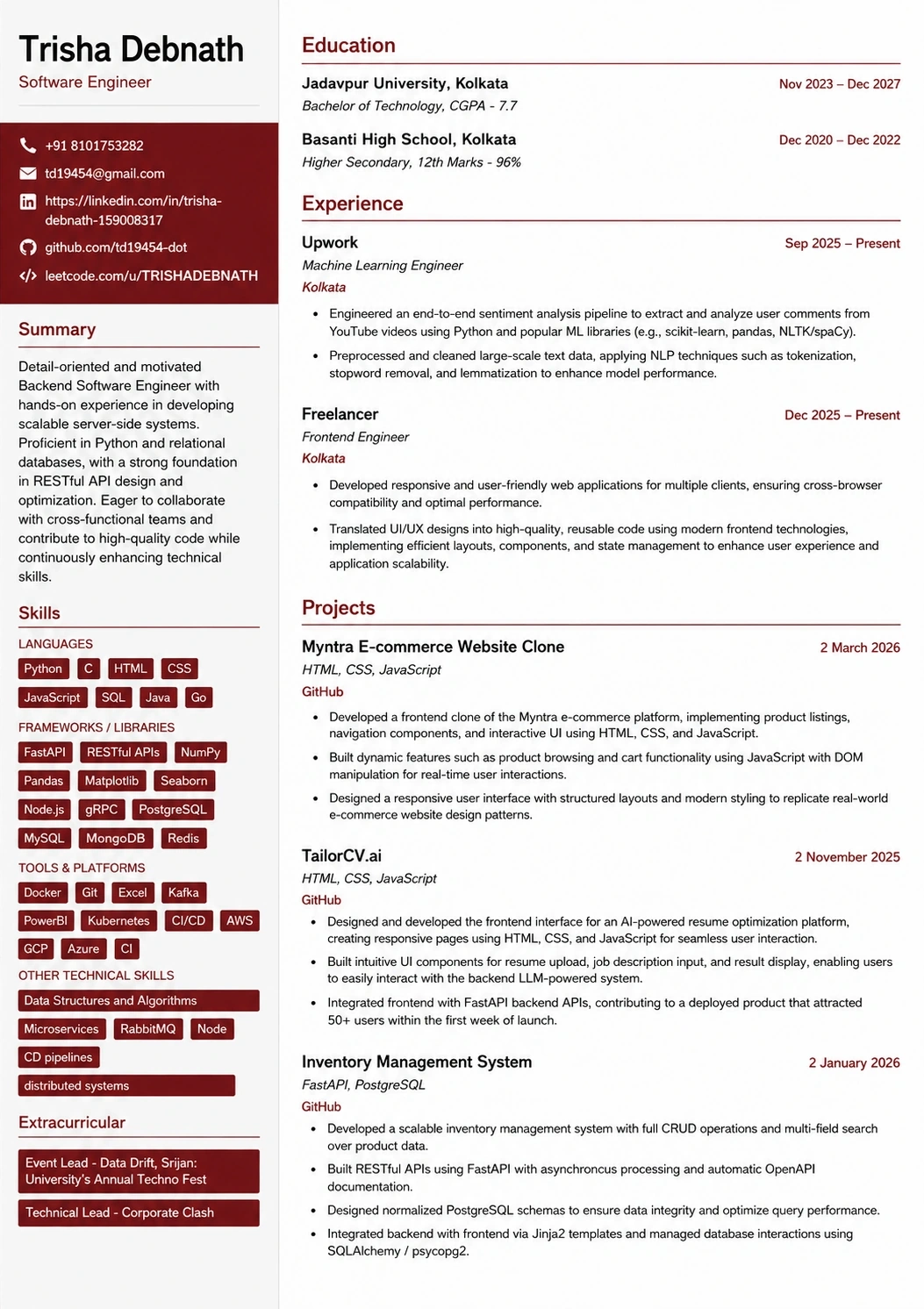
This template is ATS-tested — start from it and the formatting rules in this guide are already handled.
Was this guide useful?
Be the first to rate it.