SS
SS
Key Takeaways
- Two forces make keywords unusually important in Singapore, starting with the standard ATS match on exact language.
- Hard-skill keywords name specific technologies, tools, certifications, and methodologies; soft-skill keywords work differently.
- You do not guess Singapore keywords - you extract them from the postings you are actually targeting.
- Placement matters as much as selection.
- Keyword-stuffing gets you past the filter and then destroyed in the interview, so use them honestly.
In Singapore's ATS-heavy, agency-driven market, keywords are how you get found and how you get past the filter. Recruiters search their databases by keyword; the applicant tracking system matches your resume to postings by exact terms. Get the keywords right and qualified-but-invisible becomes shortlisted. This guide covers the best resume keywords for Singapore jobs in 2026 — how to find them, where to place them, and how to use them honestly.
Why Keywords Decide So Much in Singapore
Two forces make keywords unusually important in Singapore. First, the standard ATS filter: your resume is matched, by exact language, against the posting — and the filter matches words, not meaning. Second, the recruitment-agency layer: a huge share of Singapore hiring runs through agencies whose consultants search their candidate databases by keyword for current and future roles. If your resume lacks the terms they search, you simply don't appear — the mechanism behind the ATS in Singapore.
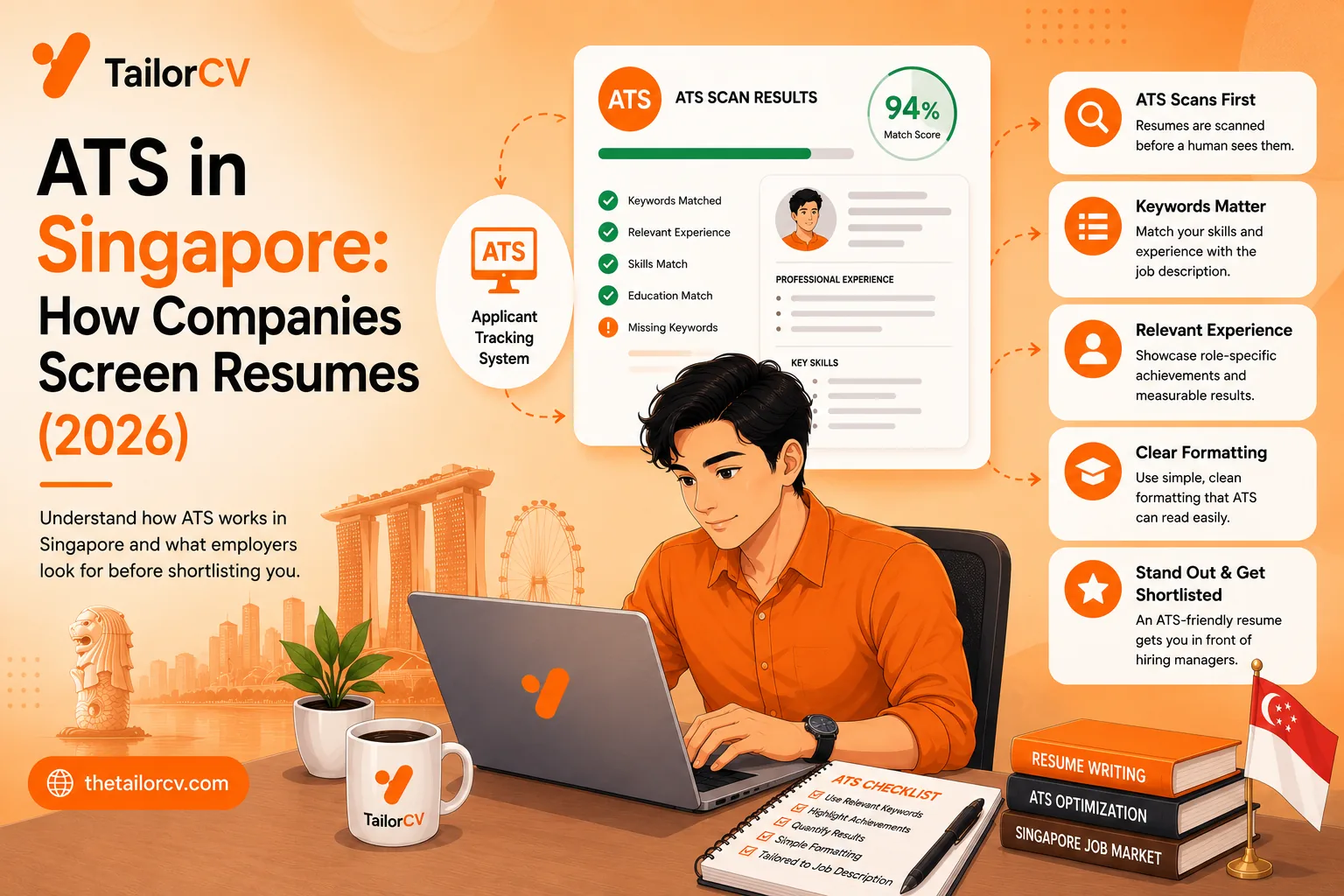
What an ATS score report actually shows you

Passed and failed checks are listed individually, so you can see which part of the resume is costing you points.
So keywords aren't decoration. A generic resume without the right terms is invisible twice over. The fix is to carry the exact language of your target roles, honestly, where you genuinely have the experience.
The Two Types of Keywords
Hard-skill keywords are the specific, named technologies, tools, certifications, and methodologies a role requires — "Python", "SQL", "SAP", "AWS", "CFA", "Agile", "financial modelling". These are what the ATS weighs most and what recruiters search. Get every one you genuinely have that the posting names into your resume, in the posting's wording. The keywords that beat the ATS and the terms that boost your score cover the mechanics.
Soft-skill and context keywords — "stakeholder management", "cross-functional", "APAC", "regional", "P&L" — matter too, but they belong woven into your summary and bullets, not dumped in a skills list. Putting soft skills in the skills section is one of the common keyword mistakes.
Where to Find the Right Keywords
You don't guess Singapore keywords — you extract them from the postings you're targeting.
- Read 5–10 real job descriptions for your target role in Singapore.
- Note the terms that repeat across them — the recurring skills, tools, and phrases are the ones the ATS and recruiters weigh.
- Cross-check against your genuine experience — you only claim what you can back up.
- Mirror the exact wording — if postings say "data visualisation" not "data viz", use theirs.
This is faster and more accurate than any generic keyword list, because it's specific to your roles. A free ATS score against a specific posting — the way the ATS reads your resume — automates the extraction — it shows the exact keywords you're missing for that job, which is the difference between an ATS score and a resume score.
Keywords by Singapore Sector
While you should always extract from real postings, some sector patterns are consistent in Singapore:
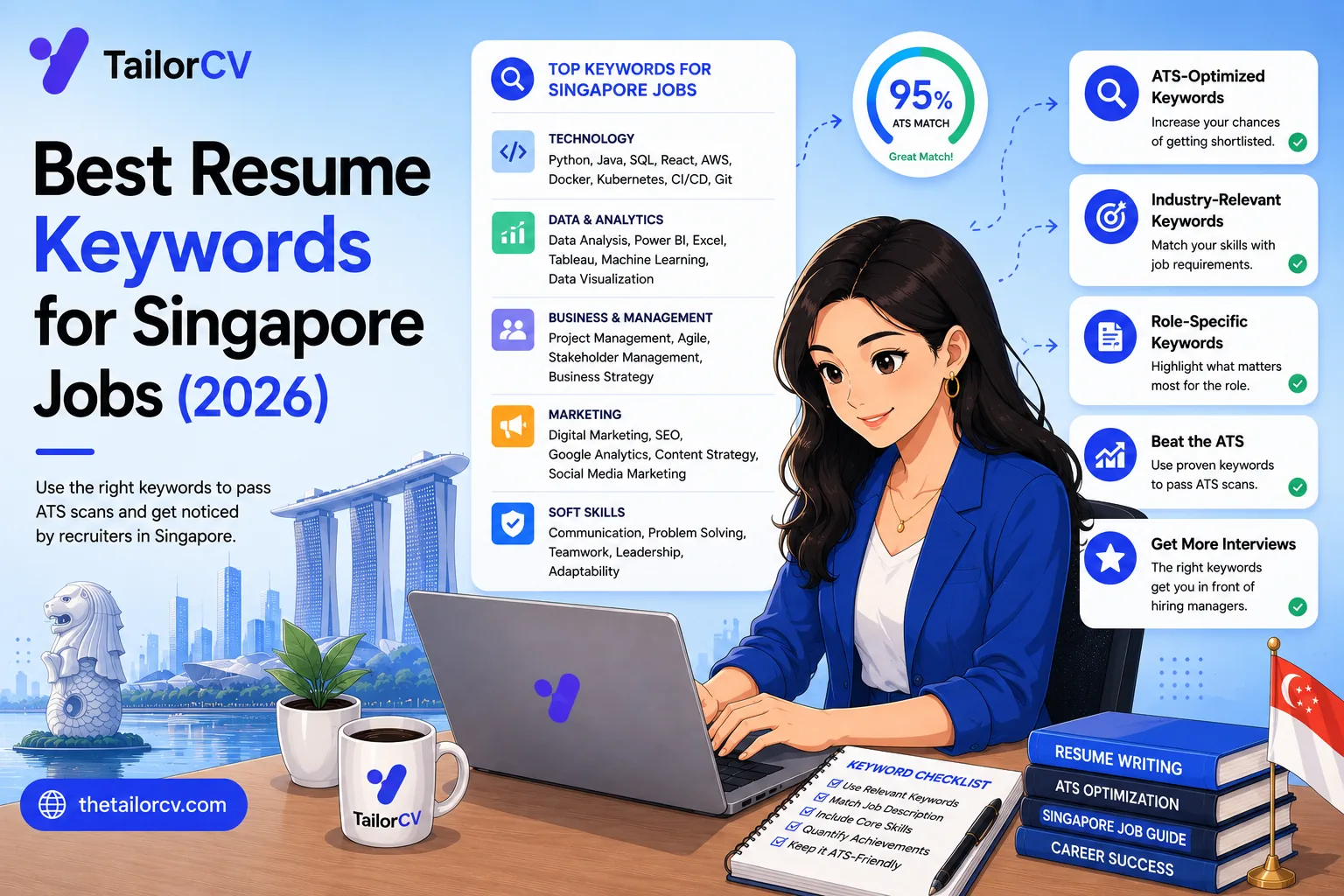
- Finance / fintech: financial modelling, risk, compliance, MAS regulations, CFA, Bloomberg, SQL, Python, P&L, reconciliation.
- Tech / software: the specific stack (Python, Java, React, AWS, Kubernetes), system design, CI/CD, Agile — the tech resume guide goes deeper.
- Data: SQL, Python, Tableau, Power BI, Spark, statistical analysis, dashboards, A/B testing.
- Supply chain / logistics: SAP, procurement, demand planning, inventory, ERP, S&OP.
- Professional services: stakeholder management, client delivery, project management, PMP, cross-functional.
Match these to what each posting actually names — the best keywords to beat the ATS generally, filtered through your specific target roles, and shaped by how to pass the ATS in 2026.
Where to Place Keywords
Placement matters as much as selection:
- Professional summary: your top 3–5 keywords, woven into 2–3 lines, in your voice. This is prime, recruiter-searched real estate.
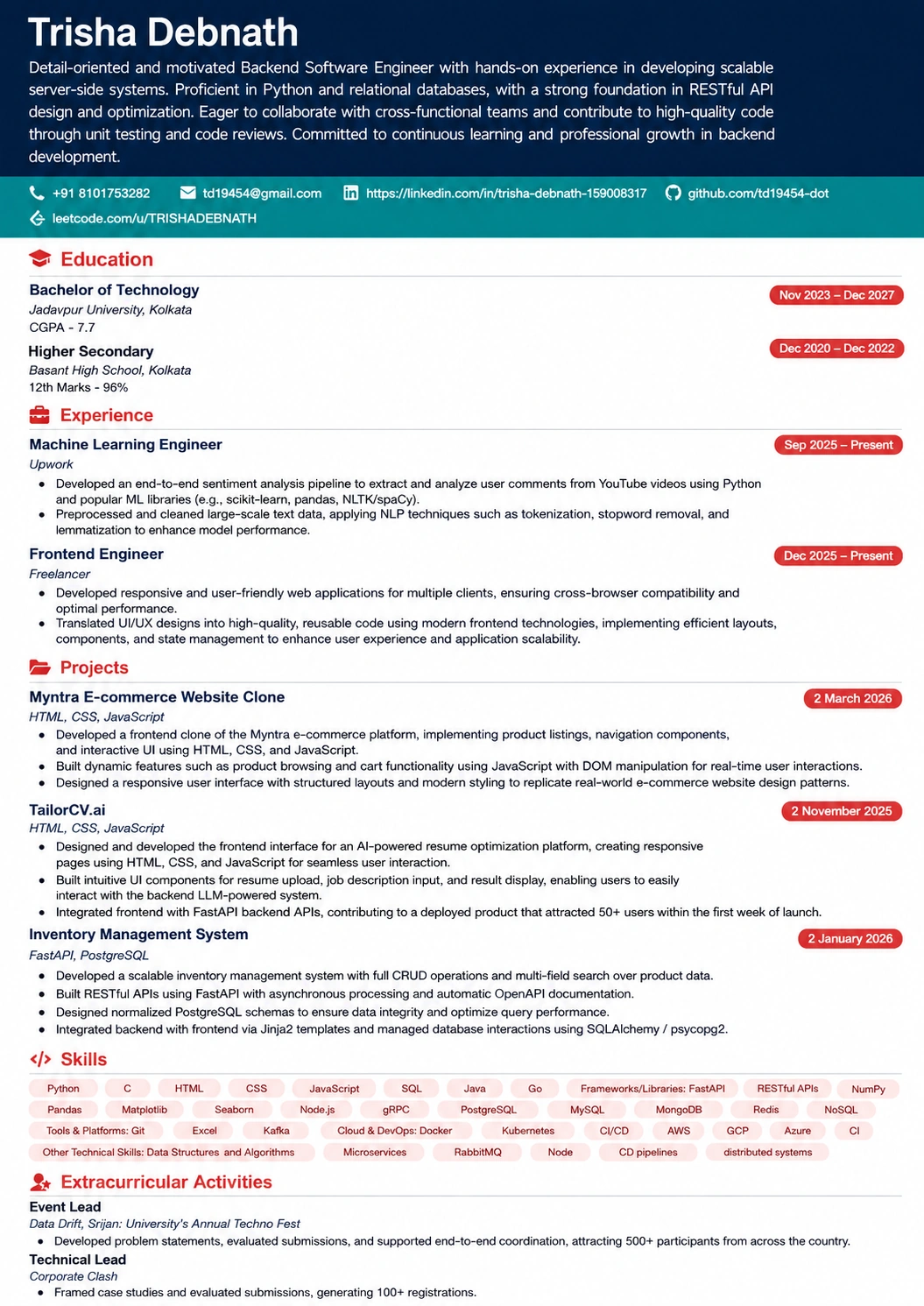
- Skills section: the hard-skill keywords as a clean, plain list (no tables or bars that break the parser).
- Experience bullets: context and soft-skill keywords, sitting on quantified results — "Led APAC stakeholder management for a S$5M project" beats a bare "stakeholder management" tag.
- Headline (LinkedIn and resume): for Singapore's recruiter-search market, your headline is a set of search tags.
Use Them Honestly — Stuffing Backfires
The temptation is to cram every keyword from the posting. Don't. Keyword-stuffing gets you past the filter and then destroyed in the interview, because you can't speak to skills you don't have. And a skills list padded with terms you can't evidence reads as hollow to the human who follows the filter.
The rule: only include keywords your real experience supports, and evidence them in your bullets. Good tailoring re-expresses genuine experience in the posting's language — it doesn't fabricate. That's the honest, effective way to tailor for every job, done fast and matched to each posting, the same tailored vs generic principle that decides whether you're seen. The full build is in writing an ATS-friendly resume for Singapore and the Singapore resume format guide.
For Freshers
If you're early-career in Singapore, your keywords come from coursework, projects, and internships rather than years of work. Your ATS score as a fresher reflects that, and a portfolio site lets you evidence skills a short resume can't — useful for a first tech job or landing a role with no experience.
After the Keywords
Keywords get you found and matched; the rest of the search still matters. Increase your match with how to increase your ATS score, add a Singapore cover letter, and know how to get a job in Singapore end to end — whether the role wants a resume or a CV. Keep your LinkedIn optimised for recruiter search, and mind Easy Apply. Then prepare for interviews: research the company, rehearse behavioural questions, tell me about yourself and why do you want this job, and run a mock interview; the full prep guide covers more. Send a follow-up, negotiate the offer, and handle rejection. Pace with how many jobs to apply to per day, and avoid job scams.
Frequently Asked Questions
What are the most important resume keywords for Singapore jobs? The specific hard skills, tools, and terms each posting names — extracted from real Singapore job descriptions in your field, and only those you genuinely have. There's no universal list; the best keywords are the ones repeated across the postings you're actually targeting.
Where should I put keywords on my resume? Top keywords in your professional summary, hard skills in a clean skills list, and context/soft-skill keywords woven into quantified experience bullets. For Singapore's recruiter-search market, your headline should also carry your key search terms.
How do I find the right keywords for a specific job? Read several real postings for the role, note the terms that repeat, cross-check against your genuine experience, and mirror the exact wording. A free ATS score against the posting automates this by showing the exact keywords you're missing.
Will keyword-stuffing help me pass the ATS in Singapore? It may pass the filter but it backfires — you get exposed in the interview and read as hollow to recruiters. Only include keywords your experience supports, and evidence them in your bullets. Honest, matched keywords beat stuffing every time.
Putting It All Together
In Singapore, keywords are how you become visible in a market that screens by software and searches by recruiter. The best keywords aren't from a generic list — they're the specific terms your target postings repeat, that you genuinely have, placed where they count (summary, skills, evidenced bullets, headline), and used honestly rather than stuffed.
Extract them from real postings, mirror the exact wording, back them with quantified results, and you clear both the ATS filter and the recruiter search that most applicants never get past. Start by running your resume against a Singapore job you want with a free ATS score — the missing-keywords list is the exact set to add first.
See which keywords you are missing
Scan your resume against the posting and get the exact terms it did not find.
Drop your resume here or choose a file
PDF only. Max 2 MB.
We never share your data or use it to train AI models.
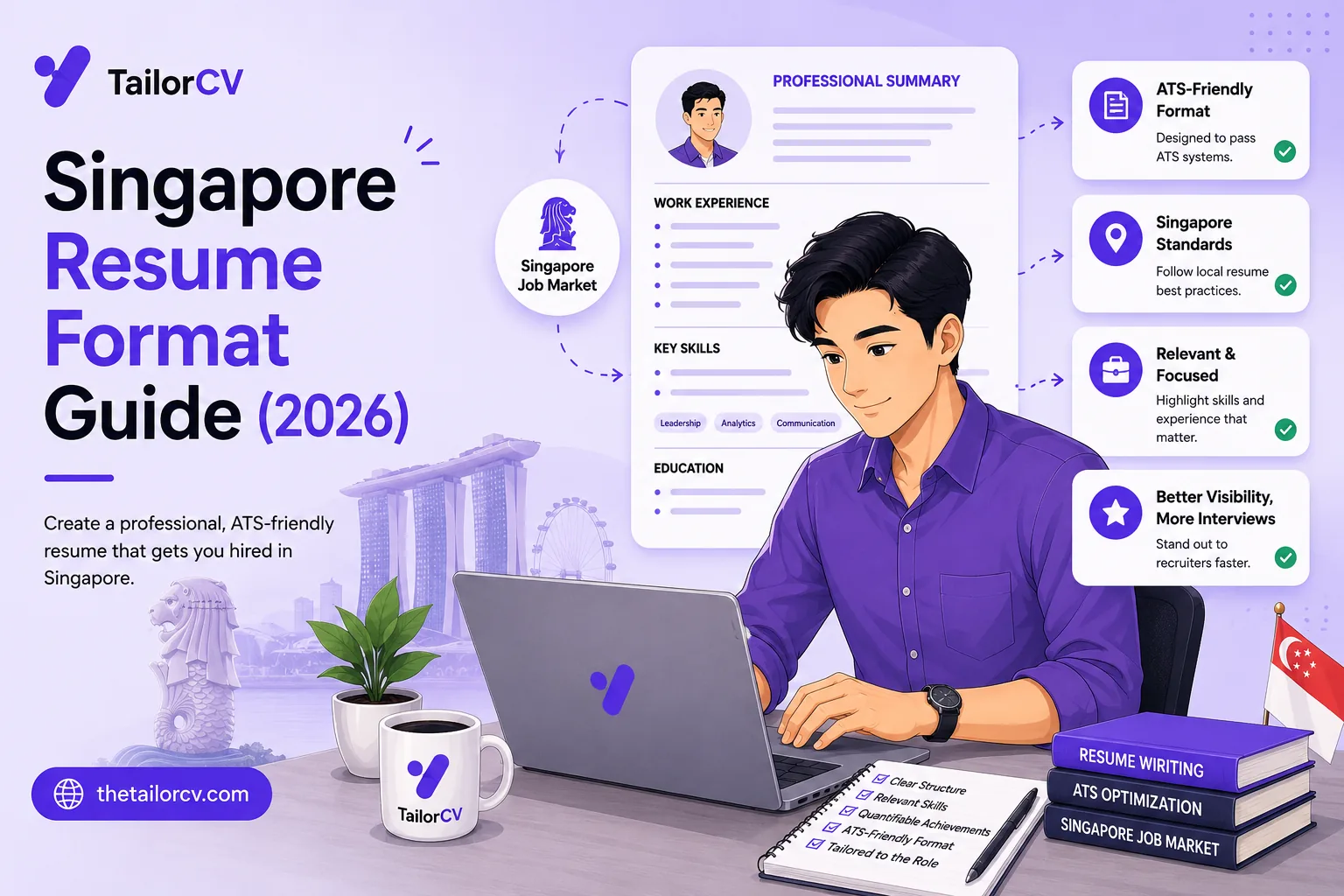
Where those keywords actually go
A layout with a real skills section gives the parser somewhere clean to find every term you just added.
Was this guide useful?
Be the first to rate it.