TD
TD

Key Takeaways
- Technical interviews consist of coding rounds, system design, project deep-dives, and behavioral rounds, each requiring distinct preparation strategies.
- For coding interviews, prioritize mastering data structures and algorithms, with a minimum of 75 problems recommended for basic prep and up to 350 for strong FAANG preparation.
- System design interviews focus on scalability, API design, and core concepts like load balancing and caching, with common questions involving designing services like URL shorteners and chat systems.
- Be prepared to discuss your past projects in detail, including the problem solved, architecture choices, and challenges faced, with a concise overview for each project on your resume.
- Behavioral rounds assess communication and cultural fit, making it essential to practice articulating your experiences and teamwork skills effectively.
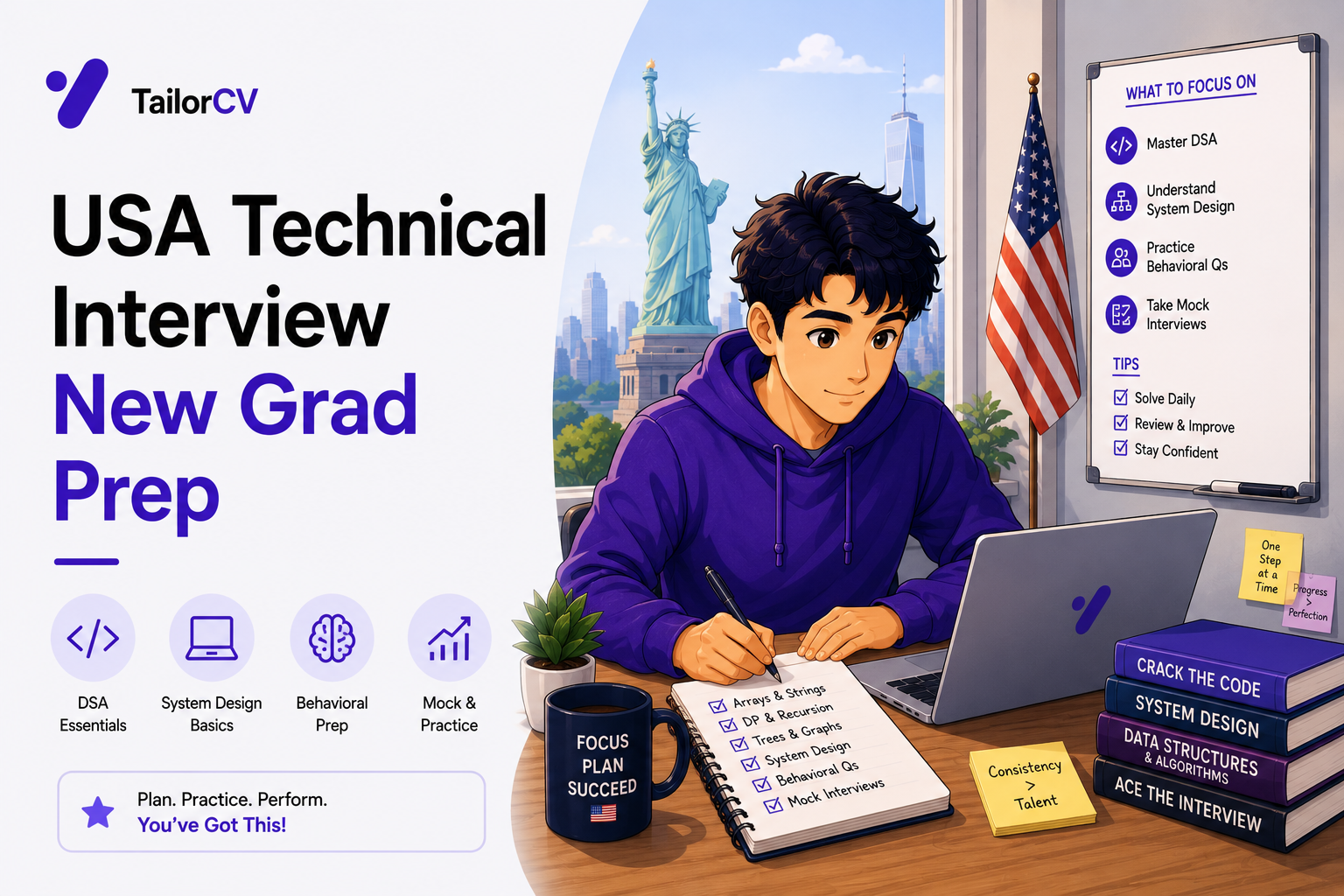
Technical interviews are how software engineering candidates are evaluated, and they are demanding. A typical technical interview process includes coding rounds (DSA), system design (for mid-senior roles), project deep-dives, and behavioral rounds. Each requires different preparation.
This guide gives you a complete roadmap for technical interview preparation in 2026 - what to study, how much, and in what order.
Before interviews begin, your resume must get you into the room. Use the TailorCV ATS score checker to optimize it. Then practice mock interviews with the free AI mock interview tool and read the behavioral interview guide.
The 4 Components of a Technical Interview
- Coding / DSA Round - Data structures and algorithms problem-solving
- system design Round - Designing scalable systems (mostly mid-senior roles)
- Project / Technical Deep-Dive - Discussing your past work in depth
- Behavioral Round - Communication, teamwork, and culture fit
Coding / DSA Preparation
Topics to Master (in priority order)
- Arrays and strings
- Hash maps and sets
- Two pointers and sliding window
- Linked lists
- Stacks and queues
- Trees and binary search trees
- Graphs (BFS, DFS)
- Recursion and backtracking
- Dynamic programming
- Heaps and priority queues
- Binary search
- Greedy algorithms
How Many Problems to Solve
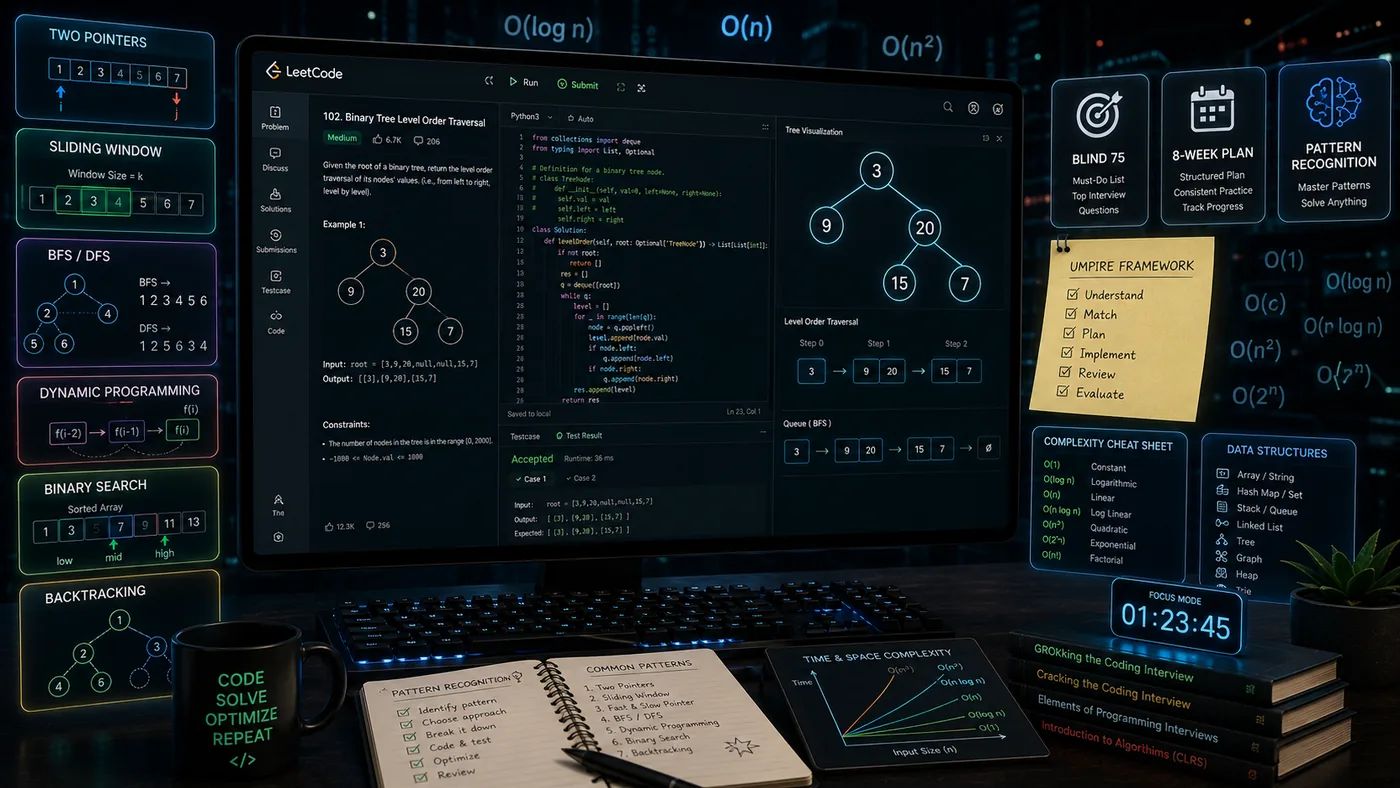
- Minimum viable prep: 75 problems (the "Blind 75" list)
- Solid prep: 150 problems across all patterns
- Strong prep for FAANG: 250-350 problems with company-tagged practice
Focus on patterns, not memorization. Once you recognize that a problem is a "sliding window" or "two pointers" problem, the solution approach becomes clear.
Practice Strategy
- Solve problems on LeetCode, HackerRank, or NeetCode
- Time yourself: 20-30 minutes per medium problem
- Always think aloud - interviewers evaluate your reasoning, not just your answer
- After solving, study the optimal solution and the underlying pattern
- Revisit problems you failed after 1 week
Read the dedicated coding interview preparation guide for detailed problem-solving frameworks.
System Design Preparation
system design rounds are standard for mid and senior roles (3+ years experience), and increasingly appear in some new-grad processes as a "low-level design" round.
Core Concepts to Understand
- Scalability (horizontal vs vertical scaling)
- Load balancing
- Caching (Redis, CDN, application cache)
- Databases (SQL vs NoSQL, sharding, replication, indexing)
- Message queues (Kafka, RabbitMQ)
- API design (REST, gRPC, GraphQL)
- Consistency models (strong vs eventual consistency, CAP theorem)
- Rate limiting
- Microservices vs monolith
Common System Design Questions
- Design a URL shortener
- Design a news feed (Twitter, Instagram)
- Design a chat system (WhatsApp)
- Design a ride-sharing service (Uber)
- Design a video streaming platform (YouTube)
- Design a rate limiter
- Design a notification system
System Design Framework
- Clarify requirements (functional and non-functional)
- Estimate scale (users, requests, data)
- Define the API
- Design the high-level architecture
- Deep-dive into core components
- Address bottlenecks and trade-offs
Read the dedicated system design interview guide for detailed walkthroughs.
Project / Technical Deep-Dive Preparation
Interviewers will ask about projects on your resume. Be ready to discuss:
- What problem the project solved
- The architecture and tech stack choices (and why)
- The hardest technical challenge and how you solved it
- What you would do differently
- Trade-offs you made
For every project on your resume, prepare a 2-minute overview and be ready to go deep on any part. If you cannot explain a project in detail, remove it from your resume.
Behavioral Round Preparation
Even technical interviews include behavioral assessment. Prepare STAR-method stories for:
- A technical challenge you overcame
- A time you disagreed with a teammate
- A project that failed and what you learned
- A time you had to learn something quickly
- How you handle competing priorities
Read the behavioral interview questions and answers guide for 40 questions and sample answers.
8-Week Technical Interview Prep Plan
Weeks 1-2: Arrays, strings, hash maps, two pointers, sliding window (40 problems) Weeks 3-4: Linked lists, stacks, queues, trees, BST (40 problems) Weeks 5-6: Graphs, recursion, backtracking, dynamic programming (40 problems) Week 7: system design fundamentals + 3 practice designs Week 8: Mock interviews, project prep, behavioral stories, review weak areas
Adjust based on your timeline. If you have 4 weeks, double the daily volume. If you have 16 weeks, slow down and go deeper.
Interview Day Tips
- Think aloud constantly - silence makes interviewers nervous
- Clarify the problem before coding - ask about edge cases and constraints
- Start with a brute-force approach, then optimize
- Test your code with examples before declaring it done
- If stuck, talk through your thought process - interviewers often give hints
- Manage your time - do not spend 40 minutes on one problem
Practice all of this with the free AI mock interview tool to build confidence before the real thing.
Related Guides
- Coding Interview Preparation Guide
- System Design Interview Guide
- How to Research a Company Before Your Job Interview
- How to Practice Mock Interviews Online for Free Using AI
- 20 Common Interview Mistakes to Avoid
- Final Round Interview Tips
- Group Discussion Tips
- How to Answer "Tell Me About Yourself"
- How to Prepare for a Job Interview
- Phone Interview Tips
- Behavioral Interview Questions and Answers
- How to Follow Up After a Job Interview
- How to Prepare for Campus Placement in 2026 - Complete Guide
- Why Am I Not Getting Interviews for Jobs I'm Qualified For?
Make This Practical
Use this advice as interview practice, not just reading material. Start a role-specific session with the AI mock interview tool, prepare your opening with How to Answer Tell Me About Yourself, and structure evidence-heavy answers with the STAR Method Interview Answers Guide.
Before the interview, make sure the resume that earned the call is still aligned with the role. Check it with the free ATS score checker, review Common Interview Mistakes to Avoid, and use How to Follow Up After an Interview once the conversation is over.
Conclusion
technical interview preparation is a structured process: master DSA patterns, understand system design fundamentals, know your projects deeply, and prepare behavioral stories. Consistent practice over 8-12 weeks prepares most candidates well.
Start with a resume that gets you interviews - use the TailorCV ATS score checker. Then work through the coding interview guide, system design guide, and behavioral interview guide. Practice delivery with the mock interview tool.
Former managers returning to hands-on roles face extra scrutiny here; moving back from management to IC covers how to prove your skills are current.
Frequently Asked Questions
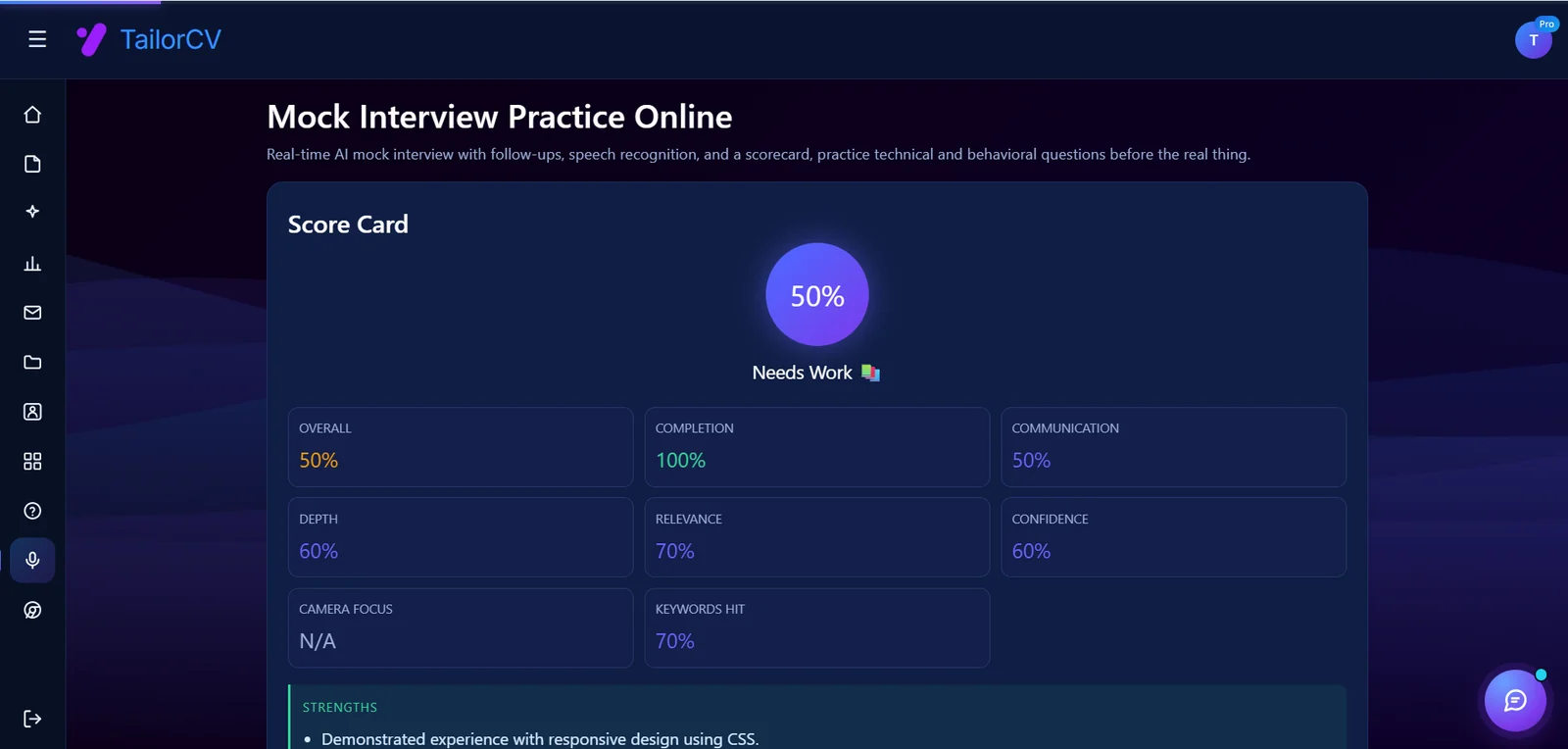
See it in action: a resume-based mock interview
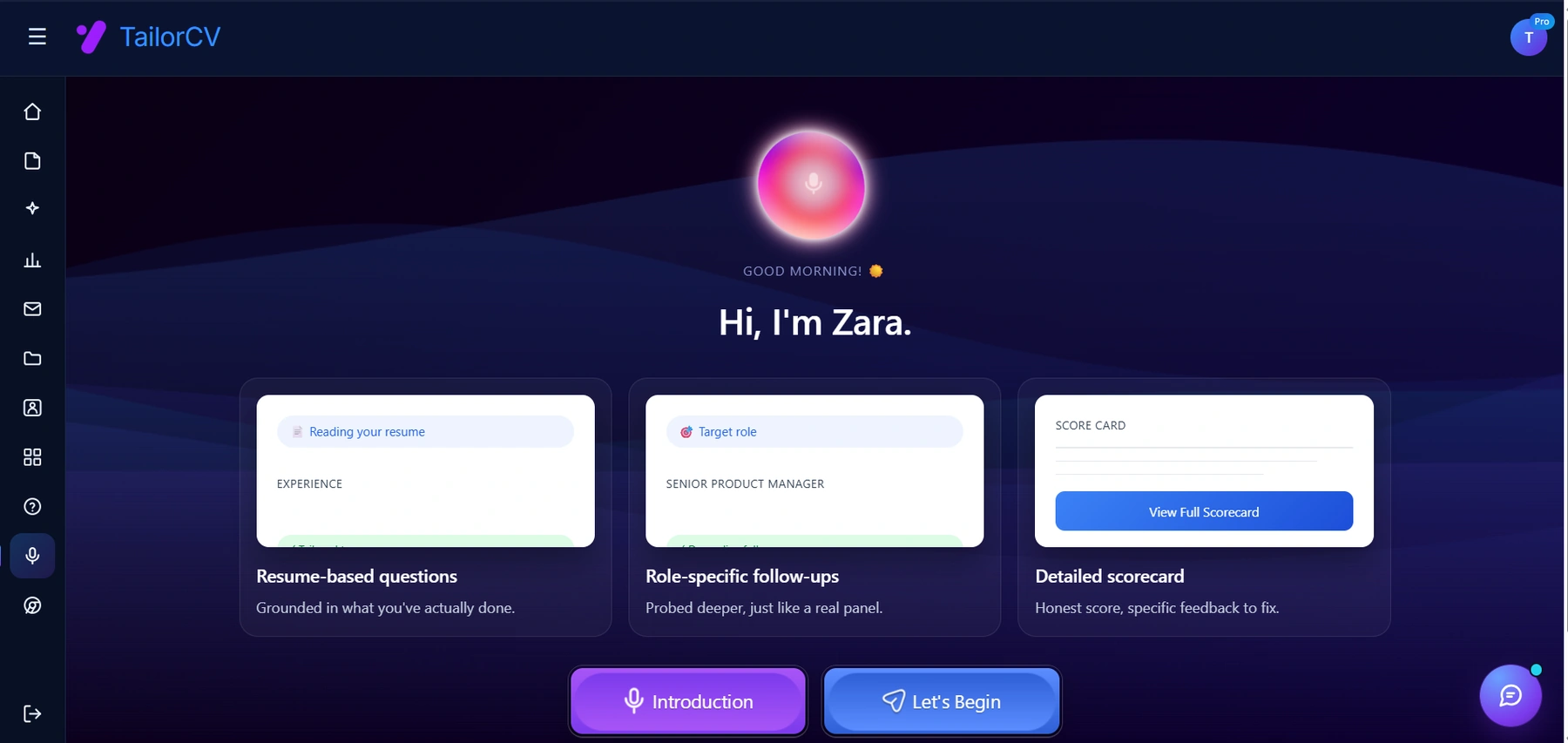
Rather than a fixed question list, the session is built from your own resume and target role, and ends with a scorecard naming the specific things to fix.
What are the key components of a technical interview in 2026?
The technical interview process typically consists of four main components: the Coding/DSA Round, System Design Round, Project/Technical Deep-Dive, and Behavioral Round. Each component assesses different skills, from problem-solving in data structures and algorithms to evaluating your ability to communicate and fit within a team. For more detailed insights, check out our Software Engineer Interview Preparation guide.
How many coding problems should I solve to prepare effectively?
To prepare effectively for technical interviews, aim to solve a minimum of 75 problems from the "Blind 75" list for basic competency. For solid preparation, tackle around 150 problems across various patterns, and for those targeting top companies like FAANG, solving between 250 to 350 problems is recommended. For a structured approach to problem-solving, refer to the Coding Interview Preparation Guide 2026.
What topics should I prioritize for the Coding/DSA Round?
When preparing for the Coding/DSA Round, prioritize mastering arrays and strings, hash maps and sets, and the two pointers and sliding window techniques. Following these, delve into more complex structures like trees, graphs, and dynamic programming. A comprehensive list of topics can help streamline your study process, which is discussed in the Coding Interview Preparation Guide 2026.
How can I prepare for the System Design Round?
Preparing for the System Design Round involves understanding how to design scalable systems and discussing trade-offs in your design choices. It’s crucial to practice with real-world scenarios and frameworks. For structured guidance and examples, explore our System Design Interview Guide 2026.
What resources can I use to optimize my resume for technical interviews?
To optimize your resume and increase your chances of landing technical interviews, use the Free ATS score checker to ensure it passes automated screening. Additionally, consider utilizing our resume templates to create a professional and impactful resume that highlights your technical skills effectively.
Was this guide useful?
Be the first to rate it.