 TD
TD

Key Takeaways
- Internal job applications require a tailored resume, just like external ones, to effectively convey your qualifications and fit for the role.
- Consider your relationship with your manager before applying; transparency can build trust, but it may be wise to wait if your manager is unsupportive.
- Use insider knowledge of the company’s language and priorities to enhance your resume and demonstrate your qualifications.
- Quantify your contributions to the company to showcase your impact and relevance to the new role.
You have been at the company for two years.
You know the product better than most interviewers. You have relationships across departments. You understand the culture, the politics, the unwritten rules.
And yet - you are not sure how to apply for an internal role without making it weird.
Do you tell your manager? Do you send a full resume or just an updated one? Does your internal reputation help you or hurt you?
Internal job applications are loaded with nuance that no one talks about. This guide covers all of it - the resume strategy, the politics, and how to tailor your application to win the role you want inside your own company.
Why Internal Applications Are Different
When you apply externally, you are a blank slate. The hiring manager reads your resume with fresh eyes.
When you apply internally, you carry baggage - good and bad. Some interviewers know you. Some know your reputation secondhand. Some have worked with you and have already formed opinions.
This changes everything about how you should present yourself.
The biggest mistake internal candidates make is assuming their internal reputation does the work for them.
It does not.
You still need a strong resume. You still need to tailor it for the role. You still need to pass the same process that external candidates go through - including, at large companies, ATS filtering.
But you have one advantage external candidates do not: insider knowledge of exactly what the hiring manager actually needs.
Before You Apply: The Political Reality
Should You Tell Your Manager?
This is the most stressful part of any internal application.
The honest answer: it depends on your relationship.
If your manager is supportive and champions your growth: Tell them before you apply. Being transparent builds trust and they may advocate for you.
If your manager is territorial or has shown signs of blocking promotions: Apply first, notify them once your candidacy is active (most companies require manager notification at some point in the process).
If you are unsure: Apply first. Then, once the hiring team is interested, prepare a professional conversation with your current manager framed around growth.
You are not betraying your manager by wanting to grow. That is a normal, healthy career move. You owe them professionalism - not veto power over your future.
How to Tailor Your Resume for an Internal Role
Your resume after optimization
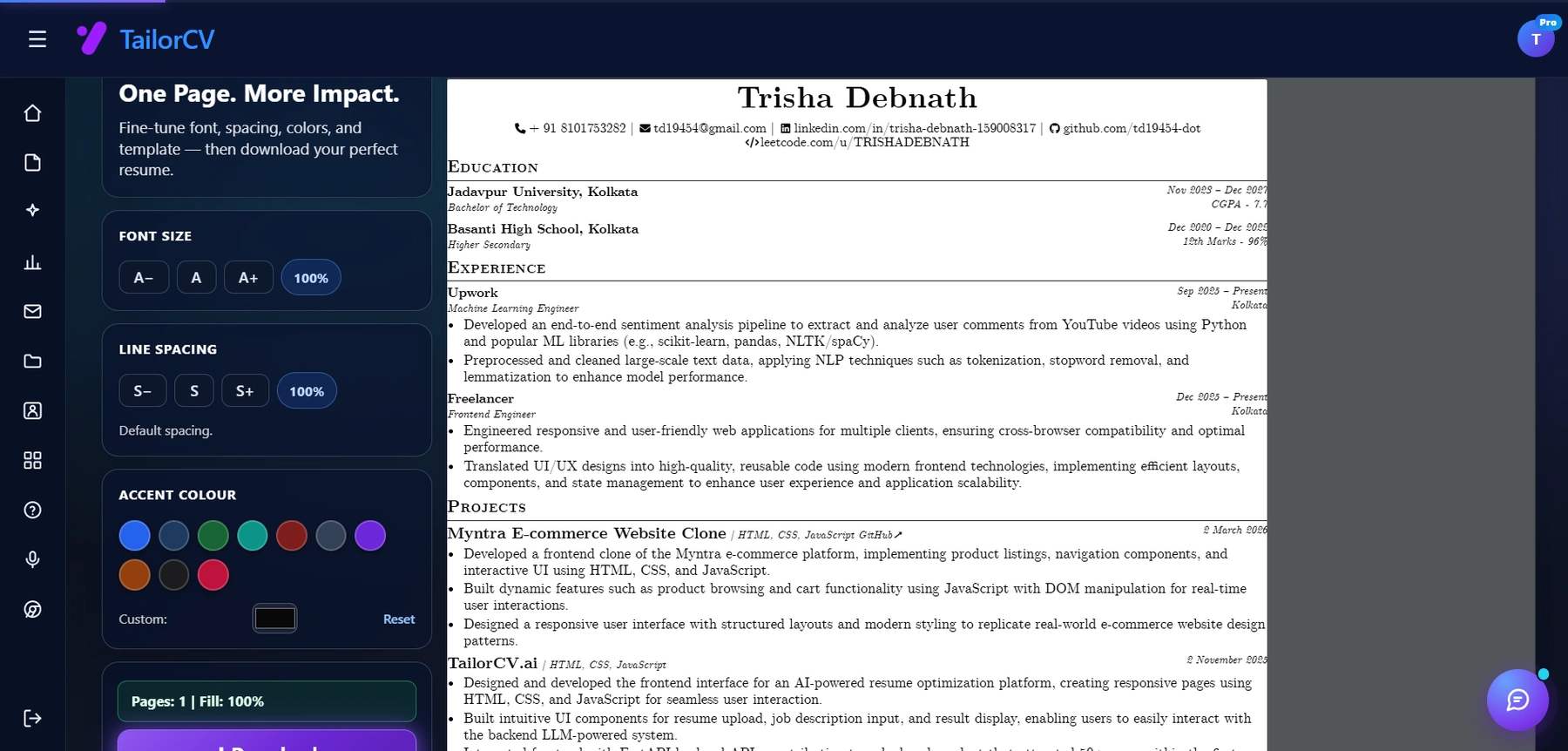
This is the resume after tailoring - the content is already matched, and these controls are how you fit it onto one page.
1. Treat It Like an External Application
Write a full, tailored resume. Do not send your LinkedIn profile. Do not send your two-year-old resume with a few updates.
Understand how to update your resume properly before starting - create a version specifically for this role, following the job description as closely as an external candidate would.
Why? Because the hiring committee may include people who have never worked with you. HR may require a formal application with resume attached. ATS systems at large companies often process internal applicants the same way as external ones.
Use TailorCV's optimizer to check your ATS match score for the internal job description. Yes - internal roles at large companies often go through ATS too.
2. Use Internal Language Strategically
You have an advantage here. You know the actual language the team uses. You know what projects they call priorities. You know which metrics the hiring manager tracks every week.
Use that insider knowledge in your resume language.
If the hiring manager calls it "the growth engine" in all-hands meetings - use that phrase. If the team is migrating to a specific platform - mention your familiarity with it.
This is not insider information you are abusing. This is context that makes you uniquely qualified.
3. Quantify Your Company-Specific Contributions
External candidates show results in abstract numbers. You can show results in context your interviewers will immediately recognize.
Quantifying your achievements with company-specific context is your biggest advantage over external candidates.
External candidate bullet: "Improved customer engagement metrics by 35% through cross-functional campaign initiatives."
Internal candidate bullet (more powerful): "Led the Q3 re-engagement campaign for lapsed users - drove 35% improvement in 30-day re-activation, which became the model for the Q4 product growth sprint."
Your interviewers know what the Q3 campaign was. They know how hard that 35% was to move. That context hits differently.
4. Address the "Why Are You Leaving Your Team" Question in Your Summary
Your professional summary should briefly signal that this move is about growth, not escape.
Weak: "Experienced marketing associate with strong analytical skills seeking new challenges."
Strong for internal application: "Marketing Associate with 2 years driving [Company]'s content analytics program, seeking to bring that execution depth into a Product Marketing role where I can own the full customer narrative strategy."
The reader sees: this person is ready to grow, they want to stay in this company, and they have a clear vision for how their past work informs their future contribution.
5. Do Not Over-Rely on Informal Relationships
"I know the hiring manager" is not a substitute for a strong application.
In fact, internal candidates who coast on relationships and submit weak applications often lose to strong external candidates - and then the professional awkwardness is real.
Check for resume red flags before submitting, and make sure your application is as polished as any external candidate's. Let the relationship be a plus, not the plan.
The Internal Application Resume Structure
Your internal resume should follow the same anatomy of a strong resume:
- Professional summary - tailored to this exact role, signals why you want this role at this company
- Skills - matched to the job description keywords
- Work experience - company roles with quantified results; lead with most relevant bullets
- Education & certifications - same as any application
One addition for internal resumes: if there are company-specific projects, initiatives, or milestones you led or contributed to, name them explicitly. External candidates cannot do this.
Before and After: Internal Application Summary
Before (Generic):
"Experienced operations analyst with strong data skills and process improvement background."
After (Internal, Tailored):
"Operations Analyst with 2 years at [Company] leading the logistics dashboard rebuild that reduced reporting lag by 4 days. Seeking to bring that cross-functional project ownership into a Senior Ops role, with a focus on scaling the new warehouse automation workflows launching in Q3."
The after version:
- Mentions a real internal project the hiring team knows
- Shows clear ownership
- Signals genuine understanding of what the new role requires
- Sounds confident, not desperate
Common Internal Application Mistakes
Submitting a lazy resume because "they already know me" The hiring team does not all know you. Even those who do want to see you take the role seriously.
Keeping every tailored resume with its job
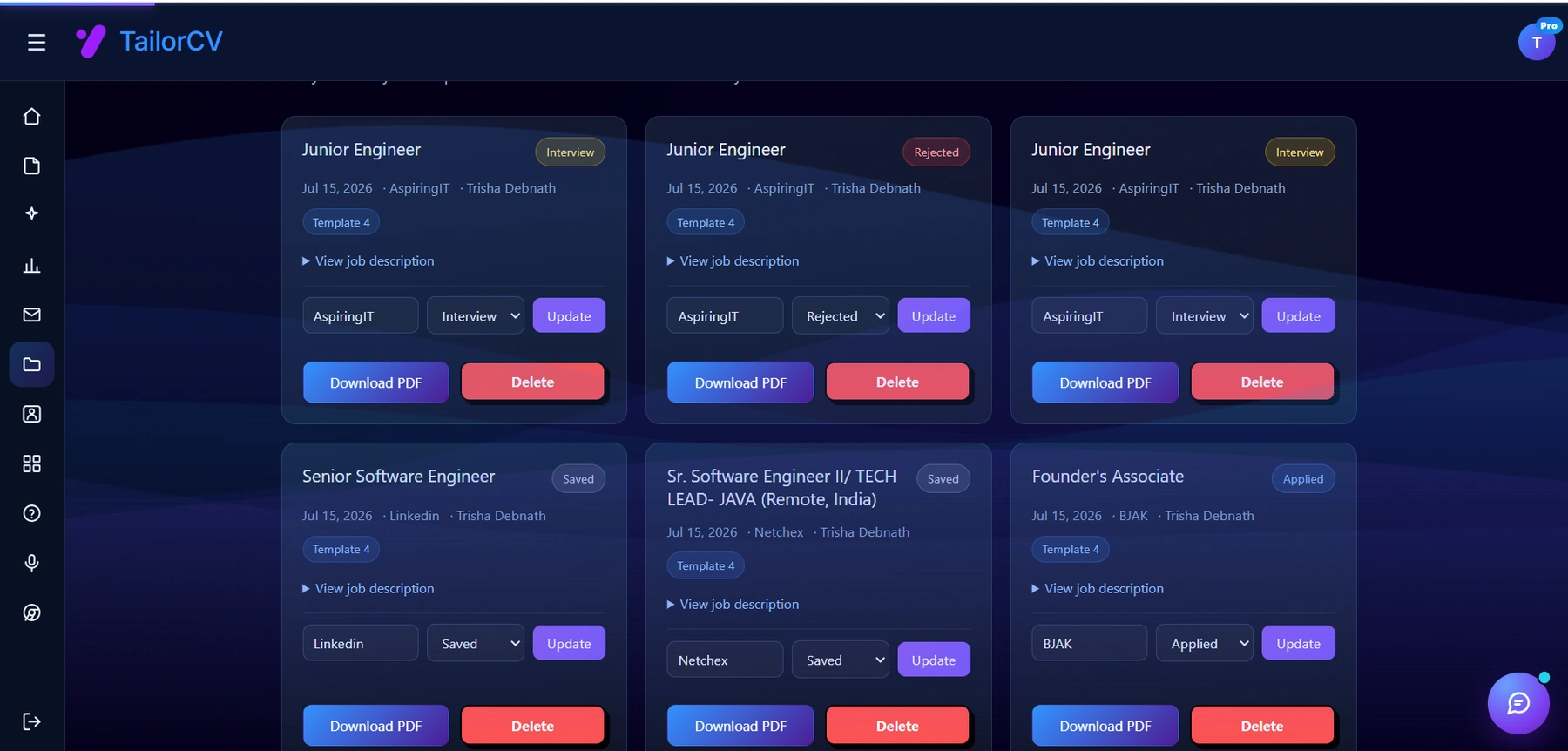
Every resume you tailor is saved against the job it was written for, with the company, the job description and a status you can move from Saved to Applied to Interview. That is the part a spreadsheet usually gets wrong - the tracker and the actual document drift apart, and you end up guessing which version you sent.
Skipping the tailoring Your resume should match the job description as closely as possible. Use the same keywords. Check your ATS score.
Being vague about why you want the role "I want to grow" is not enough. What specifically about this role, this team, this moment in the company's journey excites you? Be specific.
Ignoring the interview process Internal candidates sometimes over-prepare for the political side and under-prepare for the actual interview. Practice your answers. Use TailorCV's AI mock interview if you want to rehearse in a low-stakes environment.
Not writing a cover letter A cover letter is even more important for internal roles - it gives you space to explain your motivation and growth trajectory in a way the resume alone cannot.
What to Do If You Do Not Get the Role
It happens. An internal candidate gets passed over for an external hire.
The professional response:
- Ask for a debrief with the hiring manager
- Be direct about what you need to build toward the next opportunity
- Do not take it personally in public - even if it stings
The useful response:
- Identify the specific gap (skills? visibility? framing?)
- Build a plan to address it
- Apply again in 6-12 months with a stronger case
Read how to handle job rejection for a full guide on processing and bouncing back. Also consider whether networking within your organization could help you build visibility for future opportunities.
Make This Practical
Do not guess whether the resume is ready. Upload it to the free ATS score checker, compare the result with the ATS Score Guide, and fix formatting issues using ATS Resume Formatting Mistakes and ATS Resume Parser Friendly Format.
After the technical cleanup, improve relevance. Use Resume Matching With Job Description, strengthen keyword coverage with the Resume Keywords Guide, and avoid overdoing it by checking ATS Keyword Mistakes. If the layout itself is weak, rebuild with an ATS-friendly resume template.
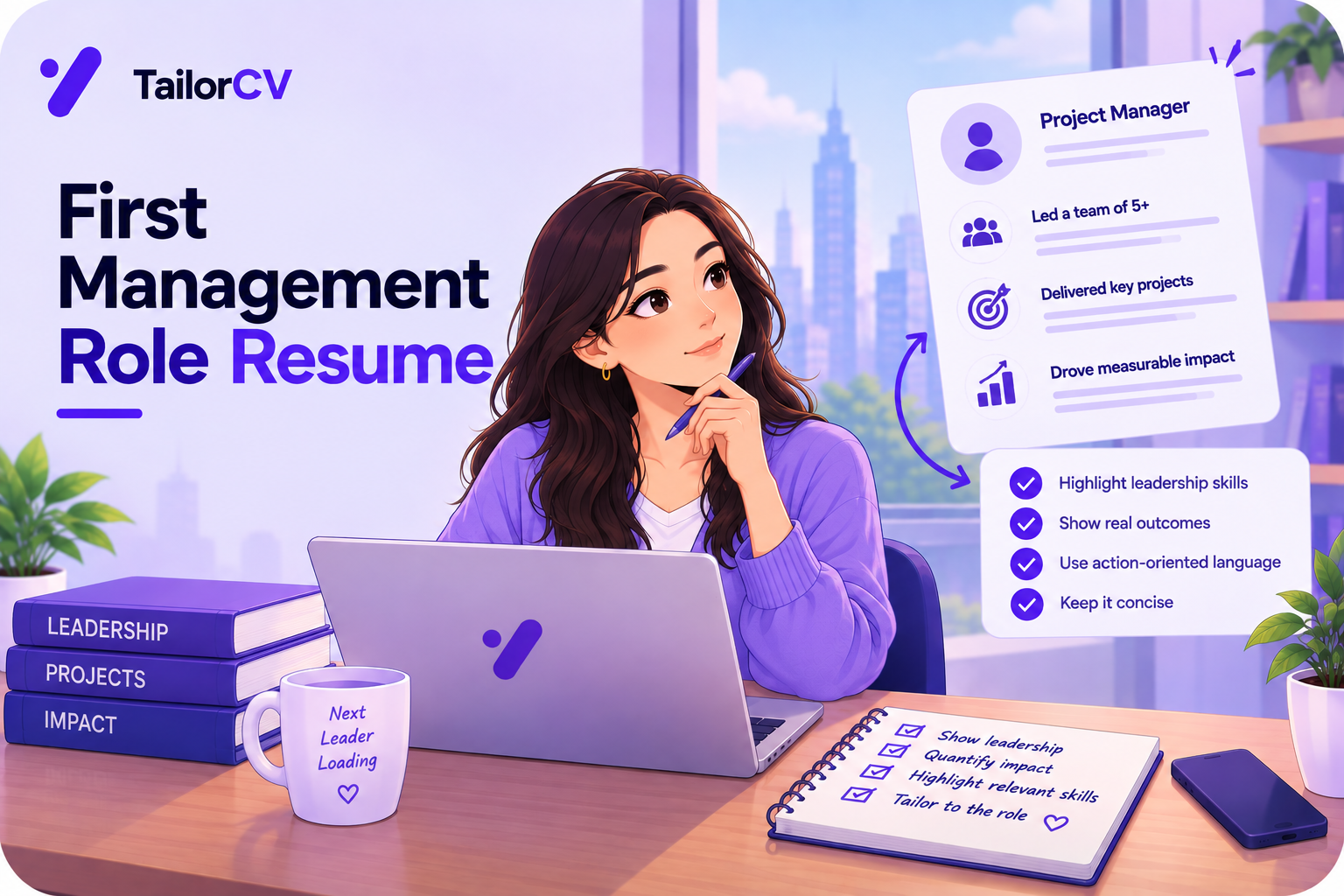
If the internal move is into your first management role, moving from senior IC to first management role covers what leadership evidence to lead with.
FAQ
Do I need a cover letter for an internal application?
Yes. A short, honest cover letter that explains your motivation and what you bring to the role is almost always worth writing. It signals seriousness.
Will applying internally hurt my current standing?
Only if you handle it poorly. Most managers respect employees who communicate ambition professionally. Sneaking around creates problems - transparency usually does not.
Should I update my LinkedIn before applying internally?
Not necessarily. Focus on your resume and the formal application. Updating LinkedIn mid-process can create unnecessary noise internally.
What if I am competing against an external candidate?
You have insider knowledge of the company, culture, and needs. That is a real advantage - if your resume and interview reflect it. Do not assume it is enough on its own. Consider also how to get a promotion to enhance your chances.
Related Guides
- How to Tailor Your Resume for Every Job
- How to Get a Promotion in 2026
- Resume Summary Match Job Description
- How to Write a Resume Summary
- ATS Score Guide
- How to Handle Job Rejection
- Cover Letter Guide 2026
- Tailored vs Generic Resume
- Resume Matching with Job Description - Complete Guide
- How to Negotiate a Salary Offer
- The Best Email Subject Line for a Job Application
Conclusion
An internal job application is not a formality.
It is a real competition where your insider knowledge is your edge - but only if you use it.
Write a full, tailored resume. Match the job description language. quantify your company-specific contributions. Handle the politics with professionalism.
You already know the company. Now show the hiring team that you also know exactly what this role needs.
Tailor My Internal Application Resume - Free
See what tailoring is worth on your resume
Score your current resume against a real job description before you change a word.
Drop your resume here or choose a file
PDF only. Max 2 MB.
We never share your data or use it to train AI models.

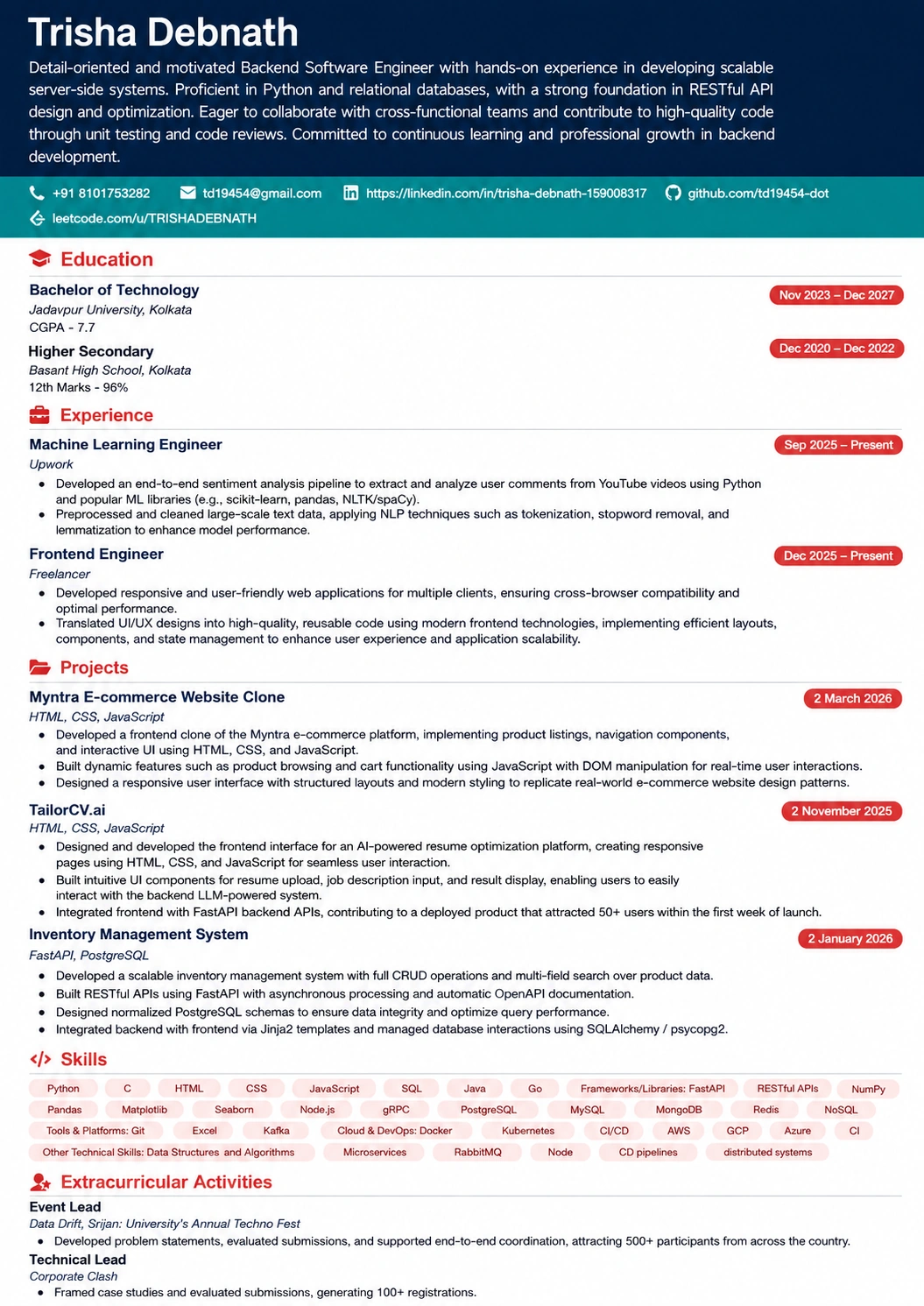
A layout that works with a short history
Leads with skills and projects instead of years of experience you do not have yet.
Was this guide useful?
Be the first to rate it.