 SS
SS

Key Takeaways
- The STAR method (Situation, Task, Action, Result) provides a structured approach to answering behavioral interview questions effectively.
- A common mistake in STAR answers is spending too much time on the Situation and not enough on the Result, which should include measurable outcomes.
- Candidates often fail by using generic stories that lack specificity; answers should be based on real projects and metrics from their resumes.
- A balanced STAR response should take 60–90 seconds, with approximately 15% on Situation, 15% on Task, 40% on Action, and 30% on Result.
"Tell me about a time you..." is the single most common lead-in to a hard interview moment. It sounds simple, but ask most candidates to answer it on the spot and the response wanders — no clear beginning, no clear ending, and no clear reason it should matter to the interviewer.
The STAR method exists to fix exactly that. It is not a gimmick or corporate jargon — it is a structure that forces a rambling memory into a story with a beginning, a decision point, and a measurable outcome. This guide breaks down each part of STAR, shows what a strong answer looks like versus a weak one, and gives you a repeatable process for preparing your own stories before the interview — not during it.
What Is the STAR Method?
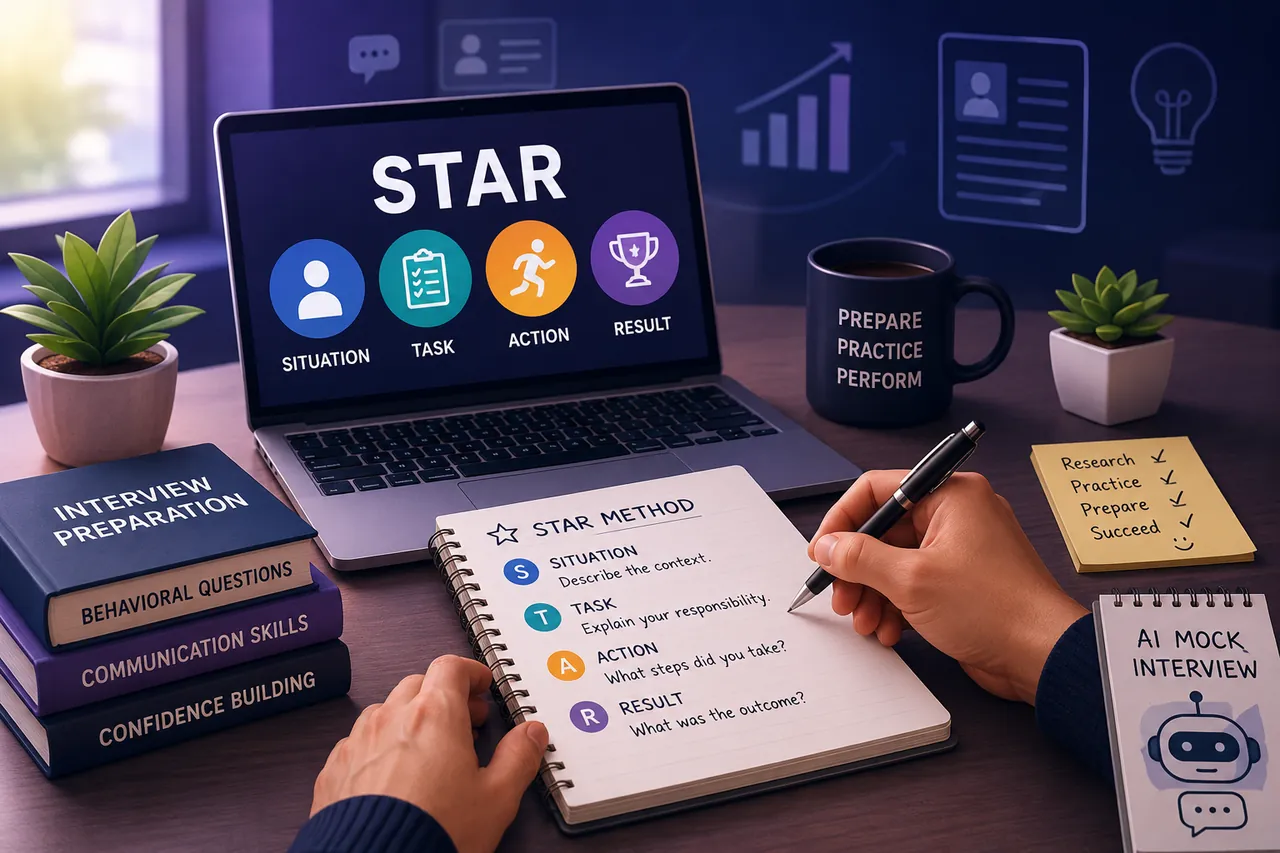
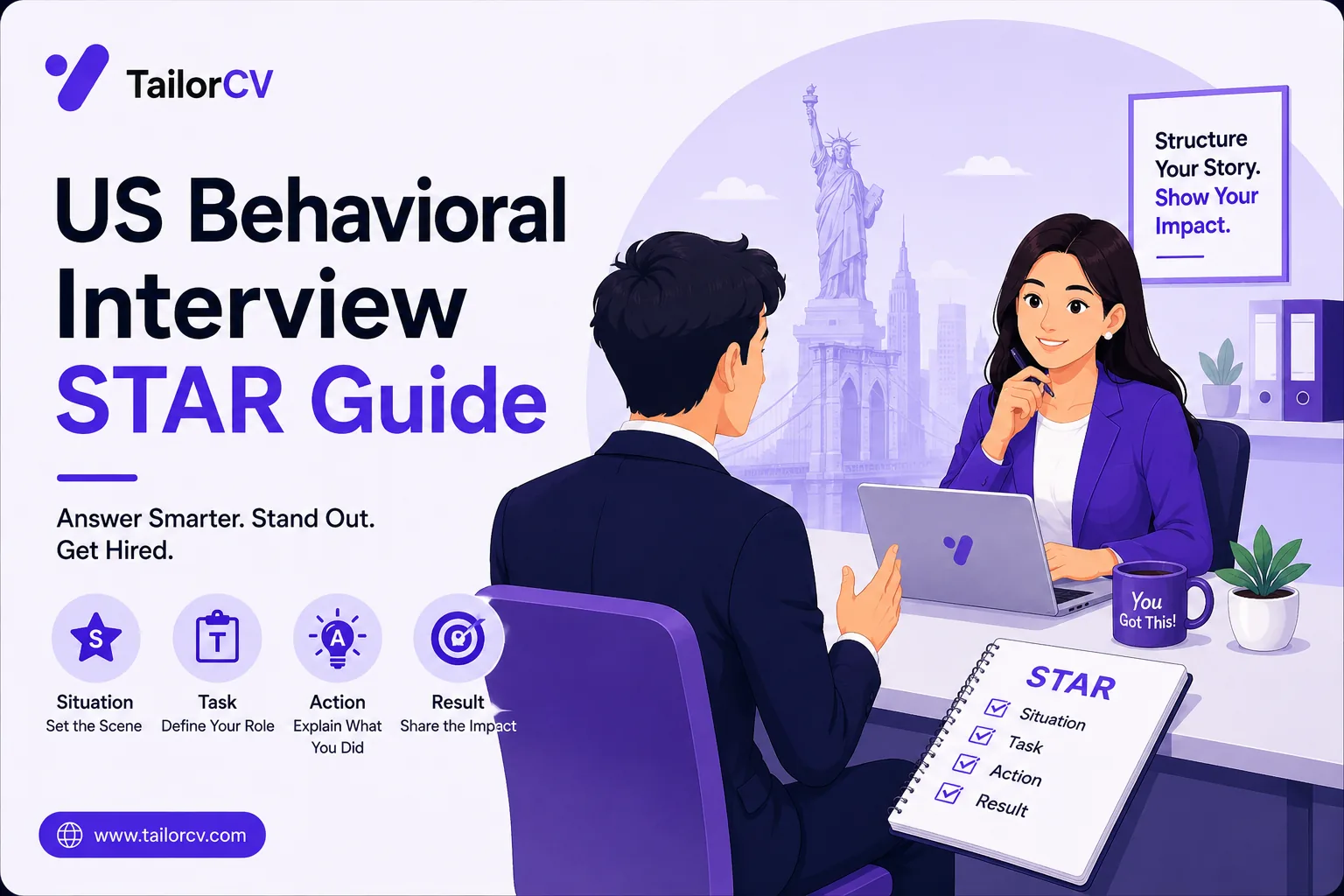
STAR stands for Situation, Task, Action, Result — four parts that, together, turn a vague memory into a complete, convincing answer.
See it in action: a resume-based mock interview
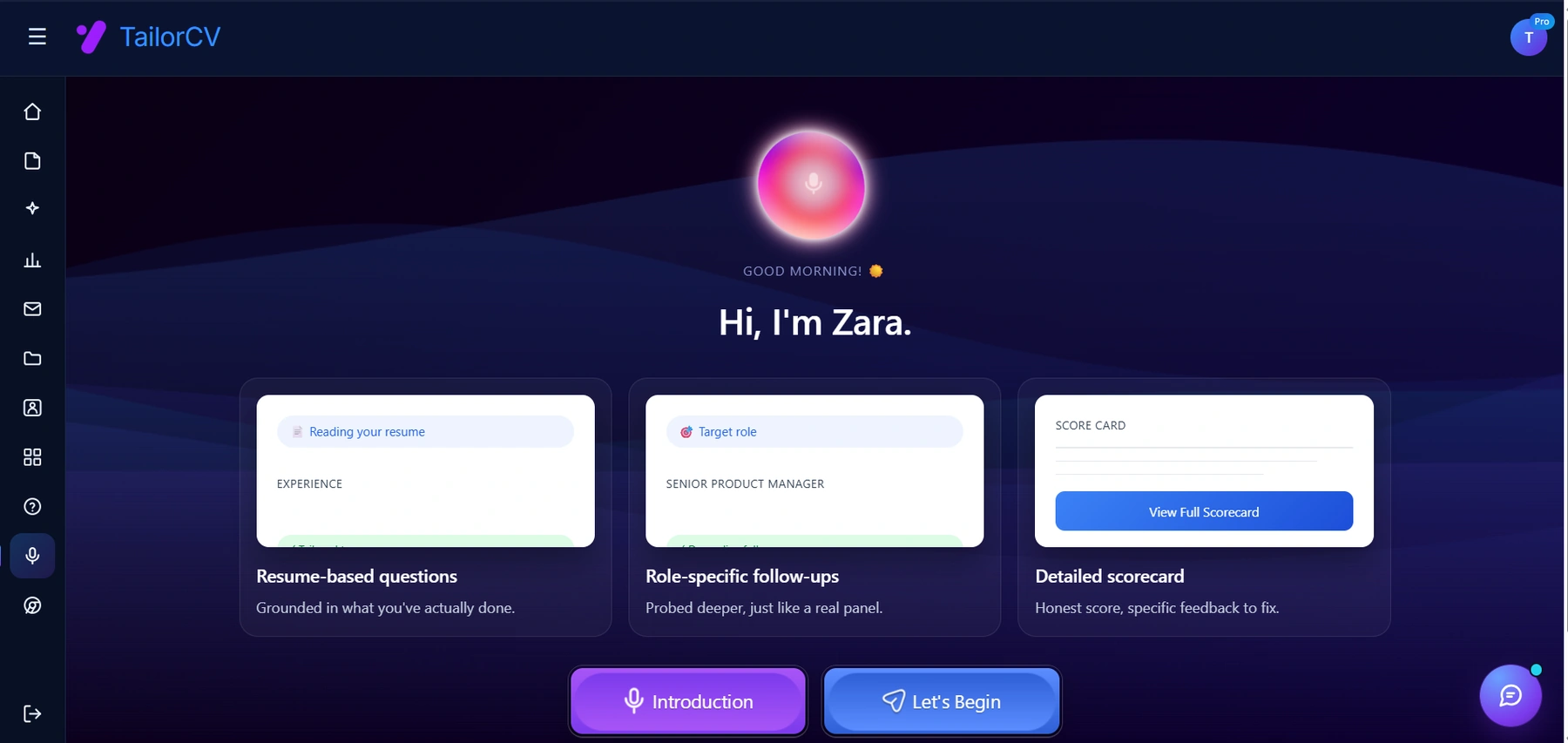
You can rehearse this before the real thing. The interviewer reads your resume first, so the questions come from your actual experience rather than a generic list.
| Option | What it involves |
|---|---|
| Situation | the context. Where were you, what was happening, why did it matter |
| Task | your specific responsibility or goal in that situation |
| Action | what you actually did, step by step |
| Result | what happened because of your action, ideally with a number attached |
Interviewers use this structure because it maps directly onto behavioral interview questions — questions that ask you to prove a claim about yourself with a real example, rather than just asserting it. "I'm a strong problem-solver" is an opinion. A STAR answer is evidence.
Why Most STAR Answers Fail
The structure is simple, but most candidates get the proportions wrong. Three common failure patterns:
- Too much Situation, not enough Result. Candidates spend two minutes on backstory and ten seconds on the outcome — which is backwards, since the Result is the part that actually answers the question.
- No numbers in the Result. "It went well" and "the team was happy" are not results. A number, a percentage, a timeframe, or a before/after comparison is what makes a result credible.
- Generic stories that could apply to anyone. If your STAR answer doesn't reference a real project, team, or metric from your actual resume, it sounds rehearsed rather than true — which is exactly why generic answers cost interviews. Vague stories usually trace back to a vague resume — see common resume-to-job-description mismatch mistakes for how that gap starts.
The fix for all three is the same: build your STAR stories directly from specific resume bullets, not from memory alone.
STAR, Broken Down: How Much Time to Spend on Each Part
A well-balanced STAR answer runs 60–90 seconds when spoken aloud. Here's roughly how to allocate it:
| Part | Time | Purpose |
|---|---|---|
| Situation | ~15% | Set context fast — one or two sentences |
| Task | ~15% | Clarify what specifically was on you to solve |
| Action | ~40% | The bulk of the answer — what you actually did |
| Result | ~30% | The payoff — numbers, outcomes, what changed |
Notice Action and Result together make up 70% of the answer. If you find yourself spending most of your time on Situation, you're almost certainly under-preparing the part that matters most.
Situation
Keep this to one or two sentences. Enough to orient the interviewer, not a full narrative.
Weak: "So this was back when I was working at my previous company, and we had this big project that involved a lot of different teams, and it was kind of a chaotic time because..."
Strong: "During a product launch, our QA team fell two weeks behind schedule with three weeks left before the release date."
Task
State your specific responsibility clearly — this is what tells the interviewer why the story is about you and not just something that happened around you.
Strong: "As the project lead, it was on me to either recover the timeline or renegotiate it with stakeholders without damaging trust in the team."
Action
This is the core of the answer. Walk through the specific steps you took — plural, sequential, and in your own voice. Use strong, direct language here; see best action verbs for a resume for the same principle applied to spoken answers — "led," "restructured," "negotiated" land far better than "helped with" or "was involved in."
Strong: "I audited the QA backlog to find what was actually blocking release versus what could ship as a fast-follow, negotiated a scoped-down v1 with the product team, and reassigned two engineers to cover the highest-risk test cases."
Result
End with a number. Always. If you don't have an exact figure, use a defensible estimate — see how to quantify resume achievements for how to translate soft outcomes into numbers you can say with confidence.
Strong: "We shipped on the original date with the core features intact, deferred two minor ones to a fast-follow release two weeks later, and had zero critical bugs reported in the first 30 days — a better outcome than the original scope would have delivered on time."
Full STAR Example Answers
Question: Tell me about a time you faced a conflict at work.
"Two senior engineers on my team disagreed on the architecture for a new service, and the disagreement had stalled the project for a week. (Situation) As the project lead, I needed to get the team unblocked without picking a side that would damage either person's buy-in. (Task) I set up a structured design review where each presented their approach with tradeoffs, then had the team score both against our actual constraints — latency, maintainability, and delivery timeline. (Action) We landed on a hybrid approach neither had originally proposed, the project resumed within two days, and both engineers later told me it was the most productive design review they'd been part of. (Result)"
Question: Tell me about a time you failed.
"I promised a launch date to stakeholders before confirming QA's actual timeline. (Situation) Once I realized the estimate was wrong, it was on me to fix it before it became a bigger problem. (Task) I flagged the risk to stakeholders as soon as I saw it, presented a revised timeline with a clear reason, and built in a buffer for the remaining phases of the project. (Action) We missed the original date by four days but hit the revised one exactly, and I've since added a standing QA check-in to every project plan I own — no project since has had a similar slip. (Result)"
Question: Give an example of a time you took initiative.
"Our team had no onboarding documentation, and new hires were taking roughly six weeks to become fully productive. (Situation) Nobody had explicitly asked me to fix this, but I saw it slowing the whole team down. (Task) I spent two weeks building a structured onboarding guide, interviewing recent hires about what had confused them most, and getting it reviewed by two senior engineers. (Action) Ramp-up time dropped to roughly three and a half weeks for the next two hires, and the guide is now the default onboarding resource for the team. (Result)"
These examples work because each one is specific enough to sound real. If you want to build your own set of stories this precise, practicing them out loud against real follow-up questions is far more effective than writing them once and hoping you remember them — a free AI mock interview built from your own resume will ask the exact follow-ups a real interviewer would, so you can pressure-test the story before it counts.
How to Build Your Own STAR Story Bank
Don't try to write a new STAR story on the spot for every possible question — prepare a small set of flexible stories in advance and adapt them to whatever's asked.
- Pull 5–6 stories from your resume, not from memory alone. Look at your strongest bullet points and ask "what's the story behind this number?" — this is also a good gut check on whether your resume bullets are written strongly enough in the first place.
- Cover the common categories: a conflict story, a failure story, an initiative story, a pressure/deadline story, and a leadership or persuasion story. Most behavioral questions map to one of these five.
- Write each one as a few bullet points, not a full script — Situation in one line, Task in one line, 2–3 Action bullets, one Result with a number.
- Practice saying them out loud. Reading silently hides filler words, rambling, and pacing problems that only show up when you speak. This is the single biggest gap between candidates who prepare and candidates who actually perform well — see common interview mistakes to avoid for how often this specific gap shows up.
- Adapt the same story to different questions. A story about catching a QA risk early can answer "tell me about a mistake," "tell me about a time under pressure," or "tell me about a time you showed ownership," depending on which part you emphasize.
- Time yourself. Aim for 60–90 seconds per answer — long enough to be complete, short enough to hold attention.
STAR Method in Different Interview Formats
STAR shows up differently depending on the round:
- Phone interviews reward pacing and clarity even more than in-person rounds, since the interviewer has no visual cues — see phone interview tips for adjustments specific to that format.
- Virtual interviews add the challenge of screen presence — see virtual interview tips for how to keep STAR answers from feeling flat on camera.
- Technical interviews often blend STAR with a technical walkthrough — see the technical interview preparation guide and system design interview guide for how behavioral and technical structure combine in those rounds.
- Final rounds tend to probe STAR answers harder with follow-up questions — see final round interview tips and resume tailoring for a second interview for what changes as you advance.
Whatever the format, always come prepared with your own questions to ask the interviewer at the end — a strong STAR performance can lose momentum if the interview closes with no genuine curiosity from your side.
Common STAR Mistakes to Avoid
- Starting with "well, so..." — a vague opener signals you haven't prepared the story. Start directly with the Situation.
- Choosing a story with no real stakes. If nothing was actually at risk, the Result won't land — pick moments that had genuine consequences.
- Taking sole credit for a team outcome. It's fine to say "I" for your specific contribution, but acknowledge the team where it's true — overclaiming reads as dishonest, not confident.
- Ending without a result. An answer that trails off after the Action leaves the interviewer to guess whether it worked — always close the loop explicitly.
- Using the same story for every question. Interviewers notice repetition across rounds, especially in final round interviews where multiple interviewers compare notes — prepare enough variety to avoid this.
What If the Interview Doesn't Go Your Way?
Even a well-structured STAR answer doesn't guarantee an offer — sometimes it comes down to fit or budget, not your delivery. If that happens, it's worth understanding why you might be getting rejected and how to handle job rejection constructively, and always follow up after the interview regardless of how it felt in the room — a good follow-up has changed outcomes even after a shaky answer.
FAQ
What does STAR stand for in interviews?
Situation, Task, Action, Result — a four-part structure for answering behavioral interview questions with a real example instead of a vague generalization.
How long should a STAR answer be?
Roughly 60–90 seconds when spoken. Keep Situation and Task brief and spend most of the time on Action and Result, since those are the parts that actually answer the question.
Do I need a number in every STAR answer?
Wherever possible, yes. A number, percentage, or timeframe makes the Result credible instead of vague — see how to quantify resume achievements for how to find a defensible number even in roles without obvious metrics.
How many STAR stories should I prepare before an interview?
Five to six flexible stories usually cover most behavioral questions, if each one is chosen to demonstrate a different theme — conflict, failure, initiative, pressure, and leadership.
How can I practice STAR answers realistically?
Speaking the answer out loud, under time pressure, to questions generated from your own resume is far more effective than reading a list silently — which is exactly what a free AI mock interview is designed for. For more guidance, check out our STAR Method for Interview Answers - Complete Guide with Examples (2026).
Related Guides
- Behavioral Interview Questions and Answers
- How to Prepare for a Job Interview in 2026
- Common Interview Mistakes to Avoid
- How to Answer "Tell Me About Yourself"
- How to Quantify Resume Achievements
- How to Write Resume Bullet Points
- Questions to Ask in an Interview
- Final Round Interview Tips
- How to Follow Up After an Interview
- Free Mock Interview Practice
Final Thoughts
The STAR method is not about sounding polished — it's about making sure the interviewer can actually follow what you did and why it mattered. Most candidates already have good stories; what they lack is the structure to tell them clearly under pressure.
Build your story bank from your real resume, practice saying each one out loud, and always close with a number. Start by making sure your resume itself has strong, quantified bullet points to draw from — check and tailor it here — then run a free AI mock interview to rehearse your STAR answers against real follow-up questions before it counts.
Practice My STAR Answers — Free
Was this guide useful?
Be the first to rate it.