 SS
SS

Key Takeaways
- Software engineer interviews assess coding, system design, behavioral skills, and resume alignment, requiring balanced preparation across all areas.
- Coding interviews evaluate problem-solving skills, reasoning, and communication; practice explaining your thought process while solving problems.
- System design interviews focus on judgment under ambiguity, requiring candidates to clarify requirements and justify design tradeoffs.
- Behavioral interviews assess communication about real work experiences, emphasizing the importance of articulating past contributions effectively.
software engineer interviews are unusual in that they test four almost unrelated skills in the same process: can you code under time pressure, can you reason about systems at scale, can you communicate clearly about your own work, and does your resume actually reflect what you can do. Most candidates over-prepare for one of these and neglect the rest — which is exactly why strong engineers still get rejected.
This guide breaks the process into its real components — coding, system design, behavioral, and resume alignment — and gives you a realistic way to prepare for all four without burning out before the interview even happens.
The Four Rounds You're Actually Being Evaluated On
Most software engineer interview loops, regardless of company size, test some combination of:
- Coding / algorithmic rounds — can you solve a problem correctly and efficiently, and explain your reasoning while doing it.
- system design rounds — can you reason about tradeoffs at scale (usually for mid-level and above).
- Behavioral rounds — can you communicate clearly about real work you've done, not hypotheticals.
- Resume and background discussion — does what's on your resume hold up to a real conversation about it.
Treating these as one undifferentiated "the interview" is the most common mistake candidates make. Each requires a different kind of preparation, and cramming only one (usually coding) while ignoring the others is why technically strong candidates still lose offers at the behavioral or system design stage.
Round 1: Coding Interviews
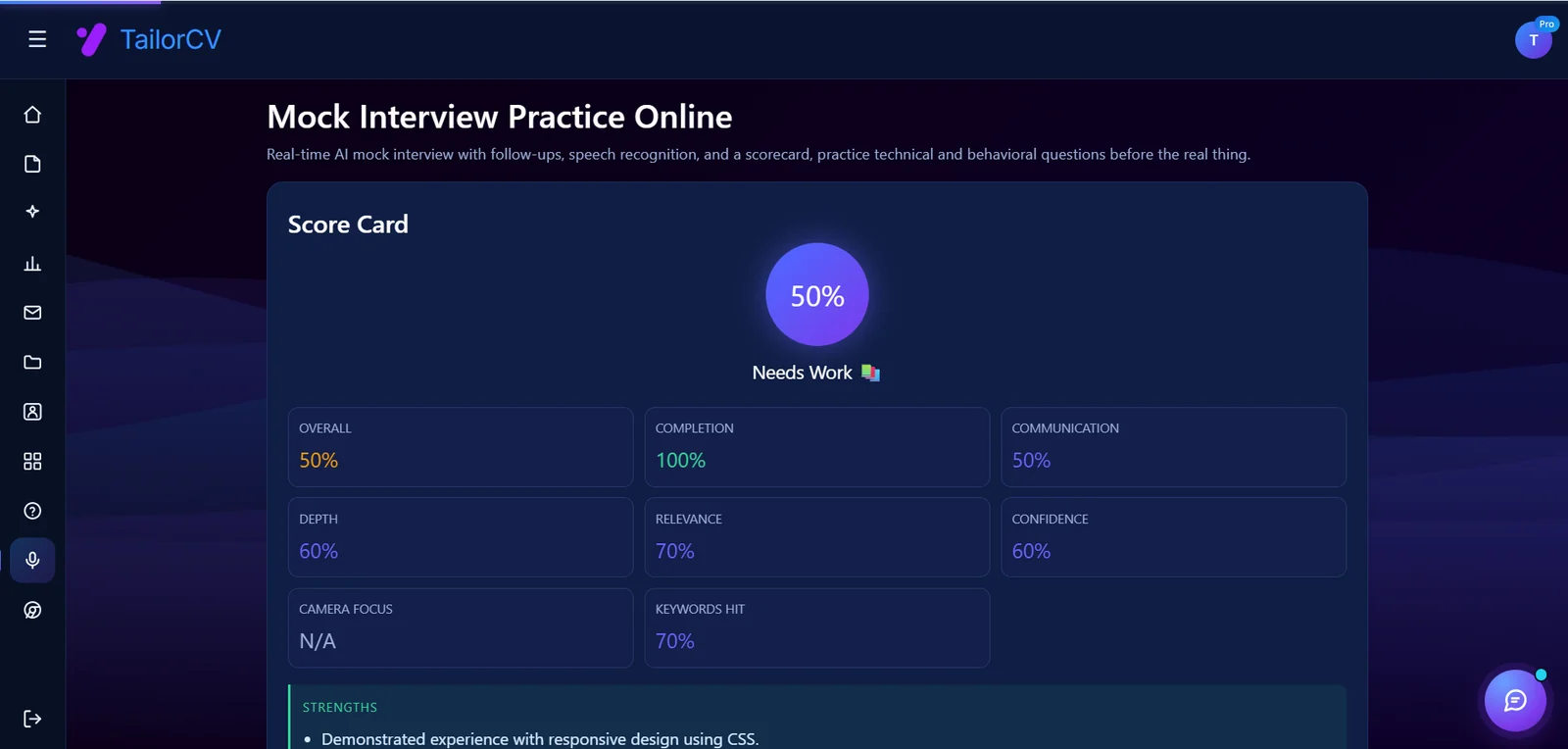
See it in action: a resume-based mock interview
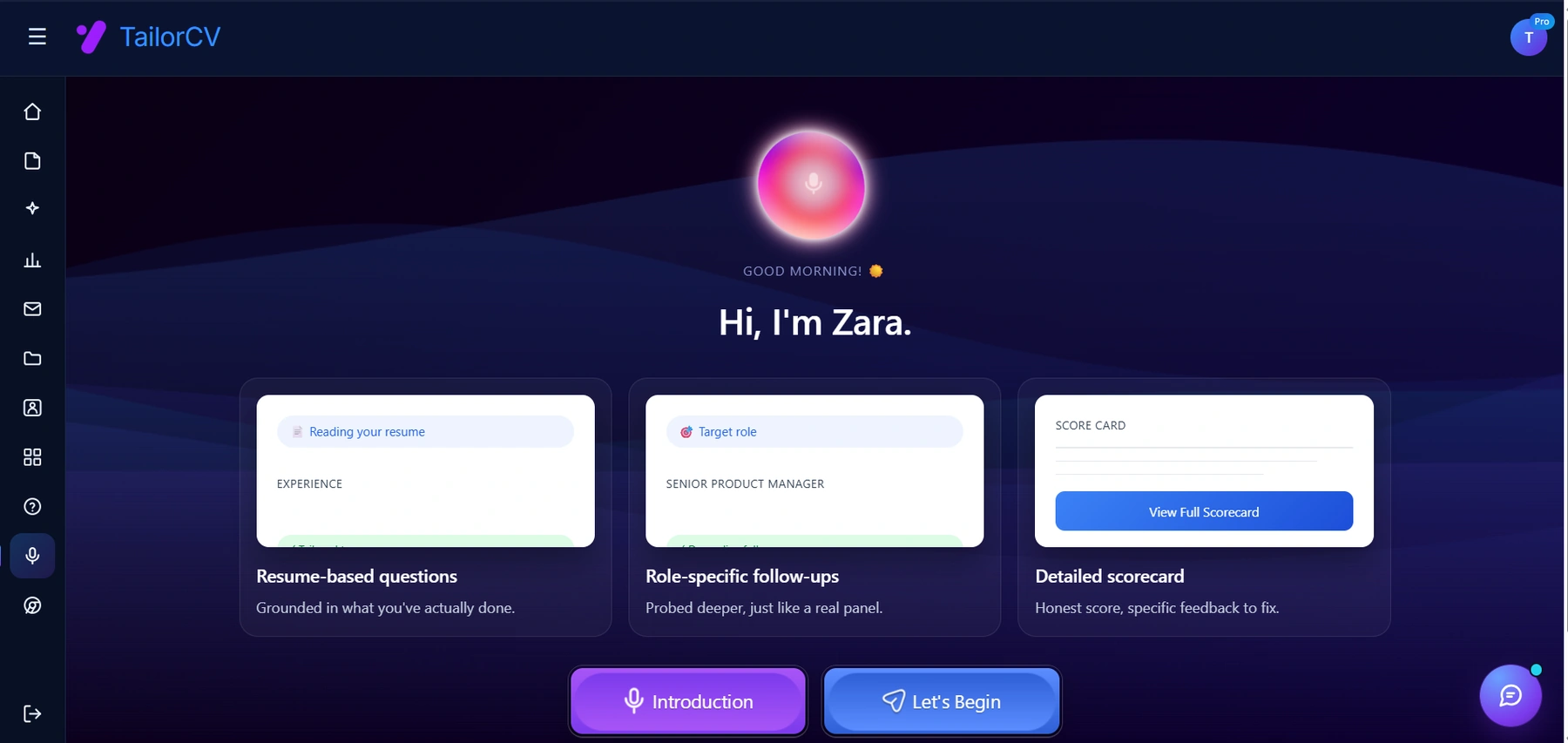
Rather than a fixed question list, the session is built from your own resume and target role, and ends with a scorecard naming the specific things to fix.
What's actually being tested
Interviewers are watching for correctness, but almost equally for how you think — do you clarify the problem before coding, do you consider edge cases, do you narrate your reasoning instead of going silent. A correct answer delivered silently often scores worse than a mostly-correct answer delivered with clear reasoning.
How to prepare
- Work through problems by pattern (sliding window, two pointers, graph traversal, dynamic programming) rather than solving problems at random — recognizing the pattern is most of the battle in a live interview.
- Practice explaining your approach out loud before you start typing — this is the habit that's hardest to build under real time pressure if you haven't rehearsed it.
- Time yourself. Most rounds run 30–45 minutes per problem, including explanation — practicing without a clock builds false confidence.
The full framework, common problem patterns, and a practice structure are in the coding interview preparation guide.
Round 2: System Design Interviews
What's actually being tested
system design rounds test judgment under ambiguity, not memorized architecture diagrams. Interviewers want to see you clarify requirements, make and justify tradeoffs (consistency vs. availability, cost vs. latency), and adjust your design when new constraints are introduced mid-conversation.
How to prepare
- Practice starting with requirements clarification before you draw anything — scale, read/write ratio, latency requirements, consistency needs.
- Build a mental checklist of components (load balancer, cache, database choice, queue, CDN) and practice justifying why each one is or isn't needed for a given problem, rather than including all of them by default.
- Practice narrating tradeoffs out loud — system design is as much a communication exercise as a technical one.
For a complete breakdown of common system design questions and a repeatable structure, see the system design interview guide.
Round 3: Behavioral Interviews
What's actually being tested
Even the most technical roles include behavioral rounds, because companies are also evaluating whether you communicate clearly, take ownership, and work well with a team — skills a coding round can't test. Engineers frequently under-prepare for this round because it feels less "objective" than a coding problem, which is exactly why it becomes a differentiator.
How to prepare
- Use the STAR structure (Situation, Task, Action, Result) to turn real projects into complete, convincing stories rather than vague summaries.
- Prepare 5–6 flexible stories covering conflict, failure, initiative, and technical leadership — pulled from your actual resume, not memory alone.
- Practice the most common questions specifically: "tell me about yourself," a conflict with a teammate, a technical decision you disagreed with, a time you missed a deadline.
The full question list and answer frameworks are in the behavioral interview questions and answers guide and how to answer "tell me about yourself".
Round 4: Resume & Background Discussion
What's actually being tested
Interviewers often pick a project directly off your resume and ask you to go deep on it — the architecture, the tradeoffs, what you'd do differently now. If your resume overstates your role or is vague about what you actually built, this is where it unravels.
How to prepare
- Make sure every project on your resume is something you can explain in technical depth for five minutes straight, including decisions you'd revisit today.
- If you're targeting a specific role, tailor your resume language to match the job description's actual stack and priorities — a generic resume creates generic, easily-derailed conversations. See resume matching for software engineers and the complete resume matching guide.
- If you're targeting large tech companies specifically, the bar for how achievements are framed is different — see software engineer resume for FAANG.
- Make sure your resume language matches your actual stack — see the relevant role guide for Python developers, Java developers, React developers, full-stack developers, backend developers, or frontend developers.
- If you're presenting personal or open-source projects, make sure your GitHub reflects well too — see GitHub portfolio optimization and, for a fuller project showcase, the full-stack portfolio guide, backend developer portfolio, or frontend developer portfolio depending on your focus.
A resume that has actually been matched against the target job description also makes AI-assisted matching tools work in your favor rather than against you — see how AI resume matching works.
A Realistic Prep Timeline
Trying to prepare all four rounds equally in the final 48 hours is how most candidates burn out before the interview even starts. A more realistic split, assuming roughly two to three weeks of runway:
Weeks 1–2: Coding foundation Work through problems by pattern daily, in shorter, focused sessions rather than long cram sessions. Consistency beats intensity here.
Week 2 (parallel): system design Once coding fundamentals feel stable, start layering in system design practice — a few problems worked through slowly with full tradeoff discussion, rather than many problems rushed.
Final week: Behavioral + resume Build your story bank, rehearse it out loud, and go through your resume line by line to make sure you can defend every claim on it. This is also the point to tailor your resume specifically to the role if you haven't already.
Final 48 hours: Company research + logistics Research the specific team and role — see how to research a company before an interview — and prepare your questions to ask the interviewer.
Throughout this whole process, rehearsing out loud matters more than reading silently — a free AI mock interview built from your actual resume can run you through behavioral and background questions specifically, so the coding and system design prep aren't the only parts you walk in having actually practiced.
Format-Specific Notes
- Phone screens are usually a lighter coding round plus a resume walkthrough — pacing and clarity matter even more with no visual cues; see phone interview tips.
- Virtual onsite loops are now standard for most companies — see virtual interview tips for screen-sharing etiquette and camera presence during whiteboard-style problems.
- Final/onsite rounds often stack multiple interviewers back-to-back and probe your answers more deeply across rounds — see final round interview tips and resume tailoring for a second interview for how expectations shift as you advance.
Common Mistakes That Sink Otherwise Strong Candidates
- Going silent while coding. An interviewer can't evaluate reasoning they can't hear — narrate your thinking even when you're unsure.
- Skipping requirements clarification in system design. Diving straight into a solution without asking about scale or constraints reads as a lack of rigor, regardless of how good the design ends up being.
- Treating behavioral rounds as an afterthought. A technically perfect candidate with vague, unstructured behavioral answers frequently loses to a slightly weaker coder who communicates clearly.
- A resume that doesn't match the role's stack or seniority. This creates awkward, unprepared moments in the background discussion round. See common interview mistakes to avoid for the broader pattern.
- No follow-up after the loop. A short, specific note after the interview keeps you top of mind through a slow decision process — see how to follow up after an interview.
FAQ
How long should I prepare for a software engineer interview?
Two to three weeks of focused, consistent practice across coding, system design, and behavioral rounds is realistic for most candidates — daily short sessions outperform occasional long cram sessions.
Do junior engineers need to prepare for system design?
Usually less intensively than mid-level or senior candidates, but a basic understanding of core components (caching, databases, load balancing) is still commonly tested, especially at larger companies.
How important are behavioral rounds for a technical role?
More important than most candidates assume. Companies are evaluating communication and ownership alongside technical skill, and a strong coder with weak behavioral answers frequently loses out to a well-rounded candidate.
Should I tailor my resume for every software engineering role I apply to?
Yes — matching your resume's language and highlighted projects to the specific role's stack and seniority level makes both the resume screen and the background-discussion round go more smoothly. See resume matching for software engineers.
What's the best way to practice for the behavioral and resume rounds specifically?
Speaking your answers out loud to questions generated from your actual resume, with feedback on clarity and structure, is far more effective than reading a question list silently — which is what a free AI mock interview is built for. Additionally, utilizing the STAR method for interview answers can enhance your response quality.
Related Guides
- Coding Interview Preparation Guide
- System Design Interview Guide
- Behavioral Interview Questions and Answers
- Technical Interview Preparation Guide
- Software Engineer Resume for FAANG
- Resume Matching for Software Engineers
- GitHub Portfolio Optimization
- Common Interview Mistakes to Avoid
- Final Round Interview Tips
- Free Mock Interview Practice
Final Thoughts
Software engineer interviews reward candidates who prepare all four dimensions — coding, system design, behavioral, and resume alignment — rather than over-indexing on one. Strong algorithms won't save a vague behavioral answer, and a well-rehearsed story won't save a resume that can't hold up to five minutes of technical questioning.
Start by making sure your resume actually matches the role you're targeting — check and tailor it here — then run a free AI mock interview to rehearse the behavioral and background rounds out loud before the real thing.
Was this guide useful?
Be the first to rate it.