 TD
TD
Key Takeaways
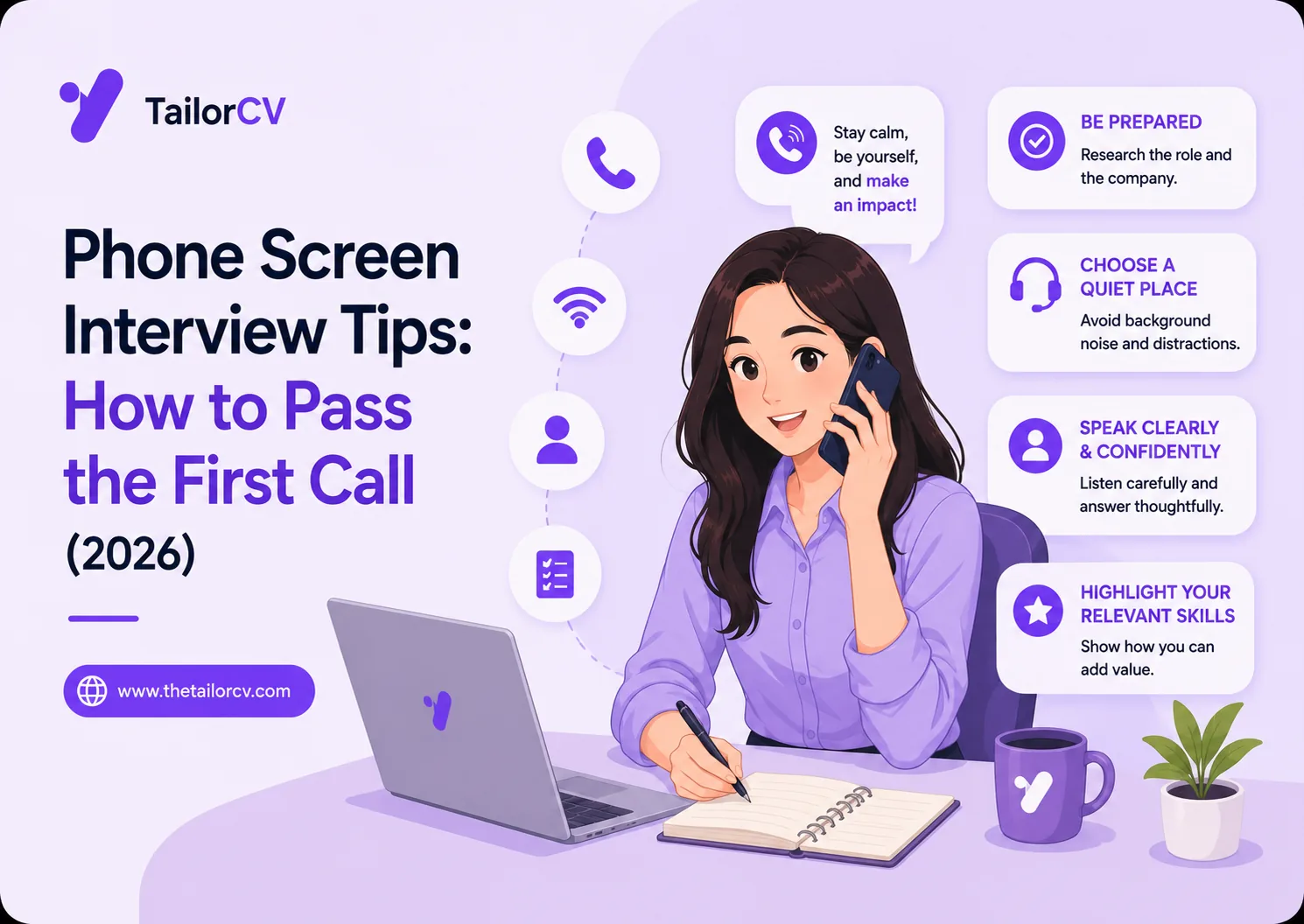
- The phone screen filters out mismatches on salary, logistics, and basic fit.
- Nail the three staples: "tell me about yourself," "why this role," and "salary expectations."
- Have your resume and the job description in front of you — this is an open-book call.
- Confirm mutual fit and next steps before you hang up.
What a Phone Screen Is For
A recruiter's phone screen is usually 20–30 minutes and is not deeply technical. It exists to confirm the basics before the company spends a manager's time: Are you actually interested? Are your salary expectations in range? Are you eligible and available? Do you communicate clearly? Clear most of those, and you advance.
Prepare Like It's Open Book
Unlike a live video round, the recruiter cannot see your desk. Keep your resume, the job description, your salary research, and a short list of questions right in front of you. Glance freely — just do not sound like you are reading.
See it in action: a resume-based mock interview
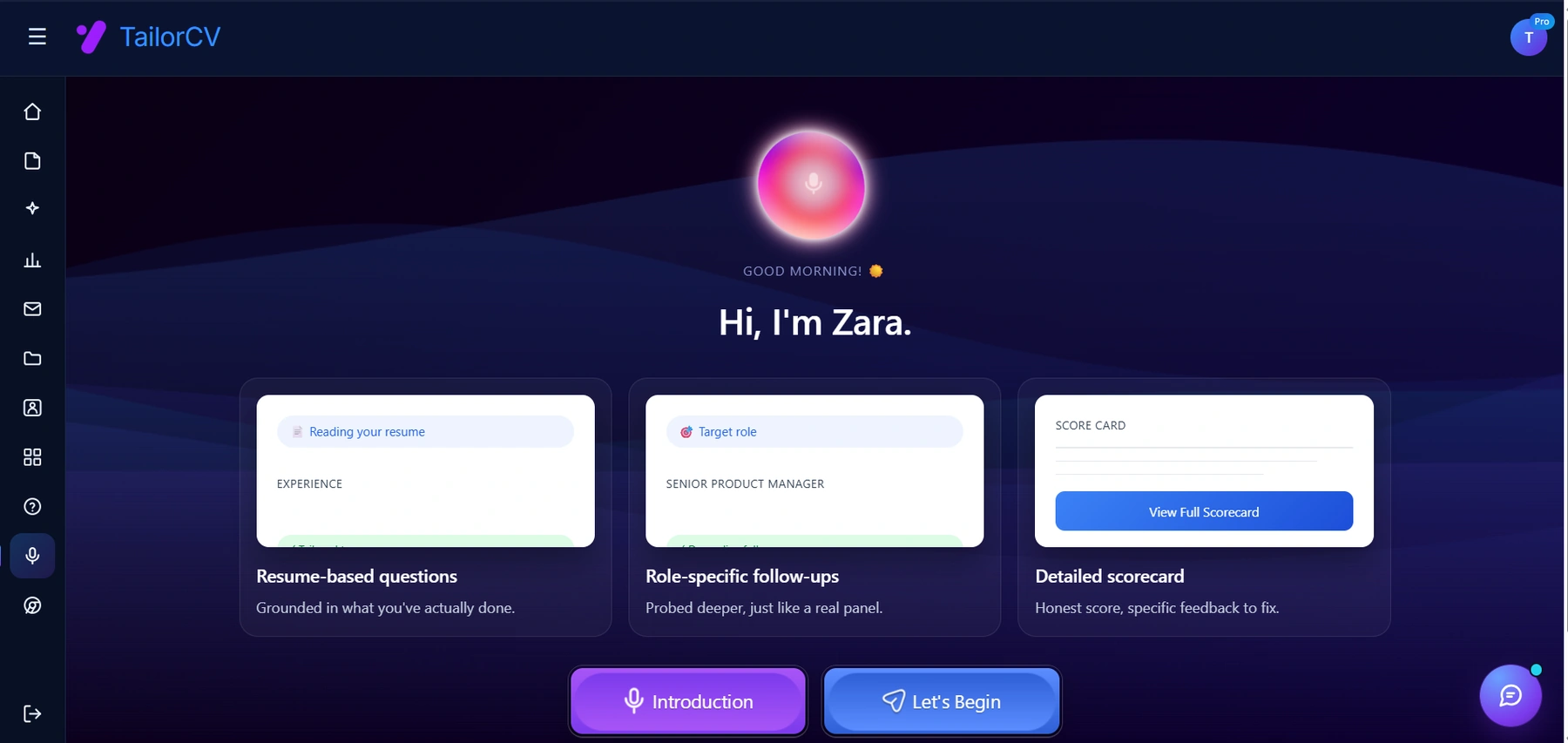
The scorecard at the end is the useful bit - an honest score plus specific feedback, which is what turns practice into improvement.
The Three Questions to Nail
"Tell me about yourself." Give a 60-second arc: what you do now, one relevant highlight, and why this role. Not your life story.
"Why are you interested in this role?" Connect something specific about the company or role to your direction. Generic enthusiasm is forgettable; a specific reason is not. (See how to answer "why do you want this job?".)
"What are your salary expectations?" Give a researched range and frame it as flexible. Deflecting entirely can stall the process; a confident range keeps it moving.
Logistics and Delivery
- Take the call somewhere quiet with strong signal. Reschedule rather than take it from a noisy street.
- Stand or sit up. Posture changes your voice; you sound more energetic on your feet.
- Smile when you talk. It genuinely comes through on audio.
- Slow down. Nerves speed up your speech; a half-beat pause reads as composure.
Close the Call Well
Before hanging up, ask about next steps and timeline, and confirm your interest: "This sounds like a strong fit and I'm very interested — what are the next steps?" It leaves a clear, positive final impression.
The 60-Second "Tell Me About Yourself"
This question opens almost every phone screen, and a rambling answer sets a bad tone for the whole call. Use a simple present-past-future arc:
"Right now I'm a backend engineer at [Company], where I own our payments service. Before that I spent two years building data pipelines, which is where I got deep into Python and SQL. I'm looking to move into a role with more architectural ownership, which is exactly why this posting caught my eye."
Three sentences, 45 seconds, and it lands on why you are talking to them. Rehearse it until it is smooth but not robotic — this is the one answer you can fully script in advance.
Salary Expectations Without Fumbling
The phone screen is where salary usually comes up, and dodging it entirely can stall the process. Do your research first, then give a confident range framed as flexible:
"Based on my research for this kind of role and my experience, I'm targeting somewhere in the [X to Y] range, but I'm flexible depending on the overall package and the scope of the role."
Anchor to market data, not to what you currently make or personally need. If they ask for your current salary and you would rather not share, it is fine to redirect to your target range instead.
Red Flags Recruiters Listen For
A phone screen is a filter, and recruiters are listening for reasons to not advance you as much as reasons to. Avoid these:
- Badmouthing a current or former employer. It signals you will do the same to them.
- Not knowing what role you applied for. If you are applying widely, keep notes so you are never caught flat.
- Vague salary evasion. A confident range keeps things moving; total deflection frustrates recruiters.
- Low energy or distraction. Background noise, obvious multitasking, or one-word answers read as disinterest.
- No questions at the end. It suggests you have not thought seriously about the role.
Prepare Your Own Questions
Even on a 20-minute screen, have two or three genuine questions ready. Good ones for a recruiter: "What does the interview process look like from here?", "What's the team's biggest priority this quarter?", and "What are you personally hoping to see in the person who fills this role?" Thoughtful questions signal seriousness and give you real information to decide with. Rehearsing the whole call once in an AI mock interview makes your answers tighter and your nerves quieter.
What the Recruiter Is Actually Screening For
A recruiter's phone screen is a filter with four quiet checkboxes, and knowing them lets you clear each on purpose:
- Genuine interest. Do you actually want this role, or are you applying to everything? A specific answer to "why this job" checks this box.
- Compensation fit. Are your expectations in the company's range? This is why they raise salary early — to avoid investing in a candidate they cannot afford.
- Basic qualification and logistics. Eligibility, location or time zone, availability, notice period. Boring but disqualifying if there is a mismatch.
- Communication. Can you explain your experience clearly and warmly? On a call with no visuals, your voice and clarity are the entire impression.
Everything else in the call is secondary. If you clear those four, you almost always advance.
Reading the Recruiter's Signals
A phone screen is a two-way read. Pay attention to what the recruiter emphasizes, because it tells you what the team values and what your later rounds will probe. If they spend time on collaboration, expect team-fit questions ahead. If they dig into a specific technology, brush up on it. If they mention the timeline and next steps enthusiastically, that is a strong buying signal. And if they raise salary early and specifically, they are trying to confirm fit before advancing you — answer with a confident range to keep momentum.
Turning a Phone Screen Into the Next Round
The screen is not just a filter to survive; it is your chance to actively advance. Three moves make a recruiter want to push you forward:
- Match your language to the posting. When you describe your experience in the exact terms the job description uses, the recruiter can easily "sell" you to the hiring manager.
- Show low-friction enthusiasm. Recruiters are also assessing whether you will accept an offer. Genuine, specific interest makes you a safer bet to advance.
- Ask about the process. "What do the next rounds look like?" signals you are serious and helps you prepare. It also subtly moves the conversation toward next steps.
A Sample Phone Screen, Start to Finish
A typical 25-minute screen follows a predictable arc: a warm opener and small talk, "tell me about yourself," a walk through your recent experience, "why are you interested in this role," a couple of logistics and salary questions, your questions, and a wrap-up on next steps. Because it is so predictable, you can prepare nearly all of it in advance. Rehearse your 60-second intro, your "why this role" answer, and your salary range until they are smooth, keep your resume and notes in front of you, and have two questions ready. Do that and the call stops being a nerve-wracking gate and becomes a conversation you are steering. A single mock interview run-through the day before makes the real thing feel routine.
Frequently Asked Questions
How long does a phone screen last?
Usually 20–30 minutes. If it runs long, that is often a good sign — the recruiter is engaged.
Should I ask about salary on the phone screen?
It is often the ideal time. Recruiters frequently raise it themselves to avoid wasting everyone's time; be ready with a range.
What if I get a technical question?
Some screens include a light one. Answer clearly and honestly; if you do not know, say how you would find out rather than bluffing.
Can I have notes in front of me on a phone screen?
Absolutely — that is one of the phone screen's advantages. Keep your resume, the job description, your salary range, and your questions in view. Just stay conversational rather than reading answers word for word.
What should I do if I don't understand a question?
Ask for clarification — it is better than guessing. "Just to make sure I answer what you're after, do you mean X or Y?" reads as thoughtful, not unprepared.
How do I recover if the call is going badly?
Reset with a strong, concrete answer and re-engage with a good question. One clear win late in a short call can shift the recruiter's overall impression. Stay calm; a composed recovery is itself a positive signal.
Is a phone screen usually with a recruiter or the hiring manager?
Most often a recruiter, whose job is to filter for basic fit, interest, and compensation before passing you to the hiring manager. Occasionally a hiring manager runs a light first call themselves. Either way, the fundamentals — clarity, energy, and specific interest — are the same.
Should I take notes during the call?
Yes, briefly. Jot down the interviewer's name, key points about the role, next steps, and the timeline. Notes help you write a specific thank-you and prepare for later rounds. Just do not let note-taking pull you out of the conversation.
What if I need to reschedule a phone screen?
Reschedule as early as possible with a brief, apologetic, professional message offering alternative times. Recruiters understand that life happens; a prompt, polite reschedule is far better than taking the call from a noisy street or while distracted.
Common Phone Screen Mistakes
Even well-qualified candidates trip on the phone screen, almost always for avoidable reasons:
- Taking the call somewhere noisy. A crackly line or background chatter undercuts everything you say. If your quiet space falls through, ask to reschedule rather than push through a bad connection.
- Rambling on "tell me about yourself." Without a prepared 60-second arc, this opener sprawls and sets a scattered tone. Script it.
- Sounding low-energy. On audio, your voice is the entire impression. Stand up, smile, and project a little more warmth than feels natural.
- Dodging the salary question. Total evasion frustrates recruiters and can stall you. Give a researched range framed as flexible.
- Not knowing which role you applied for. If you are applying widely, keep notes so you are never caught flat when they name the company.
- Having no questions. "No, I think you covered everything" reads as disinterest. Always have two ready.
Preparing in Under an Hour
You do not need days to prepare for a phone screen — a focused hour covers it. Spend fifteen minutes re-reading the job description and your own resume so you can speak fluently to both. Spend fifteen more researching the company: what they do, a recent update, and why you genuinely want the role. Draft and rehearse your three staples — your 60-second intro, your "why this role" answer, and your salary range — out loud until they are smooth. Write down two questions to ask. Finally, set up your logistics: a quiet room, strong signal, your resume and notes in front of you, and water within reach. That single hour is the difference between a screen that feels like an ambush and one that feels like a conversation you are steering — and it is a fraction of the effort you already spent finding and applying to the role.
Putting It All Together
A phone screen is a filter, not a formality — it decides whether the company invests a manager's time in you. Treat it as open-book: keep your resume, the job description, and your notes in front of you, nail the three staples (tell me about yourself, why this role, salary range), and bring genuine energy and a couple of real questions. Clear that bar and you advance to the rounds where the job is actually won.
Was this guide useful?
Be the first to rate it.