 SS
SS
Key Takeaways
- Approach the raise conversation as a business case by presenting evidence of your value rather than making a personal plea.
- The best times to ask for a raise include after significant accomplishments, during performance reviews, or when the company is financially healthy.
- Gather evidence of your achievements, market data on salary benchmarks, and demonstrate your growth in value since your last raise.
- Schedule a meeting with your manager to discuss your contributions and compensation, signaling seriousness and allowing them to prepare.
- Use a structured script during the conversation, clearly stating your accomplishments and desired salary, then pause to let your manager respond.
Asking for a raise is one of the most uncomfortable but financially important conversations in your career. A successful raise conversation can increase your income by 5-20% - and since future raises and offers are often percentages of your current salary, the impact compounds for years.
The key is to approach it as a business case, not a personal plea. You are not asking for a favor - you are presenting evidence that your value to the company has grown and that your compensation should reflect it.
This guide covers when to ask, how to build your case, the exact scripts to use, and how to handle every response.
This is related to the salary negotiation guide for new offers and the how to get a promotion guide. To understand your market value, keep your resume updated and run it through the TailorCV ATS score checker periodically.
When to Ask for a Raise
Best Timing
- After a major accomplishment or successful project delivery
- During your performance review cycle (but prepare in advance, do not wait for the meeting)
- After taking on significantly more responsibility
- When you have data showing you are underpaid relative to market
- When the company is doing well financially
Worst Timing
- During layoffs or budget freezes
- Right after a company loss or missed targets
- When you have recently made a visible mistake
- Casually, without preparation
- As an ultimatum without genuine alternatives
Step 1: Build Your Case with Evidence
A raise request is a business case. Gather:
What optimizing actually does to your resume
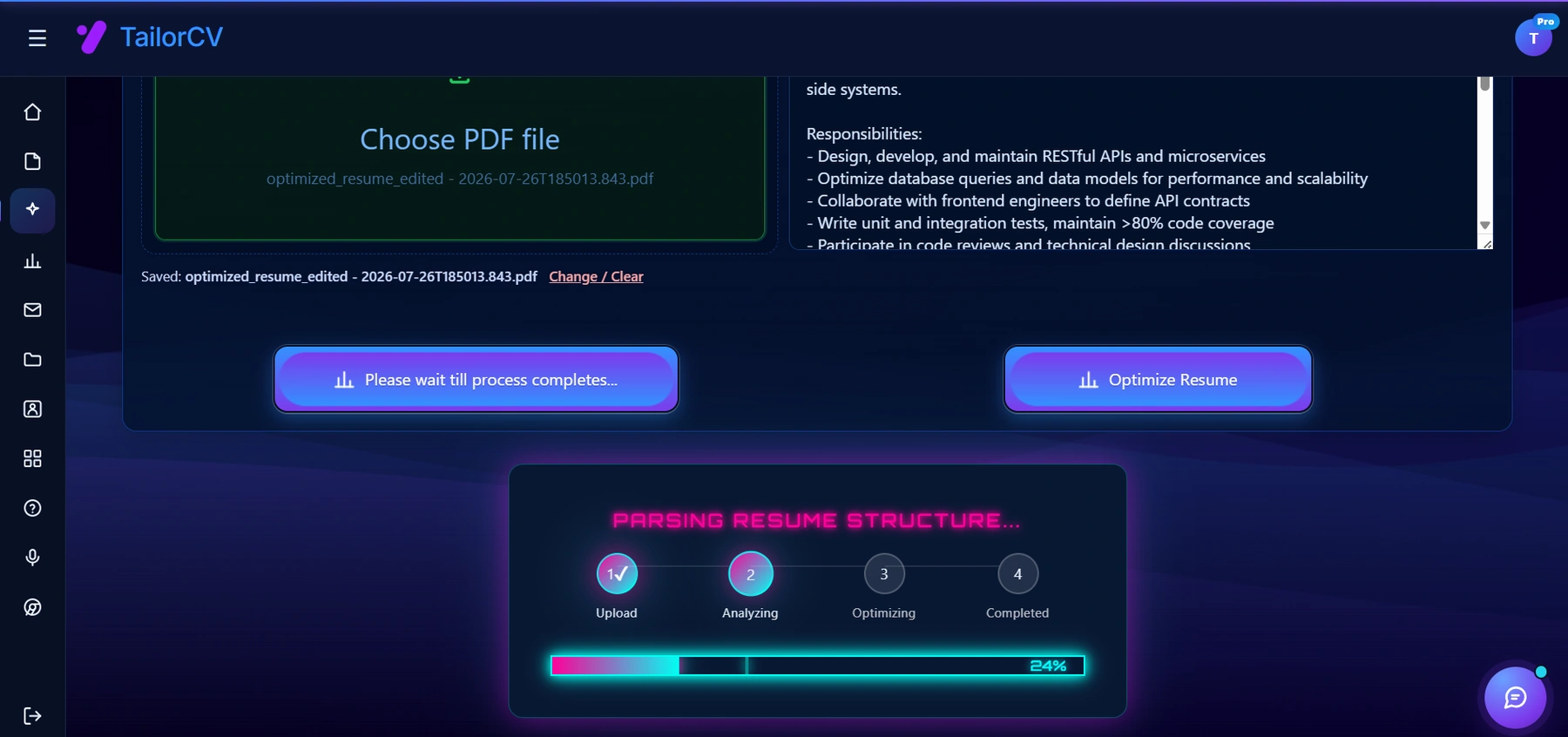
Optimising runs against the specific job description you paste in, not in the abstract.
Your Accomplishments
Document specific achievements since your last raise:
- projects delivered and their business impact
- Revenue generated or costs saved
- Process improvements with measurable results
- Additional responsibilities you have taken on
- Skills you have developed
quantify everything. "I led the migration project that reduced infrastructure costs by $40K annually" is far stronger than "I worked hard this year."
Market Data
Research what your role pays in your market:
- Levels.fyi (tech), Glassdoor, LinkedIn Salary, PayScale
- Filter by your title, location, experience, and company size
- If you are below market, this is powerful evidence
Your Value Growth
Show that you are doing more than when you were hired or last raised:
- Expanded scope
- Higher complexity work
- Mentoring or leadership responsibilities
- Skills that make you more valuable
Step 2: Schedule the Conversation
Do not ambush your manager. Request a meeting:
"Hi [Manager], I'd like to schedule 30 minutes this week to discuss my role, my contributions over the past year, and my compensation. When works for you?"
This signals seriousness and gives your manager time to prepare (and possibly start the approval process).
Step 3: The Raise Conversation Script
Opening
"Thank you for meeting with me. I've really enjoyed the work over the past [time period], especially [specific project or area]. I wanted to discuss my compensation in light of how my role and contributions have grown."
Present Your Case
"Since my last salary adjustment, I've [specific accomplishment 1], [specific accomplishment 2], and [specific accomplishment 3]. For example, [most impressive quantified result]. I've also taken on [additional responsibilities]."
State Your Ask
"Based on my contributions and market research for this role - which shows a range of [X to Y] - I'd like to discuss adjusting my salary to [specific number]. Is that something we can work toward?"
Then Stop Talking
After you state your number, be silent. Let your manager respond. Filling the silence weakens your position.
How to Handle Each Response
"Yes" or a Counter-Offer
If they agree or counter close to your number, accept graciously: "That works for me, thank you for recognizing my contributions."
"I need to check / get approval"
"I understand. When can we reconnect on this? I'd appreciate a follow-up by [specific date]."
"There's no budget right now"
"I understand budgets are tight. Can we set a specific timeline to revisit this - perhaps in 3 months? And in the meantime, are there non-salary adjustments we could discuss, such as additional PTO, a title change, professional development budget, or remote flexibility?"
Also ask: "What specifically would I need to demonstrate to justify this raise when budget allows?" - this turns a no into a roadmap.
"You're already paid fairly"
"I appreciate that perspective. My market research shows [data]. Could you help me understand how my compensation was benchmarked? I'd like to align on what would justify an increase."
What NOT to Do
- Don't make it about personal financial needs (rent, bills, family) - make it about value
- Don't compare yourself to specific colleagues' salaries
- Don't threaten to quit unless you genuinely have an offer and are prepared to leave
- Don't get emotional or defensive
- Don't accept a vague "we'll see" - get a specific timeline
- Don't apologize for asking
If You Get a No
A no is not the end. Your options:
- Get a roadmap: Ask exactly what you need to achieve for a yes, and a timeline.
- Negotiate non-salary benefits: PTO, flexibility, development budget, title.
- Set a follow-up date: Lock in a specific revisit date (e.g., 3 months).
- Evaluate the market: If you are genuinely underpaid and the company won't adjust, it may be time to explore other offers. The strongest raise leverage is often a competing offer - read the salary negotiation guide.
The Competing Offer Lever
The most powerful raise lever is a genuine competing offer. If you have explored the market and received a higher offer, your current employer often matches or exceeds it to retain you.
Caution: only use this if you are genuinely prepared to leave. Bluffing can backfire, and some companies will let you walk. To be ready, keep your resume updated with the TailorCV ATS score checker and your LinkedIn profile optimized.
Related Guides
- How to Get a Promotion
- How to Negotiate a Salary Offer
- First 90 Days at a New Job
- How to Get Your First Tech Job
- Personal Branding for Professionals
- Career Change to Tech
- Why Am I Not Getting Interviews for Jobs I'm Qualified For?
- Freelancing vs Full-Time Employment
- How to Follow Up After a Job Interview
- How to Get a Job With No Experience
- How to Prepare for Campus Placement
- LinkedIn Profile Optimization Guide
- Best Questions to Ask in a Job Interview in 2026 - 40 Smart Questions
- ATS Mistakes Experienced Professionals Make (And Why Your Resume Stops Working After 5+ Years)
- Behavioral Interview Questions and Answers - Complete 2026 Guide
- 200 Best Action Verbs for Resume in 2026 - By Role and Category
- 20 Common Interview Mistakes to Avoid in 2026
Make This Practical
Turn the career advice into a stronger application system. Start by checking your resume with the free ATS score checker, align it with the role using How to Tailor Your Resume for Every Job, and keep your profile consistent with LinkedIn Resume Tailoring Sync.
When you are ready to apply, build the supporting pieces around the resume. Use the AI cover letter generator for targeted outreach, practice with the AI mock interview tool, and review Why Your Resume Gets No Responses if applications are not converting.
Conclusion
Asking for a raise is a business negotiation, not a personal favor. Build your case with quantified accomplishments and market data, schedule a proper conversation, state a specific number, and handle the response professionally. Even a no can become a roadmap to a yes.
To strengthen your position long-term, keep your skills current with the skills to add to your resume guide, keep your resume sharp with the TailorCV ATS score checker, and read the how to get a promotion guide.
Frequently Asked Questions
When is the best time to ask for a raise?
The best timing to ask for a raise typically includes moments like after successfully delivering a major project or during your performance review cycle. It's crucial to prepare in advance and not wait for the meeting to make your case. Additionally, asking when the company is performing well financially can increase your chances of a positive response.
How should I build my case for a raise?
To build your case for a raise, document specific accomplishments since your last salary review. Highlight projects you've delivered, revenue generated, and any process improvements with measurable results. This evidence will support your argument and demonstrate that your value has increased, making it a solid business case rather than a personal plea.
What should I avoid when asking for a raise?
Avoid asking for a raise during layoffs, budget freezes, or immediately after a company loss. These situations can significantly diminish your chances of a favorable response. Instead, approach the conversation with preparation and professionalism, steering clear of casual requests or ultimatums without genuine alternatives.
How can I ensure I am not underpaid?
To ensure you are not underpaid, regularly research your market value and compare your salary with industry standards. Keeping your resume updated and using tools like the Free ATS score checker can help you assess your professional standing and advocate for a raise based on data.
What if my request for a raise is denied?
If your request for a raise is denied, it's essential to remain professional and seek constructive feedback. Inquire about the reasons behind the decision and ask what steps you can take to position yourself for a future raise. This proactive approach demonstrates your commitment to personal growth and can pave the way for future opportunities, such as a promotion. For more on this, check out our guide on How to Get a Promotion in 2026.
What is your resume scoring right now?
Scan it against a job description and get your ATS match score in about a minute.
Drop your resume here or choose a file
PDF only. Max 2 MB.
We never share your data or use it to train AI models.

Was this guide useful?
Be the first to rate it.