 SS
SS

Key Takeaways
- Over 90% of large companies use Applicant Tracking Systems (ATS) that filter resumes before they reach human recruiters.
- Sending a generic resume is the most common reason for not receiving responses; tailor your resume for each job application.
- Ensure your ATS score meets the threshold required for competitive roles by checking it against the job description before submission.
- Use a clean, single-column resume layout to avoid parsing issues that can cause ATS to misread your information.
- Your resume's summary and headline should align closely with the specific role to enhance your chances of getting noticed.
You are applying. You are qualified. You are hearing nothing. It is one of the most demoralizing experiences in a job search - and almost always, the problem is fixable. Here are the most common reasons qualified candidates get no responses, and the exact fix for each.
Test your resume right now with the free ATS checker to see what is costing you responses.
The Hard Truth: Most Resumes Don't Reach a Human
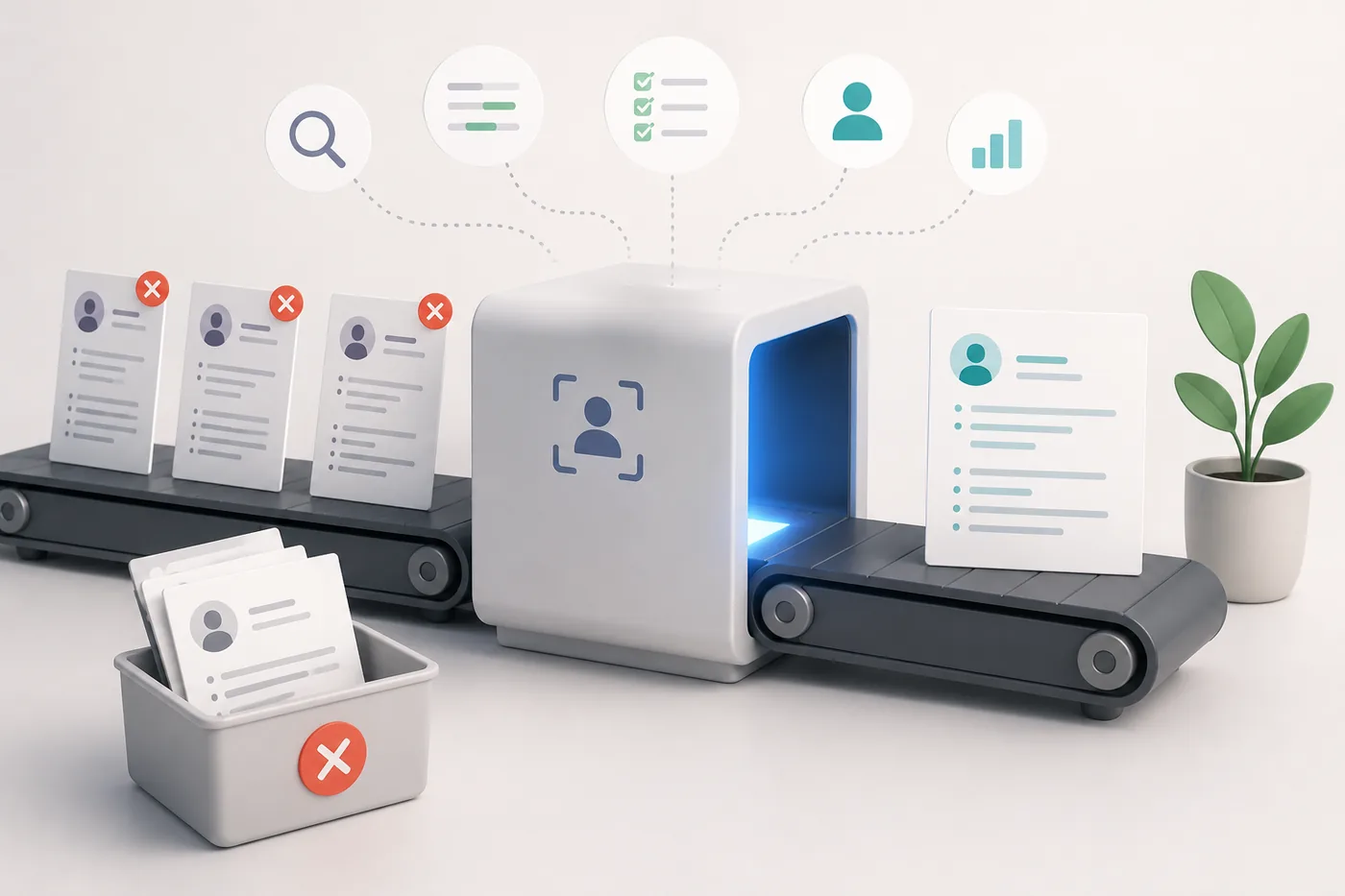
More than 90% of large companies use Applicant Tracking Systems (ATS) that score and rank resumes before any human sees them. If your resume scores below the system's threshold, it is auto-filtered - no response, no explanation. You were never actually rejected by a person.
That is why being qualified is not enough. Your resume needs to communicate that qualification in the language the ATS and recruiter are looking for.
See how ATS detects a generic resume to understand what is happening before anyone reads your resume.
Reason 1 - Your Resume Is Generic
The single most common reason for silence: you are sending the same resume to every job. ATS systems score your resume against the specific requirements of the posting. A generic resume - one written for a job category, not a specific role - will score 40-60% on most postings. Systems configured to auto-advance candidates above 70-75% will never surface your application.
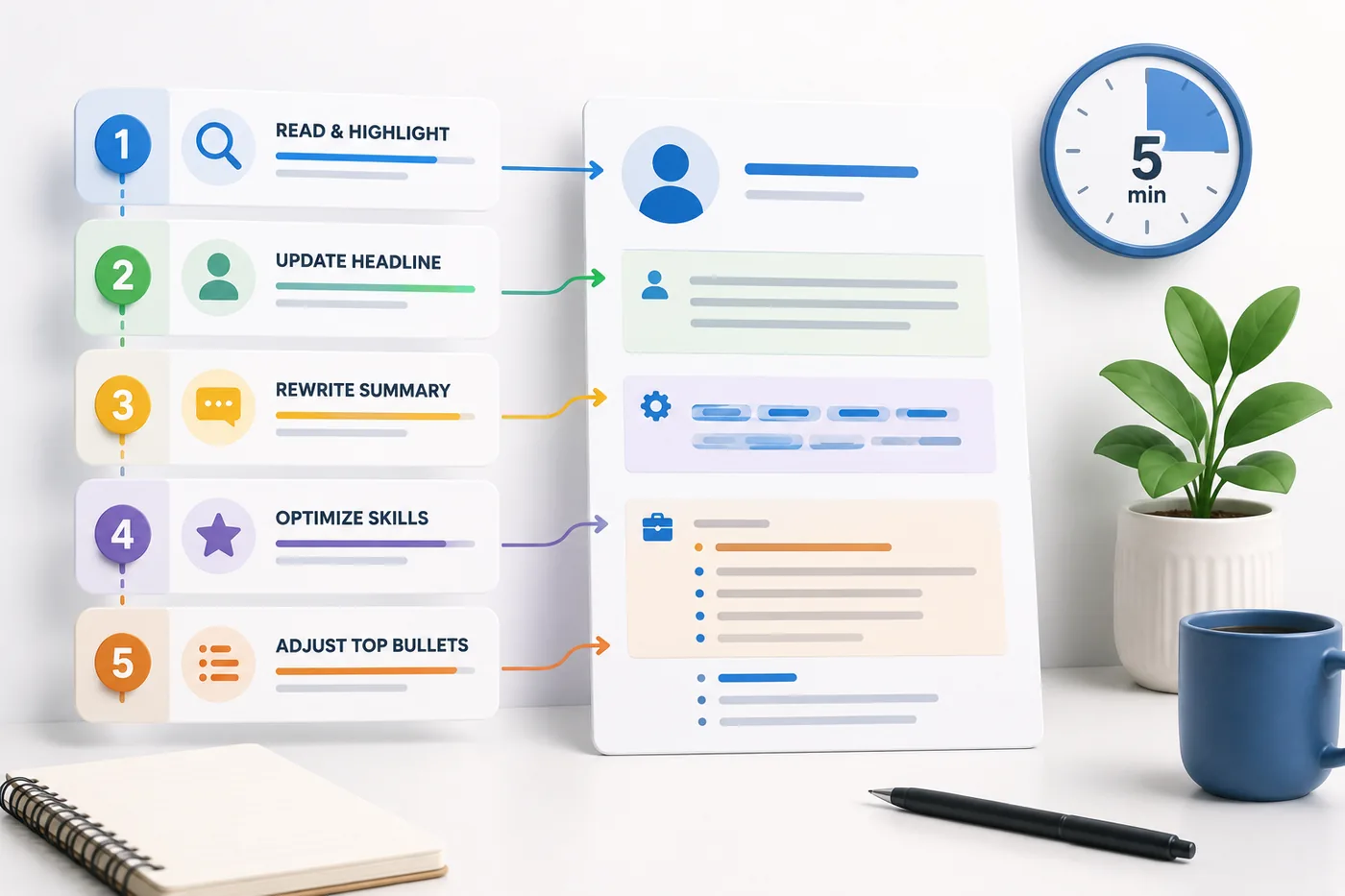
The fix: Run the 5-minute tailoring checklist before every application. At minimum, update your headline, summary, and skills to match the specific posting.
Also read: how recruiters spot generic resumes.
Reason 2 - Your ATS Score Is Below the Threshold
Even if your resume is partially tailored, it may still fall below the ATS cutoff for a competitive role. The most competitive postings attract 200-500+ applications, and systems are often configured to surface only the top 10-15%.
The fix: Check your score before you submit. TailorCV's free ATS scanner compares your resume to the job description in under 60 seconds and shows you exactly which keywords are missing. Getting from 62% to 78% often requires adding 4-6 specific terms.
See how to increase your ATS score and how to check your ATS score for free.
Reason 3 - ATS Is Failing to Parse Your Resume
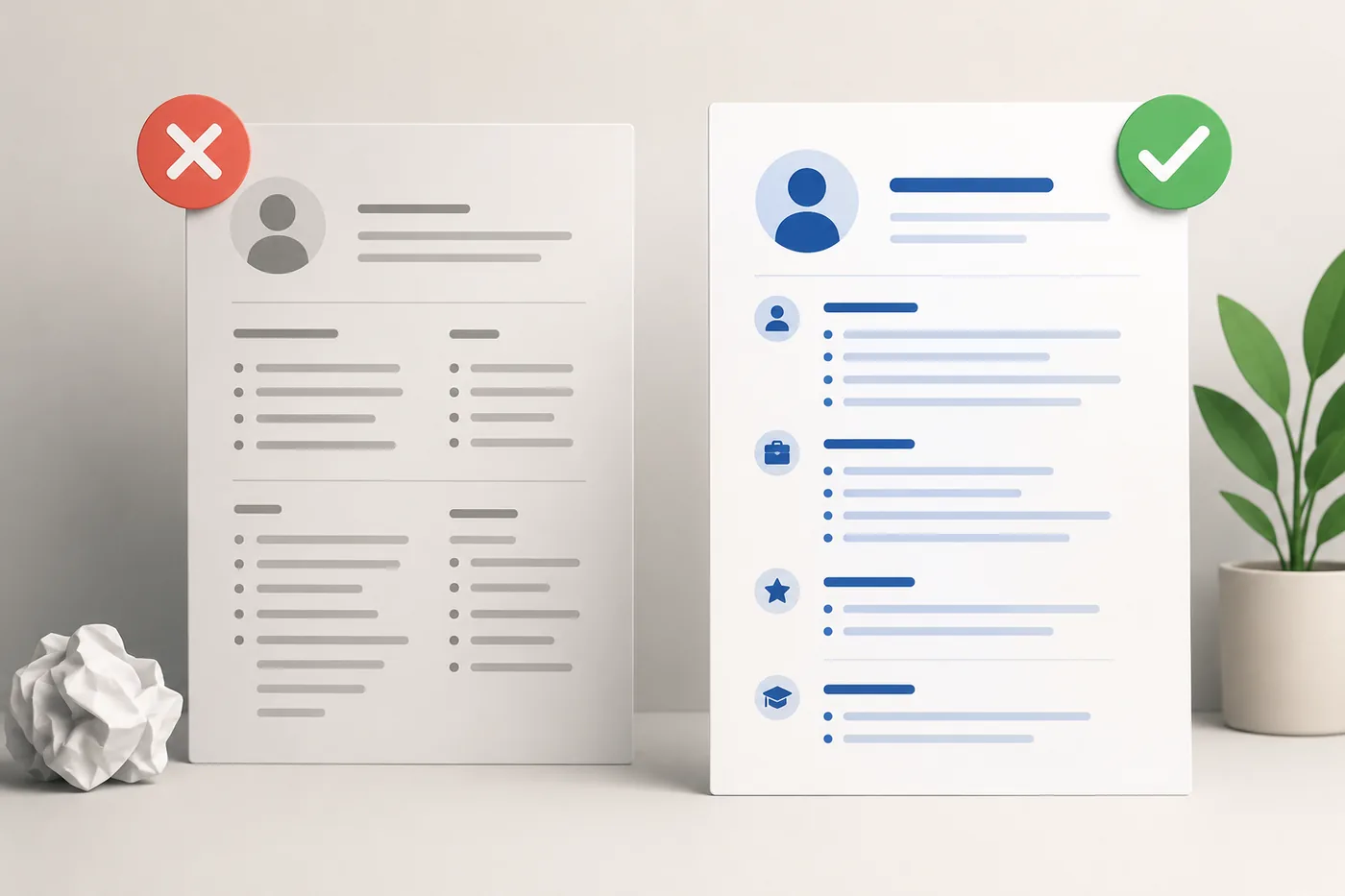
If your resume uses a creative or visually complex template - multiple columns, tables, text boxes, icons, headers embedded in graphics - the ATS may not be able to read the content correctly. It parses what it can find, which may be 40-60% of your actual text.
Common parsing failures:
- Two-column layouts where the right column is completely missed
- Contact information inside a header graphic (your name and email never extracted)
- Skills or experience sections parsed as a single unstructured block
- Job titles and dates not recognized because of unusual formatting
The fix: Use a clean, single-column layout with standard section headers. See ATS resume formatting mistakes for the complete list of what breaks parsers.
Reason 4 - Your Summary and Headline Don't Match the Role
The top section of your resume is processed first and weighted most heavily. If your headline says "Marketing Professional" and you're applying for "Performance Marketing Manager," you've already lost the job title alignment signal.
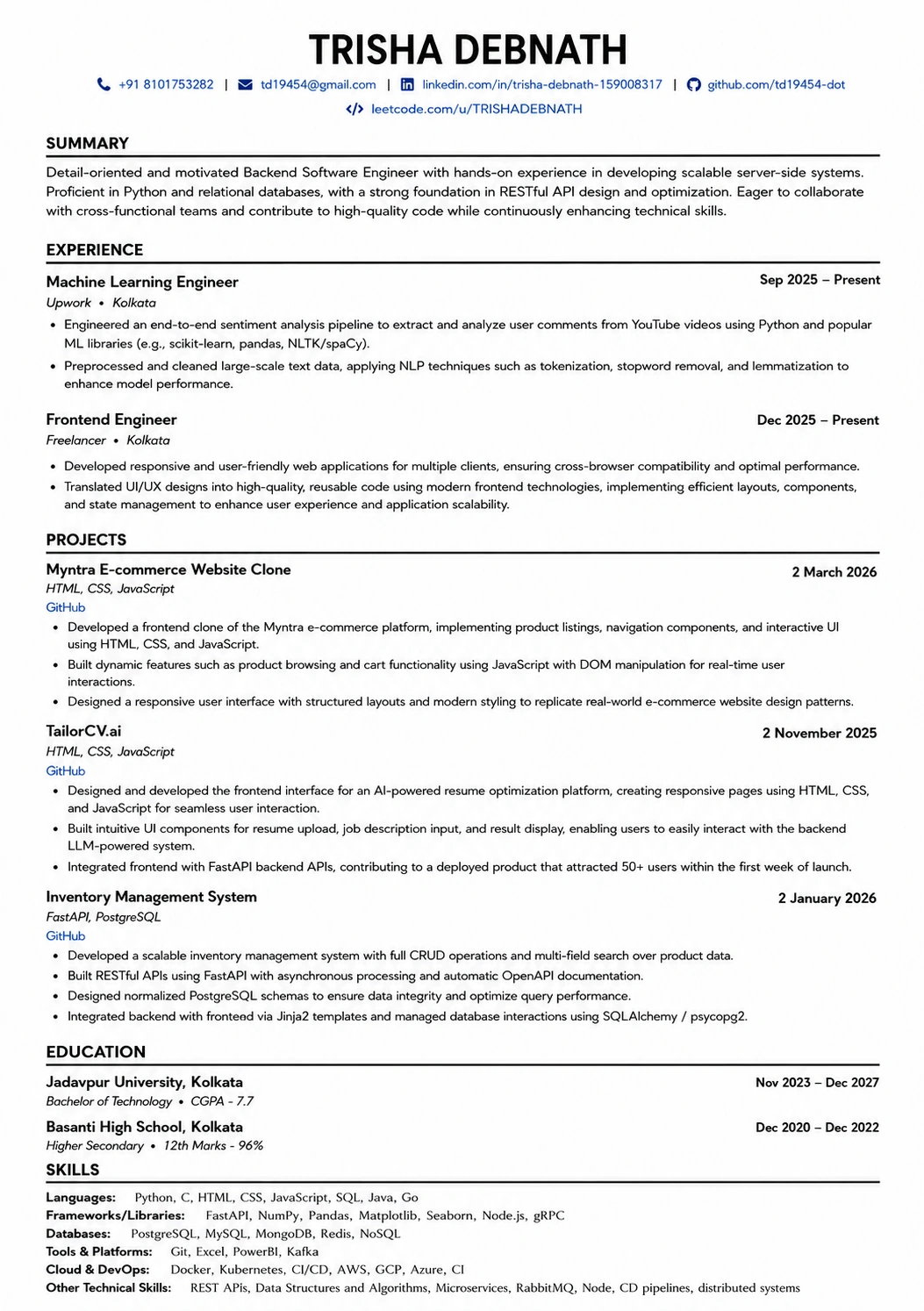
Your resume after optimization
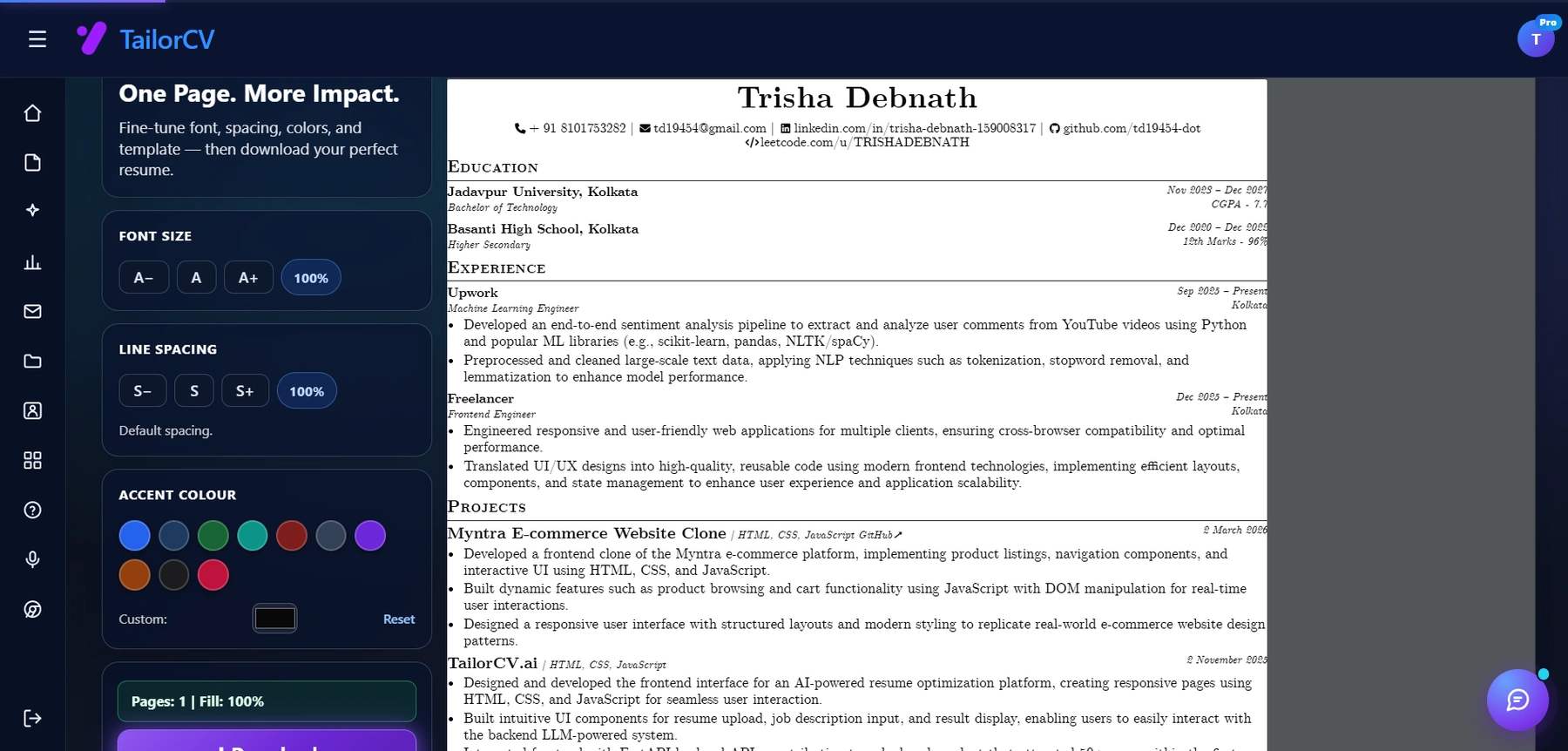
Font size, spacing, accent colour and template are all adjustable, with a live page counter.
A generic summary - "Experienced professional seeking a challenging role" - contributes almost nothing to your ATS score and tells a recruiter nothing in the 6-second first pass.
The fix: Write your headline as the exact job title you're applying to. Write your summary as a 3-sentence targeted pitch for this role. See how to write a resume summary and how to write a resume headline.
Reason 5 - Your Bullets Describe Responsibilities, Not Results
Recruiters read "responsible for" and immediately know the resume is generic. Every person who held that job title was "responsible for" the same things. What they need to see is what you achieved.
| Responsibility (Low Impact) | Achievement (High Impact) |
|---|---|
| "Responsible for customer support" | "Resolved 94% of tickets within SLA, contributing to 12-point NPS increase" |
| "Managed social media accounts" | "Grew Instagram following from 8K to 31K in 10 months through weekly Reels strategy" |
| "Led engineering team" | "Managed 7 engineers through a platform migration delivering on schedule with zero downtime" |
The fix: Read how to quantify resume achievements for the complete framework.
Reason 6 - You're Applying to the Wrong Roles
Sometimes the silence is signal - you may be applying for roles where there is a genuine gap in your qualifications or experience level. If you're consistently scoring below 60% on ATS for a particular role type, that is a data point worth examining.
The fix: Use the ATS checker on 3-5 similar postings and see if a consistent keyword gap emerges. If you keep missing the same skills, that's your development roadmap.
Reason 7 - Your Keywords Don't Match (Even If Your Skills Do)
You may have the skills - but if you're using different terminology than the posting, ATS won't recognize it.
- Posting says "Tableau" - you say "data visualization"
- Posting says "Agile" - you say "iterative delivery"
- Posting says "SEO" - you say "organic search optimization"
The fix: Mirror the exact terminology of the posting. Read best resume keywords to beat ATS systems for the most commonly expected terms by industry.
How to Diagnose Your Specific Problem
If you are getting no responses, run this diagnostic:
- Check your ATS score - use the free scanner at TailorCV. If it's below 70%, that is your primary issue.
- Check your formatting - paste your resume into a plain text editor. If it looks garbled or sections are missing, ATS is failing to parse it.
- Check your summary and headline - do they match the role's title and language?
- Check your bullets - do they have numbers, results, and the specific keywords from the posting?
- Check your application volume vs. tailoring ratio - are you sending 50 generic resumes or 10 tailored ones? The latter will produce more responses.
Frequently Asked Questions
How long should I wait before assuming no response?
For most roles, if you haven't heard within 2-3 weeks, it's safe to follow up once. After that, move on. See how to follow up after an interview.
Does quantity of applications help?
Volume only helps if each application is at least minimally tailored. 50 generic applications typically produce fewer responses than 15 targeted ones.
Is my experience the problem?
Possibly, but less often than candidates assume. More often the problem is communication, not experience. TailorCV's scanner will show you whether the gap is in keywords, formatting, or genuine qualification mismatches. Consider checking how ATS detects a generic resume for more insights.
Related Guides
- How Recruiters Spot Generic Resumes
- How ATS Detects a Generic Resume
- How to Tailor a Resume in 5 Minutes
- How to Increase Your ATS Score
- ATS Resume Formatting Mistakes
- How to Quantify Resume Achievements
- Best Resume Keywords to Beat ATS Systems
- How to Write a Resume Summary
- How to Check Your ATS Score for Free
- Does My Resume Pass ATS? A 12-Point Checklist
- Hidden ATS Mistakes in Job Search
- Common Resume Job Description Mismatch Mistakes
Make This Practical
Use this guide as part of a complete job-search workflow. Check your resume with the free ATS score checker, improve targeting with the Resume Optimization Guide, and choose a clean format from the ATS-friendly resume templates.
After the resume is ready, strengthen the rest of the application. Draft a targeted letter with the AI cover letter generator, practice interviews with the AI mock interview tool, and create a project-backed proof page with the portfolio website builder if you need a stronger online presence.
Conclusion
Getting no responses when you're qualified is almost never about your experience - it is about your resume's ability to communicate that experience in a way the ATS and recruiter recognize. Fix your headline, summary, and keywords for each specific posting, clean up your formatting so ATS can parse it, and replace responsibilities with achievements. Do those four things and the silence will break.
Find out why your resume isn't getting responses - free
What is your resume scoring right now?
Scan it against a job description and get your ATS match score in about a minute.
Drop your resume here or choose a file
PDF only. Max 2 MB.
We never share your data or use it to train AI models.

Templates that keep this structure intact
This template is ATS-tested — start from it and the formatting rules in this guide are already handled.
Was this guide useful?
Be the first to rate it.