 TD
TD

Key Takeaways
- Competency-based interviews assess specific skills like leadership, communication, and problem-solving through structured questions and scoring systems.
- These interviews promote objectivity by asking all candidates the same questions, reducing biases in the hiring process.
- Past behavior is a strong predictor of future performance, making competency-based evaluations effective for employers.
- Candidates should prepare evidence-based answers using the STAR method to demonstrate their competencies effectively.
- Key competencies include leadership, adaptability, teamwork, customer focus, integrity, and results orientation, each with specific example questions to practice.
Competency-Based Interview Questions - Complete Guide with Examples (2026)
Competency-based interviews - also called skills-based or structured interviews - assess whether you demonstrate specific competencies required for the role. Instead of casual conversation, interviewers score your answers against predefined criteria: leadership, communication, problem-solving, adaptability, and more.
Used by Fortune 500 companies, government agencies, and structured hiring programs, competency interviews require prepared, evidence-based answers. This guide covers how to prepare in 2026.
Practice competency answers with AI mock interviews. Also read behavioral interview questions, STAR method guide, situational questions, and the complete interview guide.
What Is a Competency-Based Interview?
Interviewers ask questions mapped to specific competencies from the job description:
- "Tell me about a time you demonstrated leadership" -> Leadership competency
- "Describe a situation where you had to adapt quickly" -> Adaptability competency
- "Give an example of resolving a customer complaint" -> Customer focus competency
Your answers are scored against a rubric. Multiple interviewers may compare notes - consistency matters, especially in panel interviews.
Why Competency-Based Interviews Matter
Competency-based interviews help employers identify candidates who not only fit the job description but also align with the company culture. These interviews reduce biases by focusing on specific skills and past experiences rather than subjective impressions.
- Consistency: All candidates are asked the same questions, making it easier to compare their skills objectively.
- Predictive Validity: Research shows that past behavior is one of the best predictors of future performance.
- Structured Evaluation: Interviewers can score candidates based on their responses, providing a clear framework for decision-making.
Top Competencies and Sample Questions
Leadership
- "Tell me about a time you led a team through a difficult project"
- "Describe when you had to influence without authority"
- "Give an example of developing someone on your team"
Prepare with manager round questions.
Communication
- "Describe a time you explained a complex topic to a non-technical audience"
- "Tell me about a difficult conversation you handled well"
See body language and communication tips.
Problem-solving
- "Walk me through a complex problem you solved"
- "Describe a time you had to make a decision with incomplete data"
For analytical roles, also see case interview prep.
Teamwork and Collaboration
- "Tell me about a successful team project and your role"
- "Describe a conflict within a team and how you resolved it"
Adaptability
- "Tell me about a time priorities changed suddenly"
- "Describe learning a new skill quickly under pressure"
Customer Focus
- "Give an example of going above and beyond for a customer or stakeholder"
- "Describe handling an angry client"
Use STAR method for every competency answer.
Integrity and Ethics
- "Describe a time you faced an ethical dilemma at work"
- "Tell me about admitting a mistake"
See situational interview questions for hypothetical ethics scenarios.
Results Orientation
- "Give an example of exceeding a target or goal"
- "Describe your most significant measurable achievement"
Connect to why should we hire you.
How to Prepare for Competency Interviews
Step 1: Extract Competencies from the Job Description
Highlight verbs and requirements: "lead," "communicate," "analyze," "deliver under pressure." Match each to a prepared story. Use online tools to help identify these keywords and competencies.
Step 2: Build a Competency Story Bank
Prepare 10-12 STAR stories covering the top competencies. Map each story to 2-3 competencies so you can reuse them flexibly. Here’s a quick checklist for your story bank:
- Situation: What was the context?
- Task: What was your responsibility?
- Action: What did you do?
- Result: What was the outcome?
Step 3: Practice Aloud
Run AI mock interview sessions focusing on competency questions. Practicing aloud helps you refine your delivery and identify any awkward phrasing.
Step 4: Align Your Resume
Every competency story should trace back to a resume bullet. Use resume matching guide and TailorCV ATS checker.
Step 5: Prepare for Scoring Consistency
In panel and HR round competency interviews, give the same structured answer regardless of who asks. This consistency can significantly impact the interviewers' perception of you.
Step 6: Understand the Scoring Rubric
Research how interviewers score responses. Many organizations use a scale (e.g., 1 to 5) to rate candidates. Familiarize yourself with what constitutes a "5" versus a "3" to better tailor your answers.
Step 7: Review Common Mistakes
| Mistake | Why it costs you |
|---|---|
| Generic answers | Avoid vague responses that don't provide specific examples |
| Hypothetical answers | Stick to real experiences unless explicitly asked otherwise |
| Not using the STAR structure | Ensure your answers are structured to convey your message clearly |
| Unclear role | Be specific about your contributions in team scenarios |
| No measurable results | Always quantify your achievements when possible. See how to quantify resume achievements |
Competency Interviews by Career Stage
| Stage | Common Competencies Tested |
|---|---|
| Freshers | Learning agility, teamwork, communication |
| Mid-career | Problem-solving, leadership, results |
| Senior / Executive | Strategic thinking, influence, change management |
| Career Changers | Transferable skills, adaptability, motivation |
Understanding the competencies relevant to your career stage can help you focus your preparation effectively.
Additional Resources
- Job Descriptions: Regularly review the job descriptions in your field to identify emerging competencies.
- Networking: Talk to professionals in your desired role to learn what competencies they consider most important.
Mistakes in Competency Interviews
- Generic answers without specific examples: Ensure your responses are unique and relevant to the question.
- Hypothetical answers when they asked for real experience: Stick to your personal experiences unless otherwise specified.
- Not using the STAR structure: Structure matters; avoid rambling.
- Stories where your role is unclear: Clearly define your contributions in team stories.
- No measurable results: Quantify your impact to enhance credibility.
Avoid all of these - see common interview mistakes.
Manage pressure with interview anxiety tips.
This expanded guide aims to provide you with thorough preparation strategies and insights into competency-based interviews, ensuring you approach your next interview with confidence and clarity.
Effective STAR Method Application in Interviews
The STAR method (Situation, Task, Action, Result) is a structured approach for answering competency-based interview questions. Understanding how to effectively apply this method can significantly enhance your responses. Here’s a detailed breakdown of how to utilize the STAR method in your answers:
See it in action: a resume-based mock interview
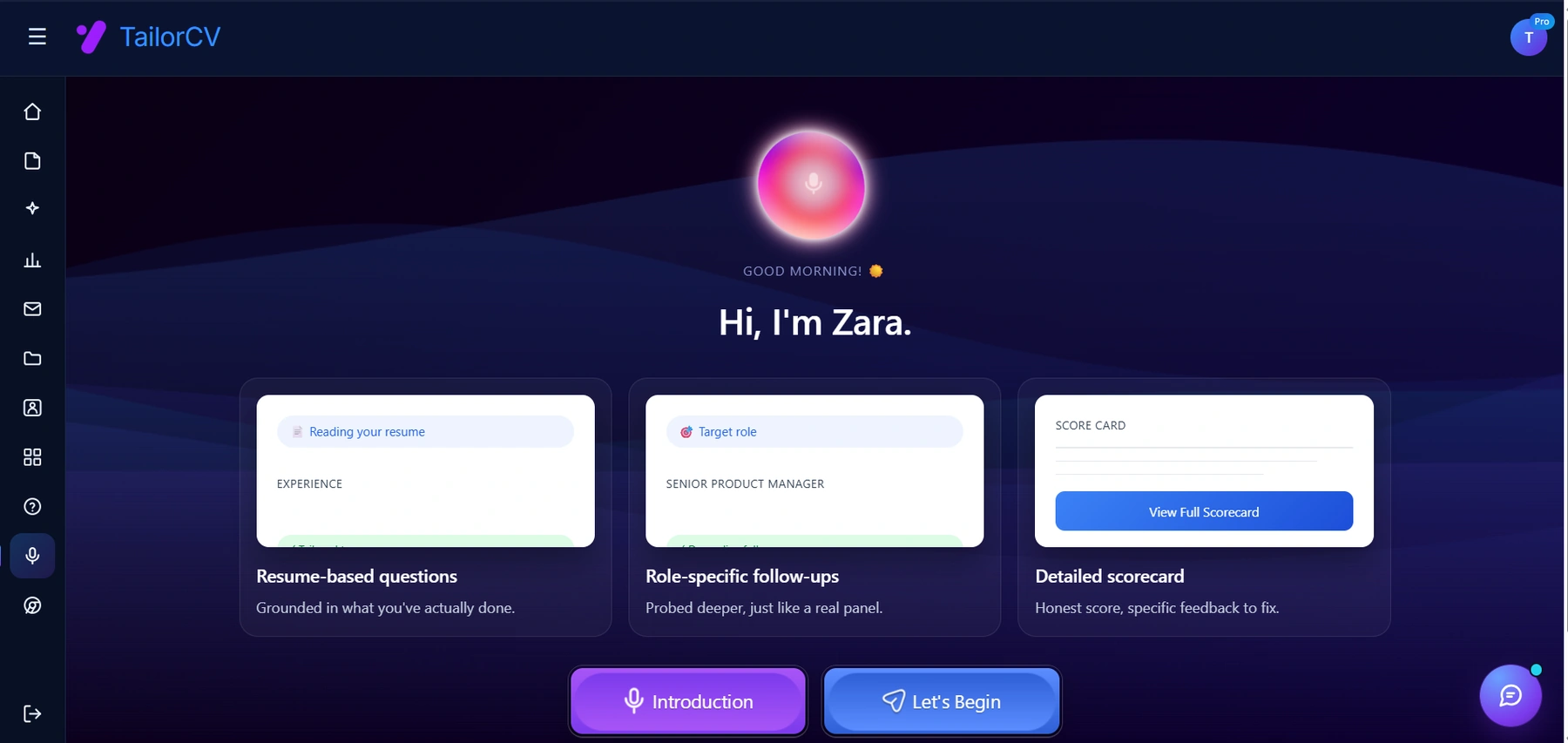
Rather than a fixed question list, the session is built from your own resume and target role, and ends with a scorecard naming the specific things to fix.
- Situation: Set the context for your story. Briefly describe the situation you were in, providing enough detail to give the interviewer a clear picture.
Example: "In my previous role as a project manager, I was tasked with leading a team to deliver a critical software update within a tight deadline."
- Task: Explain the specific task you were responsible for in that situation. This clarifies your role and the challenges you faced.
Example: "My task was to coordinate between the development, testing, and marketing teams to ensure that the update was not only completed on time but also met quality standards."
- Action: Detail the actions you took to address the task. This is where you showcase your skills and competencies.
Example: "I organized daily stand-up meetings to track progress, implemented a new project management tool to streamline communication, and set up a feedback loop with the QA team to address issues promptly."
- Result: Conclude with the outcome of your actions. Quantify your results where possible to illustrate the impact of your contributions.
Example: "As a result, we launched the update two days ahead of schedule, which led to a 15% increase in user satisfaction and a 10% boost in sales within the next quarter."
Using the STAR method helps you create compelling narratives that highlight your competencies. Practice crafting multiple STAR responses for different competencies to prepare for various questions.
Common Mistakes to Avoid in Competency-Based Interviews
While preparing for competency-based interviews, it's crucial to be aware of common pitfalls that could undermine your performance:
-
Vagueness: Avoid providing vague answers that lack detail. Be specific about your experiences and the results of your actions.
-
Neglecting the Result: Failing to mention the outcome of your actions can leave the interviewer questioning the effectiveness of your contributions. Always include quantifiable results when possible.
-
Over-Emphasizing Team Efforts: While teamwork is important, make sure to highlight your individual contributions clearly. This helps the interviewer understand your personal strengths.
-
Not Practicing: Going into the interview without practicing your responses can lead to stumbling over your words or forgetting key details. Conduct mock interviews to refine your answers.
-
Ignoring the Job Description: Tailoring your answers to align with the competencies highlighted in the job description is crucial. Use specific examples that resonate with the role you’re applying for.
Checklist for Competency-Based Interview Preparation
Use this checklist to ensure you’re thoroughly prepared for your competency-based interview:
-
[ ] Identify Key Competencies: Review the job description and list the key competencies required for the role.
-
[ ] Prepare STAR Responses: For each competency, draft a STAR response that highlights relevant experiences.
-
[ ] Practice Aloud: Rehearse your answers out loud to build confidence and improve your delivery.
-
[ ] Seek Feedback: Conduct mock interviews with a friend or mentor and ask for constructive feedback on your responses.
-
[ ] Research the Company: Understand the company culture and values to tailor your examples to align with what they seek in candidates.
-
[ ] Prepare Questions: Have thoughtful questions ready to ask at the end of the interview, demonstrating your interest in the role and the company.
Short Scenarios to Illustrate Competency Questions
Here are a few brief scenarios that illustrate how to use competency-based questions to assess candidates effectively:
-
Scenario 1: A candidate is asked, "Tell me about a time you had to resolve a conflict within a team." This question assesses interpersonal skills and conflict resolution abilities.
-
Scenario 2: When asked, "Describe a situation where you had to meet a tight deadline," the interviewer evaluates time management and prioritization skills.
-
Scenario 3: A question like "Can you give an example of when you took the initiative?" probes for proactivity and leadership qualities.
By crafting scenarios that align with the competencies you're evaluating, you can better gauge a candidate's fit for the role.
Additional Resources for Interview Preparation
To further enhance your interview preparation, consider utilizing these resources:
-
Mock Interviews: Engage in simulated interviews to practice your responses in a realistic setting. Check out our mock interview service for tailored practice.
-
ATS Checker: Ensure your resume is optimized for Applicant Tracking Systems by using our ATS checker.
-
Cover Letter Templates: Pair your resume with a compelling cover letter using our cover letter templates, designed to catch the attention of hiring managers.
By leveraging these tools, you can effectively prepare for competency-based interviews and present yourself as a strong candidate.
Frequently Asked Questions
Are competency interviews the same as behavioral interviews?
Very similar. Behavioral interviews ask "tell me about a time." Competency interviews map those stories to specific role competencies with scoring rubrics.
How many stories should I prepare?
10-12 versatile STAR stories covering 8-10 competencies. More for senior roles.
Can AI mock interviews generate competency questions?
Yes - TailorCV's AI mock interview asks role-relevant questions based on your resume and target position.
Practice competency-based answers with TailorCV's free AI mock interview.
Make This Practical
Use this advice as interview practice, not just reading material. Start a role-specific session with the AI mock interview tool, prepare your opening with How to Answer Tell Me About Yourself, and structure evidence-heavy answers with the STAR Method Interview Answers Guide.
Before the interview, make sure the resume that earned the call is still aligned with the role. Check it with the free ATS score checker, review Common Interview Mistakes to Avoid, and use How to Follow Up After an Interview once the conversation is over.
Was this guide useful?
Be the first to rate it.