 SS
SS
Key Takeaways
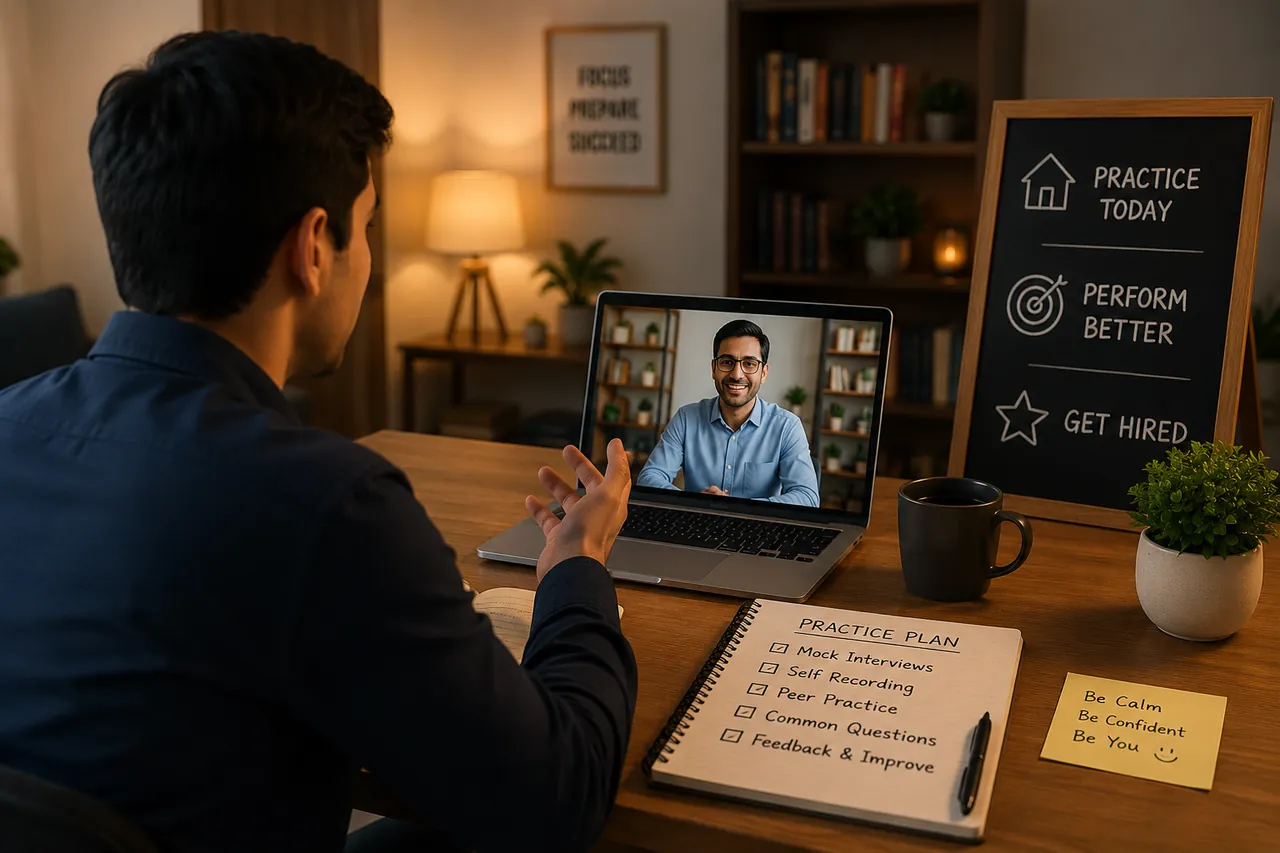
- Practicing job interviews at home involves speaking answers aloud, handling unexpected questions, and developing muscle memory for calmness during interviews.
- AI mock interviews offer realistic practice with instant feedback and are available 24/7, making them ideal for solo preparation.
- Self-recording answers on video helps evaluate body language and vocal delivery, essential for improving interview performance.
- Mirror practice can enhance delivery of key responses in just 5 minutes a day over a week.
- Engaging a friend or mentor for mock interviews provides valuable human feedback and follow-up questions that AI may not cover.
Reading interview tips is not practice. Practice means speaking answers aloud, handling unexpected questions, and building the muscle memory that keeps you calm when it counts.
You do not need a coach or a scheduled partner to prepare well. This guide covers how to practice job interviews at home in 2026 - with free and low-cost methods that actually work.
The fastest starting point: TailorCV's free AI mock interview. Also read the AI mock interview complete guide, complete interview preparation guide, and optimize your resume first with the TailorCV ATS checker.
Why Home Practice Matters
Candidates who only read guides fail in interviews because:
See it in action: a resume-based mock interview
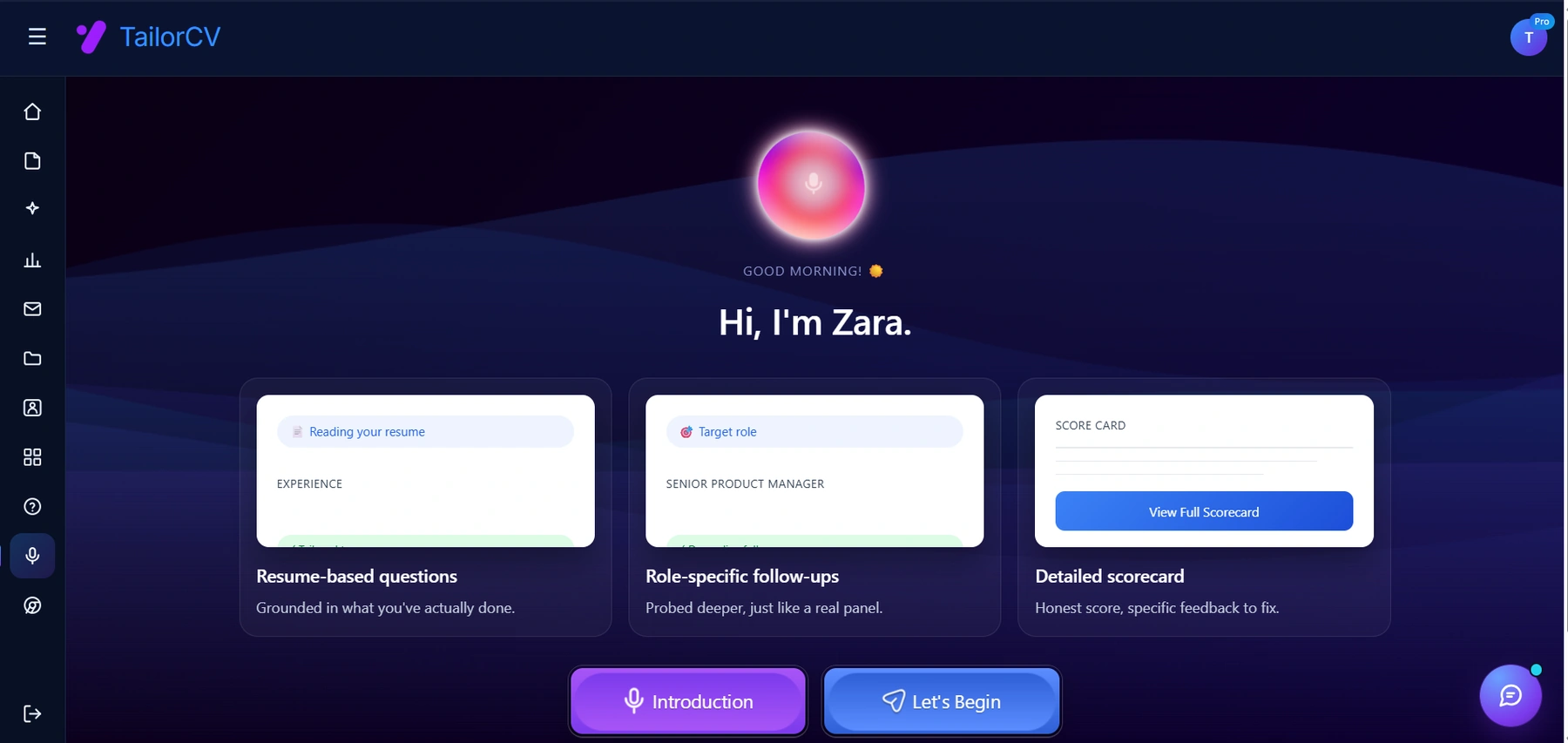
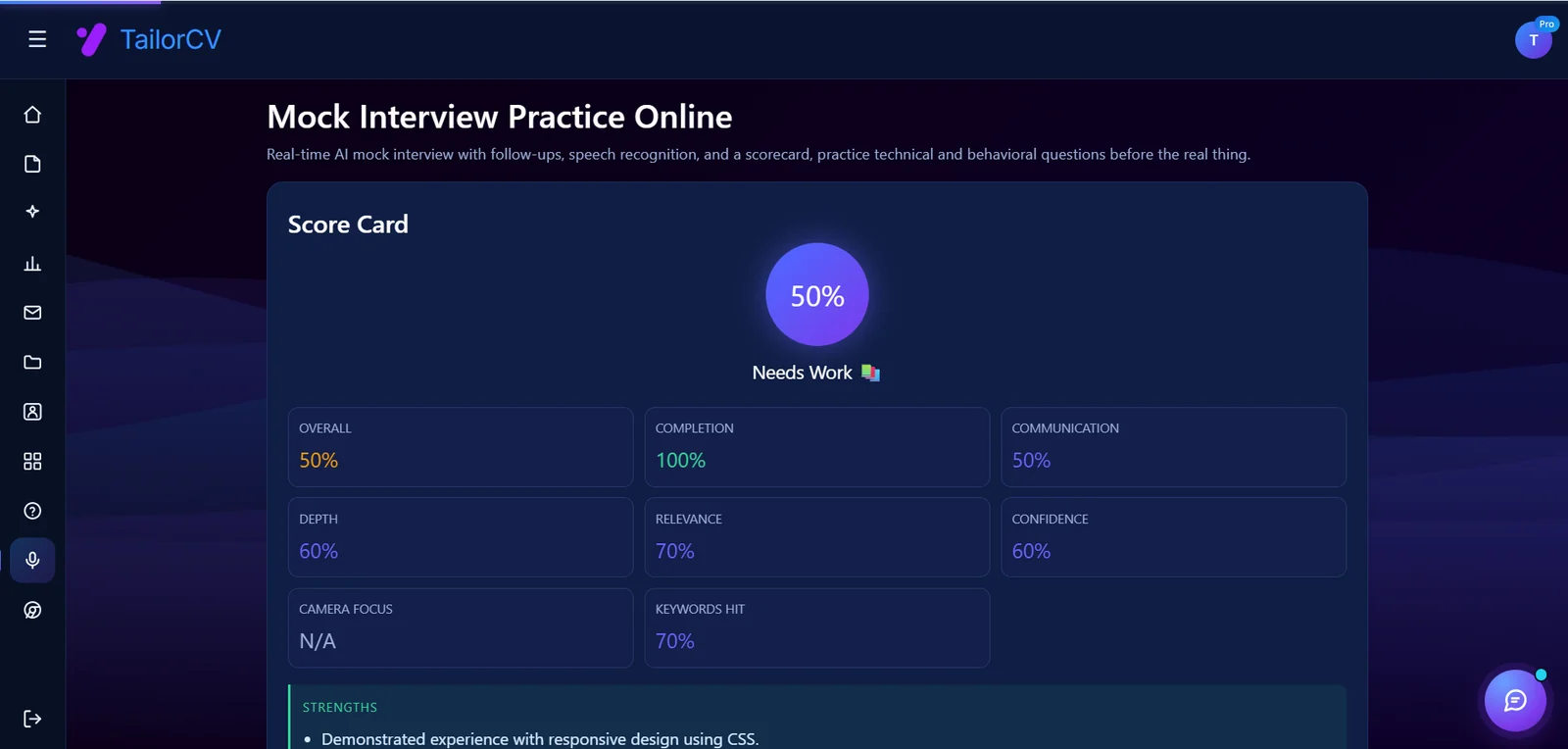
The scorecard at the end is the useful bit - an honest score plus specific feedback, which is what turns practice into improvement.
- They never hear how their answers sound
- They freeze on unexpected questions
- They underestimate timing - answers are too long or too short
- They do not practice body language and vocal delivery
Home practice fixes all of this before the real HR round, manager round, or technical interview.
Method 1: AI Mock Interviews (Best for Solo Practice)
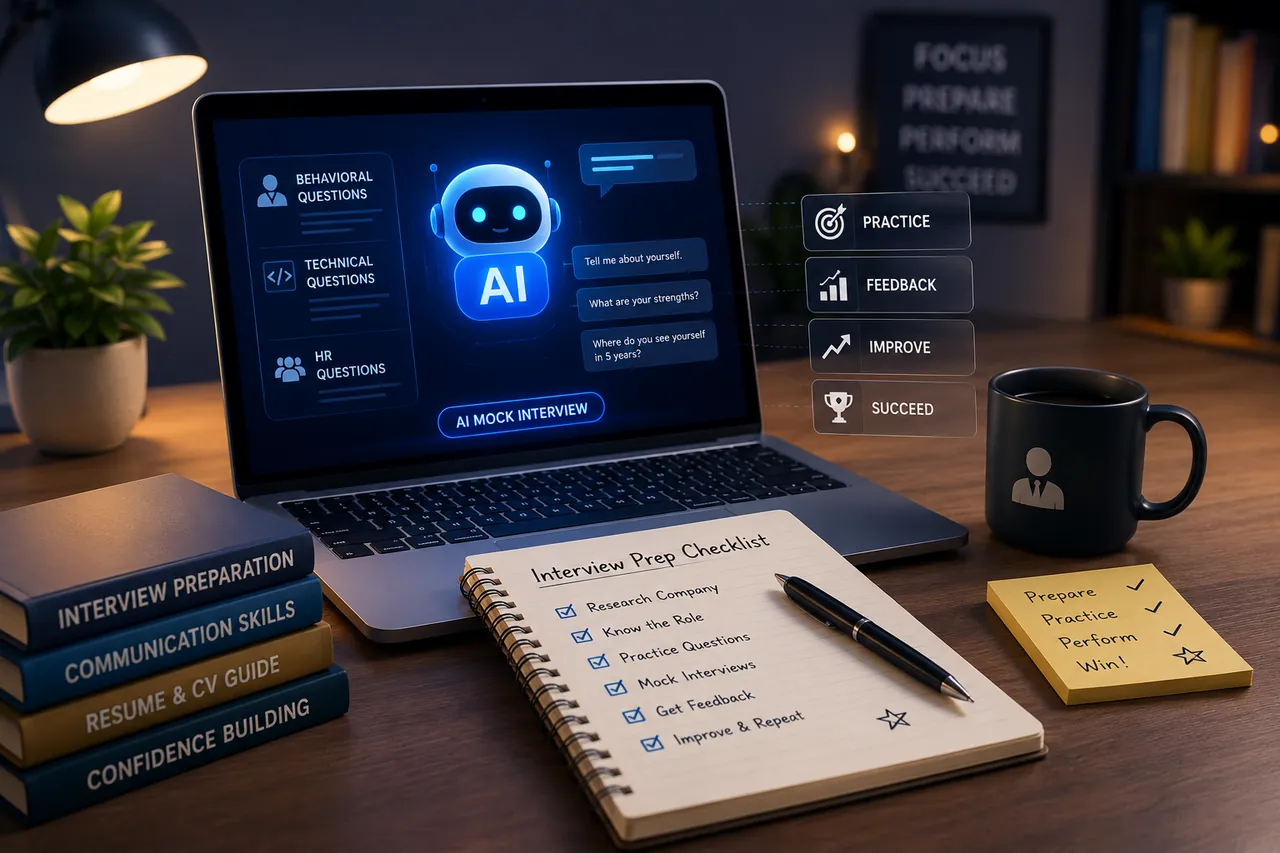
AI mock interviews are the closest thing to a real interview you can do alone:
- Ask realistic questions based on your role and resume
- Provide instant feedback on your answers
- Available 24/7 with no scheduling
- Free to start with TailorCV mock interview
Deep dive: mock interview practice online with free AI and mock interview practice free guide.
Recommended routine: 3-5 AI mock sessions per week, 20-30 minutes each.
Method 2: Self-Recording on Video
- Write 10 questions from the behavioral interview guide
- Record yourself answering each one on your phone
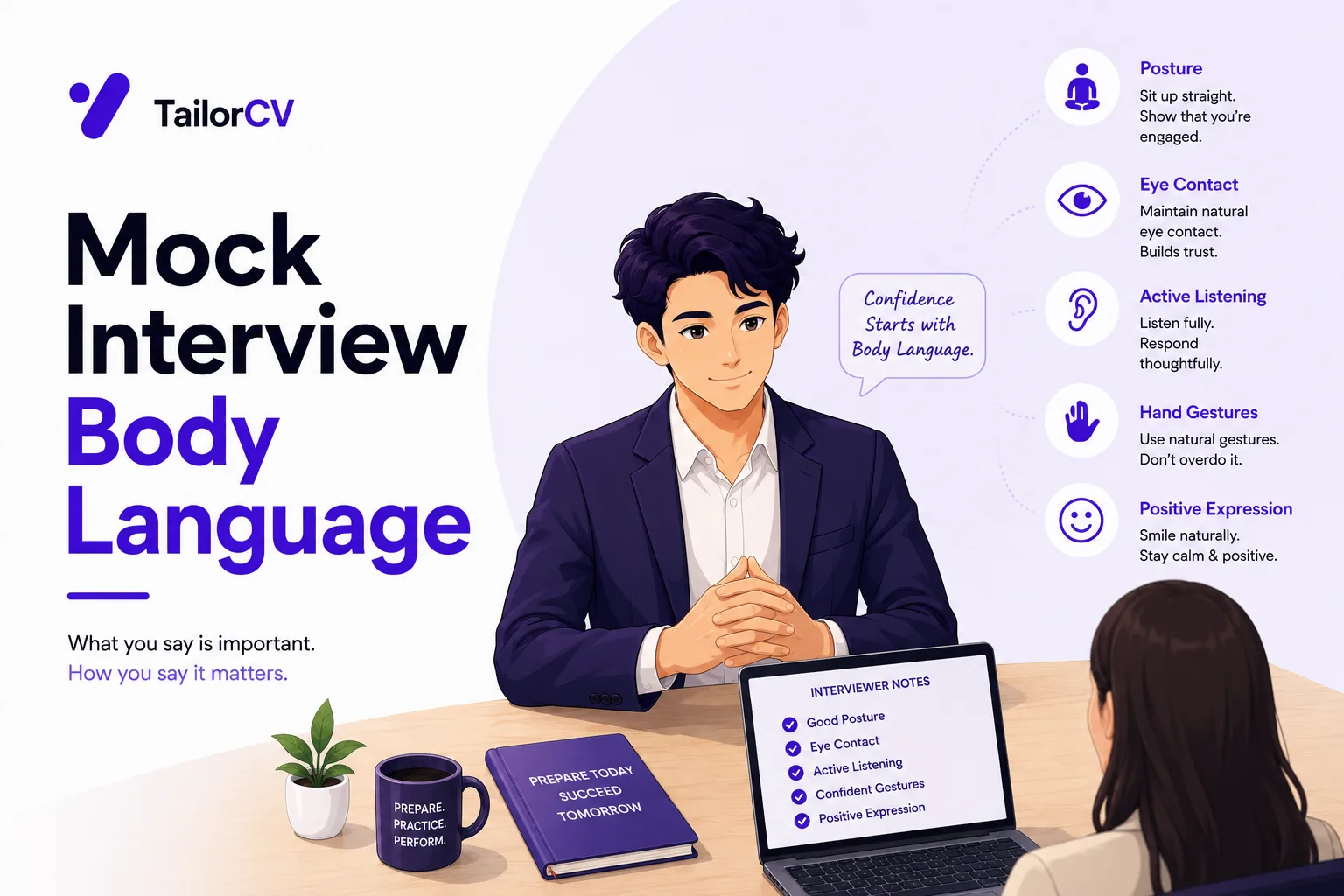
- Watch without sound first - evaluate body language
- Watch with sound - check for filler words, pacing, clarity
- Re-record improved versions
Essential for virtual interviews and remote job interviews.
Method 3: Mirror Practice (Quick Daily Drill)
Stand in front of a mirror and deliver your tell me about yourself answer, why should we hire you pitch, and 3 STAR stories.
5 minutes daily for one week = noticeable improvement.
Method 4: Peer and Mentor Practice
Ask a friend, colleague, or mentor to run a 30-minute mock interview. Give them a question list:
Peer practice adds human follow-up questions AI might miss.
Method 5: Structured 7-Day Prep Plan
| Day | Activity |
|---|---|
| Day 1 | Optimize resume - ATS checker. Research company - research guide |
| Day 2 | Write STAR stories - STAR guide |
| Day 3 | AI mock interview #1 - start here |
| Day 4 | Practice tough questions - career gap, job hopping |
| Day 5 | AI mock interview #2 + video self-review |
| Day 6 | Technical or role-specific prep - coding guide, case interview guide |
| Day 7 | Full dress rehearsal - simulate panel or final round |
What to Practice at Home by Interview Type
- Behavioral: STAR method
- Technical: Coding prep, system design
- HR: HR round questions
- Freshers: First job interview tips
- Group format: Group interview tips
- Competency: Competency-based guide
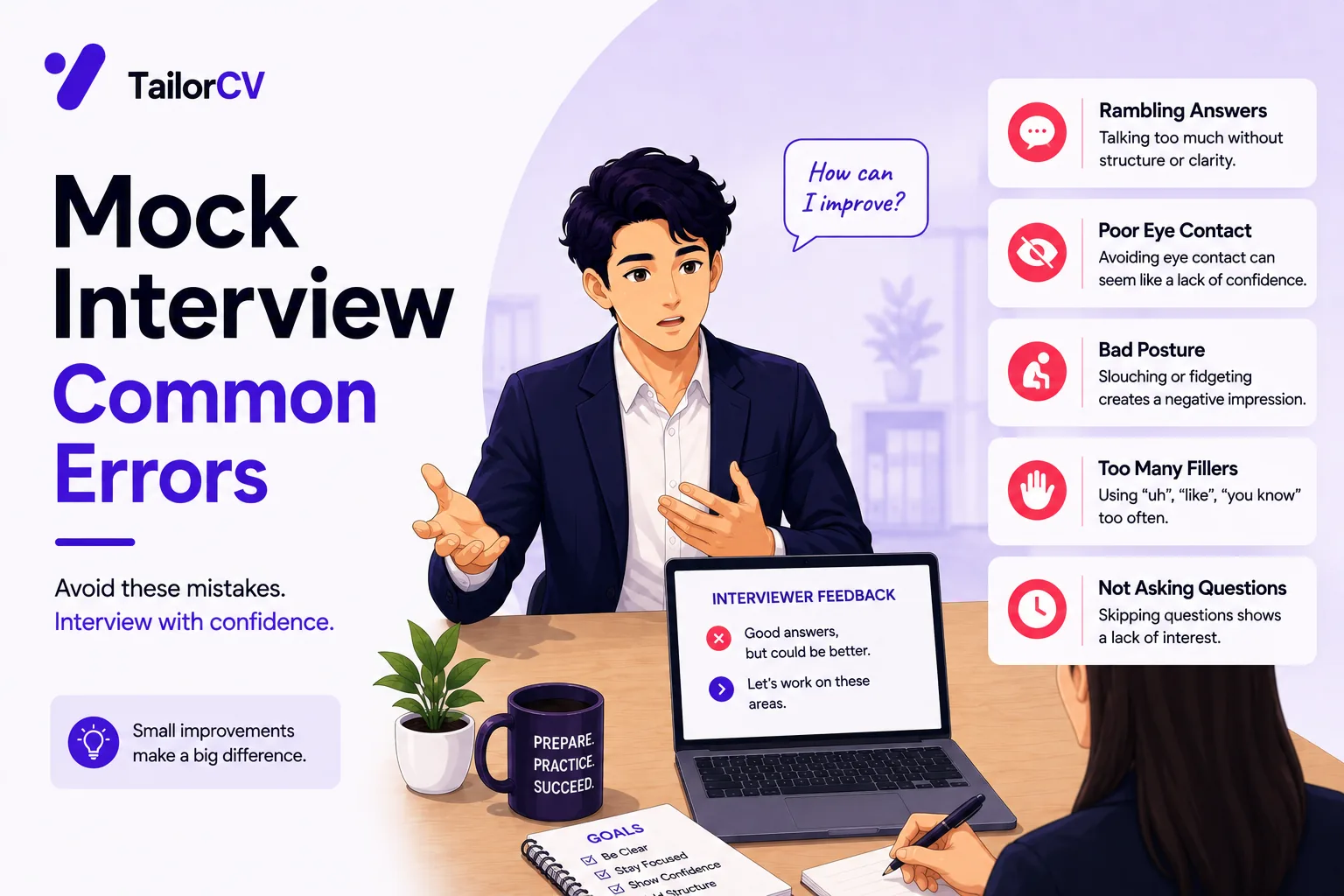
Manage pre-interview stress with interview anxiety tips. Avoid common mistakes.
Common Mistakes to Avoid When Practicing Interviews at Home
While preparing for interviews at home, it's easy to fall into common pitfalls that can hinder your performance. Here are some mistakes to avoid:
-
Neglecting Company Research: Focusing solely on practicing answers without understanding the company’s mission, culture, and role specifics can make your responses generic. Always tailor your answers to reflect your understanding of the company.
-
Ignoring Body Language: Practicing your words is important, but neglecting body language can undermine your confidence. Pay attention to your posture, eye contact, and gestures, as they play a crucial role in how you are perceived.
-
Over-rehearsing: While repetition can be beneficial, over-rehearsing can make your answers sound robotic. Aim for a balance where your responses are natural and conversational.
-
Failing to Simulate Real Interview Conditions: Practicing in a relaxed environment can lead to a false sense of security. Try to simulate real interview conditions by dressing appropriately and minimizing distractions.
-
Not Seeking Feedback: Practicing alone can limit your perspective. Make sure to engage peers or mentors to provide constructive feedback on your performance.
Step-by-Step Guide to Using AI Mock Interviews Effectively
AI Mock Interviews can be an invaluable tool for practice. Here's how to make the most out of this method:
-
Choose the Right Platform: Select an AI mock interview platform that offers a variety of questions tailored to your industry. Check out our AI Mock Interview - Complete Guide to Practicing and Winning in 2026 for recommendations.
-
Set Clear Goals: Before starting, define what you want to achieve. Whether it’s improving your confidence or mastering specific questions, having clear objectives will guide your practice.
-
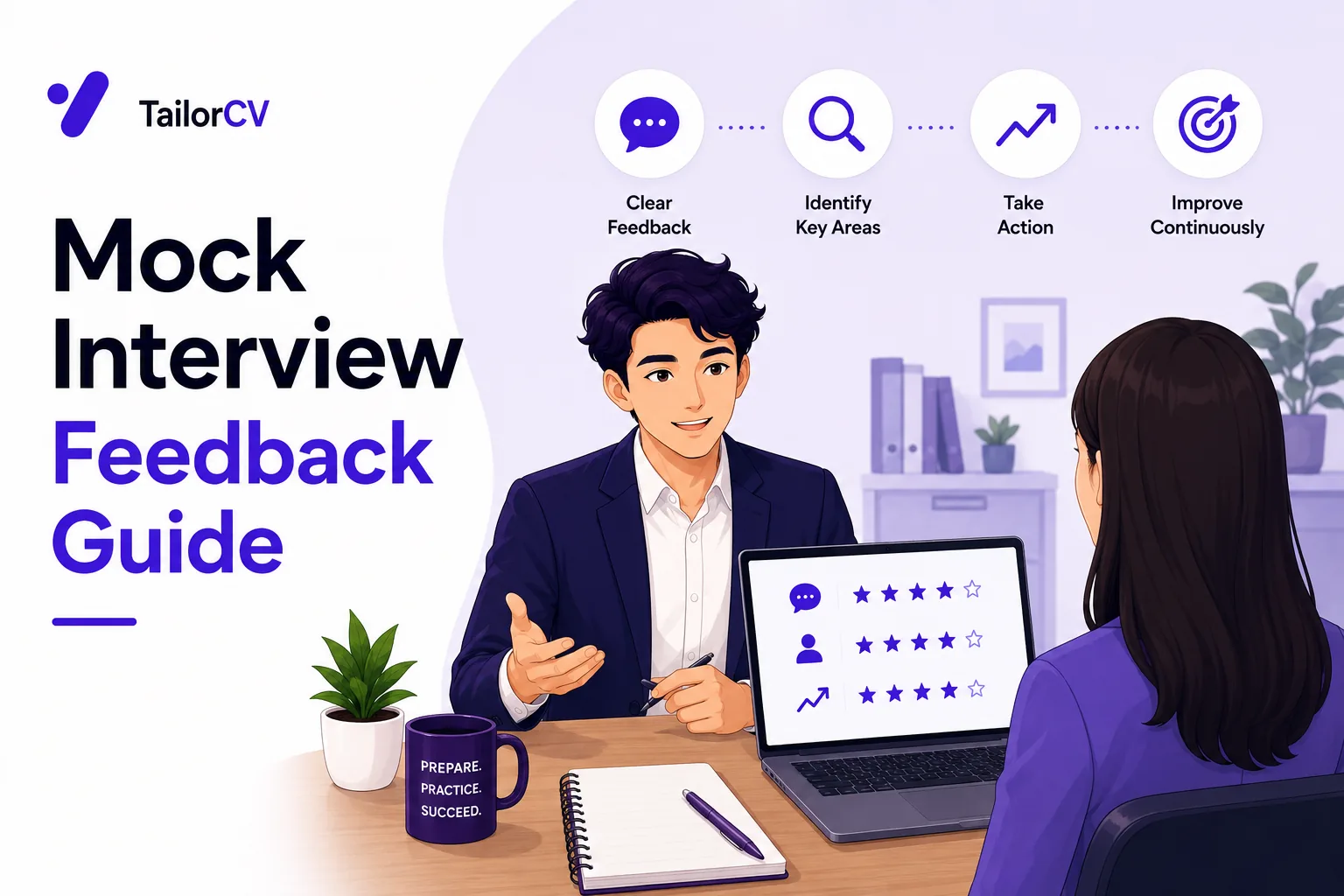
Engage with the Feedback: Most AI platforms provide instant feedback. Take the time to review this feedback critically. Note areas of improvement and focus on them in subsequent sessions.
-
Record Your Sessions: If the platform allows, record your mock interview sessions. This will help you analyze your performance later and track your progress over time.
-
Practice Regularly: Consistency is key. Schedule regular sessions to keep your skills sharp and to build confidence.
Mini Checklist for Home Interview Preparation
Use this checklist to ensure you cover all essential aspects of your interview preparation:
- unchecked: Research the Company: Understand their values, mission, and recent news.
- unchecked: Prepare Your Documents: Have your resume, cover letter, and portfolio ready for reference.
- unchecked: Practice Common Questions: Focus on behavioral, situational, and technical questions relevant to your field.
- unchecked: Utilize the STAR Method: Structure your answers using the STAR method to provide clear and concise responses. For more, see our STAR Method for Interview Answers - Complete Guide with Examples (2026).
- unchecked: Dress Rehearsal: Wear the outfit you plan to wear to the interview to practice in a professional mindset.
- unchecked: Limit Distractions: Choose a quiet space and turn off notifications on your devices.
- unchecked: Simulate Interview Conditions: Consider timing your responses and asking someone to role-play as the interviewer.
- unchecked: Reflect on Practice Sessions: After each practice, spend a few minutes reflecting on what went well and what could be improved.
Scenario-Based Practice: Handling Difficult Questions
One effective way to prepare is to practice answering difficult questions through scenarios. Here’s how to set this up:
-
Identify Challenging Questions: List questions that you find particularly challenging. Examples include "What is your biggest weakness?" or "Why should we hire you?"
-
Create Scenarios: For each question, create a scenario that requires a thoughtful response. For example, for “What is your biggest weakness?”, think of a real weakness and how you are working to improve it.
-
Role-Play with a Friend: Ask a friend or mentor to role-play the interviewer. They can ask you the questions and provide feedback on your responses.
-
Practice the Response: Focus on articulating your thoughts clearly and confidently. Use the STAR method where applicable to structure your answers.
-
Debrief: After the role-play, discuss what worked and what didn’t. This will help you refine your answers further.
Conclusion: Continuous Improvement
Practicing interviews at home is a dynamic process that benefits from continuous improvement. Regularly update your strategies based on your experiences and feedback, and don’t forget to incorporate new techniques such as How to Overcome Interview Anxiety and Nerves - Proven Tips for 2026 to enhance your performance. By staying proactive and reflective in your practice, you’ll boost your chances of success in your upcoming interviews.
Frequently Asked Questions
How many hours should I practice at home?
For a standard interview process, 5-10 hours total spread over a week is effective. More for technical roles.
Is AI mock interview enough without human practice?
AI mock interviews cover 80% of preparation needs. Add one peer session for best results.
What if I don't have anyone to practice with?
AI mock interviews + video self-recording is a complete solo system. Start free.
Start practicing at home with TailorCV's free AI mock interview.
Make This Practical
Use this advice as interview practice, not just reading material. Start a role-specific session with the AI mock interview tool, prepare your opening with How to Answer Tell Me About Yourself, and structure evidence-heavy answers with the STAR Method Interview Answers Guide.
Before the interview, make sure the resume that earned the call is still aligned with the role. Check it with the free ATS score checker, review Common Interview Mistakes to Avoid, and use How to Follow Up After an Interview once the conversation is over.
Was this guide useful?
Be the first to rate it.