 SS
SS
Key Takeaways
- To get promoted, demonstrate that you are already operating at the next level before the promotion is granted.
- Understand the requirements for the next level by studying your company's framework or asking your manager directly.
- Deliver results that showcase next-level impact by taking on high-visibility projects and mentoring others.
- Build visibility by sharing your contributions in team settings and engaging in cross-functional projects with leadership.
- Secure a sponsor who can advocate for you and have a clear conversation with your manager about your promotion ambitions and roadmap.
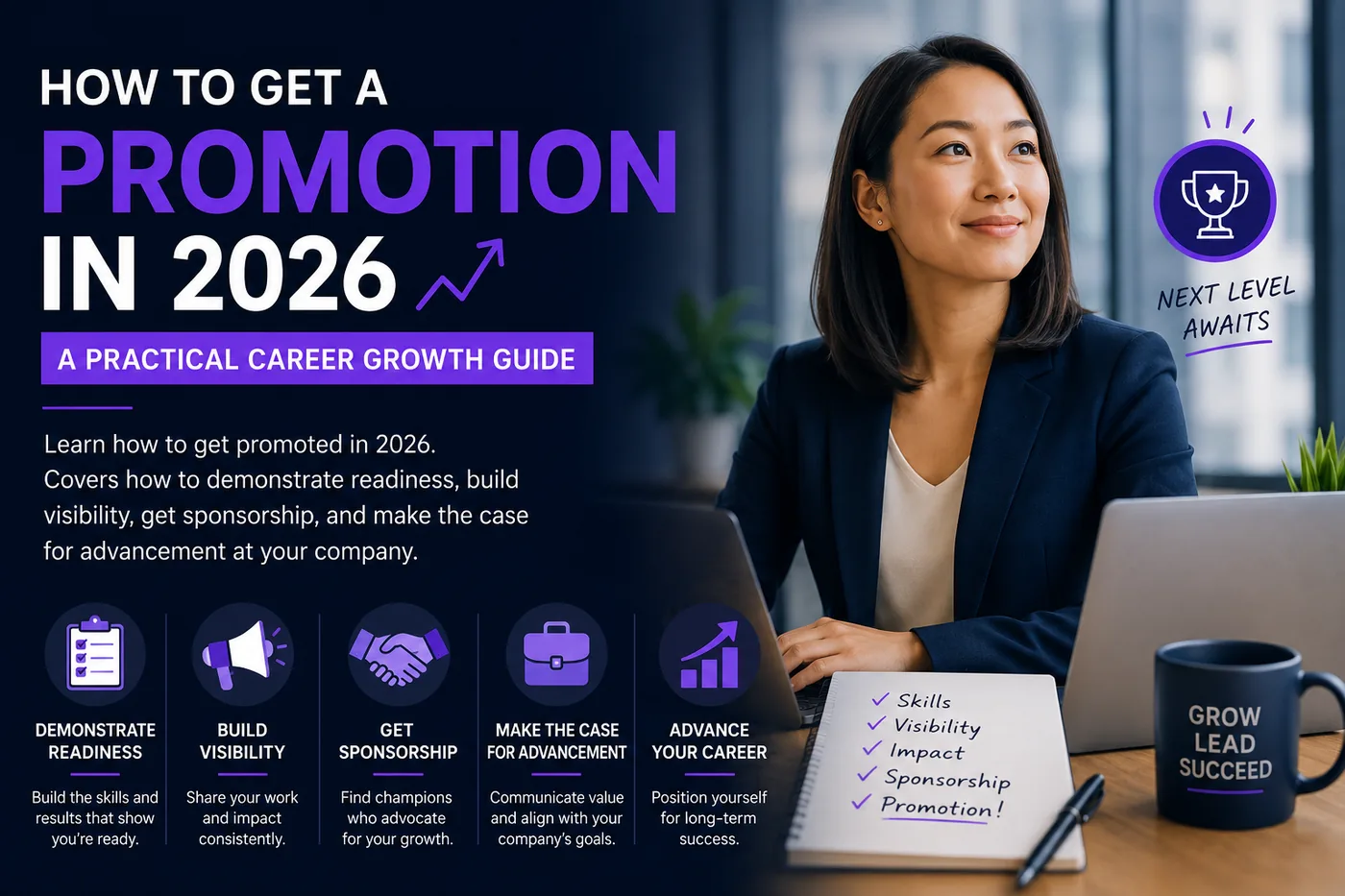
Getting promoted is not just about working hard. Plenty of hard workers get passed over while others advance faster. Promotions go to people who demonstrate that they are already operating at the next level, who are visible to decision-makers, and who make a clear business case for their advancement.
This guide covers the practical strategy for getting promoted in 2026 - what to do, how to position yourself, and how to make the ask.
This pairs with the how to ask for a raise guide and the skills to add to your resume guide. Keep your resume updated with your achievements using the TailorCV ATS score checker - documenting accomplishments as they happen builds your promotion case.
The Core Principle: Operate at the Next Level First
The biggest misconception about promotions is that you get promoted and then start doing the higher-level work. In reality, you demonstrate that you can do the higher-level work, and then you get promoted to match.
To get promoted to senior, you must already be operating like a senior. To get promoted to lead, you must already be showing leadership. Promotions formalize what you are already doing - they rarely grant it in advance.
Step 1: Understand the Requirements for the Next Level
Most companies have a leveling framework or competency matrix. If yours does:
- Get a copy and study it
- Identify the gaps between your current performance and the next level
- Build a plan to close those gaps
If your company has no formal framework:
- Ask your manager directly: "What would I need to demonstrate to be promoted to [next level]?"
- Observe what people at the next level do differently
- Look at the job description for the next-level role
Step 2: Deliver Results at the Next Level
Promotions require evidence. Take on work that demonstrates next-level impact:
- Volunteer for high-visibility, high-impact projects
- Solve problems that matter to the business, not just your immediate team
- Take ownership of outcomes, not just tasks
- Mentor others (a key signal of seniority)
- Lead initiatives without being asked
Document everything. Keep a running log of your accomplishments with quantified impact. This becomes your promotion case and your resume material.
Step 3: Build Visibility
Doing great work that nobody sees does not get you promoted. You need decision-makers to know your contributions.
Ways to Build Visibility
- Present your work in team meetings and demos
- Write clear updates that show impact, not just activity
- Share wins appropriately (without arrogance) in team channels
- Contribute in cross-functional settings where senior people are present
- Take on projects that interface with leadership
Visibility is not bragging - it is making your real contributions known so they can be evaluated fairly.
Step 4: Get a Sponsor
A mentor advises you. A sponsor advocates for you when you are not in the room - and promotion decisions happen in rooms you are not in.
To build sponsorship:
- Deliver consistently for senior leaders
- Make your manager's job easier (managers sponsor people who make them look good)
- Build genuine relationships with leaders beyond your direct manager
- Ask your manager to advocate for you explicitly
Your manager is usually your most important sponsor. Make sure they understand your ambitions and your accomplishments.
Step 5: Have the Promotion Conversation
Do not wait silently hoping to be noticed. Express your ambition clearly.
The Conversation Script
"I'm really enjoying my work and I'm ambitious about growing here. I'd like to work toward a promotion to [next level]. Can we talk about what I'd need to demonstrate and what the timeline might look like?"
This does three things:
- Signals your ambition (managers can't advocate for goals they don't know about)
- Gets you a concrete roadmap
- Starts the clock on the process
Then, periodically check in: "I've now done [X, Y, Z] that we discussed. Where do you see me relative to the promotion?"
Step 6: Make the Formal Case
When you are ready, help your manager build the promotion case. Provide them with:
What optimizing actually does to your resume
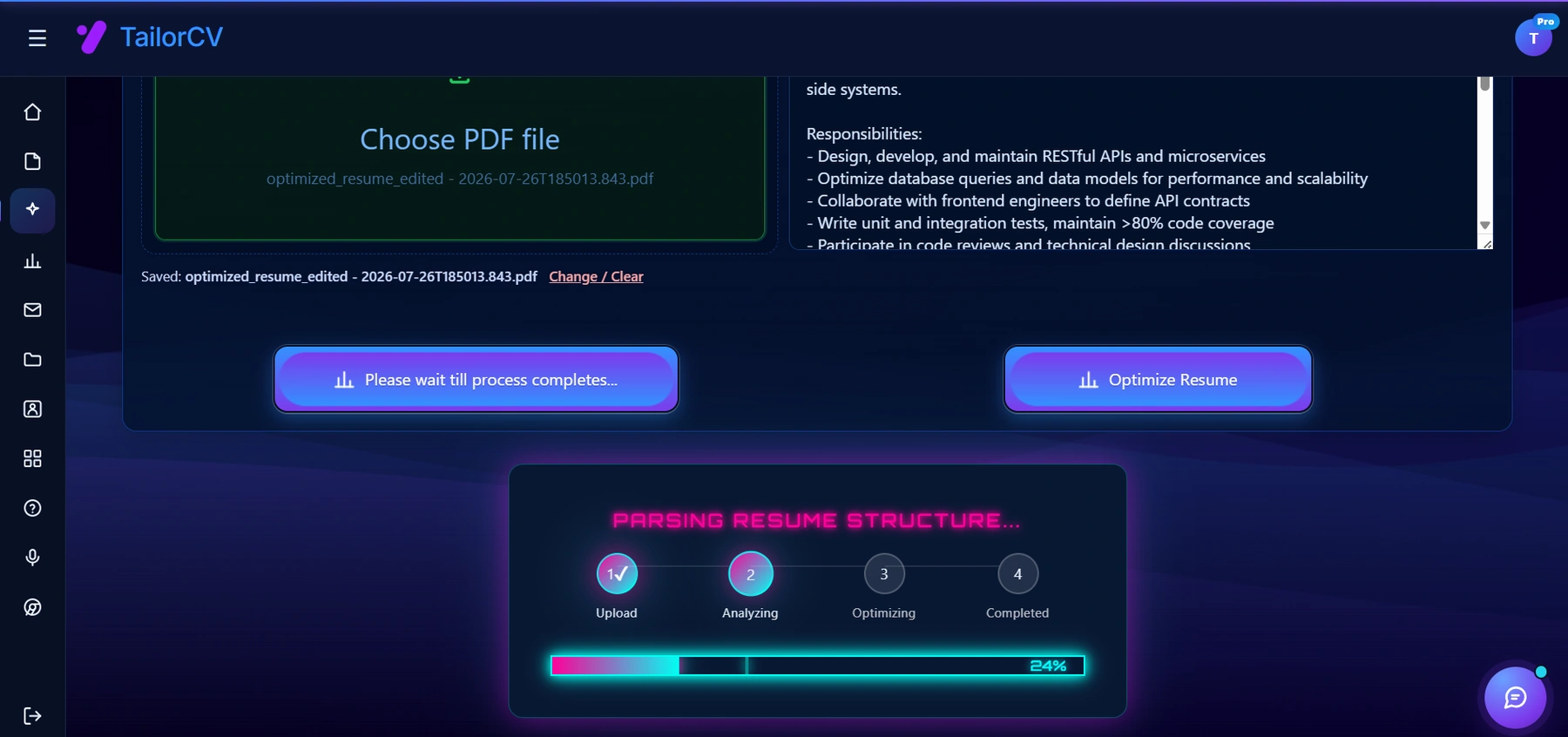
Optimising runs against the specific job description you paste in, not in the abstract.
- A document of your accomplishments with quantified impact
- Evidence that you are operating at the next level
- Examples of leadership, ownership, and business impact
- Peer or stakeholder feedback if available
Make it easy for your manager to advocate for you by giving them the ammunition.
What If You Get Passed Over?
If you do not get promoted:
- Ask for specific, actionable feedback: "What specifically prevented this promotion, and what would change the outcome?"
- Get a concrete timeline and criteria for reconsideration
- Evaluate whether the feedback is fair and achievable
- If you consistently deliver at the next level but are repeatedly passed over, it may be time to explore external opportunities - sometimes the fastest promotion is a new company at a higher level
Keep your resume ready for that possibility using the TailorCV ATS score checker.
Common Promotion Mistakes
Mistake 1: Assuming hard work alone gets noticed
Hard work is necessary but not sufficient. Visibility and business impact matter equally.
Mistake 2: Not expressing ambition
Managers cannot advocate for goals they do not know you have. Tell them.
Mistake 3: Focusing on tenure
"I've been here 3 years" is not a promotion argument. Impact and next-level performance are.
Mistake 4: Waiting to be noticed
Promotions rarely happen passively. You must actively build your case and ask.
Mistake 5: Not documenting accomplishments
If you cannot list your specific quantified achievements, you cannot make a strong case. Document as you go.
Related Guides
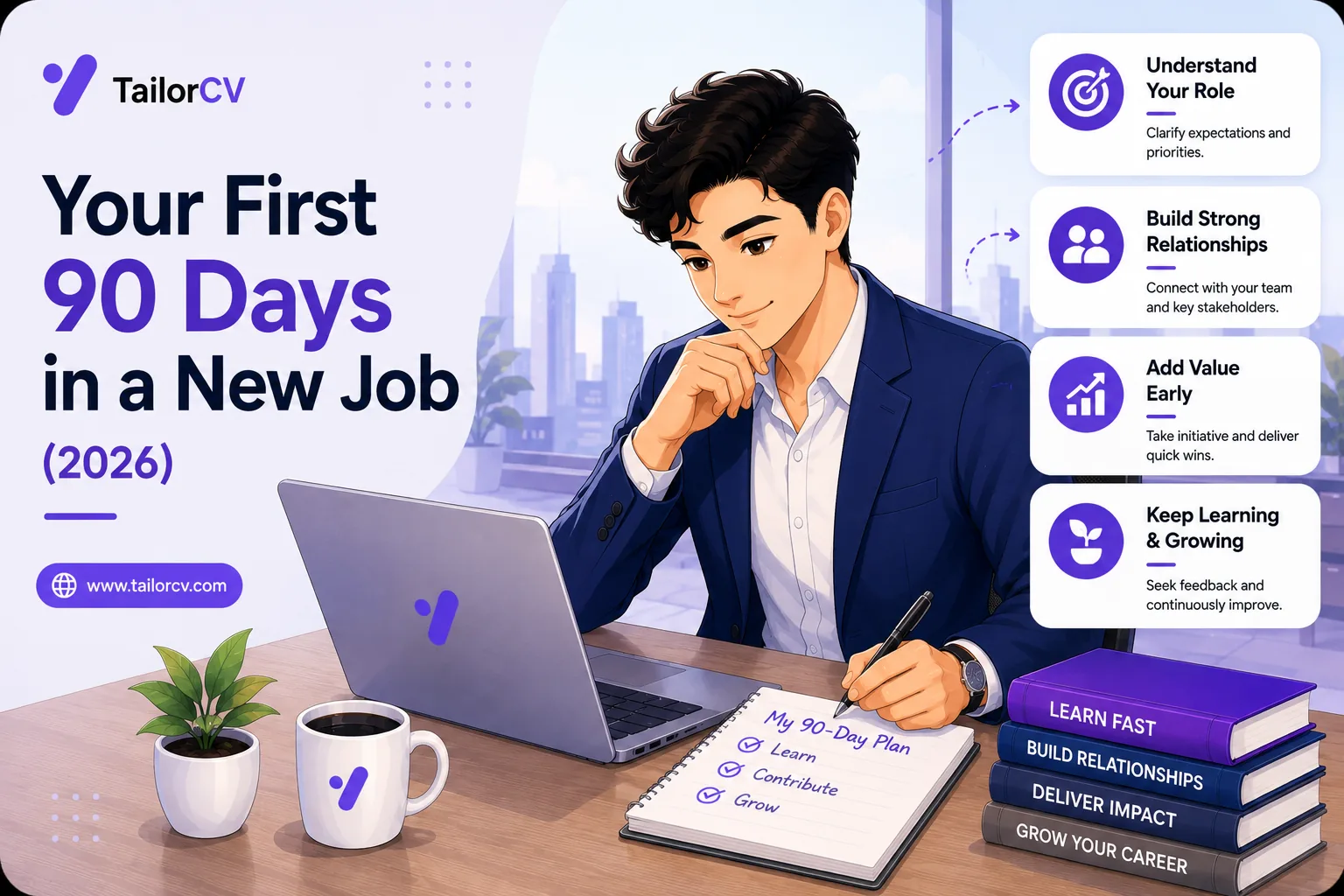
- First 90 Days at a New Job
- How to Ask for a Raise
- Personal Branding for Professionals
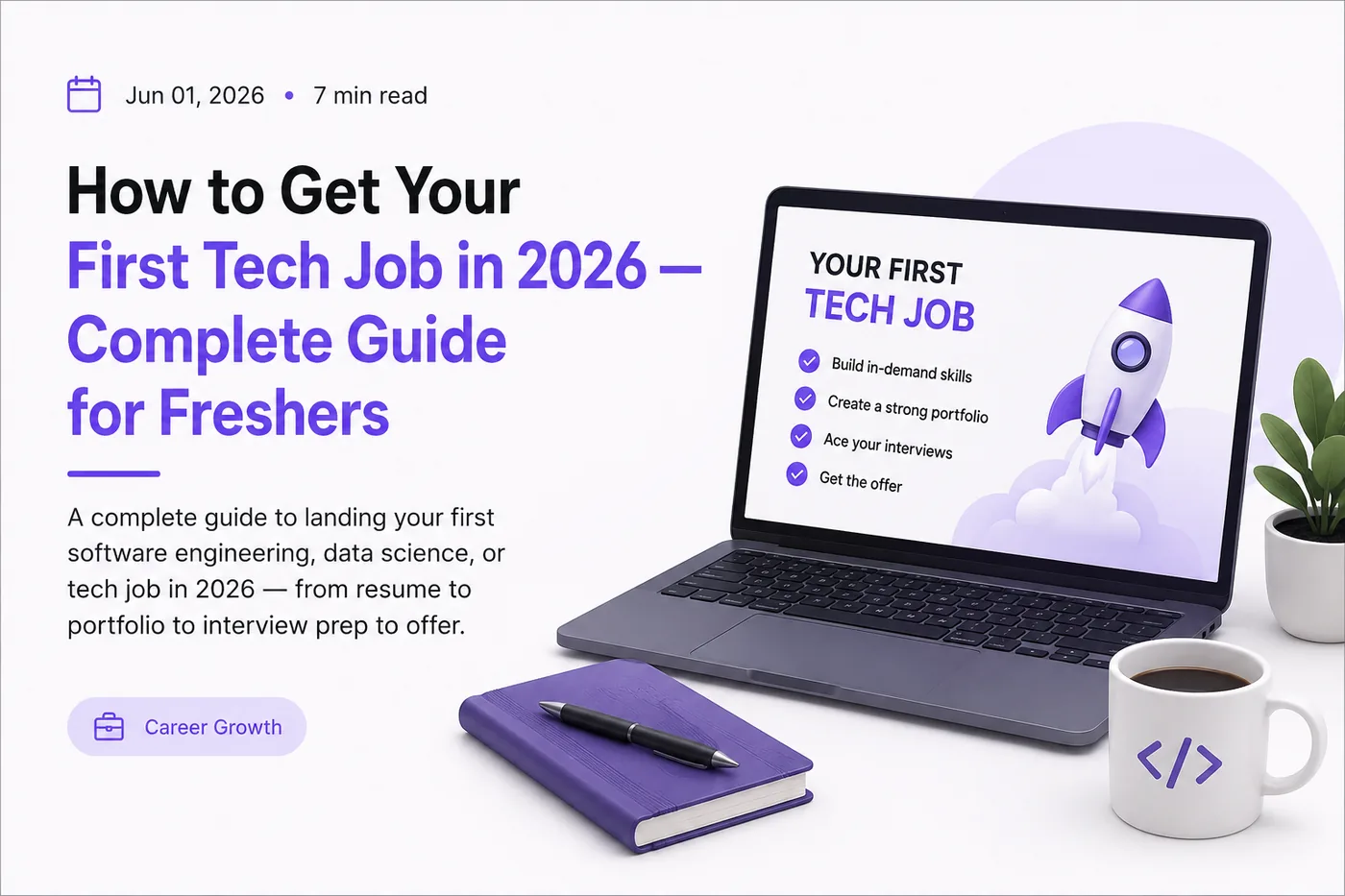
- How to Get Your First Tech Job
- Career Change to Tech
- Freelancing vs Full-Time Employment
- How to Get a Job With No Experience
- Why Am I Not Getting Interviews for Jobs I'm Qualified For?
- Work-Life Balance Tips for Professionals
- How to Build a Professional Portfolio
- How to Decline a Job Offer Professionally
- How to Explain Resume Gaps
- ATS Mistakes Experienced Professionals Make (And Why Your Resume Stops Working After 5+ Years)
- How to Handle Job Rejection in 2026 - Practical Guide for Job Seekers
- How to Negotiate a Salary Offer in 2026 - Tactics That Actually Work
- How to Quit Your Job Professionally in 2026 - Complete Guide
- How to Write a Resume Headline in 2026 - With 30 Examples
Make This Practical
Turn the career advice into a stronger application system. Start by checking your resume with the free ATS score checker, align it with the role using How to Tailor Your Resume for Every Job, and keep your profile consistent with LinkedIn Resume Tailoring Sync.
When you are ready to apply, build the supporting pieces around the resume. Use the AI cover letter generator for targeted outreach, practice with the AI mock interview tool, and review Why Your Resume Gets No Responses if applications are not converting.
Conclusion
Getting promoted requires operating at the next level, delivering visible business impact, building sponsorship, and proactively making your case. Promotions formalize the value you already demonstrate - your job is to demonstrate it clearly and make it visible.
Document your accomplishments continuously and keep your resume current with the TailorCV ATS score checker. When the time comes, use the how to ask for a raise guide for the compensation conversation, and keep building in-demand skills with the skills guide.
Frequently Asked Questions
What are the key steps to demonstrate readiness for a promotion in 2026?
To demonstrate readiness for a promotion, focus on operating at the next level before the formal title change. This involves understanding the requirements for the next level by studying your company's leveling framework and identifying gaps in your performance. Create a plan to close these gaps, and consistently deliver results that align with the expectations of the role you aspire to. For more on how to position yourself effectively, check out our guide on personal branding for professionals.
How can I build visibility within my company to support my promotion efforts?
Building visibility involves actively engaging with decision-makers and showcasing your contributions. Attend company meetings, share your successes, and seek opportunities to collaborate on high-impact projects. Networking within your organization can also help you gain support from sponsors who can advocate for your promotion. For tips on making a strong impression in your first few months, refer to our post on first 90 days at a new job.
What role does sponsorship play in getting a promotion?
Sponsorship is crucial as it involves having an advocate within your organization who can vouch for your capabilities and potential. A sponsor can help you navigate company politics and provide insights on what it takes to advance. To secure a sponsor, focus on building relationships with higher-level colleagues and demonstrating your value consistently. For a deeper understanding of how to effectively approach this, consider reading our guide on how to ask for a raise.
How should I approach making the case for my promotion?
When making the case for your promotion, prepare a clear and concise presentation of your achievements, contributions, and how they align with the company's goals. Use data and specific examples to support your claims, and be ready to discuss how you can add even more value in the new role. Documentation of your accomplishments will strengthen your case, so keep your resume updated using our free ATS score checker.
What should I do if I don’t have a formal promotion framework at my company?
If your company lacks a formal promotion framework, take the initiative to ask your manager directly what you need to demonstrate for a promotion. Pay attention to the behaviors and skills of those who are already in the role you aspire to, and actively seek feedback on your performance. Additionally, exploring the specific job description for the next level can provide clarity on expectations. For guidance on internal applications, check our post on how to tailor your resume for an internal job application.
What is your resume scoring right now?
Scan it against a job description and get your ATS match score in about a minute.
Drop your resume here or choose a file
PDF only. Max 2 MB.
We never share your data or use it to train AI models.

Was this guide useful?
Be the first to rate it.