 TD
TD
Key Takeaways
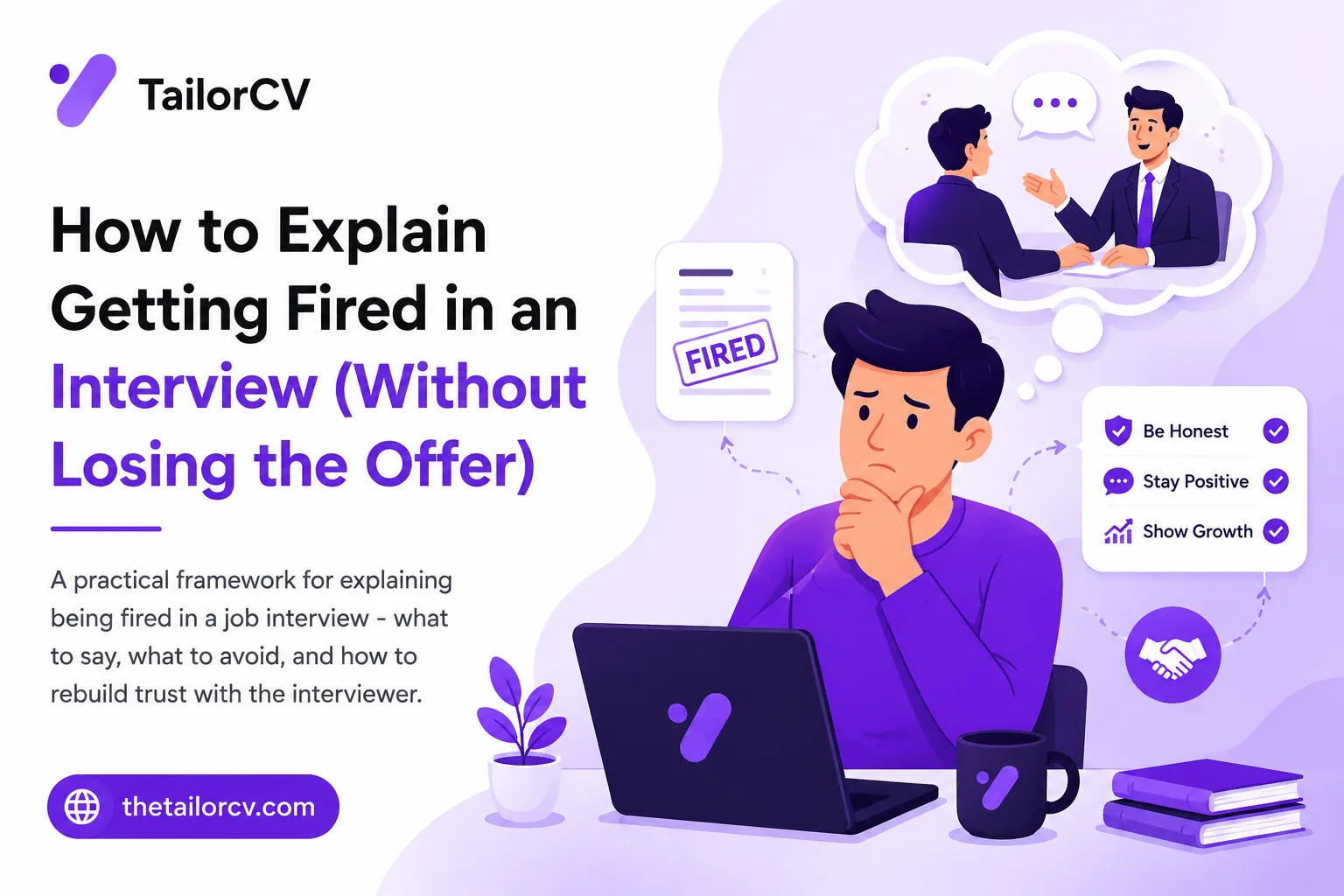
- When explaining being fired, keep your response brief and factual without blaming others or getting defensive.
- Highlight what you learned from the experience to demonstrate accountability and self-awareness.
- Connect your lesson learned to your current readiness for the role you are applying for.
- Prepare your answer in advance by practicing a succinct explanation and identifying genuine lessons using the STAR method.
- Anticipate follow-up questions about the situation, its impact on your career, and your current mindset regarding the experience.
Getting fired feels like the end of your story with a company - in an interview, it's just one question you need a clear, honest answer for. Interviewers aren't looking for a perfect employment history; they're evaluating whether you can talk about a setback with accountability and self-awareness. Panic or over-explaining hurts you far more than the firing itself.
Before the interview, make sure the rest of your story is airtight - check your resume against the role with the free ATS score checker and rehearse this exact question with the AI mock interview tool.
The 3-Part Framework
1. Be brief and factual
State what happened in one or two neutral sentences. Don't over-explain, don't badmouth your former employer, and don't get defensive.
"I was let go from my last role due to a performance mismatch with the team's expectations at the time."
2. Show what you learned
This is the part that actually matters to the interviewer - proof you've reflected and changed, not just survived.
"It pushed me to get much more explicit about expectations early in a role, and to ask for feedback more often instead of waiting for a formal review."
3. Redirect to your readiness now
Close by connecting the lesson to why you're a stronger fit today.
"Since then, I've been proactive about aligning with managers early, and I'm looking for a role where I can apply that directly."
What NOT to Say
- Do not blame your former manager or company by name, even if it's technically true - see common interview mistakes to avoid
- Do not minimize it to the point of sounding dishonest ("it wasn't really a big deal")
- Do not ramble - a long, defensive answer signals more discomfort than the firing itself
- Do not lie about the circumstances - inconsistencies during reference checks are far more damaging than the original firing
How to Prepare Your Answer in Advance
- Write your one-sentence factual explanation and practice saying it without hesitation.
- Identify one genuine lesson - not a generic platitude - using the STAR method to structure it.
- Practice out loud with the AI mock interview tool, which can simulate this exact question based on your resume.
- If the gap it created is visible on your resume, also review how to explain resume gaps so your written story and spoken story match.
See it in action: a resume-based mock interview
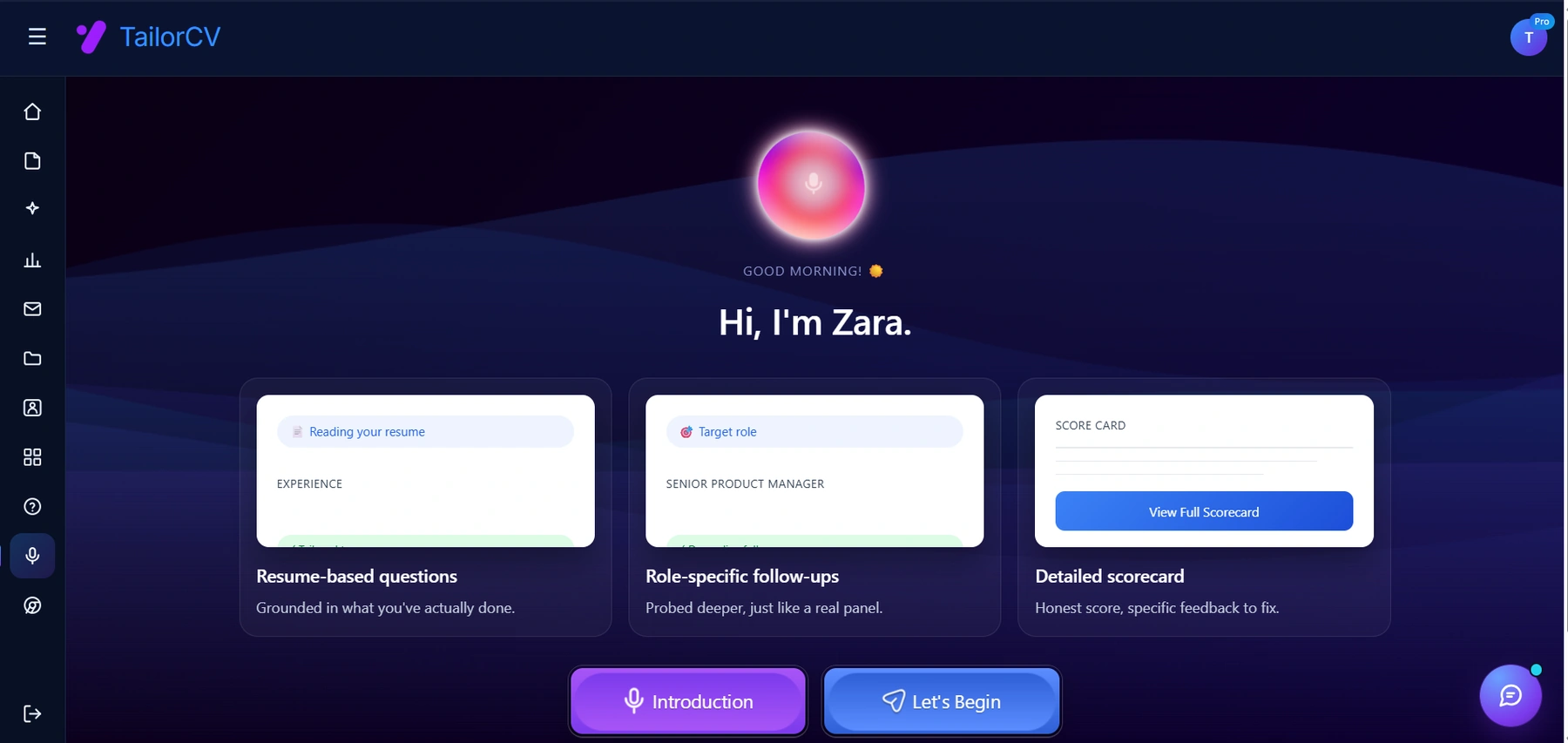
The scorecard at the end is the useful bit - an honest score plus specific feedback, which is what turns practice into improvement.
What to Expect in the Interview
When preparing to discuss being fired, it's crucial to anticipate the interviewer's follow-up questions. Here are some common aspects they might explore:
- Details of the Situation: They may ask for more context about why the firing occurred. Be ready to succinctly elaborate without getting defensive.
- Impact on Your Career: Interviewers might inquire how the experience affected your career trajectory. Reflect on this and be prepared to discuss how you’ve grown since.
- Your Current Mindset: Expect questions about how you view your past firing. A positive, forward-thinking attitude can demonstrate resilience.
Real Examples of How to Frame Your Response
Example 1: Performance-Related Dismissal
"I was let go due to not meeting performance expectations. This experience taught me the importance of seeking regular feedback, which I now prioritize in every role."
Example 2: Cultural Mismatch
"I was released from my last position because my work style didn’t align with the company culture. This made me realize the importance of cultural fit, and I now actively assess how my values align with a company’s mission and environment."
Example 3: Restructuring
"I was part of a company-wide restructuring that impacted many employees. This experience highlighted the unpredictability of the job market, and I’ve since focused on building a more adaptable skill set."
Common Mistakes to Avoid
While discussing your firing, be mindful of these pitfalls:
- Over-Defensiveness: Avoid sounding like you are justifying your actions. Instead, focus on what you learned.
- Negative Language: Using negative terms can create a poor impression. Maintain a neutral tone.
- Inconsistency: Ensure your story aligns with what your references might say. Any discrepancy can raise red flags.
How to Follow Up After the Interview
After discussing your firing, it’s important to reinforce your qualifications and fit for the role. Here’s how:
- Send a Thank-You Email: In your follow-up, briefly reiterate your enthusiasm for the role and how you've grown from past experiences.
- Mention Key Points: If there were specific skills or experiences that came up during the interview, highlight them again in your thank-you note.
- Stay Positive: Keep the tone upbeat, focusing on the future and what you can bring to the company.
Preparing for Reference Checks
Be consistent. What you tell the interviewer should match what a former employer would say if contacted. If you're unsure how a reference will characterize the situation, address it proactively rather than letting the interviewer discover a mismatch later. Here are steps to prepare:
- Inform Your References: Let them know what you plan to say about your firing. This helps ensure they are on the same page.
- Provide Context: If appropriate, share your narrative with your references so they can support your story with context.
- Ask for Feedback: Before providing their details, ask your references how they would describe your work ethic and contributions.
Additional Strategies for Long-Term Success
While discussing a firing can be daunting, focusing on your overall career strategy can help mitigate the impact. Consider the following:
- Professional Development: Engage in courses or certifications that enhance your skills. This shows commitment to growth.
- Networking: Build relationships within your industry. Networking can lead to opportunities that allow you to demonstrate your capabilities.
- Career Coaching: A career coach can provide personalized strategies for navigating challenging conversations and advancing your career.
Crafting Your Narrative: A Step-by-Step Guide
When preparing to explain your termination, it's essential to build a narrative that highlights your growth and resilience. Follow these steps to craft a compelling story:
-
Identify Key Takeaways: Reflect on your experience and pinpoint three main lessons learned from the situation. These could include improved communication skills, the importance of aligning with company culture, or better time management.
-
Structure Your Story: Use a simple structure to present your narrative: - Situation: Briefly describe the context of your job and what led to your termination. - Action: Explain what you did to address the issues that arose. - Result: Highlight the positive outcomes that resulted from your actions, focusing on personal growth.
-
Practice Your Delivery: Rehearse your narrative aloud. This will help you become more comfortable and confident when discussing it in an interview.
-
Seek Feedback: Share your narrative with a trusted friend or mentor. Their feedback can help you refine your story and ensure it resonates well.
By following this guide, you can transform a potentially negative experience into a narrative that showcases your adaptability and commitment to professional development.
Do's and Don'ts for Discussing Your Termination
Navigating the conversation about your termination can be tricky. Here’s a practical list of do's and don'ts to guide you:
Do's:
- Do Be Honest: Acknowledge the termination without going into unnecessary detail. Honesty builds trust.
- Do Stay Positive: Frame your response in a way that emphasizes what you learned and how you have grown since then.
- Do Keep It Brief: Provide a succinct explanation and steer the conversation toward your qualifications for the new role.
- Do Focus on the Future: Shift the focus to your aspirations and how you can contribute to the prospective employer.
Don'ts:
- Don't Place Blame: Avoid criticizing your previous employer or colleagues. This can come across as unprofessional.
- Don't Dwell on the Past: Limit your explanation to just a few sentences and then pivot to discussing your skills and experiences.
- Don't Lie or Mislead: Attempting to hide the truth can backfire and damage your credibility.
- Don't Exhibit Negative Body Language: Maintain positive body language to convey confidence and professionalism during your explanation.
By adhering to these guidelines, you can approach the topic of your termination with confidence and poise.
Mini Checklist: Preparing to Discuss Your Termination
Before heading into your interview, use this mini checklist to ensure you’re fully prepared:
- unchecked: Draft Your Narrative: Have a clear, concise story about your termination ready.
- unchecked: Practice Your Delivery: Rehearse your explanation until you feel comfortable.
- unchecked: Prepare for Follow-up Questions: Anticipate questions the interviewer might ask after your explanation and prepare responses.
- unchecked: Research the Company Culture: Understand the values of the company you’re interviewing with and how your experiences align with them.
- unchecked: Update Your Resume: Ensure your resume accurately reflects your skills and experiences without focusing on the termination.
- unchecked: Plan Your Questions: Have thoughtful questions ready to ask the interviewer, demonstrating your interest in the role and the company.
By checking off these items, you can approach your interview with confidence, ready to discuss your past experiences effectively.
Real-World Scenarios: How to Frame Your Response
Understanding how to frame your response can make a significant difference in your interview. Here are a couple of scenarios to illustrate effective approaches:
Scenario 1: Performance-Based Termination
Response: "In my last role, I encountered some challenges with meeting performance expectations due to a mismatch in my skill set and the job requirements. I took this as a learning opportunity, enrolled in a relevant training program, and have since developed new skills that I’m excited to apply in this role."
Scenario 2: Company Downsizing
Response: "Unfortunately, my position was eliminated during a company-wide downsizing. While it was unexpected, I used the time to reflect on my career goals and focus on my professional development. I’m now eager to bring my experience and new skills to a company like yours that values growth and innovation."
Using these scenarios as templates, you can customize your response to your situation, showcasing resilience and a proactive approach.
By incorporating these additional sections into your blog post, you can provide readers with a comprehensive toolkit for addressing the sensitive topic of termination in interviews, helping them navigate this challenging situation effectively.
Conclusion
Getting fired can feel like a significant setback, but how you handle the conversation about it can set you apart in an interview. By preparing a concise explanation, reflecting on lessons learned, and connecting your past to your current readiness, you can turn a potential negative into a positive narrative. Remember, everyone faces challenges, and demonstrating resilience and growth can leave a lasting impression on potential employers.
For more in-depth insights into interview preparation, check out our guide on how to prepare for a job interview in 2026 and explore additional resources to boost your confidence in interviews.
Frequently Asked Questions
Should I bring up being fired before they ask?
Only if it's likely to surface anyway (a visible resume gap or an obvious reference check risk). Otherwise, answer honestly and directly only when asked - see how to explain a career gap in an interview for gap-specific framing.
What if I was fired for a reason I disagree with?
Focus on what you learned and how you've grown, even if you felt the decision was unfair. Interviewers are evaluating your response, not re-litigating the original decision.
Will being fired automatically disqualify me?
No - most interviewers understand that being let go happens for many reasons, including team fit, restructuring, or mismatched expectations. A calm, accountable answer often reassures them more than a spotless history would.
How do I answer if I was fired more than once?
Focus on the most recent, most relevant instance, and be ready to show a clear pattern of growth across roles. Practice this scenario specifically with the AI mock interview tool so your tone stays steady under follow-up questions. For additional insights, consider reviewing how to explain job hopping in a job interview and how to answer "why are you leaving your current job?".
Make This Practical
Don't wait for the real interview to find the right words. Rehearse this exact question with the AI mock interview tool, align your resume story with how to explain resume gaps, and confirm your resume is still a strong match for the role with the free ATS score checker.
Conclusion
A firing is a fact, not a life sentence. Say it plainly, show what you learned, and move the conversation forward to why you're ready now.
Was this guide useful?
Be the first to rate it.