TD
TD

Key Takeaways
- Group interviews assess collaboration, leadership, communication, listening, problem-solving, and stress response among candidates.
- Engage with other candidates before the interview starts to demonstrate strong body language and friendliness.
- Contribute to discussions early but avoid dominating; aim for 20-30% of the airtime.
- Show leadership by inviting quieter candidates to share their thoughts and build on others' ideas.
- Maintain professionalism during disagreements and take notes to show engagement and reference others' contributions.
A group interview puts you in the same room (or video call) with other candidates - and asks you to discuss, debate, solve problems, or present together while interviewers watch how you interact. It is not about destroying the competition. It is about demonstrating collaboration, leadership, and communication under social pressure.
This guide covers group interview strategies for 2026.
Practice your individual answers first with AI mock interviews, then apply these group dynamics tips. Also read panel interview tips (multiple interviewers, one candidate - the opposite format), behavioral interview guide, and the complete interview guide.
Group Interview vs. Panel Interview
| Format | Who is in the room |
|---|---|
| Panel interview | You + multiple interviewers |
| Group interview | You + other candidates + interviewer(s) |
| 1:1 interview | You + one interviewer |
Group interviews are common in retail, hospitality, sales, graduate programs, and companies assessing culture fit at scale.
What Interviewers Evaluate in Group Interviews
- Collaboration - do you build on others' ideas?
- Leadership - do you facilitate without dominating?
- Communication - clear, respectful, concise
- Listening - do you acknowledge others' contributions?
- Problem-solving - quality of your ideas and analysis
- Stress response - composure when others disagree
Use STAR method when asked individual questions within the group format.
Group Interview Strategies
1. Be friendly to other candidates before it starts
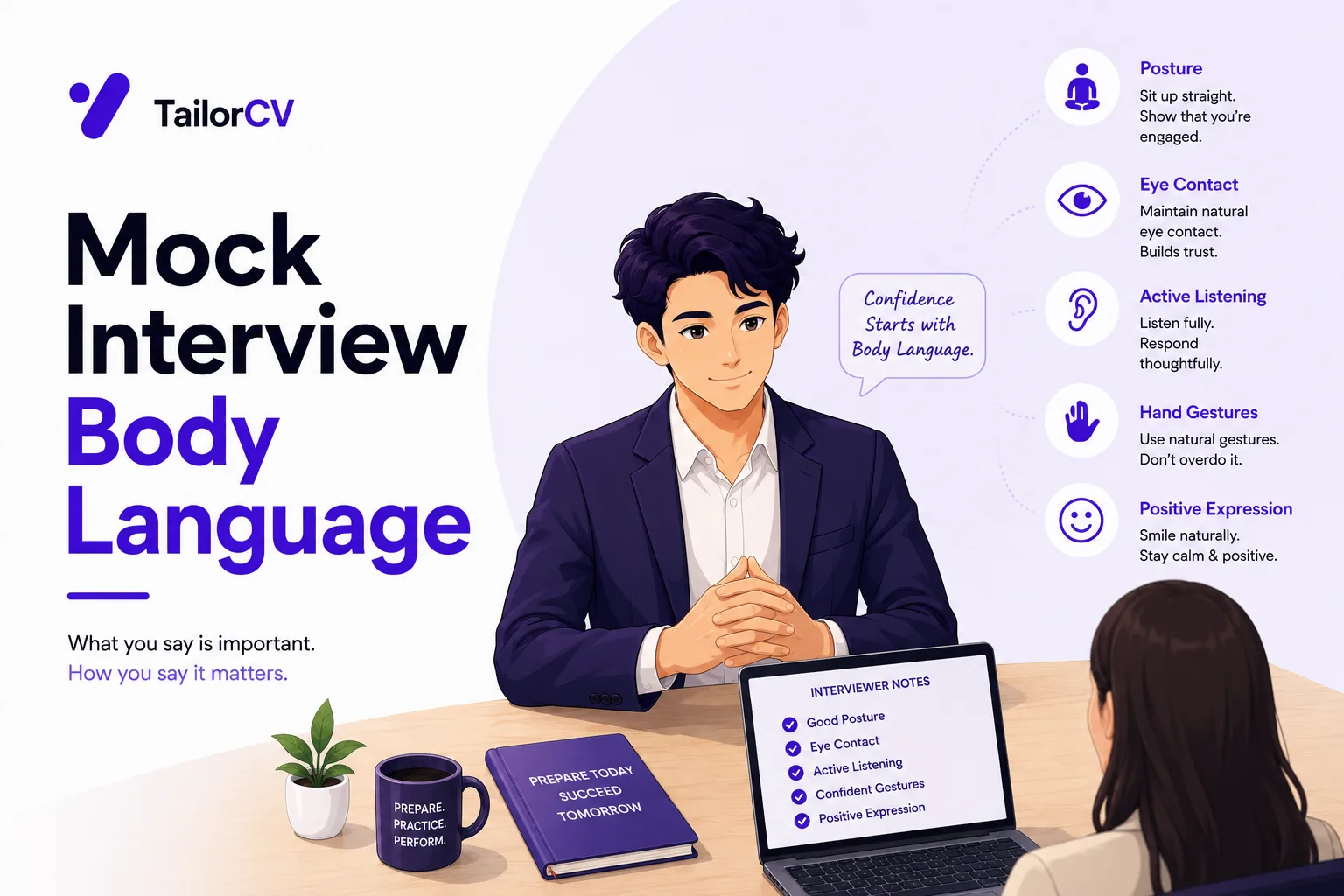
Introduce yourself. You are being watched from the moment you arrive. Strong body language starts here.
2. Contribute early - but do not dominate
First thoughtful contribution shows confidence. But speaking 60% of the time reads as arrogant. Aim for 20-30% of airtime.
3. Build on others' ideas
"That's a great point, Sarah. I'd add that we could also..." This shows collaboration - the #1 trait group interviews test.
4. Invite quiet candidates in
"James, what do you think about this approach?" Interviewers love this - it shows leadership and empathy.
5. Stay professional when disagreed with
Disagree with ideas, not people. "I see it differently because..." not "That's wrong."
6. Take notes during group exercises
Shows engagement. Reference others' points by name.
7. Prepare individual answers too
You may be called on individually for tell me about yourself or why should we hire you.
Common Group Interview Activities
- Group discussion - topic provided, open debate
- Case study exercise - solve a problem as a team - see case interview guide
- Role play - sales pitch, customer service scenario
- Presentation - individual or team presentation
- Q&A session - individual questions in front of the group
For situational scenarios, apply the PAR framework during group discussions.
Mistakes That Eliminate You
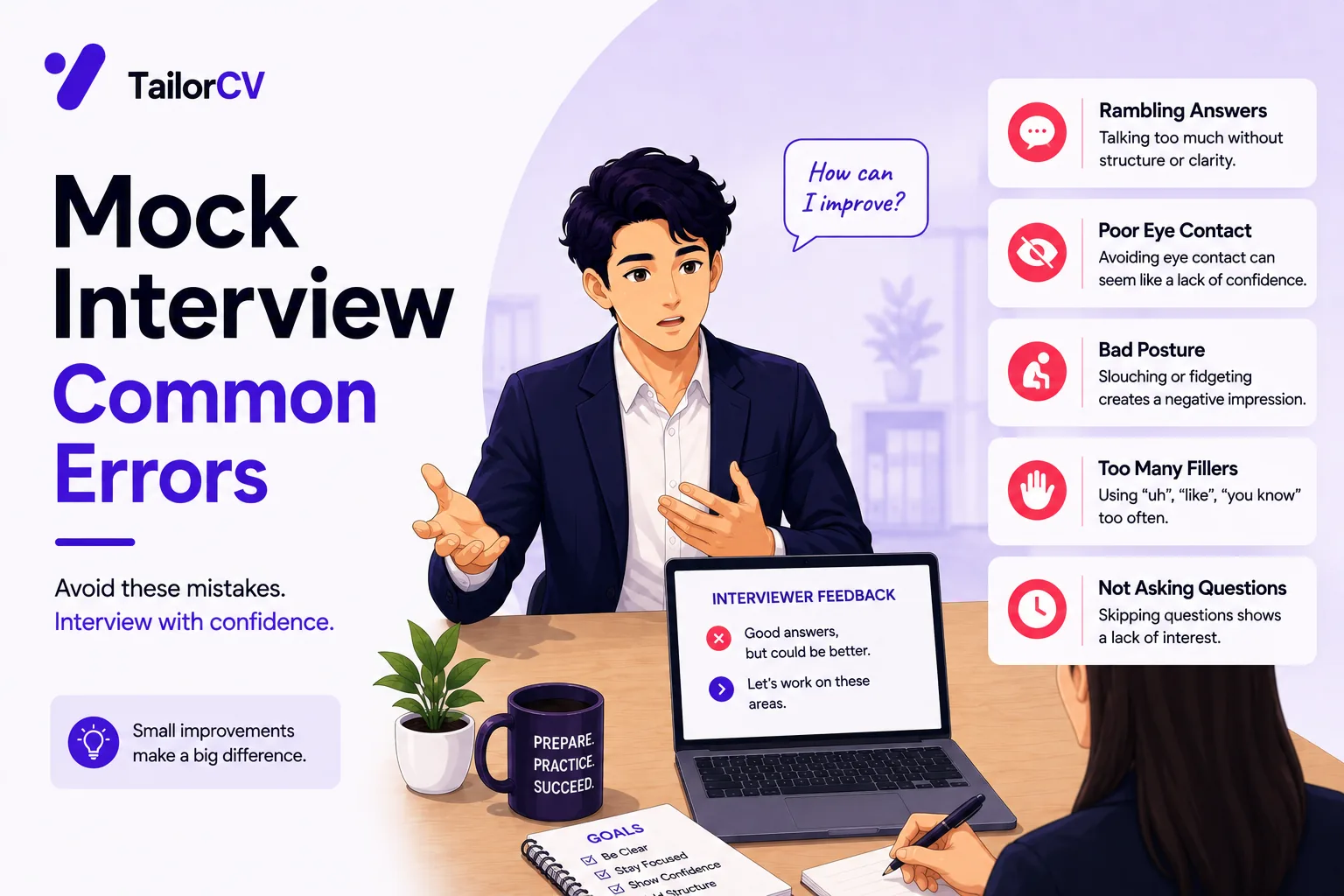
- Interrupting others constantly
- Staying completely silent
- Dismissive body language (eye rolling, sighing)
- Trying to sabotage other candidates
- Checking your phone
- Only talking to the interviewer, ignoring peers
Full list: common interview mistakes.
How to Prepare
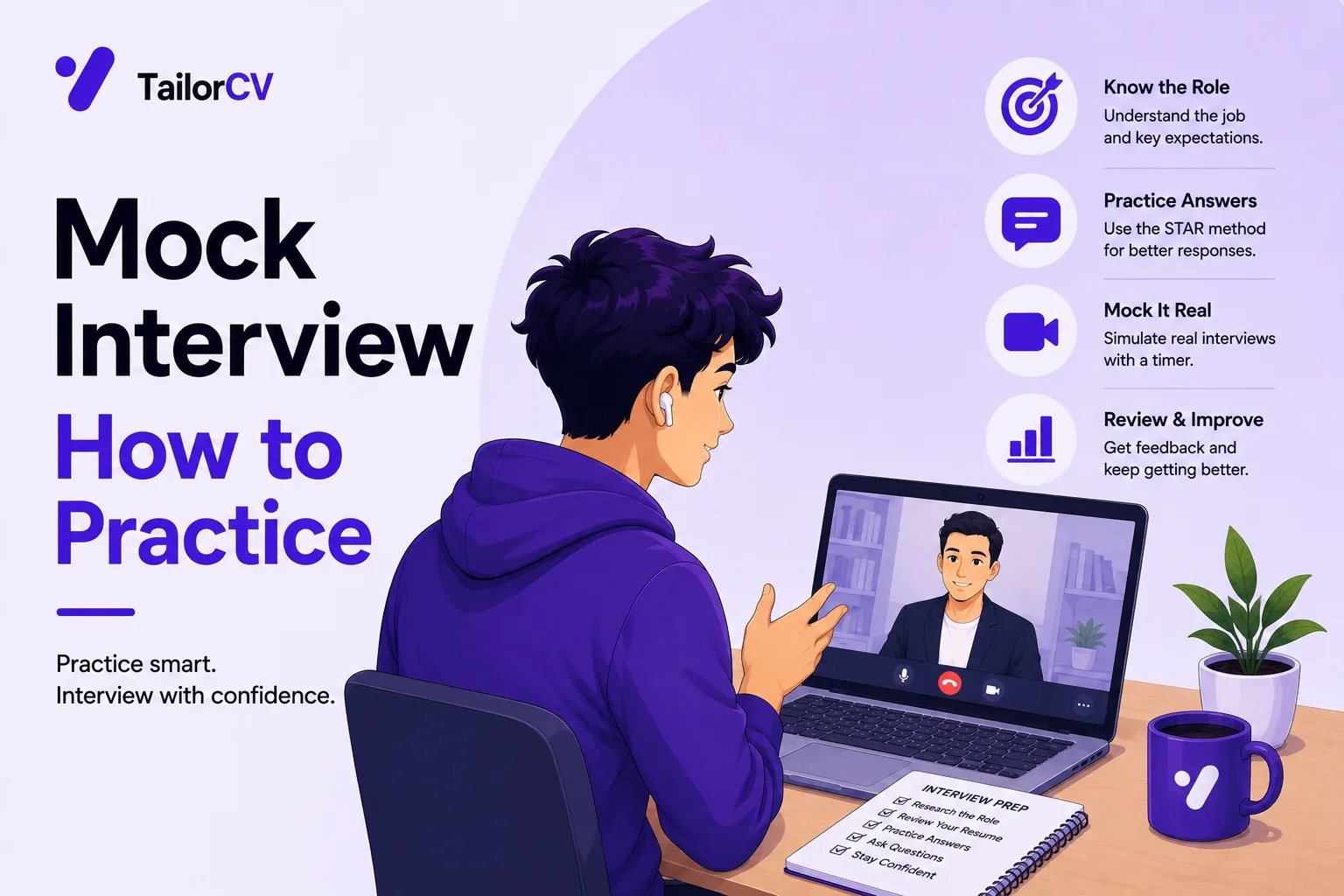
- Practice individual answers - mock interview at home
- Practice group settings - study group, friends, meetups
- Research the company - company research guide
- Prepare questions - questions to ask
- Manage nerves - interview anxiety tips
- Optimize resume - TailorCV ATS checker
See it in action: a resume-based mock interview
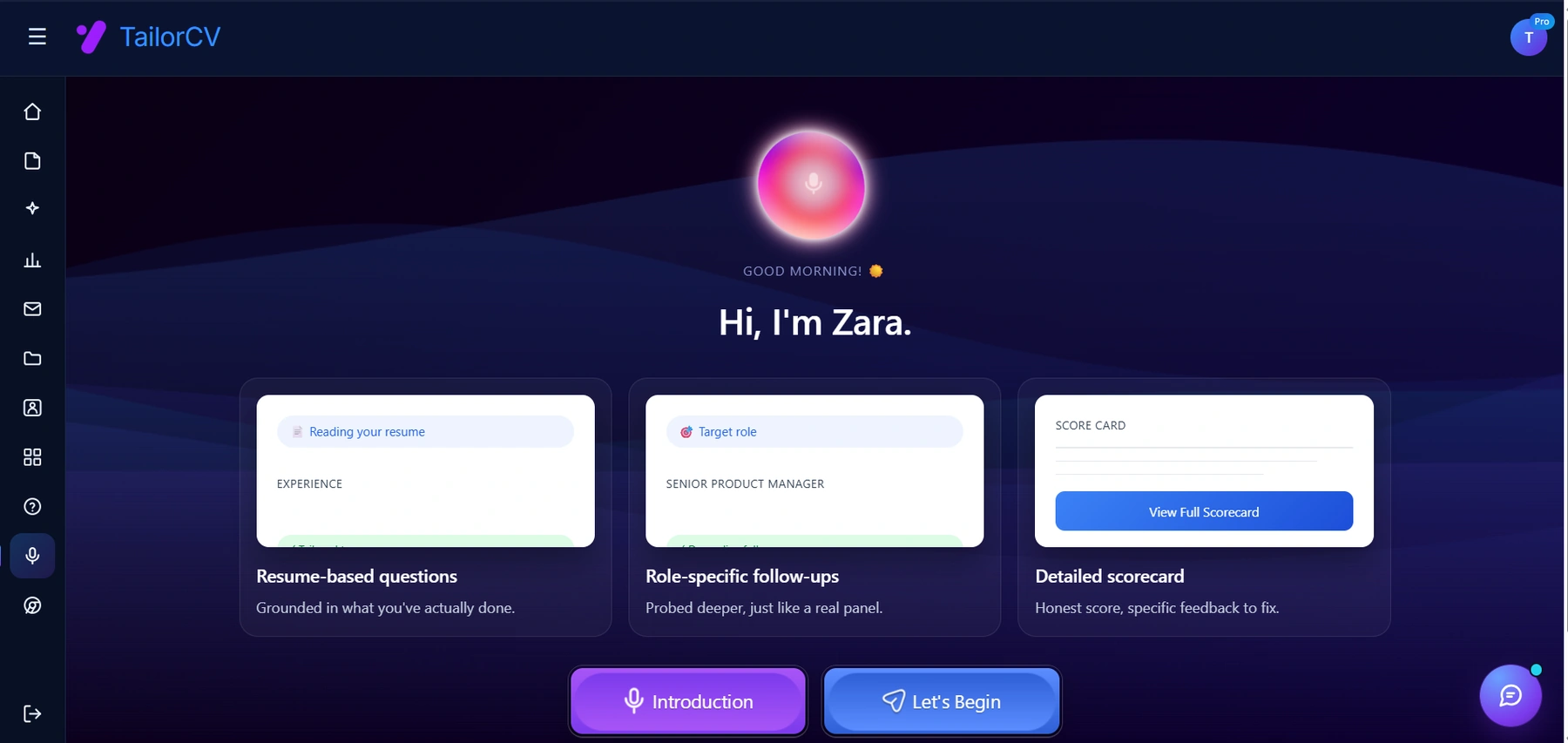
The scorecard at the end is the useful bit - an honest score plus specific feedback, which is what turns practice into improvement.
Freshers often face group interviews in campus drives - see campus placement prep and first job interview tips.
Scenario-Based Group Interview Practice
One of the best ways to prepare for a group interview is to simulate the experience. Gather a few friends or peers and conduct mock group interviews. Here’s a step-by-step guide on how to organize this practice:
-
Select a Job Role: Choose a specific position you’re applying for, such as a marketing coordinator or software developer.
-
Gather Participants: Invite 3-5 friends, classmates, or colleagues who can act as interviewers and candidates. Ensure they understand the job role and can provide constructive feedback.
-
Create a Question Set: Develop a list of common group interview questions or scenarios. These can include: - How would you handle a disagreement among team members? - Describe a time you worked successfully in a team. - What strategies would you use to meet tight deadlines?
-
Role-Play: Assign roles to each participant. One person should act as the main interviewer while others can pose follow-up questions or contribute to discussions.
-
Feedback Session: After each mock interview, hold a feedback session where participants share what went well and areas for improvement. Focus on communication, body language, and teamwork.
Practicing in a simulated environment can significantly boost your confidence and readiness for the actual group interview.
Do's and Don'ts for Group Interviews
Navigating a group interview can be tricky. Here’s a concise list of do's and don'ts to help you shine:
Do's:
| Question | What they are checking |
|---|---|
| Engage with Everyone | Make eye contact with all interviewers and acknowledge your fellow candidates. It shows you’re a team player |
| Listen Actively | Pay attention to others' responses. This will help you build on their ideas and demonstrate your collaborative skills |
| Be Concise | Keep your answers clear and to the point. Avoid rambling to maintain the interest of the interviewers |
| Ask Questions | Show your interest by asking insightful questions related to the role or company. This can set you apart from other candidates |
Don'ts:
| What | Details |
|---|---|
| Dominate the Conversation | While it’s important to assert yourself, make sure you’re not overshadowing others. Collaboration is key |
| Interrupt Others | Allow your peers to finish their thoughts before you jump in. This demonstrates respect and good listening skills |
| Be Negative | Avoid speaking poorly about past employers or experiences. Keep the conversation positive and focused on your strengths |
| Lose Focus | Stay engaged throughout the interview. It's easy to zone out when others are speaking, but your attention matters |
Common Group Interview Scenarios and Responses
Understanding potential scenarios in a group interview can help you prepare effective responses. Here are a few common scenarios along with suggested responses:
Scenario 1: Team Problem Solving
Situation: The group is presented with a problem that requires a team solution.
Response: “I suggest we break down the problem into smaller parts. I can take the lead on researching options, while others can brainstorm creative solutions. This way, we can efficiently compile our ideas and present a well-rounded approach.”
Scenario 2: Conflict Resolution
Situation: A disagreement arises between two candidates about the best approach to a task.
Response: “I see both of your points. Perhaps we can combine elements of both approaches to create a more comprehensive solution. What do you both think about that?”
Scenario 3: Time Management
Situation: The group is given a limited time to complete a task.
Response: “Given our time constraint, I propose we allocate specific tasks to each member based on our strengths. I can manage the writing portion, while others can focus on research and design to ensure we meet our deadline without compromising quality.”
These scenarios not only prepare you for the types of questions you may encounter but also help you practice collaborative thinking.
Mini Checklist for Group Interview Success
Before heading to your group interview, use this checklist to ensure you’re fully prepared:
- unchecked: Research the Company: Understand their culture, values, and recent news.
- unchecked: Know Your Role: Be clear on the position you’re applying for and how it fits within the team.
- unchecked: Prepare Personal Examples: Have relevant stories ready that demonstrate teamwork, conflict resolution, and leadership.
- unchecked: Dress Appropriately: Choose professional attire that aligns with the company culture.
- unchecked: Practice Active Listening: Rehearse how to show you’re engaged in discussions.
- unchecked: Bring Necessary Materials: Have copies of your resume and any other relevant documents.
- unchecked: Arrive Early: Get to the interview location ahead of time to calm your nerves and familiarize yourself with the environment.
Following this checklist can help alleviate stress and enable you to focus on showcasing your best self during the group interview.
Leveraging Feedback Post-Interview
After the group interview, don’t forget to seek feedback, whether you get the job or not. Here’s how to approach it:
-
Send a Thank You Email: Express gratitude to the interviewers for their time and the opportunity to participate.
-
Request Feedback: Politely ask for any feedback regarding your performance. You could say, “I’m always looking to improve, and I would appreciate any insights you could share about my interview.”
-
Reflect on Your Experience: Regardless of the feedback you receive, take time to reflect on your performance. What went well? What could be improved? This self-assessment will be invaluable for future interviews.
By actively seeking feedback and reflecting on your experiences, you can continuously enhance your interview skills and increase your chances of success in future group interviews.
Frequently Asked Questions
Should I try to outshine other candidates?
Stand out through quality contributions and collaboration, not by putting others down. Interviewers often hire multiple candidates from group interviews.
What if other candidates are overly aggressive?
Stay calm and professional. Facilitate rather than compete. Interview anxiety guide helps here.
Can AI mock interviews help with group interviews?
They prepare your individual answers and communication confidence - AI mock interview guide. Practice group dynamics with real people.
Sharpen your interview answers with TailorCV's AI mock interview before your group interview.
Make This Practical
Use this advice as interview practice, not just reading material. Start a role-specific session with the AI mock interview tool, prepare your opening with How to Answer Tell Me About Yourself, and structure evidence-heavy answers with the STAR Method Interview Answers Guide.
Before the interview, make sure the resume that earned the call is still aligned with the role. Check it with the free ATS score checker, review Common Interview Mistakes to Avoid, and use How to Follow Up After an Interview once the conversation is over.
Was this guide useful?
Be the first to rate it.