TD
TD
Key Takeaways
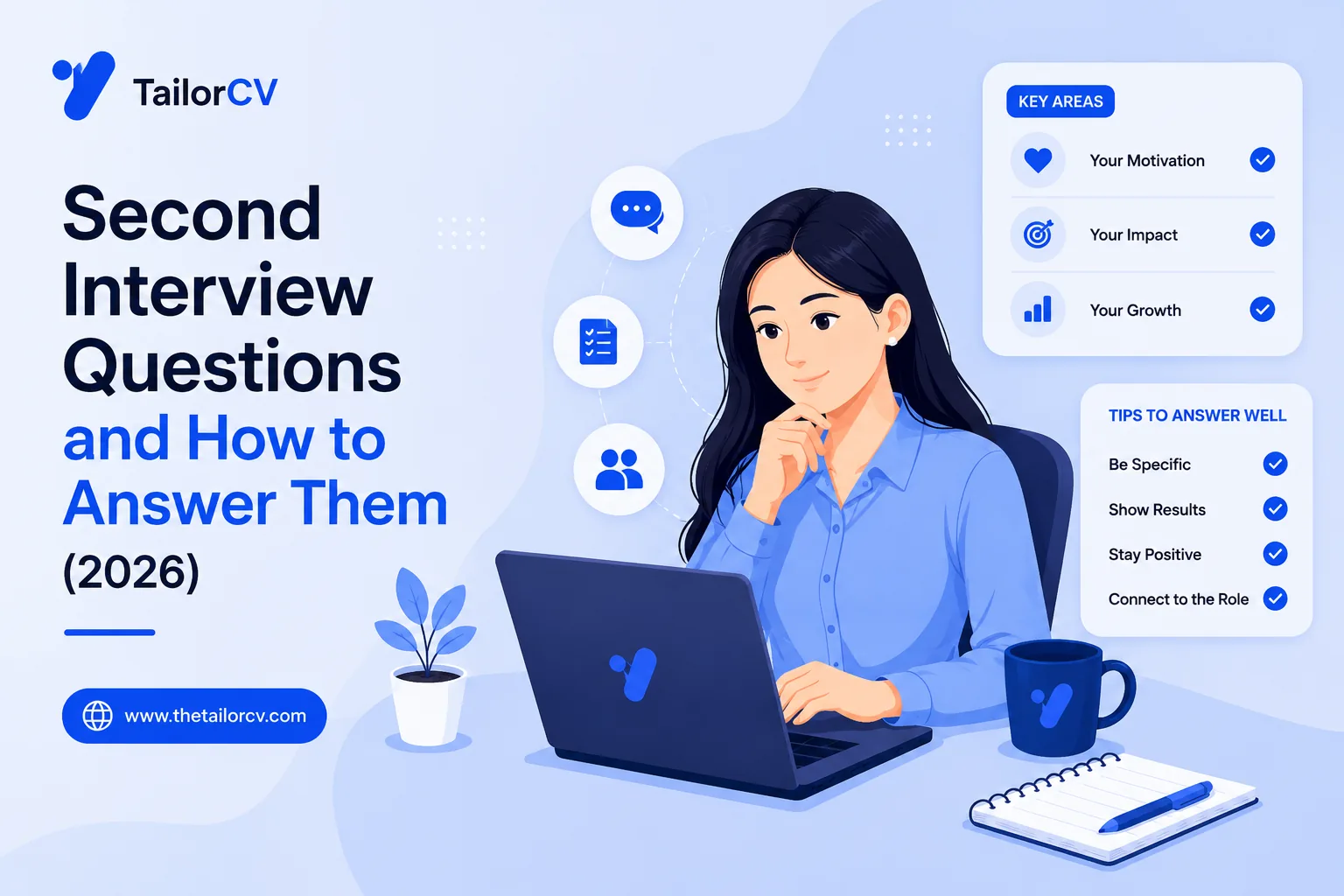
- A second interview tests fit and depth, not whether you are qualified — that was round one.
- Expect harder, more specific questions and more senior interviewers.
- Have fresh stories ready; repeating round-one answers verbatim falls flat.
- Your questions matter more now — they signal how seriously you are evaluating them back.
What a Second Interview Is Really For
By the second round, the company believes you can do the job. Now they are answering three quieter questions: Will you fit the team? Can you go deeper than the surface? And are you actually going to accept if we offer? Your job is to prove depth and genuine interest, not to re-sell your basic qualifications.
Common Second-Interview Questions
"Walk me through how you'd approach [a real problem the team faces]." They want your thinking, not a perfect answer. Talk through your reasoning out loud, state your assumptions, and ask clarifying questions the way you would on the job.
See it in action: a resume-based mock interview
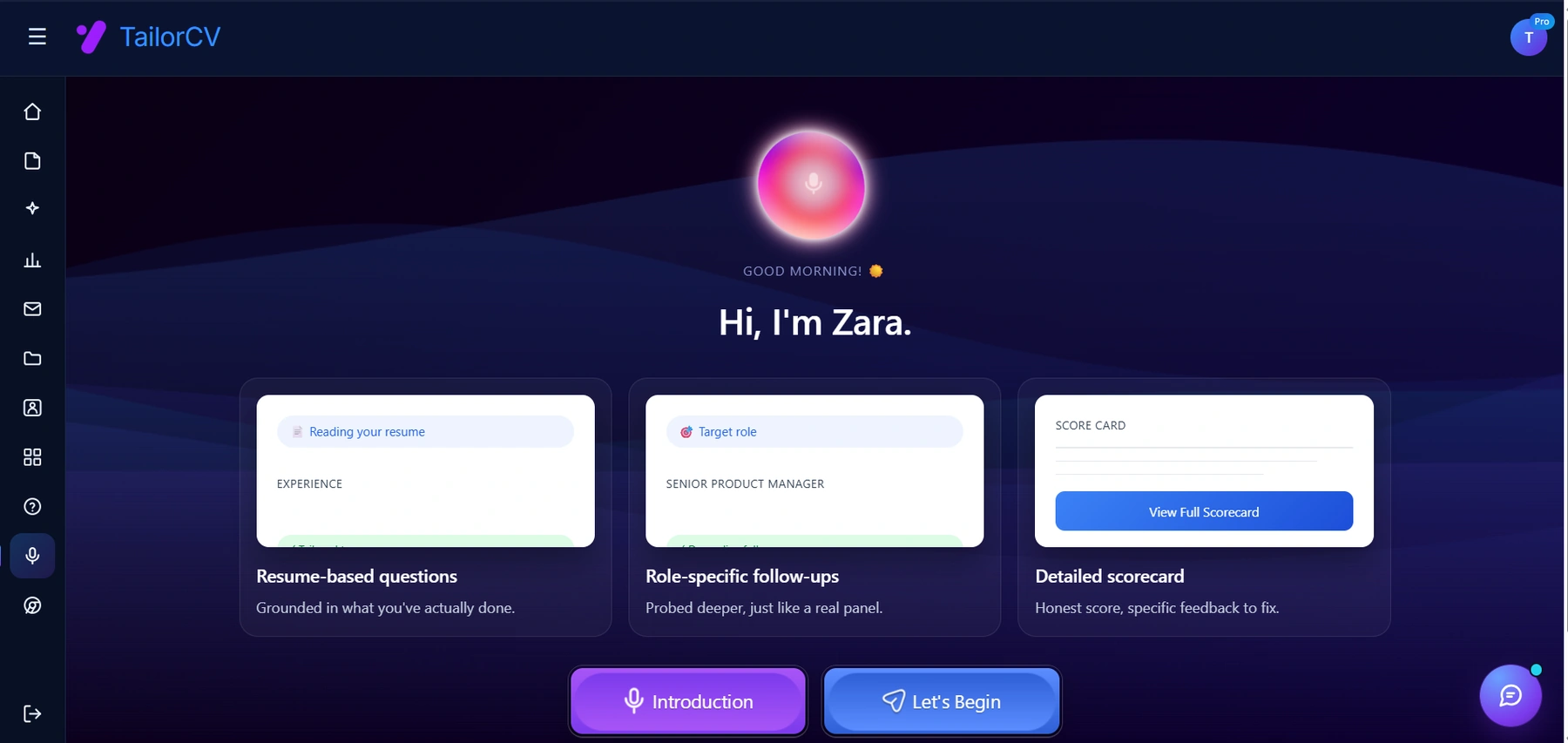
Rather than a fixed question list, the session is built from your own resume and target role, and ends with a scorecard naming the specific things to fix.
"Tell me about a time you disagreed with a manager or teammate." Use a real example. Show that you can hold a view, listen, and land on what is best for the work — not that you always win or always fold.
"Where does this role fit in your longer-term plans?" Be honest and specific. Connect the role to a direction you are genuinely heading, so it does not sound like a stopover.
"What questions do you have for us?" This is not a throwaway. Have three real questions ready (see below).
Bring New Stories
Interviewers compare notes between rounds. If you tell the panel the exact same anecdote you told the recruiter, it reads as a thin repertoire. Prepare a second set of examples that show different strengths, and practice them out loud in a mock interview so they land naturally.
Questions to Ask Them
- "What does success in this role look like in the first 90 days?"
- "What's the biggest challenge the team is facing right now?"
- "How do you and the team prefer to give and receive feedback?"
These show you are already thinking like a member of the team, and they give you real information to decide with.
More Questions You Should Prepare
Beyond the staples above, second rounds often probe these areas. Have a real, specific answer for each.
"What's your biggest weakness — and what are you doing about it?" Name a genuine, non-fatal weakness and, more importantly, the concrete steps you are taking. The growth story matters more than the flaw.
"Tell me about a project that failed." They want ownership and learning, not a humblebrag disguised as a failure. Describe a real setback, your role in it, and exactly what you changed afterward.
"How do you prioritize when everything is urgent?" Show a real method — impact vs effort, deadlines, stakeholder alignment — with an example of using it under pressure.
"What would your first 90 days look like?" This tests whether you have thought concretely about the role. Sketch a plan: learn the systems and people, find quick wins, then take on bigger ownership.
"Why are you leaving your current role?" Stay positive. Frame it as moving toward something (growth, scope, a mission) rather than fleeing something. Never trash a current employer.
How to Prepare Between Rounds
The gap between the first and second interview is a gift — use it deliberately.
- Debrief round one. Write down every question you were asked and grade your own answers. Fix the weak ones.
- Research deeper. Read the company's recent news, product updates, and the LinkedIn profiles of your upcoming interviewers.
- Prepare fresh stories. Interviewers compare notes; new examples show range. (Reusing round-one anecdotes verbatim falls flat.)
- Rehearse out loud. A few reps in an AI mock interview turn rambling answers into crisp ones.
- Prepare your own questions. Round two is when thoughtful questions carry the most weight.
Reading the Panel
Second rounds often introduce more senior people, and each interviewer is evaluating something different. The engineer probes depth; the manager probes collaboration and reliability; the skip-level or executive probes judgment and fit with the bigger picture. Tailor your emphasis to who is in front of you: go technical with the engineer, talk teamwork with the manager, and think out loud about trade-offs and impact with leadership. Recognizing what each person is really assessing lets you give the answer they are actually looking for.
Using the STAR Method in Second Rounds
Second interviews lean heavily on behavioral questions — "tell me about a time when..." — and the candidates who answer them well almost always use a structure, whether they name it or not. The STAR method keeps a story tight and complete:
- Situation: briefly set the scene. One or two sentences.
- Task: what you specifically needed to do.
- Action: what you did — the heart of the answer, in the first person.
- Result: how it turned out, quantified if possible.
Without structure, behavioral answers ramble: candidates over-explain the setup, bury their own role, and forget the result entirely. With STAR, a two-minute answer lands cleanly and the interviewer remembers the point. Prepare five or six flexible STAR stories covering leadership, conflict, failure, a big win, and problem-solving — most behavioral questions are just different doors into the same handful of stories.
Handling the Questions You Fear Most
"Tell me about your biggest weakness." The trap is a fake weakness ("I work too hard") or a disqualifying one ("I miss deadlines"). The answer is a real, non-fatal weakness plus concrete action: "I used to hold onto work too long trying to perfect it. I've learned to ship at 90% and iterate, and I set my own internal deadlines to enforce it."
"Why are you leaving your current job?" Never criticize your employer. Frame it as moving toward something: growth, scope, a mission, a specific kind of work. Bitterness in this answer is one of the fastest ways to lose a second round.
"What's your salary expectation?" By the second round this is fair game. Give a researched range framed as flexible, and treat it as the opening of a conversation, not a final number. If it has not come up and you are deep in the process, it is reasonable to ask about the band.
"Do you have any concerns about the role?" Be honest but constructive. Raising a thoughtful question ("I'd want to understand how the team handles on-call") shows you are seriously evaluating the fit, which senior interviewers respect.
What Interviewers Are Really Evaluating
By the second round, competence is largely assumed — you cleared that bar in round one. Now the panel is weighing subtler things: Will you fit the team's working style? Do you communicate clearly under a harder question? Are you self-aware about your weaknesses? Are you actually going to accept, or are you using this to leverage another offer? Every answer you give is read through those lenses. This is why enthusiasm, consistency across your answers, and thoughtful questions matter as much as the technical content — they are the signals that decide a close call between two qualified people.
The Day Before: A Preparation Routine
- Re-read the job description and your own resume, so you can speak fluently to both.
- Review your round-one answers and sharpen any you fumbled.
- Prepare fresh STAR stories you did not use in round one.
- Research your interviewers on LinkedIn to anticipate their angle.
- Write down three genuine questions to ask, tuned to who you will meet.
- Do one full spoken rehearsal, ideally in an AI mock interview, so your delivery is warm and unhurried.
Frequently Asked Questions
How is a second interview different from the first?
The first screens for qualification; the second probes fit, depth, and seriousness. Interviewers are usually more senior and questions are more specific.
Should I ask about salary in the second round?
It is increasingly acceptable, especially if the recruiter opened the door. If compensation has not come up at all, it is reasonable to ask about the range now.
How many rounds are normal?
Two to four is common. If you are in a second round, treat it as a real shot — companies do not spend senior time on candidates they are not seriously considering.
Should I bring anything to a second interview?
Bring fresh copies of your resume, a notepad with your prepared questions, and if relevant, a short portfolio or work sample. For a final round, some candidates bring a brief 30-60-90 day plan — a strong signal of seriousness.
Is it normal to meet the whole team in a second round?
Yes, increasingly so. Team-fit conversations and "meet the team" segments are common in later rounds. Treat everyone you meet as an evaluator, including peers who seem casual.
How soon should I expect a decision after a second interview?
Often within one to two weeks, but it varies. Ask about the timeline before you leave, and send a thank-you within 24 hours to stay top of mind during the decision.
Is it okay to reuse a story from the first interview?
Avoid retelling the exact same anecdote — interviewers compare notes, and repetition suggests a thin repertoire. Prepare a fresh set of examples for the second round that show different strengths, so each conversation reveals something new about you.
What if I'm asked a question I can't answer?
Stay composed and reason out loud rather than bluffing. Say what you do know, describe how you would find the answer, or ask a clarifying question. Interviewers often care more about your thinking process than a perfect answer, and honesty under pressure reads far better than a fabricated response.
Turning the Tables: Questions That Impress
By the second round, the questions you ask carry as much weight as the answers you give, because thoughtful questions signal that you are seriously evaluating the role rather than just hoping to be chosen. Move past the basics and ask things that reveal genuine engagement: "What does success in this role look like in the first 90 days, and how is it measured?", "What's the biggest challenge the team is facing right now?", "How do you and the team prefer to give and receive feedback?", "What's something about working here that surprised you when you joined?", and "What would make you excited about the person who fills this role?" These questions do three things at once — they give you real information to decide with, they demonstrate that you think like a future team member, and they subtly shift the dynamic from you being evaluated to a mutual fit conversation. Avoid questions whose answers are on the company website; those signal you did not do your homework. The best questions are specific to something you learned during the interview process itself.
Reading the Signals That You're Doing Well
Second interviews often give off signals about how you are being received, and learning to read them helps you calibrate in real time. Positive signs include interviewers spending more time selling you on the role, introducing you to additional team members on the spot, discussing specifics like start dates or logistics, and asking when you would be available. When an interviewer shifts from probing your qualifications to describing what your first projects would be, they are picturing you in the seat — a strong buying signal. Less encouraging signs include a rushed, checkbox-style interview or a lack of engagement with your answers. None of these are definitive, and you should give your best regardless, but noticing them helps you decide where to lean in — if they are clearly interested, it is a good moment to express your genuine enthusiasm and ask about next steps directly.
Putting It All Together
A second interview is not a repeat of the first — it is a deeper test of fit, depth, and seriousness, usually with more senior people. Debrief round one, research harder, prepare fresh stories, and read what each interviewer is really assessing. Come with thoughtful questions of your own and a concrete sense of your first 90 days. Do that and you show up as someone the team can already picture working alongside — which is exactly the impression that turns a second interview into an offer.
Was this guide useful?
Be the first to rate it.