 SS
SS
Key Takeaways
- Applicant Tracking Systems (ATS) automate the recruitment process by parsing, ranking, and filtering resumes based on specific criteria.
- Job seekers must optimize their resumes with relevant keywords and straightforward formatting to improve their chances of passing through ATS filters.
- Use standard fonts and headings, avoid graphics, and keep the design simple for better ATS readability.
- Tailor your resume for each job application by customizing content and incorporating the exact job title to align with ATS criteria.
- Early-career candidates should aim for a one-page resume focused on relevant experiences and skills.
Understanding how Applicant Tracking Systems (ATS) work is crucial for job seekers in the United States. These systems are designed to streamline the hiring process by filtering resumes before they even reach a human recruiter. With a significant percentage of companies employing ATS, knowing how to optimize your resume for these systems can greatly enhance your chances of landing that coveted interview. In this article, we'll delve into the intricacies of ATS, explore best practices for crafting an ATS-friendly resume, and provide actionable strategies tailored for job seekers, including new graduates, international candidates, and those seeking visa sponsorship.
What is an ATS?
An Applicant Tracking System (ATS) is software used by employers to manage the recruitment process. It automates the sorting and filtering of resumes based on specific criteria, such as keywords, skills, and formatting. Understanding how ATS evaluates resumes is essential for job seekers aiming to increase their visibility and improve their chances of getting hired.
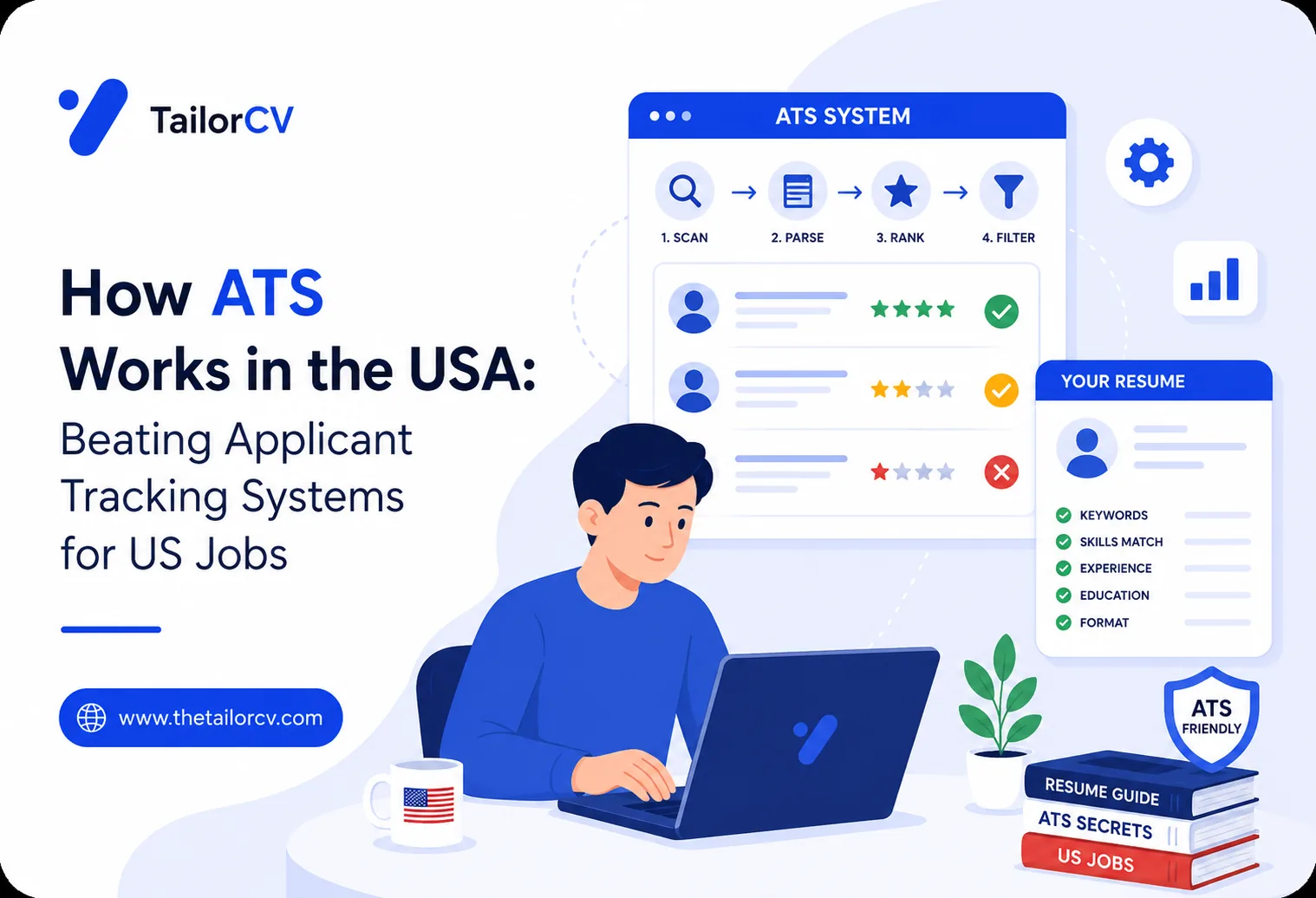
How ATS Works
- Parsing: When a resume is submitted, the ATS parses the information, extracting relevant details such as contact information, work history, education, and skills.
- Ranking: The system ranks resumes based on how well they match the job description. This ranking is often influenced by keyword usage and the overall format of the resume.
- Filtering: Resumes that don’t meet the minimum criteria set by the employer are filtered out, meaning they never reach the hiring manager's desk.
Why is ATS Important for Job Seekers?
Understanding ATS is vital for several reasons:
- Increased Competition: With many applicants for each job, ATS helps employers quickly identify the most qualified candidates.
- Keyword Optimization: Job descriptions often contain specific keywords that ATS looks for, making it essential to tailor your resume accordingly.
- Format Compatibility: Many ATS systems struggle with complex formatting, so using a straightforward design can prevent your resume from being misread.
Crafting an ATS-Friendly Resume
To beat the ATS and improve your chances of landing a job, follow these guidelines for creating an ATS-friendly resume:
1. Use Standard Formatting
- Avoid Graphics and Images: ATS may not read these elements correctly.
- Simple Fonts: Stick to standard fonts like Arial, Calibri, or Times New Roman.
- Consistent Headings: Use standard headings like "Work Experience" and "Education."
2. Incorporate Relevant Keywords
- Analyze Job Descriptions: Identify keywords and phrases that appear frequently in job listings for your target position.
- Use Variations: Include variations of keywords to capture different ways employers might phrase the same requirements.
3. Optimize Bullet Points
- Action Verbs: Start bullet points with strong action verbs (e.g., "Developed," "Managed," "Increased").
- Quantify Achievements: Use numbers to showcase your accomplishments (e.g., "Increased sales by 30% in six months").
Example:
Instead of saying:
- "Responsible for managing a team."
Say:
- "Led a team of 5 to achieve a 20% increase in project efficiency over six months."
4. Tailor Your Resume for Each Job
- Customize Content: Modify your resume for each application to align with the specific job description.
- Use Job Title: Incorporate the exact job title in your resume to ensure it matches the ATS criteria.
5. Keep It One Page (if Early-Career)
For early-career candidates, a one-page resume is often preferred. Focus on relevant experiences and skills that align with the job you're applying for.
Utilizing TailorCV Tools
To further enhance your resume and job search strategy, consider leveraging tools available on TailorCV:
What optimizing actually does to your resume
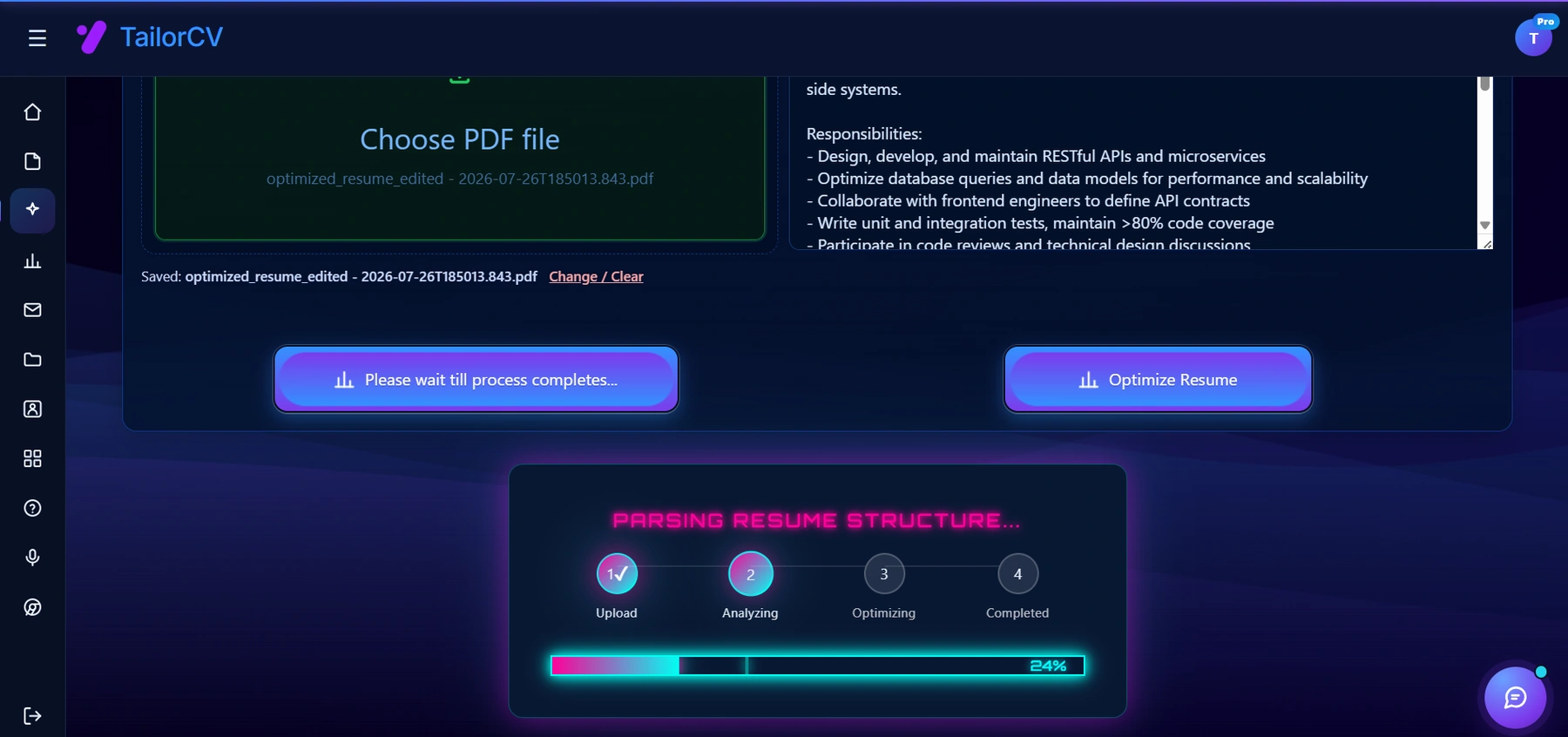
Checking against the real job description - rather than optimising in the abstract - is the step that actually moves the score.
- Free ATS Score Checker: Assess how well your resume performs against ATS criteria.
- Resume Templates: Use professionally designed templates that are ATS-friendly.
- Resume Optimization Guide: Learn more about optimizing your resume for ATS.
Understanding Work Authorization
For international candidates seeking jobs in the U.S., it’s essential to be aware of work authorization requirements. Many employers prefer candidates who are already authorized to work in the U.S. Here are some key points:
- H-1B Visa Sponsorship: If you are seeking visa sponsorship, make this clear in your resume. Highlight skills that are in high demand.
- Include Relevant Experience: If you have prior experience in the U.S., make sure to emphasize it.
For more detailed information on this topic, check out our guide on Resume for H-1B Visa Sponsorship Jobs: How to Stand Out.
The Importance of Cover Letters
A well-crafted cover letter can complement your resume and give you an edge over other candidates. Use the AI Cover Letter Generator to create a compelling cover letter tailored to your target job.
Preparing for Interviews
Once you’ve successfully passed the ATS stage, the next step is preparing for interviews. Utilize the AI Mock Interview tool to practice your responses and build confidence.
Common ATS Pitfalls to Avoid
Navigating the intricacies of Applicant Tracking Systems can be challenging. Here are some common mistakes job seekers make and how to avoid them:
-
Ignoring Job Descriptions: Many candidates fail to tailor their resumes to match specific job descriptions. Always extract keywords and phrases from the job listing and incorporate them naturally into your resume.
-
Using Uncommon File Formats: While PDF files are generally safe, some ATS struggle to read them. Opt for .docx or .txt formats unless specified otherwise in the job application.
-
Overloading with Graphics: Avoid using images, graphics, or unusual fonts. ATS may not recognize these elements, which can lead to your resume being misread or discarded.
-
Including Irrelevant Information: Focus on experience and skills that are relevant to the job you're applying for. Extraneous information can dilute your application and confuse the ATS.
-
Neglecting the Cover Letter: Some candidates believe a cover letter is unnecessary. However, many ATS also scan cover letters for keywords, so don’t skip this vital component. Use our cover letter tool to ensure your letter is ATS-friendly.
Step-by-Step Guide to Crafting an ATS-Friendly Resume
Creating an ATS-friendly resume does not have to be overwhelming. Follow this step-by-step guide to ensure your application gets past the ATS and into the hands of hiring managers:
-
Choose the Right Format: Start with a simple, clean format. Use standard section headings like "Work Experience," "Education," and "Skills" to help the ATS easily categorize your information.
-
Identify Relevant Keywords: Analyze the job description and highlight key skills, qualifications, and industry-specific terms. Use tools like our ATS Keywords guide to discover effective keywords.
-
Incorporate Keywords Naturally: Integrate the identified keywords throughout your resume, particularly in the skills and experience sections. Ensure they flow naturally within your descriptions.
-
Use Standard Job Titles: If your previous job title was unique, consider using a more common title in parentheses next to yours. This will help the ATS recognize your experience.
-
Save and Submit: When saving your resume, use a clear filename that includes your name and the job title. For example, "John_Doe_Marketing_Manager_Resume.docx" will help you stay organized and make a good impression.
Mini Checklist for ATS Compatibility
Before submitting your resume, run through this quick checklist to ensure it meets ATS requirements:
- unchecked: File Format: Is your resume in .docx or .txt format?
- unchecked: Keywords: Have you incorporated relevant keywords from the job description?
- unchecked: Simple Layout: Is your resume free from images, graphics, and unusual fonts?
- unchecked: Section Headings: Are your sections clearly labeled with standard headings?
- unchecked: Contact Information: Is your contact information easy to find at the top of the document?
- unchecked: No Spelling Errors: Have you proofread your resume for spelling and grammatical mistakes?
- unchecked: Tailored Content: Is your resume tailored specifically for the job you are applying for?
Scenarios: ATS Success vs. Failure
Understanding the impact of ATS optimization can be clearer through real-life scenarios. Here are two contrasting examples:
Scenario 1: ATS Success
Applicant: Sarah, a digital marketing specialist.
Approach: Sarah carefully reviewed the job description for a marketing manager position. She identified essential keywords like "SEO," "content strategy," and "digital campaigns." She tailored her resume to highlight relevant experience, using the exact phrases from the job listing.
Outcome: Sarah's resume passed the ATS with flying colors, and she received an interview invitation within days.
Scenario 2: ATS Failure
Applicant: Tom, a software engineer.
Approach: Tom submitted a generic resume that included fancy formatting and graphics. He used unique job titles and omitted keywords from the job description entirely.
Outcome: Tom's resume was rejected by the ATS due to formatting issues and lack of relevant keywords, and he missed out on a great job opportunity.
Do's and Don'ts for ATS Optimization
When crafting your resume, keep these do's and don'ts in mind:
Do's:
- Do use standard fonts: Stick to common fonts like Arial, Calibri, or Times New Roman.
- Do customize your resume: Tailor your resume for each job application to align with the specific role.
- Do test your resume with an ATS checker: Use tools like the ATS Resume Checker to see how well your resume performs.
Don'ts:
- Don't use tables or columns: These can confuse the ATS, leading to misinterpretation of your information.
- Don't include unnecessary personal details: Avoid including your age, marital status, or any other personal information that isn't relevant to the job.
- Don't forget to update your LinkedIn: Ensure your LinkedIn profile is aligned with your resume, as recruiters often cross-reference both.
By following these guidelines, you can significantly improve your chances of passing through ATS filters and landing job interviews. Remember, a well-optimized resume is your first step towards a successful job search.
Related Guides
Keep building your US job search with these related TailorCV guides:
- US Resume Format Guide (2026): How to Write a Resume for American Jobs
- How to Get a Job in the USA in 2026: A Step-by-Step Guide
- Resume for H-1B Visa Sponsorship Jobs: How to Stand Out
- How to Write a Cover Letter for US Jobs (With Structure and Examples)
- ATS Resume Checker - How It Works and How to Pass (2026)
- Does My Resume Pass ATS? A 12-Point Checklist (2026)
- How to Make Your Resume ATS-Friendly in 2026 - Complete Guide
- ATS Keywords - How to Find and Add Them to Boost Your Score (2026)
You can also check your resume's ATS score for free, generate a tailored cover letter, or build a portfolio website in minutes.
Frequently Asked Questions
How do I know if my resume is ATS-friendly?
You can evaluate your resume's compatibility with ATS using our Free ATS Score Checker. This tool will highlight areas for improvement.
What should I include in my resume for a new grad position?
Focus on relevant coursework, internships, and skills. For more guidance, refer to our Entry-Level Jobs in the USA: A New-Grad Resume and Job Search Guide.
How can I improve my ATS score?
To improve your ATS score, ensure your resume includes relevant keywords from the job description, uses a standard format, and highlights your most relevant experiences. For detailed strategies, check our Resume Optimization Guide.
Should I use a template for my resume?
Yes, using a template can help you maintain a clean and professional format while ensuring ATS compatibility. Explore our collection of Resume Templates.
What are the best practices for crafting a cover letter?
Your cover letter should be tailored to the job you’re applying for, highlighting your relevant skills and experiences. For more tips, refer to our Cover Letter Guide 2026.
What is your resume scoring right now?
Scan it against a job description and get your ATS match score in about a minute.
Drop your resume here or choose a file
PDF only. Max 2 MB.
We never share your data or use it to train AI models.

Templates that keep this structure intact
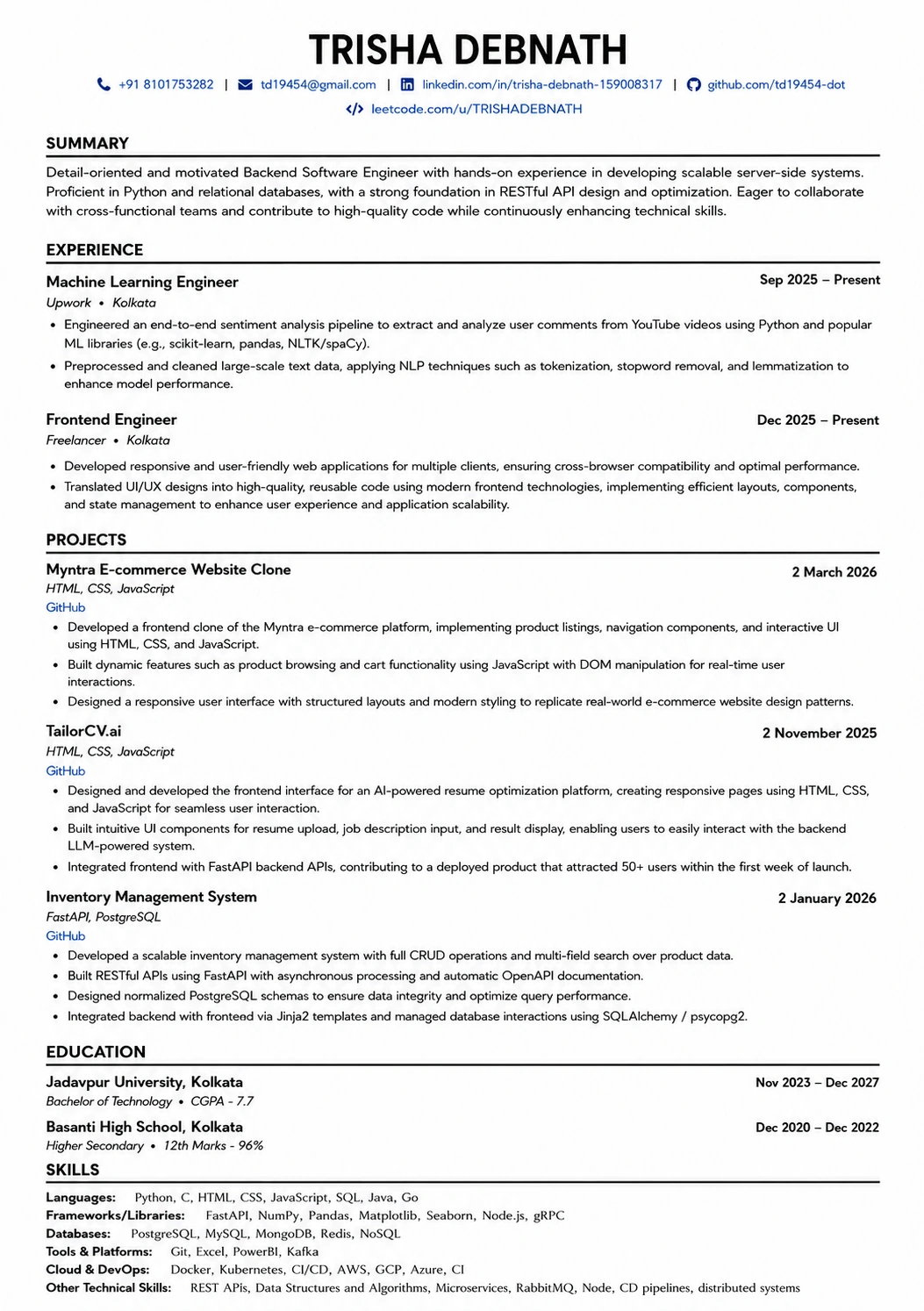
This template is ATS-tested — start from it and the formatting rules in this guide are already handled.
Was this guide useful?
Be the first to rate it.